


Grief and loneliness: where to begin

When someone dies, you may miss their particular presence even when other people are around. Start small: tell one trusted person when you feel lonely, and suggest something specific, such as a walk or a regular phone call. Make room for quiet time too, if it helps you rest or remember the person who died. You do not have to replace that relationship to begin feeling connected again.
If you live far from family, as many people in Barcelona do, the distance can make ordinary moments of grief feel harder to share. A support group, familiar community activity or conversation with a therapist can give you another place to speak honestly. The steps in this guide are options, not a timetable; choose what feels manageable today.
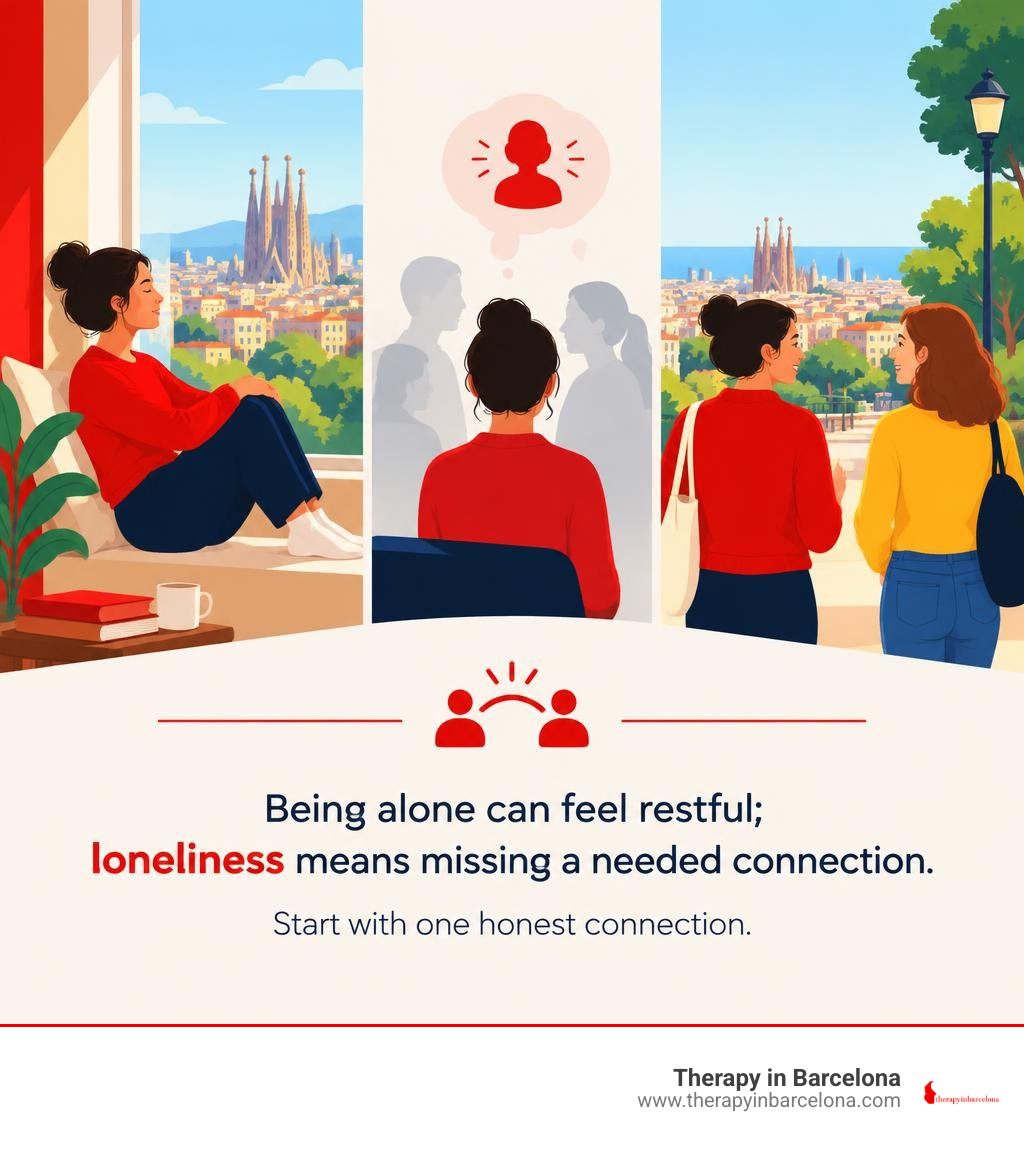
Understanding Grief and Loneliness: Why Bereavement Feels So Isolating
Bereavement alters your daily life in ways that extend far beyond sadness. When an important person dies, an entire relational ecosystem vanishes. You lose daily conversations, shared humour, unspoken understandings, and mutual routines. In a survey by bereavement charity Sue Ryder, 88% of people reported feeling alone in their grief.
This isolation often stems from the absence of a needed relationship. You may be surrounded by caring colleagues, neighbours, and acquaintances, yet still experience deep isolation because none of them can replace the person you lost. According to guidance on grief and loneliness from Cruse Bereavement Support, this experience is a natural response when your closest attachment bond is severed.
Emotional Loneliness vs. Social Isolation: Feeling Alone in a Crowd
To understand post-loss isolation, it helps to distinguish between subjective emotional loneliness and objective social isolation (Utz et al., 2014).
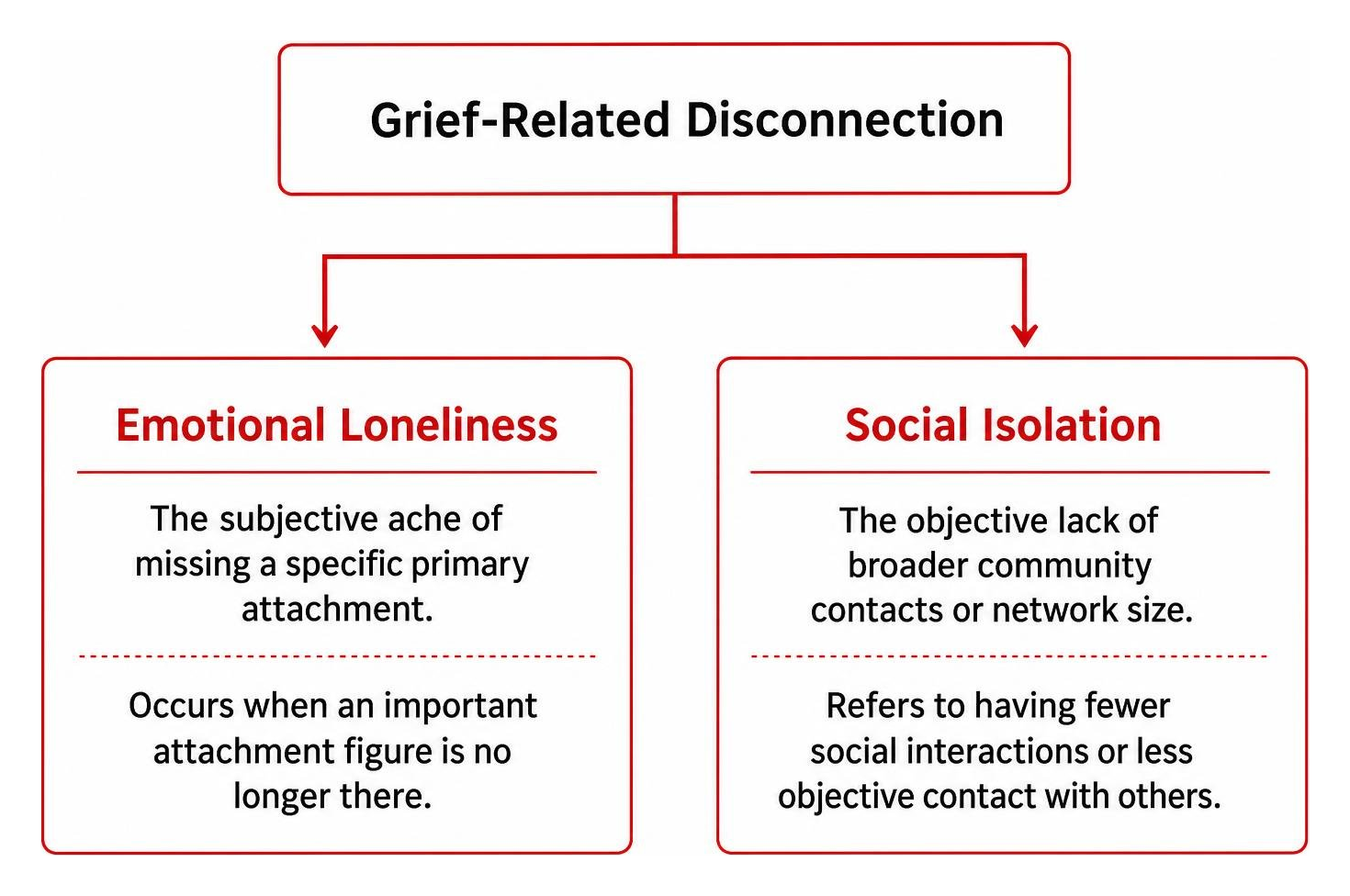
Emotional Loneliness
Emotional loneliness is the internal feeling that an important emotional connection is missing. It occurs when a primary attachment figure—such as a spouse, parent, child, or close friend—is no longer there. Because this feeling is rooted in attachment loss, simply increasing social invitations or being around crowds will not immediately soothe it (Vedder et al., 2025).
Social Isolation
Social isolation refers to having fewer social interactions or less objective contact with others. While an individual can be socially isolated without feeling lonely, bereavement often triggers both. Mourners may withdraw from their social circles, or friends may pull away because they do not know what to say.
Common Triggers of Loneliness After Bereavement
Grief-related loneliness is frequently sparked by everyday shifts:
- Loss of companionship and routines: Waking up to an empty home, eating meals by yourself, or having no one to share minor daily events with.
- Cessation of caregiving: If you spent months or years caring for a loved one, the end of those responsibilities can leave a sudden, quiet void.
- Social awkwardness: Friends or acquaintances may avoid you because they fear saying the wrong thing, leading to fewer invitations.
- Unshared memories: Possessing years of shared context and inside jokes that no one else in your current social circle understands.
- Practical barriers: Dealing with estate administration, single parenting, or financial adjustments without your partner’s support.
For internationals living in hubs like Madrid, Valencia, or Barcelona, these triggers can be magnified. Being away from extended family and childhood support networks can make the quiet moments of loss feel heavier.
The Physical and Psychological Impact of Loss
Grief is a whole-body experience. When coping with loss, your nervous system interprets the sudden absence of a primary attachment figure as a disruption to your safety and equilibrium.
How Grief and Loneliness Affect Mind and Body
The cognitive fatigue that accompanies bereavement is well documented. You might find it difficult to concentrate at work, forget simple appointments, or feel physically drained after modest tasks.

Psychologists often observe two primary styles of grieving:
- Intuitive grief: Centred on emotional expression, sharing feelings, and processing pain through relational communication.
- Instrumental grief: Focused on problem-solving, cognitive processing, and physical activity or task-oriented coping.
Neither style is superior; both are natural ways the mind and body adapt to major loss.
Health Risks of Sustained Isolation
Prolonged loneliness is not merely uncomfortable; it is a notable public health concern. Research highlights that chronic isolation carries health risks comparable to smoking 15 cigarettes a day, contributing to:
- Heightened systemic inflammation and reduced immune response
- Cardiovascular strain and elevated blood pressure
- Higher vulnerability to cognitive decline and sleep disturbances
- Increased risks of ongoing emotional distress and prolonged low mood
Acknowledging these physical effects underscores why gentle, steady steps toward connection are a vital part of caring for your health after loss (Niino et al., 2024).
Gentle Strategies to Cope with Bereavement and Isolation
Reconnecting after a loss does not mean forgetting the person who died. Instead, it involves finding manageable ways to ground yourself, nurture your nervous system, and gradually rebuild your social world.
Daily Micro-Steps for Rebuilding Connection
When energy is low, large social gatherings can feel overwhelming. Focus instead on small, sustainable actions:
- Establish low-pressure touchpoints: Say hello to your local barista, exchange a pleasantry with a grocer, or take a walk in a bustling public park.
- Lean on reliable friendships: Research indicates that perceived support from close friends often provides a uniquely protective buffer against grief-related loneliness (Utz et al., 2014).
- Engage in community volunteering: Dedicating a few hours a month to a local charity or animal shelter can restore a sense of purpose and low-stakes connection.
- Join interest-based groups: Explore local book clubs, language exchanges, or walking groups to connect over shared activities rather than small talk. For expats adapting to life in Spain, navigating loneliness living abroad often begins by building steady community through these shared activities.
Case Vignette (Fictional Composite Profile): Consider Mateo, a 42-year-old software architect who relocated from Manchester to Valencia. Following the sudden death of his partner, Mateo felt entirely detached from his new surroundings. The quiet of his flat felt overwhelming, yet networking events felt exhausting. Mateo began with micro-steps: a daily morning coffee at the same café, a weekly pottery class, and a fortnightly video call with an old friend. These low-demand interactions offered steady grounding without forcing him to hide his sorrow.
Continuing Bonds: Honouring the Deceased While Moving Forward
Modern bereavement psychology emphasises the concept of “continuing bonds.” You do not need to sever your emotional connection to heal. Instead, you can develop an enduring internal relationship with the person who died while remaining engaged in present life.
- Private rituals: Lighting a candle on significant dates, cooking their favourite recipe, or visiting a park they loved.
- Expressive writing: Writing letters to your loved one about current events, unexpressed thoughts, or moments you wish you could share.
- Legacy projects: Donating to a cause they cared about or organising a small photo album that celebrates their life.
How Friends and Family Can Support a Grieving Loved One

Supporting a bereaved individual requires patience and presence rather than quick fixes.
- Show up consistently: The influx of support often tapers off after the first month, precisely when intense loneliness can set in. Send low-pressure check-in messages across the first year.
- Offer concrete assistance: Instead of asking, “Let me know if you need anything,” offer specific help: “I’m picking up groceries on Thursday; what can I bring you?” or “Would you like to go for a 20-minute walk this evening?”
- Listen without giving advice: Avoid clichés like “everything happens for a reason.” Allow them to speak about their loss and mention the deceased person by name.
The Path Forward: Support Groups and Professional Care
While friends and family provide essential care, structured peer groups and professional therapy offer specialised spaces where grief can be processed without worry of burdening others.
Long-Term Trajectories: How Grief and Loneliness Shift Over Time
Loneliness following bereavement is rarely linear. Research tracking widowed individuals shows that while overall distress generally eases over the first one to three years, loneliness can resurface during anniversaries, holidays, or significant life transitions. Understanding this variable trajectory helps normalise setbacks; experiencing a wave of loneliness two years after a loss is a natural aspect of ongoing adaptation.
Finding Community and Tailored Therapeutic Guidance
Coping with grief while living abroad presents distinct challenges. Internationals often encounter administrative systems in a second language and may lack access to lifelong family networks.
When choosing mental health support, people have several avenues:
- Public healthcare systems: Valuable for basic regional care and medical support, though often subject to long waiting lists and limited language options.
- Large online platforms: Offer broad directory listings, though they typically rely on automated algorithms rather than personalised human matching.
- Local practices and specialised private clinics: Local practices offer standard therapy, while practices such as Therapy in Barcelona provide bespoke therapist matching with psychology-trained practitioners, strict privacy standards with no data selling, and culturally sensitive care tailored to the international community.
Therapeutic approaches often utilised for grief and loneliness include:
- Cognitive Behavioural Therapy (CBT): Helps identify and gently reframe thought loops that reinforce self-isolation and helplessness.
- Acceptance and Commitment Therapy (ACT): Encourages accepting difficult emotions while aligning daily actions with personal core values.
- Narrative Therapy: Explores the life story shared with the deceased and helps reconstruct personal identity moving forward.
- Internal Family Systems (IFS) and Somatic Approaches: Assists in processing the physical tension, internal conflict, and emotional numbness tied to deep loss.
For individuals located in Málaga, Alicante, Sevilla, or internationally, online therapy options provide flexible continuity of care in English and other native languages.
When to Seek Urgent Support
If you or someone you know is experiencing unmanageable despair, thoughts of self-harm, or feels unable to stay safe, please reach out immediately to professional crisis resources:
- Spain Crisis Line: Call 024 (National Suicide Prevention Line) or 717 003 717 (Teléfono de la Esperanza).
- International Emergency Services: Dial 112 in Europe, or visit your nearest hospital emergency department.
- UK Support: Contact the Samaritans at 116 123.
- US/Canada Support: Call or text 988.
Frequently Asked Questions About Grief and Loneliness
Why do I feel so lonely even when surrounded by supportive people?
This occurs because loneliness in bereavement is primarily emotional rather than social. You are missing a specific attachment bond. While friends and colleagues provide warmth, they cannot replace the unique relationship, shared history, and daily intimacy you shared with the person who died.
How long does loneliness after the death of a spouse or loved one typically last?
Grief timelines vary significantly. Longitudinal studies suggest that intense feelings of loneliness often begin to soften over the first 12 to 36 months, but adaptation is non-linear. Anniversaries, quiet evenings, and major life changes can bring temporary resurgences of loneliness for years afterward.
What is the difference between intuitive and instrumental grieving styles?
Intuitive grievers process loss primarily through feeling and emotional expression, often finding relief in talking, crying, and relational support. Instrumental grievers process grief cognitively and behaviourally, channeling their energy into tasks, problem-solving, physical projects, or quiet reflection. Both styles are valid and normal.
Conclusion
Adapting to life after a significant loss requires time, self-compassion, and gentle patience. Healing does not mean leaving your loved one behind; it means finding ways to honour your bond while slowly creating a meaningful life in the present.
Therapy in Barcelona is a trusted psychology practice in Spain established in 2011 by founder Leigh Matthews, an Australian Psychologist who has lived in Barcelona since 2011 and brings experience in supporting internationals. Our practice offers in-person sessions at our central Barcelona office in the Eixample district, as well as online therapy worldwide.
Our team of psychology-trained therapists provides culturally informed care for adults, couples, teens, and families in English, as well as German, French, Spanish, Afrikaans, Portuguese, Austrian-German, and Swiss-German. As a private-pay practice, some of our therapists offer sliding scale fees for those with financial need, which prospective clients are welcome to inquire about.
If you’d like support, book a Free Discovery Call: Book your Free Discovery Call to find a therapist matched to your unique journey.
