


When Moving Abroad Feels Like More Than You Bargained For

Acceptance and Commitment Therapy delivered remotely to people living abroad — is one of the most effective ways to address the anxiety, identity confusion, and emotional exhaustion that often come with life in a new country.
Here is a quick overview of what it involves:
- What it is: A mindfulness-based, evidence-backed therapy that helps you stop fighting difficult thoughts and emotions, and instead build a life guided by your personal values
- Who it is for: Expats, digital nomads, trailing spouses, and international families struggling with cultural adjustment, loneliness, homesickness, or a loss of identity
- How it is delivered: Via secure video sessions, accessible from anywhere in the world, across time zones
- Why it works: Expats are more likely to experience anxiety and depression, and ACT helps by building the psychological flexibility needed to navigate these challenges.
- How to get started: Most therapists offer a free initial consultation so you can find the right fit before committing
You did everything right. You researched the city, landed the job or followed your partner, packed your life into bags, and made the leap. Barcelona, Valencia, Madrid — wherever you landed, it looked like the beginning of something exciting.
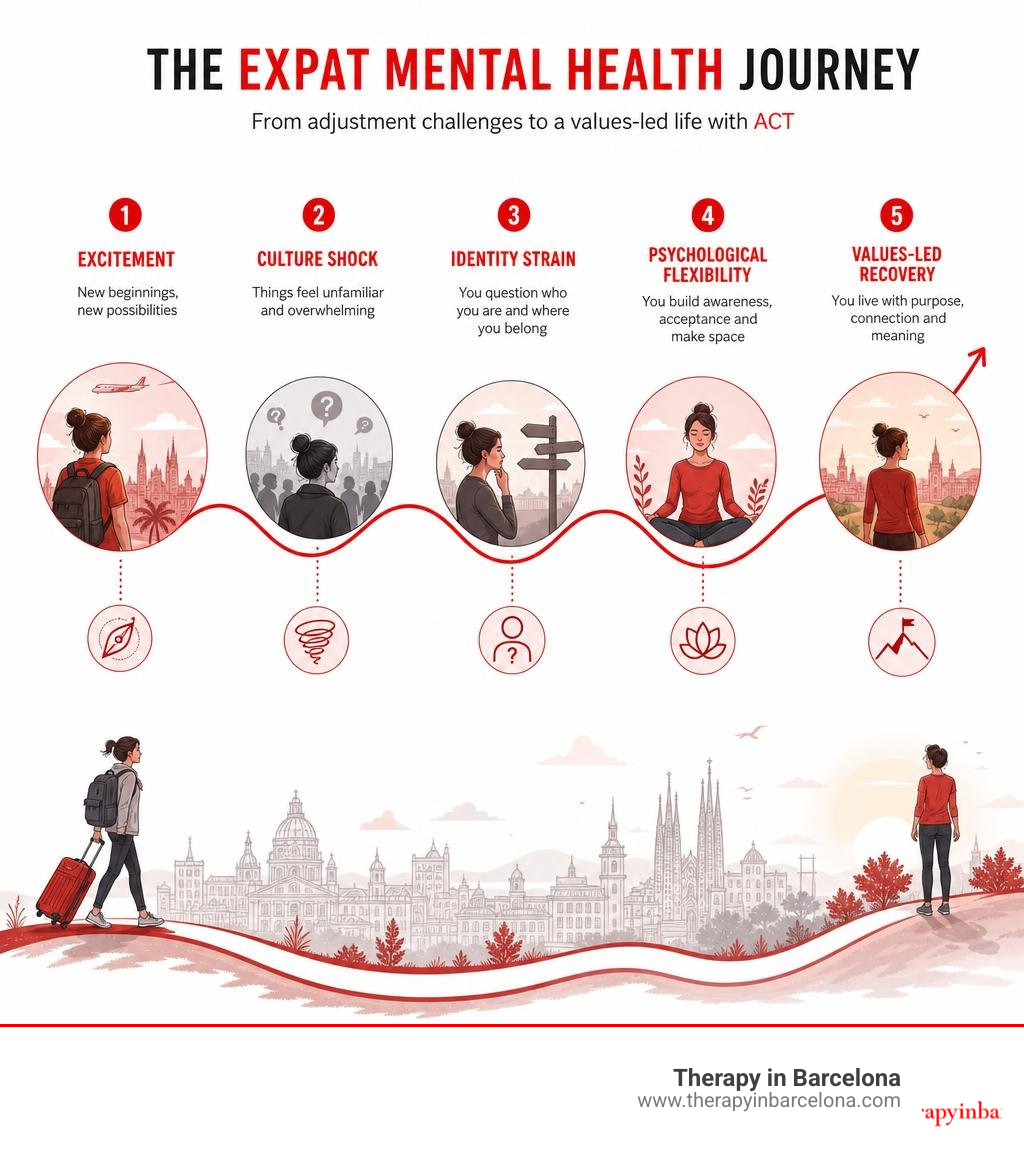
And then, somewhere between the admin queues, the language barriers, and the WhatsApp messages from home that remind you what you are missing, it started to feel harder than expected. Not the romantic kind of hard. The quiet, grinding kind — where you are not sure who you are anymore, or whether what you are feeling is normal, or whether you are just not cut out for this life.
You are not alone in that. Research published by the Journal of Global Mobility consistently shows that expats carry a significantly higher mental health burden than their non-expat counterparts, with many experiencing persistent feelings of being overwhelmed, unmotivated, or down.
Yet many internationals wait far too long before reaching out for support — often because finding the right therapist, in the right language, who actually gets the expat experience, feels like one more impossible task on an already overwhelming list.
That is exactly the gap that online ACT therapy is designed to fill.
What is Acceptance and Commitment Therapy (ACT) for Internationals?
Acceptance and Commitment Therapy (ACT) is an action-oriented, mindfulness-based branch of psychotherapy. Rather than trying to eliminate or control difficult thoughts and emotions, ACT teaches people to change their relationship with them.
By developing psychological flexibility, individuals learn to accept their internal experiences while committing to meaningful actions that align with their core values. The Association for Contextual Behavioral Science, a professional organisation connected to ACT research and training, describes ACT as an approach focused on helping people live more flexibly and meaningfully, even when difficult inner experiences are present.
For internationals navigating the unpredictable waves of relocation, this approach is highly practical. It helps them move away from the exhausting cycle of trying to “force” themselves to feel happy or settled, and instead focuses on building a rich, purposeful life in their new environment.
How ACT Differs from Traditional CBT
Traditional Cognitive Behavioural Therapy (CBT) often focuses on cognitive restructuring. This means identifying “irrational” or negative thoughts and actively working to challenge, reframe, or change them. While this is highly effective for many, it can sometimes feel like an endless internal debate, especially when an expat is facing genuinely difficult, unfixable realities.
ACT takes a different route. Instead of teaching people to fight or change their thoughts, it teaches them to observe them without judgment.
- CBT asks: “Is this thought realistic, and how can I change it to feel better?”
- ACT asks: “This thought is present right now. Can I allow it to be here without letting it run my life, and what can I do right now that aligns with who I want to be?”
This shift from trying to control thoughts to simply changing how one relates to them is incredibly liberating. It frees up precious mental energy that would otherwise be spent struggling against natural feelings of homesickness or anxiety.
Why ACT is Uniquely Suited for Life Abroad
Living abroad brings a unique set of emotional hurdles:
- Cultural adjustment: The constant friction of navigating unfamiliar social norms, bureaucracy, and language barriers.
- Identity loss: Losing the professional status, social circles, and daily routines that previously defined who you were.
- Homesickness: The painful ache for familiar faces, comfort foods, and the ease of “home.”
ACT does not treat these feelings as problems that need to be “cured.” Instead, it acknowledges that feeling sad, anxious, or lonely is a completely normal response to leaving your entire support system behind. By helping expats align their daily choices with their core values, ACT provides a clear roadmap for rebuilding a sense of purpose and belonging, even when life feels highly uncertain.
The Six Core Processes of Online Expat ACT Therapy
At the heart of ACT is a model known as the “Hexaflex.” This model consists of six core processes that work together to build psychological flexibility. When applied to the challenges of Expat Therapy, these processes offer practical tools for managing the emotional roller coaster of international life.

Acceptance and Cognitive Defusion in Online Expat ACT Therapy
Acceptance is not about giving up or resigning yourself to misery. It is about acknowledging the present moment exactly as it is, without trying to fight it. For an expat, this might mean accepting that they feel lonely today, rather than beating themselves up for not “making the most” of their adventure.
Cognitive defusion helps you step back from difficult thoughts instead of treating them as facts. For expats, this can reduce anxiety around language barriers, social situations, and adjusting to life in a new country.
Being Present and Self-as-Context
When you live abroad, it is easy to spend your time stuck in the past (reminiscing about how easy life was back home) or worrying about the future (wondering if you will ever settle down). Mindfulness and being present ground you in the here and now. This allows you to appreciate the small, positive aspects of your current life, even amidst the chaos of a major cultural transition.
Self-as-context, or the “observer self,” reminds you that you are more than your current thoughts, feelings, or circumstances. For expats facing identity loss, it helps separate self-worth from temporary challenges like career setbacks or adjusting to a new country.
Values and Committed Action in Online Expat ACT Therapy
Values are what give our lives meaning. They are the directions we want to head in, like compass points (e.g., connection, adventure, learning, or family). ACT helps expats clarify their core values so they can make intentional choices, rather than simply reacting to stress.
Committed action is about taking concrete, practical steps toward those values, even when it feels uncomfortable. If an expat values connection, committed action might mean attending a local meetup or starting a language exchange, even if their anxiety is telling them to stay home. It is about building a fulfilling life one small, value-aligned choice at a time.
How Online ACT Helps Expat Partners and Families
While the person who initiated a move abroad often has a built-in structure through work or study, trailing spouses and expat partners frequently face a much steeper climb. They often grapple with a sudden loss of professional identity, intense isolation, and the pressure of keeping the household running in an unfamiliar language. This can place immense strain on relationships and families.
Many expats experience a loss of identity after moving abroad. Changes in career, language, social connections, and daily routines can lead to loneliness, resentment, and relationship conflict during the adjustment process.
Through ACT therapy, you work on:
- Accepting grief: Making space to mourn a previous life without guilt.
- Clarifying values: Reconnecting with personal values, such as creativity and community.
- Taking committed action: Joining local activities and volunteering to rebuild identity, confidence, and social connections.
ACT helps shift the focus from what’s been lost to what can be built in the present. For expats, couples, and families navigating life abroad, this can strengthen resilience, relationships, and overall wellbeing.
Choosing the Right Path: Online Therapy vs. Alternatives
When seeking mental health support abroad, expats generally have a few different paths they can take. It is important to weigh these options carefully to find the one that best fits your lifestyle, budget, and emotional needs.

To help you compare, here is a breakdown of the primary options available to internationals living in Spain:
Public Health Systems (e.g., CatSalut in Catalonia)
- What it is: The local public healthcare system.
- The reality for expats: While the public health system offers valuable care, mental health services often involve long waiting lists, limited sessions, and few English-speaking therapists with experience supporting expats.
Large Global Online Platforms
- What it is: Massive, app-based therapy corporations.
- The reality for expats: Online therapy platforms are convenient but often use automated therapist matching and may offer less personalised care, with some also facing concerns about data privacy.
Local In-Person Clinics
- What it is: Traditional private clinics in your host city.
- The reality for expats: A good option if you crave face-to-face connection. However, unless you live in a major international hub like Barcelona or Madrid, finding a highly qualified, English-speaking specialist who understands the unique psychological weight of relocation can be difficult.
Therapy in Barcelona (Online & In-Person)
- What it is: A trusted, private-pay group practice established in 2011, specialising exclusively in the international community.
- The reality for expats: Therapy in Barcelona offers personalised therapist matching, culturally sensitive care, and strict privacy. With online therapy available across Spain and worldwide, you can access specialist support wherever you are.
Frequently Asked Questions about Online ACT for Expats
How long does ACT therapy typically take for expats?
The duration of ACT therapy is highly individualised and depends on your specific goals and challenges. However, because ACT is a highly practical, skills-based approach, many clients begin to notice meaningful shifts within 8 to 12 weekly sessions.
Sessions typically last 50–60 minutes and include practical exercises to build psychological flexibility between appointments. A qualified psychologist can provide structured, evidence-based support tailored to your goals.
Can I access online ACT therapy from any country?
Yes. One of the greatest benefits of online therapy is its flexibility. Whether you are a digital nomad moving between co-living spaces, an expat travelling for work, or someone relocating to a new country entirely, online therapy travels with you.
This continuity of care is vital for mental well-being; you do not have to start over and retell your story to a new therapist every time you cross a border. For digital nomads and highly mobile internationals, reading more about how to Roam Free Heal Freely A Digital Nomads Guide To Remote Therapy highlights how remote support can anchor you through constant transition.
What should I look for in an online ACT therapist?
When searching for the right therapist, look for the following key credentials and qualities:
- Formal Qualifications: Ensure they are a fully qualified, licensed psychologist or psychotherapist with specific training in Acceptance and Commitment Therapy.
- Expat Experience: A therapist who has personally lived abroad will have a first-hand understanding of culture shock, identity transitions, and bureaucratic stress.
- Language and Cultural Competence: You should be able to express yourself in your native language (or the language you feel most comfortable using for emotional expression). Nuance is easily lost in a second language.
- A Good Personal Match: Trust your gut during your initial contact. You should feel safe, respected, and heard.
If you are looking for trusted professionals in Spain, finding a culturally competent, English-speaking therapist who understands the unique challenges of expat life is essential. At Therapy in Barcelona, our psychology-trained therapists offer their services as therapists in Spain, ensuring you receive high-quality, empathetic care tailored to your journey.
Moving Forward on Your Journey
Living abroad is a beautiful, bold adventure — but it is also an emotional challenge that can leave even the most resilient individuals feeling lost, anxious, or disconnected. You do not have to navigate this transition alone, and you do not have to wait until you are in crisis to ask for help.
Founded in 2011 by Australian psychologist Leigh Matthews, Therapy in Barcelona provides warm, culturally sensitive therapy for internationals, with in-person sessions in Barcelona and online support worldwide.
If you are ready to stop fighting the struggle and start building a meaningful life abroad, we invite you to take the first step. Book a Free Discovery Call today, and let us match you with a therapist who truly understands your world.
