


Why Expats and Internationals Choose Online Psychotherapy in Europe
Expats and internationals can access licensed online psychotherapy in Europe by choosing accredited, English-speaking practitioners through specialised expat practices or verified European registries.
Remote therapy allows individuals to connect with clinicians tailored to their cultural background, bypassing public healthcare waiting lists, administrative hurdles, and local language barriers. Virtual sessions also provide seamless continuity of care when relocating between countries across European time zones.
Living abroad in vibrant European hubs offers rewarding career paths and enriching cultural exposure. However, relocating internationally often disrupts familiar support networks, routines, and emotional anchors. Connecting with an English-speaking therapist who understands the expat lifestyle provides vital stability during periods of change.
Rather than settling for a local practitioner who might lack cultural context, remote care allows you to choose a clinician tailored to your background. For a deeper look at international support networks, explore The Expat’s Guide to Online Therapy: Bridging Distances, Building Connections.
Managing Relocation Stress and Identity Drift Abroad
Moving across borders involves distinct psychological stages. The initial excitement of a new country frequently gives way to culture shock, acute homesickness, and unexpected isolation. Many international professionals, accompanying partners, and students experience what psychologists call “identity drift” – a destabilising sense of losing one’s grounding while adapting to an unfamiliar environment.
Consider a fictional example: a 32-year-old professional who relocated from London to Munich. Language barriers and everyday tasks began affecting her confidence and sleep. Online therapy in her mother tongue helped her manage acculturation stress, rebuild routines, and regain emotional balance.
International students face similar hurdles when balancing demanding academic schedules with foreign living conditions. Practical mental health resources like Remote Therapy for Expat Students: Mental Health Support That Travels with You show how remote sessions provide essential continuity during university terms.
Effectiveness of Virtual Care vs. In-Person Sessions
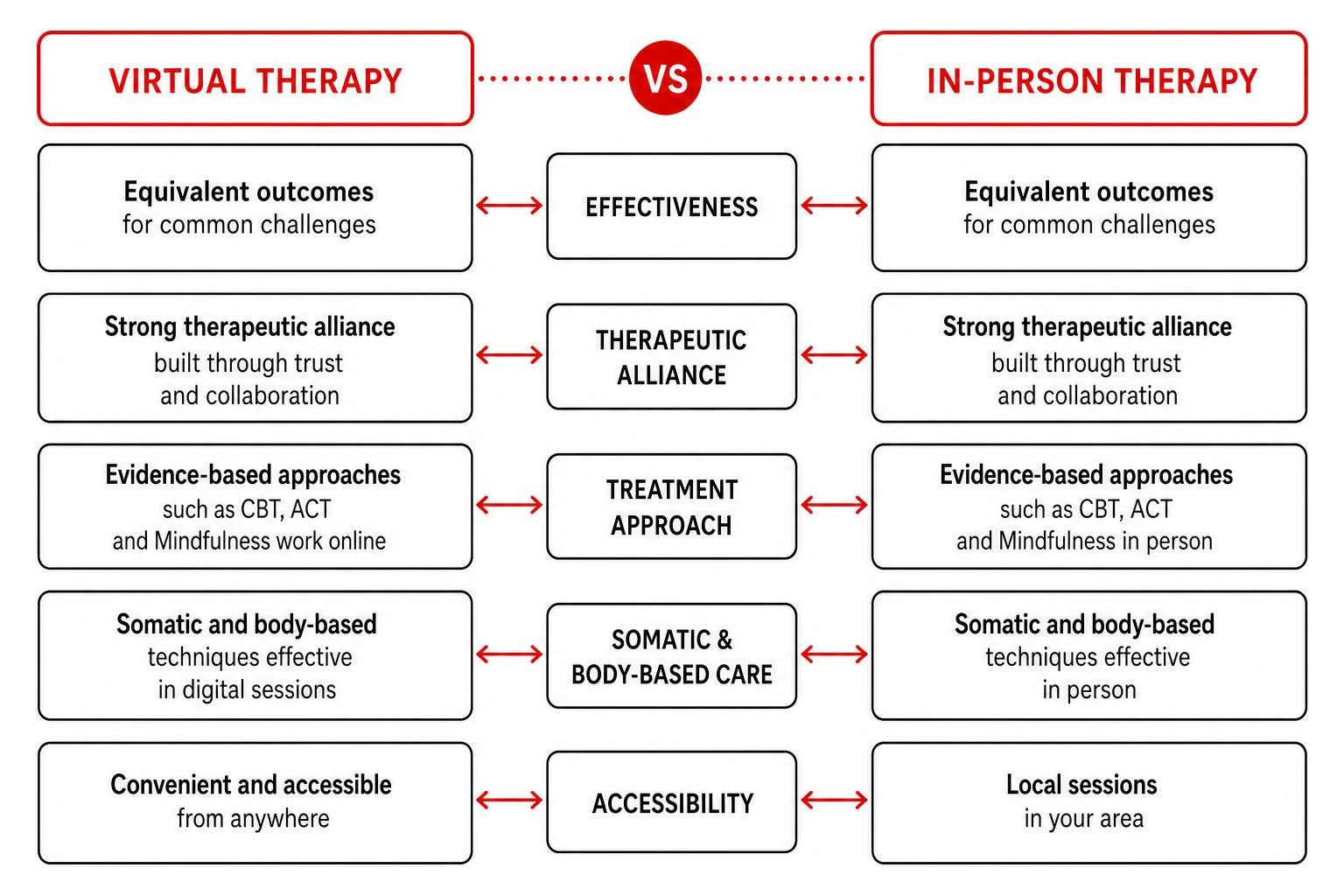
Clinical research consistently demonstrates that remote therapy can deliver outcomes comparable to traditional face-to-face sessions for many non-acute concerns.
For example, a 2018 systematic review and meta-analysis comparing internet-based CBT with face-to-face CBT found no meaningful difference in outcomes across the conditions studied. Online therapy can work well when the practitioner is qualified, the connection is private, and the client-therapist fit is strong.
Therapeutic success relies primarily on the strength of the therapeutic alliance – the collaborative trust developed between client and practitioner – rather than physical proximity. A systematic review and non-inferiority meta-analysis on videoconferencing psychotherapy found that the working alliance was not meaningfully weaker online than in person.
Evidence-based modalities such as Cognitive Behavioural Therapy (CBT), Acceptance and Commitment Therapy (ACT), and Mindfulness-Based Stress Reduction (MBSR) translate seamlessly to digital environments. Practitioners also integrate somatic and body-based approaches remotely to help clients identify physical tension, regulate their nervous system, and restore emotional stability.
Credentials, Cross-Border Regulations, and Data Privacy in the EU
Accessing healthcare across European borders requires an understanding of clinical standards, regulatory frameworks, and digital privacy rules. The European Union maintains high professional and data security standards, but licensing structures vary between member states.

How to Verify Licensing Standards in Online Psychotherapy Europe
When seeking online psychotherapy in Europe, verifying the clinical background of your practitioner ensures safe and ethical care. In Europe, qualified therapists typically hold advanced university degrees in clinical psychology, counselling psychology, or psychotherapy, along with registration in their respective professional bodies.
Standard professional benchmarks across Europe include:
- European Certificate of Psychotherapy (ECP): Awarded by the European Association for Psychotherapy (EAP), this credential establishes standardized clinical competencies across participating European nations.
- National Professional Registrations: In Germany, reputable psychologists often register with the Berufsverband Deutscher Psychologinnen und Psychologen (BDP). Similar national registries exist across Spain, the UK, the Netherlands, and France.
- Specialised Cross-Cultural Experience: Ensuring a practitioner has specific training in intercultural communication, Third Culture Kid dynamics, or systemic expat care prevents misunderstandings during sessions.
For additional guidance on finding accredited English-speaking practitioners abroad, consult Mind the Gap: Finding English-Speaking Therapy in Europe as an Expat.
Confidentiality and GDPR Standards for Telehealth
Under the European Union’s General Data Protection Regulation (GDPR), mental health records are classified as sensitive personal health data requiring rigorous security safeguards. Compliant online therapists ensure full confidentiality by adhering to strict technical protocols:
- Encrypted Video Channels: Using dedicated, professional telehealth software with end-to-end encryption rather than standard consumer video apps.
- Secure European Data Hosting: Storing session documentation, intake questionnaires, and correspondence on secure servers located within the EU.
- Transparent Privacy Policies: Providing clients with clear written documentation outlining how their personal details are handled and protected.
To better understand how encryption safeguards your virtual consultations, review Encrypted Emotions: Understanding Secure Online Therapy.
Practical Differences: Psychotherapy, Counselling, and Coaching
Understanding the distinction between psychotherapy, psychological counselling, and personal coaching helps you choose the right level of support for your current circumstances.
Clinical Psychotherapy
Psychotherapy is an in-depth, evidence-informed clinical process designed to address deep-seated emotional patterns, relational wounds, unresolved painful events, or persistent feelings of sadness and overwhelming worry.
It explores how past experiences shape present behaviours and utilises modalities such as Internal Family Systems (IFS), Schema Therapy, and Psychodynamic therapy. Psychotherapy requires fully licensed, advanced psychological clinicians.
Psychological Counselling
Counselling focuses primarily on current life challenges, problem-solving, and emotional adjustment. It is ideal for working through specific transitions such as moving abroad, career shifts, mild situational stress, or relationship communication hurdles. While structured and evidence-based, it generally focuses on short-to-medium-term goals. For practical strategies on reducing daily overwhelm, see Online Therapy for Stress: Click Your Way to Calm.
Personal and Expat Coaching
Coaching is non-clinical, future-oriented, and centered on goal achievement, professional growth, and performance enhancement. While valuable for motivation and lifestyle design, coaching does not address underlying psychological distress or emotional wounds.
You can explore more about how structured psychological support helps internationals thrive by reading What Are the Benefits of Online Therapy for Internationals Living in Spain?.
Choosing Delivery Formats: Video vs. Audio-Only Sessions
Most online therapy takes place over secure video calls, allowing practitioners and clients to read facial expressions, body language, and non-verbal cues. However, some professionals and digital nomads prefer audio-only consultations.
Audio-only sessions can reduce screen fatigue, offer extra privacy in shared living spaces, and help clients focus deeply on verbal expression without self-consciousness. For remote workers moving frequently between European locations, exploring resources like Roam Free, Heal Freely: A Digital Nomad’s Guide to Remote Therapy highlights how flexible delivery formats support mobile lifestyles.
Specialised Support for Couples, Teens, and Families Across Borders
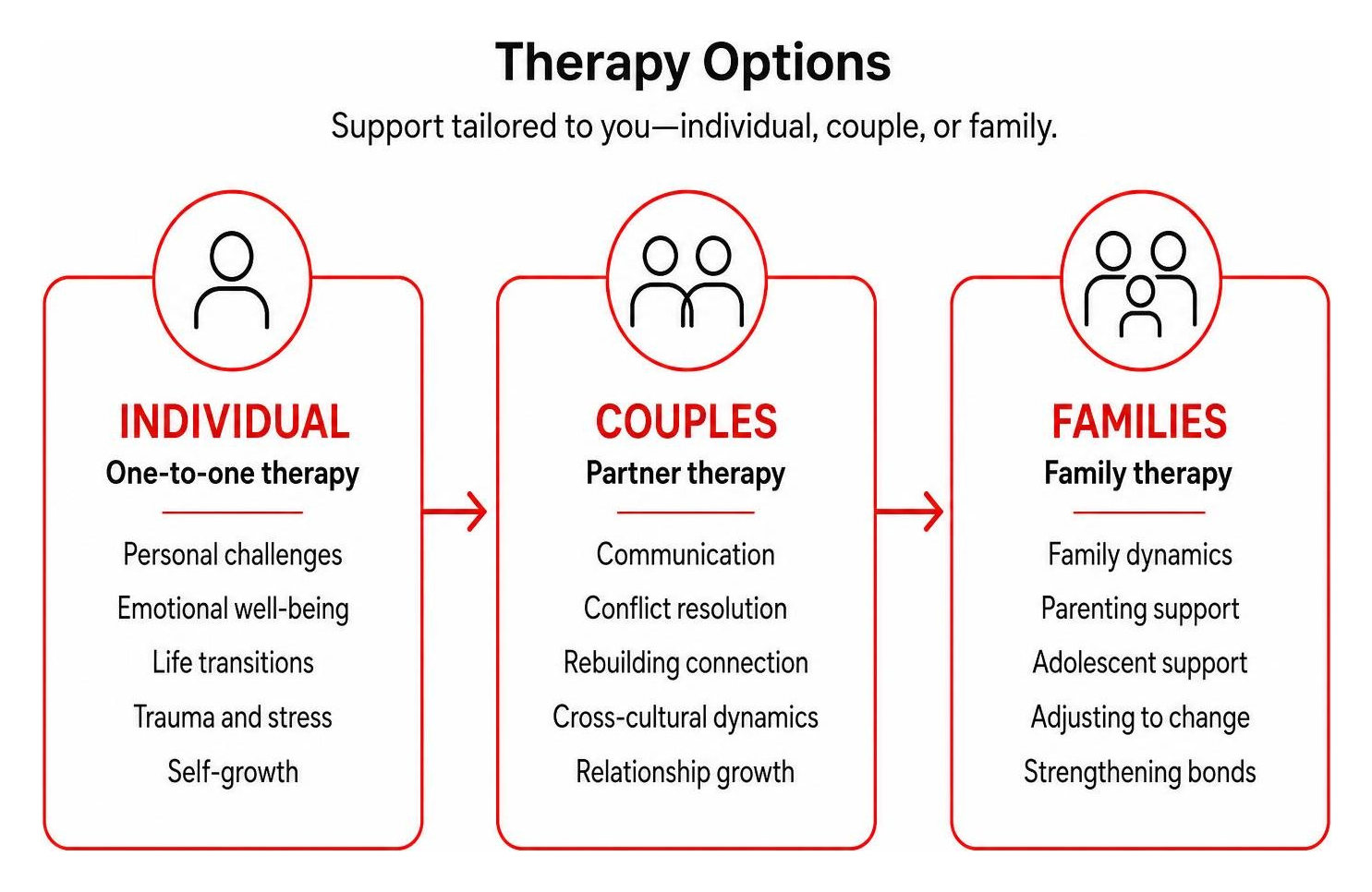
Living abroad places unique pressures on relationships and family units. Cross-cultural couples frequently encounter differences in communication norms, parenting expectations, and cultural assumptions. Systemic family therapy and evidence-based couples approaches—such as the Gottman Method or Emotionally Focused Therapy (EFT)—help partners work through these complexities with mutual empathy.
International teenagers and Third Culture Kids also encounter unique identity challenges, school transitions, and social fragmentation when moving between countries. Specialised adolescent and family practitioners provide tailored spaces to help young people process these adjustments.
Managing Costs, Insurance, and Crisis Protocols
When planning online psychotherapy in Europe, understanding fee structures, payment models, and insurance reimbursement options allows you to manage your care effectively.

Costs, Insurance Reimbursement, and Getting Started with Online Psychotherapy in Europe
Cross-border psychotherapy across Europe primarily operates on a private-pay basis. This independent model can support strict privacy, reduce reliance on public healthcare waiting lists, and allow you to select a clinician matched specifically to your cultural and linguistic needs.
While specific prices vary, it is standard for private-pay services to offer transparent session fees. Some therapists offer sliding scale fees for those with financial need, and prospective clients can inquire about this during their initial intake.
Clients holding private or international health insurance policies may be able to claim partial or full reimbursement, depending on their policy terms:
- US Out-of-Network Health Insurance: Some expats from the United States with PPO plans may receive reimbursement by requesting detailed “superbills” containing formal administrative billing codes from their therapist.
- German Private Health Insurance (PKV): Clients covered under German private insurance policies may be able to submit itemised invoices adhering to standard clinical documentation guidelines for possible reimbursement.
Always check reimbursement rules directly with your insurer before starting care, because coverage varies by country, policy, specific plan requirements, and practitioner credentials.
Platforms across Europe offer various search options. Public system clinicians, large online platforms, broad directories, and local private practices can all be valid routes, depending on language, urgency, budget, and care needs.
Broad directories offer direct browsing by language or location, while specialised group practices provide bespoke matching, expat-specific cultural sensitivity, strict privacy without data selling, and private-pay continuity when that is the right fit.
For broader insights into modern virtual care models, see Swipe Right on Mental Health: Best Online Therapy for Adults.
Emergency Resources and Crisis Care Protocols Outside Therapy
Online psychotherapy is designed for non-acute psychological care and is not suitable for severe medical or acute psychiatric crises. If you or someone you know is experiencing acute distress, thoughts of self-harm, or a medical emergency, contact local emergency services immediately:
- Pan-European Emergency Number: Call 112 (free of charge from any phone across all EU member states).
- European Crisis Support: Access regional helplines such as Befrienders Worldwide or SOS Help for immediate, confidential emotional support in English.
- Local Hospitals: Visit the nearest hospital emergency department (Urgencias / Notaufnahme / Urgences) for immediate psychiatric care.
Frequently Asked Questions About European Online Therapy
Can I keep the same online therapist if I move between European countries?
Yes. One of the greatest advantages of online therapy is continuity of care. If you relocate between European countries sharing Central European Time (CET) or adjacent time zones, you can maintain your regular weekly sessions without needing to find a new clinician or restart your therapeutic journey from scratch.
How quickly can I begin online therapy sessions in Europe?
While public healthcare systems often involve waiting lists lasting several months, private online practices typically process intake requests within 24 to 48 hours. After completing a brief initial intake to assess your needs, you can often schedule your first exploratory session within a few days.
What languages are available for remote psychotherapy across Europe?
Online therapy networks across Europe offer extensive linguistic diversity. While English is the most common language for international therapy, sessions are widely available in German, French, Spanish, Italian, Dutch, Portuguese, and many other languages, allowing you to express complex emotions in your primary tongue.
Conclusion
Founded in 2011 by Australian Psychologist Leigh Matthews, Therapy in Barcelona is a trusted group practice offering psychology-trained, multilingual support for internationals living in Spain.
Therapy in Barcelona works both online with clients worldwide (including the USA and Canada) and offers face-to-face therapy sessions at their office in Barcelona, providing careful personalised matching for adults, couples, teens, and families. If you’d like support, book a Free Discovery Call.
