


Find Online English-Speaking Therapy In Gran Canaria

To find English-speaking online therapy in Gran Canaria, start by choosing a qualified therapist who works in English, is clear about their professional credentials, and understands the practical realities of international life. Ask whether they offer secure video sessions, what their availability is in Canary Islands time, and whether their experience fits your needs as an individual, couple, parent, or teenager.
Online sessions can be a practical option whether you live in Las Palmas, Maspalomas, or a smaller part of the island, or move regularly for work. You can speak from a private space without travelling to an appointment, while still building a consistent relationship with the same therapist.
Living abroad can bring more than sunshine and a change of scenery. Language fatigue, loneliness, relationship pressure, career uncertainty, and the distance from family can all become harder to carry alone.
This guide explains how to choose online therapy in English from Gran Canaria, manage the Canary Islands’ one-hour difference from mainland Spain, and understand your options for privacy, fees, insurance, and urgent support.
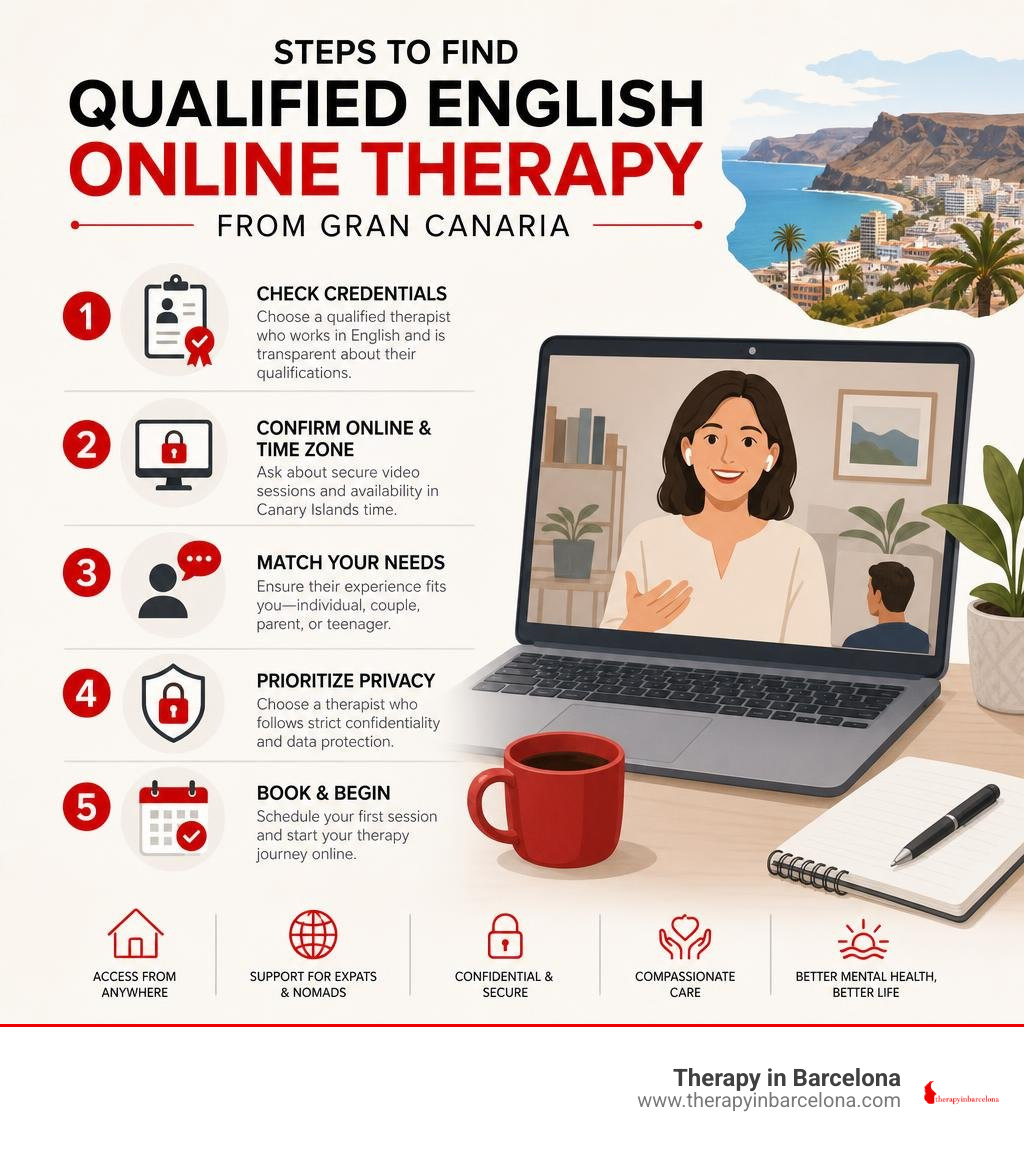
How Online Therapy in English Works for Expats and Digital Nomads in Gran Canaria
Choosing online therapy in English in Gran Canaria gives international residents, remote professionals, and families direct access to licensed therapists by secure video call, wherever they are based on the island.
Therapy sessions take place over secure, GDPR-compliant video platforms that protect your confidentiality. This means you do not need to navigate island traffic, search for scarce local multilingual clinics, or compromise on your therapist’s clinical specialisations. You simply log on from a private room, home office, or quiet garden space.
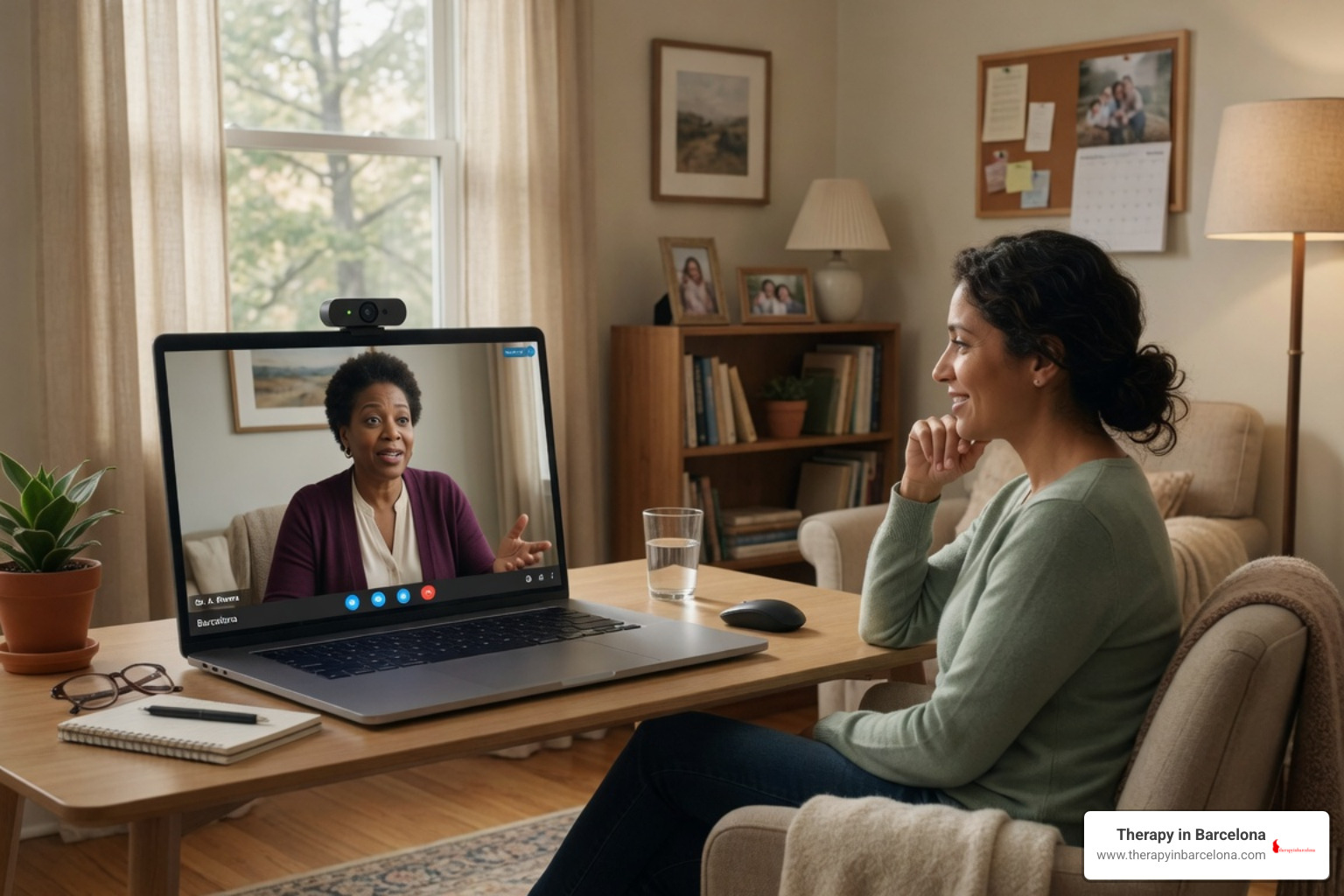
Step-by-Step Guide: Accessing Online Therapy in English in Gran Canaria
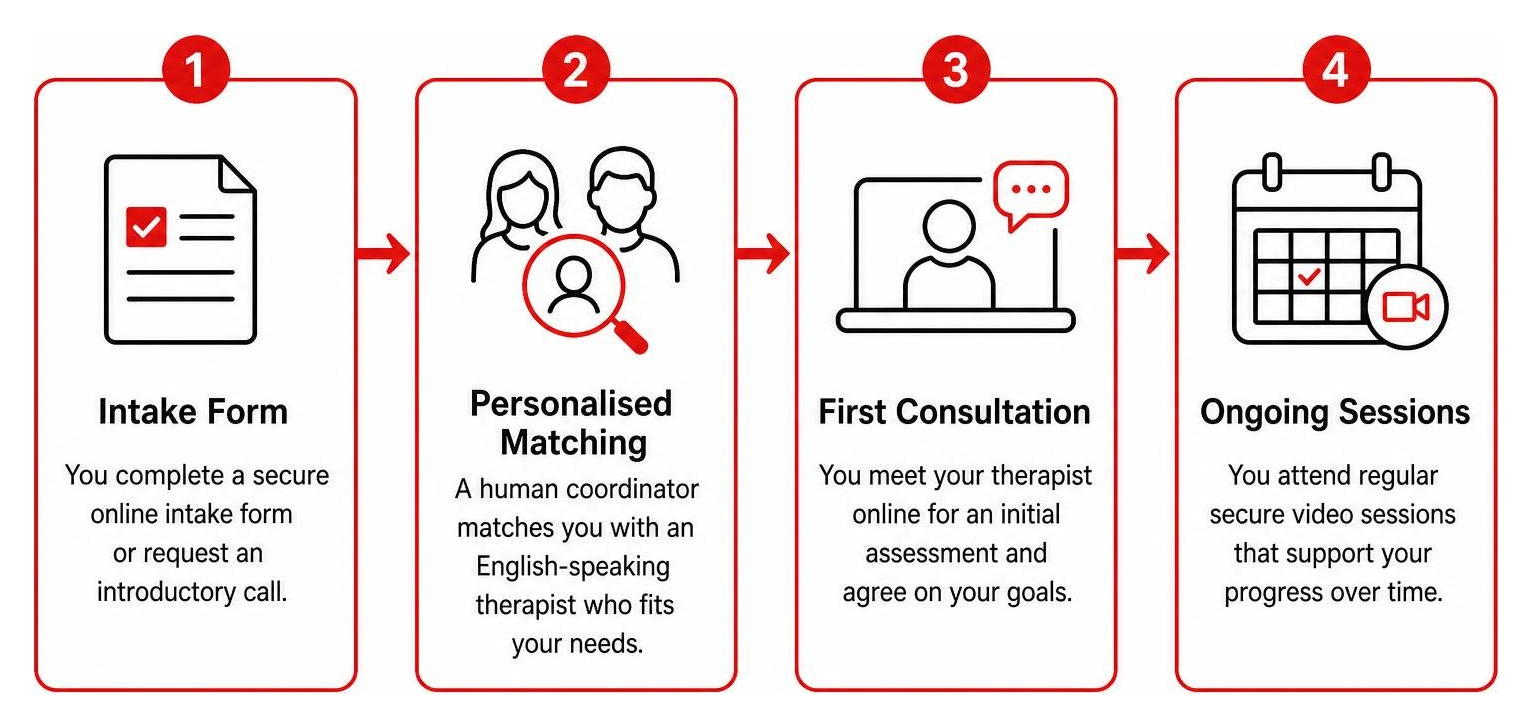
Getting started with virtual therapy is straightforward and structured to ensure you feel supported right from your first enquiry.
- Initial Contact: You reach out through an online intake form or arrange an initial introductory call to outline what you are experiencing.
- Personalised Matching: Instead of leaving your mental health to an automated algorithm, human intake coordinators review your specific cultural background, relationship dynamics, and therapeutic goals.
- First Consultation: You connect with your matched professional for an initial assessment where you discuss your current challenges and outline realistic goals.
- Ongoing Sessions: You and your therapist establish regular weekly or fortnightly sessions tailored to your needs, whether you are seeking individual therapy or support for your relationship.
To get the most out of your sessions, set up a stable broadband connection (at least 10 Mbps), an updated laptop or tablet with a working webcam, and a private room where you cannot be overheard.
Managing Island Scheduling and the Canary Islands Time Zone
A common logistical question involves handling time differences. Gran Canaria observes Western European Time (WET / UTC+0) during winter and Western European Summer Time (WEST / UTC+1) during summer. This puts the Canary Islands exactly one hour behind mainland Spain (CET / CEST) and in the same time zone as the UK and Ireland.
This one-hour difference is easy to manage when scheduling appointments with mainland-based or European therapists. For instance, a 10:00 AM session offered from Barcelona or Madrid takes place at 9:00 AM in Las Palmas. Many international practitioners offer broad scheduling windows from early morning through late evening, making it simple to fit sessions around remote work sprints, family commitments, or island activities.
If you also require general medical advice or urgent non-psychological consultations while living on the island, multilingual medical care is available online across Spain.
Navigating Mental Health Care Pathways in the Canary Islands
International residents seeking mental health support on the island generally encounter three distinct pathways, each with unique advantages and limitations.
Key Benefits of Online Therapy in English for Life in Gran Canaria
Living on an island over 2,000 kilometres from mainland Europe offers a wonderful climate, but it can also present specific emotional hurdles. Many expats experience subtle forms of “island fever,” where the physical boundary of the Atlantic Ocean intensifies feelings of isolation and distance from extended family.
Opting for online therapy allows you to:
- Speak fluently in your native language without linguistic fatigue.
- Access specialised therapists who understand expat life transitions.
- Maintain consistent appointments even if you travel between islands or visit your home country.
- Protect your personal privacy in smaller island communities where local social circles frequently overlap.
Comparing Public Healthcare, Global Directories, and Specialist Group Practices
Understanding your care options helps you choose the right route for your personal needs, timeline, and budget:
Canarian Health Service (Servicio Canario de la Salud – SCS)
- Structure: The regional public healthcare system accessible via local health centres (centros de salud).
- Strengths: Highly affordable or free for registered residents paying into the Spanish social security system.
- Considerations: Consultations are almost exclusively in Spanish, referral queues to secondary mental health services can involve long waiting times, and session frequency is often limited.
Global Subscription Platforms and Large Directories
- Structure: Large tech-driven matching directories and app-based chat subscription platforms.
- Strengths: Fast sign-up, broad geographical coverage, and varied price points.
- Considerations: Many rely on automated algorithms rather than human-led intake. Practitioner turnover can be high, and text-based subscription models may lack the relational depth required for complex emotional work.
Specialised Private Group Practices
- Structure: Dedicated practices established specifically to support international and expatriate communities.
- Strengths: Clinicians possess deep personal and clinical experience with cross-cultural moves, relocation stress, and bicultural relationships. Practices provide comprehensive therapy services with bespoke therapist matching, culturally sensitive support in the client’s native language, strict privacy (no data selling), and private-pay quality.
- Considerations: Private-pay care requires out-of-pocket investment, though some practitioners offer sliding-scale spots or provide invoices for international private health insurance reimbursement.
Common Challenges and Evidence-Based Therapeutic Modalities
Living abroad does not magically erase emotional vulnerabilities; often, the stress of adjusting to a new environment brings them to the surface. English-speaking professionals work with a broad spectrum of common challenges:
- Anxiety and Overwhelm: Managing social anxiety in unfamiliar settings, administrative fatigue, or feeling on edge.
- Persistent Low Mood: Coping with loneliness, loss of established support networks, and adjusting to a slower island pace.
- Relocation Burnout: High-achieving digital nomads and remote professionals facing blurring boundaries between work and downtime.
- Cross-Cultural Relationship Strain: Navigating bicultural dynamics, differing expectations around family obligations, or communication breakdowns using couples counseling.
- Parenting and Youth Transitions: Helping children and teens adapt to new international or local schools through tailored adolescent support.
To address these concerns, qualified therapists draw from well-researched, evidence-based modalities:
- Cognitive Behavioural Therapy (CBT): Identifies and modifies unhelpful thought patterns and behaviours to build practical coping mechanisms for daily stressors.
- Acceptance and Commitment Therapy (ACT): Encourages psychological flexibility, mindfulness, and alignment with core personal values rather than struggling against uncomfortable feelings.
- Internal Family Systems (IFS): Helps clients understand and harmonise different internal parts (such as the inner critic or perfectionist) to heal underlying emotional wounds.
- Schema Therapy and DBT: Supports deeper emotional regulation, interpersonal effectiveness, and the transformation of long-standing relational patterns.
Research-Backed Efficacy of Telepsychology for Internationals
Extensive clinical studies suggest that remote video therapy can produce outcomes comparable to face-to-face consultations for concerns such as anxiety, low mood, and adjustment difficulties. In Spain, mental health-related sick leave has also risen sharply in recent years, reflecting broader social and workplace pressures.
Furthermore, global epidemiological research published by the World Health Organization consistently shows that approximately one in four people will experience a period of mental health difficulty during their lifetime.

Telepsychology bridges the gap for internationals who might otherwise delay seeking help due to local language barriers. Studies evaluate the therapeutic alliance—the collaborative bond of trust between client and practitioner—and confirm it forms just as deeply through a high-definition video link as it does in a physical clinic room.
Addressing Expat Relocation Stress, Burnout, and Relationship Dynamics
Relocating to Las Palmas for remote work can initially feel exciting, but over time long working hours, isolation, and distance from familiar support networks may begin to take a toll. Motivation can drop, social connection may become harder, and gatherings that once felt enjoyable can start to trigger anxiety.
Through online Acceptance and Commitment Therapy (ACT), a client might work with an English-speaking therapist who understands the experience of living abroad. Therapy can help establish healthier work boundaries, clarify personal values around connection, and develop practical steps towards building a more fulfilling social life on the island.
Similarly, international families frequently face parenting complexities across borders. Adapting to new educational frameworks, bilingual pressures, and separation from grandparents can strain family resilience, making specialised family therapy an invaluable resource for long-term harmony.
Costs, Insurance, and Crisis Resources in Gran Canaria
Navigating private mental health care costs and insurance reimbursement in Spain is relatively straightforward once you know what documentation to request.
Managing Therapy Budgets and Health Insurance Reimbursement
Private mental health care in Spain functions primarily on a direct-fee basis. While exact session fees vary depending on therapist qualifications and format, it is standard practice for clients to pay their therapist directly per session.
Key financial considerations include:
- Private-Pay Model: Clients settle session fees via credit card, bank transfer, or secure online payment gateways before or immediately following their appointment.
- Sliding-Scale Options: To keep care accessible, some therapists reserve a limited number of reduced-fee sliding-scale slots for students or individuals experiencing genuine financial hardship. Prospective clients can inquire about sliding-scale availability during their initial consultation.
- Private Insurance Reimbursement: Some international or private health insurance policies may reimburse outpatient psychotherapy. Check your policy for mental health cover and ask your therapist for an official invoice if needed.
For comprehensive details on appointment rates and policies, review our guide to therapy fees and coverage. If you require specialised in-person medical, gynaecological, or allied health treatments in the south of the island, multilingual health clinics in Maspalomas offer care in English, German, and Dutch.
Emergency Mental Health Support and Crisis Care Protocols
Online therapy is designed for scheduled, outpatient personal growth and emotional processing. Virtual platforms are not equipped to handle acute psychiatric crises, active suicidal behaviour, or medical emergencies.
If you or someone you know in Gran Canaria is in immediate physical danger or experiencing an acute mental health crisis, use the following resources immediately:
- Emergency Services: Dial 112 (available 24/7 across Spain with English, Spanish, and German operators).
- National Suicide and Crisis Helpline: Call 024 (free, confidential 24/7 national mental health helpline in Spain).
- Hospital Emergency Rooms (Urgencias): Go directly to the emergency department of the nearest general hospital:
- Hospital Universitario de Gran Canaria Doctor Negrín (Las Palmas de Gran Canaria)
- Complejo Hospitalario Universitario Insular – Materno Infantil (Las Palmas de Gran Canaria)
- Hospital San Roque Maspalomas (Maspalomas / San Bartolomé de Tirajana)
- International Hotlines: UK residents can contact Samaritans via text or email, or dial international emergency lines when in distress.
Frequently Asked Questions About English Online Therapy in Gran Canaria
Is online therapy as effective as in-person therapy for expats?
Yes. Multiple peer-reviewed studies confirm that video call psychotherapy produces clinical outcomes comparable to face-to-face sessions for common concerns such as anxiety, low mood, chronic stress, and relationship difficulties. The key factor in successful therapy is the therapeutic alliance—the trust, empathy, and mutual understanding between you and your therapist—which develops naturally across secure video.
Can an online therapist prescribe medication in Spain?
No. Psychologists and psychotherapists provide psychological assessments, talk therapy, and coping strategies, but they cannot prescribe medication. In Spain, psychiatric medications can only be prescribed by a licensed medical doctor or psychiatrist. Psychiatrists can provide medical evaluations and issue official electronic prescriptions via Spain’s certified REMPE digital prescription platform, which are valid at all local island pharmacies (farmacias).
How do I ensure my virtual therapy sessions remain private and secure?
Professional online therapy is conducted over encrypted, GDPR-compliant communication platforms designed specifically for healthcare data protection. To safeguard your personal privacy on your end, always connect using a password-protected home or private Wi-Fi network (avoid public cafe Wi-Fi), use headphones to prevent others from overhearing your conversation, and choose a quiet, enclosed room where you feel relaxed and secure.
Conclusion
Finding the right therapeutic fit while living away from home makes all the difference in your international journey. Therapy in Barcelona is a trusted group practice in Spain established in 2011 by founder Leigh Matthews, an Australian Psychologist who brings extensive experience supporting international clients, Third Culture Kids, accompanying partners, and remote professionals.
Our team provides psychology-trained, multilingual care in English, German, French, Spanish, Afrikaans, Portuguese, Austrian-German, and Swiss-German. We work online with clients worldwide (including the USA and Canada) and offer face-to-face sessions at our central Barcelona office, ensuring careful personalised matching for adults, couples, teens, and families.
Living on Gran Canaria should be a rewarding chapter in your life, not an isolating one. If you’d like support, book a Free Discovery Call today to get matched with a practitioner who understands your world. What is one small step you can take today to give your emotional well-being the priority it deserves?
