


Finding a Therapist for Expats in Alicante: What You Need to Know

Finding a therapist for expats in Alicante is more straightforward than most people expect — but knowing where to start makes all the difference. Here is a quick overview:
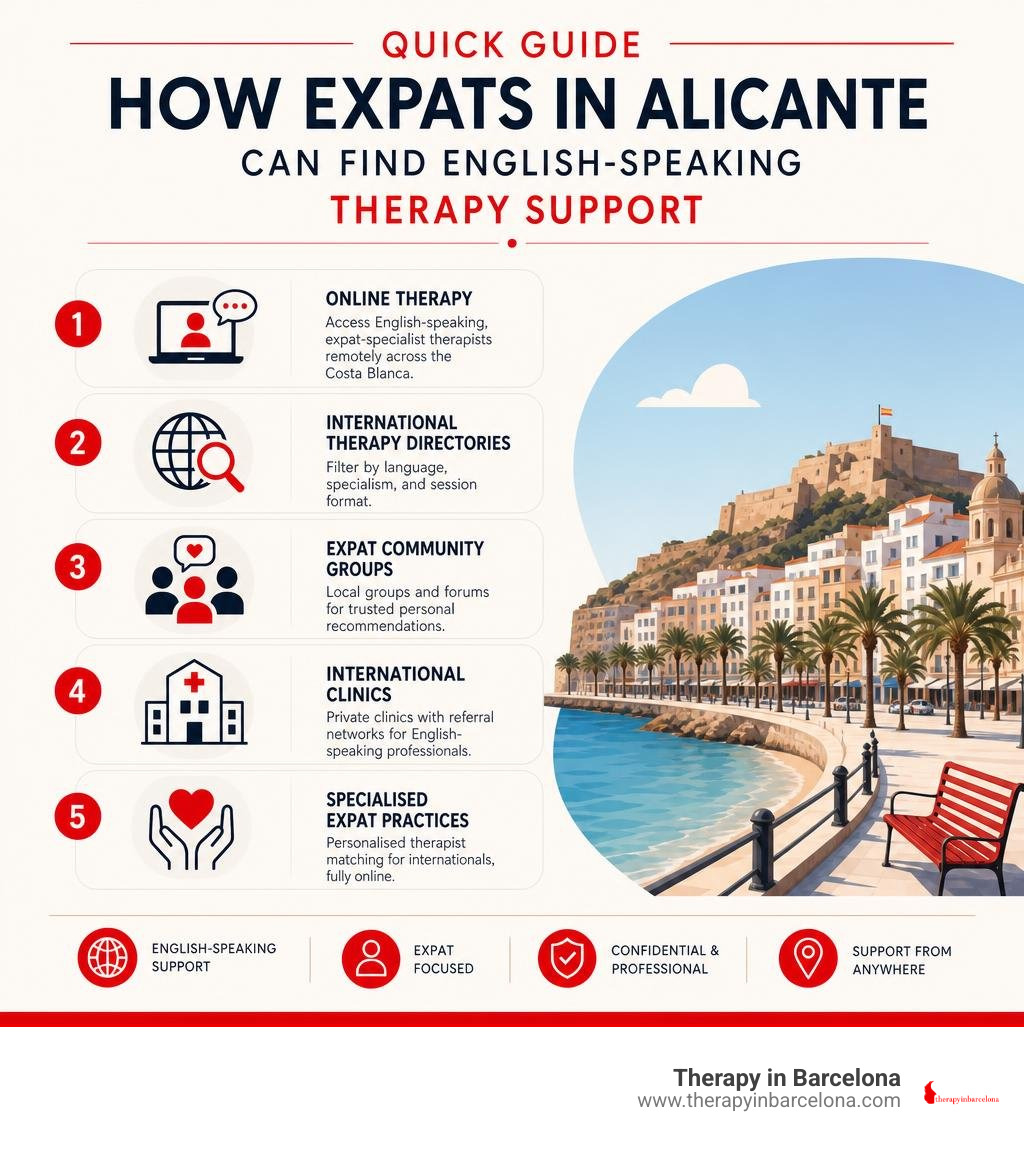
How to find expat therapy support in Alicante:
- Online therapy — Access English-speaking, expat-specialist therapists remotely, regardless of where you are on the Costa Blanca. This is often the fastest route to qualified support.
- International therapy directories — Platforms that list verified, English-speaking therapists let you filter by language, specialism, and session format.
- Expat community groups — Local Facebook groups and forums are commonly used to crowdsource personal recommendations for English-speaking mental health professionals.
- International clinics — Some private medical clinics in the Alicante region maintain referral networks for English-speaking practitioners.
- Specialised expat practices — Group practices like Therapy in Barcelona offer personalised therapist matching for internationals living across Spain, fully online.
Alicante has a lot going for it. The seafront, the sunshine, the unhurried pace of coastal life — it is easy to see why so many people from the UK, Northern Europe, and beyond choose to put down roots here. And yet, for all its charm, moving to Alicante brings with it a set of emotional challenges that the Instagram version of expat life rarely shows.
The language barriers are real. The bureaucracy is exhausting. The support network you spent years building back home simply does not exist here yet. And there is a particular kind of loneliness that can settle in even when you are surrounded by friendly faces — the feeling that no one quite knows the full version of you.
It is not unusual for expats in Alicante to quietly scroll through local Facebook groups at midnight, typing out some version of the question: “Does anyone know a mental health professional here who speaks English?” That small act of reaching out often marks the moment someone realises that what they need is not more sunshine or a busier social calendar — it is genuine, professional support in their own language.
This guide is for anyone at that point, or approaching it. Whether you have just arrived on the Costa Blanca or have been here for years and are only now acknowledging the weight you have been carrying, there are real options available to you.
The Hidden Emotional Cost of Coastal Paradise: Expat Life in Alicante

There is a strange psychological phenomenon that happens when you move to a beautiful coastal city like Alicante. On paper, you are living the dream. You have the Mediterranean on your doorstep, warm evenings, and a slower, more relaxed pace of life. But internally, you might feel anxious, disconnected, or deeply lonely.
This contrast often creates what psychologists call “expat guilt.” You feel that because you live in a sunny paradise, you have no right to feel sad or overwhelmed. This pressure to feel grateful can cause you to mask your struggles, hiding your anxiety behind busyness and daily routines.
Relocation is widely recognised as one of life’s most significant stressors. According to the Holmes-Rahe Life Stress Inventory, major life changes such as moving home, changing jobs, and adjusting to a new environment rank high among the events that require the most psychological adjustment.
When you uproot your life, you leave behind your “social architecture”—the friends, family members, and familiar routines that quietly keep you grounded. Without this support network, even minor setbacks can make you feel as though the rug has been pulled out from under you.
If you want to understand more about managing these feelings, you can read our guide on Expat Mental Health Staying Sane Abroad.
Why You Might Need a Therapist for Expats Alicante
Living in Alicante as an international resident is an exciting adventure, but it also brings unique stressors that locals rarely have to face. Managing the Spanish administrative system, trying to secure a residency card, or dealing with local utilities in a language you do not speak fluently can trigger chronic stress.
Language barriers also affect how you express your personality. Many expats find themselves performing a simplified, edited version of themselves because they cannot yet communicate with nuance in Spanish. This can lead to a quiet erosion of self-worth and a feeling of being socially excluded.
Furthermore, being physically distant from ageing parents or family milestones back home often brings a heavy emotional toll. You might find yourself constantly questioning whether you made the right decision to move. Exploring these complex feelings with a professional who understands the unique landscape of international life can help you regain your footing.
For practical advice on managing this transition, take a look at Thriving Abroad a Guide to Expat Mental Health.
Common Mental Health Challenges on the Costa Blanca
The international community in the Alicante province is highly diverse, ranging from retirees adjusting to a slower pace of life to digital nomads, remote workers, and young families. Each group faces distinct mental health challenges.
Many expats find that once the excitement of relocating fades, feelings of isolation can begin to surface. Working remotely and spending long periods alone can make it difficult to build new social connections, leading to increased loneliness over time.
Without a familiar support network nearby, many expats begin relying heavily on a partner for emotional support, which can place added strain on the relationship. At the same time, losing a familiar professional and social identity can leave people questioning who they are in a new environment.
Loneliness and anxiety can take root even in a sunny coastal town. If you are experiencing similar struggles, you are not alone, and you do not have to navigate this transition on your own. You can find out more about the support available in our article on Beyond Borders Essential Support for Expats Worldwide.
How to Find a Qualified Therapist for Expats Alicante

When you decide to seek support, the next step is finding a practitioner who is the right fit for your needs. This means looking for a professional who not only speaks your language fluently but also understands the psychological nuances of the expat journey.
You can begin your search by:
- Checking specialised international therapist directories.
- Asking for trusted recommendations within local international community networks.
- Searching for group practices that specialise in supporting the international community in Spain.
To understand how to go about this process, you can read our resource on Finding an English Speaking Therapist in Spain.
Verifying Credentials and Qualifications in Spain
It is essential to ensure that any mental health professional you work with is fully qualified and legally authorised to practice. In Spain, the profession is regulated to protect clients and ensure high standards of care.
Here is what you should look for when verifying a therapist’s credentials:
- Registration with the COP: A qualified psychologist in Spain must be registered with the Colegio Oficial de Psicología (the official professional body for psychologists). They will have a unique registration number (known as a número de colegiado).
- General Health Psychologist Status: To practice clinical or therapeutic psychology privately in Spain, a practitioner typically needs the official designation of Psicólogo General Sanitario.
- Academic Background: Ensure your therapist holds a university degree in psychology or psychotherapy from a recognised institution, along with specialised postgraduate training in evidence-based modalities.
Choosing a psychology-trained professional who adheres to strict ethical standards ensures that your therapy is safe, confidential, and grounded in proven clinical practices.
What to Expect in Your First Session
Taking the step to attend your first therapy session can feel daunting, but knowing what to expect can help ease your anxiety.
The process typically begins with an initial conversation, often through a Free Discovery Call. This brief chat is not a therapy session; instead, it is a chance for you to share what you are struggling with and for the practice to match you with a therapist whose skills and personality align with your needs.
During your first official session, which usually lasts around 50 to 60 minutes, your therapist will focus on:
- Creating a safe space: Establishing a warm, non-judgmental environment where you feel comfortable sharing your story.
- Understanding your history: Exploring your current challenges, your relocation journey, and your personal background.
- Setting therapeutic goals: Collaborating on what you want to achieve, whether that is managing anxiety, rebuilding your self-esteem, or improving communication in your relationship.
Your therapist will work with you to design a tailored approach, drawing on evidence-based methods such as Cognitive Behavioural Therapy (CBT), Acceptance and Commitment Therapy (ACT), or Internal Family Systems (IFS). To learn more about starting this journey, read Your Guide to Therapy and Counselling Services Near You.
Exploring Your Options: Public Healthcare vs. Private Expat Therapy
When seeking mental health support in Alicante, you will generally choose between the public healthcare system and private therapy services. Each pathway has its own set of advantages and limitations, and understanding these can help you make the best decision for your well-being.
To explore these options in depth, you can consult The Complete Guide to Expat Mental Health Support Resources.
Choosing an Online Therapist for Expats Alicante
While some expats prefer sitting in a physical office, finding a local, in-person English-speaking therapist in Alicante can sometimes be challenging due to high demand or limited local availability. This is where online therapy offers a distinct advantage.
Opting for online sessions allows you to work with highly specialised expat therapists based in major hubs like Barcelona, Madrid, or Valencia, without leaving your home on the Costa Blanca. It offers complete flexibility, saving you the stress of travelling to an unfamiliar location or trying to fit appointments around a busy schedule.
At Therapy in Barcelona, we provide professional, culturally sensitive online therapy to expats living in Alicante and across Spain. Our team of psychology-trained expat professionals understands the unique realities of building a life abroad, helping you feel seen and understood from your very first session.
If you would like to read more about our services for residents in the region, visit our dedicated page on Alicante Spain.
Comparing Your Mental Health Support Options in Spain
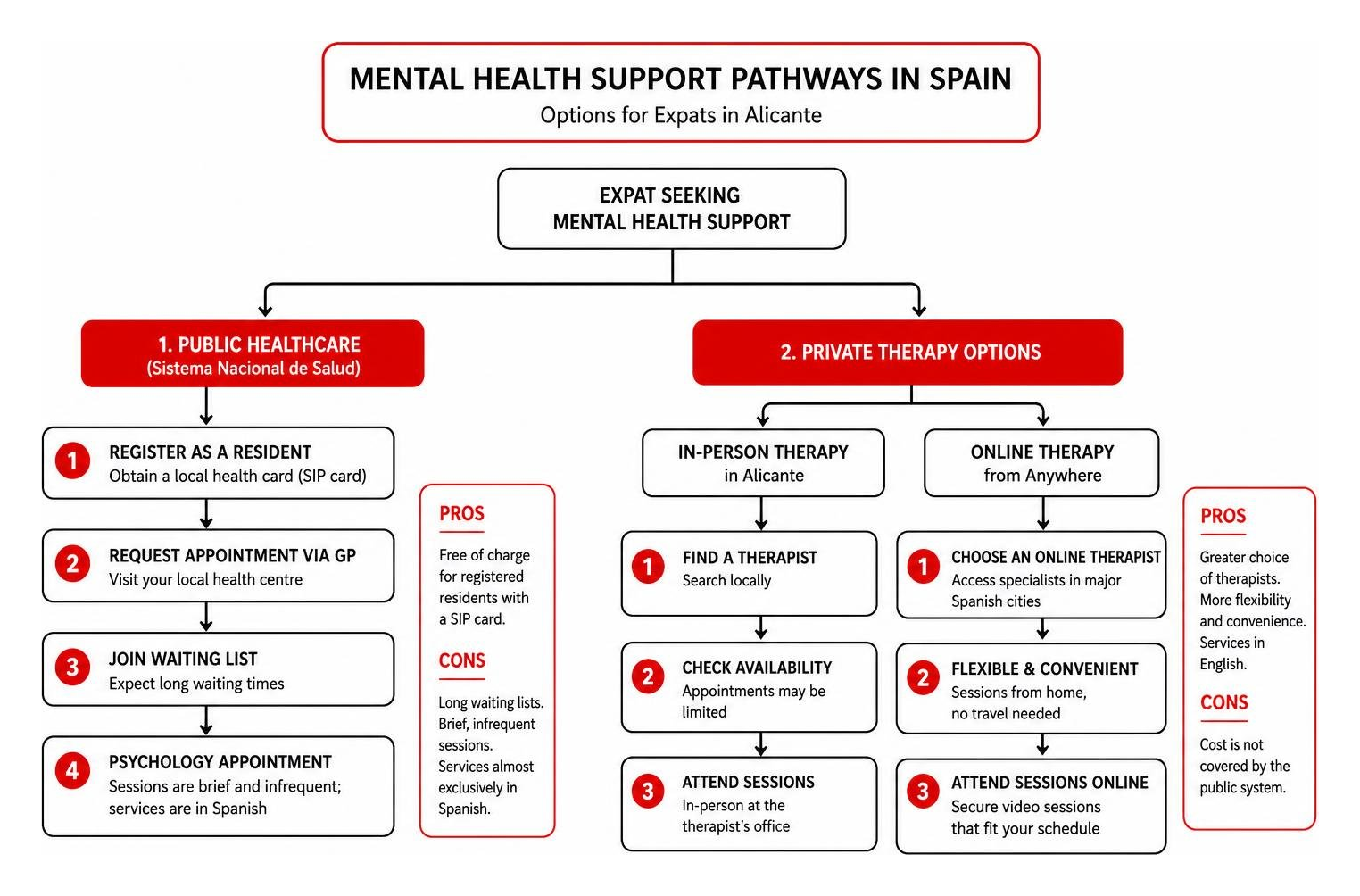
To help you make an informed choice, here is a mobile-friendly breakdown of the primary mental health pathways available to expats in Spain:
Public Healthcare (Sistema Nacional de Salud)
- Pros: Free of charge for registered residents who hold a local health card (SIP card).
- Cons: The public system often has exceptionally long waiting lists. Sessions are usually brief and infrequent, and there is a high likelihood of language barriers, as services are almost exclusively delivered in Spanish.
Large Online Directory Platforms
- Pros: They offer a large pool of global practitioners and a quick, automated booking system.
- Cons: These platforms often use automated matching, may lack expertise in expat issues, and can raise concerns about data privacy and inflexible subscription models.
Specialised Private Practices (such as Therapy in Barcelona)
- Pros: You receive personalised therapist matching, culturally sensitive care from psychology-trained expat therapists, and strict confidentiality with no data selling.
- Cons: This is a private-pay service. Some insurance plans may reimburse psychological care, and sliding scale fees may be available for those with financial need.
Frequently Asked Questions about Expat Therapy in Alicante
Can non-Spanish residents access public mental health services in Alicante?
Yes, non-Spanish residents can access public mental health services, provided they are registered in the Spanish social security system and hold a local SIP health card (Tarjeta Sanitaria Individual).
The process typically begins by booking an appointment with a GP (médico de cabecera) at your local community health centre (Centro de Salud). You will need to explain your mental health concerns to the doctor, who can then refer you to a specialist at a regional mental health unit (Unidad de Salud Mental).
While this system is a valuable resource, expats should be prepared for potential language barriers. GPs and public psychiatrists in the Alicante province primarily conduct consultations in Spanish, and translation services are rarely provided by the state.
How much does private therapy cost for expats in Alicante?
The cost of private therapy in Spain varies depending on the therapist’s experience, their specialisation, and whether the sessions are held in-person or online.
Generally, private session fees in Spain range from €55 to €100 per session. Some specialised clinical assessments or couples and family sessions may cost more. When budgeting for therapy, it is helpful to view it as an investment in your long-term well-being and adjustment.
Many private practices operate on a private-pay basis, but they are happy to provide the necessary invoices if your private international health insurance policy covers psychological support. If you are experiencing financial difficulties, it is always worth asking if a therapist offers sliding scale fees to make support more accessible.
What resources are available for expats in immediate crisis?
If you or someone you know is experiencing a mental health emergency or is in immediate danger, please contact emergency services directly.
Essential emergency resources in Spain include:
- General Emergency Services: Call 112 (available 24/7, with English-speaking operators).
- National Suicide Prevention Hotline: Call 024 (a free, confidential, 24/7 lifeline in Spain). You can also read the official Spanish Ministry of Health information about the 024 hotline.
- Local Hospitals: You can visit the emergency department (Urgencias) of the nearest public hospital, such as the Hospital General Universitario de Alicante.
Please note that Therapy in Barcelona is a private therapy practice and does not provide emergency, crisis intervention, or acute psychiatric services.
Finding Your Footing in Alicante
Uprooting your life to move to the Costa Blanca is a brave and exciting step, but it is entirely natural to need support along the way. You do not have to carry the invisible weight of adaptation, loneliness, or relationship strain on your own.
At Therapy in Barcelona, we are committed to being the warm, professional, and ethical therapists we would want to work with ourselves. Founded by Australian Psychologist Leigh Matthews—who relocated to Spain in 2011 and understands the realities of intercultural life firsthand—our practice has spent over a decade providing a compassionate sanctuary for the international community.
We believe that therapy should never be a one-size-fits-all approach. That is why we take the time to carefully understand your story, matching you with a qualified, psychology-trained expat therapist who truly gets what you are going through. Whether you are seeking individual support, couples counselling, or help for your family, or teen, we are here to help you build a fulfilling, grounded life in Spain.
If you would like support, book a Free Discovery Call today to get started.
