


Finding Your Way Together: Navigating Relationship Challenges Abroad

Expat relationship support comes in many forms, from free community resources to professional therapy. Here’s a quick overview of affordable options:
Free resources:
- Online forums like Reddit’s r/expat
- Facebook groups for expats in your city
- InterNations community events
- Language exchange meetups
Low-cost professional support:
- Sliding-scale therapy (€70-115 per session)
- Online counseling platforms
- Group workshops and webinars
- University training clinics
DIY relationship strengthening:
- Daily 10-minute check-ins
- Cultural exploration dates
- Joint language learning
- Shared goal-setting
Moving abroad as a couple isn’t just about navigating a new city—it’s about rebuilding your relationship in an entirely new context. When you relocate internationally, your relationship faces unique stressors that couples who stay in their home countries simply don’t encounter.
Family concerns are the number one reason for failed international assignments, with marital breakdown being a leading cause of early repatriation. The statistics paint a clear picture: the stress of cultural adjustment, shifting power dynamics, and social isolation can put even the strongest relationships to the test.
“I wanted to tell you how much I loved your workbook. I find it is an amazing tool for expats that are beginning their journey or someone like me that will be moving for the third time! I wish that I had that tool the first time that we moved because it was hard for my husband to understand what I was going through,” shares Marlaine Legault, highlighting how proper support can transform the expat experience.
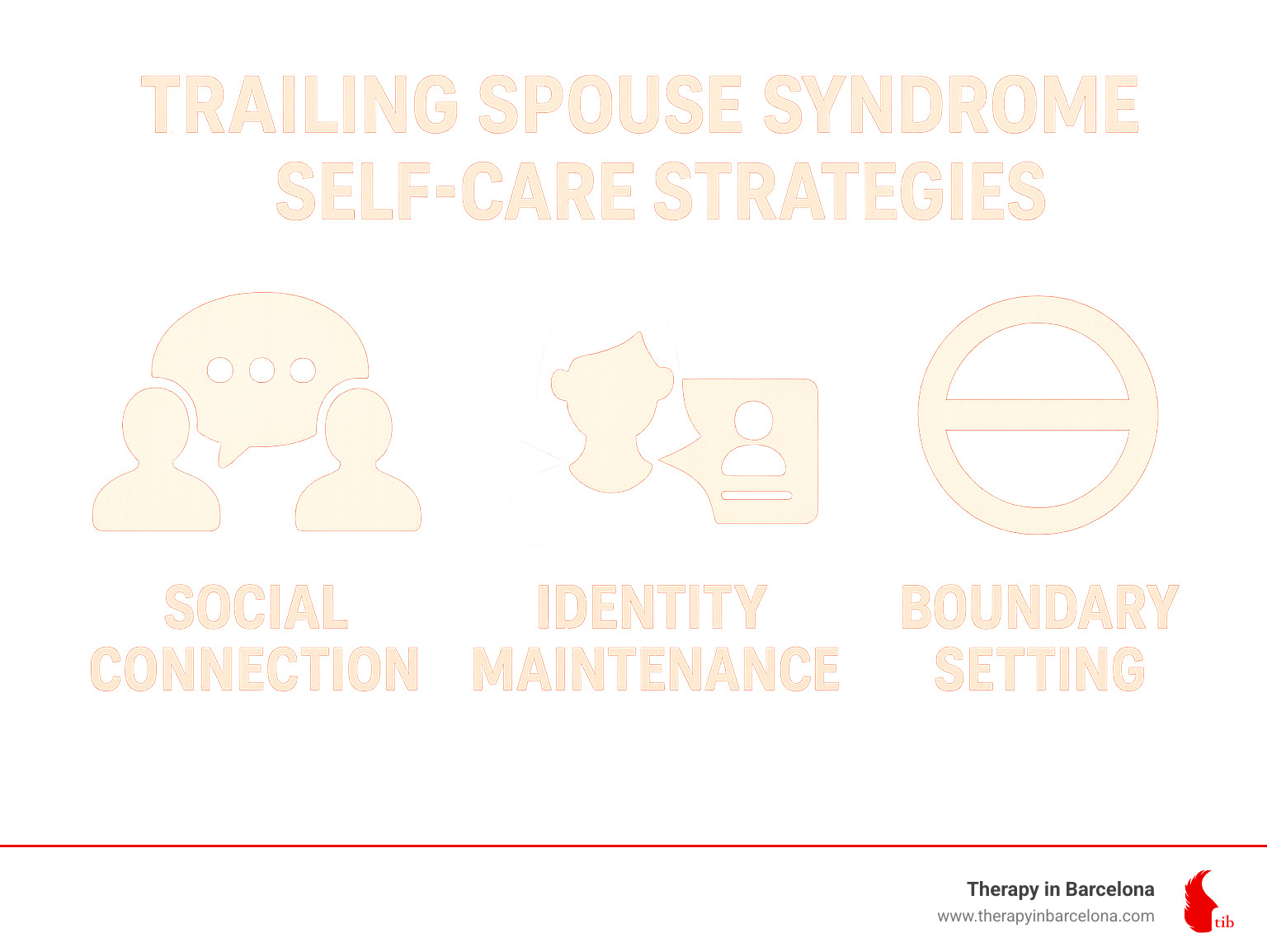
Whether you’re dealing with “trailing spouse syndrome,” navigating cross-cultural miscommunications, or simply trying to maintain connection while building a new life, finding affordable relationship support is crucial—but it doesn’t have to break the bank.

Why This Guide Matters
Moving abroad as a couple isn’t just about navigating new streets and customs—it’s about rebuilding your relationship in entirely new circumstances. When you relocate internationally, your partnership often faces a perfect storm of challenges: financial strain, communication breakdown, and power imbalance.
The statistics paint a sobering picture. Research shows that only 20% of expat partners find employment abroad, often due to work permit restrictions, language barriers, or closed professional networks. This employment gap doesn’t just squeeze your finances—it fundamentally shifts the power dynamic in your relationship.
As one expat candidly shared on Reddit: “They don’t understand that while my life changed completely, theirs barely did.” This sentiment echoes across expat communities worldwide. The “local” partner maintains their career trajectory, social connections, and cultural comfort, while the “trailing” partner must rebuild everything from scratch.
Leigh Matthews, founder of Therapy in Barcelona, understands this dynamic firsthand. As an Australian psychologist who relocated to Barcelona in 2011, she shares: “As an expatriate myself, I moved from Australia to live with my Danish husband in Barcelona. I too experienced an intercultural marriage, the need to adapt to Spanish family obligations, Catalan culture, and pregnancy in a foreign country all at once.”
When one partner feels like they’ve sacrificed everything while the other continues business as usual, resentment can quietly build. The “trailing spouse” may struggle with identity loss and dependence, while the “leading spouse” might feel burdened by being the sole provider or guilty about their partner’s sacrifices.
These relationship strains often emerge at precisely the time when you most need each other’s support—when you’re both navigating cultural adjustment, homesickness, and the practical challenges of setting up life in a new country.
This guide offers practical, budget-friendly solutions to address these challenges before they erode your relationship’s foundation. Whether you’re already feeling the strain or wisely looking to prevent future issues, we’ll help you find the right support without breaking the bank.
Free & Low-Cost Resources for Expat Relationship Support
When living abroad strains your relationship but your budget feels just as stretched, don’t despair. There’s a wealth of expat relationship support available that won’t cost you a fortune—or anything at all.
Online Communities
The digital world offers sanctuary for couples facing similar challenges. Reddit’s r/expat provides a judgment-free zone where partners can share their struggles anonymously. One user’s story resonates with many: “My partner criticized every outing, which triggered severe anxiety and social withdrawal. We finally turned things around by deliberately creating personal space and supportive routines.”
Facebook groups specific to your location can be goldmines too. Simply search “Expats in [your city]” to find relationship workshops, social events, and recommendations for culturally sensitive therapists who understand the unique pressures of international relationships.
In-Person Networking

Nothing quite replaces face-to-face connection when you’re feeling isolated in a new country. InterNations hosts regular gatherings in over 420 cities worldwide, with some chapters offering dedicated groups for couples and families navigating cross-cultural challenges.
The magic of these meetups lies in their serendipity. As one InterNations member shared: “At a Munich networking night with 452 attendees from 56 nationalities, I met three other couples dealing with the same cross-cultural parenting issues we were facing. We now meet monthly to share strategies and support.” These connections often evolve into lasting friendships that sustain you through the ups and downs of expat life.
Language Exchange Partnerships
Learning your partner’s native language—or tackling the local language together—can transform your relationship dynamics. Language exchange meetups offer dual benefits: improving your communication skills while connecting you with locals and fellow internationals.
One expat in Barcelona noted: “When I started learning Catalan alongside my partner, our relationship shifted dramatically. Instead of him always being the ‘expert,’ we became co-learners in this new environment.” This shared vulnerability created a more balanced partnership and deeper mutual respect.
Public Libraries and Community Centers
Your local library might be the most underrated resource in your expat toolkit. Many libraries in international hubs offer free relationship workshops, cultural integration programs, and multilingual resources specifically designed for cross-cultural families.
Libraries often serve as community anchors, hosting intercultural events that help bridge gaps between different worldviews—including those that might exist between you and your partner.
Podcasts and Online Resources
When you can’t make it to in-person events, podcasts like “Expat Happy Hour” and “The Expat Cast” frequently address relationship challenges through an international lens. Therapy in Barcelona also offers valuable blog articles on expat relationship challenges that provide evidence-based guidance without cost.
These resources can spark meaningful conversations between you and your partner during commutes or quiet evenings at home.
How to Vet Free Advice Without Getting Burned
Not all advice is created equal, especially when it comes to something as complex as cross-cultural relationships. Before taking guidance to heart, consider these trust signals:
Moderation policies often indicate the quality of a forum or group. Well-moderated spaces tend to provide more balanced perspectives and filter out harmful advice.
Cultural sensitivity is crucial—does the advice acknowledge different cultural approaches to relationships, or does it assume one culture’s norms are universal?
Qualification transparency matters when advice comes from professionals. Are credentials clearly stated, or is expertise vaguely defined?
Personal experience can be valuable, but remember it’s subjective. One expat’s cautionary tale: “I initially followed advice from a Facebook group that suggested I ‘just adapt’ to my partner’s culture. This one-sided approach nearly destroyed our relationship until we found balanced guidance that honored both our backgrounds.”
Building a No-Cost Peer Network for Ongoing Expat Relationship Support
Creating your own support network provides sustainable, free expat relationship support that evolves with your needs:
Establish a buddy system by connecting with another expat couple in a similar situation. Regular check-ins create accountability and perspective when challenges arise.
Schedule accountability calls with friends or family back home who know you both well and can offer objective viewpoints when tensions run high.
Organize holiday tradition swaps where couples share and celebrate each other’s cultural traditions, reducing homesickness while building community.
As one expat couple in Barcelona finded: “We started a monthly ‘relationship round table’ with three other international couples. We rotate hosting, share a meal, and discuss a specific challenge. It’s become our lifeline—completely free yet incredibly valuable.”
These peer connections often provide the most relevant support because they understand exactly what you’re going through—they’re living it too.
Affordable Professional Options: Stretching Your Therapy Budget
When community resources and self-help strategies aren’t quite enough, professional expat relationship support becomes essential. The good news? Quality therapy doesn’t have to drain your savings account.
Sliding-Scale Sessions
Many therapists understand the financial constraints expats face and offer reduced rates based on income. At Therapy in Barcelona, fees typically range from €70 to €95 for individual therapy and €90 to €115 for couples therapy, with some flexibility available for those in need.
One client shared their journey: “I spent a lot of money on therapists that didn’t really acknowledge my needs. My therapist here is the first who actually gives me what I need: ways to cope with my depression when it comes. We don’t waste time on irrelevant things.”
Online Counselling Advantages

The digital revolution has been a game-changer for expat relationship support. Online therapy eliminates commuting costs and often comes with a lower price tag than face-to-face sessions. What’s reassuring is that research consistently shows online therapy delivers comparable outcomes to in-person sessions for most relationship issues.
For expat couples with unpredictable schedules or travel requirements, this flexibility is invaluable. As one client noted: “Our therapist helped us steer through a period when my partner was temporarily working in another country. The online format meant we could continue therapy despite being in different time zones.”
Group Workshops and Webinars
If individual therapy feels financially out of reach, consider group formats that provide professional guidance at a fraction of the cost. Many expat-focused therapists offer workshops addressing common challenges like cultural adjustment for couples, communication across language barriers, navigating family visits, and managing career transitions abroad.
These group settings not only ease financial pressure but also create opportunities to connect with others facing similar challenges – a welcome bonus for expats seeking community.
Insurance Reimbursement Options
Don’t automatically assume therapy isn’t covered by your insurance. Many international health plans include mental health benefits, and some employers offer Employee Assistance Programs (EAPs) that cover relationship counseling.
For those in Spain, while public healthcare typically doesn’t cover couples therapy, some private insurance plans do. Always ask about direct billing or reimbursement options – you might be pleasantly surprised.
Finding Budget-Friendly Expat Relationship Support Online
When searching for online therapy that won’t break the bank, try these practical approaches:
Use platform search filters to find therapists specializing in expat relationships and intercultural dynamics. Look for time-zone flexibility that accommodates partners with different schedules, especially during visits home. Don’t hesitate to request trial sessions to assess compatibility before committing to a package.
Therapy in Barcelona offers a comprehensive guide to expat couples therapy that can help you understand what qualities to look for in a therapist who truly understands the unique challenges of international relationships.
Negotiating Fees & Packages Without Awkwardness
Many people feel uncomfortable discussing money, but therapists expect these conversations – it’s part of their everyday practice. Try these straightforward approaches:
Be direct in your initial email: “I’m interested in couples therapy but need to work within a budget of X per month. Do you offer any payment plans or reduced rates?”
Ask about value bundles: “Do you offer any discounts for booking multiple sessions in advance?”
Inquire about sliding scales: “I understand your standard rate is X. Do you offer any sliding scale options based on income?”
One Therapy in Barcelona client shared: “I was hesitant to mention my financial constraints, but when I did, my therapist suggested a combination of biweekly sessions and self-guided exercises that made the support affordable without compromising quality.”
Good therapists want to help you find solutions – both for your relationship and your wallet. Being honest about your financial situation often leads to creative arrangements that work for everyone involved.
DIY & Preventative Strategies to Strengthen Your Expat Relationship
Professional therapy provides invaluable guidance, but what you do between sessions can make all the difference—or even prevent the need for intensive support altogether. Small, daily practices can become powerful tools for maintaining connection while navigating the challenges of expat life together.

Daily Habits that Double as Expat Relationship Support
Creating meaningful daily rituals can transform your connection, even during the most challenging periods of adjustment. Try setting aside just 10 minutes each day for distraction-free check-ins with questions like “What challenged you today?” or “How can I support you tomorrow?” These brief moments create a foundation of understanding that’s particularly valuable when navigating unfamiliar cultural terrain together.
Bilingual date nights offer another powerful way to honor both partners’ backgrounds. Taking turns planning evenings that celebrate each other’s cultures through food, music, or activities builds mutual appreciation that can counterbalance the power imbalance that often develops when one partner is more culturally adapted than the other.
Creating joint playlists or reading lists that feature music or books from both your cultures can spark meaningful conversations about your experiences. One Barcelona-based couple shared: “Our weekly ‘culture exchange’ evening became our lifeline during the difficult first year. Sharing songs from home helped us process homesickness together rather than suffering alone.”
Even if one partner already speaks the local language, learning together creates a shared experience that equalizes the power dynamic. As Leigh Matthews of Therapy in Barcelona explains: “When both partners engage in cultural exploration together, it transforms what could be a divisive experience into a bonding opportunity.”
Power Dynamics & Fair Division of Labour Abroad
The shift in power dynamics when one partner is local (or more established) often creates significant relationship strain if left unaddressed. Research shows that 99% of trailing spouses identify a “strong and stable marriage” as the number one factor contributing to successful adjustment abroad.
Creating a household matrix can help balance responsibilities despite employment disparities. Sit down together and list all tasks—from bill payments to social planning—and discuss who handles what. This visual representation often reveals imbalances you might not otherwise notice.
Regular joint career planning sessions maintain a sense of partnership even when one person isn’t working. Schedule quarterly conversations about both partners’ professional goals to ensure the “trailing spouse” doesn’t feel their career has been permanently sidelined.
Taking turns being the “lead” on different aspects of expat life gives both partners a sense of agency. Perhaps one person researches weekend activities while the other handles apartment hunting. This alternating decision-making approach prevents resentment from building.
Therapy in Barcelona offers excellent resources on division of labour in relationships that can guide these sometimes difficult conversations.
Raising Global Kids on a Budget
For expat parents, children add another dimension to relationship dynamics—but they can also provide opportunities for deeper cultural connection.
Connect with other international families to create a dual-language book exchange network. This not only saves money but builds community while exposing your children to multiple languages.
Creating a visual holiday rotation calendar showing which cultural celebrations you’ll honor each year ensures both parents’ traditions receive equal attention. One Barcelona-based family shared: “Our calendar hangs in the kitchen, and our children love seeing which cultural tradition is coming next. It’s eliminated arguments about ‘whose culture matters more’ because they can literally see the balance.”
Joining free parent support groups specific to international families provides a space to discuss the unique challenges of raising third-culture kids with others who understand. These groups often become valuable social connections for the whole family.
One Barcelona-based expat family created a simple but meaningful tradition: “We made a ‘cultural treasure box’ where we collect free mementos from both our home countries and Spain. Each Friday, we select an item and share its story with our children. It costs nothing but keeps both our cultures alive.”
Therapy in Barcelona’s approach is particularly valuable for navigating these complex family dynamics. As one client noted: “Our therapist helped us see that our parenting conflicts weren’t about right versus wrong, but about different cultural approaches to raising children. That perspective shift alone transformed our relationship.”
By implementing these expat relationship support strategies, you’re not just maintaining your connection—you’re building a stronger, more resilient partnership uniquely equipped to thrive in your international life together.
Frequently Asked Questions about Expat Relationship Support
How can we balance visits home without draining our savings?
The financial strain of maintaining connections with both partners’ home countries is a common challenge for expat couples. One Barcelona couple shared with me: “We realized we were spending nearly €5,000 annually on trips home. By being more strategic, we cut that cost in half while still keeping meaningful connections with family.”
Here’s what works for many of our clients:
Alternate years for holidays between your two home countries rather than trying to visit both every year. This approach immediately cuts travel costs in half while ensuring neither family feels neglected long-term.
Invite family to visit you instead. Not only is hosting often less expensive than two people traveling, but it gives your relatives valuable insight into your new life. Many expats find this helps bridge understanding gaps when family can’t quite grasp what your daily reality is like.
Get creative with technology for virtual celebrations. One client sets up holiday meals with screens at both tables, sharing traditions simultaneously across continents. They mail small packages of decorations or traditional foods beforehand to create a more connected experience.
Consider house-swapping with other expat families during holiday periods. This growing practice within international communities can significantly reduce accommodation costs while providing authentic local experiences for both families.
Is couples therapy still useful if only one partner is struggling with expat life?
Absolutely! In fact, this scenario is incredibly common among the couples we see at Therapy in Barcelona. When one partner (typically the “trailing spouse”) struggles more with the transition, therapy becomes a valuable neutral space where both perspectives receive equal validation.
“My husband couldn’t understand why I was so unhappy in Barcelona when he was thriving,” shared one of our clients. “Our therapist helped him see that my experience as a non-working partner without language skills was completely different from his integrated office environment where everyone spoke English.”
This imbalance often creates a dynamic where the struggling partner feels invalidated or guilty for “complaining about paradise,” while the thriving partner feels frustrated or helpless. Expat relationship support through therapy helps both partners understand each other’s unique experiences and develop strategies to support each other through different adjustment phases.
Even when one partner is resistant initially, many couples report breakthrough moments when the thriving partner gains insight into their significant other’s daily challenges, leading to greater empathy and practical support.
What if language barriers make therapy feel expensive and inefficient?
Language barriers in therapy are a legitimate concern, especially when discussing complex emotional issues. However, there are several approaches that make expat relationship support accessible despite these challenges:
Seek multilingual therapists who understand the nuances of expressing emotions in different languages. At Therapy in Barcelona, our team offers services in multiple languages, ensuring you can express complex feelings in your native tongue.
Consider therapist-matching services that connect you with professionals who speak your language. Platforms like “It’s Complicated” offer free matching to help you find the right therapist with the right language skills.
Explore co-therapy options where two therapists—one fluent in each partner’s language—collaborate to provide comprehensive support. While less common, this approach can be particularly effective for couples with significant language differences.
Prepare key points in advance if working with some language limitations. Writing down important thoughts before sessions helps maximize efficiency when expressing yourself isn’t as fluid as in your native language.
One client noted: “Initially, I worried therapy in my second language would be a waste of money. But our therapist’s cultural sensitivity and patience made it work—she understood the nuances of being in an intercultural relationship better than any therapist back home could have.”
A therapist’s understanding of expatriate challenges often matters more than perfect language fluency. A therapist who gets the unique pressures of expat relationships but speaks with an accent is typically more helpful than a perfectly fluent therapist who doesn’t understand cultural adjustment issues.
Conclusion
Moving abroad with your partner isn’t just about surviving a new environment—it’s about creating an opportunity to deepen your connection in ways you never imagined. Throughout this guide, we’ve explored how expat relationship support can transform what might be a challenging transition into a journey of growth together.
Research shows that around 70% of couples see significant improvements when they commit to therapy. But the beauty of supporting your relationship abroad is that you have options at every budget level—from free community resources to professional guidance to daily practices you can implement tonight.
As Leigh Matthews, founder of Therapy in Barcelona, often reminds her clients: “Expatriation doesn’t have to strain your relationship—with the right tools, it can actually strengthen your bond as you steer new experiences together.”
Leigh understands this journey intimately. As an Australian psychologist who relocated to Barcelona in 2011, she experienced the complexities of intercultural marriage, adapting to Spanish family obligations, and navigating Catalan culture—all while pregnant in a foreign country. Her personal experience infuses Therapy in Barcelona’s approach with genuine empathy and practical insight.
When you’re ready to take the next step, professional support doesn’t have to feel clinical or disconnected. Therapy in Barcelona offers personalised therapist matching, ensuring you connect with someone who truly understands the expat experience—because they’re living it too. Their team brings both professional expertise and personal understanding to your unique relationship challenges.
Why not start today? You could:
- Implement one free strategy from this guide
- Explore the recommended resources
- Reach out for a free findy call to discuss how professional support might complement your relationship journey
Learn more about expat relationship support services at Therapy in Barcelona
Investing in your relationship while abroad isn’t just about avoiding problems—it’s about building a partnership so resilient it can thrive anywhere in the world. Your expat journey together doesn’t have to be perfect to be beautiful—sometimes the challenges you overcome together become the foundation of your strongest connection.
