


Finding Quality Mental Health Support in Your Area

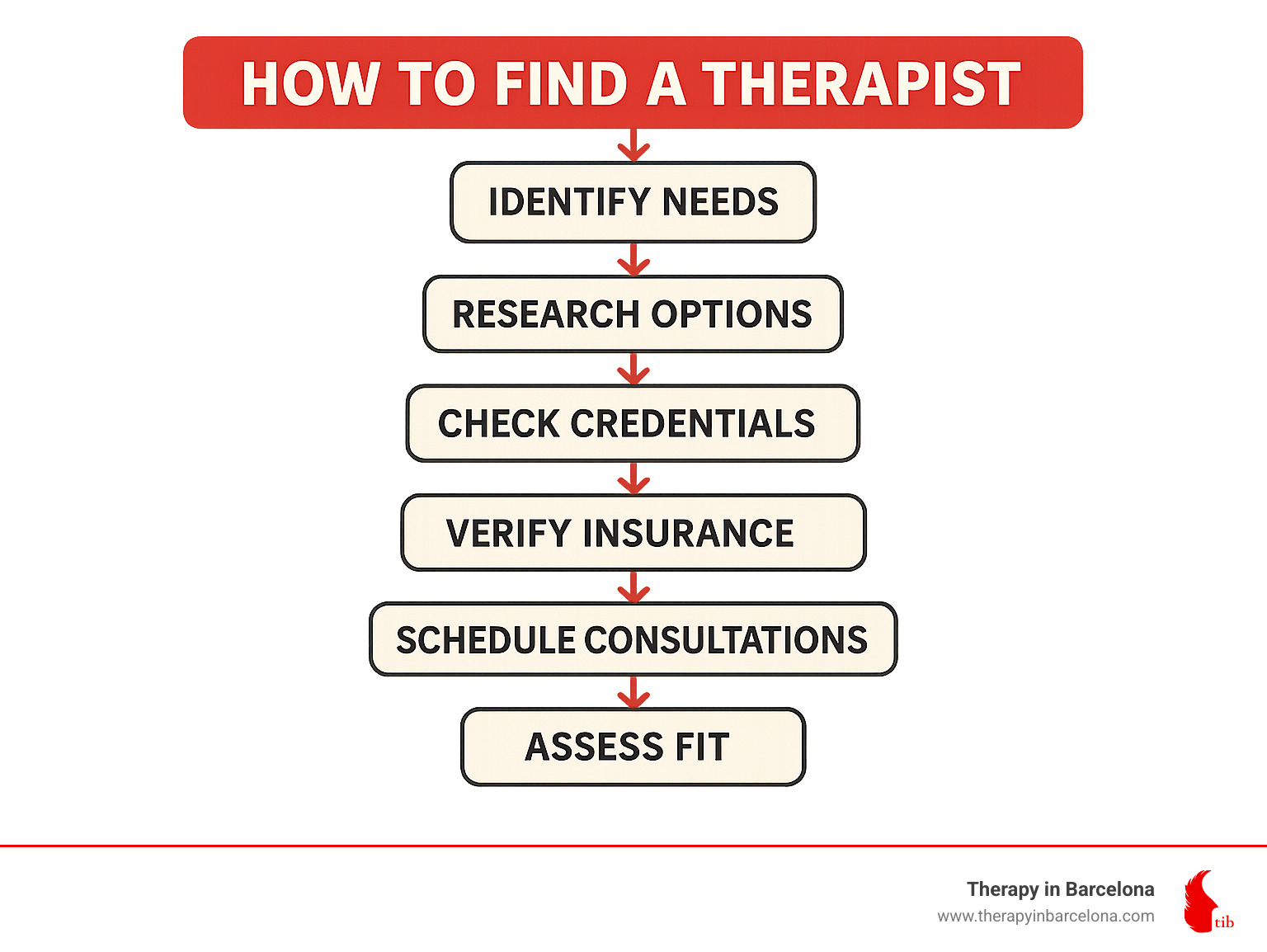
Finding the best therapists near me is a crucial step in prioritizing your mental health and wellbeing. If you’re looking for immediate guidance on finding a qualified therapist in your area, here’s a quick overview:
- Use trusted directories like Psychology Today, GoodTherapy, or Zocdoc
- Check insurance coverage through your provider’s website
- Ask for referrals from your primary care doctor or trusted friends
- Verify credentials by checking state licensing boards
- Consider specialty needs (anxiety, depression, relationship issues, etc.)
- Schedule consultation calls with 2-3 potential therapists before deciding
More than 80% of expats are struggling with mental health yet finding the right therapeutic support can feel overwhelming. Whether you’re dealing with anxiety, depression, relationship challenges, or simply navigating a difficult life transition in a foreign country, connecting with a qualified mental health professional in your local area can make all the difference.
“The connection and therapeutic alliance to one’s therapist is the most important factor for a successful outcome,” notes research from multiple therapy platforms. This highlights why finding the right therapist—not just any therapist—matters so much.
When searching for “best therapists near me,” you’re taking an important first step toward mental wellness. Local therapists offer several advantages: easier access to care, shorter travel times, and often a better understanding of community-specific challenges and resources.
Expats are significantly more likely to experience anxiety and depression compared to those living in their home countries. Studies show that they are three times more likely to feel trapped or depressed
The good news? There are structured approaches to finding quality care that matches your specific needs, preferences, and budget. According to the International Adviser, seeking appropriate mental health support is a crucial component of overall wellbeing.
Why Seeing a Local Therapist Matters
There’s something uniquely comforting about sitting across from someone who understands not just your personal struggles, but also the community you live in. While online therapy has surged in popularity since the pandemic, connecting with a best therapist near me offers distinct advantages that can significantly improve your therapeutic journey.
Accessibility and Convenience
When your therapist’s office is just a short drive or walk away, maintaining regular appointments becomes infinitely more manageable. Those precious minutes saved on commuting can make all the difference, especially when you’re juggling a busy schedule or going through a particularly challenging time that requires more frequent sessions.
“Having my therapist just ten minutes from my home made it possible for me to attend weekly sessions even during my busiest work periods,” shares one Therapy in Barcelona client. “That proximity was crucial to my healing process.”
Community Context
Local therapists bring an invaluable understanding of your community’s specific challenges and resources. They’re familiar with the cultural nuances, local support networks, and community-specific issues that might be affecting your mental health.
For example, in Baltimore, where 42% of adults have experienced three or more Adverse Childhood Experiences (ACEs) compared to 24% statewide, a therapist familiar with the community can better recognize and address these localized trauma factors. Similarly, for expats in Barcelona, having a therapist who understands the unique challenges of navigating Spanish bureaucracy or cultural integration can be incredibly validating.
Face-to-Face Connection
While online therapy offers wonderful convenience, many people find that in-person sessions create a deeper therapeutic alliance. The subtle non-verbal cues, body language, and even the physical environment of a therapy room all contribute to creating a safe, contained space for emotional exploration.
“There’s something about physically entering a space dedicated to my healing that helps me transition mentally into therapy mode,” notes another client. “That physical separation from my everyday life helps me focus on my growth.”

Continuity of Care
When your mental health team is all in one geographical area, coordination becomes smoother. Local therapists can more easily collaborate with your other healthcare providers, creating an integrated approach to your wellbeing. This can be particularly important if you’re working with a psychiatrist for medication management alongside your therapy.
For internationals in Barcelona, Therapy in Barcelona helps facilitate this continuity of care by forging connections with other English-speaking healthcare providers in the city, ensuring comprehensive support for expats navigating the Spanish healthcare system.
Signs You Might Need Support
Before we explore how to find the right therapist, it’s worth pausing to consider whether therapy might benefit you right now. You don’t need to be in crisis to benefit from professional support – many people find therapy invaluable for personal growth and developing healthier coping strategies.
Here are some common signs that connecting with a best therapist near me could be helpful:
- Persistent emotional changes: Feelings of sadness, hopelessness, or emptiness that don’t seem to lift
- Overwhelming worry or anxiety that interferes with your daily activities
- Relationship difficulties or communication challenges with loved ones
- Major life transitions such as relocation, career changes, divorce, or bereavement
- Sleep disturbances or significant changes in your appetite
- Loss of interest in activities you once enjoyed
- Trauma or stressful experiences that continue to affect your daily life
- Feeling stuck despite your best efforts to move forward
For expats and internationals, these challenges can be amplified by cultural adjustment, language barriers, and distance from familiar support systems – making local, culturally-sensitive therapy support even more valuable. According to research published in the Journal of Cross-Cultural Psychology, expatriates face unique mental health challenges that benefit from specialized therapeutic approaches.
Step-by-Step Guide to Finding the Best Therapists Near Me
Finding the right therapist isn’t just about convenience—it’s about finding someone who truly understands your unique needs and circumstances. As someone who might be feeling overwhelmed, anxious, or simply ready for positive change, you deserve a thoughtful approach to this important decision.
1. Clarify Your Goals & Preferred Therapist Type
Before diving into directories or making calls, take a moment to reflect on what you’re hoping to achieve through therapy. Are you struggling with anxiety that keeps you up at night? Working through a painful breakup? Trying to build healthier relationships? Or perhaps navigating the complex emotions of moving to a new country?
Having clarity about your goals helps tremendously when communicating with potential therapists. It also helps you identify which type of mental health professional might be the best match for your needs.
Different mental health professionals bring unique training and perspectives to their work:
Psychiatrists are medical doctors who can prescribe medication alongside therapy. If you think medication might be helpful, starting here could make sense.
Psychologists hold doctoral degrees (PhD or PsyD) and often specialize in psychological testing and evidence-based therapies. Our therapists at Therapy in Barcelona are psychologists in their countries of origin offering their services as Psychotherapists here in Barcelona, so they don’t diagnose or offer formal psychological assessments.
Licensed Clinical Social Workers (LCSWs) bring a valuable community-focused perspective, connecting therapy with practical resources.
Licensed Professional Counselors (LPCs) and Licensed Mental Health Counselors (LMHCs) provide skilled mental health counseling for a wide range of concerns.
Marriage and Family Therapists (MFTs) focus specifically on relationship dynamics and family systems.
The approach your therapist uses matters too. Some common therapeutic approaches include Cognitive Behavioral Therapy (CBT) for changing thought patterns, Acceptance and Commitment Therapy (ACT) for developing psychological flexibility, EMDR for processing trauma, and Internal Family Systems (IFS) for working with different “parts” of yourself.
At Therapy in Barcelona, therapists offer various approaches including CBT, ACT, IFS, and Solution-Focused Brief Therapy, tailoring their methods to each client’s specific situation.
2. Verify Credentials, Experience & Cultural Competence
Once you have a clearer picture of what you’re looking for, it’s time to research potential therapists who might be a good fit.
All legitimate therapists should hold proper licensing through their state’s professional board. You can (and should) verify a therapist’s credentials through your state’s licensing board website. Look for recognized credentials like PhD, PsyD, MD, LCSW, LPC, LMFT, or LMHC.
Experience matters too, especially with your specific concerns. In Baltimore, for example, 93% of therapists specialize in treating anxiety, 88% in depression, and 71% in self-esteem issues. Finding someone experienced with your particular challenges increases the likelihood of effective treatment.

For many people, cultural competence is just as important as technical expertise. This means finding a therapist who understands and respects your cultural background, values, and identity. This becomes particularly important if aspects of your identity—whether related to race, ethnicity, religion, sexual orientation, or gender—are central to your concerns.
If you’re an expatriate or international resident, finding a therapist who understands the unique challenges of living abroad can be invaluable. At Therapy in Barcelona, the therapists are expatriates themselves, giving them understanding of the challenges of adapting to life in a new country.
3. Compare Costs, Insurance & Affordable Options
Therapy is an investment in your wellbeing, but it’s important to find care that’s financially sustainable for you. Understanding the financial aspects upfront can help you find care that fits your budget.
In the United States, therapy sessions typically range from £100 to £200 per session, though rates can vary significantly depending on location and therapist credentials. In Barcelona, fees typically range from €85 to €95 for individual therapy and €90 to €115 for couples therapy.
If you have health insurance, take time to understand your mental health benefits:
In-network providers have contracted with your insurance company to accept specific rates, typically resulting in lower out-of-pocket costs for you.
Out-of-network providers don’t have contracts with your insurance company, but your plan may still cover a portion of their fees through out-of-network benefits.

If traditional therapy isn’t financially accessible right now, don’t give up hope. Many therapists offer sliding scale fees based on income. You might also consider community mental health centers, university training clinics (which offer reduced-fee services provided by supervised graduate students), group therapy (often more affordable than individual sessions), or Employee Assistance Programs through your workplace.
4. Shortlist & Interview the “Best Therapists Near Me“
After researching potential therapists, create a shortlist of 2-3 who seem like promising matches. Most therapists offer a brief phone consultation (often free) to help determine if they’re a good fit for your needs.
During these consultations, ask questions that help you gauge whether this therapist understands your concerns and has relevant experience:
“What experience do you have working with issues like mine?” “How do you typically approach treatment for these concerns?” “How do you measure progress in therapy?” “What role do you expect me to play in the therapeutic process?”
Pay close attention to how you feel during these conversations. Do you feel heard and understood? Is their communication style comfortable for you? Can you imagine opening up to this person about difficult topics?
Finding the right therapist often involves some trial and error. If the first therapist you meet doesn’t feel like a good match, it’s completely acceptable—even advisable—to try someone else. The therapeutic relationship is one of the most important factors in successful therapy outcomes, so finding someone you connect with matters tremendously.
For more guidance on finding a therapist who’s right for you, check out Local Heroes: How to Locate a Mental Health Therapist Near You and The Art of Choosing a Therapist.
Online vs In-Person Therapy: Which Is Right for You?
With the rise of telehealth, therapy has evolved beyond the traditional office setting. Today, many therapists offer both online and in-person sessions, giving you more choices for how you receive support. But how do you know which option is best for your specific situation?

Finding the best therapists near me isn’t just about their qualifications—it’s also about choosing a format that fits your lifestyle and preferences. Let’s explore both options to help you make an informed decision.
Pros & Cons of Each Modality (“Best Therapists Near Me” Online vs On-Site)
In-Person Therapy
There’s something meaningful about sharing physical space with your therapist. When you meet face-to-face, your therapist can observe your full body language and non-verbal cues, which can offer valuable insights into your emotional state. Many clients appreciate having a dedicated therapeutic space separate from their daily environment—a sanctuary where they can focus entirely on their mental health.
In-person sessions often feel more personal and immediate, creating a connection that some find harder to establish online. You’ll also never have to worry about technology glitches interrupting an important moment. For certain therapeutic techniques that involve physical elements or specific equipment, being in the same room can be particularly beneficial.
However, in-person therapy does require travel time and transportation planning. This can be challenging if you have a busy schedule or mobility issues. During public health concerns like the pandemic, in-person sessions may also involve additional considerations about exposure.
Online Therapy
The convenience of online therapy has made mental health support more accessible than ever. You can connect with a therapist from anywhere with an internet connection—whether that’s your living room, office, or even while traveling. This eliminates travel time and transportation barriers, making it easier to fit therapy into a hectic schedule.
Online therapy often offers more flexible scheduling options, including evening or weekend appointments that might not be available in-person. Perhaps most importantly, it provides access to specialists who might not be locally available. For many people, the comfort of talking from their own space makes therapy feel less intimidating, especially for those new to the experience.
Of course, online therapy isn’t without challenges. Technology issues can sometimes disrupt sessions, and it can be harder for therapists to pick up on subtle non-verbal cues. You might also face privacy concerns if finding a quiet, private space at home is difficult. Online therapy may not be ideal for certain crisis situations, and some insurance plans might not cover virtual sessions the same way they cover in-person care.
At Therapy in Barcelona, clients have the flexibility to choose between in-person sessions at their centrally located office in Eixample or online therapy for clients worldwide (except the USA and Canada due to licensing restrictions).
Making Your Choice
When deciding between online and in-person therapy, consider what matters most to you:
If convenience and flexibility top your priority list, online therapy might be your best match. It removes geographical barriers and fits more easily into busy schedules.
If you value face-to-face interaction and benefit from a physical space dedicated solely to your mental health journey, in-person sessions might serve you better.
Many people find that a hybrid approach works wonderfully—perhaps meeting in person for initial sessions to establish rapport, then switching to online when travel is difficult or schedules get tight.
The good news? Many therapists, including those at Therapy in Barcelona, offer both options. This means you can choose what works best for your unique situation and even adjust your approach as your needs change.
The most important factor is finding a therapist you connect with, regardless of the format. The best therapists near me search is ultimately about finding someone who understands your needs and can help you steer life’s challenges—whether that’s through a screen or across the room.
Preparing for Your First Session & Maximising Results
Taking that first step to find a therapist is a huge accomplishment – now let’s make sure you get the most from your investment. A little preparation before your first appointment can set the foundation for a productive therapy journey.
Before walking into that first session (or logging on, if you’re meeting online), take some time to gather your thoughts. Most therapists, including our team at Therapy in Barcelona, will send intake forms ahead of time. While it might feel like paperwork, filling these out thoughtfully gives your therapist valuable context before you even meet.
Reflect on what you hope to achieve through therapy. Are you looking to manage anxiety that’s been intensified by expat life? Working through relationship challenges? Processing grief? Having some clarity about your goals – even if they evolve later – helps focus your work together.
Jot down key concerns or patterns you’ve noticed in your life. Maybe you’ve found yourself feeling isolated since moving abroad, or perhaps certain situations consistently trigger strong emotional responses. These notes can be helpful conversation starters when you’re feeling nervous in that first meeting.
It can also help to prepare a few questions for your therapist about their approach or what to expect from the process. This isn’t just about getting information – it’s about determining if this person feels like the right fit for your needs.
What to Expect in Session One
First sessions have a rhythm of their own. Your therapist will likely begin with introductions and an explanation of how they work, including important policies around confidentiality. In the US, therapists follow HIPAA regulations, while in Spain and other countries, similar privacy laws protect your information.
Your therapist will only break confidentiality in specific circumstances – if you’re at immediate risk of harming yourself or others, if there’s suspected abuse of a child or vulnerable adult, or if required by court order. Don’t hesitate to ask questions about these policies if anything seems unclear.
The bulk of this first meeting typically involves the therapist asking questions to understand your current concerns and relevant history. This isn’t about digging into every detail of your past – it’s about getting enough context to begin working effectively together.
Toward the end of the session, you’ll likely discuss a preliminary plan for your work together – how often you’ll meet, general therapeutic approaches that might be helpful, and perhaps some initial recommendations or “homework” to consider between sessions.
The first session is just the beginning. Building a trusting therapeutic relationship takes time, and seeing meaningful change usually requires patience and consistent work. At Therapy in Barcelona, we understand that opening up to a stranger can feel vulnerable, especially when you’re already navigating the challenges of life in a new country.
Many clients tell us they leave their first session feeling a mixture of emotions – sometimes relief at having finally spoken about their concerns, sometimes emotional fatigue from the vulnerability, and often a sense of cautious hope. Whatever you experience is completely normal.
The therapeutic journey is unique for each person, but with the right preparation and expectations, your first session can be the beginning of meaningful growth and positive change in your life abroad.
Overcoming Common Obstacles & Alternative Resources
Finding the right therapist can sometimes feel like a challenging journey, even with the best intentions. Let’s explore some common roadblocks and how to steer them with warmth and understanding.
When Cost Feels Like a Barrier
Money concerns shouldn’t stand between you and the support you deserve. If therapy fees are stretching your budget, several paths can make mental health care more accessible:
- Many therapists offer sliding-scale fees based on your income — don’t hesitate to ask about this option.
- Community mental-health centres often provide quality care at reduced rates, while Employee Assistance Programmes (EAPs) through your workplace might include several free sessions.
- Group therapy can be both more affordable and powerfully supportive, creating connection with others facing similar challenges.
- If you’re comfortable with technology, online therapy platforms sometimes offer lower-cost alternatives to traditional in-person sessions.
- Another hidden gem? Therapy-training institutes where supervised students offer reduced-fee services. These therapists-in-training are often especially dedicated and receive close guidance from experienced professionals.
When Wait-lists Seem Endless
It can be disheartening to find the perfect therapist only to find they have a months-long wait-list. If you’re facing this situation:
- Ask to join their cancellation list for last-minute openings — these happen more often than you might think.
- Request referrals to colleagues who might have shorter wait-lists but a similar approach.
- Consider online therapy, which often has greater availability and removes geographical limitations.
- Group therapy options frequently have openings sooner than individual sessions.
- If you need immediate support, crisis resources are always available; your well-being matters too much to wait if you’re struggling intensely.
When Stigma or Personal Hesitation Holds You Back
Taking that first step toward therapy can feel vulnerable. If you’re feeling hesitant:
- Seeking help is a sign of strength, not weakness — it takes courage to look inward and work toward growth.
- Consider scheduling just a single consultation session to test the waters without committing right away.
- Online therapy offers additional privacy if you’re concerned about being seen entering a therapist’s office.
- While building comfort with the idea of therapy, self-help resources can provide valuable support in the meantime.
When Language or Cultural Barriers Feel Overwhelming
Finding a therapist who truly understands your cultural background or speaks your native language can be especially challenging when living abroad:
- Look for directories that allow filtering by language and cultural background.
- Online therapy vastly expands your options beyond local providers.
- Seek therapists who specifically mention cultural competence in their profiles, and don’t hesitate to ask potential therapists about their experience working with your specific cultural background.
At Therapy in Barcelona, this challenge is addressed directly by offering therapy in multiple languages with therapists who are themselves expatriates, bringing first-hand understanding of the unique cultural challenges of living abroad.
Alternative Resources While You Search
While working to connect with a therapist, or if therapy isn’t currently accessible to you, these resources can provide meaningful support:
- Crisis hotlines offer immediate help when you need it most. In the United States, the 988 Suicide and Crisis Lifeline provides 24/7 support from trained counsellors.
- Support groups, both in-person and online, create community around specific concerns, from grief to anxiety to parenting challenges.
- Mental-health apps can guide you through meditation, mood tracking, and developing coping skills.
- Evidence-based self-help books on specific mental-health topics can provide valuable insights and strategies.
- Don’t overlook community resources — libraries, community centres, and faith-based organisations often offer free or low-cost support programmes.
- Check out our list of crisis and community resources for internationals in Barcelona and Madrid here
Reaching out for support in any form is a brave and powerful step toward well-being. Whether through traditional therapy or alternative resources, you deserve care that meets you where you are.
Frequently Asked Questions about Finding a Therapist
When you’re searching for the best therapists near me, you probably have some questions about the process. Let’s address some of the most common concerns that come up when people are looking for mental health support.
How do I know if a therapist is a good fit?
Finding the right therapist feels a bit like dating—chemistry matters! Trust your instincts when evaluating this relationship. A good fit usually means you feel genuinely heard and understood during your sessions. You should notice your therapist communicates clearly about what to expect, and you get the sense they truly “get” what you’re going through.
The right therapist creates a space where you feel safe enough to be honest and vulnerable. While therapy isn’t always comfortable (growth rarely is!), you should never feel judged or dismissed. And perhaps most importantly, over time, you should notice movement toward your goals.
If something feels off after a few sessions, it’s perfectly okay to bring this up directly with your therapist. Good therapists welcome this feedback and can adjust their approach—or help you find someone better suited to your needs if necessary.
Does insurance usually cover therapy sessions?
The short answer is: often yes, but with important limitations. Thanks to mental health parity laws, most insurance plans do cover therapy to some degree. However, coverage varies significantly between providers and plans:
Many plans limit you to a certain number of sessions per year, and you might need to meet a deductible before coverage kicks in. Some insurance companies only cover specific types of providers or require certain diagnoses to approve coverage.
If you want to see a therapist who doesn’t accept your insurance directly, check if your plan offers “out-of-network” benefits, which can help offset some costs.
The most reliable way to understand your specific coverage is to call your insurance company directly or review your benefits documentation carefully. When you call, ask specifically about mental health benefits, session limits, required diagnoses, and whether you need a referral from your primary care physician.
Are therapy conversations confidential?
Yes, confidentiality is a cornerstone of effective therapy. What you share with your therapist stays between you, with a few specific exceptions that therapists are legally required to disclose:
If your therapist believes you’re at imminent risk of harming yourself or someone else, they may need to break confidentiality to ensure safety. They’re also mandated reporters for suspected abuse or neglect of children, elderly individuals, or dependent adults. In rare cases, a court order might compel disclosure of information, and of course, if you provide written permission to share specific information, they can do so.
Your therapist should clearly explain these confidentiality policies during your first session, including any exceptions that apply in your jurisdiction. Don’t hesitate to ask questions if anything about confidentiality feels unclear—understanding these boundaries helps create the trust necessary for effective therapy.
Taking the step to find a therapist is an act of courage and self-care. Whether you’re an expat navigating life in a new country or simply someone looking for support during a challenging time, finding the best therapists near me is an investment in your wellbeing that can yield benefits for years to come.
Conclusion
Finding the best therapists near me isn’t just about a quick Google search—it’s a personal journey that requires thoughtfulness and self-reflection. The time you invest in finding the right therapeutic match can truly transform your mental health journey and overall wellbeing.
Throughout this guide, we’ve walked through the essential steps: clarifying your needs, verifying credentials, considering practical factors like cost and location, and—perhaps most importantly—trusting your instincts about that all-important therapeutic connection.
Seeking help isn’t a sign of weakness—it’s quite the opposite. It takes real courage to reach out, whether you’re dealing with a specific mental health concern, navigating the choppy waters of a major life transition, or simply wanting to understand yourself on a deeper level. Therapy provides a unique space for support, insight, and growth that we rarely find elsewhere in our lives.
For those in Barcelona or expatriates seeking online support, Therapy in Barcelona offers a truly personalized approach to therapist matching. Our team understands the unique challenges of expatriate life because we’ve lived it ourselves. As psychology-trained therapists who are also expatriates, we bring both professional expertise and personal understanding to each therapeutic relationship.
That first step—researching therapists, making that initial call, or walking into your first session—is often the steepest part of the climb. But with each small step forward, you move closer to the support and personal growth you deserve.

If you’re ready to begin your therapy journey, start with the steps we’ve outlined, reach out to a few potential therapists, and remember that finding the right therapeutic relationship is worth the effort. Your future self will thank you for the investment you’re making in your mental health today.
