


Understanding the Overlap Between Loneliness and Low Mood

If you’re wondering what do you do when you feel lonely and depressed, here are the most important first steps:
- Acknowledge what you’re feeling without self-blame — loneliness and low mood are signals, not character flaws.
- Do one small thing for yourself today — a short walk, a journal entry, or a text to someone you trust.
- Limit passive social media scrolling, which tends to deepen the feeling of being left out.
- Reach out to one person — it doesn’t have to be a big conversation; even a brief message counts.
- Seek professional support if the feeling has lasted more than two weeks or is affecting your sleep, work, or daily functioning.
There’s a moment many people recognise. It’s late. You’re in your flat — maybe in Barcelona, maybe in Madrid or Valencia — and despite the city buzzing just outside the window, you feel completely cut off. You might scroll through your phone, see everyone else apparently thriving, and wonder what’s wrong with you.
Nothing is wrong with you. But that feeling deserves attention.
Loneliness and a persistent low mood are two of the most common experiences people carry quietly. Research suggests loneliness can overlap with the brain systems involved in physical pain — it genuinely hurts. And when it goes unaddressed for long enough, it can pull you into a low mood that’s much harder to shift on your own.
For internationals living in Spain, this experience is especially common. Moving to a new country — however exciting — strips away the casual, everyday connections that quietly sustain us: colleagues you grab coffee with, friends nearby, family a short drive away. What’s left can feel hollow, even when life on paper looks fine.
This guide is here to help. Whether you’re newly arrived in Barcelona or have been here for years and still feel like something is missing, you’ll find honest, practical steps to start feeling less alone — and to know when it’s time to ask for more support.
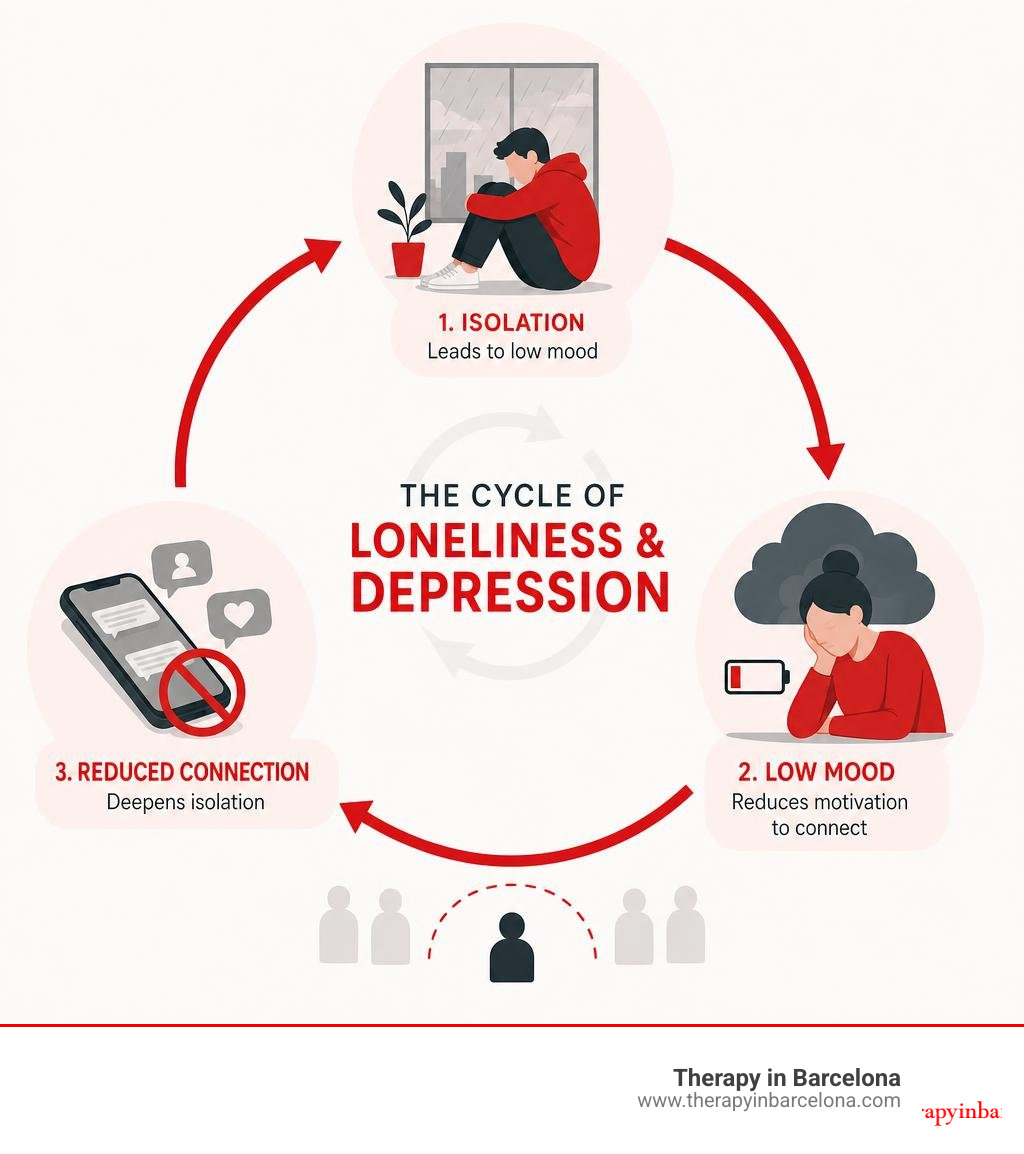
While they are closely linked, transient loneliness and a persistent low mood are not the exact same thing. Loneliness is a subjective, painful emotional state arising from a perceived gap between the social connections one has and the connections one desires. It is a universal human signal, much like hunger or thirst, reminding people that they need community to survive and thrive.
When a person experiences loneliness, the brain registers this social disconnection as an active threat. Scientific research on loneliness and physical pain shows that social exclusion lights up the very same neural networks responsible for physical distress.
A persistent low mood, on the other hand, is more pervasive. It involves a loss of interest in activities once enjoyed, and a heavy sense of hopelessness that lingers regardless of who is in the room.
The danger lies in how these two states feed into one another. When isolation is left unaddressed, the chronic stress of feeling disconnected begins to alter brain chemistry. To understand how this works, it helps to look at how is isolation fueling your depression what you need to know. Prolonged isolation acts as a major trigger, slowly lowering resilience and dragging a person down into a heavy, low mood.
Understanding What Do You Do When You Feel Lonely and Depressed
When loneliness begins to morph into a persistent low mood, the emotional landscape changes. When these feelings last for at least two consecutive weeks and significantly affect daily life, they require careful attention.
Instead of simply missing friends, a person might experience a deep emotional numbness. This numbness makes it incredibly difficult to reach out, creating a self-reinforcing loop. Social isolation leads to low mood, and that low mood saps the physical energy and motivation required to seek out other people.
When caught in this cycle, the question of what do you do when you feel lonely and depressed becomes urgent. The person might want to connect but feels too exhausted, unworthy, or hollow to make the effort. This heavy, immobilising weight is one of the hallmark feelings of depression, making everyday tasks feel like climbing a mountain.
Common Triggers for Internationals in Spain
For those who have relocated, the risk of falling into this cycle is particularly high. The process of cultural adjustment is mentally exhausting. Trying to navigate daily life in a new language, adapting to unfamiliar customs, and coping with the sheer stress of relocation can leave newcomers feeling deeply alienated.
Many internationals arrive in Barcelona, Madrid, or Valencia expecting a fresh start, only to feel surprisingly alone once daily life begins. A new job, unfamiliar systems, limited Spanish, and weekends without close friends can make even an exciting move feel emotionally heavy.
It can feel like being an outsider looking through a glass wall. This experience is familiar to many expats, digital nomads, and international students in hubs like Madrid, Valencia, Malaga, or Alicante. The initial excitement of the move can fade, leaving a painful gap where a support network used to be.
Without a familiar community to buffer the stress, homesickness can quickly turn into something much heavier. Understanding this transition is the first step in moving from homesick to hopeful a guide to expat depression therapy.
What Do You Do When You Feel Lonely and Depressed? Immediate Steps
When you are deep in this state, trying to fix everything at once is a recipe for overwhelm. Instead, the focus must shift to small, manageable, and compassionate actions.
Self-compassion is your most important tool here. Beating yourself up for feeling down only adds to the emotional burden. Accept that you are going through a difficult transition, and treat yourself with the same kindness you would offer a struggling friend.
Establishing a basic daily routine is crucial. When a heavy, low mood hits, structure is often the first thing to slip. Keeping a consistent sleep schedule, eating nourishing meals, and prioritising your physical health can provide a stable foundation.

According to the NHS guide on coping with loneliness, small lifestyle changes and setting minor, achievable targets are highly effective in breaking the cycle of isolation. Taking things one step at a time prevents you from retreating further into your shell. To help you navigate these moments, you can explore 7 easy ways to stop feeling lonely before its too late.
Early Warning Signs to Watch For
It is vital to recognise the early warning signs that indicate loneliness is worsening into a persistent low mood. These signs often show up physically before they are fully recognised mentally:
- Sleep disruption: Finding it incredibly difficult to fall asleep, waking up in the early hours of the morning, or sleeping excessively but still feeling exhausted.
- Appetite changes: A sudden loss of interest in food, or using eating as a primary coping mechanism to soothe emotional pain.
- Persistent hopelessness: A feeling that things will never get better, no matter what actions are taken.
- Self-blame and shame: Interpreting loneliness as a personal defect, thinking, “I am lonely because there is something fundamentally wrong with me.”
To protect your mental health, it is essential to look closely at the unspoken truth understanding what loneliness feels like. Loneliness is not a sign of weakness; it is a signal that your basic human need for belonging is not being met.
Evidence-Based Self-Help Tools
If you are trying to manage these feelings, several evidence-based cognitive and behavioural tools can help you regain a sense of control:
- Thought journaling: When you feel down, your brain tends to generate automatic negative thoughts (e.g., “Nobody cares about me”). Write these thoughts down and actively look for evidence that contradicts them.
- Gratitude lists: Every evening, write down three specific things you are grateful for. This simple practice helps train your brain to notice positive details it might otherwise overlook.
- Behavioural activation: This involves scheduling small, positive activities even when you do not feel like doing them. Action often needs to precede motivation.
- Sunlight exposure: Getting outside for at least 20 minutes a day, especially in sunny regions like Málaga, Alicante, or Sevilla, helps regulate your mood and circadian rhythms.
For a deeper look at these self-directed strategies, you can read about How to Fight Depression and Loneliness without Outside Help.
Rebuilding Social Connections with Low Energy
When your energy levels are close to zero, the idea of going to a busy networking event or a crowded party can feel completely unfeasible. The key is to start with incredibly low-barrier interactions.
Micro-interactions are a gentle way to remind yourself that you are part of the world. Saying hello to the barista at your local café, exchanging a brief comment with a neighbour, or asking a shopkeeper in Valencia how their day is going requires very little emotional energy. Yet, these tiny moments of connection release small bursts of dopamine and lower stress hormones.
Focus on shared activities rather than intense, face-to-face socialising. Doing something collaborative, like an art class, a walking group, or a language exchange, takes the pressure off. You do not have to carry a conversation; the focus is on the activity itself.

Always prioritise quality relationships over quantity. Having one or two people who truly understand you is far more beneficial than having hundreds of superficial social media contacts. For practical advice on navigating this transition, read about Coping with isolation strategies for a connected life.
What Do You Do When You Feel Lonely and Depressed to Rebuild Connections?
If you are ready to take a slightly larger step, look for structured environments where connection happens naturally.
Volunteering for a cause you care about — whether that is an animal shelter in Madrid or a community garden in Sevilla — is a fantastic way to meet like-minded people. It shifts your focus away from your own internal struggles and gives you a sense of purpose.
Joining interest-based groups, such as book clubs, hiking groups, or amateur sports leagues, provides a safe, predictable structure for socialising. These low-barrier settings allow you to interact on your own terms.
As highlighted by Psychology Today on building connection, overcoming loneliness requires identifying your specific connection needs and taking small, calculated risks to meet them. If you need a gentle roadmap to get started, you can explore Dont go it alone practical tips to manage loneliness and isolation.
How Loved Ones and Communities Can Support You
If you are reading this because you are worried about a friend or family member who is struggling, your support can make a world of difference.
The most powerful thing you can offer is active listening. Avoid the temptation to jump in with quick solutions or toxic positivity (such as saying, “Just get out more!”). Instead, provide non-judgmental support. Let them know that their feelings are valid and that you are there for them, even if they do not have the energy to talk much.
Offer practical help. When someone is feeling persistently down, even basic tasks can feel impossible. Offering to bring over a home-cooked meal, helping them tidy up, or simply sitting with them while they watch a film can ease the burden of isolation.
By talking openly about these struggles, we can reduce the stigma surrounding mental health. As the Mental Health Foundation tips on loneliness point out, sharing our vulnerabilities is a courageous act that helps build deeper, more authentic relationships.
Professional Support and Long-Term Prevention
Self-help tools are incredibly valuable, but they are not always enough. When loneliness and a persistent low mood become deeply rooted, professional support is often the most effective way forward.
Modern therapy utilises several evidence-based approaches to help people break these painful cycles. Cognitive Behavioural Therapy (CBT) is highly effective for identifying and challenging the dysfunctional thinking patterns that keep people isolated. Acceptance and Commitment Therapy (ACT) helps individuals accept their difficult emotions while taking committed action toward their core values.
Group therapy is another powerful option. It provides a safe space where individuals can realise they are not alone in their struggles, receive peer feedback, and practice new relationship patterns in a supportive environment.
Combined with positive lifestyle changes, these therapeutic tools help build long-term psychological resilience. For more resources on managing these feelings, you can browse articles under the Tag loneliness.
When to Seek Professional Guidance
How do you know when it is time to transition from self-help to professional therapy? A good rule of thumb is the two-week threshold. If you have experienced a persistent low mood, constant loneliness, and a lack of interest in life for more than two consecutive weeks, it is time to seek support.
Another key indicator is when daily life becomes difficult to manage. If your emotional state is making it hard to perform at work, maintain your relationships, sleep properly, or take care of your basic physical needs, self-help alone may not be sufficient.
When starting therapy, the most important predictor of success is the therapeutic alliance — the relationship of trust and collaboration you build with your therapist. Finding a professional who truly understands your background and lifestyle is essential. If you are ready to explore your options, you can look into the resources available under the Tag depression counselling.
Comparing Your Support Options
When looking for mental health support in Spain, you generally have three main avenues. Here is how they compare in a straightforward, mobile-friendly format:
1. Public Health Systems (Seguridad Social)
- The Reality: This is a free option, but the public mental health system in Spain is under immense pressure.
- The Challenges: Waiting lists for a psychologist can take several months. Furthermore, sessions are often short, infrequent, and it is highly unlikely you will be able to access therapy in English or other native languages.
2. Large Online Platforms
- The Reality: These global apps offer quick access to therapists worldwide, often at a lower price point.
- The Challenges: These platforms frequently use automated algorithms rather than human care to match you with a professional. There are also ongoing privacy concerns regarding how user data is handled, and the high-volume nature of the platforms can lead to a less personalised, transactional experience.
3. Local Private Practices (Like Therapy in Barcelona)
- The Reality: A private-pay service that prioritises high-quality, specialised care.
- The Benefits: Practices like Therapy in Barcelona offer bespoke, human-led therapist matching and culturally sensitive support in your native language. They specialise in expat-specific care, ensuring you work with a psychology-trained professional who understands the unique cultural challenges of living abroad. Strict privacy protocols ensure your data is never sold, and some therapists offer sliding scale fees for those with genuine financial need.
Frequently Asked Questions about Loneliness and Depression
Can loneliness actually cause a persistent low mood?
Yes, chronic loneliness can indeed trigger a persistent, heavy low mood. When a person is isolated for a long period, their body remains in a state of low-grade physiological stress. This chronic stress elevates stress hormones like cortisol, disrupts sleep patterns, and alters brain chemistry over time.
As discussed in this AOL article on loneliness vs depression, while loneliness is a transient emotional state, leaving it unaddressed can act as a direct precursor to a prolonged period of feeling down.
How do I make friends when I have social anxiety and low energy?
The key is to take very small, structured steps. Do not pressure yourself to be highly outgoing or talkative. Instead, look for environments where you can be around people without the pressure to perform.
Joining a structured class, volunteering for a hands-on task, or participating in a shared hobby allows you to interact naturally and at your own pace. For more practical advice on building connections when you feel low, you can read the HelpGuide on dealing with loneliness.
What is the difference between solitude and loneliness?
Solitude is a voluntary, positive state of being alone. It is often refreshing, peaceful, and allows for self-reflection and creative focus.
Loneliness, however, is a painful, involuntary emotional state characterised by a sense of disconnection and isolation. It is not about the physical absence of people, but rather the lack of meaningful, authentic connection. To understand this distinction better, take a look at What to do when loneliness strikes your guide to finding connection.
Taking the Next Step
If you are currently asking yourself what to do when you feel lonely and depressed, please remember that you do not have to navigate this heavy season all by yourself. Loneliness and low mood can make you feel completely invisible, but these feelings are highly manageable with the right support and tools.
Since 2011, Therapy in Barcelona has been providing a compassionate sanctuary for the international community. Founded by Leigh Matthews — an Australian Psychologist and expat who moved to Barcelona in 2011 — this trusted private practice understands the unique challenges of building a life in a foreign country.
The highly qualified, psychology-trained team offers personalised therapist matching, ensuring you are paired with a professional who fits your specific needs and goals. They offer multilingual therapy both in-person at their central Barcelona office and online to clients worldwide.
You don’t have to stay stuck in the cycle of isolation. If you would like professional support to help you reconnect, Book your Free Discovery Call today.
