


Beyond Consent: Why We Need Active Communication About Sex

Communication about sex is something most of us know we should do — and yet, for many couples, it remains one of the hardest conversations to actually have.
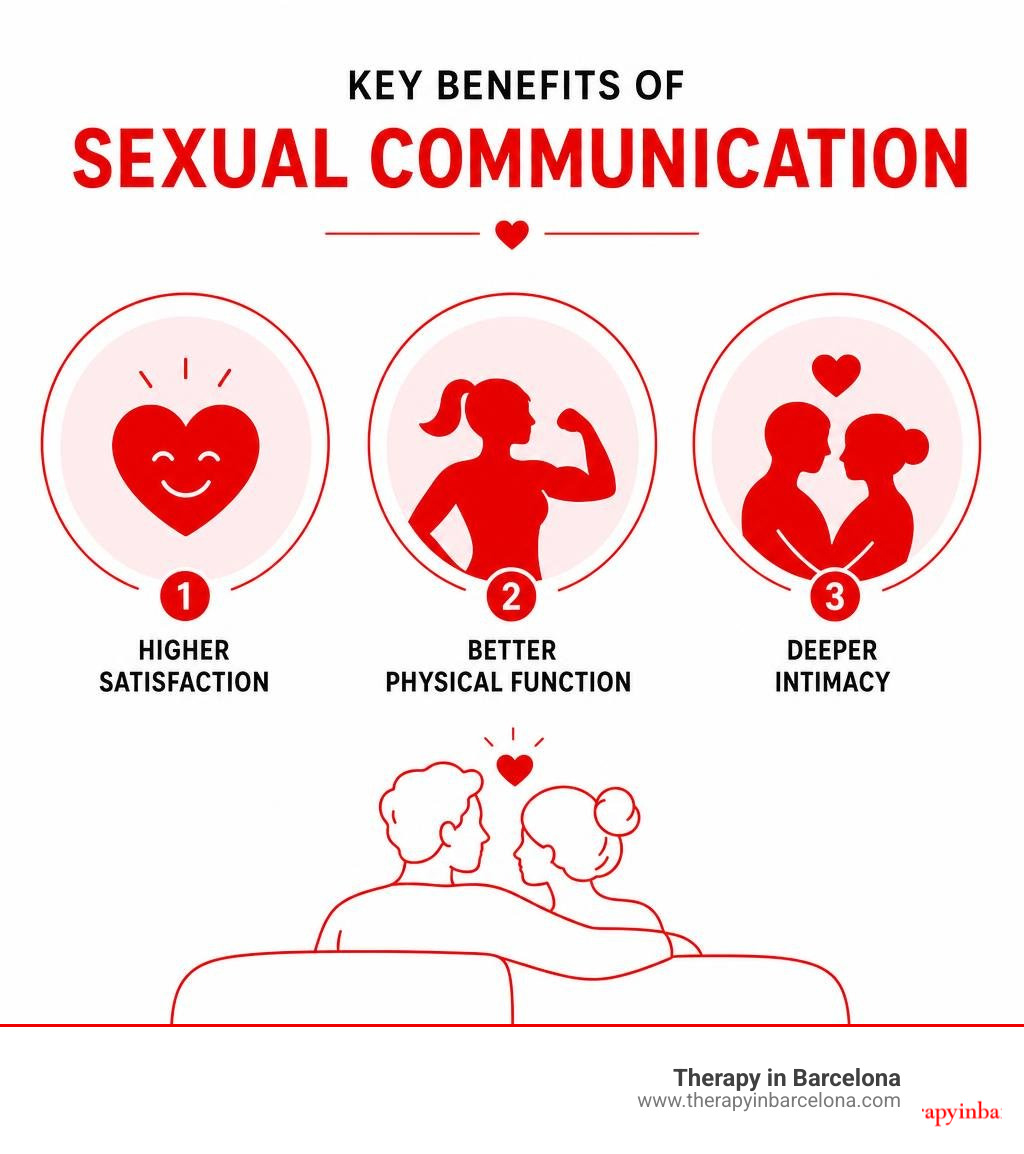
Here is a quick overview of what open sexual communication can do for your relationship:
- Improve sexual satisfaction — research consistently shows it is the strongest predictor of how satisfying sex feels, more than frequency or technique
- Enhance physical function — including desire, arousal, orgasm, and reduced pain during sex
- Build emotional intimacy — honest dialogue creates safety and trust between partners
- Reduce misunderstandings — partners who talk openly are far less likely to misread each other’s needs
- Support sexual health — open discussion makes it easier to address contraception, STI prevention, and other health concerns
The gap between what we assume our partner wants and what they actually want is often larger than we realise. Open, honest communication is one of the most effective ways to build a more satisfying and connected sexual relationship.
That gap is exactly why this matters.
For many people — including expats navigating new relationships or long-term partnerships under the added stress of living abroad — talking about sex can feel especially exposing. It touches on vulnerability, identity, and fear of judgment all at once. Whether you are in Barcelona, Valencia, Madrid, or anywhere else in Spain, those feelings are real and entirely common.
This guide is here to help. We will walk through why sexual communication goes far beyond consent, what the science says about how it shapes physical intimacy, the barriers that get in the way, and practical tools you can start using today — both in and out of the bedroom.
Many people confuse consent with sexual communication. While consent is the indispensable baseline — a clear, ongoing process of ensuring both partners are willing participants — active communication is about how to make the experience mutually fulfilling.
Simple consent often looks like a “yes” or “no” in the moment. Sexual communication, however, is an ongoing dialogue about preferences, boundaries, and desires. It is the difference between simply agreeing to an activity and actively sharing what makes that activity feel safe, pleasurable, and emotionally connecting.
This ongoing dialogue is also crucial for physical safety and peace of mind. It provides the framework for discussing sexual health details that might otherwise feel awkward to bring up. This includes:
- STI prevention and testing history: Discussing status before intimacy reduces anxiety and builds trust.
- Contraception: Sharing the responsibility of pregnancy prevention openly, rather than making assumptions.
- Lubrication needs: Normalising the use of lube to enhance comfort and reduce physical friction or pain.
Addressing these topics openly with your partner is just as important as being honest with your healthcare providers. When seeking medical or therapeutic support, sharing accurate details about your sexual relationship allows professionals to provide highly tailored care. For instance, those living in Spain might consult specialised sexologists or seek professional sex therapy to navigate these conversations.
As highlighted in the guide on How to Talk About Sex with Your Partner, moving past basic consent into active expression helps partners take responsibility for their own pleasure. It shifts the dynamic from passive participation to active, shared exploration.
The Science of Intimacy: How Talk Improves Function
It is easy to think of sexual communication as purely emotional, but the research shows it has a direct, measurable impact on physical sexual function. When couples talk openly, they experience tangible improvements across multiple physiological dimensions of sex, including:
- Desire: Reconciling mismatched drives by speaking openly about what sparks interest.
- Arousal and Lubrication: Reducing feelings of pressure or anxiety around performance, which naturally supports the body’s physical arousal responses.
- Orgasm: Helping partners understand the specific pacing, pressure, and positioning required for climax.
- Erectile Function: Lowering the pressure to perform, which is a primary psychological trigger for erection difficulties.
- Pain Reduction: Allowing partners to voice discomfort immediately and adjust movements to prevent pain.
When these physical aspects of intimacy feel blocked, many women find it incredibly helpful to explore these dynamics in a dedicated clinical space. Reading about Why Every Woman Should Consider Sex Therapy can offer deeper insights into how professional guidance helps unpack these physical and emotional connections.
The Science of Intimacy: How Communication About Sex Enhances Physical Function
To understand just how powerful this link is, we can look at the data. A comprehensive academic meta-analysis examined the relationship between couples’ sexual communication and specific dimensions of sexual function. The findings reveal a clear, positive correlation across the board:
- Overall Sexual Function: $r = .35$
- Orgasm: $r = .23$
- Sexual Arousal: $r = .21$
- Erectile Function: $r = .19$
- Lubrication: $r = .17$
- Sexual Desire: $r = .16$
- Reduced Pain: $r = .12$
The research also highlighted several key moderators that influence these numbers:
- Gender Differences: The positive impact of talking about sex is particularly pronounced for women. The effect sizes for sexual desire ($r = .21$ for women vs. $r = .12$ for men) and orgasm ($r = .26$ for women vs. $r = .16$ for men) show that verbalising needs is highly critical for female physical satisfaction.
- Relationship Status: The strength of this link changes depending on the commitment level. For overall sexual function, studies with married participants showed a massive effect size ($r = .47$), compared to those with mixed relationship types ($r = .31$) and dating couples ($r = .11$). This suggests that as relationships mature, the ability to communicate about sex becomes the primary driver of physical satisfaction.
- Cultural Context: Interestingly, studies conducted outside the U.S. showed a larger effect size ($r = .39$) than those within the U.S. ($r = .12$). In highly individualistic cultures, there may be a smaller association between communication and function, whereas in other cultural frameworks, open dialogue plays an even more vital role in maintaining relational harmony.
Overcoming Barriers: Attachment Styles and the Fear of Vulnerability
If the benefits of talking about sex are so clear, why do we find it so difficult?
The truth is, sexual communication triggers deep-seated fears. When we think about voicing our true desires or boundaries, we often perceive three distinct threats:
- Threats to Self: Fear of feeling embarrassed, judged, or “abnormal.”
- Threats to Partner: Fear of hurting our partner’s feelings, making them feel inadequate, or bruising their ego.
- Threats to Relationship: Fear of creating conflict, losing connection, or “killing the mood.”
When these fears are left unaddressed, couples often fall into silence. This silence breeds resentment, which acts like a slow poison in a relationship. Over time, unexpressed preferences turn into frustration, leading to a cycle of avoidance where partners stop initiating intimacy altogether.
Working through these blocks is a central focus of couples work. Exploring the clinical processes outlined in Unlocking Intimacy: Exploring the Benefits of Sex Therapy for Couples can help partners understand how to dismantle these communication barriers in a safe, structured way.
How Attachment Styles Shape Our Intimacy
Our willingness to speak up about sex is heavily shaped by our attachment style—the relational blueprint we developed in early life. According to established research on attachment theory, these styles influence how we handle vulnerability and intimacy:
- Secure Attachment (approx. 50% of the population): These individuals find it relatively easy to express their desires, set boundaries, and receive feedback without feeling personally attacked.
- Anxious Attachment (approx. 20% of the population): Anxiously attached individuals often fear rejection or abandonment. They might stay silent about their own needs to keep their partner happy, or they may interpret a partner’s boundary as a sign of fading love.
- Avoidant Attachment (approx. 25% of the population): Avoidantly attached individuals tend to pull away when emotional or physical intimacy feels too intense. They may use physical distance to maintain control and find direct conversations about sexual needs highly uncomfortable.
- Disorganized Attachment (approx. 5% of the population): This style is characterised by a mix of anxious and avoidant behaviours, often resulting in a desire for closeness coupled with a deep fear of actually letting someone in.
For many people, relocating abroad for a fresh start also brings unexpected emotional challenges. Adjusting to a new environment can affect confidence, relationships, and overall wellbeing.
Avoidant attachment can make physical intimacy feel uncomfortable, leading people to hide their needs or keep partners at a distance. Learning to recognise these patterns and communicate boundaries can help build a more secure and satisfying connection.
Practical Strategies for the Bedroom and Beyond
Building a better sexual connection requires a mix of verbal and non-verbal tools, applied with what we call the “golden rule” of intimacy: patience, kindness, and mutual support.
This supportive approach is especially vital when one or both partners require physical accommodations due to chronic pain, illness, or disability. Approaching these moments without criticism creates a space where both partners feel safe to adapt.
During intimacy itself, you can combine non-verbal and verbal cues to guide your partner:
- Non-verbal cues: Guiding your partner’s hand, adjusting your body position, or changing the pace and pressure of your movements.
- Verbal cues: Using simple, direct phrases in the moment, such as “right there,” “a bit softer,” “faster,” or “that feels amazing.”
Practical Tools to Improve Your Communication About Sex
When you are ready to bring structure to your conversations, several evidence-based tools can help reduce defensiveness and build clarity:
- Use “I” Statements: Instead of saying, “You never spend enough time on foreplay,” reframe it to avoid blame: “I feel incredibly aroused and connected when we take our time with touching beforehand. I would love for us to do more of that.”
- Yes/No/Maybe Lists: This is a structured inventory where both partners independently rate various sexual activities, body boundaries, and safer sex practices. It takes the pressure off spontaneous requests and highlights shared areas of interest.
- Scheduled Check-Ins: Talk about sex outside the bedroom. Discussing intimacy during a low-stakes moment—like a walk through the park or over Sunday morning coffee—keeps the conversation relaxed and objective.
- The “Sex Candle” Ritual: To reduce the anxiety of spontaneous initiation or rejection, some couples use a designated candle. Lighting it signals an invitation; the other partner can accept by leaving it lit, or gently blow it out to decline, knowing the decision is respected without drama.
- Safe Words and Pause Gestures: Establish a clear word or physical gesture that instantly pauses activity. This creates an emotional safety net, ensuring either partner can slow things down at any moment.
To make these conversations easier, you can explore interactive resources such as The Gottman Card Decks App for Couples Communication. Additionally, therapists often use structured clinical approaches like the PLISSIT model to guide these dialogues. You can read more about how this works in Unpacking PLISSIT: A Simple Framework for Sexual Health Conversations.
Exploring New Horizons Together
Once a baseline of safety is established, couples can use their communication skills to explore new areas of intimacy. These discussions should always happen outside the bedroom, in a relaxed, non-judgemental environment. You can explore:
- Sex Toys: Discussing how adding toys can enhance mutual pleasure, rather than viewing them as a threat or competition.
- Fantasies: Sharing personal desires or scenarios you find exciting, using the “Yes/No/Maybe” framework to see where your interests overlap.
- Erogenous Zones: Mapping each other’s bodies to discover areas of sensitivity beyond the genitals.
- Sexual Bucket Lists: Creating a shared list of positions, settings, or experiences you would both love to try over time.
- Pornography and Bondage: Having open, honest conversations about your boundaries, values, and curiosity regarding adult media or light BDSM.
If you are looking for ways to unpack long-standing taboos around solo and shared pleasure before speaking with a partner, our guide on Masturbation Myths Debunked offers a helpful starting point.
Navigating Your Options: Finding the Right Support in Spain
When trying to improve your sexual relationship, it is helpful to know what professional support options are available. Here is a look at how different pathways compare for international residents living in Spain:
Public Health System
- How it works: Accessible through local referral networks in Spain.
- The reality: While cost-effective, public systems often involve long waiting lists, a highly limited number of sessions, and a significant lack of English-speaking or culturally sensitive specialists.
Large Online Platforms
- How it works: Global apps that match you with therapists online.
- The reality: These platforms offer convenience but often rely on automated matching algorithms. They frequently lack personalised care and have raised serious privacy concerns regarding how client data is managed or sold.
Local Practices
- How it works: Traditional face-to-face clinics located in your city.
- The reality: Excellent for local residents, but these practices may not fully understand the unique psychological nuances, identity shifts, and isolation challenges that come with the international expat experience.
Therapy in Barcelona
- How it works: Bespoke matching with highly qualified, psychology-trained therapists who are also expats themselves.
- The reality: Established in 2011 by Leigh Matthews—an Australian Psychologist with over 20 years of experience supporting internationals—we provide a private-pay, highly confidential sanctuary. We never sell data, and we offer specialised couples and sex therapy tailored specifically to the international community. Services are available face-to-face in Barcelona or online across Spain and worldwide.
To learn more about what to expect from professional support, you can read What is Sex Therapy? A Comprehensive Guide to Clinical Sexology and Sexual Psychotherapy.
Frequently Asked Questions About Sexual Communication
How do I talk to an avoidant partner about sex?
Talking to an avoidant partner requires patience and validation. Avoidantly attached individuals often have sensitive “brakes” when it comes to intimacy; criticism or high-pressure conversations will cause them to withdraw further.
Start by picking a neutral, low-stakes moment outside the bedroom. Validate their need for safety and pace, and own up to any ways you might have contributed to a high-pressure dynamic in the past. Focus on building emotional safety first, and treat communication as a collaborative, step-by-step process.
What if my partner and I have mismatched sex drives?
Desire discrepancy is incredibly common in long-term relationships. The first step is to remove the shame and stop viewing the partner with lower desire as “broken.”
Work together to redefine what “sex” means in your relationship. It does not have to be limited to intercourse; it can include massage, kissing, holding hands, or close physical presence. By expanding your definition of intimacy, you can find collaborative solutions that honour both partners’ needs without pressure or resentment.
How can we start talking about sex if we feel embarrassed?
If talking about sex feels too vulnerable, start by using metacommunication—which simply means talking about how hard it is to talk.
You can say something as simple as: “I want to talk about our sex life because I love you, but I feel really embarrassed even bringing this up.” Acknowledging the awkwardness out loud instantly lowers the tension. Start small, focus on positive feedback first (what you already love), and build your confidence from there.
Moving Forward Together
At Therapy in Barcelona, we believe that a satisfying intimate life is built on a foundation of safety, trust, and open dialogue. Navigating these conversations as an expat can feel uniquely challenging, but you do not have to figure it out alone.
Our international team of psychology-trained therapists provides culturally sensitive, bilingual support to help you and your partner reconnect. Whether you want to address desire differences, work through attachment blocks, or simply learn how to speak more openly, we are here to guide you.
If you would like support, book a Free Discovery Call today. We offer face-to-face sessions at our offices in Barcelona and online therapy worldwide.
To take the next step in your relationship journey, explore our specialised Sex Therapy Services.
