


Step 1: Navigating Directories to Find Psychotherapists Near Me
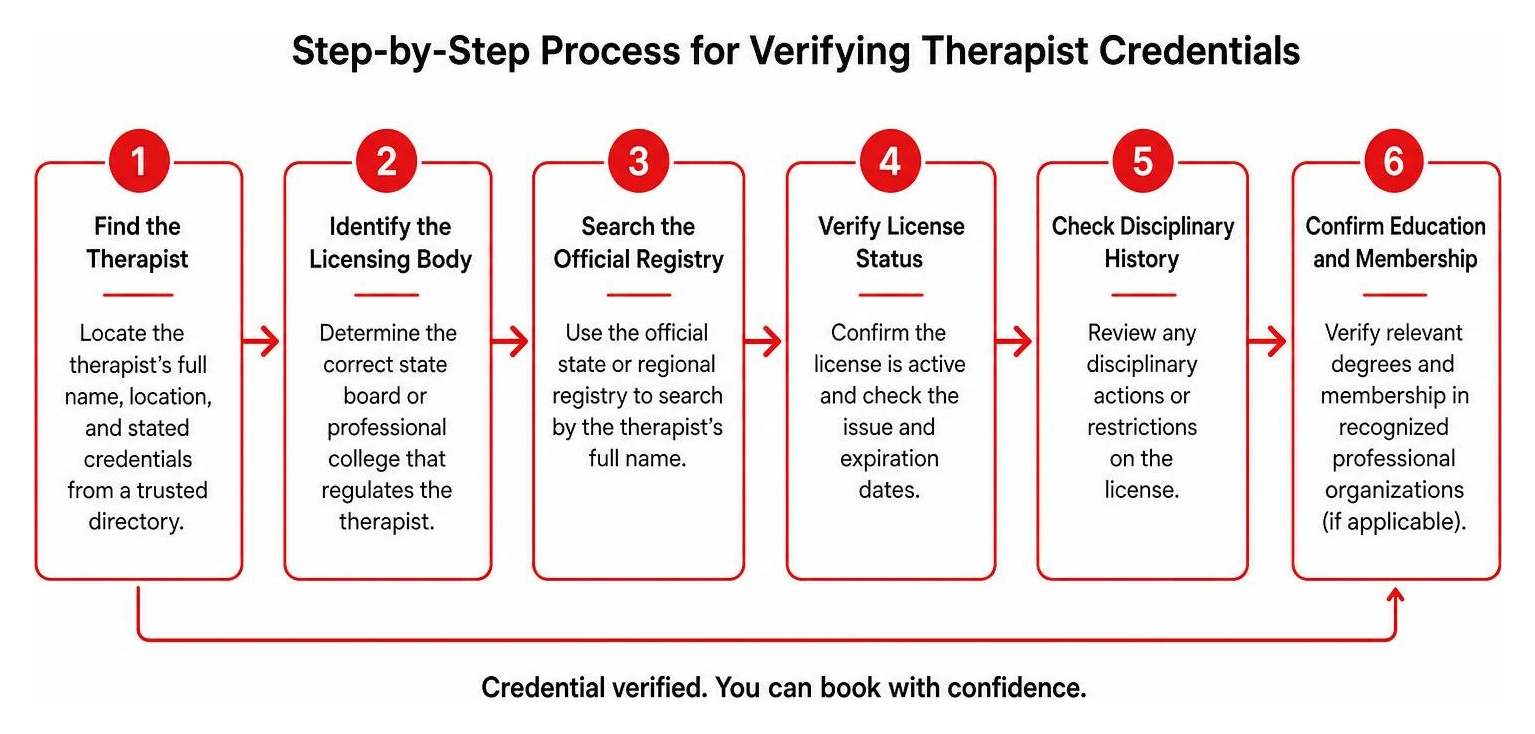
Searching for psychotherapists near me on online directories often feels like reading a list of endless choices. While directories gather many professionals in one place, knowing how to filter them saves time and energy.
You can use online locator tools to search by city or country. For example, people living in the US might use directories to search by city or state, while internationals in Spain look for local hubs. You can also read about Local heroes how to locate a mental health therapist near you to learn more about localised searches.
Evaluating Directory Features and Limitations
Major directories allow you to narrow your search by geographic area, insurance provider, gender, and specific concerns. Some directories show a “Verified” seal. This seal usually means the platform checked the provider’s professional licence in their state or country.
However, national directories have limitations:
- Profiles are written by the practitioners themselves, so descriptions can sound similar.
- Search algorithms do not assess personal rapport or clinical depth.
- Directory listings rarely explain how a therapist adapts their work for international clients or expats.
Verifying Credentials and Licensure
Before booking, check that the practitioner holds a current, valid licence to practise. In the US, state registry databases allow you to search a therapist’s full name to confirm their licence status and check for any disciplinary actions.
In Spain and Europe, official professional colleges regulate psychologists. A licensed clinical professional will hold a recognised university degree in psychology or psychotherapy and maintain active membership in an official regional college.
For Spain, the Consejo General de la Psicologia de Espana can help you identify official professional college information. Checking these details protects your safety and ensures ethical care.
Step 2: Understanding Qualifications and Therapeutic Specialities
The mental health field uses many titles. Understanding the difference between professional credentials helps you choose the right level of support. You can read more about Finding the right therapist for depression or anxiety to match your needs to a specialist.
Distinguishing Psychologists, Social Workers, and Counsellors
The differences in training affect how professionals view your concerns:
- Psychologists: Hold doctoral degrees (PhD or PsyD in the US, or equivalent master’s and doctoral qualifications in Europe). They complete years of research and practical work, focusing on comprehensive psychological evaluation and individual therapy.
- Licensed Clinical Social Workers (LCSW): Hold a master’s degree in social work (MSW). They examine mental health within a social context, looking at family dynamics, environment, and societal stress.
- Licensed Professional Counsellors (LPC / LMFT): Hold master’s degrees in counselling or family therapy. They focus on practical tools, life transitions, and relationship dynamics.
At Therapy in Barcelona, all team members are psychology-trained professionals with university qualifications from their home countries, ensuring high standards for the expat community.
Matching Specialists to Anxiety, Low Mood, Trauma, and Relationships
General therapy helps with broad stress, but specific struggles need targeted expertise:
- Anxiety and Panic: A specialist helps reframe circular thinking and regulate physical symptoms.
- Feeling Overwhelmed or Down: Specialists focus on restoring motivation and behavioural patterns gradually.
- Relational Trauma and Attachment: Experts explore how past experiences shape present choices.
- Expat Life and Cultural Adjustment: Specialised care helps with isolation, career shifts, and family dynamics when living far from home.
Many expats experience persistent worry, isolation, and the challenges of adjusting to life in a new country. Standard therapist directories often offer hundreds of names, which can feel overwhelming. By filtering for therapists who specialise in expat life and anxiety, it becomes easier to find a suitable match with an understanding of the unique challenges of living abroad.
Step 3: Choosing the Right Therapeutic Approach for Your Needs
Therapeutic modalities explain how a therapist works with you in sessions. Choosing an approach depends on your goals and how you prefer to process thoughts. Read The art of choosing a therapist what you need to know for deeper insight into styles.
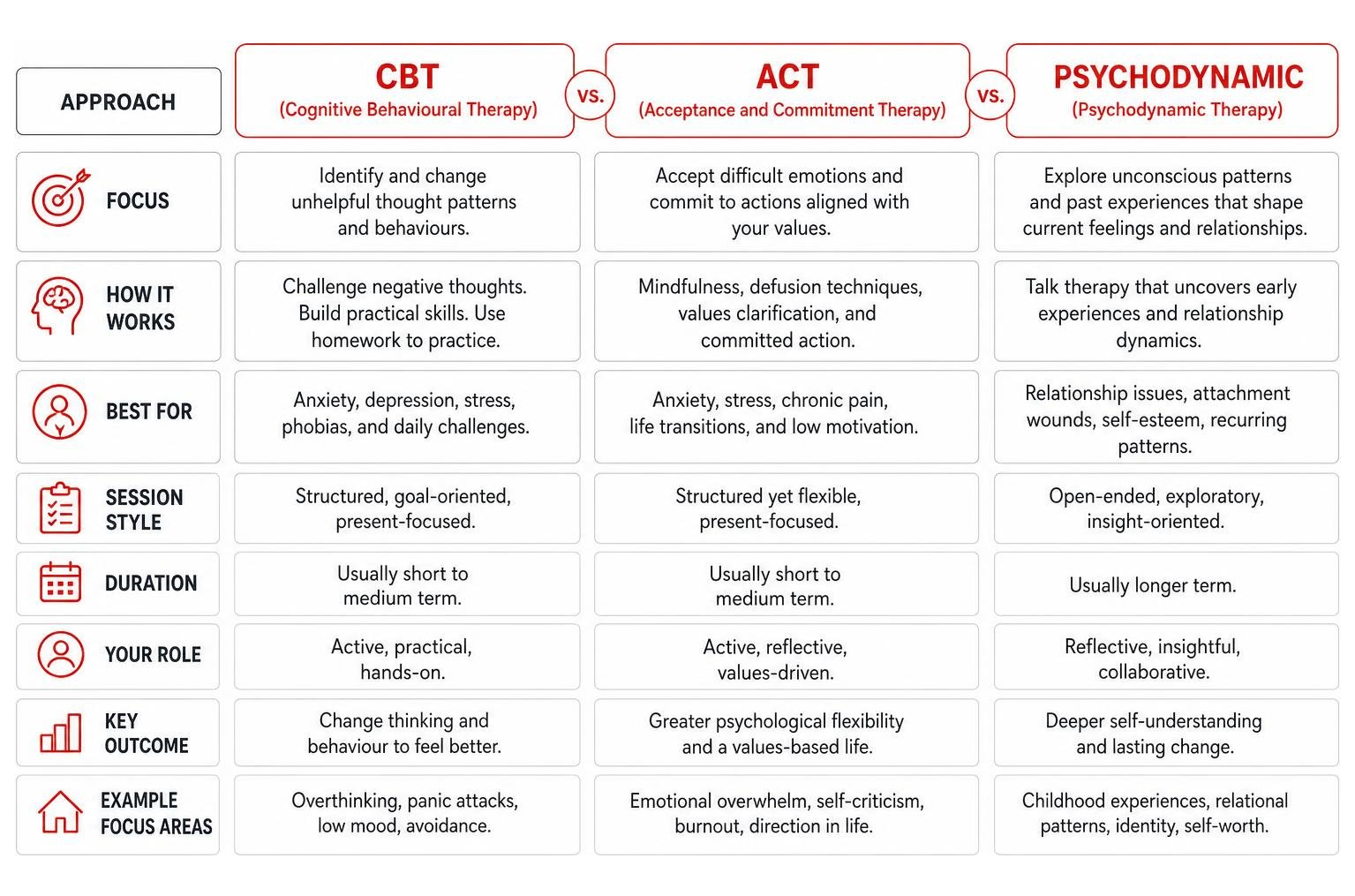
CBT, ACT, and Psychodynamic Approaches
Different styles suit different personality types:
- Cognitive Behavioural Therapy (CBT): Focuses on identifying and changing negative thought patterns. It is structured, goal-oriented, and includes practical homework.
- Acceptance and Commitment Therapy (ACT): Teaches you to accept difficult emotions rather than fighting them, guiding you to act according to your core values.
- Psychodynamic Therapy: Examines unconscious patterns, past experiences, and childhood attachment. You can explore how past dynamics influence modern stress in dedicated psychodynamic sessions.
Somatic Therapy, EMDR, and Trauma-Informed Care
When trauma or chronic stress stays in the body, talk-focused therapies might need physical or nervous-system support:
- Somatic Approaches: Focus on body sensations to release stored physical tension and fight-or-flight responses.
- EMDR (Eye Movement Desensitisation and Reprocessing): Uses bilateral stimulation to help the brain process stuck memories.
- Trauma-Informed Care: Ensures the therapeutic environment prioritises safety, choice, and empowerment.
Step 4: Balancing Location, Availability, and Financial Options
Logistics play a large role in keeping up with therapy. If session times or locations are inconvenient, sticking with the process becomes harder. Explore Your guide to finding the right therapist near you for practical scheduling strategies.
Comparing In-Person Sessions and Telehealth Flexibility
When searching for psychotherapists, consider whether you prefer in-person appointments or online calls:
- In-Person Therapy: Provides a private physical space away from work and home. Therapy in Barcelona offers face-to-face sessions at their central office in Eixample, Barcelona.
- Online Telehealth: Offers flexibility for busy professionals, parents, or those living in other cities like Málaga, Sevilla, or Alicante. Online therapy allows you to meet from the comfort of your own home.
Navigating Insurance, Sliding Scale Fees, and Out-of-Pocket Costs
Therapy options vary based on financial structure:
- Public Healthcare Systems: Provide free mental health services, but waitlists can be long and practitioner choice is often limited.
- Large Online Platforms: Offer convenience, but therapist selection can feel random and privacy policies vary.
- Private-Pay Speciality Clinics: Independent practices like Therapy in Barcelona offer bespoke therapist matching, strict privacy without data selling, and culturally sensitive support in your native language.
Therapy in Barcelona operates as a private-pay practice. Some individual therapists offer sliding scale fees based on financial need, which prospective clients can ask about during intake.
Step 5: Conducting Initial Consultations to Assess Compatibility
The single most important factor for successful therapy is the relationship between client and practitioner. An initial call allows you to test this connection.
Read How do I choose the right therapist for my needs as an expatriate to learn how to prepare for your first chat.
Essential Questions to Ask During Your First Call
Use a brief consultation to ask direct questions:
- “What experience do you have helping clients with my specific concern?”
- “How would you describe your style—are you quiet and reflective, or active and structured?”
- “How do you structure ongoing sessions, and how do we measure progress?”
- “What is your policy for rescheduling or cancelling appointments?”
Identifying Culturally Competent and Identity-Affirming Care
A culturally competent therapist recognises how culture, language, and background shape your world. For international residents, this means working with someone who understands culture shock, language barriers, and the stress of living away from family networks. Therapists should also offer LGBTQ+ affirming care and neurodiversity-friendly approaches.

Frequently Asked Questions About Finding a Therapist
How do I know if psychotherapists are properly licensed?
You can verify credentials through official state databases or regional professional bodies. In Spain, look for psychologists registered with the Colegio Oficial de Psicología (COP). Authentic practices gladly share registration details upon request.
What should I ask during a consultation with psychotherapists near me?
Ask about their clinical experience with your main issues, their primary therapeutic style, session costs, cancellation policies, and how they adapt care to your personal background.
How do confidentiality and crisis care work in therapy?
Therapy sessions are strictly private. Practitioners cannot share your personal details without explicit written consent, except in rare situations involving immediate danger to yourself or others.
Note on Crisis Care: Private outpatient therapy practices do not provide immediate crisis emergency services. If you or someone you know is in severe distress or experiencing a mental health crisis, please contact local emergency services immediately:
- In Spain: Call 112 (Emergency Services) or 024 (National Suicide Prevention Line).
- In the UK: Call 111 or 999.
- In the US: Call or text 988.
Finding Compassionate, Personalised Care Worldwide
Searching for psychotherapists can feel overwhelming when managing life stress, but finding the right therapeutic connection provides a solid foundation for long-term growth and healing.
Therapy in Barcelona was founded in 2011 by Leigh Matthews, an Australian Psychologist who has been in Barcelona since 2011. From her extensive background supporting international clients, she created Therapy in Barcelona as a practice dedicated to providing empathetic mental health support for the expat community.
Today, Therapy in Barcelona is a trusted group practice offering psychology-trained, multilingual care in English, German, French, Spanish, Afrikaans, Portuguese, Austrian-German, and Swiss-German. The clinic serves clients in-person at its central office in Barcelona and provides virtual sessions across Spain and worldwide, including the USA and Canada.
The team provides careful, personalised therapist matching for adults, couples, teenagers, and families, ensuring you work with a professional who understands your needs.
