


Moving to Alicante Spain: What to Know Before You Relocate

Moving to Alicante Spain means planning for more than sunshine and beach access. You will need the right visa or residency registration, a realistic housing budget, healthcare cover, and time to adjust to a different language and pace of life.
For a quick overview:
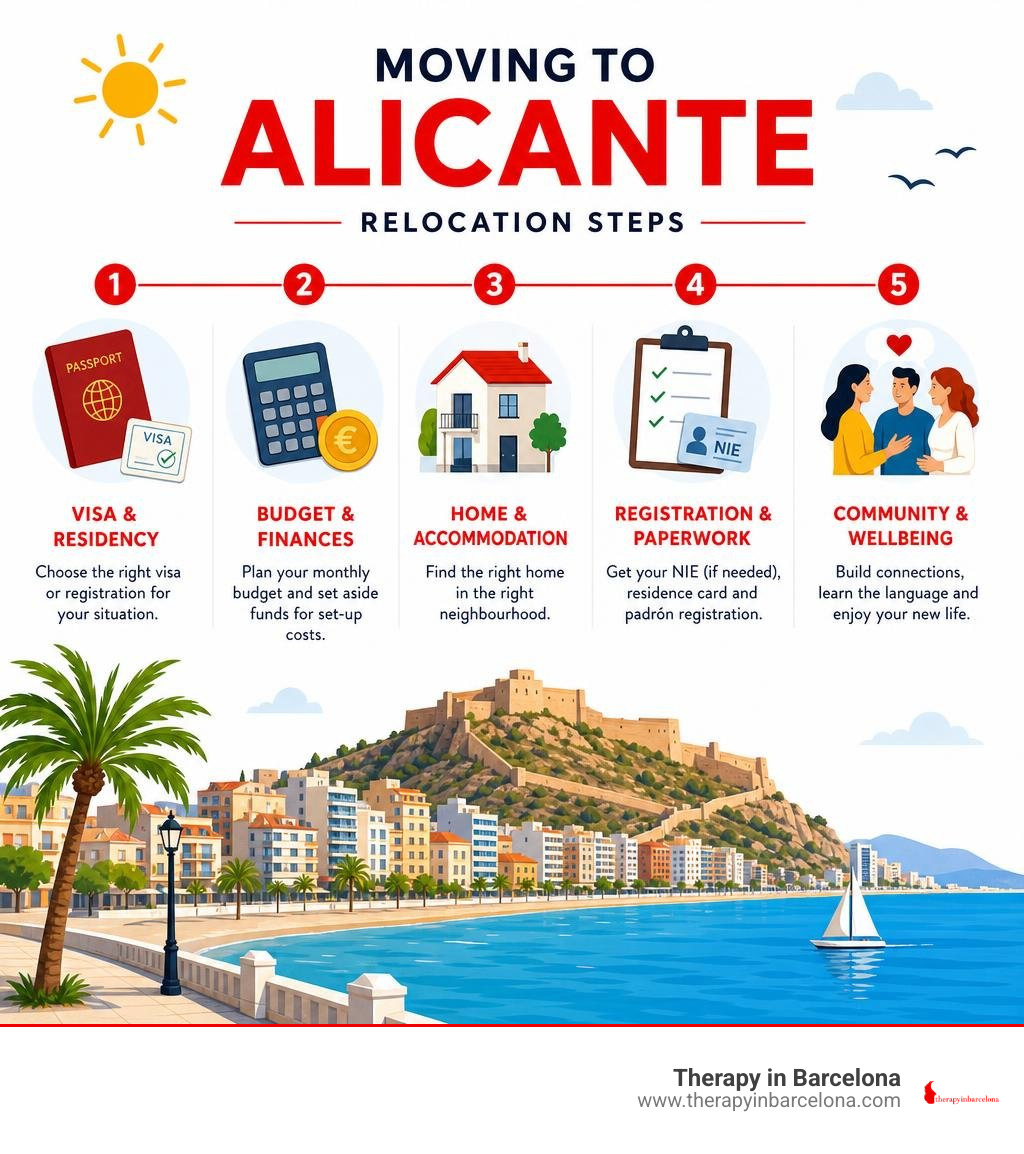
- Choose your legal route first. EU citizens can live in Spain under free-movement rules but must register for longer stays. Most non-EU citizens, including UK nationals after Brexit, need a suitable residence visa before moving.
- Budget for housing and set-up costs. A single person commonly needs around EUR1,500 to EUR1,900 a month including rent, although costs vary greatly by neighbourhood and lifestyle.
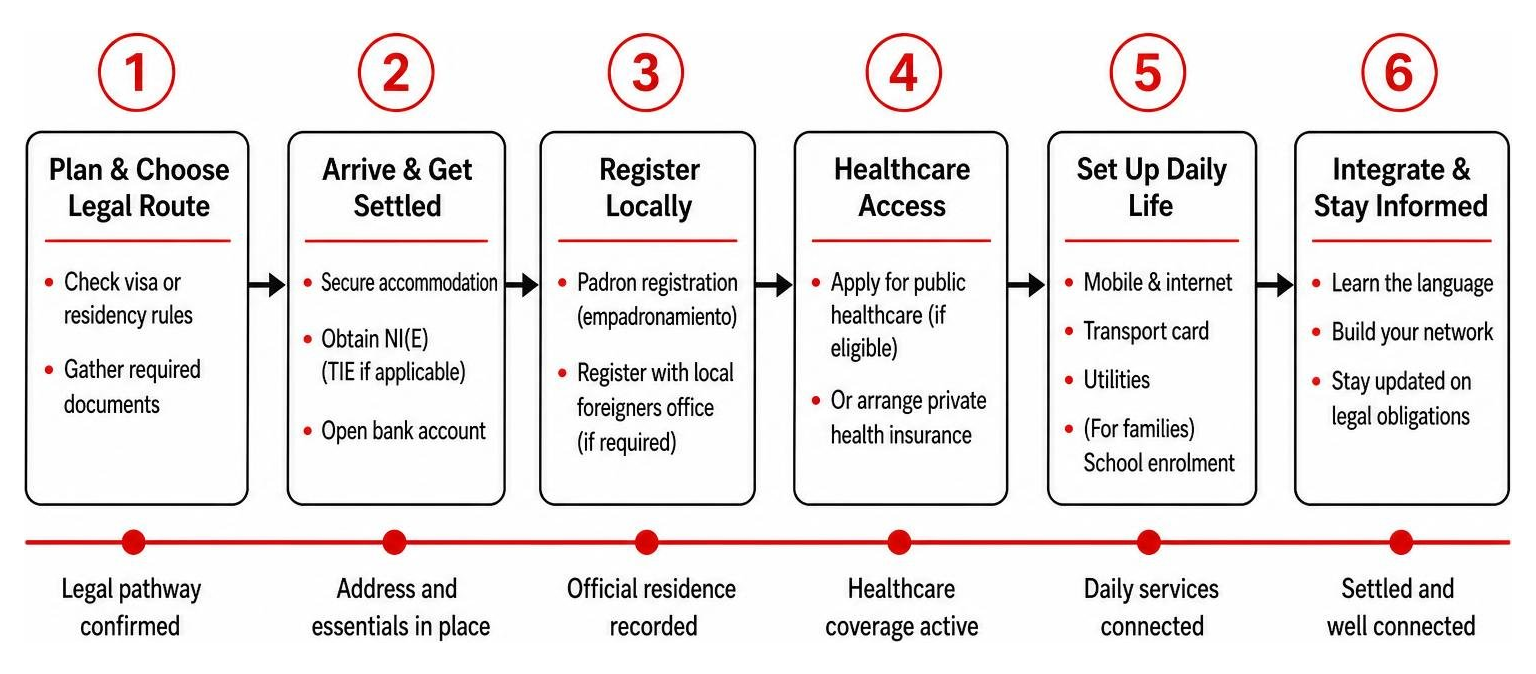
- Secure an address and complete local paperwork. Your NIE, residence card where applicable, and padrón registration are central to setting up daily life.
- Arrange health cover and practical essentials. Think insurance, banking, phone service, transport, and, for families, school places.
- Plan for the human side of relocation. Making friends, using Spanish in everyday situations, and missing home can take more energy than expected.
Alicante combines a working provincial capital with Costa Blanca beach life. The city has roughly 330,000 residents, while foreign nationals make up a meaningful share of its population according to Spain’s National Statistics Institute. It also offers more than 300 days of sunshine in a typical year, based on regional climate information from AEMET. Those are compelling reasons to move, but they do not remove the practical and emotional work of starting again.
This guide explains what to prepare before you go, from residency and housing to daily routines and support systems. It also recognises that an international move can feel exciting and disorientating at the same time, especially for accompanying partners, families, remote workers, and people building a new social circle.
Why Moving to Alicante Spain is a Top Choice for Expats
Choosing moving to alicante spain places you in one of Europe’s most welcoming coastal hubs. Nestled along the southeastern Mediterranean shore, Alicante boasts over 300 to 320 sunny days annually and an average annual temperature around 18°C, according to climate statistics from AEMET. Warm summers, mild winters, and moderate humidity draw individuals seeking physical ease and outdoor living. Take your interest further with a free chat with our partners at Moving to Spain and use our discount code TIB10 if you book a paid service with them.
Beyond the mild weather, Alicante functions as a primary communications nexus for more than 1.9 million province residents, according to population data from INE. The Alicante-Elche Miguel Hernández Airport serves over 11 million passengers every year based on official transport figures from INE, placing nearly 100 European cities just a direct flight away. High-speed train infrastructure at the city centre station allows residents to reach Madrid in just over two hours. Whether commuting for business or visiting relatives, staying connected to wider networks remains straightforward.
The general rhythm of daily life balancing Mediterranean charm with city conveniences attracts retirees, remote professionals, and young families alike. You can explore further lifestyle insights through this detailed Moving To Alicante: Your Guide Living On The Costa Blanca resource. Moving here allows you to slow down without feeling isolated from global transport links or modern facilities.
Essential Visa and Legal Requirements for Moving to Alicante Spain
If you hold citizenship within an EU/EEA country, moving to Spain requires fewer legal hurdles, though administrative registration remains necessary. Staying beyond 90 days requires registering on the central register of foreign nationals (Registro Central de Extranjeros) with proof of income and medical cover. Non-EU nationals must secure an entry visa approved by a Spanish embassy or consulate before moving permanently.
Key visa routes for non-EU expats include:
- Non-Lucrative Visa (NLV): Ideal for retirees or financially self-sufficient individuals who do not intend to seek local employment in Spain.
- Digital Nomad Visa (DNV): Tailored for remote workers and freelancers employed by non-Spanish organisations or clients outside Spain.
- Student or Work Visas: Designed for enrolled university students or individuals holding guaranteed local employment contracts with Spanish firms.
Once in Spain, obtaining your Foreigner Identity Number (NIE) and physical Foreigner Identity Card (TIE) represents the core of legal settlement. You will also need to complete your empadronamiento (city hall address registration) at the local council office. For detailed step-by-step paperwork advice, read through our guides on From Visas to Tapas: How to Get Spanish Residency and review Your Ultimate Moving to Spain Checklist: Don’t Miss a Step.
Practical Steps for Moving to Alicante Spain from Non-EU Countries
Non-EU residents face specific documentary thresholds when relocating to Alicante. Spanish consulates strictly enforce minimum capital metrics for non-lucrative applicants, alongside mandatory private health insurance policies featuring zero co-payments. Non-EU citizens entering the Schengen zone without a visa must demonstrate adequate personal savings, standardly benchmarked at approximately €100 per day of stay according to entry rules outlined by INE.
For UK citizens navigating life after Brexit, relocation requires careful pension and tax planning. UK driving licences must be exchanged within designated legal timeframes following formal residency establishment. Similarly, American expats moving from the US must navigate international tax reporting obligations to the IRS alongside Spanish tax residency frameworks.
Shipping household goods, importing household pets, and arranging currency transfers require advance coordination. Expats frequently use dedicated international transfer platforms like Wise or Revolut to reduce bank exchange commissions. To explore specific post-Brexit relocation guidelines, review this resource on Moving to Alicante from the UK: a complete guide for expats – Green-acres.
Practical Breakdown of the Cost of Living in Alicante

Living in Alicante remains considerably more affordable than residing in major European capitals or larger domestic cities such as Madrid and Barcelona. A single expat can maintain a comfortable lifestyle on a monthly budget between €1,500 and €1,900, inclusive of city centre accommodation, according to consumer data from Numbeo. For a couple, average monthly living expenses hover near €1,800 to €1,900, depending on personal choices.
To better understand monthly cash flow, single expats typically spend around €673 per month on basic living costs excluding housing according to figures from Numbeo. Basic utility packages covering electricity, water, heating, and rubbish collection for an 85 m² apartment average roughly €97 to €150 per month. Internet connections and mobile data services add an additional €30 to €50 monthly.
Food and recreation remain reasonable across the city. Weekly groceries for two people at local markets like Mercado Central generally total between €80 and €100. Dining out at traditional neighbourhood taverns offers exceptional value, with mid-day daily menus (menú del día) priced from €12 to €15 per person. To compare costs across various regions, consult our guide Spain Awaits: A Comprehensive Guide to Your Move.
Housing Market and Property Prices Across Neighbourhoods
Housing costs in Alicante vary based on proximity to the coastline, building age, and local district amenities. Renting a modern one-bedroom apartment in the city centre costs between €600 and €900 per month according to Numbeo, while newer units in prime areas can reach €1,100. Property purchase prices across the municipality average around €2,300 per square metre, though luxury coastal enclaves command upwards of €3,000 to €4,500 per square metre.
Distinct neighbourhoods cater to different lifestyle priorities:
- Centro & Casco Histórico: Perfect for urban lovers wanting pedestrian streets, dining, and immediate access to Postiguet beach. One-bedroom rentals start around €800 to €900 per month.
- San Juan Playa & Cabo de las Huertas: Popular among families and affluent expats seeking modern residential complexes, swimming pools, international schools, and coastal tram links. Rents often range from €1,200 to €1,600 monthly.
- Carolinas Altas & Benalúa: Budget-friendly, authentic Spanish districts situated slightly inland. One-bedroom apartments can be found for €700 to €800 monthly.
When buying real estate in the Valencian region, buyers should budget for an 8% property transfer tax (ITP) on existing homes. For a wider regional perspective on properties, check our Costa Blanca Guide.
Navigating Healthcare, Education, and Daily Life on the Costa Blanca
Accessing reliable medical care is a common concern when moving to alicante spain. Legal foreign residents contributing to the Spanish social security system access state medical care through public health centres (centros de salud) and regional public hospitals like Doctor Balmis. Non-working expats, retirees using non-lucrative visas, and new arrivals usually secure private health insurance policies from providers such as Sanitas, Asisa, or Cigna to satisfy visa requirements.
Families relocating with children have varied schooling choices across the Costa Blanca. State public schools offer instruction primarily in Castilian Spanish and Valencian, providing total cultural immersion for younger children. Alternatively, over 15 private international and bilingual institutions operate across Alicante province—such as King’s College or Lady Elizabeth School—offering British, French, or International Baccalaureate curricula.
Public infrastructure throughout Alicante is reliable and clean. The coastal TRAM light rail system links the city centre with northern beach towns like El Campello, San Juan, and Denia, allowing many residents to live comfortably without owning a private vehicle. Learning Spanish remains important for handling local bureaucracy, even though English is widely understood in tourist districts.
Overcoming Expat Relocation Challenges and Managing Mental Health Abroad

Relocating to a new country involves psychological shifts that go far beyond packing boxes and filling out administrative forms. Beyond the excitement of sunshine and scenic vistas lies the quiet emotional work of adjusting to a foreign culture. Expats frequently encounter unexpected culture shock, bureaucratic frustration, identity confusion, and periods of social isolation during their first year abroad.
Consider the journey of Marcus, a fictional composite avatar representing common expat challenges and not a real client. After leaving a corporate career in London to work remotely from Alicante, Marcus expected immediate relaxation. Instead, he found himself overwhelmed by administrative delays, struggled to form deep local friendships, and felt isolated in his central apartment. His story highlights how international transitions can strain emotional wellbeing regardless of how sunny the climate is.
When life abroad feels challenging, finding qualified mental health support in your native language makes a real difference. Expats in Spain have various options, including public system clinicians, large online platforms, and local practices. While public system clinicians provide valuable care, non-native speakers often face long waiting lists and language barriers. Therapy in Barcelona distinguishes itself through key differentiators, including bespoke therapist matching, expat-specific cultural sensitivity, strict privacy without data selling, and private-pay quality.
Therapy in Barcelona is a trusted group practice in Spain established in 2011, offering psychology-trained multilingual care in English, German, French, Spanish, Afrikaans, Portuguese, Austrian-German, and Swiss-German. Founded by Leigh Matthews, an Australian Psychologist who has been in Barcelona since 2011, founder of Therapy in Barcelona, and experienced in supporting international clients for over 14 years, the practice provides a sanctuary for internationals. Therapy in Barcelona works both online with clients worldwide (including the USA and Canada) and offers face-to-face therapy sessions at their office in Barcelona, providing careful personalised matching for adults, couples, teens, and families.
Addressing internal transitions proactively allows you to build genuine resilience in your new environment. Rather than pushing through stress or isolation alone, connecting with culturally sensitive professionals helps you process relocation stress. To read more about emotional wellbeing abroad, explore The Hidden Challenges of Expats in Spain: Why Many Don’t Last and How to Thrive Living Abroad.
If you or someone you know is in crisis or needs immediate emergency assistance in Spain, please call emergency services at 112 or contact the national mental health crisis helpline at 024.
Frequently Asked Questions About Moving to Alicante
How much money do you need to live comfortably in Alicante?
A single expat can live comfortably in Alicante on a monthly budget of €1,500 to €1,900, which includes renting a central one-bedroom apartment, utilities, groceries, and dining out. Couples typically require around €1,800 to €1,900 per month for a balanced lifestyle. Exact requirements vary depending on neighbourhood choices, private schooling needs, and lifestyle habits.
Is Alicante safe and welcoming for foreign expats?
Yes, Alicante is widely considered a safe, welcoming, and hospitable city with low overall crime rates. Over 15% of the city’s population consists of international residents according to data from INE, creating a diverse, expat-friendly social environment. Standard common-sense precautions against petty pickpocketing should be maintained in crowded tourist zones and central transport hubs.
Do you need to speak fluent Spanish to live in Alicante?
You do not need fluent Spanish to manage immediate daily tasks upon arrival, as English is widely spoken in tourist zones, beachfront restaurants, and international service industries. However, learning basic Castilian Spanish is essential for navigating municipal bureaucracy, connecting with local neighbours, and fully integrating into daily Spanish life.
Conclusion
Relocating to Alicante offers an exceptional balance of Mediterranean climate, coastal beauty, and accessible modern infrastructure. From navigating visa requirements and securing a flat near San Juan beach to setting up local healthcare, thorough preparation paves the way for a smooth transition. Taking practical steps early allows you to settle into your new rhythm with confidence.
Adjusting to a new culture is a step-by-step emotional journey as much as a logistical process. Giving yourself space to process change, adapt to local routines, and build a meaningful social network will help you thrive long-term. If you’d like support navigating the emotional side of your move, book a Free Discovery Call with our team. You can also explore our broader resource, A Practical Guide to Moving to Spain, to prepare for every phase of your journey.
