


Is International Therapy Right for You? Here’s What to Know First

International therapy refers to mental health support delivered across borders — typically via video, phone, or chat — connecting you with a qualified therapist regardless of where either of you is based in the world.
If you’re weighing your options, here’s a quick overview:
- What it is: Therapy delivered online by licensed professionals, often across different countries and time zones
- Who it’s for: Expats, digital nomads, accompanying spouses, Third Culture Kids, and anyone living away from their home country
- How to access it: Through specialist directories, private practices, or online platforms — sessions run via secure video call, usually weekly
- What it costs: This is a private-pay service, meaning it is self-funded rather than covered by a national health system; some therapists offer sliding scale fees for those with financial need, and you’re welcome to ask about this
- Key benefit: You can work with a therapist who understands your cultural background and speaks your language, no matter where you live
- What to check: Credentials, professional registration, and whether the therapist has experience working with internationally mobile clients
Living abroad has a way of stirring things up. The excitement of a new city — whether that’s Barcelona, Valencia, or Málaga — can sit right alongside a quiet, persistent sense of not quite belonging. For many expats, finding a therapist who truly gets that experience is harder than it sounds.
Local public health systems, while valuable, often come with long waiting lists and significant language barriers for non-native speakers. That gap is exactly where international therapy has grown so rapidly.
Platforms and directories now list tens of thousands of practitioners across more than 100 countries, and the research consistently shows that video-based therapy is just as effective as sitting in a room with someone.
But more options don’t automatically mean easier choices. The real question isn’t just whether international therapy works — it’s how to find the right provider for your specific life, language, and needs. This guide breaks that down clearly, so you can make a confident decision.
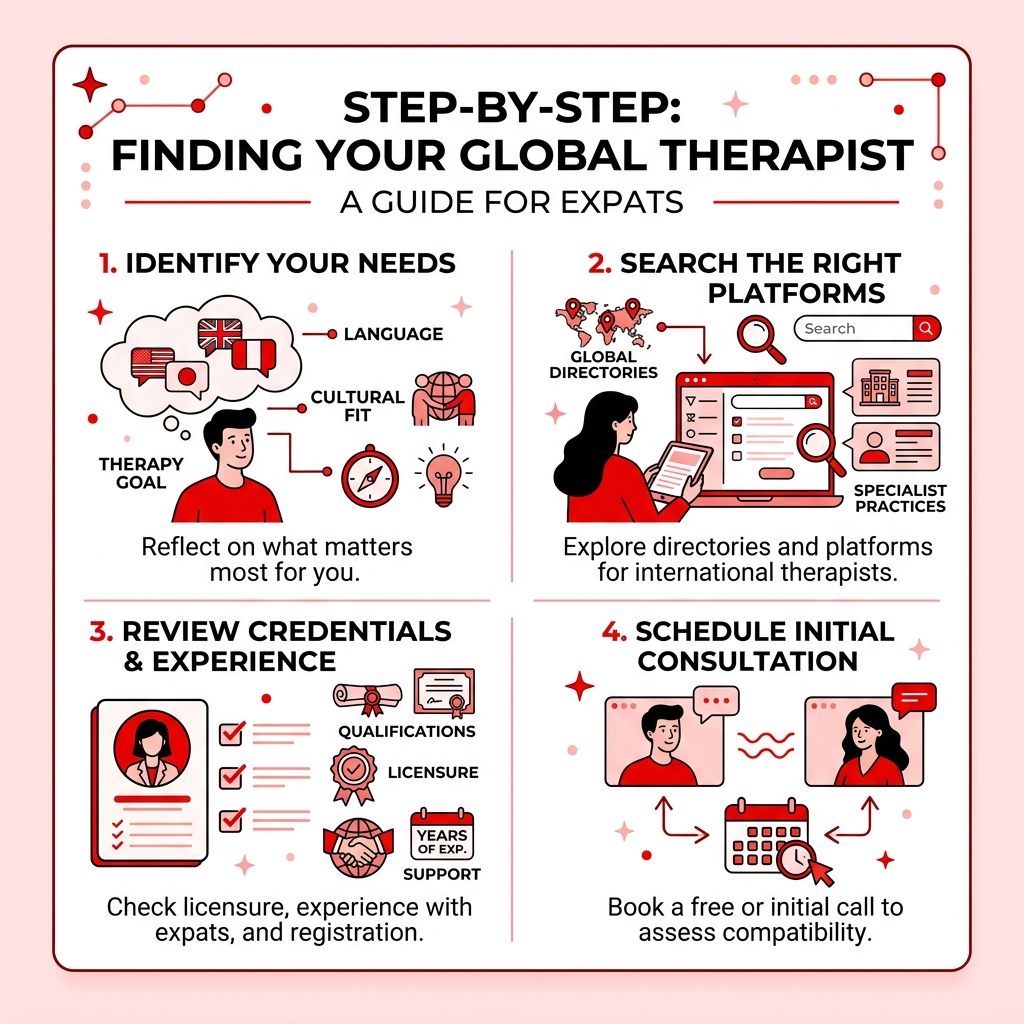
What is International Therapy and How Does it Work?
At its heart, international therapy is about removing the geographical barriers to mental health care. It is a form of cross-border care that uses technology to connect clients with practitioners who might be thousands of miles away.
For a digital nomad moving between hubs like Alicante and Madrid, or an expat settled in Sevilla, it provides a “portable” support system that doesn’t disappear if they relocate again.
This model relies heavily on tele-health. Instead of commuting to a local clinic where you might struggle to explain complex emotions in a second language, you log into a secure video platform from the comfort of your home. You can learn more about the specifics of how therapy works to see if this remote format aligns with your expectations.
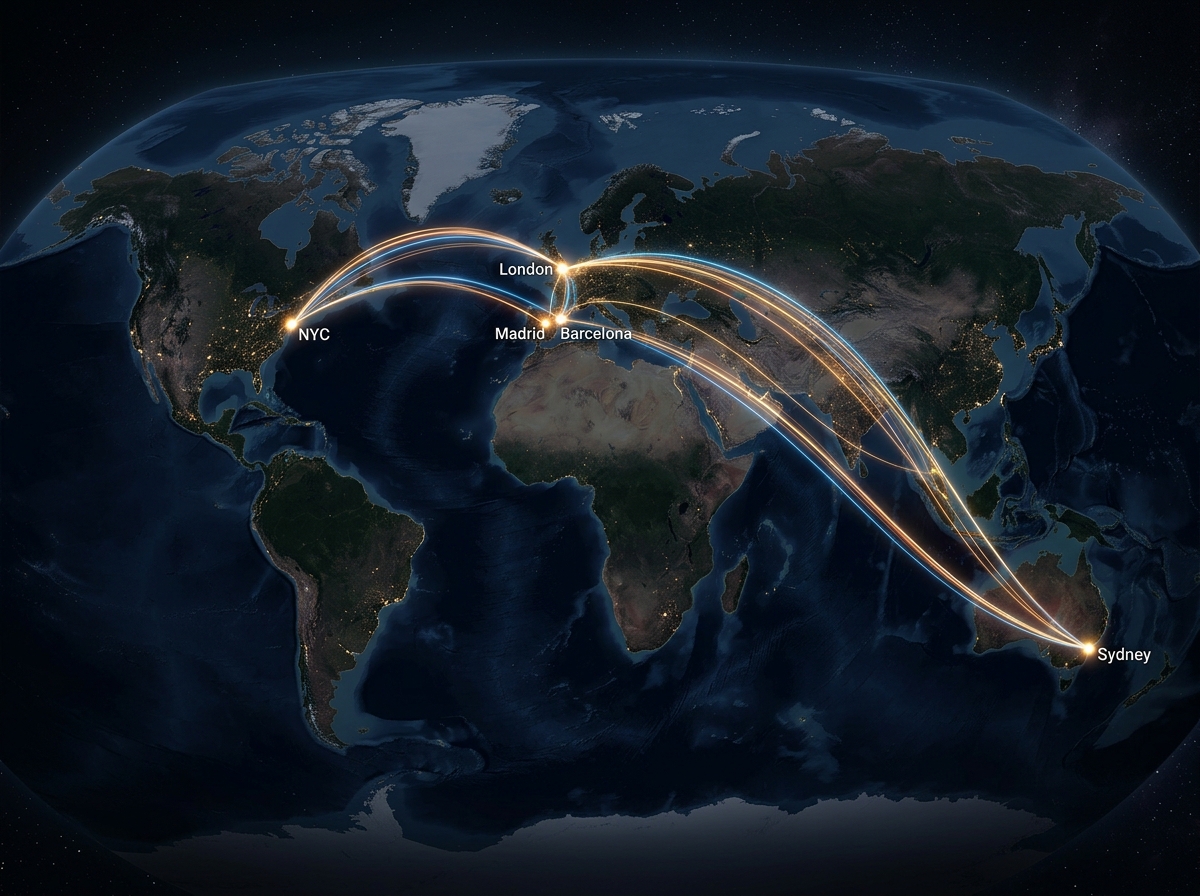
The mechanics of remote support
Most sessions take place via encrypted video software, though some providers offer messaging or audio-only options. A key component of this work is “cultural humility.” This means the therapist doesn’t just have clinical skills; they have a deep respect for and curiosity about your specific cultural background.
This is particularly vital for Third Culture Kids (TCKs)—people who spent their formative years outside their parents’ native culture. TCKs often face unique identity and attachment challenges that a traditional local therapist might not fully grasp.
Finding professionals who understand the unique challenges faced by internationally mobile populations can help bridge this gap and provide more culturally attuned, relevant support.
Why lifestyle dictates your choice
Your lifestyle is the biggest factor in choosing a provider. Are you an accompanying spouse who has moved for a partner’s career and is now facing unexpected isolation? Or perhaps an international student in Barcelona struggling with the pressure of a foreign university system?
When language barriers exist, even simple daily tasks can feel draining. Adding the “work” of therapy in a non-native language can feel like an impossible hurdle. This is why many seek out expat therapy specifically—it prioritises a shared understanding of the migrant experience.
Why Choose an International Therapist Over Local Options?
The most common reason people look beyond their immediate postcode is cultural competence. A local therapist in a small Spanish town may be excellent at treating clinical depression, but they might not understand the specific grief of “missing home” while simultaneously feeling like you no longer fit in back there.
Research supports this shift toward digital care. A study published in the Journal of Telemedicine and e-Health found that online therapy is just as effective as face-to-face sessions, with some participants actually finding it easier to open up from a familiar environment.
The benefits of international therapy: affordability and availability
One of the most practical drivers for international therapy is the “cost-availability” balance. In many Western countries, private therapy can cost between €100 and €150 per session, often with months-long waitlists.
In contrast, the global market allows clients to find qualified, English-speaking practitioners in countries with a lower cost of living—such as South Africa, India, or the Philippines—where sessions might range from €15 to €50. This isn’t “cut-rate” care; these are often highly trained psychologists whose rates simply reflect their local economy.
For those without comprehensive insurance, online therapy can be the most sustainable way to access long-term support.
Overcoming the “Lost in Translation” effect
There is a specific kind of relief in being able to use idioms, slang, or cultural references without having to stop and explain them. Biculturalism and native-level fluency allow for a more nuanced expression of self.
If you’ve ever felt that your personality changes slightly when you speak another language, you’ll understand why English-speaking therapy is often a non-negotiable for the international community.
Evaluating Global Providers: Qualifications and Red Flags
When you are looking for a therapist halfway across the world, how do you know they are who they say they are? Credential verification is the most important step in your search.
Essential credentials to verify
A reputable international therapist should hold at least a Master’s degree in a relevant field (Psychology, Counselling, or Social Work) and be registered with a professional body in their home country. For example:
- In India, look for registration with the Rehabilitation Council of India (RCI).
- In South Africa, check for the Health Professions Council of South Africa (HPCSA).
- For trauma specialists, check if they are registered with the EMDR International Association.
Always ask about their supervised hours and continuing education. You can find more tips on how to choose a therapist to ensure your safety and the quality of your care.
Warning signs in international therapy
While most practitioners are dedicated professionals, keep an eye out for these red flags:
- Guaranteed outcomes: No ethical therapist will promise to “cure” you in a specific number of sessions.
- Pressure to commit: Avoid those who push for large upfront payments for “packages.”
- Poor boundaries: If a therapist messages you at odd hours for non-administrative reasons, it’s a sign of a lack of professionalism.
- Lack of transparency: They should be clear about their qualifications, fees, and privacy policy from the start.
Seeking culturally sensitive therapy means finding someone who respects your autonomy and provides a transparent framework for your work together.
Common Evidence-Based Methods in International Therapy
Qualified international practitioners use the same scientifically backed methods as local ones. The most common include:
- CBT (Cognitive Behavioural Therapy): Great for managing anxiety and changing negative thought patterns.
- ACT (Acceptance and Commitment Therapy): Helpful for navigating the “stuck” feelings often associated with relocation.
- EMDR (Eye Movement Desensitisation and Reprocessing): A powerful tool for processing past or recent trauma.
- The Gottman Method: A gold standard for couples therapy.
Specialisations for the expat experience
The “Big Four” issues for internationals are usually anxiety, depression, trauma, and ADHD. Living abroad can exacerbate these conditions; for instance, the lack of a familiar support network can make a depressive episode feel much more intense.
Research, such as this scientific study on EMDR, highlights how these targeted approaches can provide significant relief even when delivered remotely. Many expats also find that psychotherapy for expats helps them develop the specific resilience needed for life in a new culture.
International therapy for couples and families
Bicultural couples often face “relational fractures” caused by differing expectations regarding family, finances, or where to live long-term. International therapy allows couples to work with specialists in Imago therapy or the Gottman Method who understand the added layer of cultural complexity. Finding ways of connecting with therapists who understand these dynamics can save a relationship from the stresses of relocation.
Navigating the Practicalities: Time Zones, Payments, and Insurance
The “international” part of international therapy brings some logistical hurdles. However, with a little planning, these are easily managed.
Managing the clock and the currency
Time zone offsets are the most common challenge. For example, if you are in Barcelona (CET) and your therapist is in Sydney, you are looking at a 10-hour difference. Many therapists working internationally are used to this and offer “early bird” or “late night” slots to accommodate global clients.
For payments, most practitioners move away from traditional bank transfers, which carry high fees. Instead, they use platforms like Wise, PayPal, or Stripe. This allows you to pay in a currency that works for both of you. You can see how our diverse team manages these logistics for clients worldwide. More information on finding a therapist in Spain can also help clarify local expectations.
How insurance works across borders
Most international therapy is “out-of-pocket,” but that doesn’t mean you can’t get reimbursed. Many international insurance plans accept “superbills”—detailed invoices provided by your therapist, but we recommend checking this beforehand.
- Reimbursement: You pay the therapist directly, then submit the invoice to your insurer.
- Deductibles: You may need to reach a certain spending threshold before your insurance kicks in.
- Check first: Always ask your insurance provider if they cover “out-of-network” or “international tele-health” providers.
Browsing a list of all therapists can help you find someone whose billing practices align with your insurance requirements.
Comparing Your Options: Public Systems, Large Apps, and Private Practices
When choosing your path, it helps to compare the three main “pillars” of care available to the international community.
Public Health Systems In Spanish cities like Valencia or Málaga, public mental health care is free or low-cost, but expats may face language barriers, long waitlists, and limited choice of therapist or therapy type.
Large Online Platforms Online therapy platforms offer convenience, flexible communication, and often lower prices. However, matching can sometimes feel impersonal, and there may be concerns around data privacy and how fees are distributed between therapists and the platform.
Bespoke Private Practices Practices like Therapy in Barcelona offer a middle ground. We provide personalised therapist matching handled by humans, not algorithms, to ensure a good “click” from day one.
Our team consists of expat-led professionals who have lived the journey themselves. While these are private-pay services, they offer a higher quality of care, strict privacy standards, and direct access to specialists who understand the nuances of life in hubs like Barcelona, Alicante, or Gran Canaria.
Frequently Asked Questions about International Therapy
Is international therapy as effective as in-person sessions?
Yes. Multiple studies have shown that for the vast majority of people, online therapy is just as effective as sitting in a room together. It is particularly successful for treating anxiety, depression, and PTSD. The key is having a stable internet connection and a private space where you feel safe to speak.
How do I pay a therapist in another country?
Most practitioners use secure digital platforms like Stripe, PayPal, or Wise. These services allow you to pay via credit card or direct transfer. Often, you can pay in your own currency, and the platform handles the conversion at a much better rate than a traditional bank.
What should I expect in my first session?
Think of the first session as a “getting to know you” phase. The therapist will ask about your background, what brought you to therapy now, and what you hope to achieve. It’s also your chance to interview them. Do you feel heard? Do they seem to understand your expat experience? This initial “click” is the biggest predictor of whether therapy will be successful.
Finding Your Sanctuary Abroad
Choosing to start therapy is a brave step, especially when you are already navigating the complexities of a foreign country. Whether you are dealing with the “messiness” of relocation, feeling stuck in your career, or confronting past traumas that have resurfaced in your new environment, you don’t have to do it alone.
At Therapy in Barcelona, we understand because we’ve been there. Our founder, Leigh Matthews—an Australian Psychologist who moved to Barcelona in 2011—built this practice because she couldn’t find the culturally sensitive, English-speaking support she needed when she first arrived. Today, we are a team of psychology-trained expats dedicated to being the therapists we would want to work with ourselves.
We offer personalised matching to ensure you find the right fit among our diverse team. From our central office in Barcelona’s Eixample district to our online sessions available to expats worldwide, we provide a safe, compassionate space for healing and growth.
If you’re ready to start your journey, we’re here to help you navigate the complexities of international life.
If you’d like support, book a Free Discovery Call today.
