


Understanding the Depression-Isolation Connection

When you’re living far from home, depression and isolation can become tangled in a confusing and overwhelming way. Here’s what you need to know:
- It’s a two-way street – Feeling persistently down can drive you to withdraw from others, and isolation can trigger or worsen these feelings
- It’s backed by science – Research shows each condition predicts the other over time, creating a self-reinforcing cycle
- You’re not alone – Over a third of adults report feeling seriously lonely, and about 1 in 4 lack adequate social or emotional support (, source)
- It’s treatable – Understanding the link is the first step toward breaking the cycle
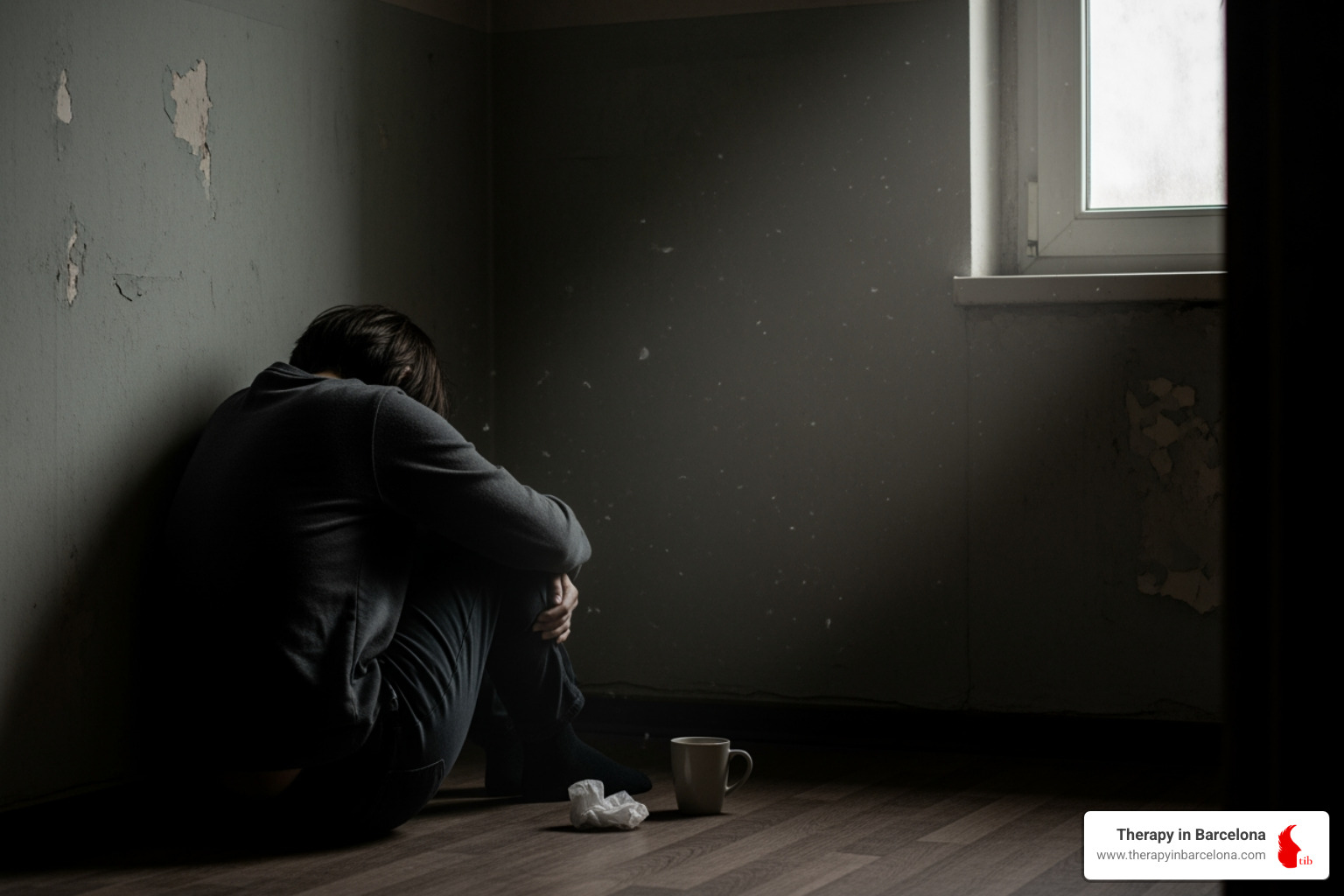
Take a 34-year-old from the UK who moved to Barcelona for a fresh start. Over time, he began turning down invitations, spending weekends alone in his flat, and feeling more and more low. He could not tell whether depression was pushing him to withdraw, or whether the isolation itself was deepening his sadness. This is a fictional example, but it reflects a common experience for many internationals adjusting to life in a new country.
The truth is, feeling down and being isolated often create a downward spiral that’s hard to escape on your own. When you’re feeling persistently low, reaching out feels impossibly hard. When you’re isolated, your mood naturally drops. This isn’t a personal failing—it’s a well-documented psychological pattern that affects millions of people, particularly those living in a new culture.
This article explores how depression and isolation affect each other, who’s most at risk (spoiler: expats face unique challenges), and most importantly, what you can do to reconnect with others and reclaim your wellbeing. Whether you’re in Barcelona, Valencia, Madrid, or anywhere else in Spain, these insights and strategies can help you understand what’s happening and take meaningful steps forward.
Social Isolation vs. Loneliness: What’s the Difference?
When we talk about depression and isolation, it’s important to clarify two distinct but related concepts: social isolation and loneliness. While often used interchangeably, they describe different aspects of our social lives.
Social isolation is the measurable side of disconnection: having little social contact, a small network, or limited support. It describes the amount of connection in your life, not necessarily how you feel about it. For example, someone who lives alone and rarely sees or speaks to others may be socially isolated. You can be socially isolated without feeling lonely.
Loneliness, by contrast, is the painful feeling of being emotionally disconnected. It is about how connected you feel, not how many people are around you. You can be busy, social, and still feel lonely if your relationships do not meet your emotional needs. In simple terms, loneliness is the gap between the connection you have and the connection you need.

For example, someone can spend all day around other people and still feel painfully alone. They might be in meetings, chat with coworkers, or join social plans in the evening, yet still feel like no one really knows them. In that case, they are not necessarily socially isolated in the objective sense, but they may be experiencing real loneliness. This is common among expats in cities like Madrid, Valencia, or Barcelona, where it is possible to have plenty of casual contact but very few deep, supportive relationships.
These struggles are more common than many people realise. Around 1 in 3 adults say they feel lonely, and about 1 in 4 say they do not have enough social or emotional support. That matters because being around people is not always the same as feeling connected to them. Someone can have coworkers, neighbours, or even a busy social calendar and still feel deeply alone. Understanding this difference is important: social isolation can contribute to loneliness, but easing loneliness usually means building relationships that feel safe, meaningful, and supportive.
The Vicious Cycle: How Depression and Isolation Feed Each Other
Feeling persistently down and being isolated often lock people into a difficult pattern, where each one makes the other worse. This pattern can be incredibly hard to break without support. Long-term studies and genetic research provide compelling evidence of this bidirectional relationship, showing that low mood can lead to isolation, and isolation can worsen feelings of depression.
Research shows this is a two-way relationship. Social isolation can raise the risk of later depression, and depression can also make people more likely to withdraw from others. In other words, each can feed the other over time. Studies also suggest loneliness has a particularly strong back-and-forth link with depressive symptoms, while depression may more directly lead to future social isolation. The key takeaway: when one improves, the other often can too.
How Low Mood Can Lead to Isolation
When someone is feeling persistently down, their brain and body can go into a protective mode that paradoxically makes things worse. Common symptoms like low energy, overwhelming fatigue, loss of interest in activities once enjoyed, and feelings of worthlessness can make even simple social interactions feel like an impossible task.
When depression sets in, pulling away from other people can feel like the easiest option. Low energy, hopelessness, shame, and loss of interest often make calls, plans, and even leaving the house feel overwhelming. Over time, this withdrawal can shrink your world and make isolation even harder to break.
This can manifest in various behavioural changes:
- Cancelling plans: Repeatedly backing out of social engagements.
- Avoiding calls and messages: Not responding to friends or family.
- Staying in: Preferring to remain at home rather than going out.
Unhelpful thoughts also play a significant role. A mind caught in a low mood might tell itself, “I’m a burden to others,” or “No one genuinely wants to see me.” These thoughts reinforce the desire to withdraw, creating a self-fulfilling prophecy. This is what makes the connection between depression and isolation so difficult; the feelings themselves can push you to do things that make you feel more isolated. You can learn more about how isolation feeds into low mood and its symptoms on HelpGuide’s article: More on how isolation feeds depression.
How Isolation and Loneliness Worsen Low Mood
Once isolation sets in, it creates fertile ground for low mood to deepen. Humans are inherently social creatures, and a lack of meaningful connection can have profound negative effects on our mental health.
Loneliness does more than hurt emotionally. It can also raise stress levels, as the brain may read disconnection as a threat. Over time, that stress can increase inflammation and weaken immune responses. This can affect both physical health and mood, making it harder to cope and increasing vulnerability to depression.
Isolation can also deepen negative thinking. Without support or perspective from other people, it is easier to get stuck in rumination, self-criticism, and hopeless thoughts. Feeling left out or unseen can be deeply painful, even in a crowded place. Research suggests that loneliness, the feeling of disconnection, may be even more closely linked to depression than simply being alone.
The Impact on Health and Wellbeing
The link between depression and isolation goes beyond mood. It has real and serious effects on your overall health.
Who’s Most at Risk?
While anyone can experience low mood and isolation, certain individual circumstances and demographic groups are more susceptible.
Individual Risk Factors:
- Major life changes: Moving abroad, as many expats do to cities like Barcelona, Valencia, or Málaga, is a significant upheaval that can disrupt social networks and lead to feelings of displacement. Other life events like divorce, unemployment, or the loss of a loved one can also trigger isolation.
- Chronic illness or psychiatric conditions: Living with a long-term physical or mental health challenge can make it difficult to engage socially.
- Grief: The profound loss of a loved one naturally leads to withdrawal and can be a significant risk factor.
- Social anxiety: Fear of social situations can lead to self-imposed isolation.
- Marginalisation or discrimination: Experiencing prejudice can lead to feelings of being an outsider and reduce opportunities for connection.
- Limited access to resources: Living in rural areas, lacking transportation, or facing language barriers (a common challenge for internationals in Spain) can make social engagement difficult.
Group Risk Factors: Certain demographic groups are disproportionately affected by loneliness and social isolation:
- Expats, international students, and digital nomads: Moving to a new country, even a vibrant one like Spain, often means leaving behind established support systems. Navigating cultural differences and language barriers in cities like Alicante, Sevilla, or Gran Canaria can intensify feelings of isolation.
- Older adults: As people age, they may experience loss of partners and friends, reduced mobility, or living alone, which increases their risk.
- Young adults: Despite being digitally connected, many young adults report high levels of loneliness.
- Low-income adults: Financial constraints can limit opportunities for social activities.
- LGBTQ+ individuals: Experiences of discrimination or lack of acceptance can lead to isolation.
Environmental factors also play a crucial role. The availability of community resources like parks, libraries, and public transport in a city can significantly impact people’s ability to connect. If these resources are lacking, or if language barriers make them inaccessible, the risk of isolation rises.
The Serious Health Risks of Depression and Isolation
The health impacts of prolonged social isolation and loneliness are serious, affecting both mental and physical health.
Mental Health Impacts:
- Increased anxiety: Loneliness and isolation are closely linked to higher levels of anxiety.
- Faster cognitive decline: Social disconnection can lead to impaired cognitive function. One study found loneliness was associated with a 40% increased risk of dementia among older adults.
- Suicidality and self-harm: Feelings of hopelessness and disconnection are significant risk factors for suicidal thoughts and behaviours.
- Worsened depression: As discussed, isolation creates a feedback loop that deepens depressive states.
Physical Health Impacts: The physical toll is equally concerning. Social isolation increases the risk for health problems as much as having an alcohol use disorder or smoking 15 cigarettes a day. It is even worse for physical health than being obese, and there is a direct correlation with premature death.
- Cardiovascular disease: Loneliness and isolation are associated with a nearly 30% increased risk of stroke and coronary heart disease.
- Type 2 diabetes: Chronic stress from isolation can impact metabolic processes.
- Weakened immune system: The stress response triggered by loneliness can suppress immune function, making individuals more susceptible to illness.
- Shorter life expectancy: A meta-analysis co-authored by Julianne Holt-Lunstad, PhD, a professor of psychology and neuroscience at Brigham Young University, found that lack of social connection heightens health risks as much as smoking 15 cigarettes a day or having an alcohol use disorder. The magnitude of risk is similar to that of obesity and physical inactivity. Social isolation doubled the risk of early death among Black participants and increased it by 60-84% among white participants in one study.
These alarming statistics underscore that addressing social isolation and loneliness is a critical public health priority. You can find more information about these health risks from the American Psychological Association: Research on health risks of social isolation.
Steps to Break the Cycle and Reconnect
Breaking the cycle of depression and isolation might seem overwhelming, but small steps matter. Self-compassion is key here – progress, not perfection, is the goal. Every little effort to reconnect is a victory.
What You Can Try If You’re Feeling Lonely
If you’re caught in the grip of loneliness, especially as an expat in a new city like Zaragoza or Marbella, taking the first step can feel monumental. Here are some actionable strategies:
- Start small: Don’t pressure yourself to attend a huge party. Begin with low-stakes interactions. Go for a short walk in a local park, grab a coffee at a nearby café, or visit a market. The goal is simply to be around others, even if you don’t interact much at first. Just noticing the effort it takes is important.
- Follow your interests: Engaging in hobbies can naturally lead to connections. Join a book club in Alicante, take a Spanish class, find a hiking group near Málaga, or volunteer for a cause you care about. These activities provide a shared purpose, making it easier to talk to new people.
- Use technology wisely: Social media can sometimes deepen feelings of isolation, but it can also be a tool for connection. Schedule regular video calls with loved ones back home. Join online groups related to your hobbies or interests – perhaps a digital nomads forum for Gran Canaria, or an expat cooking group in Barcelona. The key is to use it to foster genuine connection, not just passive scrolling.
- Therapy tools: Cognitive Behavioural Therapy (CBT) can help you challenge the negative thoughts that fuel loneliness and withdrawal (“I’m a burden,” “No one likes me”). Acceptance and Commitment Therapy (ACT) can help you act on your values, even when it feels hard or uncomfortable, guiding you to pursue meaningful connections despite the emotional discomfort.
How to Support Someone Who’s Withdrawing
It’s challenging to watch a loved one struggle with depression and withdrawal. Your support can make a significant difference, even if it feels like they’re pushing you away.
- Listen without judging: It’s not easy to approach someone about their depression and limited social engagement. But it’s important to do so. If you’re unsure what to say, simply be a good listener. Offer a safe space for them to express their feelings without trying to “fix” them. Tell your friend or family member that you’re concerned and that you want to help.
- Offer gentle, steady support: Consistency is key. Instead of grand gestures, offer small, regular connections. “I’m thinking of you” or “No pressure, but I’d love to go for a walk in the park if you’re up for it” can be more effective than demanding they socialise. Check in regularly, even if it’s just a text.
- Help with practical things: Depression can make everyday tasks overwhelming. Offer to help with groceries, errands, or cooking a meal. This can ease their load and gently bring you into their space.
- Encourage professional help: Frame seeking therapy as a sign of strength, not weakness. You might say, “It sounds like you’re going through a lot, and a professional could offer some strategies and support.” For expats, finding an English-speaking therapist who understands the unique challenges of living abroad can be particularly helpful. HelpGuide.org offers additional tips on supporting someone with depression: Tips on supporting someone with depression.
Finding the Right Professional Support
When you’re dealing with both depression and isolation, professional support can be invaluable. For expats and internationals in Spain, finding the right therapist who understands your unique context is particularly important. Therapy isn’t one-size-fits-all, and a good match can strongly influence how helpful it feels.
Your Therapy Options in Spain: What to Know
Understanding the landscape of mental health support in Spain can help you make an informed decision:
Public Healthcare System
Available to residents in Spain, the public healthcare system can provide mental health support. It is often low-cost or free at the point of use, which is a big advantage. At the same time, it usually comes with long waiting lists, which can be difficult when you need help soon. Session frequency might also be limited, and for non-Spanish speakers, language barriers can make it hard to talk about complex emotions and experiences.
Large Online Platforms
Many large online therapy platforms offer convenience and quick access, allowing you to connect with a therapist from anywhere in Spain, whether you are in Madrid, Valencia, Málaga, or a smaller town. However, these platforms can sometimes feel impersonal, with less emphasis on careful therapist matching or expat-specific challenges. You might also have concerns about how your data is stored and used, or find that continuity with the same therapist is not always guaranteed.
Local Private Therapists and Practices
Working with a local private therapist or practice can offer more personalised care and flexibility in scheduling and approach. Some are very experienced with internationals, while others may focus mainly on local clients. The main challenge for expats is often finding someone who speaks your language comfortably and truly understands the experience of living abroad, navigating bureaucracy, and feeling far from home. Not every therapist will have this background, so it can take time to find a good fit.
Therapy in Barcelona: How We Work
At Therapy in Barcelona, we specialise in supporting the international community and people living between cultures. Our aim is to offer a compassionate, steady place to land when you are overwhelmed by depression and isolation or other struggles.
Here’s how we are different, alongside these other options:
Personalised therapist matching
Therapy works best when you feel safe and understood. We do not just assign you to the next available professional. We take time to understand your situation, preferences, and goals, then match you with a therapist from our team who is likely to be a good fit. If it does not feel right, we can explore a rematch.Psychology-trained, expat-aware team We are a group practice of psychology-trained therapists who work with adults, couples, teens, and families. All of us are expats ourselves and have lived abroad, so we understand culture shock, loneliness in cities like Barcelona or Valencia, relationship strain, and identity questions that can arise when you move countries. We draw on our shared expertise to provide high quality care and support each other as clinicians.
Cultural and linguistic sensitivity
Our main language is English, and some therapists also speak German, French, Spanish, Afrikaans, Portuguese, Austrian-German, and Swiss-German. Being able to switch languages or use words that reflect your background can make sessions feel more natural and less tiring.Evidence-based, flexible approaches
We use proven therapy approaches such as CBT, ACT, Schema Therapy, DBT, psychodynamic and systemic therapy, plus couples methods like the Gottman Method. Your therapist tailors the approach to your needs, rather than using a one-size-fits-all model.Privacy and independence
As a private practice, we do not sell data to third parties. Sessions are confidential within legal and ethical limits, and we take privacy seriously. This can feel reassuring if you are concerned about who sees your information.Online and in-person support We offer online therapy for clients across Spain and worldwide, which can be especially helpful if you are in places like Marbella, Sevilla, or Gran Canaria and want expat-informed care. If you live in or near Barcelona, we also provide in-person sessions in our Eixample offices, offering a calm, welcoming space away from daily demands.
Therapy is a personal choice, and there is no single “right” path. Some people try a public system clinician first, use a large online platform, or work with a local therapist, then realise they want something more tailored to the expat experience. Others come to us first because they want that focus from the outset.
If you’d like support, you can book a Free Discovery Call. It’s a short, no-obligation call to help you understand how we work, ask questions, and see whether Therapy in Barcelona feels like a good fit for you. We see clients online worldwide and in person in Barcelona, and all our therapists are psychology-trained and offer their services as therapists in Spain.
Reconnection is Possible
Feeling stuck between depression and isolation is tough, especially when you’re living abroad in Spain. The way they feed each other can feel like a trap. But this pattern can be broken. Reconnection is possible, and every small step you take towards it is a significant act of courage and self-care.
Whether you’re starting with a short walk in a local park in Valencia, joining a new hobby group in Alicante, or simply reaching out to a trusted friend, these efforts chip away at the walls of isolation. If you’re supporting a loved one, your gentle, persistent presence and non-judgmental listening can be a lifeline.
At Therapy in Barcelona, we offer personalised, culturally sensitive support for internationals facing depression and isolation. Our psychology-trained expat therapists understand the challenges of living abroad and use evidence-based approaches to help you reconnect, feel supported, and build a more fulfilling life in Spain and beyond.
If you’d like support, we invite you to book a Free Discovery Call. We see clients online worldwide and in person in Barcelona, ready to walk alongside you on your path to healing and growth.
