


What Are Advanced Techniques for Counseling and Psychotherapy?

Advanced techniques for counseling and psychotherapy refer to a sophisticated set of methods that go beyond basic talk therapy — integrating multiple therapeutic models, working with unconscious processes, and tailoring interventions to each person’s unique psychological landscape.
Here is a quick overview of the most widely used advanced approaches:
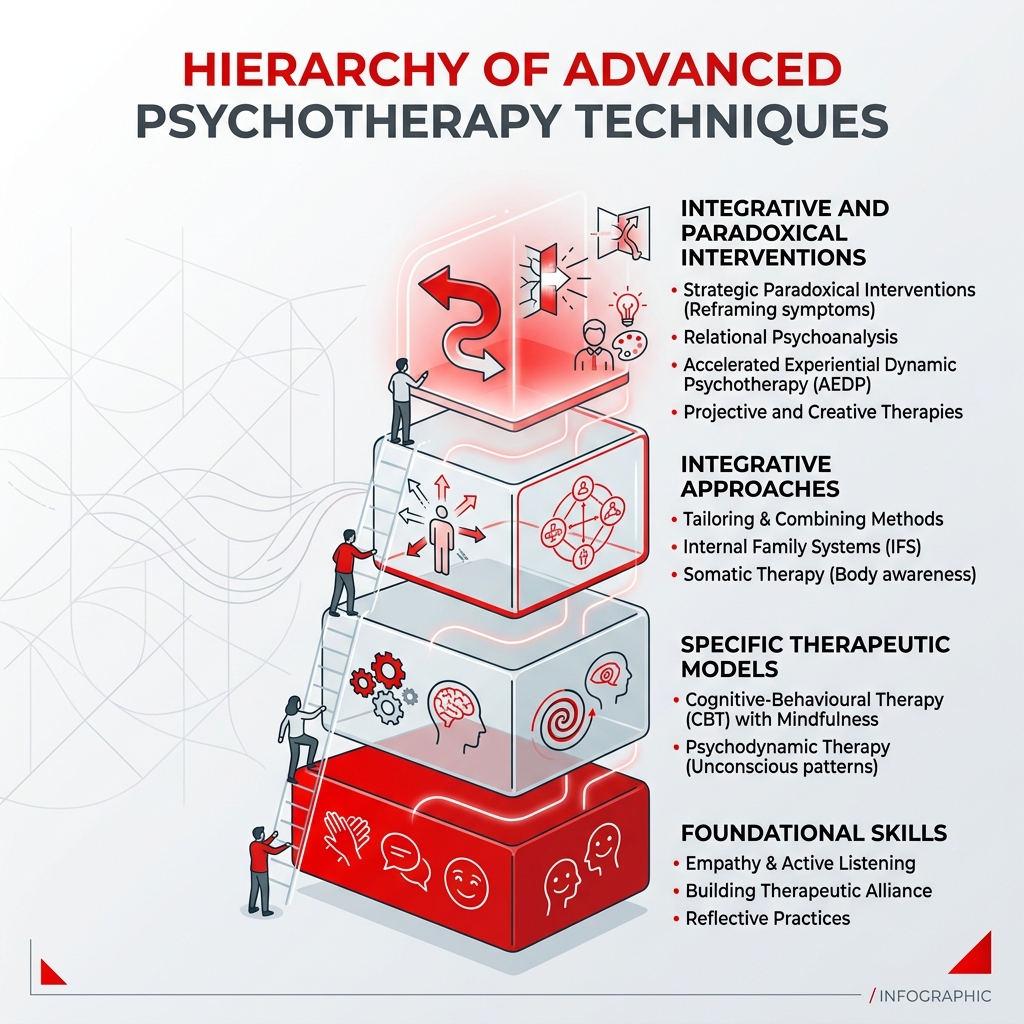
- Psychodynamic therapy – Explores unconscious patterns, early relationships, and defence mechanisms to understand current behaviour.
- Cognitive-Behavioural Therapy (CBT) with mindfulness – Combines structured thought-challenging with present-moment awareness for emotional regulation.
- Relational Psychoanalysis – Focuses on the therapeutic relationship itself as a vehicle for change, working with transference and countertransference.
- Accelerated Experiential Dynamic Psychotherapy (AEDP) – Targets core emotional experiences and state transformations for rapid, lasting change.
- Integrative approaches – Draws from narrative therapy, Internal Family Systems (IFS), somatic therapy, and solution-focused methods to meet each client’s needs.
- Projective and creative therapies – Uses metaphor, dream analysis, and expressive arts to access material that is difficult to reach through direct conversation.
- Paradoxical interventions – Strategically reframes resistance and symptoms to shift deeply entrenched patterns.
These approaches are not just for crisis situations. They are for anyone who wants to understand themselves more deeply — whether you are navigating a difficult life transition, working through relationship patterns, or processing experiences that have stayed with you longer than expected.
For many people living abroad, in cities like Barcelona, Madrid, or Valencia, these questions can feel especially pressing. The distance from familiar support systems, the complexity of building a new life in a different culture, and the everyday challenges of expat life can bring long-standing emotional patterns to the surface in unexpected ways.
That is precisely where advanced therapeutic work becomes most valuable. Rather than managing symptoms alone, these methods aim to get to the root — helping you understand why you feel the way you do, and giving you real tools to change it.
This guide breaks down the core concepts, techniques, and research behind advanced counseling and psychotherapy, so you can make sense of what is available and what might be most useful for you.
Core Principles of Advanced Counseling and Psychotherapy
The foundation of advanced practice rests on the understanding that human behaviour is rarely a straight line. It is influenced by a complex web of unconscious thoughts, desires, and memories that are often inaccessible to our everyday awareness. These hidden forces can shape how we react to stress, form attachments, and view ourselves.
Advanced practitioners move beyond “manualised” therapy. Instead, they use nonlinear thinking to spot patterns that aren’t immediately obvious. This involves a deep commitment to the therapeutic alliance — the relationship between the therapist and the client.
Research shows that therapist effects account for about 8% to 9% of the variance in outcomes, which is actually higher than the specific treatment type used. This means the skill, empathy, and presence of the therapist are vital. For those interested in the nuances of these methods, you can find more info about Psychodynamic Psychotherapy to see how these theories translate into modern practice.
The Role of Case Formulation
One of the most critical skills in advanced therapy is case formulation. Think of it as a bespoke roadmap for your healing. Rather than just matching a diagnosis to a treatment, a therapist constructs a formulation that integrates your personal history, cultural background, and specific psychological needs.
The Handbook of Psychotherapy Case Formulation describes this as the “invisible force” that guides therapy. It ensures that every intervention is intentional. For an expat living in a city like Málaga or Alicante, a good formulation will also consider multicultural factors — such as the impact of relocation, language barriers, and the “messiness” of adapting to a new country.
Mechanisms of Therapeutic Change
How does change actually happen? In advanced techniques for counseling and psychotherapy, change is usually driven by three key mechanisms:
- Insight: Gaining a deep, visceral understanding of your internal world.
- Affect Processing: Learning to sit with and move through intense emotions rather than avoiding them.
- State Transformations: Moving from a “self-at-worst” state (driven by fear or shame) to a “self-at-best” state (characterised by clarity and vitality).
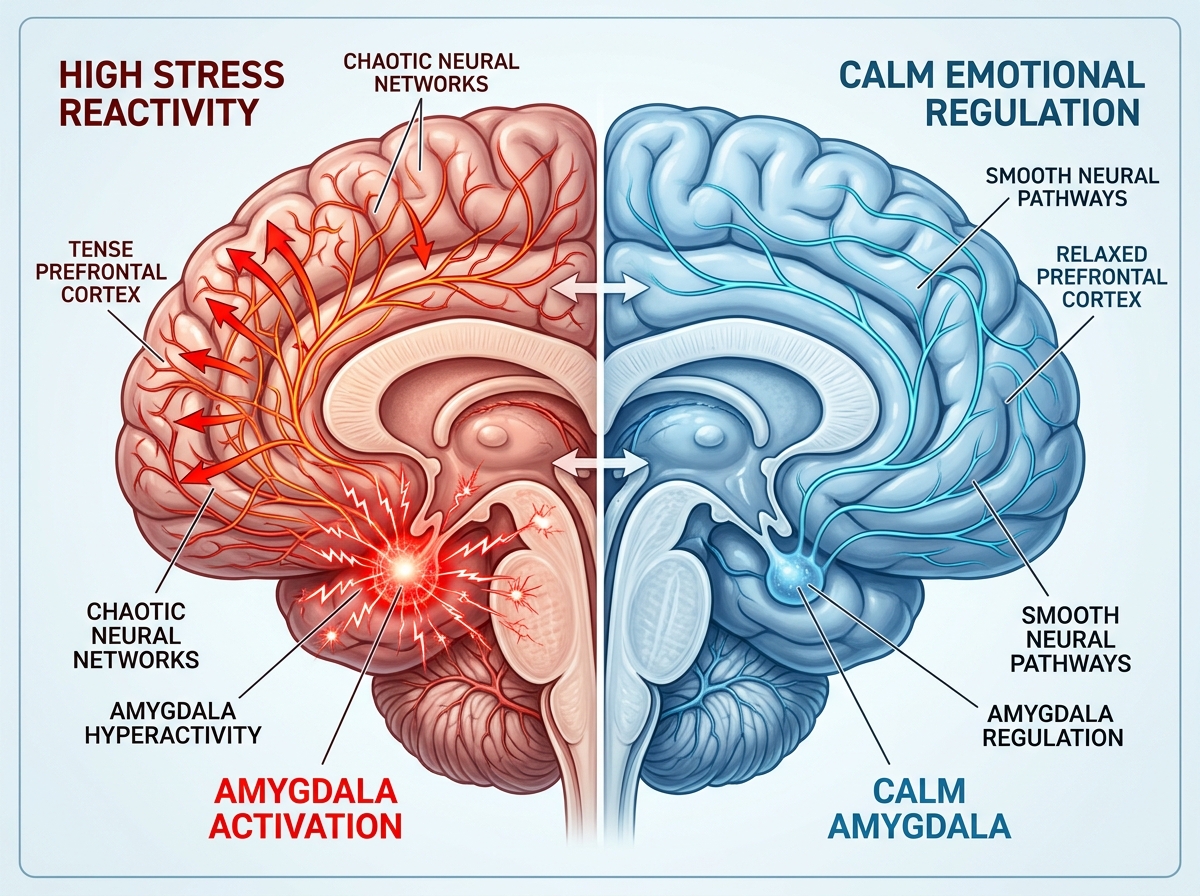
Neuroscience shows that these shifts aren’t just mental; they involve the brain’s emotional centres like the amygdala and prefrontal cortex.
Advanced Techniques for Counseling and Psychotherapy: Classic and Modern Models
Advanced therapy combines established and modern techniques. For example, Adler’s Push-Button technique helps clients recognise their ability to influence emotional states, while the ABC Model helps identify and challenge beliefs that contribute to distress.
Learn more about the ABC Model and Rational Emotive Behaviour Therapy (REBT) through the Albert Ellis Institute.
Modern practitioners, such as Dr. Christian Conte, have expanded these basics into original models like the ‘Five Errors of Communication’ and the ‘Four C’s of Parenting’. These models provide practical ways to manage high-conflict situations and improve relational dynamics, whether in a family setting or a professional environment.
Practical Guidelines for Advanced Techniques for Counseling and Psychotherapy
Mastering advanced techniques requires more than just knowing the theory; it requires high-level execution of basic skills:
- Active Listening and Empathising: This isn’t just nodding; it’s “nonlinear listening” — hearing what is not being said.
- Self-Disclosure: Used sparingly and strategically to strengthen the therapeutic bond.
- Dealing with Resistance: Instead of pushing against a client’s “defences,” an advanced therapist might use paradoxical interventions. For example, if a client is terrified of failure, the therapist might “prescribe the symptom” or suggest a “postponement” of change to lower anxiety and neutralise the power struggle.
Creative and Projective Therapies
Sometimes, words aren’t enough. Advanced practice often incorporates creative methods to bypass the conscious mind’s filters.
- Metaphor Therapy: Using stories or analogies to describe complex feelings.
- Dream Analysis: Exploring the “latent” or hidden meanings behind your dreams to uncover unconscious conflicts.
- Defense Mechanism Analysis: Identifying patterns like projection (attributing your feelings to others) or rationalisation.
These techniques are closely linked to Narrative Therapy, where clients are encouraged to “re-author” their life stories, moving from a position of victimhood to one of agency and strength.
Navigating Complex Relational Dynamics and Psychoanalysis
In advanced relational work, the focus shifts to the “here-and-now.” This involves examining transference — where a client unconsciously redirects feelings about a past figure (like a parent) onto the therapist. Conversely, therapists must manage countertransference — their own emotional reactions to the client.
Understanding these dynamics is essential for breaking the “repetition compulsion,” which is the tendency to repeat painful relationship patterns from the past. By exploring these in the safety of the therapy room, clients can develop healthier “object relations” (how they relate to others and themselves).
Managing Multiple Transferences
Clients often bring multiple layers of transference to a session. An advanced therapist maintains a non-judgmental, curious attitude to explore these patterns as they arise. This collaborative process fosters a deeper therapeutic connection, allowing the client to feel truly seen.
This approach is a hallmark of Interpersonal Therapy, which focuses on improving current relationships to relieve psychological symptoms.
Advanced Strategies for Personality Disorders and Trauma
For complex conditions like personality disorders or deep-seated trauma, standard short-term therapies may not be enough. Transference-based treatments have shown significant success in improving interpersonal functioning for those with severe personality pathology.
Scientific research on Psychodynamic Therapy efficacy indicates that while long-term therapy may have higher direct costs, it often leads to more sustainable, long-term change for personality disorders and chronic depression compared to brief interventions. For trauma specifically, integrating these insights with EMDR Therapy can help process distressing memories while addressing the relational impact of the trauma.
Mastering Advanced Integrative and Holistic Approaches
The modern trend in advanced techniques for counselling and psychotherapy is integration. This means combining the best of different worlds. For example, combining Mindfulness with CBT helps clients stay grounded in the present while they challenge negative thought loops.
Models like Accelerated Experiential Dynamic Psychotherapy (AEDP) take this further by focusing on “dyadic regulation” — the idea that we heal best in connection with another person. By somatic focusing (paying attention to physical sensations), clients can access “core affects” that lead to profound breakthroughs.
This aligns with Somatic Therapy, which recognises that the body often remembers what the mind tries to forget.
Integrating Internal Family Systems and Narrative Therapy
Another powerful integration is “parts work” from Internal Family Systems (IFS). This involves identifying different “parts” of yourself — such as a “protector” part that uses anger to hide vulnerability. When combined with Narrative Therapy, clients can amplify their strengths and reframe their life stories.
You can learn more about this by exploring IFS Therapy, which is particularly effective for resolving inner conflicts.
Future Directions in Advanced Techniques for Counseling and Psychotherapy
The field is constantly evolving. We are seeing a greater integration of neuroscience, helping therapists understand the biological underpinnings of emotional change. There is also a move toward “deliberate practice” — where therapists engage in ongoing supervision and feedback to refine their skills, much like a master musician or athlete.
Furthermore, digital tools are being used to enhance the therapeutic process, and there is a renewed focus on cultural humility. For expats in Spain, this means working with therapists who understand the nuances of the international experience and the specific stresses of living in hubs like Valencia or Seville.
Finding Advanced Therapeutic Support: Navigating Your Options
When you are looking for therapy that uses these advanced techniques, it is important to understand the different settings available to you.
Considerations for Public Health Systems
Spain’s public healthcare system is an important resource, but high demand can mean long waits, infrequent sessions, and a focus on short-term symptom management rather than deeper therapeutic work.
Evaluating Large Online Therapy Platforms
Large online platforms may be affordable and convenient, but algorithm-based matching can overlook cultural nuances. Privacy concerns and therapist turnover may also disrupt consistent, long-term care.
Why Therapy in Barcelona Excels in Advanced Care
Therapy in Barcelona offers a different experience. We are a private-pay service, which allows us to maintain a high standard of personalised care and strict privacy — we never sell your data.
Founded by Leigh Matthews, an Australian Psychologist and expat who moved to Barcelona in 2011, our practice was born from a real understanding of the expat journey. We don’t just assign you to the next available person.
Our intake process is thorough because we believe that matching you with the right therapist is the most important step for a positive outcome. Our team consists of highly qualified, psychology-trained professionals who are expats themselves.
We offer culturally sensitive support across Spain, including Barcelona, Madrid, and Valencia, ensuring that you work with someone who truly “gets” the international life.
Frequently Asked Questions about Advanced Psychotherapy
What distinguishes advanced techniques from basic counseling?
Advanced techniques involve “nonlinear thinking.” While basic counseling might focus on active listening and support, advanced methods integrate multiple modalities (like CBT and psychodynamic principles) and actively manage complex relational dynamics like countertransference and resistance.
Is psychodynamic therapy as effective as CBT?
Yes. Both approaches can be effective for treating depression. However, psychodynamic therapy may offer greater long-term benefits for personality disorders and complex relational issues because it focuses on underlying patterns and root causes, not just symptoms.
How do advanced techniques help expats specifically?
Expats often face cultural adjustment, identity shifts, and isolation. Approaches such as Relational Psychoanalysis and Narrative Therapy can help you process these experiences and build a stronger sense of self in your new home.
Conclusion
Mastering the mind through advanced therapeutic techniques is a journey toward professional excellence and personal liberation. Whether it’s through the deep exploration of the unconscious in psychodynamic work or the structured integration of mindfulness and CBT, these methods offer a pathway to lasting change.
At Therapy in Barcelona, we are committed to being the therapists we would want to work with. We understand that life abroad is a beautiful but often challenging adventure. If you’re ready to move beyond the surface and explore these advanced approaches, we are here to support you.
If you’d like support, book a Free Discovery Call. We see clients online worldwide, including the USA and Canada, and in person at our sanctuary in the heart of Barcelona. For more information on how we can help, explore more info about our services.
