


Finding Support When You Need It Most

Mental health therapist near me is one of the most common searches people make when they’re ready to reach out for professional support. If you’re looking for immediate guidance on finding a local therapist, here’s a quick summary:
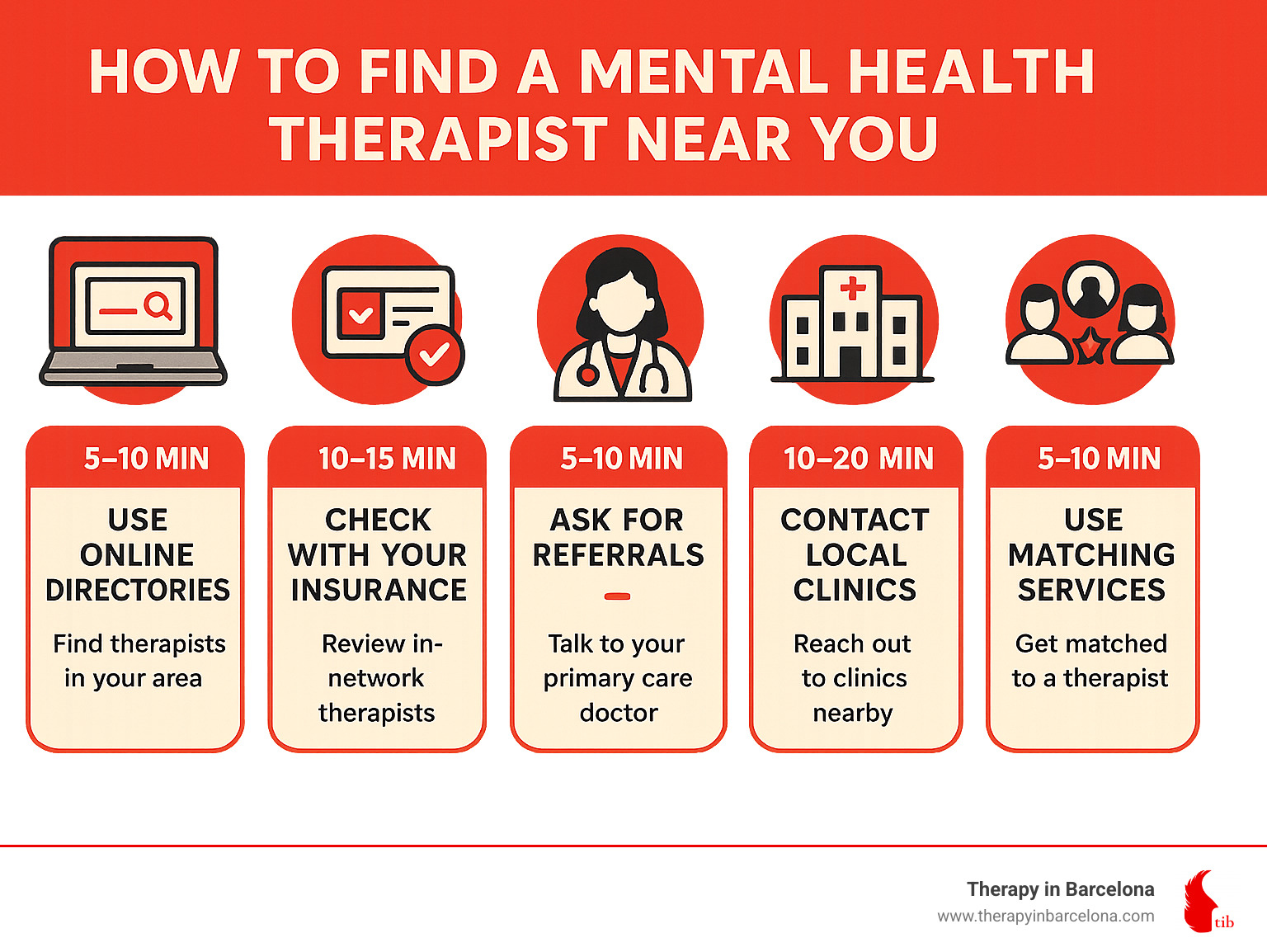
How to Find a Mental Health Therapist Near You:
- Use online directories like Psychology Today, TherapyRoute, or BetterHelp
- Check with your insurance provider for in-network therapists
- Ask for referrals from your primary care doctor
- Contact local mental health clinics or community centers
- Use therapist-matching services that consider your specific needs
When searching for mental health support, especially in a foreign country, the process can feel overwhelming. Whether you’re dealing with anxiety, depression, relationship issues, or simply need someone to talk to, finding the right therapist who understands your unique circumstances is crucial to your wellbeing.
For internationals and expats, this search comes with additional challenges. You might be looking for someone who speaks your language, understands the specific stresses of living abroad, or can help you steer cultural adjustments that impact your mental health.
As Leigh Matthews, founder of Therapy in Barcelona and an Australian psychologist who has lived in Barcelona since 2011, notes: “Finding an English-speaking therapist who truly understands expat life can be a challenge—that’s why I created this practice to fill that gap.”
The good news is that with the right approach, you can find a therapist who meets your needs, whether you prefer in-person sessions, online therapy, or a hybrid approach. And with the growth of telehealth options, geographic barriers are less limiting than ever before.
In this guide, we’ll walk you through everything you need to know about finding a mental health therapist near you, with special attention to the unique needs of internationals and expats.
Do I Really Need Therapy? Early Signs & Self-Checks
Wondering if you need therapy is a common first step before searching for a mental health therapist near me. For internationals living in Barcelona or elsewhere abroad, this question carries unique dimensions as you steer life in a new culture.
Many of us experience challenges that therapy can help address, especially when living in a foreign country. Your feelings aren’t just “part of the expat experience” if they’re significantly affecting your wellbeing.
As you consider whether therapy might be helpful, watch for these early warning signs:
- Persistent low mood or anxiety that doesn’t seem to lift
- Cultural adjustment struggles that feel overwhelming
- Relationship difficulties, particularly those complicated by cultural differences
- Sleep disruptions or changes in your eating patterns
- Feelings of isolation in your new environment
- Unexplained physical symptoms without clear medical causes
- Trouble concentrating or making everyday decisions
“I was very anxious to start therapy when I first contacted Therapy in Barcelona,” one client shared. “I was very glad to have found a place that offered therapy in English, as it is more comfortable and also with therapists that are also foreigners in Spain, as cultural differences may be easier to understand.”
When Everyday Stress Tips Into Trouble
Living abroad brings exciting opportunities alongside unique challenges. The vibrant streets of Barcelona might feel exhilarating one day and overwhelming the next. But how do you know when normal adjustment stress crosses into territory where professional support would be beneficial?
Pay attention to these red flags that suggest your stress may have intensified beyond what’s manageable on your own:
Feeling unable to handle daily responsibilities that you previously managed with ease. Perhaps work tasks pile up, or simple errands feel impossibly daunting.
Withdrawing from social connections and activities you once enjoyed. Maybe you’re declining invitations or avoiding language exchanges you previously looked forward to.
Using alcohol or substances more frequently to cope with difficult emotions or situations.
Experiencing panic attacks or intense anxiety that interferes with your ability to engage in daily life.
Noticing that your mood is affecting your work performance or your relationships with others.
Having thoughts of harming yourself or feeling that life isn’t worth living.
The transformative power of therapy is real. As another client noted, “I think already a month or two after starting weekly sessions my family noticed a change, and are now proud of my more positive attitude and higher confidence.” Professional support can help turn things around when life abroad feels overwhelming.
Self-Assessment Tools You Can Try First
If you’re uncertain whether therapy is right for you, several self-assessment resources can help you gauge your mental wellbeing:
Mood tracking apps provide insights into your emotional patterns. Tools like Daylio, Moodfit, or MoodMission can help you identify triggers and track changes in your wellbeing over time.
Online screening questionnaires from reputable mental health organizations offer structured ways to assess your symptoms. While not diagnostic, they can indicate whether professional support might be beneficial. The Mental Health America screening tools are particularly helpful for initial self-assessment.
Journaling with specific prompts focused on emotional awareness can reveal patterns you might not otherwise notice. Try writing about your feelings at different times of day, or reflecting on what triggers particular emotions.
Self-reflection exercises help identify patterns in your thoughts and behaviors. Set aside quiet time to consider how you’re really doing across different areas of life—work, relationships, self-care, and personal growth.
These tools provide valuable insights but aren’t substitutes for professional assessment. As one Therapy in Barcelona client wisely noted, “To one extent or another, everyone is in need of therapy as not everyone has all the tools and knowledge to take care of their mind.”
Living abroad presents unique mental health challenges. Cultural differences, language barriers, and distance from familiar support systems can amplify everyday stressors. Recognizing when you need support is a sign of strength, not weakness—and finding a mental health therapist near me who understands the expat experience can make all the difference in your journey toward wellbeing.
Who’s Who in Mental Health Care
When searching for a mental health therapist near me, you’ll encounter various types of professionals. Understanding the differences can help you find the right match for your needs.

Types of Mental Health Professionals
When I first moved to Barcelona as an expat, I was confused about the different mental health titles and qualifications. You might be feeling the same way! Let me break it down for you.
Psychologists hold doctoral degrees (PhD, PsyD) in psychology and bring expertise in psychological assessment, therapy, and testing. While they’re highly trained in therapeutic approaches, they typically cannot prescribe medication in most countries.
Psychiatrists, on the other hand, are medical doctors specializing in mental health who can prescribe medication. They might offer therapy sessions, but many focus primarily on medication management and work collaboratively with therapists.
Counselors, Psychotherapists and Therapists usually have master’s degrees in counseling, psychology, or related fields. They provide talk therapy for a wide range of concerns, from everyday stress to more complex issues.
Social Workers with clinical training (like LCSWs) offer therapy while also helping connect you with community resources – particularly valuable when navigating a new country.
Psychiatric Nurses have specialized training in mental health care and may provide therapy. In some regions, they can prescribe medication under supervision.
At Therapy in Barcelona, our team consists of highly qualified, English-speaking therapists from diverse cultural backgrounds. We understand the expat experience and bring specialized approaches custom to meet the unique needs of internationals living abroad.
Therapy Modalities at a Glance
Different therapists use different approaches – think of them as different roads leading to the same destination of improved wellbeing. Here are some common ones you might encounter:
Cognitive Behavioural Therapy (CBT) helps you identify and change unhelpful thought patterns and behaviours that might be keeping you stuck. It’s practical, structured, and often includes homework between sessions.
Acceptance and Commitment Therapy (ACT) teaches you to accept difficult thoughts and feelings rather than fighting them, while committing to actions that enrich your life according to your values.
Internal Family Systems (IFS) views the mind as naturally having different “parts” and works with these aspects of yourself to promote healing and integration.
Eye Movement Desensitization and Reprocessing (EMDR) is particularly effective for trauma, using bilateral stimulation (often eye movements) to help process difficult memories in a new way.
Mindfulness-Based Approaches incorporate meditation and present-moment awareness to help you relate differently to thoughts and feelings.
Creative Arts Therapies use art, music, or movement as tools for expression and healing when words alone aren’t enough.
At Therapy in Barcelona, we offer this diverse range of approaches because we believe therapy isn’t one-size-fits-all. As we often tell our clients: “We tailor therapy to each person’s needs by blending evidence-based practices proven to work. We allow you to express yourself while providing the structure, skills and strategies you need to create real change.”
In-Person, Group, or Telehealth?
When looking for a mental health therapist near me, you’ll need to consider which format works best for your lifestyle and preferences:
In-Person Therapy creates a dedicated space away from your daily life where you can focus completely on your wellbeing. Many clients value the face-to-face connection and the ritual of physically going to a session. It can be particularly beneficial for certain therapies like EMDR or play therapy with children.
Group Therapy brings together people facing similar challenges, reducing the isolation that can be particularly acute for expats. It offers peer support, multiple perspectives, and is often more affordable than individual sessions.
Telehealth/Online Therapy has revolutionized access to mental health care, especially for the international community. It offers flexibility with scheduling, eliminates travel time (perfect for busy professionals or parents), and allows you to connect with a therapist regardless of location – even if you travel frequently.
Therapy in Barcelona offers both in-person sessions at our welcoming offices in Calle Paris 162-164 in Barcelona’s Eixample district and secure online therapy for expats worldwide (except USA and Canada).
As one of our clients shared: “Approachable and easy sessions and the availability of therapists working in different languages is helpful for foreigners living in Barcelona.”
Whether you prefer the connection of sitting in the same room with your therapist, the community of a group, or the convenience of online sessions from your home, the most important thing is finding an approach that feels right for you.
Finding a “Mental Health Therapist Near Me”: Your Step-by-Step Search Guide
Now that you understand what to look for, let’s explore how to find a mental health therapist near me with a systematic approach that works—especially if you’re an expat navigating a new country’s mental health system.

Step 1 – Start With Trusted Directories
Finding the right therapist often begins with searching reliable resources that can connect you with qualified professionals. Several reputable online directories can simplify your search:
Psychology Today offers one of the largest therapist directories with detailed profiles and helpful filtering options to narrow your search based on specialty, language, and approach. The APA Psychologist Locator is particularly helpful for those in the United States seeking licensed psychologists.
If you’re looking for convenience and personalized matching, services like BetterHelp can connect you with therapists based on your specific needs and preferences. They have over 31,000 licensed therapists and have helped more than 5.3 million people find appropriate care. Meanwhile, Headway focuses specifically on helping clients find in-network mental health providers, with the average client saving approximately 75% on therapy sessions.
A newcomer to the scene, but founded by Therapy in Barcelona and not connected to venture capitalist funding, Online Therapy Europe is about to launch their beta platform in 2025.
For expats in Barcelona or Spain, specialized services like Therapy in Barcelona’s therapist matching process can be invaluable. Their personalized approach ensures you’re matched with a therapist who truly understands the unique challenges of expat life—something generic directories might miss.
Step 2 – Leverage Community & Expat Networks
The power of community connections shouldn’t be underestimated when searching for a mental health therapist near me—especially when you’re far from home.
Expat Facebook groups often contain hidden gems of information, with members freely sharing recommendations for therapists who understand the international experience. These word-of-mouth referrals can lead you to professionals who have already helped others in similar situations.
International schools frequently maintain lists of English-speaking therapists who work with families and children navigating cross-cultural challenges. Your company’s HR department might offer Employee Assistance Programs with confidential therapy referrals as part of your benefits package.
Don’t overlook embassy or consulate websites, which sometimes list mental health resources specifically for their nationals living abroad. The US Embassy in Spain, for example, maintains a list of English-speaking medical professionals including mental health providers.
Leigh Matthews founded Therapy in Barcelona after experiencing the challenge of finding English-speaking mental health support as an expat. Unfortunately, she didn’t find what she needed at that time: an English speaking therapist who could understand her situation as a foreigner navigating a major adjustment to a new life in a new culture. This personal experience drives their mission to ensure no expat faces that same struggle.
Step 3 – Shortlist Using Filters That Matter
Once you have some potential options, it’s time to narrow down your search using criteria that truly matter for your situation:
Specialization is crucial—does the therapist have experience with your specific concerns, whether that’s cultural adjustment, relationship issues, or anxiety? Language fluency matters tremendously when discussing complex emotional topics; being able to express yourself in your native language can make therapy significantly more effective.
Consider the therapist’s cultural competence—do they understand cultural nuances relevant to your background and current situation? Practical matters like availability (do their hours work with your schedule?) and session format (in-person, online, or hybrid options) will affect how easily you can engage with therapy long-term.
Finally, be realistic about cost—what are their fees, and do they work with insurance or offer sliding scale options for those with financial constraints?
Therapy in Barcelona emphasizes the importance of this matching process: “We take time to ensure we make the best match between therapist and client to improve the probability of positive therapeutic outcomes from the outset. We don’t just match a client with the next available professional. Some potential clients find this information-gathering a hassle, but it is key to providing a personalised and effective service.”
This careful approach might take slightly longer initially, but it significantly increases your chances of finding a therapist who truly “gets” you—saving time, money, and emotional energy in the long run.
How to Know You’ve Found The Right Fit
Finding a mental health therapist near me is just the first step. Ensuring they’re the right fit for you is equally important for your therapeutic journey.

The relationship between you and your therapist—often called the therapeutic alliance—is one of the strongest predictors of positive outcomes in therapy. When you feel understood, respected, and genuinely supported, healing becomes possible.
As one Therapy in Barcelona client shared: “I felt very comfortable and the communication was great! I was able to dig in to some sensitive subjects in the first appointment, which was beyond my expectations. Booking the appointment was easy. I’m feeling very optimistic about the potential of these sessions.”
Questions to Ask in a First Call
When you first speak with a potential therapist, trust your instincts about how comfortable you feel. Many therapists, including those at Therapy in Barcelona, offer a free initial consultation or findy call to help ensure a good match before committing to regular sessions.
Consider asking about their approach to therapy to understand their style and methods. You’ll want to know if they’ve worked with clients facing similar issues to yours—experience with your specific concerns can be invaluable, especially for expats dealing with cultural adjustment.
It’s helpful to learn how they typically structure sessions so you know what to expect. Understanding how you’ll measure progress together helps set realistic expectations for your therapeutic journey.
For practical matters, ask about their policy for emergencies so you’ll know how to reach help between sessions if needed. And if you’re living abroad, definitely inquire about their experience working with expats or internationals—this understanding is crucial for contextualizing your experiences.
Another Therapy in Barcelona client noted: “I feel incredibly comfortable and safe with my therapist. I recognise the importance of the therapeutic relationship and I am really happy with the therapy so far.”
Red Flags to Watch For
While searching for a mental health therapist near me, be mindful of warning signs that might indicate a therapist isn’t right for you.
Be wary of judgmental responses to your concerns or background. A good therapist creates a safe, non-judgmental space where you can explore difficult emotions.
Watch for poor boundaries, such as sharing too much personal information or contacting you inappropriately outside sessions. Professional boundaries are essential for effective therapy.
Be cautious of pushy sales tactics or pressure to commit to lengthy treatment packages upfront. Ethical therapists respect your autonomy and financial boundaries.
If you encounter vague or unclear credentials or a therapist seems unwilling to discuss their training, consider this a red flag. Transparency about qualifications is important.
Be skeptical of therapists who offer guarantees of quick fixes for complex issues. Healing takes time, and honest therapists acknowledge this reality.
Finally, be cautious of one-size-fits-all approaches rather than individualized treatment. Your therapy should be custom to your unique needs and circumstances.
At Therapy in Barcelona, the focus on personalized matching reflects an understanding that the right therapeutic relationship is fundamental to healing. As they explain, “We take time to ensure we make the best match between therapist and client to improve the probability of positive therapeutic outcomes from the outset.”
Trust your gut feeling when evaluating potential therapists. If something doesn’t feel right, it’s perfectly acceptable to continue your search until you find someone with whom you feel comfortable and understood.
What Will It Cost? Fees, Insurance & Affordable Options
Understanding the financial side of therapy is often a key concern when searching for a mental health therapist near me. Let’s break down what you might expect to pay and explore ways to make therapy more accessible.
Typical Therapy Costs
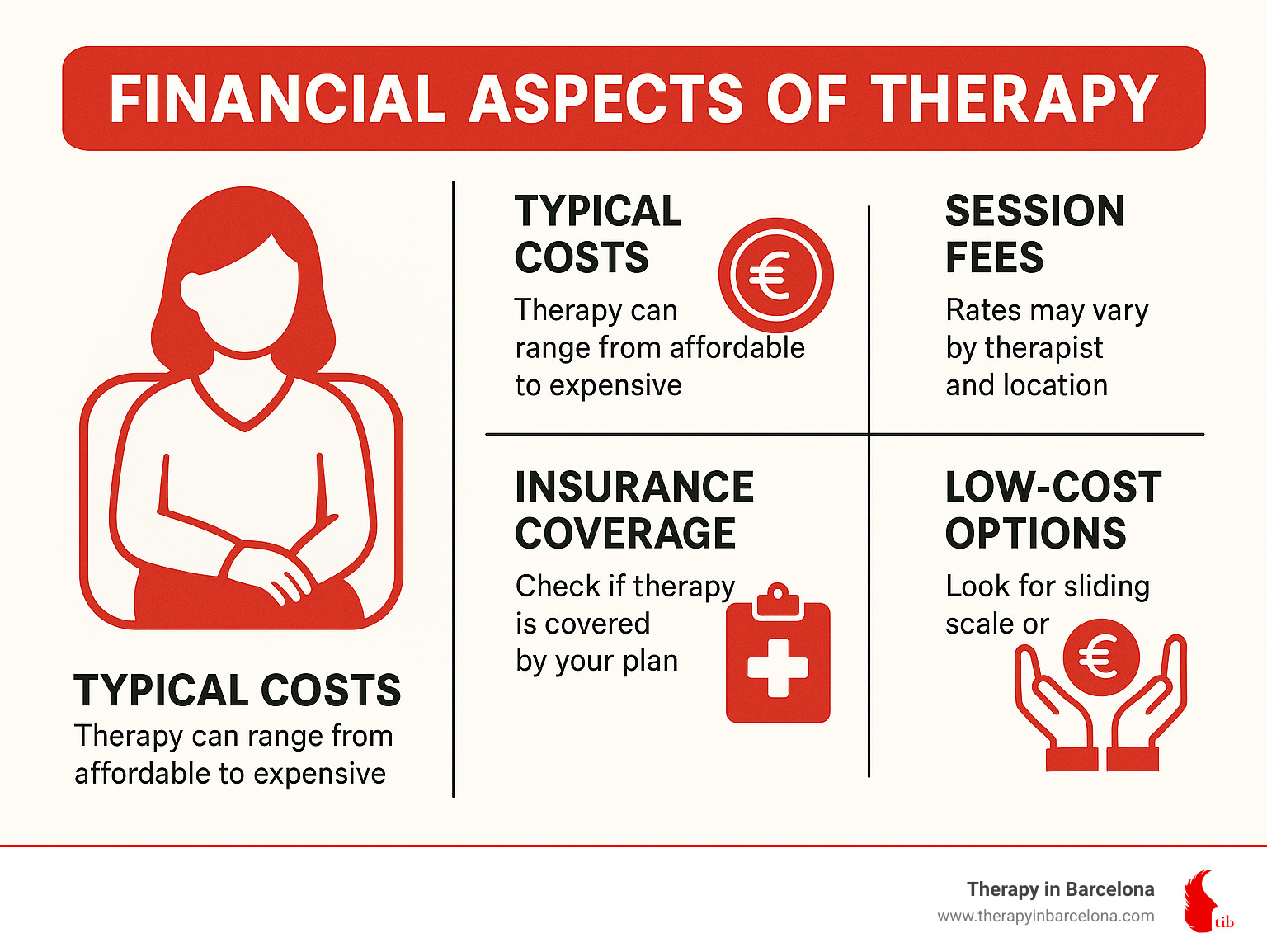
The cost of therapy varies widely depending on where you live, your therapist’s qualifications, and how you connect with them. In Europe, private practice therapists typically charge between €60-€150 per session, while at Therapy in Barcelona, fees range from 70 to 95 Euros (including VAT) for individual therapy and from 90-115 Euros (including VAT) for couples therapy.
If you’re considering low-cost, online options, platforms like BetterHelp offer subscription-based models averaging $70 USD to $100 USD per week, which can be more economical for some.
“Our collaborators set their own prices,” explains Therapy in Barcelona. “Once you are matched to a therapist, we will let you know their fees and preferred payment method.”
Insurance coverage for therapy is a bit of a mixed bag:
In the United States, many therapists accept insurance, though finding in-network providers can be challenging (that’s where platforms like Headway can be incredibly helpful). European public healthcare systems may cover some therapy sessions, but waiting lists can stretch for months. Meanwhile, private insurance policies might reimburse a portion of your therapy costs, though you’ll typically need to pay upfront and submit claims afterward.
If you have an HSA or FSA account in the US, good news – these funds can usually be applied toward therapy expenses, making it a bit easier on your wallet.
Making Therapy Affordable
If you’re concerned about costs (and who isn’t these days?), there are several ways to access therapy at more manageable price points:
Sliding scale fees are offered by many therapists, including some at Therapy in Barcelona, adjusting rates based on your income or financial situation. Don’t be shy about asking – therapists understand that financial constraints shouldn’t be a barrier to mental health support.
Community mental health centers often provide services at reduced rates, while university training clinics offer lower-cost therapy with supervised graduate students who are completing their clinical training.
Group therapy sessions typically cost less than individual therapy while still providing valuable support and insights. For some concerns, this format can be particularly effective, offering the added benefit of connection with others facing similar challenges.
Employee Assistance Programs (EAPs) are a hidden gem that many people forget about. If your company offers an EAP, you might be entitled to several free counseling sessions – worth checking your benefits package!
Investing in therapy is investing in yourself. As one Therapy in Barcelona client shared: “I don’t think I would have been able to accomplish this much without my therapist’s help and guidance. From the very beginning, I felt very comfortable during our conversations.”
While therapy does represent a financial commitment, finding the right support can be truly transformative – and there are options available to make it more accessible, regardless of your budget.
Crisis & Specialised Resources When You Need Help Now
Sometimes you need immediate support before you can find a mental health therapist near me. Whether you’re experiencing an urgent mental health crisis or have specific needs that require specialised care, knowing where to turn can make all the difference.
If You’re in Immediate Danger
Mental health emergencies require prompt attention, just like physical emergencies. If you’re experiencing a crisis:
In Spain, call 112 for emergency services or attend your nearest hospital emergency department.
In Spain, mental health emergencies are usually managed by medical professionals rather than police officers with specialised mental health training, such as Crisis Intervention Teams (CIT) found in countries like the U.S.
If someone is experiencing a mental health crisis, you can call 112, the national emergency number, and request medical assistance. However, there is no guarantee that the responders will have specific mental health crisis de-escalation training.
For additional support, Spain offers several helplines: Samaritans in Spain provides free, English-language support at 900 525 100; El Teléfono de la Esperanza offers crisis and emotional support in Spanish at 717 003 717; and Línea 024 is a national suicide prevention line available 24/7.
Mental health services in Spain are decentralised, meaning what’s available can vary depending on your autonomous community. It’s worth learning about the resources and emergency protocols in your local area.
For those travelling or living abroad, don’t hesitate to go to your nearest emergency room if you’re experiencing severe psychological distress or having thoughts of harming yourself.
Expats should keep their embassy or consulate contact information handy, as they can often provide emergency assistance and connect you with local resources during a crisis.
Research has shown that online cognitive behavioural therapy can be effective for many mental health concerns, with a 2018 study published in the Journal of Medical Internet Research finding comparable outcomes to in-person therapy for certain conditions. This is particularly relevant for expats who may initially need support while searching for a local therapist.
Unique Needs
Mental health care isn’t one-size-fits-all, and finding providers who understand your specific background and challenges can be crucial to effective treatment. Therapy in Barcelona can help locate professionals in our community to support your specific needs if we do not have a therapist who can assist.
New parents struggling with postpartum depression or anxiety can find understanding and support through Therapy in Barcelona, which offers resources in multiple languages and connections to other specialised providers.
At Therapy in Barcelona, we understand that the international community faces unique challenges that require culturally sensitive care. Our team specialises in supporting expatriates, including adults, couples, children, teenagers, international students, digital nomads, and families navigating the complex emotional landscape of living abroad.
As one client shared: “Finding an English-speaking therapist who understands expat life made all the difference in my healing journey.” Our therapists not only speak your language but also understand the unique stressors and adjustment issues that come with building a life in a new country.
Reaching out for help is a sign of strength, not weakness. Whether you need immediate crisis support or specialised care for your unique situation, resources are available to help you on your journey towards better mental health.
Frequently Asked Questions about Finding Local Therapy
Why can’t I just use my GP for everything?
While your family doctor provides excellent general healthcare, they typically don’t have the specialized training needed for in-depth mental health support. Finding a dedicated mental health therapist near me offers several important advantages:
Your therapist brings specialized mental health training that most GPs simply don’t have time to acquire. They can dedicate focused sessions entirely to your mental wellbeing, without the time constraints of a typical medical appointment. Plus, they offer expertise in specific therapeutic approaches custom to your unique situation.
Many people also appreciate having a confidential space separate from their medical care where they can explore sensitive topics freely.
As one Therapy in Barcelona client beautifully expressed: “I have found therapy to be an incredibly positive experience. It has given me space to work out things in my life and I have felt very listened to and understood. I have methods to deal with problems in a way I didn’t before.”
How many sessions will I need?
This is one of the most common questions people ask, and the honest answer is: it depends. The length of your therapy journey varies widely based on several factors:
Your specific concerns and personal goals will naturally influence the timeline. Some issues respond well to brief interventions, while others benefit from more extended exploration. The complexity of what you’re working through plays a significant role too – recent, specific challenges might resolve more quickly than longstanding patterns.
Different therapeutic approaches also work on different timelines. While some people benefit from short-term therapy (typically 8-12 sessions), others find value in longer-term work that allows for deeper exploration.
Most importantly, your therapist will discuss potential timeframes during your initial sessions and regularly review your progress together. Therapy isn’t one-size-fits-all, and your journey is unique to you.
I was struck by what one Therapy in Barcelona client shared after just beginning their journey: “Only had one session but feel like I already have a clear plan for tackling issues going forward with my therapist’s help.” This highlights how even a single session can provide clarity and direction.
Is online therapy as effective as face-to-face?
If you’re wondering whether online therapy really “works,” the research is encouraging. Studies increasingly show that online therapy can be just as effective as in-person therapy for many conditions. Research published in the Journal of Medical Internet Research found that online Cognitive Behavioral Therapy (CBT) produced results comparable to face-to-face CBT for depression and anxiety.
Online therapy offers several distinct advantages that many clients appreciate:
The convenience and accessibility can’t be overstated – no commute means therapy fits more easily into busy schedules. Many people feel more comfortable in their own environment, which can help them open up more freely. The elimination of travel time makes therapy possible for those with mobility challenges or packed calendars.
Perhaps most valuable for expats is the ability to access therapists outside your geographic area. This means you can find someone who truly understands your specific needs, regardless of where you both physically are.
Recognizing these different preferences, Therapy in Barcelona offers both in-person sessions at their Barcelona office and online options, understanding that different clients thrive in different therapeutic environments.
Whether you choose online or in-person therapy, the most important factor is finding a therapist you connect with who understands your unique circumstances as an expat or international.
Conclusion
Finding a mental health therapist near me can feel like navigating uncharted waters, especially when you’re far from home. But remember – seeking help isn’t just okay, it’s a powerful step toward wellbeing.

The journey might begin with uncertainty, but it often leads to profound change. As one Therapy in Barcelona client beautifully expressed: “My time with this therapist has changed my life. It sounds like one of those statements that someone might make up to look good on a website or blog but this really is the case. I was literally saved from darkness and despair that was slowly consuming my soul.”
For internationals navigating life in Barcelona or anywhere in Spain, finding someone who truly “gets it” makes all the difference. That’s what makes Therapy in Barcelona special – their team consists of qualified, English-speaking therapists who are expats themselves. They’ve walked in your shoes and understand the unique challenges of building a life abroad.
Their personalized matching process isn’t just convenient – it’s carefully designed to connect you with a therapist who resonates with your specific needs, cultural background, and therapeutic goals. This thoughtful approach helps create that essential foundation of trust and understanding from your very first session.
Whether you choose an in-person therapist at their welcoming Eixample office, connect online from anywhere in Spain, or work with another provider entirely, taking that first step is something to celebrate. You’re prioritizing your wellbeing in a way that takes courage and self-awareness.
As Leigh Matthews, Therapy in Barcelona’s founder, knows from both professional expertise and personal experience: finding the right therapist who speaks your language (literally and figuratively) can transform your experience abroad from merely surviving to genuinely thriving.
Ready to explore your options? You can book a free discovery call with Therapy in Barcelona or complete their intake form to begin your therapist-matching journey today.
Your search for a mental health therapist near me isn’t just about finding professional support – it’s about finding a partner for your wellbeing journey who understands where you’ve been and can help light the path forward.
