


Why Finding the Right Support Matters When You’re Far From Home

Finding a psychologist malaga english can feel overwhelming when you’re living in a new country. Here’s what you need to know to get started:
Quick Guide to Finding an English-Speaking Psychologist in Málaga:
- Where to look: Online directories (like Doctoralia), expat forums, professional networks, and word-of-mouth recommendations from other internationals.
- What to check: Confirm their experience with expat issues, and ensure they offer sessions in fluent English.
- Therapy options: Choose between in-person sessions in Málaga, online therapy from providers across Spain, or specialist expat services.
- Cost: This is typically a private-pay service; some therapists offer sliding scale fees for those with financial need—just ask.
- First steps: Many therapists offer a Free Discovery Call to see if you’re a good match.
Moving to Málaga is supposed to be an adventure. But somewhere between unpacking boxes and deciphering your first utility bill, the reality can hit differently.
You might find yourself lying awake at 3 AM, wondering if you made the right choice, or feeling isolated in a busy café. These feelings aren’t a sign of failure; they’re a normal part of adjusting to a major life change.
The challenge is explaining complex feelings in a second language. You need someone who understands not just your words, but the cultural context behind them—the homesickness, the language fatigue, or the grief for the career you left behind.
This is why finding the right English-speaking psychologist in Málaga is so important. It’s not about avoiding Spanish culture. It’s about having a space where you can express yourself fully, without anything getting lost in translation, with a therapist who understands the specific struggles of being far from home.
Why Seek an English-Speaking Psychologist in Málaga?
As more internationals make Málaga home, the demand for English-speaking mental health support has grown. And for good reason.
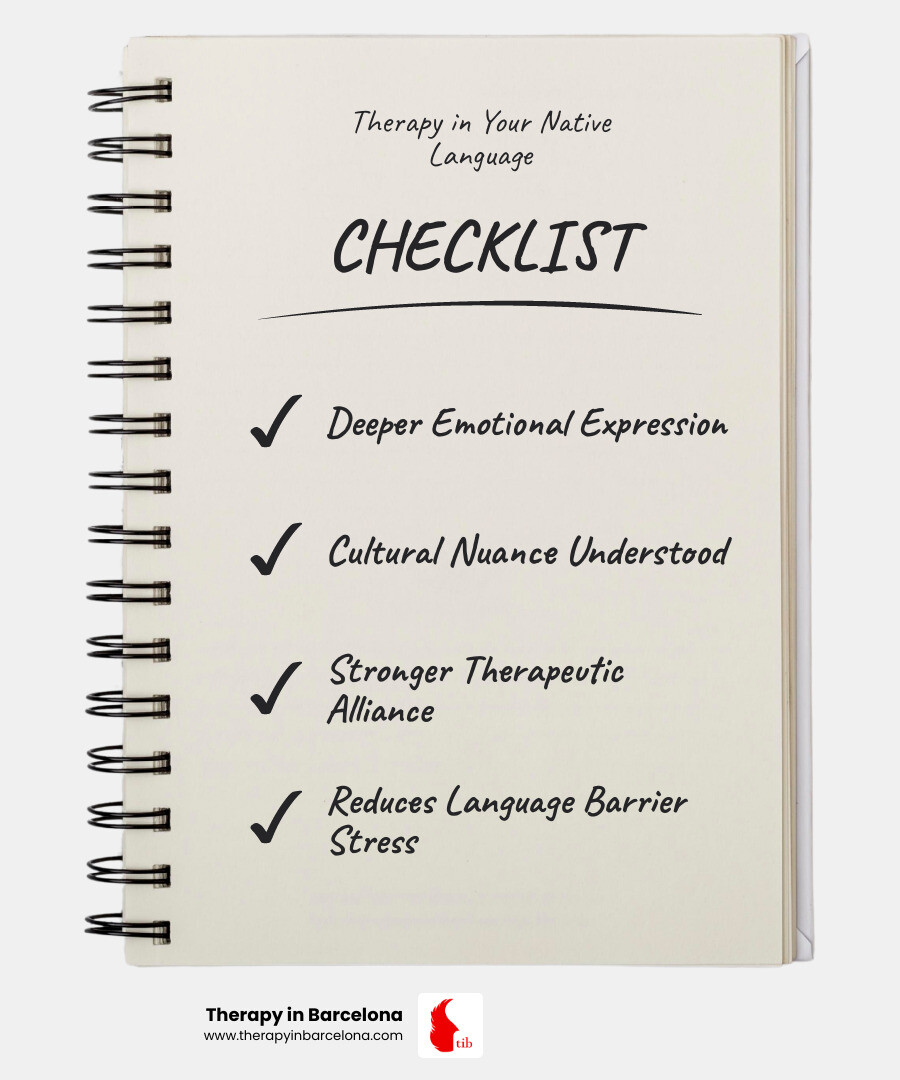
When you’re dealing with persistent worry or relationship struggles, the last thing you need is the mental load of translating your feelings. Therapy works best when you can express yourself fully, without the constant internal editing that comes with speaking a second language.
How do you explain the specific texture of your worry, or the complicated mix of excitement and grief that comes with starting over? These conversations deserve the full range of your emotional vocabulary.
As one of our clients put it: “My therapist speaks perfect English, something that is very important for me, who feels super excluded from social life here, for not speaking Spanish. It was vital that she fully understands me.” That sense of being truly heard can make all the difference.
But it’s not just about language. An English-speaking psychologist malaga english often brings cultural sensitivity. They’re more likely to understand the challenges you face as an expat—the isolation, career uncertainty, or unexpected strain on relationships.
Take Alex, for instance. He’s a 34-year-old from the UK who moved to Málaga for adventure. While Alex is a fictional composite character created to represent common expat challenges, his story is a familiar one. He didn’t expect the profound loneliness that hit him a few months in. Finding an English-speaking therapist meant he could drop the performance and work with someone who intuitively understood what it means to be caught between two cultures.
This need for culturally attuned support isn’t unique to Málaga. Across Spain—in cities like Valencia, Madrid, and Alicante—internationals are seeking therapists who can bridge both the language and cultural gap. For more on why this matters, have a look at the benefits of choosing English-speaking and expat professionals.
The Expat Experience: More Than Just Sunshine
The Instagram version of Málaga leaves out the real challenges:
- Cultural adjustment isn’t a straight line. After the initial honeymoon phase, you might feel frustrated, guilty, or homesick.
- Building a new social circle from scratch takes more energy than most people expect.
- Spanish bureaucracy can feel like a full-time job, especially with a language barrier.
- Work-life balance is different, and it can be hard to find your rhythm.
These challenges can lead to genuine distress. Understanding the psychological aspects of expatriation is crucial. Read about the challenging aspects of living abroad in this article.
The Power of Being Truly Understood
Imagine trying to describe feelings of anxiety in a language you learned as an adult. It’s like painting with only half your colours.
Speaking your native language in therapy gives you access to a deeper emotional vocabulary. You can be precise, use cultural references, and even use humour without worrying it won’t land.
This clarity is vital for the “therapeutic alliance”—the bond between you and your therapist. Scientific research on the therapeutic alliance consistently shows this bond is one of the strongest predictors of positive outcomes. When you can speak freely, you build a stronger, more authentic connection.
That’s the real power of working with a psychologist malaga english. You can use your energy for healing and growth, not for struggling to be understood.
How to Find the Right Psychologist Malaga English For You
Finding the right psychologist malaga english is a personal journey, but it doesn’t have to be a daunting one. Here’s how to make an informed choice that aligns with your needs.
Where to Start Your Search
You’ve decided to seek support—a huge step. Now, where do you begin?
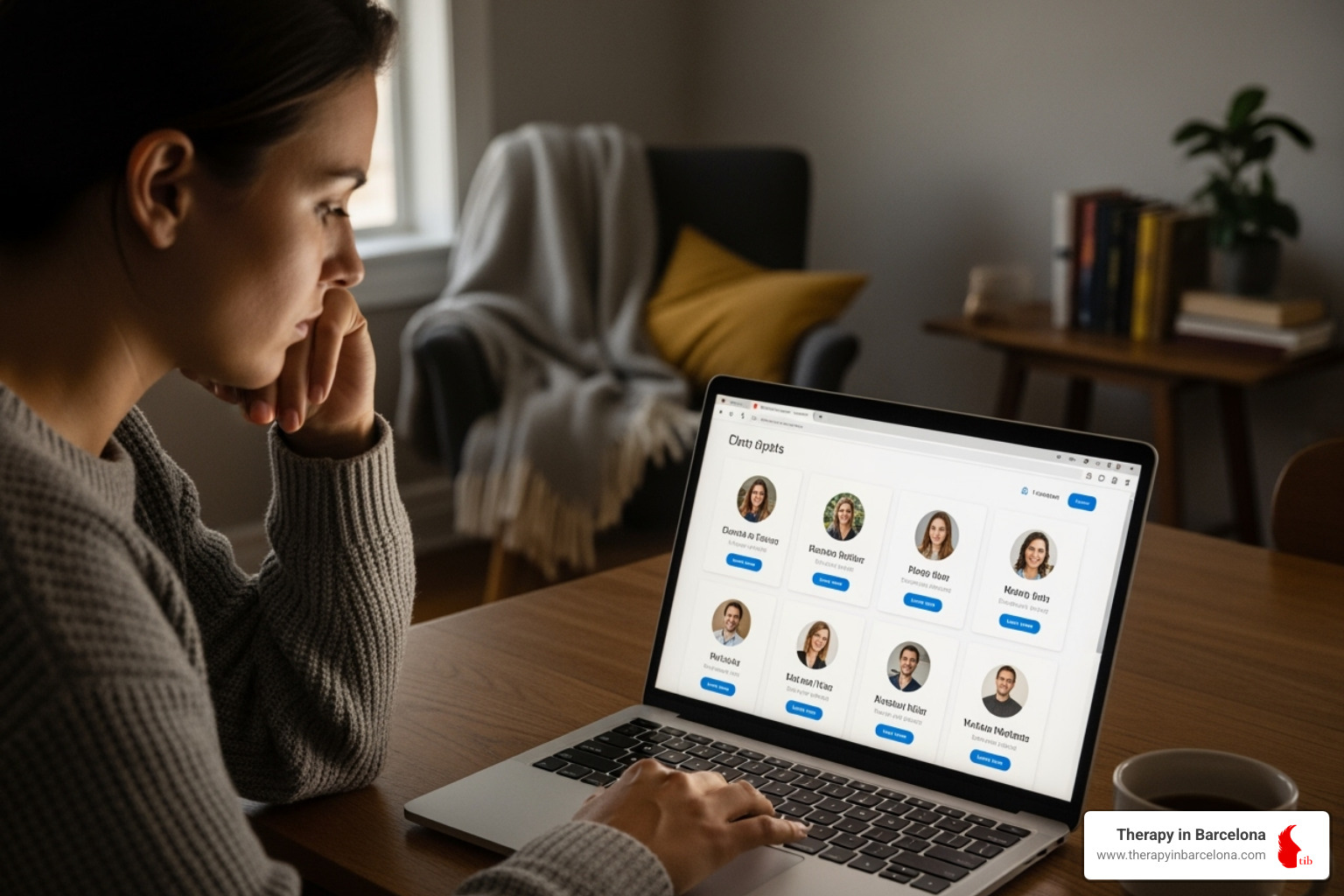
- Online Directories: Platforms like Doctoralia list therapists by speciality and language, with services often starting from around €80 per session.
- Expat Forums and Social Media: Facebook groups for expats in Málaga are invaluable for authentic recommendations.
- Professional Networks: Your embassy, consulate, or international schools may have lists of recommended professionals.
- Word-of-Mouth: Trusted recommendations from friends or colleagues are powerful.
When looking, always check for qualifications. To understand more about vetting a therapist, check our guide on Finding a Therapist in Barcelona.
Comparing Your Therapy Options
You have a few avenues for mental health support in Málaga:
- The Public Healthcare System (Sistema de Salud): Accessible, but often has long waiting lists and it can be hard to find an English-speaking therapist.
- Large Online Therapy Platforms: Convenient, but the matching can be impersonal and therapists may not understand the specifics of expat life in Spain. Some platforms may also sell client data.
- Local Private Practices in Málaga: Can offer a personal touch, but it’s important to check their specific experience with expat issues.
- Specialist Expat Services: This is where services like Therapy in Barcelona stand out. We focus exclusively on the international community and offer:
- Bespoke Therapist Matching: A thorough intake process to find the best fit for you.
- Expat-Specific Cultural Sensitivity: Our therapists are often expats themselves.
- Strict Privacy: We are a private-pay service and do not sell client data.
- Sliding Scale Fees: Some of our therapists offer reduced fees for those with financial need.
Choosing the right option depends on your priorities regarding wait times, cost, and the depth of cultural understanding you seek.
What to Look for in an English-Speaking Psychologist in Málaga
Finding the right fit is crucial. Here’s what to keep in mind:
- Qualifications and Licensing: Ensure they are a ‘psicólogo colegiado’—a licensed psychologist registered with the official College of Psychologists. This guarantees they meet national standards.
- Experience with Internationals: A therapist who understands cultural adjustment and homesickness can offer more relevant support.
- Therapeutic Approach: Consider what might resonate with you, whether it’s Cognitive Behavioural Therapy (CBT), Acceptance and Commitment Therapy (ACT), Psychodynamic, Gestalt, or Internal Family Systems (IFS).
- Good Fit and Rapport: This is critical. You need to feel comfortable and understood. Many therapists offer a Free Discovery Call to help you assess this fit.
- Transparency: A good therapist will be open about their methods, fees, and process.
For further insights, our article on Top English Speaking Therapists in Barcelona may be helpful, as many principles apply universally.
Understanding Therapy in Málaga: What to Expect
Once you’ve found a potential psychologist malaga english, understanding the practical aspects of therapy can help you feel more prepared.

Common Therapy Types and Approaches
Therapy isn’t one-size-fits-all. When looking for a psychologist malaga english, you’ll find professionals who specialise in different types of support.
Individual therapy is the classic one-on-one setting. Many psychologists also offer couples counselling to improve communication, and family therapy to address group dynamics. Many couples therapists draw on evidence-based models such as the Gottman Method or Imago Relationship Therapy. For younger people, child and adolescent therapy provides specialised support. You can learn more about Couples Counselling and what to expect.
Therapists often use an “integrative” approach, drawing from different methods. Common modalities include:
- Cognitive Behavioural Therapy (CBT): Focuses on changing unhelpful thought patterns and behaviours.
- Acceptance and Commitment Therapy (ACT): Helps you accept difficult feelings while committing to value-aligned actions.
- Psychodynamic Therapy: Explores how past experiences influence the present.
- Gestalt Therapy: Emphasises present-moment awareness.
Other approaches like Somatic Experiencing or Solution-Focused Brief Therapy (SFBT) are also available. The key is finding what works for you. For a deeper look, see Therapy in Barcelona: How Therapy Works.
Costs and Logistics
Knowing the practical side makes the process less daunting. Therapy in Málaga is typically a private-pay service. Costs vary, with some therapists charging €55-€70 per session and others starting from €80. Online therapy can sometimes be a more affordable option.
A standard session lasts 50 to 60 minutes. Payment is usually via bank transfer or card. While private therapy is rarely covered by Spanish public health insurance, it’s worth checking if your private international health insurance offers partial reimbursement.
If you’re worried about cost, don’t let that stop you. Some therapists offer sliding scale fees for those with financial need. It’s simply a matter of asking.
How therapy can help with an English-speaking psychologist in Málaga
So, what can therapy actually do for you?
If you’re dealing with persistent worry or are feeling down and unmotivated, therapy can teach you effective coping mechanisms and help you understand the roots of your feelings. It provides a path towards regaining control and vitality.
For relationship issues, therapy offers strategies for better communication and conflict resolution. As one client shared, it helped them “stop a loop of being angry between each other due to bad communication.”
Beyond specific problems, therapy builds resilience and fosters personal growth. It’s a space for self-findy, building confidence, and finding new choices for a more fulfilling life. As another client put it: “Every time I came from a session I had such a big smile and felt really powerful and strong!”
Working with an English-speaking psychologist ensures you get this support from someone who understands your language and your expat journey. For more on this, explore our insights on Therapy for Internationals.
Preparing for Your First Therapy Session
A first therapy session can bring a mix of anticipation and nerves. That’s normal. A bit of preparation can reduce anxiety and help you make the most of this important step.

Key Questions to Ask a Potential Therapist
Before committing, use the Free Discovery Call to interview your potential therapist. You’re deciding if this is someone you can trust. Here are some questions worth asking:
- “What’s your experience with issues like mine?” (e.g., anxiety, cultural adjustment).
- “What therapeutic approach do you use?” (e.g., CBT, ACT, psychodynamic).
- “What are your fees, and do you offer a sliding scale?” Be upfront about your budget.
- “What is your cancellation policy?”
- “What can I expect from our first few sessions?”
- “Do you have experience working with expats?”
Trust your gut. If it doesn’t feel right after the initial conversation, it’s okay to keep looking.
The Difference Between a Psychologist, Psychotherapist, and Counsellor
In Spain, these titles can be confusing. Here’s what you need to know:
- A psychologist (psicólogo/a) holds a university degree in Psychology and, to practise clinically, a specific Master’s degree. They must be registered with the official College of Psychologists (‘psicólogo colegiado’). This is the gold standard.
- A psychotherapist (psicoterapeuta) is a less regulated term. They have specialised training in psychotherapy but can come from various backgrounds. Look for accreditation from a recognised psychotherapy association.
- A counsellor (consejero/a) is an even broader term. Their training can vary significantly, so always ask about their specific qualifications.
At Therapy in Barcelona, all therapists are highly qualified professionals with psychology training or equivalent qualifications, ensuring quality and expertise.
Your Path to Well-being in Málaga
Taking the step to find a psychologist malaga english is an act of courage. It means you’re ready to build a life that feels more authentic, even while living abroad.
You are not alone in this. The growing community of English-speaking therapists in Málaga and across Spain exists because this is a shared experience.
The value of a culturally sensitive guide is immense. When your therapist understands the pressures of visas, language fatigue, and building a life between two worlds, the process is far more effective. You can focus on the work that matters.
Therapy in Barcelona is a trusted practice in Spain, established in 2011 by Leigh Matthews, an Australian Psychologist based in Barcelona and experienced in supporting internationals. We are a collaborative group practice of highly qualified, psychology-trained therapists who work with adults, couples, teens and families.
We speak English, and some of our therapists also speak German, French, Spanish, Afrikaans, Portuguese, Swedish, Austrian-German and Swiss-German.
While our offices are in Barcelona, we proudly offer online therapy to expats worldwide, including in the USA and Canada, and to those living in Málaga, Valencia, Alicante, Madrid, and beyond. We also offer face-to-face sessions in our Barcelona office.
Your well-being is paramount. If you’d like support, we invite you to take the first step towards feeling more understood, grounded, and yourself.
