


Why CBT Therapy Barcelona is Your Gateway to Mental Wellness

CBT therapy Barcelona offers evidence-based support for expats and internationals struggling with anxiety, depression, and cultural adaptation challenges. Here’s what you need to know:
Quick CBT Therapy Barcelona Guide:
- What it is: Cognitive Behavioural Therapy focusing on thoughts and behaviours
- Duration: 8-12 sessions, typically 50 minutes each
- Cost: €85-95 per session (individual), €90-115 (couples)
- Languages: English-speaking therapists available
- Format: In-person or online sessions
- Best for: Anxiety, depression, stress, cultural adjustment, relationship issues
Moving to Barcelona can feel like stepping into a beautiful maze. Take Emily, for example—a 34-year-old professional from the UK who moved to Barcelona seeking trip but found herself battling unexpected loneliness and cultural overwhelm. While Emily is a composite representation of common expat struggles, her story mirrors what many internationals face when adapting to life abroad.
CBT therapy Barcelona provides a practical, research-backed approach to untangling these challenges. Unlike other therapy forms that dive deep into childhood experiences, CBT focuses on present-moment patterns—how your thoughts influence your feelings and behaviours right now.
This approach proves particularly effective for expats because it addresses the immediate stressors of international life: visa anxiety, language barriers, friendship gaps, and that persistent feeling of being caught between two worlds. Whether you’re dealing with panic attacks on the metro or struggling to build meaningful connections in your new city, CBT offers concrete tools you can use immediately.
The good news? Barcelona’s international community means you’ll find English-speaking therapists who understand the unique challenges of expat life—from navigating Spanish bureaucracy to managing homesickness during family holidays back home.
The Basics of Cognitive Behavioural Therapy
Cognitive Behavioural Therapy stands as the most researched and effective psychological intervention for many mental health challenges within developed countries. The approach focuses on a simple yet powerful concept: your thoughts, feelings, and behaviours are interconnected, and changing one element can positively impact the others.
Research consistently shows CBT’s effectiveness for treating anxiety, depression, phobias, insomnia, and trauma. Scientific research on CBT outcomes demonstrates its particular value for people navigating cultural transitions—making it ideal for Barcelona’s international community. The UK’s National Institute for Clinical Excellence (NICE) specifically recommends CBT for depression treatment, whilst studies demonstrate its effectiveness across diverse populations.
What makes CBT unique is its skills-focused, short-term approach. Rather than exploring your childhood for months, CBT therapists help you identify current thought patterns that might be keeping you stuck. For instance, if you’re thinking “I’ll never make friends in Barcelona because I don’t speak perfect Spanish,” CBT helps you examine this belief and develop more balanced, realistic thinking.
The therapy is goal-oriented, meaning you and your therapist work together to identify specific, measurable outcomes. This collaborative approach ensures you’re not just talking about problems—you’re actively building tools to solve them.
How CBT Differs From Other Approaches
Understanding therapy options can feel overwhelming, especially when you’re already dealing with expat stress. Here’s how CBT compares to other common approaches:
CBT vs Psychodynamic Therapy:
- CBT focuses on present-moment patterns rather than past experiences
- Sessions are structured with clear agendas and homework assignments
- Treatment typically lasts 8-12 sessions rather than months or years
- Progress is measured through specific goals and outcome tracking
CBT vs Mindfulness-Based Therapy:
- CBT actively challenges negative thought patterns rather than simply observing them
- Includes behavioural experiments and concrete action steps
- Combines mindfulness techniques with cognitive restructuring
- Emphasises problem-solving alongside awareness
CBT vs Humanistic Approaches:
- Provides specific techniques and tools rather than general support
- Follows evidence-based protocols with proven effectiveness
- Includes between-session homework and practice exercises
- Focuses on symptom reduction alongside personal growth
This structured approach particularly benefits expats who often need practical strategies for immediate challenges like job interviews in Spanish, navigating healthcare systems, or managing visa-related anxiety.
Key Components & Techniques
CBT therapists use several core techniques that prove especially helpful for international clients:
Cognitive Restructuring helps you identify and challenge unhelpful thought patterns. For example, changing “Everyone thinks my accent is terrible” into “Some people might notice my accent, but many find it charming, and it doesn’t affect my ability to communicate effectively.”
Behavioural Activation involves gradually increasing activities that bring pleasure or achievement. This might mean joining a hiking group in the Collserola mountains or attending English-speaking meetups in Gràcia, even when anxiety suggests avoiding social situations.
Exposure Techniques help you gradually face feared situations. If you’re anxious about speaking Spanish in shops, your therapist might help you practice ordering coffee in progressively challenging environments.
Thought Records provide structured ways to examine your thinking patterns. These worksheets help you notice when thoughts become distorted by stress or cultural adjustment challenges.
Mindfulness and Relaxation techniques help manage the physical symptoms of anxiety and stress. These prove particularly valuable when dealing with the sensory overload of adapting to a new culture.
CBT Therapy Barcelona: A Lifeline for Internationals
Barcelona’s unique position as an international hub creates specific mental health needs that CBT therapy Barcelona addresses effectively. The city attracts expats, digital nomads, international students, and accompanying spouses—each facing distinct challenges that CBT can help resolve.
Cultural adaptation often triggers anxiety, depression, and identity confusion. You might find yourself questioning fundamental aspects of your personality: “Am I really this socially awkward, or is it just the language barrier?” CBT helps separate temporary adjustment challenges from deeper concerns about your identity and capabilities.
Third Culture Kids—those who’ve grown up in cultures different from their parents’—often struggle with belonging and identity questions. CBT provides tools for navigating these complex feelings whilst building confidence in multicultural environments.
Digital nomads face unique stressors around work-life balance, isolation, and constant adaptation. The structured, goal-oriented nature of CBT suits their lifestyle, offering practical strategies they can implement regardless of location.
Leigh Matthews, the Australian psychologist who founded Therapy in Barcelona, recognised these specific needs when she moved to Barcelona in 2011. As an expat herself, she understood the gap between general mental health services and the culturally sensitive support internationals require. Her extensive experience supporting internationals for over 13 years positions her as an authority on expat mental health challenges.
Why Barcelona Makes CBT Stand Out
Barcelona’s international character creates an ideal environment for CBT therapy Barcelona to flourish. The city’s multilingual nature means therapists understand communication challenges beyond simple language barriers—they recognise how cultural context shapes meaning and expression.
The Mediterranean lifestyle offers natural opportunities for behavioural activation techniques. CBT therapists might encourage beach walks along Barceloneta, outdoor dining in Poble Sec, or exploring the city’s numerous parks as part of treatment plans. This integration of local culture with therapeutic techniques creates more engaging, sustainable interventions.
Barcelona’s unique stressors—from navigating Catalan bureaucracy to understanding local social customs—require therapists who understand these specific challenges. English-speaking CBT therapists in Barcelona often share similar experiences, creating deeper empathy and more relevant interventions.
The city’s private healthcare system means therapy operates outside the public health framework, requiring VAT charges but offering more flexibility in treatment approaches and scheduling. This system suits CBT’s structured, time-limited format whilst providing the personalised attention international clients need.
Addressing Specific Expat Problems
CBT therapy Barcelona excels at addressing the concrete challenges expats face daily. Visa anxiety responds well to CBT techniques that help separate realistic concerns from catastrophic thinking. Your therapist might help you develop action plans for visa applications whilst managing the emotional overwhelm that often accompanies bureaucratic processes.
Job hunting pressure in a foreign country creates unique stressors around professional identity and competence. CBT helps you separate your skills and experience from temporary challenges around language or cultural fit. Techniques like behavioural experiments might involve gradually increasing networking activities or practicing interview skills in Spanish.
Friendship gaps often trigger deep loneliness and self-doubt. CBT addresses both the practical aspects of building social connections and the emotional challenges of feeling isolated. Your therapist might help you identify specific social goals whilst challenging thoughts like “I’m too old to make new friends” or “Everyone already has their established groups.”
Bicultural relationships present unique challenges around communication styles, family expectations, and cultural values. CBT provides structured approaches for navigating these differences whilst maintaining individual identity and relationship satisfaction.
Family distance becomes particularly challenging during holidays, emergencies, or major life events. CBT helps you develop coping strategies for managing guilt, sadness, and the practical challenges of maintaining long-distance relationships.

Walking Through a Typical CBT Journey
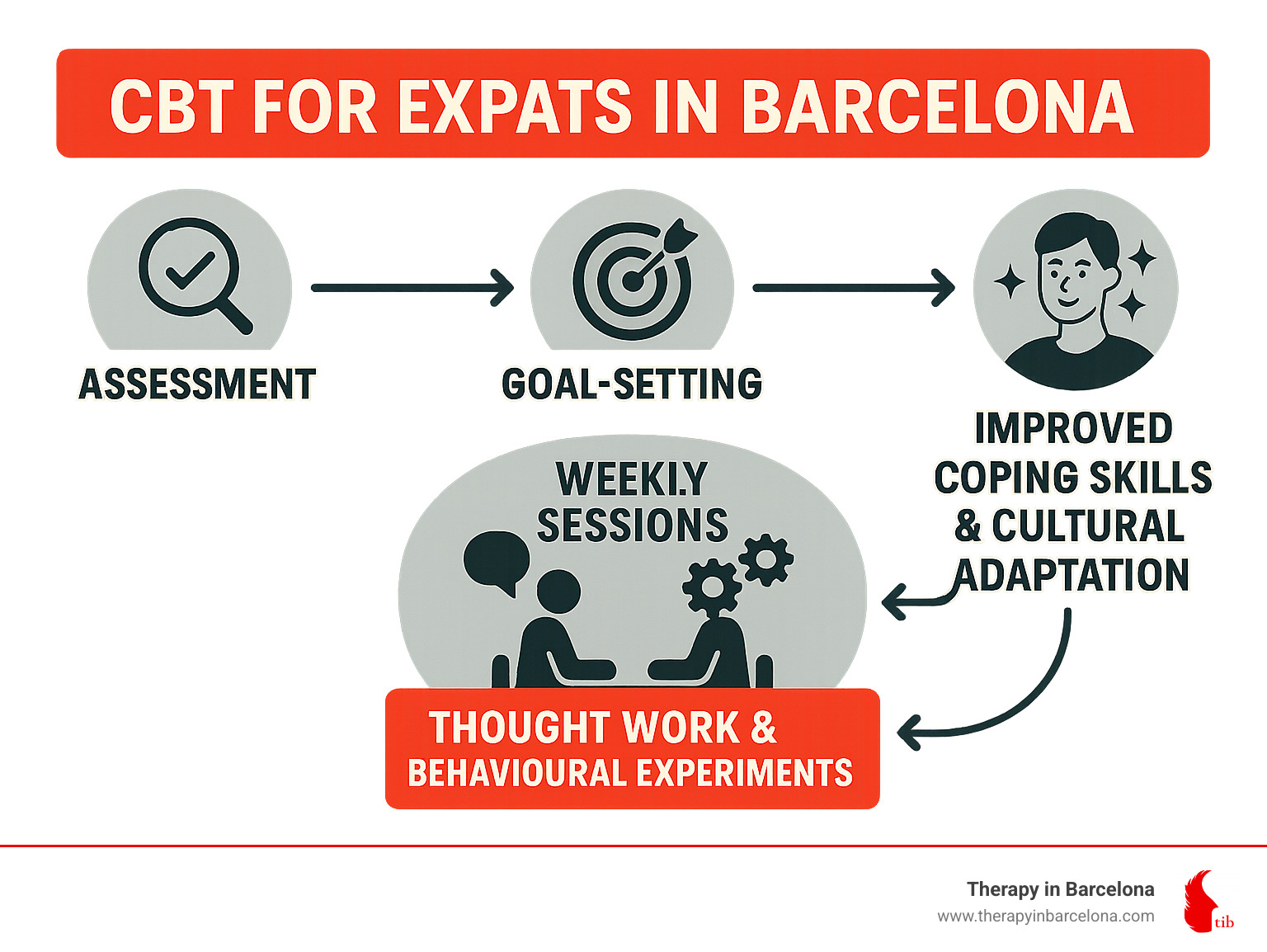
Understanding what to expect from CBT therapy Barcelona helps reduce anxiety about starting treatment. The process typically begins with a comprehensive assessment where your therapist explores your current challenges, goals, and background. This isn’t about digging into childhood experiences—it’s about understanding your present situation and what you hope to achieve.
Collaborative goal-setting follows the assessment. You and your therapist identify specific, measurable outcomes like “reduce panic attacks on public transport” or “build confidence for job interviews in Spanish.” These goals guide your treatment and help track progress.
Sessions typically last 50 minutes and initially occur weekly, reducing to bi-weekly as you progress. Most people complete CBT in 8-12 sessions, though this varies based on individual needs and goals. The structured nature means you’re actively working towards change rather than simply talking about problems.
Each session includes reviewing homework from the previous week, exploring current challenges, learning new techniques, and planning between-session activities. This active approach ensures you’re building skills and implementing changes in real-world situations.
Homework assignments might include thought records, behavioural experiments, or gradual exposure exercises. For example, if you’re anxious about speaking Spanish in social situations, you might practice ordering coffee in Spanish, then progress to asking for directions, then joining a Spanish conversation group.
Progress measurement occurs throughout treatment using standardised questionnaires and goal-specific tracking. This evidence-based approach ensures you can see concrete improvements and adjust treatment as needed.
The final sessions focus on relapse prevention, helping you identify early warning signs and develop strategies for maintaining progress. You’ll create a personalised toolkit of techniques to use independently after therapy ends.
First-Session Expectations in CBT Therapy Barcelona
Your first CBT therapy Barcelona session focuses on understanding your current situation and building rapport with your therapist. Expect questions about your reasons for seeking therapy, current symptoms, and what you hope to achieve. This isn’t an interrogation—it’s a collaborative conversation about your needs and goals.
The therapist will explain CBT principles and how they apply to your specific challenges. They’ll discuss confidentiality, session structure, and what to expect from treatment. This transparency helps you feel more comfortable and engaged in the process.
You’ll likely receive some initial coping tools to use before your next session. These might include breathing exercises for anxiety, activity scheduling for depression, or thought-monitoring techniques for stress management.
The therapist matching process at Therapy in Barcelona ensures you’re paired with someone who understands your specific challenges. Whether you’re dealing with cultural adaptation, relationship issues, or work-related stress, you’ll work with a therapist who has relevant experience and training.
Many clients report feeling hopeful after their first session, not because problems are solved, but because they have a clear plan and practical tools to start making changes.
Is CBT Therapy Barcelona Available Online?
Yes, CBT therapy Barcelona is available online through secure video platforms. This flexibility proves particularly valuable for digital nomads, frequent travelers, or those with scheduling constraints. Research shows online CBT can be equally effective as in-person treatment for many conditions.
Online sessions require stable internet, privacy, and a quiet space. Therapists provide technical support and backup communication methods to ensure smooth sessions. The format works well for CBT because the structured, goal-oriented approach translates effectively to video sessions.
Time zone considerations matter for clients traveling frequently. Therapy in Barcelona offers online sessions to expats worldwide (except USA and Canada), accommodating different time zones and travel schedules.
Many clients combine online and in-person sessions based on their needs and circumstances. This hybrid approach provides maximum flexibility whilst maintaining therapeutic continuity.
The online format also reduces barriers for those who might feel anxious about attending in-person sessions or have physical limitations affecting mobility.

Money Matters & Practicalities
Understanding the financial aspects of CBT therapy Barcelona helps you make informed decisions about treatment. Individual therapy sessions range from €85-95, whilst couples therapy costs €90-115 per session. These fees reflect the specialised nature of expat-focused therapy and the qualifications of English-speaking therapists.
VAT at 21% applies to all therapy sessions because private therapy isn’t classified as a medical service in Spain. This differs from some other countries where therapy might be VAT-exempt, so factor this into your budget planning.
Sessions require upfront payment, with therapists accepting various payment methods including bank transfers, cards, and cash. This system ensures clear financial boundaries and helps maintain the therapeutic relationship.
Most therapists provide detailed invoices that you can submit to insurance companies for potential reimbursement. Keep all receipts and invoices organised for insurance claims or tax purposes.
The time-limited nature of CBT means you’re investing in 8-12 sessions rather than months or years of treatment. This makes the total cost more predictable and often more affordable than longer-term therapy approaches.
Consider the cost against the potential benefits: improved mental health, better work performance, improved relationships, and increased life satisfaction. Many clients find the investment pays for itself through improved quality of life and reduced stress-related problems.
Insurance & Reimbursement Tips
Private health insurance policies vary significantly in their mental health coverage. Contact your insurer before starting therapy to understand your benefits, reimbursement rates, and any required documentation.
International health insurance often provides better mental health coverage than local Spanish policies. Companies like Cigna, Bupa, and Allianz frequently cover therapy sessions, though you’ll typically pay upfront and claim reimbursement.
When submitting claims, include detailed invoices showing:
- Therapist’s name and qualifications
- Session dates and duration
- Diagnosis codes (if required)
- Treatment type (individual or couples therapy)
Some employers offer Employee Assistance Programs (EAPs) that cover mental health services. Check with your HR department about available benefits.
Keep detailed records of all therapy-related expenses, including travel costs if your insurance covers them. Some policies reimburse transportation to therapy appointments.
Submit claims promptly—many insurers have time limits for reimbursement requests. Follow up on pending claims and maintain copies of all submitted documentation.
Is CBT Worth the Investment?
The question of value extends beyond immediate cost considerations. CBT therapy Barcelona provides lifelong coping skills that continue benefiting you long after treatment ends. Unlike medication that requires ongoing costs, CBT teaches techniques you can use independently.
Research demonstrates CBT’s effectiveness for preventing relapse in depression and anxiety. The skills you learn—cognitive restructuring, behavioural activation, stress management—remain available whenever you face future challenges.
For expats, the investment often pays dividends through improved work performance, better relationships, and increased confidence navigating cultural challenges. Many clients report that therapy helped them advance professionally, build meaningful friendships, and enjoy their Barcelona experience more fully.
The time-limited nature of CBT means you’re not committing to years of treatment. Most people see significant improvements within 8-12 sessions, making it a cost-effective approach compared to longer-term therapies.
Consider the cost of not addressing mental health challenges: decreased work performance, relationship problems, physical health issues from chronic stress, and reduced quality of life. When viewed this way, therapy becomes an investment in your overall well-being and future success.

Choosing the Right English-Speaking CBT Therapist
Finding the right CBT therapy Barcelona provider requires research and consideration of several factors. Start by verifying qualifications—look for therapists with psychology degrees, specific CBT training, and registration with professional bodies like the British Psychological Society or equivalent organisations.
Experience with expat populations matters significantly. Therapists who understand cultural adaptation challenges, visa stress, and international lifestyle demands can provide more relevant, effective support. Look for providers who specifically mention expat experience or international client focus.
Personal fit remains crucial for therapeutic success. The best-qualified therapist won’t help if you don’t feel comfortable with their communication style or approach. Many practices offer brief consultation calls to assess compatibility before committing to treatment.
Language considerations go beyond basic fluency. You need a therapist who understands cultural nuances, humour, and the subtle ways language shapes thought and emotion. Native English speakers or those with extensive English-speaking experience often provide deeper understanding.
Availability and scheduling flexibility matter for busy expat lifestyles. Look for therapists who offer evening or weekend appointments, online sessions, and understanding of work travel demands.
Crisis support policies are important considerations. Understand how your therapist handles emergencies, after-hours contact, and situations requiring immediate intervention.
Where to Look & What to Ask
Professional directories provide starting points for finding qualified CBT therapists. The British Psychological Society maintains directories of registered psychologists, whilst local expat networks often share recommendations.
Therapy in Barcelona offers a unique therapist-matching service that considers your specific needs, preferences, and goals. Rather than simply booking with the next available therapist, they conduct thorough assessments to ensure optimal therapeutic fit.
When contacting potential therapists, ask about:
- Specific CBT training and experience
- Experience working with expats
- Approach to cultural adaptation challenges
- Session format (in-person, online, or hybrid)
- Availability and scheduling flexibility
- Fees and payment methods
- Crisis support policies
Don’t hesitate to ask about their personal experience as expats. Many therapists in Barcelona are internationals themselves, providing valuable perspective on the challenges you’re facing.
Request brief consultation calls to assess compatibility. Most therapists offer these conversations to ensure good therapeutic fit before beginning treatment.
Real-Life Success Stories
Emily, our composite avatar representing common expat experiences, initially struggled with panic attacks on Barcelona’s metro system. Through CBT, she learned to identify the catastrophic thoughts triggering her anxiety and developed practical coping strategies. She now uses public transport confidently and has expanded her social circle through activities she previously avoided.
Client testimonials from Therapy in Barcelona highlight the transformative power of culturally sensitive CBT. One client shared: “My therapist speaks perfect English, something that is very important for me, who feels super excluded from social life here, for not speaking Spanish. It was vital that she fully understands me.”
Another client noted: “I spent a lot of money on therapists that didn’t really acknowledge my needs. My therapist at Therapy in Barcelona is the first therapist that actually gives me what I need which is ways to cope with my depression when it comes.”
A long-term client reported: “Extremely satisfied with the sessions. Been having weekly sessions for over a year now. Helped me a lot deal with tough situations, change my way of thinking, and be in sync with my emotions.”
These success stories highlight the importance of finding therapists who understand both CBT techniques and the unique challenges of expat life in Barcelona.
Frequently Asked Questions about CBT Therapy Barcelona
How long does a full course of CBT take?
Most people complete CBT in 8-12 sessions, with each session lasting approximately 50 minutes. Sessions typically start weekly and may reduce to bi-weekly as you progress. The exact duration depends on your specific goals, the complexity of your challenges, and how quickly you develop and implement new skills.
Some people see significant improvements within 4-6 sessions, whilst others benefit from the full 12-session course. Your therapist will regularly review progress and adjust treatment length based on your needs and goals.
Can I switch therapists if the fit isn’t right?
Absolutely. Therapeutic fit is crucial for successful outcomes, and reputable practices support client choice in therapist selection. Therapy in Barcelona’s matching process aims to prevent mismatches, but they understand that sometimes changes are necessary.
If you’re not comfortable with your assigned therapist, discuss this with the practice. They can arrange a new match based on your feedback and preferences. There’s no shame in requesting a change—it’s a normal part of ensuring you receive the best possible care.
Will my Spanish skills affect therapy progress?
No, your Spanish language level won’t impact your therapy progress. CBT therapy Barcelona specifically offers English-speaking therapists who understand the challenges of navigating life in a foreign language.
Many clients find that conducting therapy in their native language allows for deeper exploration of thoughts and feelings. The nuances of emotion and meaning are often easier to express in your first language, leading to more effective therapeutic outcomes.
Some clients worry that avoiding Spanish in therapy somehow undermines their integration into Barcelona life. In reality, having a space where you can express yourself fully in English often provides the emotional support needed to engage more confidently with Spanish-speaking environments.
Conclusion
CBT therapy Barcelona offers a practical, evidence-based approach to navigating the unique challenges of expat life. Whether you’re dealing with cultural adaptation stress, relationship challenges, or anxiety about your future in Barcelona, CBT provides concrete tools for immediate relief and long-term resilience.
The combination of Barcelona’s international community, skilled English-speaking therapists, and CBT’s proven effectiveness creates an ideal environment for mental health support. You don’t have to struggle alone with the challenges of international life—professional help is available and accessible.
Therapy in Barcelona’s personalised matching process ensures you’re paired with a therapist who understands your specific needs and cultural background. Their team of expat therapists brings both professional expertise and personal understanding of the international experience.
Seeking therapy isn’t a sign of weakness—it’s a proactive step towards building the life you want in Barcelona. The skills you learn in CBT will serve you not just during your time in Barcelona, but throughout your international journey.
If you’re ready to transform your Barcelona experience from overwhelming to empowering, consider reaching out for a findy call. Your future self will thank you for taking this important step towards mental wellness and cultural adaptation success.
For more information about CBT therapy options and to begin your journey towards better mental health, visit Therapy in Barcelona’s CBT services. Your Barcelona life deserves the support of skilled, culturally sensitive professionals who understand exactly what you’re going through.
