


Why Madrid Captures the American Expat Imagination

Moving to Madrid as an American is a life-changing decision. Spain’s capital offers a compelling mix of affordability, safety, and quality of life that is hard to find in major US cities. But it is not just about lower rent or sunny weather—it is about a different way of living, one that blends the energy of a capital with a relaxed Mediterranean pace.
There is a Spanish saying: “De Madrid al Cielo”—from Madrid to heaven. It suggests that once you have experienced Madrid, the only thing better is the sky above. This guide covers the practical steps and the emotional journey of making this move.
Quick Overview: Moving to Madrid
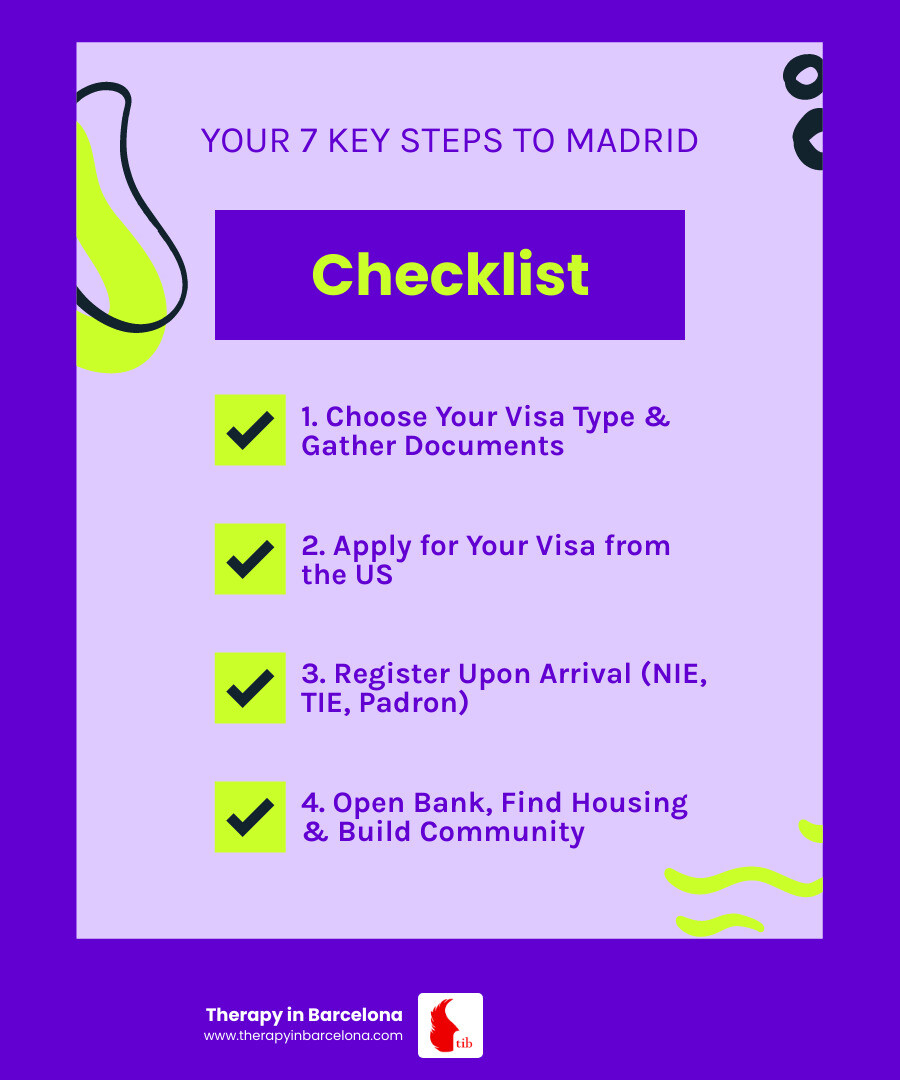
- Visas & Paperwork: Choose your visa (e.g., Digital Nomad, Non-Lucrative), apply from the US 3-6 months in advance, and upon arrival, register for your NIE/TIE and empadronamiento.
- Cost of Living: Expect costs to be 40-50% lower than in major US cities. A budget for a one-bedroom flat in central areas is around €1,000–€1,700/month.
- Lifestyle: Enjoy 300 days of sunshine, a vibrant culture, and excellent public transport. Learning Spanish is essential for daily life.
- Taxes & Healthcare: You will file taxes in both the US and Spain. Public healthcare is excellent, but private insurance is often required for visas.
Moving abroad is also an emotional journey. The initial excitement can give way to loneliness or culture shock. This guide will help you prepare for the administrative maze and understand what it really takes to build a life in Madrid.
Why Choose Madrid? The Pros and Cons for Americans
Moving to Madrid as an American means embracing a city that pulses with life, history, and possibility. It offers a lifestyle that feels fundamentally different from the American pace. But like any major relocation, it comes with trade-offs.

What Madrid Gets Right
Madrid’s quality of life is a major draw. Spain consistently ranks well for safety, and walking home at night feels surprisingly secure for many Americans. The cost of living is another significant advantage; rent can be 50-60% lower than in New York or San Francisco, giving you an urban lifestyle without the financial strain. The city enjoys around 300 days of sunshine a year, and its culture is unapologetically Spanish. Long lunches, evening paseos, and late-night dinners are woven into the fabric of daily life. As Spain’s economic centre, Madrid also offers growing opportunities for expats in tech, finance, and education. For a deeper look at what draws people to Spain, see 5 reasons to move to Spain.
Where Madrid Challenges You
Life in Madrid is not without its difficulties. The summer heat can be intense, with temperatures regularly hitting 40°C. Spanish bureaucracy is famously slow and requires immense patience. The housing market is also under strain, with rising rents and fierce competition for flats. Finally, Madrid is landlocked, so if you dream of living by the sea, you will need to travel a few hours by train or car. Preparing for these realities is key, and understanding Spanish bureaucracy can help.
How Madrid Compares to Other Spanish Cities
- Madrid vs Barcelona: Barcelona has beaches and Gaudí’s architecture but is more tourist-focused and can be more expensive. Madrid feels more grounded in traditional Spanish life.
- Madrid vs Valencia: Valencia offers a lower cost of living and coastal access. It is smaller and more relaxed, making it a strong choice if career opportunities are not your top priority.
The Lifestyle That Defines Madrid
Madrid’s rhythm is different. The culture is social, built around personal connection. Work-life balance is real, with around 30 days of paid leave and public holidays. This slower pace can be a gift, but it requires adjustment. Shops may close in the afternoon, and dinner often starts at 10 p.m. Understanding the hidden challenges of expat life can help you prepare emotionally for this transition. Madrid offers a life that is rich and vibrant, but whether that feels like freedom or friction depends on your readiness to adapt.
The Practical Guide to Moving to Madrid as an American
Relocating to a new country involves a series of practical steps. For Americans eyeing Madrid, understanding visa options, managing finances, and navigating administrative procedures are crucial.

Visa Options for Americans Moving to Madrid
For any stay longer than 90 days, Americans need a long-stay visa. Always check the official visa information from the Spanish Foreign Ministry for the latest requirements. Common options include:
- Digital Nomad Visa (DNV): For remote workers with non-Spanish employers. Requires a monthly income of at least €2,762, a degree or 3+ years of experience, and proof of a work relationship.
- Non-Lucrative Visa: For those with passive income who will not work in Spain. Requires proof of financial self-sufficiency (around $32,000 annually for one person).
- Student Visa: For full-time students at an accredited institution. Allows for part-time work with prior authorisation.
- Work Visa: Requires a job offer from a Spanish employer who will sponsor your visa. This includes options for highly skilled workers and the self-employed.
All visas must be applied for from the US before you move. The process can take several months. Common requirements include proof of income, comprehensive health insurance, and an apostilled criminal background check.
Understanding the Cost of Living
Madrid is one of Spain’s more expensive cities but is still more affordable than major US hubs. A solo expat can live comfortably on around €1,930 per month, while a family of four might need about €5,000.
- Housing: This is the biggest expense. A studio in the city centre can range from €1,000 to €1,700 per month, while a three-bedroom flat can be €1,800 to €3,000. Rents are lower in outlying districts.
- Utilities: Budget around €130 per month for electricity, water, and internet.
- Daily Expenses: Groceries can be €250–€400 a month. A monthly public transport pass for the city centre is about €55 (or just €20 for those under 27).
For detailed comparisons, Numbeo is a useful resource.
First Administrative Steps After You Arrive
Once you land, you will need to tackle some bureaucracy. Navigating these steps is a rite of passage for every expat.
- NIE (Número de Identificación de Extranjero): Your Foreigner Identification Number, essential for nearly all official transactions.
- TIE (Tarjeta de Identidad de Extranjero): Your physical residency card. You must apply for it within one month of arrival.
- Empadronamiento (Padrón): Your registration at the local town hall, which is required to access public services.
You will need to book appointments (citas) for these, which can be difficult to secure. For banking, you will need your NIE to open an account with banks like Santander or BBVA. Services like Wise or Revolut are helpful for managing international money transfers.
Building Your New Life: Work, Health, and Family
Once the paperwork is sorted, the real work of building a life in Madrid begins. This means finding work, accessing healthcare, and navigating the education system.
The Job Market and Career Opportunities for Americans
As Spain’s economic engine, Madrid offers opportunities, particularly in tech, healthcare, engineering, and education. While some international companies operate in English, fluency in Spanish opens up far more doors and is essential for daily life. The work culture is relationship-based, with long lunches and a focus on personal connection. While the pace may feel slower, Spain offers around 30 days of paid leave, reflecting a strong emphasis on work–life balance. Job search platforms like LinkedIn and InfoJobs are good starting points. For more tips, this guide to English-speaking jobs has useful strategies. The adjustment can be stressful, and navigating work stress is a common challenge for expats.
Navigating the Spanish Healthcare System
Spain’s healthcare system is one of the best in Europe. The public system (Sistema Nacional de Salud) provides high-quality care to anyone legally employed or self-employed, though waiting times for specialists can be long. Many expats opt for private health insurance for faster access and English-speaking doctors, and it is often a visa requirement. Providers like Sanitas, Adeslas, and Asisa are popular.
Accessing mental health support through the public system can be difficult due to long waiting lists and language barriers. There are alternatives: the public system, large online platforms, and local practices in Madrid. These can work well for many people. Some internationals, however, prefer care that is tailored to their context and language needs.
At Therapy in Barcelona, our team of psychology-trained therapists are expats themselves. We’re a trusted group practice in Spain, established in 2011, and we work with adults, couples, teens and families. We offer online therapy to clients in Madrid, Valencia, Málaga and across Spain, and worldwide (including the USA and Canada), as well as face-to-face sessions in our Barcelona office. We provide personalised therapist matching and use evidence-based approaches like CBT, ACT, Schema Therapy, DBT, Somatic and Psychodynamic therapies, and the Gottman Method for couples. Our private-pay service has strict privacy standards and we never sell your data. Some therapists offer sliding-scale fees; just ask during your Free Discovery Call. Our team works in English, and some therapists also offer sessions in German, French, Spanish, Afrikaans, Portuguese, Swedish, Austrian-German and Swiss-German.
Education Options for Expat Families
For families moving to Madrid as an American, school choice is a major decision. Options include free public schools (públicos), which offer full immersion in Spanish; semi-private schools (concertados), which are partially government-funded; and private international schools. Most American families choose international schools like the American School of Madrid or the British Council School, which offer American, British, or IB curricula. Annual tuition can range from €6,000 to over €20,000. Neighbourhoods like Chamartín and Pozuelo de Alarcón are popular with families due to their proximity to these schools. Support for expat families can help you steer these choices. Other cities like Valencia and Málaga also have excellent international schools.
Embracing the Madrileño Lifestyle
Once the practicalities are handled, the real fun begins: embracing the vibrant Madrileño lifestyle.
Finding Your Community and Social Connections
Madrid has a large international community, so you are far from alone. Language exchanges, often organised through Meetup events, are a great way to practise Spanish and meet locals and other expats. Joining sports clubs or hobby groups can also help you build genuine connections. Despite the city’s social nature, loneliness can still be a challenge after the initial excitement fades. Understanding why it is hard to make friends abroad can help you steer this common expat experience.
Exploring Madrid’s Neighbourhoods, Culture, and Cuisine
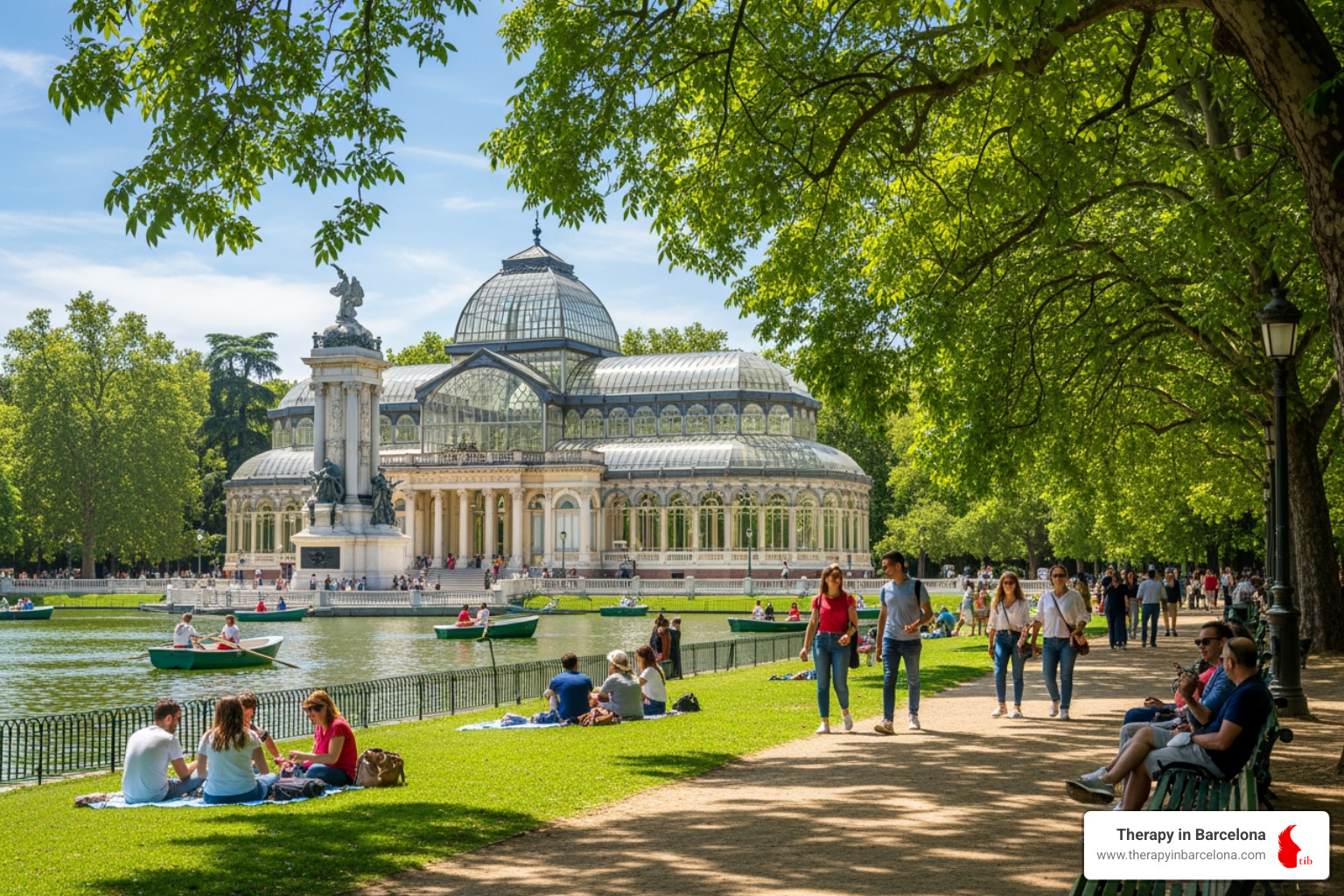
Madrid is a city of distinct neighbourhoods. La Latina offers a traditional atmosphere with its famous Rastro flea market, while Malasaña has a bohemian, alternative vibe. Retiro is known for its beautiful park and world-class museums like the Prado and Reina Sofía. For families, areas like Chamartín and Salamanca are popular.
The city’s food culture is legendary. Tapas are a way of life, and you will find yourself hopping between bars savouring small plates of jamón ibérico and patatas bravas. For a classic experience, try the croquetas at Casa Julio or enjoy the vermouth culture on a Sunday afternoon. The nightlife is famously vibrant, with rooftop bars and late-night dinners.
Travel and Getting Around
Madrid’s central location and excellent public transport make it a fantastic base for exploration. The Metro, bus, and train network is efficient and affordable. The city is also highly walkable, with many attractions in the centre within easy reach. For day trips, historic cities like Toledo and Segovia are a short train ride away. Spain’s high-speed AVE trains connect you quickly to cities like Valencia and Barcelona, while Adolfo Suárez Madrid–Barajas Airport (MAD) is a major hub for travel across Europe and beyond.
The Emotional Side of Moving to Madrid as an American
Moving to Madrid as an American is more than a logistical challenge; it is a personal journey. The initial thrill of a new adventure can often give way to unexpected difficulties.
Take Sarah, a 29-year-old from New York. She moved to Madrid and loved the city’s energy, but after a few months, homesickness hit hard. She felt disconnected and struggled to form deep friendships. Sarah is fictional, but her story mirrors what many expats experience.
Culture shock and loneliness are common. The stress of adapting can also strain relationships and challenge your sense of identity. For some, these feelings can intensify into expat depression. Building resilience helps: practise self-compassion, keep routines that ground you, and seek support early. The importance of mental health during relocation matters.
If you’re in immediate crisis or thinking about harming yourself, please seek urgent help. In Spain, call 112 or contact 024 (Línea 24/7) for suicide prevention. In the USA, call or text 988. In Canada, call 1-833-456-4566 or text 45645. Crisis lines and emergency departments in hospitals offer immediate support; we do not provide crisis care. Check out our crisis resources page for more info.
There are several ways to find help: the public health system, large online platforms, and local practices in Madrid or Valencia. These options suit many people. If you prefer culturally aware care that understands international life, we can help.
Therapy in Barcelona was created for this reason. Our team of English-speaking, psychology-trained therapists are expats themselves. We offer personalised therapist matching, not just the next available slot. We see clients online worldwide, including the USA and Canada, and in person at our Barcelona office. Some therapists also work in German, French, Spanish, Afrikaans, Portuguese, Austrian-German and Swiss-German. We are a private-pay, trusted practice in Spain since 2011 with strict privacy standards. If you’d like support, book a Free Discovery Call.
Frequently Asked Questions about Moving to Madrid
Do I need to speak Spanish to live in Madrid?
Yes, it is highly recommended. While you can get by with English in tourist areas and expat circles, Spanish is essential for daily life, from dealing with bureaucracy to forming genuine connections with locals. Learning the language is not just about practicality; it is about belonging. You can read more about the need to speak the local language.
What are the tax implications for an American living in Madrid?
As a US citizen, you must file an annual US tax return on your worldwide income. If you are a tax resident in Spain (spending over 183 days a year there), you will also be taxed by Spain on your worldwide income. The US-Spain tax treaty prevents double taxation, often through the Foreign Earned Income Exclusion (FEIE) or foreign tax credits. You may also need to file FBAR and FATCA forms. Spain’s tax rates are progressive, but some professionals may qualify for the Beckham Law, which offers a flat tax rate on Spanish-sourced income for up to five years. For official details, consult the US-Spain Tax Treaty documents.
Is Madrid a safe city for Americans?
Yes, Madrid is a very safe city with low rates of violent crime. Residents generally feel secure, even at night. The main concern is petty theft, such as pickpocketing in crowded tourist areas like Sol, Plaza Mayor, and on public transport. Taking standard precautions is usually enough to avoid any issues.
Conclusion: Your Madrid Adventure Awaits
Moving to Madrid as an American offers rich culture and a high quality of life. Planning matters, but the emotional side matters too. If you’d like support with the transition, we’re here.
Therapy in Barcelona was founded by an expat for expats. Our team understands international life because we’ve lived it. We offer personalised matching and culturally sensitive care. If you’d like support, book a Free Discovery Call. We see clients online worldwide, including the USA and Canada, and in person at our Barcelona office.
