


Making Friends Abroad Is Harder Than Anyone Warns You

Making friends abroad is one of the most rewarding — and most quietly difficult — parts of living in a new country. You have the flat, the job, maybe even a favourite café. But on a Sunday evening, when the novelty wears off, the silence can feel very loud.
Loneliness is common in the early stages of living abroad. There is often a gap between arriving in a new place and feeling like you truly belong there, especially in the first few months. That period can feel awkward, quiet, and more emotionally intense than many people expect. For practical ways online spaces can help, see How online communities can help you find your feet as an international.
Here is a guide on how to start making friends in a new country:
- Before you arrive – activate your existing network, join expat Facebook groups, and research interest-based communities in your destination city.
- In the first 90 days – say yes to most invitations, attend regular events, and use apps like Bumble BFF, Meetup, or Internations to widen your net.
- To meet locals – join language exchange programmes, volunteer, take classes, and become a regular at a neighbourhood spot.
- As an introvert – choose structured, low-pressure activities like book clubs, board game nights, or small hobby groups over loud mixers.
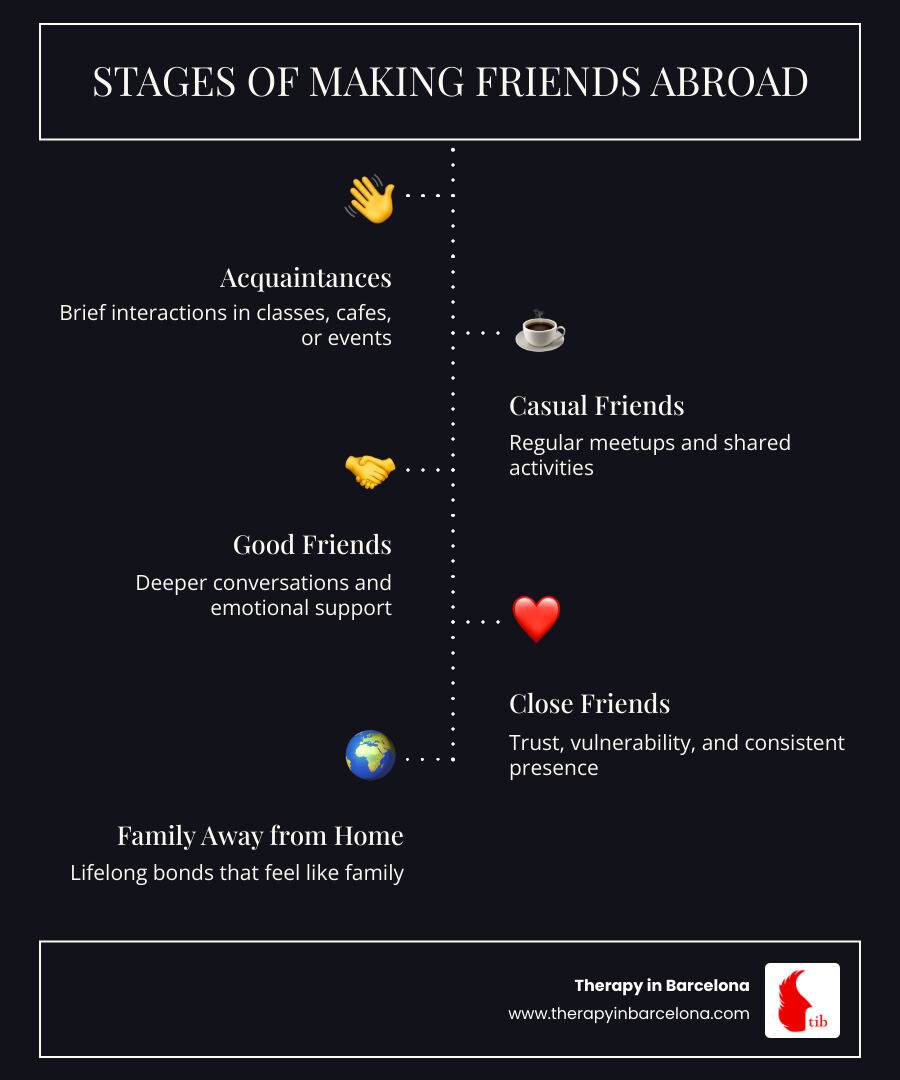
- For lasting friendships – show up consistently, follow up after meeting someone, and give relationships three to six months to deepen.
What makes this hard is not a lack of effort. It is the absence of what researchers call propinquity — the repeated, unplanned contact that builds trust over time. At home, that happened naturally through school, work, or your neighbourhood. Abroad, you have to recreate it deliberately.
The first three months are especially important. Friend groups tend to solidify around that window, and the habits you build early — saying yes, showing up consistently, following through on plans — shape your entire social life in a new country. Miss that window, and it can feel like everyone already has their people.
This guide explains how to build real connections abroad, whether you are a solo traveller in Valencia, an accompanying partner in Madrid, or a professional starting over in Barcelona.
Pre-Departure: Activating Your Network
Before you even zip up your suitcase, your social journey begins. Many people wait until they land to start looking for community, but the most successful expats begin building bridges weeks before departure. Your existing network is often more expansive than you realise.
Social Network Activation
Don’t be shy about broadcasting your move. A simple, well-crafted post on LinkedIn or Facebook can yield surprising results. Instead of just saying “I’m moving,” ask for specific introductions. “Does anyone know someone in Málaga who likes hiking?” or “Looking for recommendations for a great yoga studio in Alicante.”
Research shows that a “friend of a friend” introduction is one of the most effective ways to bypass the awkwardness of a cold start. These connections come with a built-in “vetting” process, making that first coffee date feel much safer and more familiar.
Niche Communities
Before you arrive, join a few communities built around shared identity or shared experience. Beyond Borders: Discovering English-speaking communities in your new city is a useful starting point for finding international and English-speaking networks. You can also look for alumni groups, professional associations, hobby-based communities, and city-specific online groups. The goal is simple: meet people where there is already some common ground, so the first conversation feels much easier.
Researching Interests
Find your “tribe” by looking for interest-based groups. If you are a ceramicist, look for studios in Seville. If you are a runner, find the local clubs in Valencia. Joining these online before you arrive allows you to start your journey with a calendar already populated with events.
Leveraging Existing Connections
- The Warm Introduction: Ask your friends back home to send a mass email or a group text introducing you to their contacts abroad.
- Global Alumni Chapters: Reach out to the president of your university’s local alumni club. Alumni often bond quickly because they share a common past in a foreign present.
- Reconnecting: Scan your social media for people you haven’t spoken to in years who might now be living in Spain. You’d be surprised how a shared hometown can turn a distant acquaintance into a close expat friend.
Making Friends Abroad: The First 90 Days
Once you arrive, the clock starts ticking. The first three months are your “social honeymoon” phase, where your energy is high and other newcomers are also looking for their group.

The “Yes Man” Energy
In your first 90 days, adopt a “say yes” policy. Whether it’s a quick coffee after work, a weekend trip to Gran Canaria, or a random invitation to a board game night, show up. You are currently in the “quantity” phase of friendship. You need to meet a lot of people to find the few you truly click with.
The Propinquity Effect
Most friendships abroad do not begin with one amazing night. They usually grow from small, repeated contact. Psychologists call this the propinquity effect: we are more likely to trust and like people we see often. That is why routine matters. Go to the same café, class, coworking space, or gym each week. When people start to recognize you, conversations feel easier, more natural, and less forced. In a new country, becoming a familiar face is one of the simplest ways to turn strangers into friends.
Creating Your Own “Freshers Week”
Regardless of your age, treat your first month like a student orientation. Attend every meetup, orientation event, and neighbourhood gathering. The goal is to build a wide net. You can refine your circle later, but for now, your job is to be visible.
Digital Tools for Social Connection
Technology works best when it leads to real-life contact, not endless scrolling.
- Bumble BFF: A good option for one-to-one friendship matching with other people who are also actively trying to meet new friends.
- Meetup.com: One of the simplest ways to find interest-based groups, from hiking and board games to language exchanges and professional events.
- Social dining apps: Shared dinners with strangers can take some pressure off, because everyone joins with the same goal: meeting new people.
- Expat and local Facebook groups: Search for phrases like “International People in [City Name]” or local neighbourhood groups to find events, ask questions, and notice which communities meet regularly.
- For more on building connection online before meeting in person, see How online communities can help you find your feet as an international.
In-Person Strategies and Clubs
- Language Classes: There is no bond quite like the one formed while struggling to conjugate verbs in a Spanish class.
- Hobby Hubs: Join an English-speaking theatre group or a sports league. These provide a “third place” — a social environment that isn’t work or home.
- The Barista Strategy: Pick one local café and go there every day at the same time. Learn the staff’s names. Eventually, you’ll start recognising other regulars.
Balancing Expat Bubbles and Local Integration
It is tempting to stay within the “expat bubble.” Other internationals understand your struggles, speak your language, and are often more “available” for friendship. However, only having expat friends can leave you feeling like a permanent tourist.
Cultural Exchange
To feel truly at home in a city like Seville or Alicante, you need to step outside the English-speaking circle. This doesn’t mean abandoning your expat friends — they are your emotional safety net. But integration requires effort.
Language Tandems
A “tandem” is a language exchange where you spend half the time speaking English and half speaking the local language. It is a fantastic, low-pressure way to meet locals who are already interested in your culture. It moves the relationship from a transaction to a genuine connection.
Shared Housing and Volunteering
If you are moving as a student or young professional, living with locals can accelerate your integration by years. If you have your own place, consider volunteering. Working toward a common cause with locals builds a different kind of respect and connection than you’ll find in a bar.
Integrating into the Local Community
- The Barista Strategy: Small daily interactions help you feel seen. A “Buenos días” to your neighbour or a short chat with the shopkeeper builds a sense of belonging.
- Local Festivals: Don’t just watch the Fallas in Valencia or the Feria in Seville; ask how you can participate.
- Cultural Curiosity: Instead of comparing everything to “how we do it back home,” ask locals why things are done a certain way. Curiosity is a magnet for connection.
Overcoming Social Anxiety and Introversion
For many, the advice to “just put yourself out there” feels like a nightmare. If you struggle with social anxiety or are simply an introvert who finds large groups draining, you need a different strategy.

A Better Fit for Introverts
Large expat mixers can feel draining, especially if you do better in quieter, more structured settings. That does not mean you are bad at socialising. It usually means you need a format that gives conversation a natural focus. Small book clubs, weekly classes, walking groups, and volunteering can make connection feel much easier because there is a shared activity to anchor the interaction. This kind of task-based socialising takes the pressure off small talk and often leads to deeper, more lasting friendships.
Structured Events
If you are introverted, look for events with a “job.” Volunteering at a local animal shelter or joining a board game group gives you something to do with your hands and a specific topic to talk about. This removes the “blank slate” anxiety of a traditional networking event.
Practical Tips for Introverts
- Depth Over Breadth: You don’t need fifty acquaintances. Aim for two or three “anchor” friends.
- Low-Stakes Activities: Invite someone for a walk or a coffee rather than dinner. It’s shorter and easier to exit if you feel drained.
- The “Exit Line”: Always have a graceful way to leave. “It’s been so lovely meeting you, but I’ve promised myself an early night. Let’s exchange numbers!”
- 7 Easy Ways to Stop Feeling Lonely Before It’s Too Late offers more tailored advice for managing these feelings.
When Loneliness Becomes More Than Just a Phase
Sometimes, despite your best efforts, the loneliness doesn’t lift. You might find yourself withdrawing, feeling persistently down, or wondering if moving was a mistake. This is often more than just a “bad week”; it can be a sign that you are feeling overwhelmed by the transition or struggling to find your footing in a new culture.
The “Expat Blues”
Leigh Matthews, an Australian Psychologist and founder of Therapy in Barcelona, has been supporting the international community since 2011. Having moved to Barcelona herself, she understands that building a “chosen family” is not just a social goal — it is a mental health necessity. When you are away from your original support system, the impact of isolation is magnified.
If you find that your social calendar is a “ghost town” and it’s affecting your ability to function, it might be time to seek professional support. I Feel So Lonely: Why Is It So Hard to Make New Friends Abroad? explores the psychological barriers that can make connection feel difficult.
Choosing the Right Support: Comparing Your Options
Finding mental health care in a foreign country is another layer of stress. Here is how the different options compare:
Public Health System (CatSalut/SNS) This is a low-cost or free option for residents in cities like Madrid, Valencia, or Barcelona. However, it often involves long waiting lists and generalist care. You may face significant language barriers if you are not yet fluent in Spanish or Catalan. Session frequency is often limited, making it difficult to build a deep therapeutic relationship.
Large Online Platforms These global apps offer high availability and lower price points. The trade-off is often variable therapist quality and concerns regarding data privacy. Crucially, these platforms often lack the local cultural nuance required to understand the specific challenges of living in Spain, such as the “digital nomad” visa stress or local bureaucratic hurdles.
Local Private Practices Individual local therapists offer a more personal touch than large apps. However, they often work in isolation without a collaborative team. Finding a therapist who specifically understands the expat experience or offers high-quality multilingual care can be a matter of trial and error.
Therapy in Barcelona We offer personalised therapist matching for internationals, with multilingual care in English, French, German, Spanish, and more. Our team understands expat life and provides both in-person sessions in Barcelona and online therapy worldwide. We also maintain strict privacy standards.
Frequently Asked Questions about Making Friends Abroad
How long does it take to make real friends in a new country?
While you can meet acquaintances in the first 2-4 weeks, “real” friends — the ones you can call in an emergency — typically take four to six months of consistent interaction to develop. Don’t rush the process; trust takes time to grow.
Is it better to have expat friends or local friends?
A healthy social “diet” includes both. Expats provide immediate empathy for the struggles of relocation. Locals provide roots, stability, and a deeper understanding of the culture you now call home. Aim for a mix.
How can I make friends if I don’t speak the local language yet?
Focus on international hubs, English-speaking hobby clubs (like theatre or hiking), and “tandem” events. Many locals in cities like Valencia, Málaga, and Madrid are eager to practice their English and will be happy to meet you halfway.
Building Your New Life
Building a life overseas is about more than just a change of scenery; it’s about building a “chosen family.” While the first few months can be quiet and the silence of a new flat can feel heavy, consistent effort leads to deep roots. The barrier to friendship is usually a shared assumption that “everyone else is busy,” rather than a lack of interest.
If you are finding the transition difficult, feeling stuck in isolation, or struggling with the “expat blues,” you don’t have to navigate it alone. At Therapy in Barcelona, we specialise in helping internationals find their feet and their community.
If you’d like support, book a Free Discovery Call. We offer sessions face-to-face in Barcelona and online worldwide, including the USA and Canada. Our team of expat therapists is ready to help you turn this new country into a true home.
