


Navigating the Pressures of Life

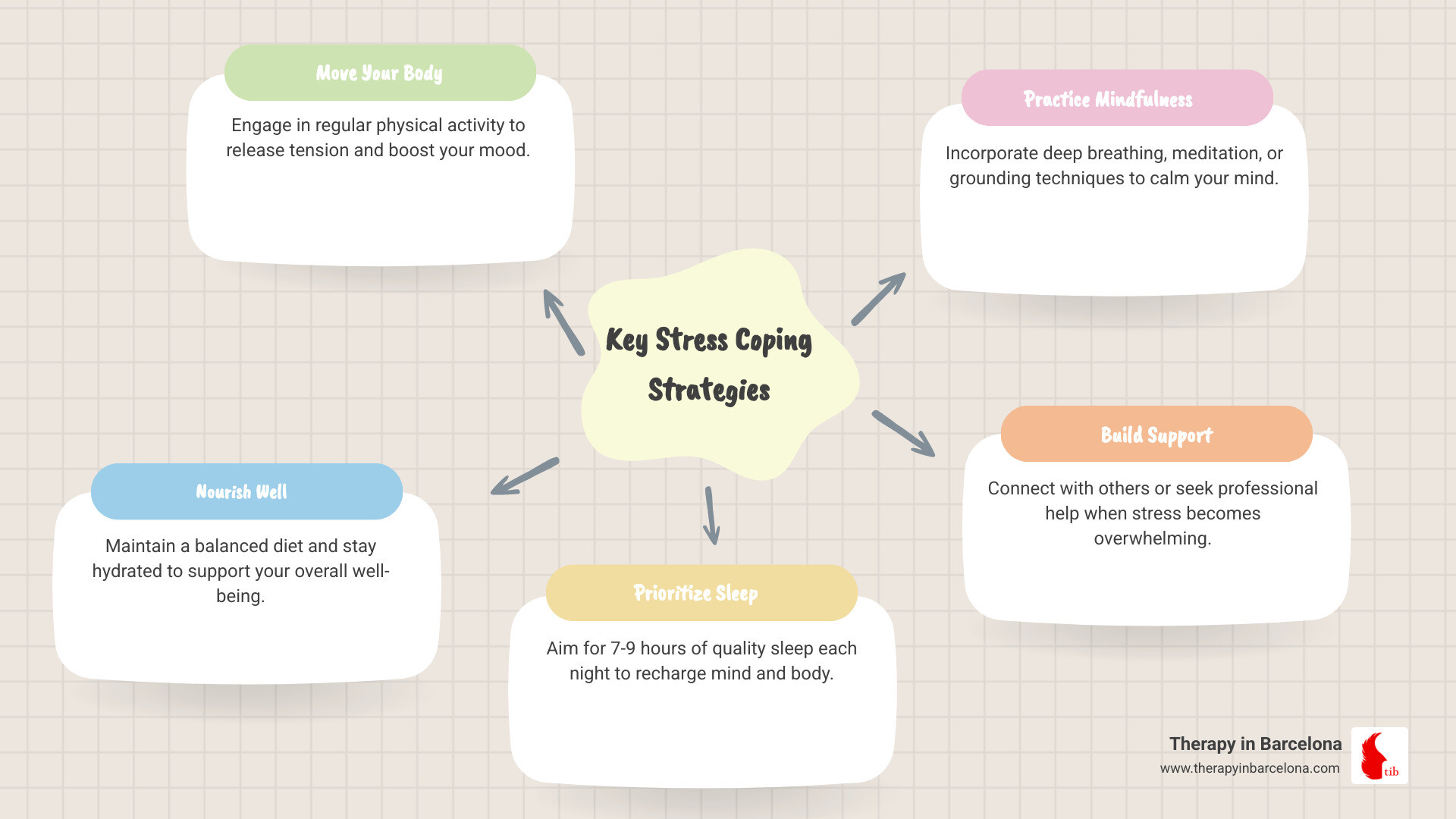
Are you looking for ways to cope with stress? Here are some quick, healthy tips:
- Get active and exercise regularly.
- Eat well and stay hydrated.
- Get enough sleep – aim for 7-9 hours a night.
- Connect with others for support.
- Practice relaxation like deep breathing or meditation.
Life in Barcelona, especially for internationals like Emily or David, is full of exciting changes that can also feel overwhelming. New work demands, cultural shifts, or finding your footing in a new city can all trigger stress, which is your body’s natural reaction to new challenges.
When stress builds, it affects your mind and body, leaving you irritable or tired. The good news is you have more control than you think. Learning to manage it is key to a calmer life.
This guide offers effective strategies to understand, reduce, and master stress.
Understanding Stress: What It Is and How It Affects You
Rushing through Barcelona, late for a meeting, an urgent email buzzes. Your heart races, shoulders tense—that’s stress. It’s a universal experience, your body’s natural alarm system. The problem arises when we don’t know how to cope with stress effectively, and the alarm keeps ringing.
The Difference Between Stress and Anxiety
People often use “stress” and “anxiety” interchangeably, but they are different. Stress is a reaction to a specific, external trigger, like a work deadline or adjusting to life in Barcelona. It’s usually short-term and fades once the trigger is gone. Anxiety, on the other hand, is more persistent and internal. It can linger without an immediate threat, focusing on future ‘what ifs’ rather than present challenges.
Here’s how they typically differ:
Nature of the Experience
- Stress: This is your body’s direct response to an external event or demand. It’s a reaction to something happening to you or around you.
- Anxiety: While anxiety can be a reaction to stress, it can also arise without an immediate, identifiable external threat. It’s often more about an internal state of worry or apprehension.
Root Cause
- Stress: You can usually point to a specific trigger for stress, like a looming deadline at work, financial worries, or a difficult conversation. The cause is often clear.
- Anxiety: The cause of anxiety can be less clear-cut. It might stem from internal worries, a general sense of unease, or even be persistent without a specific, identifiable external trigger.
How Long It Lasts
- Stress: Stress is often temporary. It tends to subside once the stressful situation or event has passed.
- Anxiety: Anxiety can be more enduring. It might linger even after a stressful event is over, or it can be a more constant, pervasive feeling.
Where Your Mind Focuses
- Stress: When you’re stressed, your attention is usually on the immediate problem or demand right in front of you. It’s very much about the “now.”
- Anxiety: Anxiety often pulls your focus towards what might happen. It’s frequently about anticipating potential future threats, worries, or negative outcomes.
While they share symptoms like headaches or sleep issues, if anxiety persists and disrupts your daily life, it may be time to seek support. The NIMH fact sheet on stress and anxiety offers more detail on these distinctions.
Recognising the Signs: Physical and Emotional Symptoms of Stress
Your body sends clear signals when stress hormones like cortisol flood your system. This triggers changes to help you handle challenges, but your body can’t distinguish between a real emergency and a stressful workday.
Physically, you might notice headaches, muscle tension, and fatigue. Sleep problems are common, as are digestive issues like an upset stomach. Your heart might race as your body enters ‘fight or flight’ mode, even over work issues.
Emotionally, stress can manifest as irritability, persistent worry, or sadness. You might find it hard to concentrate or notice a dip in your self-esteem. Recognising these signs early is the first step to effectively coping with stress.
The Long-Term Impact of Chronic Stress
Short-term stress can be helpful, but chronic stress—when your body’s emergency response is constantly active for weeks or months—is harmful. When your stress response stays on for too long, it can damage your health.
The physical toll is significant. It weakens your immune system and harms your cardiovascular system, increasing the risk of heart disease. It can also lead to digestive problems, weight changes, and impaired memory and concentration. Some may turn to substances for relief, but moderation is key.
Mentally, chronic stress increases the risk of depression and anxiety disorders. A 2017 review on the impact of stress on body function shows it can even change brain structure. Understanding this highlights why learning how to cope with stress is vital for your long-term health. With the right strategies, you can build lasting resilience.
Proactive Strategies: The 4 A’s of Stress Management
When stress feels overwhelming, the ‘4 As’ of stress management—Avoid, Alter, Adapt, and Accept—offer a practical framework for taking control. This approach, detailed by the Mayo Clinic Health System on the 4 As, helps you choose the right strategy for any challenge.
Avoid Unnecessary Stress
The smartest way to handle stress is sometimes to avoid it. This means consciously removing avoidable stressors from your life. Learn to say no to extra commitments and avoid people who cause stress. You can also control your environment by limiting news exposure or changing a stressful commute. Finally, pare down your to-do list by distinguishing between ‘shoulds’ and ‘musts’.
Alter the Situation
If you can’t avoid a stressor, try to alter it. This involves being assertive and communicating your needs to shape a better outcome. Express your feelings assertively using ‘I’ statements, and be willing to compromise to reduce tension. Learning to manage your time better by prioritising and delegating can prevent feeling stretched thin. Crucially, set boundaries to protect your time and energy, which is vital for expats.
Adapt to the Stressor
When you can’t change the situation, change your reaction. Adapting involves adjusting your perspective and expectations. Reframe problems as opportunities for growth and look at the big picture—will this matter in five years? Also, adjust your standards. Perfectionism is a major stressor; ‘good enough’ is often sufficient. Finally, practice gratitude. Noting what you’re grateful for daily can significantly improve well-being and help you cope with stress.
Accept the Things You Can’t Change
Some things are beyond our control. Acceptance is key to finding peace and learning how to cope with stress. Focus on what you can control, like your response to a situation, and see difficult situations as opportunities for growth. Share your feelings with trusted friends or a professional. Also, practice forgiveness to free yourself from the burden of anger and resentment. For expats, accepting uncontrollable aspects of a new culture is vital. If you’re struggling, Therapy in Barcelona offers individual therapy for adapting to change to help you steer these challenges.
How to Cope with Stress: Actionable Lifestyle Habits
When learning how to cope with stress, your mind and body are connected. Healthy lifestyle habits are the foundation of stress management, especially for expats in Barcelona facing daily challenges.
The Power of Movement: Physical Activity for Stress Relief

When stressed, your body craves movement. Physical activity is one of nature’s most powerful stress relievers, releasing mood-boosting endorphins and providing a break from worry. The U.S. Department of Health and Human Services recommends building up to 2.5 hours of physical activity per week. Even a 20-minute daily walk in Barcelona can make a difference. Rhythmic exercises like walking or dancing are especially effective. Weave movement into your day by taking the stairs or walking to the market. Find more tips in the Physical Activity Guidelines for Americans.
Fuel Your Body, Calm Your Mind: Nutrition and Stress
Your diet directly impacts your stress levels. While tempting, quick fixes like sugar or caffeine often worsen stress long-term. Focus on well-balanced meals with fruits, vegetables, lean proteins, and whole grains. Reduce caffeine and sugar, as their temporary boost is followed by a crash that can heighten anxiety. Alcohol may seem relaxing, but it’s a depressant that can disrupt sleep and worsen anxiety. Moderation is key: 2 drinks or less per day for men, and 1 or less for women. Avoid unhealthy substances like drugs or misused medications, as they ultimately increase your stress.
Prioritise Rest: How to cope with stress through better sleep hygiene
Sleep is essential for managing stress. Adults need 7 or more hours of sleep per night to recharge. Maintain a consistent sleep schedule, even on weekends. A relaxing bedtime routine—like a warm bath or reading—signals to your body that it’s time to wind down. Limit screen time for at least an hour before bed, as the blue light interferes with sleep hormones. Keep your bedroom cool, dark, and quiet, a sanctuary for rest.
Take Control of Your Time and Reduce Stress
Poor time management is a major stressor, especially for expats. Prioritise tasks by identifying what truly matters. Break large projects into smaller, manageable steps to avoid feeling overwhelmed. Delegate when possible—asking for help is a sign of strength. Avoid procrastination, as the mental energy spent avoiding a task is often greater than the energy needed to complete it. Effective time management is about doing what matters with less stress.
Mental and Emotional Toolkits for Building Resilience
Beyond lifestyle changes, mental and emotional tools are key to coping with stress and building resilience. Think of these strategies as a personal toolkit for navigating life’s ups and downs.
Mindfulness and Relaxation: Your Instant Calming Tools

Mindfulness—being present without judgment—is a powerful antidote to stress. It’s a vital anchor for expats in Barcelona, providing a sense of calm and balance. Here are some techniques:
- Deep breathing: Inhale slowly through your nose, hold, and exhale slowly through your mouth.
- Meditation: Even a few minutes daily trains your mind to be less reactive. Consistency is key.
- Progressive muscle relaxation: Tense and then relax different muscle groups to release physical tension.
- Sensory grounding: When overwhelmed, notice 5 things you can see, 4 you can feel, 3 you can hear, 2 you can smell, and 1 you can taste.
Regular practice can make these automatic responses to stress. Learn more from the NCCIH on Meditation and Mindfulness.
The Strength of Connection: Social Support Systems
Strong social connections are a vital buffer against stress, especially for expats dealing with isolation. Combating isolation is crucial; actively seek connections through expat groups or local clubs. Building a support network of trusted friends is about quality, not quantity. Sometimes, you just need someone to listen without judgment. Interestingly, giving support to others can also build your own resilience. Our team of expat therapists at Therapy in Barcelona understands these unique challenges and can provide culturally sensitive support.
Healthy vs. Unhealthy Coping: Making Conscious Choices
When stress hits, the choices you make determine whether you build resilience or fall into unhealthy patterns. Healthy coping includes exercise, engaging in hobbies, talking to friends, enjoying humour, and journaling. Conversely, unhealthy coping includes substance misuse, emotional eating, excessive avoidance of problems, and zoning out with screens. Making conscious choices is key to coping with stress.
Journaling for Clarity: How to cope with stress by writing it out
Journaling is a simple, powerful tool for stress management. It helps you identify triggers by noting patterns, process emotions by writing them down, and gain perspective on your problems. To start, just write for 5-10 minutes daily without rules, focusing on your feelings. A stress diary is your personal research project into what helps you thrive.
When to Seek Professional Support for Stress
While self-help strategies for coping with stress are empowering, sometimes professional support is necessary. Recognising this is a sign of strength. If you’ve tried various techniques but still feel overwhelmed, it might be time to reach out.
Signs you might need more help include stress significantly interfering with your daily life. Persistent overwhelming feelings of fear, anger, or sadness, or constant anxiety that disrupts your health and sleep are key indicators. For expats, this can manifest as avoiding social situations or struggling at work. Relying on unhealthy coping mechanisms like alcohol or overeating is another sign. If you have thoughts of harming yourself or others, seek immediate help.
Therapy can offer a safe, confidential space to explore the root causes of your stress. A therapist can help you identify and challenge negative thoughts (using approaches like CBT), regulate emotions, and build resilience. It can also improve your ability to communicate effectively and set healthy boundaries.
For internationals in Spain, finding a therapist who understands expat life is crucial. Leigh Matthews, an Australian psychologist and expat, founded Therapy in Barcelona after experiencing this need herself. She built a team of qualified, English-speaking therapists who are also expats.
This team doesn’t just understand therapy; they understand the complexities of expat life—from cultural adaptation to the grief of leaving home. Therapy in Barcelona offers services across Spain, with a personalised matching process to connect you with the right therapist for your specific needs. This culturally sensitive support means you can explore your challenges without explaining the basics of expat life. Your therapist already gets it.
Learn more about our services and how we can help you thrive in your international journey.
Conclusion
Learning how to cope with stress isn’t about eliminating it, but about building a toolkit of healthy strategies to manage it. Especially as an expat in a vibrant city like Barcelona, challenges are inevitable. You have the power to cultivate a calmer, more fulfilling life.
We’ve covered understanding stress vs. anxiety, the ‘4 As’ (Avoid, Alter, Adapt, Accept), and the importance of lifestyle habits like exercise, nutrition, sleep, and time management. We also explored mental tools like mindfulness, social connection, and journaling.
Building resilience is an ongoing journey of mindful choices and self-kindness. Asking for help is a sign of strength. If stress becomes overwhelming, professional support can be life-changing.
That’s where Therapy in Barcelona comes in. Our team of skilled, psychology-trained therapists are also expats who understand your unique journey. We offer personalised therapist matching and culturally sensitive support to connect you with the right professional.
Ready to take the next step? We’re here to help you master stress and thrive. Book your free discovery call to find the right support for you and see how we can help.
