



Cognitive behavioral therapy techniques for adjustment disorder are vital tools for anyone seeking to manage and overcome the emotional symptoms and stressors associated with these disorders.
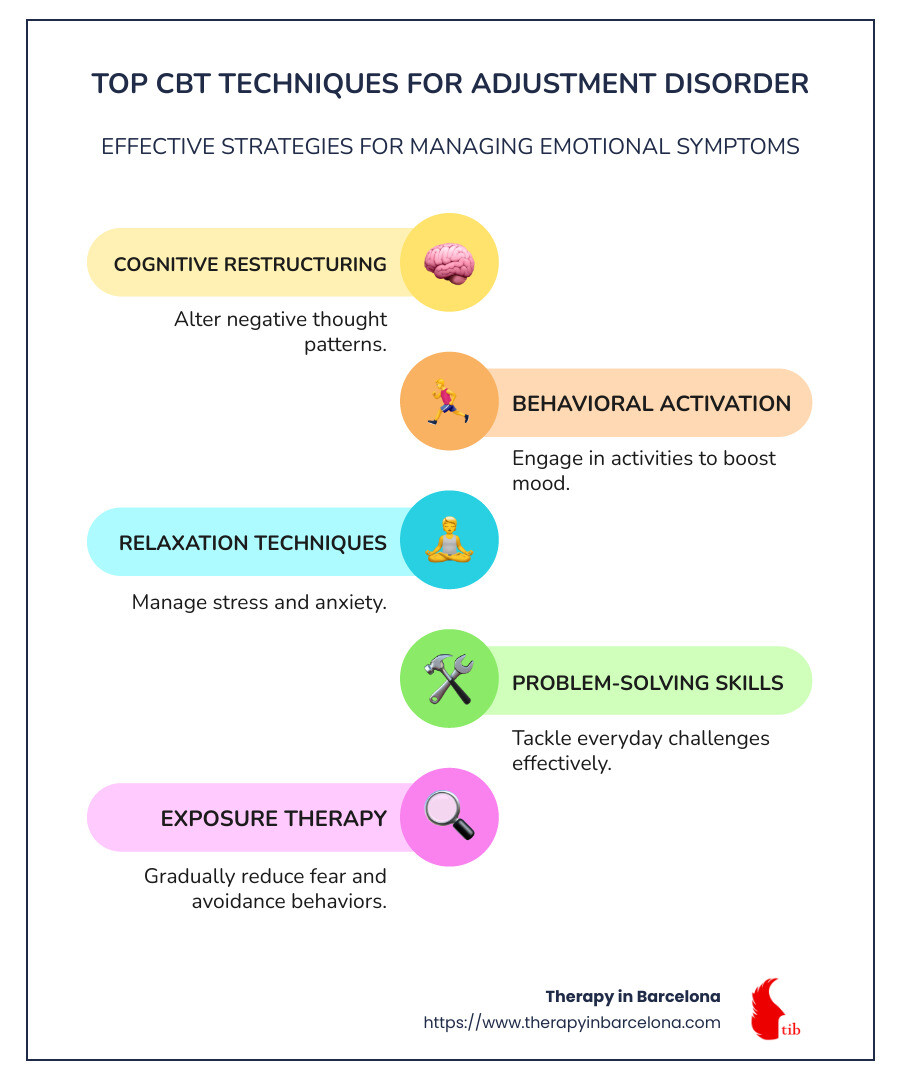
Top CBT Techniques for Adjustment Disorder:
- Cognitive Restructuring: This helps in altering negative thought patterns.
- Behavioral Activation: Encourages engaging in activities to boost mood.
- Relaxation Techniques: These assist in managing stress and anxiety.
- Problem-Solving Skills: Equips individuals to tackle everyday challenges effectively.
- Exposure Therapy: Gradually reduces fear and avoidance behaviors.
Feeling overwhelmed by a major life change like moving to a new country or dealing with a job loss? You’re not alone. Adjustment disorders can creep in when stressors exceed what our natural coping mechanisms can handle, leading to emotional symptoms such as anxiety, hopelessness, or social withdrawal. Many people in Barcelona or other busy international hubs may find themselves facing such challenges, as they juggle the demands of adapting to a new culture or city life.
Just like Emily, a fictional expatriate struggling with her move to Barcelona, who mirrors many expats’ realities—experiencing anxiety, loneliness, and longing for familiar comforts—adjustment disorders are a common and treatable response to identifiable stressors.
CBT techniques empower individuals to develop resilience and steer these emotional challenges with confidence. At Therapy in Barcelona, our approach aims to provide supportive, culturally sensitive guidance to help you thrive amidst life’s transitions.
Understanding Adjustment Disorder
Feeling overwhelmed by a major life change like moving to a new country or dealing with a job loss? You’re not alone. Adjustment disorders can creep in when stressors exceed what our natural coping mechanisms can handle, leading to emotional symptoms such as anxiety, hopelessness, or social withdrawal. Many people in Barcelona or other busy international hubs may find themselves facing such challenges, as they juggle the demands of adapting to a new culture or city life.
Adjustment disorders are psychological responses to significant life changes. Imagine Emily, a fictional expatriate who recently moved to Barcelona. Like many expats, she initially felt excited but soon found herself struggling with unexpected loneliness and anxiety. Emily’s experience is not unique. Adjustment disorders are a common and treatable response to identifiable stressors like a new job, divorce, or even the loss of a loved one.
These disorders manifest when stressors push us beyond our usual coping abilities. The emotional symptoms can include:
- Anxiety: Constant worry or feeling on edge.
- Hopelessness: A lack of motivation or feeling down.
- Social Withdrawal: Avoiding friends or social activities.

At Therapy in Barcelona, we understand these challenges and offer a supportive environment to help you steer them. Our culturally sensitive approach, grounded in cognitive behavioral therapy techniques for adjustment disorder, empowers individuals to develop resilience and steer these emotional challenges with confidence. By integrating CBT techniques, we aim to guide you through life’s transitions, helping you thrive amidst the changes.
Cognitive Behavioral Therapy Techniques for Adjustment Disorder
Imagine you’re trying to steer the busy streets of Barcelona, but every turn feels overwhelming. This can be what it’s like living with an adjustment disorder. But don’t worry, cognitive behavioral therapy (CBT) is here to help you find your way.
CBT is a powerful tool used to tackle negative thought patterns. Think of it as a mental GPS, helping you reroute your thoughts and behaviors to find a smoother path. It’s about recognizing those automatic negative thoughts that pop up when you’re stressed, like thinking you’ll never fit in or that you’re not capable of handling change. With CBT, you learn to challenge these thoughts and replace them with more balanced, realistic ones.
How CBT Works
CBT breaks down the connection between thoughts, feelings, and behaviors. Here’s how it can help:
Identify Negative Thoughts: First, you pinpoint those pesky thoughts that are causing distress. For example, Emily, our fictional expat, might think, “I’ll never make friends here.” Recognizing this is the first step.
Challenge and Change: Next, you work on challenging these thoughts. Is it really true that you’ll never make friends? Probably not. CBT helps you find evidence against these thoughts and encourages more positive thinking.
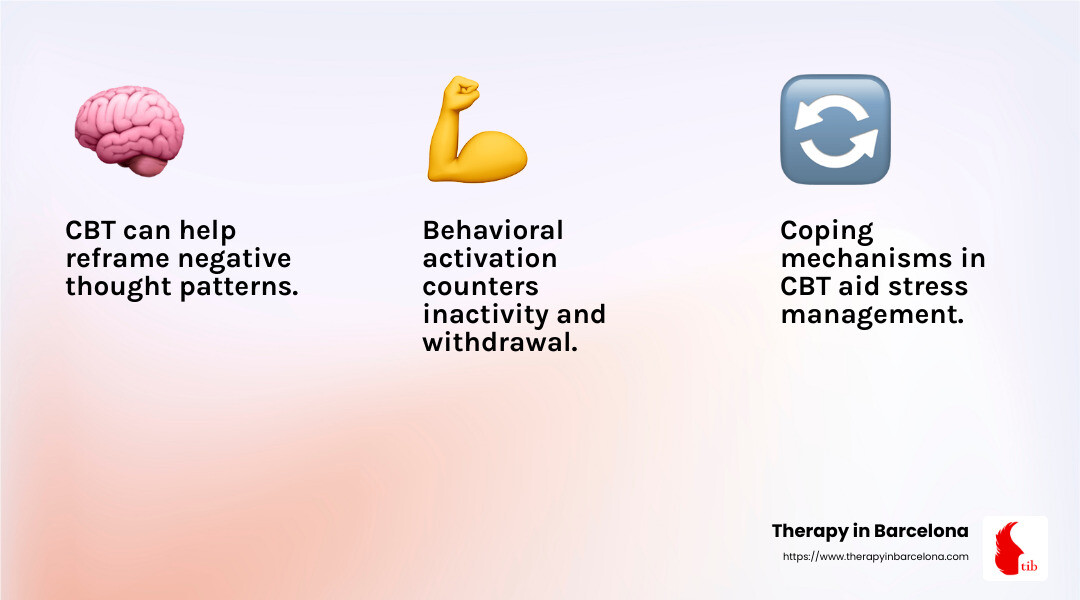
Coping Mechanisms: Once you have a handle on your thoughts, CBT introduces practical coping mechanisms. These are like tools in your mental toolkit, ready to help when stress hits. Techniques might include relaxation exercises or problem-solving strategies to manage daily challenges.
Coping Mechanisms in Action
Let’s look at coping mechanisms through the lens of CBT:
Relaxation Techniques: Simple practices like deep breathing or progressive muscle relaxation can reduce anxiety and help you feel more grounded.
Problem-Solving Skills: Breaking down overwhelming tasks into smaller, manageable steps can make them less daunting. This is particularly useful for expats trying to adjust to a new culture or job.
Behavioral Activation: Engaging in activities that bring joy or accomplishment can counteract withdrawal and inactivity. For Emily, this might mean joining a language class or exploring local cafes.
Why CBT?
CBT is not just about talking; it’s about doing. It’s action-oriented, focusing on building skills that promote resilience and adaptability. In a city like Barcelona, where the pressures of expat life can be intense, CBT provides a structured approach to navigating these challenges.
By using cognitive behavioral therapy techniques for adjustment disorder, individuals can transform overwhelming thoughts into manageable ones, leading to a more balanced and fulfilling life. At Therapy in Barcelona, we’re here to support you every step of the way, offering a culturally sensitive approach to help you thrive in your new environment.
Next, let’s explore how these CBT techniques can be seamlessly integrated into your daily life for lasting change.
Key CBT Techniques for Adjustment Disorder
Living in a new city like Barcelona can be both exciting and challenging. If you’re feeling overwhelmed, cognitive behavioral therapy techniques for adjustment disorder can help. Let’s explore some key techniques: cognitive restructuring, exposure therapy, and problem-solving skills.
Cognitive Restructuring
Think of cognitive restructuring as a mental makeover. It’s all about changing the way you think. When faced with stress, our minds can jump to negative conclusions. For instance, if you’re feeling isolated, you might think, “I’ll never make friends here.” Cognitive restructuring helps you spot these thoughts and replace them with more balanced ideas.
Here’s a simple way to start:
Identify Negative Thoughts: Notice when you’re thinking negatively. Write it down.
Challenge the Thought: Ask yourself, “Is this thought true? What evidence do I have?”
Replace with Positive Thoughts: Create a more balanced statement. Instead of “I’ll never make friends,” try “Making friends takes time, and I’m taking steps to meet new people.”
Exposure Therapy
Exposure therapy is like facing your fears but in a safe, controlled way. It’s especially helpful if certain situations make you anxious. By gradually exposing yourself to these situations, you can reduce anxiety over time.
For example, if the thought of speaking Spanish in public makes you nervous, start small:
Start Small: Begin by practicing phrases at home or with a friend.
Gradual Exposure: Try ordering coffee in Spanish or asking for directions.
Build Confidence: As you practice, your confidence will grow, and the fear will lessen.
Problem-Solving Skills
Problem-solving skills are like a toolkit for life. They help you break down big challenges into manageable steps. This is crucial when adjusting to a new environment.
Here’s how you can develop these skills:
Define the Problem: Be clear about what the issue is. For example, “I’m struggling to balance work and social life.”
Brainstorm Solutions: List possible solutions without judging them.
Evaluate and Choose: Pick the best solution and give it a try.
Reflect: After trying a solution, reflect on what worked and what didn’t. Adjust as needed.
These techniques are not just theoretical. They’re practical tools you can use every day to steer the ups and downs of life as an expat. At Therapy in Barcelona, we understand the unique challenges you face and are here to guide you through them.
Next, let’s explore how these CBT techniques can be seamlessly integrated into your daily life for lasting change.
Implementing CBT in Daily Life
Once you’ve learned some cognitive behavioral therapy techniques for adjustment disorder, it’s time to put them into action. Here’s how you can integrate these strategies into your everyday routine in Barcelona or any new city.
Behavioral Activation
Behavioral activation is about doing activities that bring you joy and a sense of accomplishment. It’s a powerful way to lift your mood and break the cycle of avoidance.
Schedule Activities: Write down activities you enjoy or want to try. This could be as simple as a morning walk in the park or visiting a local café.
Make a Commitment: Put these activities in your calendar. Treat them like an important appointment you can’t miss.
Start Small: Begin with easy tasks and gradually add more challenging ones. For example, if meeting new people feels daunting, start by attending a small group event.
Stress Management
Stress management is crucial, especially when adapting to a new environment. Simple techniques can make a big difference in how you handle daily stressors.
Deep Breathing: Take a few minutes each day to focus on your breath. Inhale slowly, hold, and then exhale. This helps calm your mind and body.
Progressive Muscle Relaxation: Tense and then relax each muscle group in your body. This can help release physical tension.
Mindfulness: Practice being present in the moment. Whether you’re enjoying a meal or walking through the city, focus on your senses and surroundings.
Goal Setting
Setting goals gives you direction and purpose. It helps you focus on what you want to achieve and how to get there.
Set SMART Goals: Make your goals Specific, Measurable, Achievable, Realistic, and Time-limited. Instead of “I want to be happier,” try “I will join a language exchange group by next month.”
Break It Down: Divide big goals into smaller steps. This makes them less overwhelming and more manageable.
Track Progress: Keep a journal or use an app to track your progress. Celebrate small wins along the way.
Implementing these techniques can transform your daily life, making it easier to steer challenges and enjoy your new surroundings. At Therapy in Barcelona, we support you in applying these strategies to build a fulfilling life abroad.
Next, we’ll answer some common questions about CBT for adjustment disorder to help you understand this approach even better.
Frequently Asked Questions about CBT for Adjustment Disorder
What are the main techniques of cognitive behavioral therapy?
Cognitive Behavioral Therapy (CBT) uses a variety of techniques to help people manage adjustment disorder. Here are some key ones:
Cognitive Restructuring: This involves identifying negative thought patterns and challenging them. For example, if you think, “I’ll never fit in here,” CBT helps you reframe it to something more positive, like “I can find ways to connect with others.”
Exposure Therapy: Gradually facing fears or anxieties related to your stressor can reduce their power over you. This might mean slowly getting comfortable with new social settings or unfamiliar routines.
Relaxation Techniques: Practices like deep breathing and progressive muscle relaxation can help calm your mind and body. These techniques are useful for managing stress and anxiety.
How does CBT help with adjustment disorder?
CBT helps by addressing the negative thought patterns and behaviors that contribute to adjustment disorder. Here’s how:
Negative Thought Patterns: CBT helps you recognize automatic thoughts that might be unhelpful. By challenging these thoughts, you can develop a more balanced perspective.
Coping Strategies: You’ll learn practical strategies to manage stressors. This might include problem-solving skills or finding ways to relax during overwhelming moments.
Stress Management: CBT equips you with tools to handle stress effectively. This includes learning how to stay calm in challenging situations and finding healthy ways to express emotions.
What are CBT skills for adjustment disorder?
CBT provides essential skills that help you steer life’s changes more smoothly:
Problem-Solving Skills: This involves breaking down a problem into smaller, manageable parts and finding practical solutions. It’s like having a toolkit for life’s challenges.
Communication Skills: Effective communication is key to building relationships and resolving conflicts. CBT helps you express yourself clearly and assertively.
Impulse Control: Learning to pause and think before reacting can prevent impulsive decisions. This skill helps you respond to situations thoughtfully rather than emotionally.
Incorporating these cognitive behavioral therapy techniques for adjustment disorder into your life can make a significant difference. They empower you to handle stressors confidently and build resilience. At Therapy in Barcelona, we guide you through these techniques, helping you thrive in your new environment.
Next, we’ll explore how CBT can be implemented in daily life, changing your approach to challenges and enhancing your well-being.
Conclusion
Navigating the complexities of expat life in a new country can be daunting, but support is available. At Therapy in Barcelona, we understand the unique challenges faced by the international community. Our approach is not only about providing therapy but about creating a personalised and culturally sensitive support system.
Personalized Therapist Matching
One of our key strengths is our personalised therapist matching process. We take the time to understand your specific needs and concerns to connect you with a therapist who is best suited to support your journey. This custom approach improves the effectiveness of therapy, ensuring that you feel understood and supported from the very start.
Culturally Sensitive Support
Living abroad often comes with cultural adjustments, feelings of isolation, and the challenge of balancing different aspects of life. Our team, composed of expats themselves, brings a deep understanding and empathy to these experiences. We provide a safe space where you can explore your thoughts and feelings without judgment, helping you to adapt and thrive in your new environment.
By integrating cognitive behavioral therapy techniques for adjustment disorder, we help you build resilience and develop effective coping strategies. Whether you’re struggling with stress, anxiety, or the emotional impact of life changes, our therapists are here to guide you every step of the way.
Choosing Therapy in Barcelona means choosing a community that values your journey and is committed to helping you steer the complexities of expat life with confidence and grace. Let us be your partner in building a fulfilling life abroad.
