


What Is Online CBT Therapy — and Could It Help You?

Online CBT therapy is a structured, evidence-based form of psychological support that delivers the principles of Cognitive Behavioural Therapy through digital channels — video sessions, messaging, worksheets, and guided exercises — rather than a traditional face-to-face setting. If you’re wondering whether it works, here’s the short answer:
What you need to know at a glance:
- What it is: A structured, evidence-based approach that helps you identify and change unhelpful thought patterns, feelings, and behaviours
- Who it helps: People managing persistent worry, low mood, stress, sleep difficulties, repetitive thoughts, and past difficult experiences
- How it’s delivered: Live video sessions, asynchronous messaging, digital worksheets, and guided exercises
- Does it work? Yes — research shows online CBT achieves outcomes comparable to in-person therapy, with an 82% treatment adherence rate
- Do I need a therapist? Self-guided tools exist, but outcomes are significantly better with a trained, qualified therapist guiding the process
- How long does it take? Most courses run between 12 and 20 sessions, though improvement is often felt within the first 5 to 15 modules, according to clinical research on digital therapy
- Cost: Online CBT from a private therapist is a private-pay service; some therapists offer sliding scale fees for those with financial need
Take Sarah — she is a fictional composite example representing common expat challenges, not a real client, but her story mirrors what many people experience. She moved from the UK to Valencia for a fresh start, excited by the city’s warmth and energy. A year in, though, she found herself lying awake at 2 AM, replaying anxious thoughts, feeling disconnected from both her new life and the friends she left behind. She wanted professional support but couldn’t face the logistics of finding a local therapist in a new city and a second language. Online CBT gave her a way in.
Stories like Sarah’s are increasingly common. Whether you’re navigating expat life in Barcelona, adjusting to a new city like Valencia or Madrid, or simply looking for flexible mental health support that fits your life, digital access to quality therapy has opened a door that simply didn’t exist a generation ago. And the science backs it up — this isn’t a workaround. It’s a legitimate, effective path to better mental health.
This guide covers everything you need to know: how online CBT works in practice, what the research says about its effectiveness, the tools and techniques involved, how to weigh your options, and how to find the right therapist for your specific situation.
Understanding Online CBT Therapy and How It Works
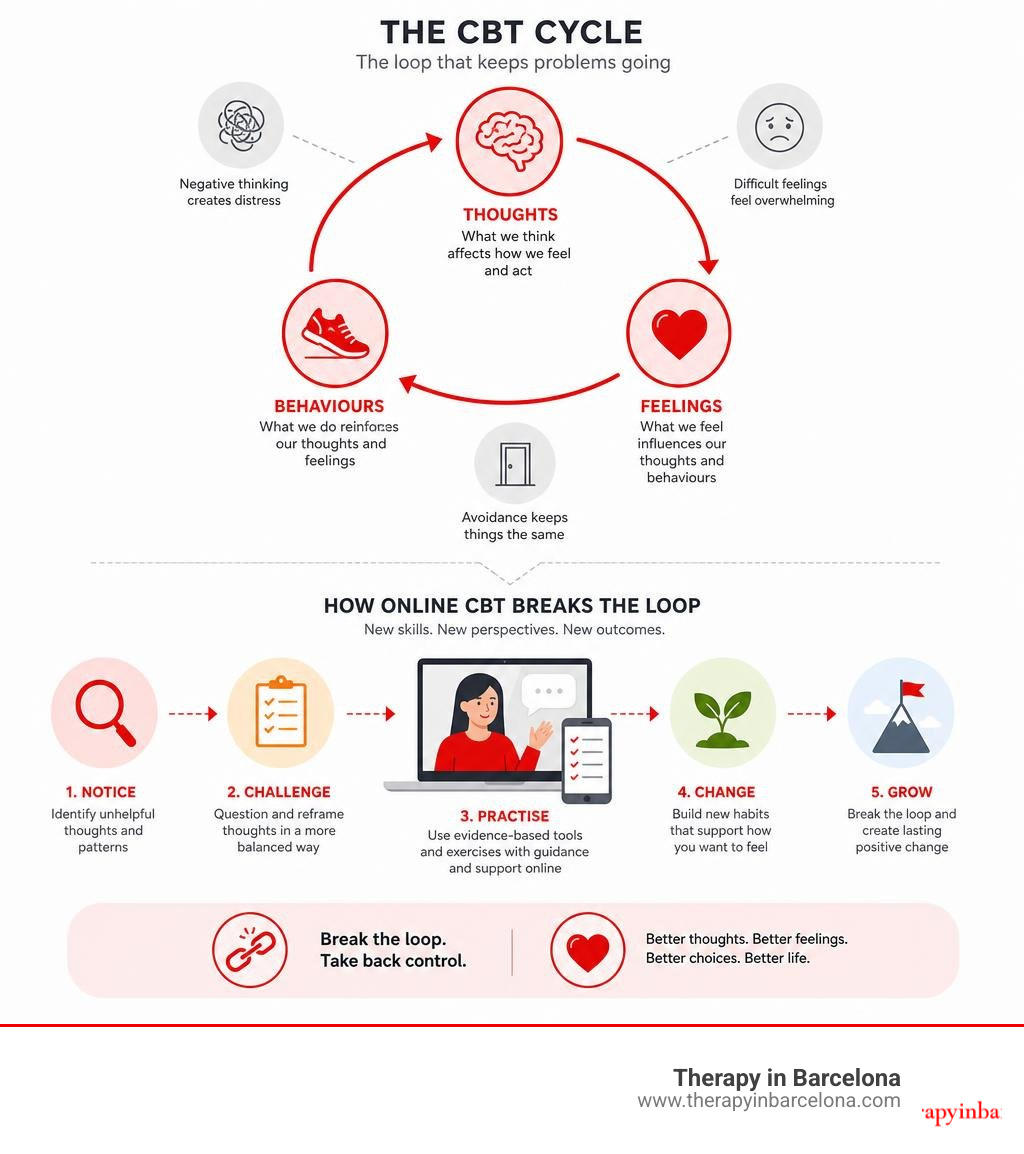
At its core, Cognitive Behavioural Therapy operates on a simple, powerful premise: our thoughts, emotions, physical sensations, and actions are deeply interconnected. When we get stuck in a negative cycle, a single unhelpful thought can trigger a cascade of difficult emotions and self-defeating behaviours.
For instance, an expat feeling isolated might think, “Nobody here wants to spend time with me.” This thought triggers feelings of sadness and worry, leading them to stop replying to messages or avoid social gatherings. This behaviour, in turn, reinforces the original unhelpful belief, trapping them in a loop of isolation.
Unlike traditional therapy models that focus heavily on exploring your early childhood, CBT is highly practical, goal-oriented, and focused on the present. It helps you examine what is happening in your life right now and gives you concrete tools to adjust your perceptions and habits.
When you transition this model to the digital space, the underlying therapeutic principles remain identical. Online CBT therapy uses digital platforms to deliver structured support. Here is how it works in practice:
- Live Video Sessions: You meet with your therapist via secure, GDPR-compliant video software, replicating the face-to-face experience from the comfort of your own home.
- Interactive Digital Worksheets: Instead of using paper handouts, you complete digital thought records and exercises on a secure platform.
- Asynchronous Communication: Many digital programmes allow you to send messages or submit worksheets to your therapist between sessions, receiving feedback multiple times a week rather than waiting for your next appointment.
- Auxiliary Wellness Tools: Platforms often integrate daily mood trackers, journaling prompts, and activity planners to help you build consistency.
By using these virtual tools, you can actively learn how CBT works and apply these skills directly to your daily life. This structured, modern approach makes online therapy for stress highly accessible, allowing you to fit mental health support seamlessly into a busy schedule.

Is Digital Cognitive Therapy Effective? What the Science Says
It is natural to wonder if talking to a therapist through a screen or completing exercises on a laptop can deliver the same results as sitting on a clinic couch. Fortunately, online CBT is one of the most thoroughly researched digital interventions in modern psychology.
A robust body of literature confirms that internet-based CBT (often called iCBT) has comparable effectiveness to traditional, face-to-face therapy for a wide range of concerns. Consider these key findings:
- High Success Rates: Research shows that CBT alone is 50% to 75% effective for overcoming low mood and persistent worry after completing just 5 to 15 digital modules.
- Sustained Progress: Research published in peer-reviewed journals, such as this long-term study, demonstrates that the positive improvements gained from online CBT are maintained at a one-year follow-up.
- Excellent Adherence: The adherence rate of online Cognitive Behavioural Therapy stands at a remarkable 82%, showing that individuals find the digital format highly engaging and manageable.
- Significant Cost Savings: Implementing digital CBT has been shown to generate substantial societal and personal cost savings. For example, a study on internet-based CBT highlighted that digital programmes can lower the financial burden of treatment significantly compared to traditional face-to-face support pathways.
This evidence confirms that choosing evidence-based therapy via a digital platform is not a second-rate option. It is a highly effective, scientifically validated path to recovery.
The Power of Guided Online CBT Therapy
While completely self-guided CBT workbooks and automated apps can be useful starting points, the scientific consensus is clear: the most successful, lasting outcomes occur when online CBT is guided by a qualified professional.
Working with a live therapist provides several critical advantages that an app simply cannot replicate:
- Tailored Personalisation: A therapist can adapt standard CBT protocols to your unique life circumstances, cultural background, and personal goals.
- Professional Accountability: Having a scheduled check-in or knowing a real professional is reviewing your weekly worksheets provides the gentle accountability needed to stay consistent.
- Therapeutic Alliance: The empathetic, non-judgmental relationship you build with a therapist is a powerful agent of change. A therapist can challenge your unhelpful beliefs with warmth and guide you through difficult emotional breakthroughs.
For example, if you are seeking support while living in Málaga, connecting with a professional who understands your unique context ensures you receive professional, human-led guidance. Taking the step of finding a therapist online bridges the gap between digital convenience and real, empathetic human connection.
Common Challenges Supported by Online CBT Therapy
Because of its structured and practical nature, online CBT is uniquely suited to treat a broad spectrum of personal challenges. It is particularly effective for:
- Persistent Worry and Fear: Including constant overthinking, sudden feelings of panic, and social apprehension. CBT helps you identify the “what-ifs” and gradually face the situations you have been avoiding.
- Low Mood and Feeling Unmotivated: By using behavioural activation techniques to rebuild momentum and motivation.
- Expat Stress and Life Transitions: Moving abroad often brings unexpected feelings of isolation, identity loss, and cultural adjustment stress.
- Sleep Difficulties and Exhaustion: Nearly 10% of adults in the Western world struggle with long-term sleep issues. Cognitive Behavioural Therapy for Insomnia (CBT-I) is widely recommended as a primary approach for sleep issues, proving highly effective over the long term.
- Repetitive Thoughts and Behaviours: Utilizing structured exposure techniques to break the cycle of distressing thoughts and repetitive actions.
If you are navigating these struggles in Spain’s major international hubs, finding specialised support is crucial. Whether you are looking for Cognitive Behavioural Therapy in Madrid or adjusting to life in Valencia, finding a professional who understands the expat experience is key.
Using targeted approaches like Cognitive Behavioral Therapy At Therapy In Barcelona A Guiding Light For Expats Navigating Lifes Challenges makes the process of finding support Lost In Translation No More Cbt Therapy Barcelona Made Easy for internationals living abroad.
Additionally, for a broader professional understanding of these techniques, you can refer to the American Psychological Association’s CBT overview.
Core Techniques and Tools in the Digital Space

One of the greatest strengths of online cbt therapy is how naturally its core therapeutic tools translate into digital formats. Rather than relying on memory, online platforms keep a secure, permanent record of your exercises, allowing you and your therapist to track your progress over time.
Here are the primary techniques you will learn and practice in a digital CBT programme:
Thought Records (Cognitive Restructuring) This tool helps you catch, write down, and evaluate automatic negative thoughts. When you feel a sudden shift in your mood, you log the situation, the automatic thought, and the emotion it caused. You then examine the objective evidence for and against that thought, helping you reframe it into a more balanced, realistic perspective.
Behavioural Activation When we feel persistently down or highly stressed, our natural instinct is to withdraw. Behavioural activation involves scheduling small, achievable, and rewarding activities into your weekly digital calendar. By scheduling these positive actions, you rebuild momentum, proving that action often precedes motivation.
Graded Exposure Exercises For feelings of fear and avoidance, avoiding what we worry about makes those worries grow over time. Your therapist will help you build an “exposure hierarchy”—a step-by-step list of situations that cause you mild to moderate discomfort. You then gradually face these situations in a planned, safe way, allowing your nervous system to learn that you are safe.
Digital Journaling and Mood Tracking Keeping a daily digital journal helps you spot emotional triggers and notice patterns in your thinking. Tracking your daily mood on a scale of 1 to 10 provides objective data, showing you how your mental fitness improves as you practice your skills.
By engaging with these tools through secure online mental health therapy, you build a personalised digital toolbox that you can access whenever you need it. This structured approach demonstrates how digital assignments help solidify these life-changing skills in real-time.
Weighing Your Options: Benefits, Costs, and Alternatives
When looking for mental health support, it is important to understand the different paths available to you so you can make an informed choice. Below, we break down the main options in a clear, mobile-friendly format designed for easy scanning.
The Public Healthcare System
In many regions, public healthcare provides free or low-cost mental health services.
- The Pros: It is financially accessible and integrated with local medical systems.
- The Cons: Waiting lists are often exceptionally long, sessions are frequently short and spaced far apart, and you rarely have the option to choose your specific therapist or access services in English.
Large Corporate Subscription Platforms
These are massive, global apps that match you with therapists using automated algorithms, often focusing on high-volume, text-based messaging.
- The Pros: Highly convenient, lower weekly costs, and immediate matching.
- The Cons: Therapists are often underpaid and overworked, leading to high burnout and lower quality care. Additionally, many of these corporate platforms have faced criticism regarding user data privacy and the selling of sensitive information for advertising.
Self-Guided CBT Apps and Workbooks
These are automated, tech-first tools that guide you through CBT exercises without any direct human involvement.
- The Pros: Extremely affordable, private, and available 24/7.
- The Cons: They lack the critical human element of professional accountability, empathy, and personalisation, leading to much higher dropout rates.
Specialised Private-Pay Practices (Like Therapy in Barcelona)
A premium private service that focuses on high-quality, personalised matching and culturally sensitive care.
- The Pros: You are matched with highly qualified, psychology-trained therapists who understand the expat experience firsthand. Your data is strictly private and never sold. Sessions are tailored to your unique goals, with sliding scale fee options available for those with financial need.
- The Cons: This is a private-pay service, meaning you invest in your care out-of-pocket rather than relying on public health coverage.
For international residents living in Spanish hubs like Alicante, Marbella, or Barcelona, choosing a specialised private service ensures you don’t get lost in translation. Whether you are seeking Cognitive Behavioural Therapy in Marbella or looking to understand the benefits of online therapy in Spain, the quality of the therapeutic match is the single most important factor in your success.
While there are global digital options available, finding a team that understands your specific geographic and cultural context is highly valuable. Taking the time to Connect From Anywhere Your Guide To Online Therapy In Spain allows you to build a secure, professional relationship on your own terms.
Frequently Asked Questions about Digital CBT
How long does a typical course of sessions take?
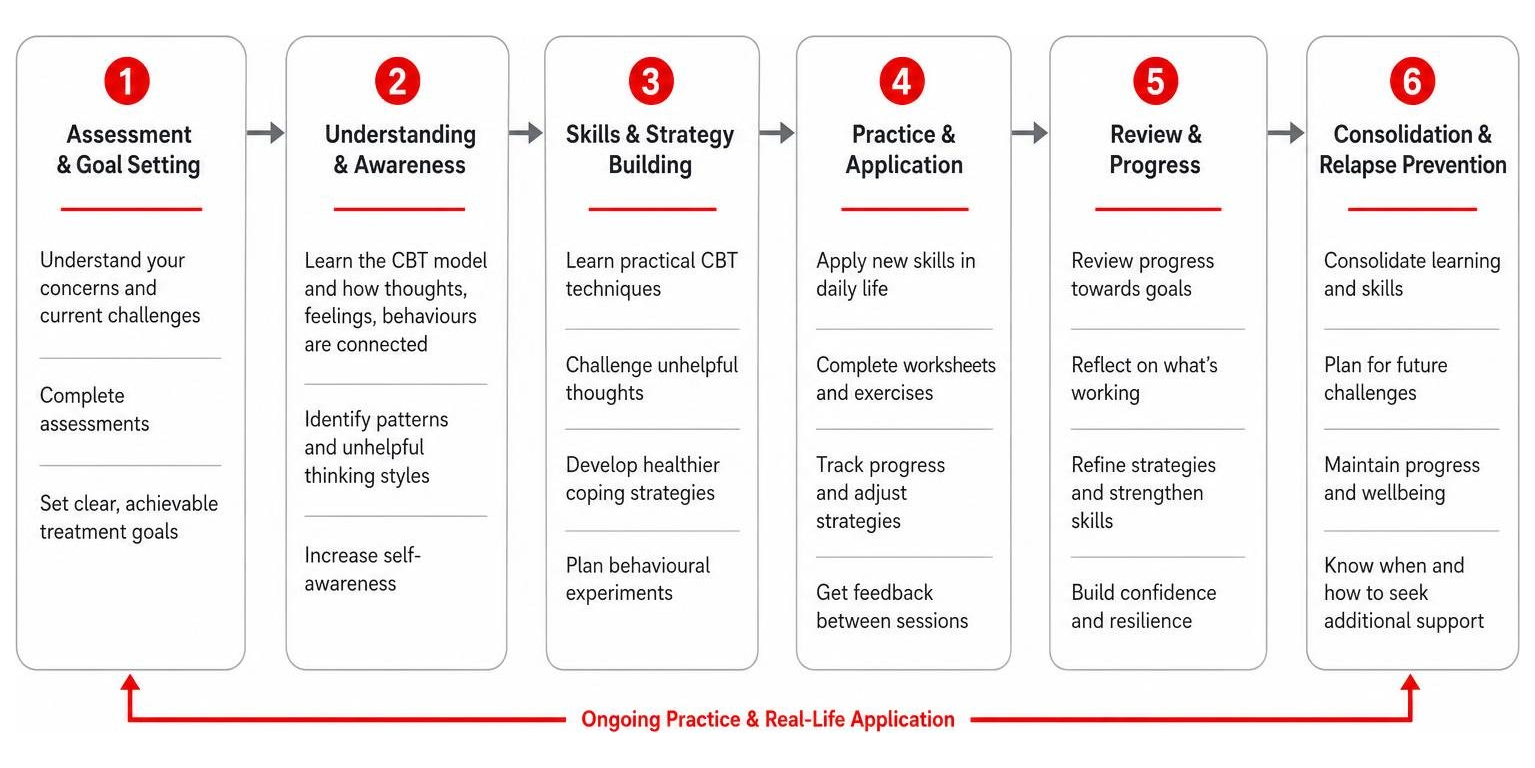
A standard course of CBT is structured and time-limited, typically running between 12 and 20 weekly sessions. However, because CBT is highly practical, many clients begin to notice positive shifts in their thinking and coping strategies within the first 5 to 15 sessions.
Your therapist will work with you to set clear, measurable goals at the start, tracking your progress regularly to ensure you are building the skills needed to eventually become your own therapist. Whether you are accessing therapy from a busy city like Sevilla or a quiet coastal town, this structured approach ensures your time and financial investment are used efficiently.
Can I practice CBT techniques on my own?
Yes, you can absolutely practice CBT techniques on your own. Self-reflection, using thought records, and keeping a daily journal are excellent ways to maintain your mental wellbeing.
However, research shows that self-guided CBT is far more effective when combined with professional therapist guidance. A trained therapist provides the professional accountability, objective insights, and emotional support needed to tackle deep-seated patterns that are difficult to see on your own.
If you are living in Gran Canaria, for instance, you can use local directories to Find Therapists in Las Palmas de Gran Canaria to find a qualified professional who can guide your self-help efforts.
How do I choose the right virtual therapist?
Choosing the right therapist is the most important step in your therapeutic journey. Look for a professional who is not only highly qualified and psychology-trained but also has a deep understanding of your specific life context.
For expats and digital nomads, this means finding a therapist who understands the unique stresses of living abroad, cultural adjustment, and language barriers. Ensure they offer therapy in your native language so you can express yourself fully.
Accessing online therapy in English with a therapist who understands the expat journey can make all the difference in helping you feel genuinely seen and understood.
Finding Your Path to Mental Fitness
At Therapy in Barcelona, we believe that mental fitness is just as important as physical fitness—and finding the right support to build it shouldn’t be complicated. Founded in 2011 by Leigh Matthews, an Australian Psychologist and expat herself, our practice was born out of a genuine need for high-quality, English-speaking mental health services tailored to the international community in Spain.
Over the last 15 years, Leigh has dedicated her career to supporting global citizens, building a trusted team of highly qualified, psychology-trained expat professionals. We understand that life abroad can be beautiful, but it can also be messy, isolating, and challenging.
We pride ourselves on our personalised matching process. We don’t just assign you to the next available slot; we take the time to understand your unique story, goals, and personality to match you with the therapist best suited to guide your journey. Whether you are looking for online therapy from Barcelona, Valencia, Madrid, Málaga, Alicante, Sevilla, Marbella, Gran Canaria, or Zaragoza, we are here to offer a safe, warm, and compassionate sanctuary.
Our team offers support to adults, couples, teenagers, and families worldwide (excluding the USA and Canada). We speak English, along with German, French, Spanish, Afrikaans, Portuguese, Austrian-German, and Swiss-German.
If you are ready to take the first step toward mastering your mind and building lasting resilience, we invite you to reach out.
If you’d like support, book a Free Discovery Call today. Let’s work together to help you feel at home in your mind, wherever you are in the world.
