


Quick Answers: Free Counselling for International Students – Where to Find Support Right Now

Free counselling for international students is available across many universities, public health systems, and charities. If you’re looking for mental health help but worried about cost, here’s how you can access immediate support:
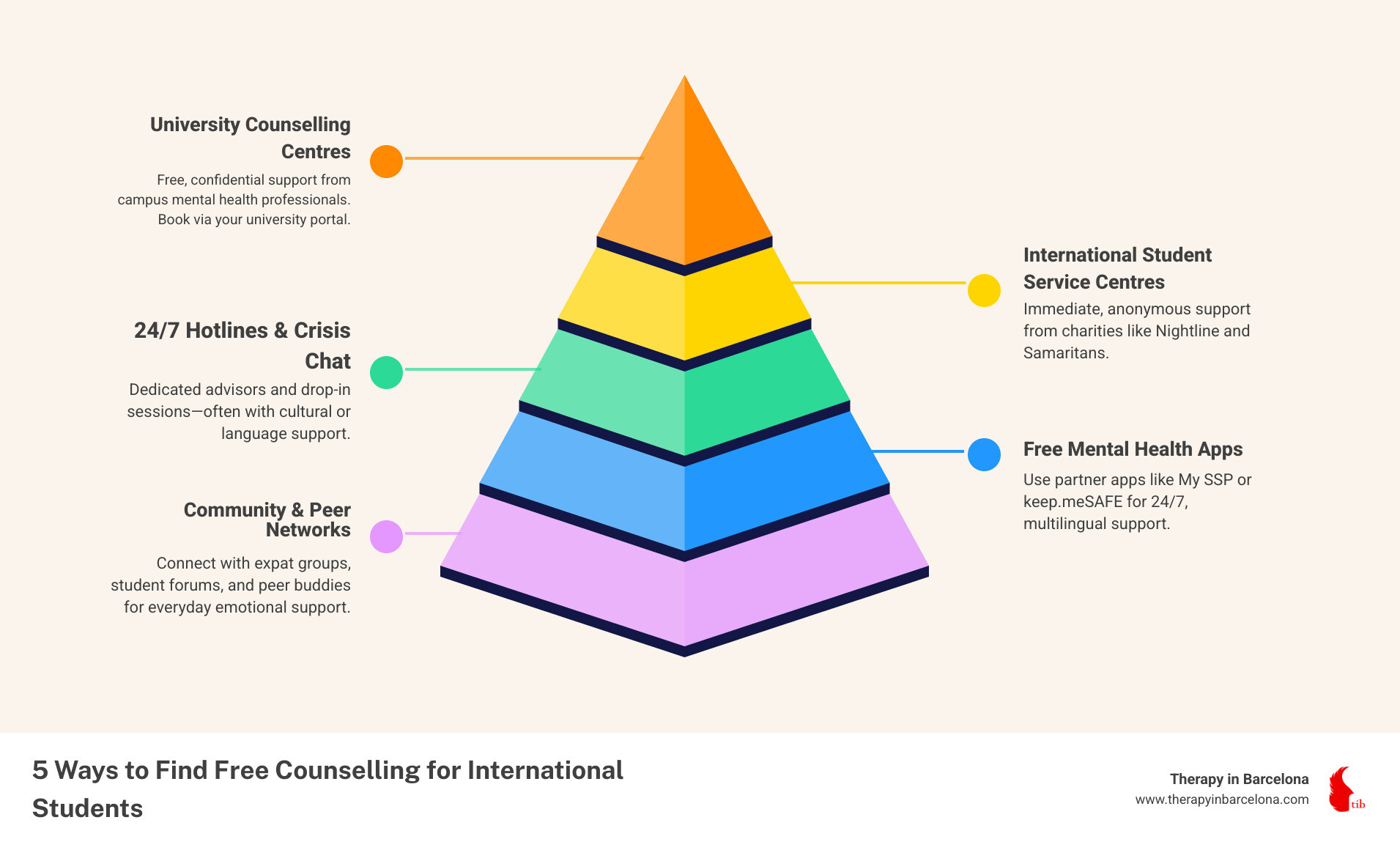
- University counselling centres: Most universities offer free, confidential therapy and mental-health support to enrolled students.
- International student service centres: Many schools have special staff or programmes for international students—ask about dedicated advisors or drop-in support.
- 24/7 hotlines & crisis chat services: Charities and non-profits (like Samaritans, or campus wellbeing helplines) offer anonymous chat and phone support in English.
- Free mental health apps: Some universities partner with apps for free, multilingual support—often available worldwide.
- Community support & peer networks: Look for expat groups, student forums, and online communities dedicated to international students’ wellbeing.
If you need professional therapy beyond what’s free, Therapy in Barcelona and similar practices offer culturally sensitive, English-speaking support for internationals. Our therapists set their own prices; see fees here.
Adjusting to life in a new country can feel much harder than expected. What starts as excitement can quickly turn into stress, homesickness, loneliness, or anxiety, especially when everything around you feels unfamiliar. If that is how you feel, you are not failing and you are not the only one. Many international students go through emotional ups and downs while settling into study, daily life, and a new culture.
Seeking help is normal—and free options exist no matter where you live or study. Whether you’re in Barcelona, Madrid, Valencia, or beyond, it’s possible to get support that respects your culture, language, and privacy.
Skip the wait and reach out—no cost, no worries.
Why Looking After Your Mental Health Abroad Is Essential
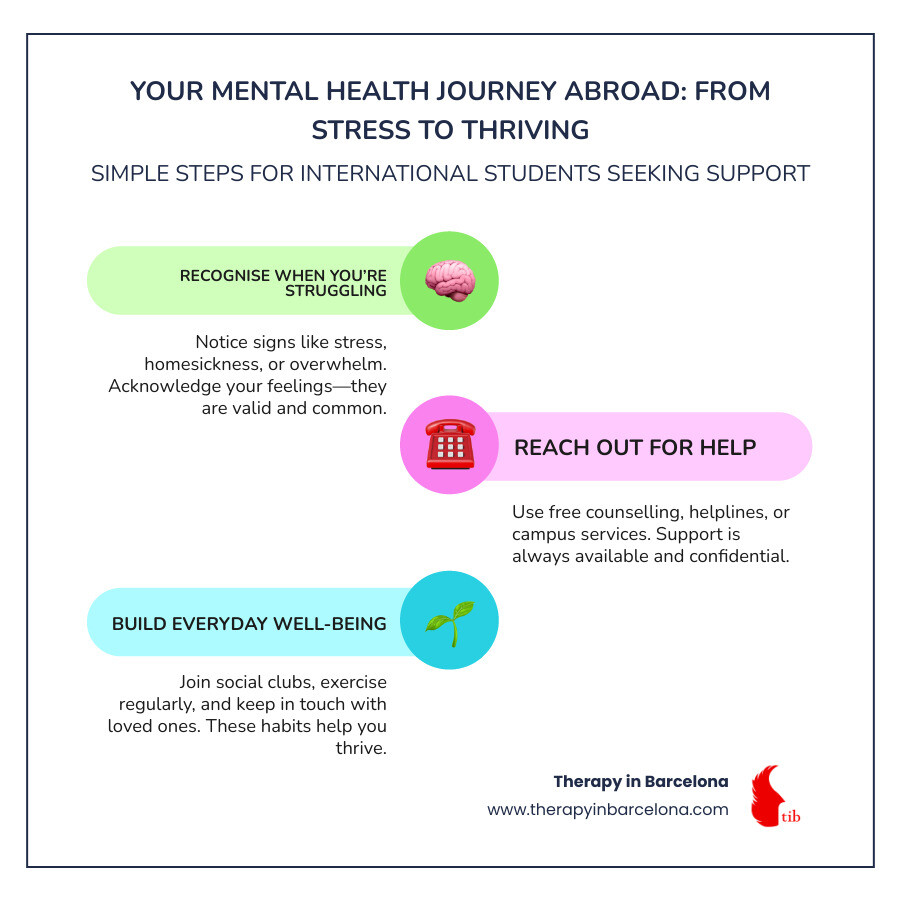
Picture this: you touch down in a new country feeling thrilled, but within weeks excitement slips into anxiety, loneliness, or a sense that everyone else is coping better than you. These feelings don’t mean you’re failing; they’re a natural response to a huge life change.
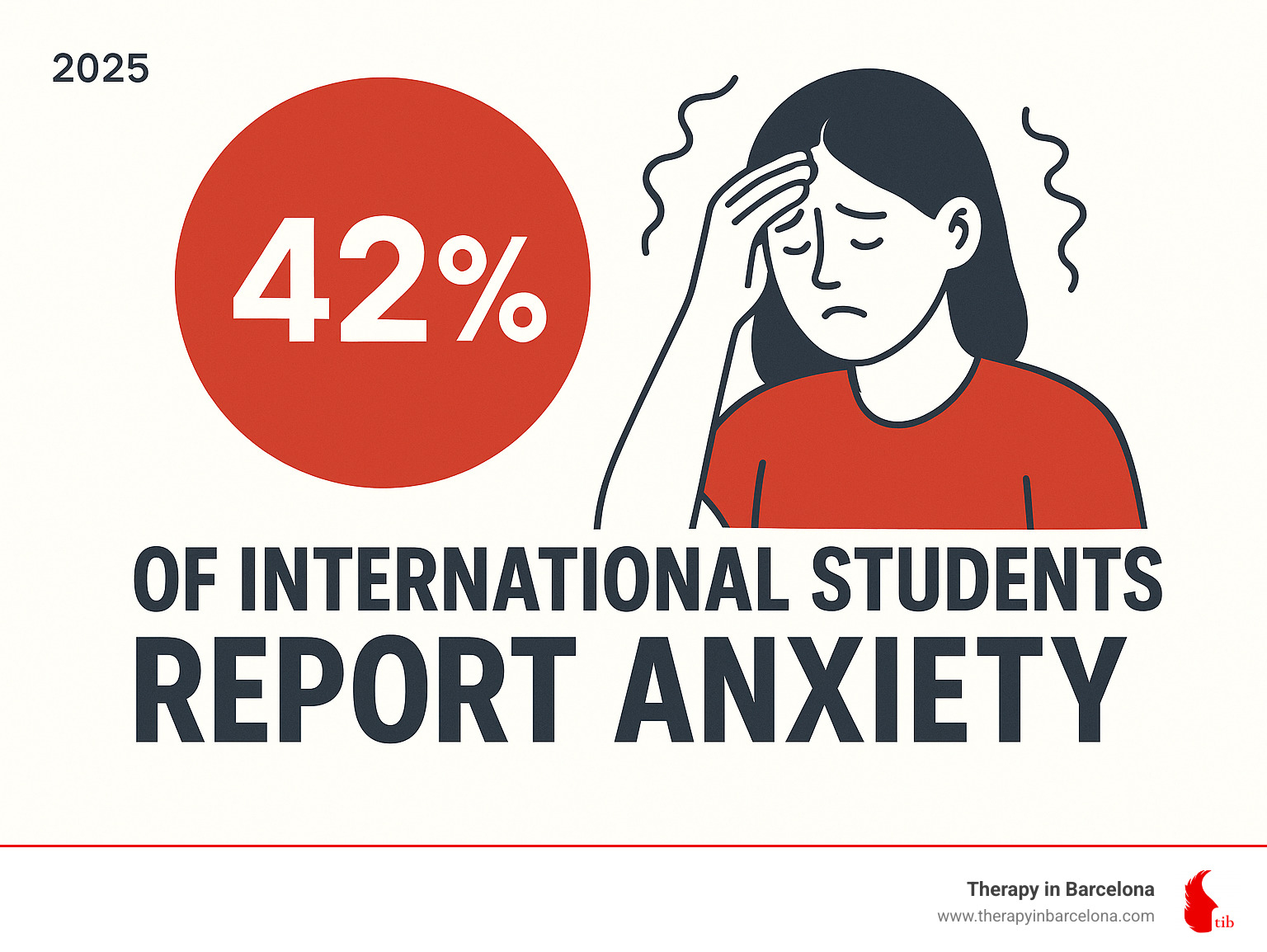
Recent surveys suggest that about 42% of students report experiencing anxiety. For international students, that stress can be intensified by homesickness, academic pressure, visa uncertainty, financial strain, and adjusting to a new culture. Recognising these pressures is an important first step, and it can make reaching out for support feel more normal and more manageable.
Talking About Your Mental Health
Reaching out for support is a strength, not a weakness. Opening up to a peer, mentor, or counsellor often brings relief and reminds you that you’re not alone. Practising self-compassion—acknowledging that adjustment takes time—builds resilience for the road ahead.
What Problems May You Be Facing Emotionally as an International Student?
- Language barriers: Even fluent speakers can stumble over academic jargon or cultural nuances, leading to frustration or self-doubt.
- Financial strain: Budgeting in a new currency, unexpected costs, or pressure from family back home can weigh heavily.
- Visa stress: Paperwork and uncertainty about renewals create a constant background anxiety.
- Academic demands: Learning new grading systems while proving yourself academically can leave you drained.
- Isolation: Forming friendships in an unfamiliar culture might take longer than expected, intensifying feelings of loneliness.
Recognising these challenges is the first step toward addressing them. Free, confidential counselling services exist precisely because universities and charities know expat life can be tough. They’re there to help you move from merely coping to truly thriving.
Free Counselling for International Students: Where to Start
When you’re feeling overwhelmed in a new country, knowing where to turn for free counselling as an international students can feel like searching for a needle in a haystack. The truth is, support is more available than you might think—you just need to know where to look.
Your university campus is often your first and best bet. Most universities offer dedicated student wellbeing or counselling centres, staffed by professional counsellors who understand the unique pressures international students face. These services are typically free for enrolled students, confidential, and designed to help you steer everything from homesickness to academic stress.
Beyond your campus, 24/7 hotlines and digital apps provide round-the-clock support when you need it most. Many universities have partnerships with global mental health platforms that offer multilingual support—meaning you can get help in your native language, no matter what time zone you’re in.
Community support networks and charity organisations also play a crucial role, offering everything from anonymous chat services to culturally sensitive counselling programmes specifically designed for international students.
| Option | Best for | Limits |
|---|---|---|
| On-campus counselling | Free, private support through your university | Often waitlists and session caps |
| Student service centres | Practical help, referrals, and international student support | Quality and scope vary by campus |
| Hotlines and charities | 24/7, anonymous help in urgent or difficult moments | Usually short-term, not ongoing therapy |
| Free mental health apps | Fast, flexible support anytime | Less personal than speaking to someone |
| Peer groups | Community, connection, and shared experience | Not a substitute for professional care |
On-Campus Clinics & Global Student Assistance Programmes
Your university’s student wellbeing centre is usually the most straightforward place to start. These centres typically offer a set number of free sessions per academic year, and booking is often as simple as filling out an online form. What makes these services particularly valuable is that the counsellors often have specific experience supporting international students—they understand the unique challenges you’re facing.
Many universities have also partnered with Global Student Assistance Programmes to expand their reach. Services like this offer 24/7 multilingual support through chat, phone, or video calls. These programmes are designed specifically for students studying abroad, so they understand the complexities of visa stress, cultural adjustment, and being far from home.
Don’t overlook your Service Centre for International Students either. Many universities have dedicated offices where advisors are specially trained in cultural adjustment and crisis management.
Hotlines & Charities
Sometimes you need to talk to someone right now, not next week when the campus counsellor has an opening. That’s where hotlines and charity services become invaluable for free counselling for international students.
In Spain, Samaritans can be a useful free option for international students who want anonymous emotional support by phone or email. If you need help finding the right service through your university or local area, the University Mental Health Advisers Network can also point you toward relevant mental health information and support.
For Irish students abroad, Helplink Irish Abroad Counselling provides free, culturally sensitive online counselling across over 40 countries—a service that’s been supporting Irish internationals since 2016.
Digital 24/7 Apps
The beauty of digital mental health support is that it’s available whenever you need it—whether you’re having a 3 AM panic attack or feeling overwhelmed between classes. Many universities worldwide now offer free, unlimited access to mental health apps, regardless of where you’re logging in from.
Many universities in Spain and across Europe offer free, confidential counselling for international students through campus wellbeing services and student assistance programmes. My SSP App is used by universities across the US, Canada, Australia, and Europe, offering 24/7 chat, phone, and video support in multiple languages.
keep.meSAFE specialises specifically in supporting international students, with culturally matched counsellors who understand the expat experience. The JED Foundation offers comprehensive mental health resources, support guides, and crisis help for students in the US.
These digital platforms often include practical tools beyond just counselling—think guided meditations, stress management techniques, and tips for improving sleep and managing academic anxiety.
Overcoming Barriers to Reaching Out
I know what you’re thinking: “This all sounds great, but what if someone finds out? What if it affects my visa? What if the counsellor doesn’t understand my culture?” These worries are completely normal—and they’re exactly why many international students hesitate to seek help, even when they desperately need it.
Let’s tackle these concerns head-on, because 42% of your peers are dealing with similar struggles. You’re not alone in feeling this way, and you’re certainly not alone in needing support.
Confidentiality is sacred in professional counselling. Whether you’re speaking with university counsellors, charity hotlines, or digital support services, your conversations are completely private. This means what you share won’t be disclosed to academic staff, immigration authorities, or anyone else without your explicit consent. It’s not just good practice—it’s a legal requirement.
Cultural sensitivity has come a long way in recent years. Many counselling centres now offer culturally matched therapists or interpreters, and it’s absolutely okay to request someone who understands your background. Don’t be afraid to ask questions like “Do you have experience with students from my country?” or “Can you help me understand how my cultural background might be affecting my adjustment?”
Time zones used to be a major barrier, but digital services have changed everything. Most free counselling for international students platforms operate 24/7, so you can reach out when it suits you—whether you’re studying abroad, back home for holidays, or dealing with insomnia at 3 AM.
Cost concerns are valid, especially when you’re already stretched thin financially. The good news? All the services we’ve mentioned are genuinely free for students. If you later decide you need ongoing therapy beyond what’s available at no cost, there are often sliding scale or low-cost options available locally.
Will Going to Counselling Affect My Grades?
Here’s something that might surprise you: students who seek counselling often see their academic performance improve, not decline. When you’re not spending all your mental energy managing anxiety, homesickness, or cultural adjustment stress, you actually have more bandwidth for your studies.
Improved focus is one of the most common benefits students report. Processing stress and learning coping strategies can help you concentrate better during lectures and exams. Building resilience through counselling gives you tools to bounce back from setbacks—whether that’s a failed exam, a difficult group project, or friendship drama.
Many students also find that counselling helps them reconnect with their motivation and goals. When you’re feeling lost or overwhelmed, it’s easy to lose sight of why you chose to study abroad in the first place. Working with a counsellor can help you refind that sense of purpose and stay on track.
Universities consistently report that students who access mental health services are more likely to complete their studies successfully. So rather than being a distraction from your academics, seeking support is actually an investment in your educational success.
What If English Isn’t My First Language?
You’re definitely not alone here—most international students speak at least two languages, and many counselling services have adapted to meet this reality. Multilingual support is increasingly common, with many universities and digital platforms offering sessions in multiple languages.
Interpreter services are available through some universities and hotlines, and many free counselling for international students apps let you select your preferred language for chat or phone support. Don’t assume you have to struggle through in English if it’s not your strongest language.
Culturally matched therapists can be incredibly valuable, especially if you’re dealing with family expectations, cultural identity questions, or conflicts between your home culture and your new environment. Ask if the counsellor has experience with your culture or nationality—many do, and they understand the unique pressures you might be facing.
If you’re in Barcelona specifically, Therapy in Barcelona offers therapy in English and several other languages, with therapists who are expats themselves. Having lived through the international journey personally, they understand the unique challenges of adapting to a new culture while maintaining your own identity.
Step-by-Step Guide to Accessing No-Cost Support
Ready to get started? Here’s your roadmap to finding free counselling for international students—no matter where you’re based. The process might feel overwhelming at first, but breaking it down into manageable steps makes it much more approachable.
Step 1: Identify Your Needs & Urgency
Before diving into the search, take a moment to assess what you’re really looking for. Are you in crisis right now? If you’re experiencing thoughts of self-harm or feeling unsafe, don’t wait—contact emergency services or a crisis hotline immediately. Your safety comes first, always.
For most international students, though, the struggles are more about ongoing stress and adjustment challenges. Maybe you’re feeling homesick, anxious about grades, or just overwhelmed by the constant effort of navigating a new culture. These feelings are completely valid and deserve attention too.
Think about what type of support would help most right now. Do you need someone to talk to immediately, or are you looking for regular, ongoing support to help you through this adjustment period? This will guide which services to try first.
Step 2: Search University Portals & Book
Your university is often the best place to start. Most institutions have made their free counselling for international students services easier to find and access than ever before. Head to your university’s website and search for terms like “counselling,” “student wellbeing,” or “international student support.”
Many universities now offer online booking systems where you can request an appointment confidentially. You’ll typically fill out a brief form about your concerns—don’t worry about getting the wording perfect. The staff are trained to understand what you’re going through.
Look out for transition case managers or international student advisors. These professionals specialise in helping students like you steer both academic and personal challenges. They often understand the unique pressures of studying abroad and can connect you with the right resources quickly.
Step 3: Tap External Helplines & Apps
If university services have a waiting list, or if you prefer to start with something more anonymous, external support can be incredibly helpful. 24/7 chat services offer instant, confidential support when you need it most.
Many students find telephone support comforting—there’s something reassuring about hearing a human voice when you’re feeling isolated. Most charity helplines allow you to remain completely anonymous, so you can share as much or as little as feels comfortable.
Don’t overlook the free mental health apps your university might provide. They often offer round-the-clock support in multiple languages, which can be a lifeline when you’re feeling overwhelmed at 2 AM.
Step 4: Advocate for Cultural Fit
Here’s something many students don’t realise: you’re allowed to ask for what you need. If you’d prefer to speak with someone who understands your cultural background, language, or specific challenges as an international student, speak up.
Don’t hesitate to ask questions about your therapist’s experience with international students or your particular concerns. Some services, like Therapy in Barcelona, specialise in matching you with therapists who truly understand the expat experience.
If your first counsellor doesn’t feel like the right fit, you can request a change. Your comfort and connection with your therapist matters enormously for the success of your support. It’s not rude or difficult—it’s advocating for your own wellbeing.
Seeking help is a sign of strength, not weakness. Every step you take towards support is an investment in your success and happiness abroad.
Beyond Counselling: Everyday Well-Being Hacks
While free counselling for international students provides essential professional support, there’s something equally powerful about the small, daily actions that can transform your mental health. Think of these as your personal toolkit—simple strategies that work alongside therapy to build resilience and joy in your everyday life.
Sleep is your secret weapon. When you’re juggling new cultures, languages, and academic pressures, your brain needs proper rest to process everything. Try to stick to a regular bedtime, even when your social life is calling.
Movement matters more than you think. You don’t need to become a gym enthusiast overnight, but even a 15-minute walk through your new city can shift your entire day. Exercise releases natural mood boosters, and exploring on foot helps you feel more connected to your surroundings.
Finding your tribe takes time—and that’s okay. Joining clubs or societies based on shared interests often leads to the most genuine friendships. Whether it’s a photography group, a hiking club, or even a board game society, these connections happen naturally when you’re doing something you enjoy.
Mindfulness doesn’t require perfection. A few minutes of deep breathing between classes, a short meditation using a free app, or simply pausing to notice your surroundings can help reset your nervous system. Many universities offer free yoga or meditation sessions specifically for students.
Seek out your fellow internationals. There’s something incredibly comforting about connecting with others who understand the unique challenges of living abroad. Look for expat meetups, international student WhatsApp groups, or Facebook communities for your city.

Building Your Own Support Network
Creating meaningful connections as an international student requires patience and intentionality. Peer buddy programmes offered by many universities can be goldmines for friendship—you’re matched with someone who understands the adjustment process because they’ve been there too.
Study groups serve double duty—they lighten your academic load while naturally building relationships. There’s something bonding about struggling through assignments together, and these connections often extend beyond the classroom.
Volunteering creates instant community. Helping others not only boosts your own happiness but also connects you with locals and fellow internationals who share your values.
Staying Connected Back Home
Maintaining relationships across time zones requires strategy, but it’s worth the effort. Schedule regular video calls with family and friends—treat them like important appointments. Use time zone apps to find windows that work for everyone.
Care packages work both ways. Receiving familiar snacks or small reminders of home can lift your spirits on difficult days. But consider sending packages too—sharing your new experiences through local treats or postcards helps loved ones feel included in your journey.
Document your journey. Whether through a private journal, a blog, or social media posts, reflecting on your experiences helps you process growth and gives you stories to share.
Building well-being abroad is a marathon, not a sprint. Some days will feel easier than others, and that’s completely normal. The goal isn’t perfection—it’s progress, one small step at a time.
Frequently Asked Questions about Free Counselling
Is counselling really confidential and free?
Absolutely. Free counselling for international students comes with the same professional standards as paid therapy. University counselling services, charity hotlines, and mental health apps all operate under strict confidentiality rules—your conversations won’t be shared with academic staff, immigration authorities, or anyone else without your permission.
The “free” part is genuine too. Most universities include counselling in their student services, funded through your tuition or student fees. Charity organisations rely on donations and volunteers to offer support at no cost. Digital apps partnered with universities typically provide unlimited access as part of your student benefits.
Think of it this way: seeking help shouldn’t add financial stress to your already challenging situation. These services exist precisely because mental health support is considered essential, not optional.
Can I use these services if I’m on exchange for just one semester?
Yes, in most cases. Universities typically extend full student support services—including counselling—to exchange students, visiting researchers, and short-term international students. You’re paying fees and contributing to the university community, so you deserve the same access to mental health resources.
That said, it’s worth checking your specific institution’s policy. Some universities have different tiers of support, but the majority treat all enrolled students equally. Free counselling for international students is often designed with short-term stays in mind, recognising that adjustment challenges can hit hardest in those first few months.
If you’re unsure about your eligibility, don’t hesitate to contact your student services office directly. They’re usually happy to clarify what’s available to you.
What if I need long-term therapy after the free sessions end?
This is a common concern, and thankfully, there are several pathways to continued support. Most university counsellors are experienced in helping students transition to ongoing care when needed.
Your counsellor can provide referrals to local therapists who understand international students’ unique challenges. Many practices offer sliding-scale fees based on your financial situation. If you’re in Barcelona or elsewhere in Spain, practices like Therapy in Barcelona specialise in supporting expats and international students—see current fees here.
Community organisations and NGOs often provide extended support specifically for internationals. Some charities offer longer-term counselling programmes, while others run support groups that can complement individual therapy.
Digital mental health apps may continue to be available even after your free university sessions end. Apps sometimes offer ongoing self-help tools, guided meditations, and chat support.
Needing continued support isn’t a sign of failure—it’s a sign of growth. Many students find that the free sessions help them identify what they need and give them the confidence to invest in their ongoing mental health.
Conclusion
Studying abroad takes courage, but that does not mean you have to handle everything alone. Whether you are adjusting to life in Barcelona, Berlin, or Boston, free counselling for international students may be just a phone call, click, or campus visit away.
The support network available to you is broad and flexible. From your university’s wellbeing services to specialist counselling practices like Therapy in Barcelona, and from community helplines to 24/7 digital tools that offer support in different languages, help is out there in formats that can fit the reality of international student life.
If you find that the free options, whilst invaluable, aren’t quite meeting your needs for longer-term support, don’t hesitate to explore professional practices that truly understand the expat experience.
If you need support beyond free student services, Therapy in Barcelona offers counselling designed for internationals navigating life far from home. The practice focuses on culturally aware therapy, helping you find a therapist who understands the challenges of studying, working, and settling abroad. If you are unsure where to begin, you can explore the available support options and book a free discovery call through their services page.
Reaching out for support is not weakness. It is a smart, strong step toward protecting your well-being. Every time you ask for help, attend a session, or make space for self-care, you give yourself a better chance to cope, adjust, and thrive while studying abroad.
Further Resources:
You’ve got this. And if you need a hand, help is always here—no cost, no worries.
