


Why Student Support Mental Health Matters Now More Than Ever

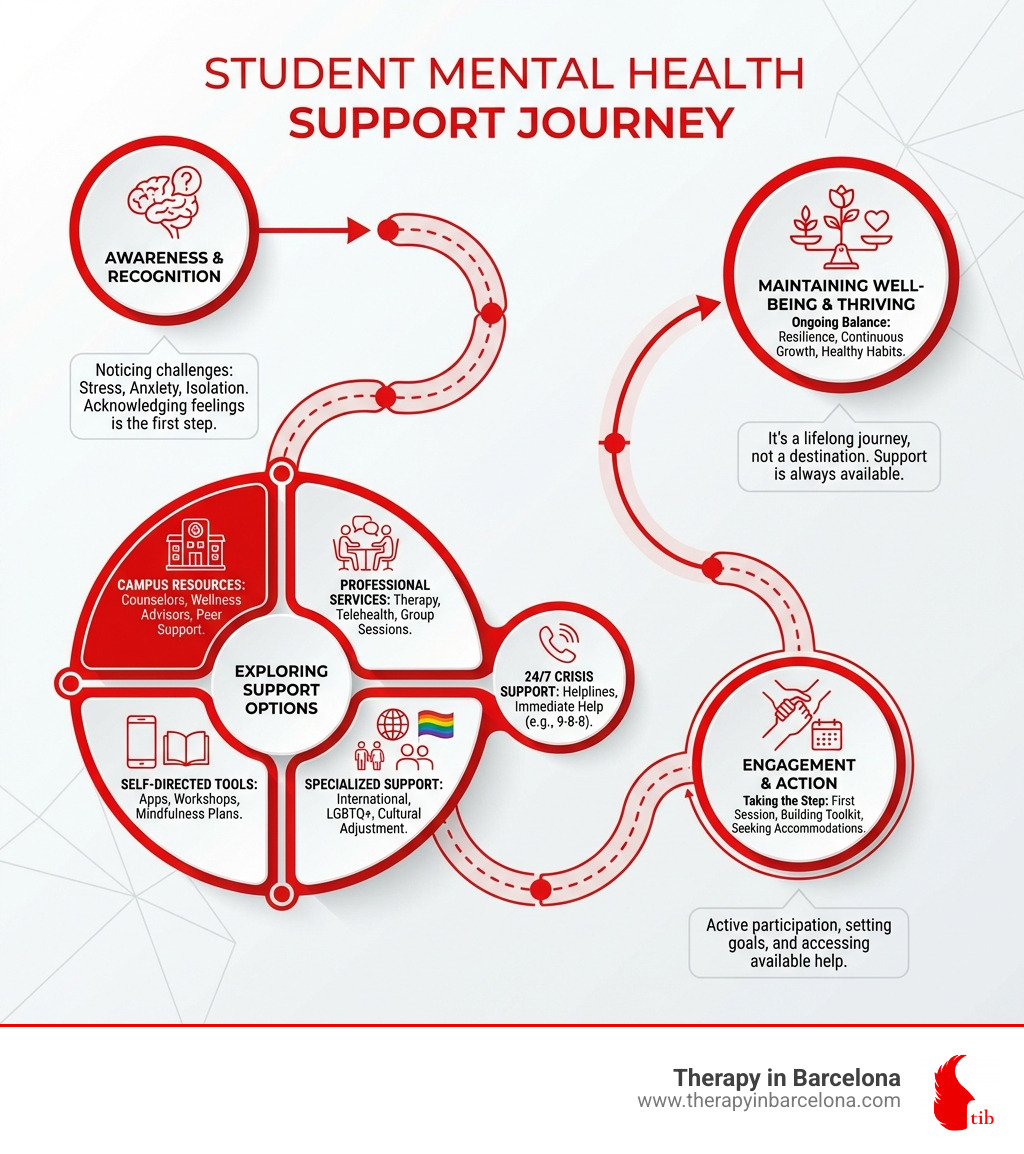
Student support mental health encompasses the range of services, resources, and strategies designed to help students maintain emotional well-being and address psychological challenges during their academic journey. Here’s what students need to know:
- Campus resources can include counsellors, student wellbeing staff, peer support groups, workshops, and referrals through university health services
- Professional services may offer one-to-one counselling, structured therapy, group support, and online sessions for students who prefer remote care
- Self-directed tools can help too, including workshops, online learning, mindfulness practices, and simple wellness plans students can use day to day
- Specialized support is often available for international students, LGBTQ+ students, racialised students, and anyone navigating culture shock or identity-related stress
- 24/7 crisis support is especially important if you are in immediate danger or thinking about suicide. In Spain, call 024 for suicide crisis support or 112 for emergencies.
- Academic accommodations may be available through disability or student support services for longer-term mental health difficulties
The numbers are hard to ignore. More than 70 percent of students say their stress levels have increased in recent years, and anxiety often rises alongside it. For international students studying in cities like Barcelona, Valencia, or Madrid, the load can feel even heavier.
Many international students arrive in Spain feeling excited about university life, then hit an unexpected wall a few months later. Loneliness, pressure to succeed, language barriers, and doubts about fitting in can build quietly. For some, grades start to drop, motivation fades, and weekends feel long and isolating. These experiences are common, and they are a sign that extra support may be needed.
Student mental health reflects a broader truth about university life. The move into higher education is one of life’s biggest transitions, and for international students, it also means adapting to a new country, culture, and routine. Mental well-being is not fixed. It can shift from day to day, and different moments may call for different kinds of support.
The good news is that support can come from more than one place. Universities increasingly understand that mental health affects grades, attendance, and a student’s overall ability to cope. Many campuses now build services around broader well-being frameworks, such as the National Standard for Mental Health and Well-Being for Post-Secondary Students, which offers practical guidance for creating more joined-up, student-centered support systems.
But campus resources aren’t the only option. Private practices like Therapy in Barcelona offer specialized support for internationals, with English-speaking therapists who understand the unique challenges of expat life. Some therapists offer sliding scale fees for those with financial need, and prospective clients can inquire about this during a Free Discovery Call. Services are available both online worldwide (including USA and Canada) and face-to-face in Barcelona.
This guide walks you through everything you need to know about student mental health support. You’ll discover the most common challenges students face, how to access both campus and community resources, what to expect in your first counselling session, and practical steps to build your personal wellness toolkit. Whether you’re thriving and looking to stay that way, feeling stressed and needing options, or struggling and requiring immediate help, there’s a pathway forward.
Common Mental Health Challenges for Students
University life is often portrayed as a time of endless socialising and intellectual discovery. While it can be that, it is also a period of significant vulnerability. Common mental health challenges in higher education include depression, anxiety, disordered eating, and substance use.
For international students, these issues are often triggered by homesickness and isolation. Moving away from familiar support systems – family, close friends, and everyday cultural routines – can create a deep sense of loneliness.

Research shows that over 70 percent of students report increased stress levels compared to previous years. This stress often stems from:
- Academic Pressure: The fear of failing or not meeting high expectations.
- Financial Strain: Managing tuition, rent, and living costs in a foreign currency.
- Identity Shifts: Navigating who you are in a completely new environment.
- Cultural Adjustment: The mental fatigue that comes from constantly translating language and social norms.
For many students, tackling mental health as an international student begins with recognising that feeling unsettled can be a normal part of a major life change. But when stress becomes ongoing, it can affect concentration, increase procrastination, disrupt attendance, and make academic performance harder to maintain.
Finding Student Support for Mental Health in Spain
If you are studying in a Spanish hub like Madrid, Málaga, or Alicante, you have several avenues for support. Most large universities have a dedicated wellness hub or student support centre. These centres are designed to be the first port of call for anyone feeling overwhelmed.
Many institutions now look to international frameworks, such as the National Standard for Mental Health and Well-Being for Post-Secondary Students, to guide their services. This standard emphasises creating a “whole-campus” approach, where mental health is a shared priority among faculty, staff, and students.
Professional Services and Campus Resources
On-campus support usually follows a tiered model. You might start with a Local Wellness Advisor (LWA) or a peer support group. These are excellent for mild stress or “okay” days where you just need to talk things through.
For more structured help, universities offer:
- Counsellors: Professionals who provide one-on-one sessions for issues like anxiety or trauma.
- Workshops: Short sessions on time management, mindfulness, or exam stress.
- Goal-Oriented Therapy: Single, 60-minute sessions focused on a specific academic problem.
- Therapy Groups: Facilitated sessions where you can connect with others facing similar struggles.
For those just starting to explore their options, a Beginners Guide to Counseling Options for International Students can help demystify the different types of therapy available.
Accessing Student Support Mental Health Services
Booking an appointment usually involves a phone call or an online portal. At many wellness hubs, the first step is an “intake” or “access” appointment. In this session, a clinician will work with you to create a personalised wellness plan. This might include a few sessions of one-on-one counselling, a recommendation for a peer group, or a referral to a community specialist if you need longer-term care.
Many students now use telehealth services to access support from their own rooms. This is particularly helpful for international students who may prefer to speak with a therapist who shares their native language or understands their specific cultural background.
At Therapy in Barcelona, we provide a specialised alternative to campus services. We offer face-to-face therapy in the Eixample district of Barcelona and online therapy worldwide (including USA and Canada). Our unique strength is our personalised therapist matching. We don’t just give you the next person on the list; we match you with a psychology-trained expat therapist who understands exactly what it’s like to live and study abroad.
Building Your Personal Wellness Toolkit
You don’t have to wait for a crisis to start looking after your mind. Preventive care is about building resilience so you can handle the “low” days more effectively.
Self-directed resources are a great place to start. You can access free Mental Health 101 online courses to learn the basics of emotional regulation and how to spot signs of distress in yourself and others.
To stay thriving overseas, consider adding these habits to your toolkit:
- Movement: Even a short walk through a park in Seville or along the beach in Alicante can lower cortisol levels.
- Journaling: Getting your thoughts out of your head and onto paper can provide clarity.
- Boundaries: It is okay to say no to social events if you need a night to recharge.
- Connection: Reach out to one person—a friend back home or a classmate—when you feel isolated.
Specialised Support for Diverse Student Groups
Mental health support is not one-size-fits-all. Different student groups face unique barriers to care. International students, for example, often deal with “acculturative stress”—the psychological impact of adapting to a new culture.
LGBTQ+ students and racialised students may also face additional stressors related to discrimination or finding safe, inclusive spaces. It is vital to find a compass for care that respects these intersecting identities.
Specialised resources like the Hope for Wellness chat provide culturally appropriate support for Indigenous Peoples, highlighting the importance of identity-specific care.
The Expat Student Experience in Spain
Living in a vibrant city like Madrid or Barcelona is an incredible opportunity, but the “expat” label brings its own set of challenges. Language barriers can make even a simple trip to a pharmacy feel exhausting.
International student counsellors are trained to help you navigate these specific hurdles. They understand that your mental health is intrinsically linked to how well you are adjusting to your new home. Whether you are in Valencia or Marbella, finding a community of fellow internationals can be a powerful antidote to cultural shock.
Beyond Campus: Community and Crisis Resources
Sometimes, campus services are closed, or you might need more immediate, urgent help. If you or someone you know is in immediate danger, always call local emergency services (112 in Spain).
For 24/7 emotional support, several helplines are available:
- 9-8-8 Suicide Crisis Helpline: Available in Canada for bilingual, trauma-informed support.
- Samaritans: A well-known service for anyone needing someone to listen.
- Global Crisis Support: The IASP provides a directory of Global Crisis Support via IASP to find local helplines anywhere in the world.
Please note that Therapy in Barcelona is a private practice and does not provide crisis intervention or emergency services. If you are in crisis, please reach out to the helplines or visit your nearest hospital.
Comparing Student Support Mental Health Options
When looking for student support mental health, you have several paths to choose from. Here is how they compare:
Public Health Systems (e.g., CatSalut in Catalonia)
- Access: Generally free or very low cost for residents.
- The Reality: These systems provide essential care but often have very long wait times. You rarely get to choose your therapist, and finding an English-speaking clinician in the public system can be difficult.
Large Online Platforms
- Access: Usually app-based with very quick start times.
- The Reality: While convenient, these platforms often use algorithms for matching rather than human insight. There are also frequent concerns regarding how your personal data is handled or sold. They may lack therapists who understand the specific nuances of expat life in Spain.
Specialised Private Practice (Therapy in Barcelona)
- Access: Private-pay service with sessions available in-person in Barcelona or online worldwide.
- The Reality: We offer bespoke therapist matching, ensuring you work with someone who fits your personality and needs. Our therapists are all psychology-trained expats who provide culturally sensitive care in English (and other languages like German, French, or Spanish). We maintain strict privacy and never sell your data. For those with financial need, some of our therapists offer sliding scale fees—just ask us about this during your inquiry.
Frequently Asked Questions about Student Support
How do mental health issues affect academic performance?
Mental health and academics are deeply linked. When you are struggling with anxiety or depression, your “executive functions”—like memory, focus, and planning—can take a hit. This often leads to procrastination and missed deadlines. Research on how to support attendance and mental wellbeing shows that students who receive early emotional support are much more likely to stay in their programmes and succeed.
What should I expect in my first counselling session?
Your first session is usually about understanding what is going on and what kind of support would help most. A counsellor may ask about your current challenges, how long things have felt difficult, and what you want to change. You might talk about goals, coping strategies, and what ongoing support could look like. It is also your chance to notice whether you feel safe, heard, and comfortable with the therapist.
Are there resources for students with long-term disabilities?
Yes. If you have a long-term mental health condition, you may be eligible for “reasonable adjustments” at your university. This could include extra time on exams or flexible deadlines. In the UK, students can apply for Disabled Students’ Allowances, and many Spanish universities have similar inclusion offices. Websites like Student Space also offer excellent advice for navigating university with a disability.
Conclusion
The transition to university life, especially in a foreign country, is a massive undertaking. It is perfectly normal to feel a mix of excitement and deep vulnerability. But remember: you don’t have to navigate the “messy” parts of expat life alone.
Personal growth is entirely possible when you have the right support in your corner. Seeking help early—whether through a campus wellness hub, a peer group, or a specialised private practice—can change the entire trajectory of your university experience.
At Therapy in Barcelona, we’ve been a sanctuary for the international community since 2011. Our founder, Leigh Matthews, an Australian Psychologist and expat herself, built this practice because she knew how hard it was to find English-speaking support that truly “got” the expat experience. We are here to offer that same empathetic, expert care to you.
If you’re ready to start your journey toward feeling better, we invite you to take the first step.
If you’d like support, book a Free Discovery Call.
