


Is There English Speaking Therapy in Europe? Here’s What You Need to Know
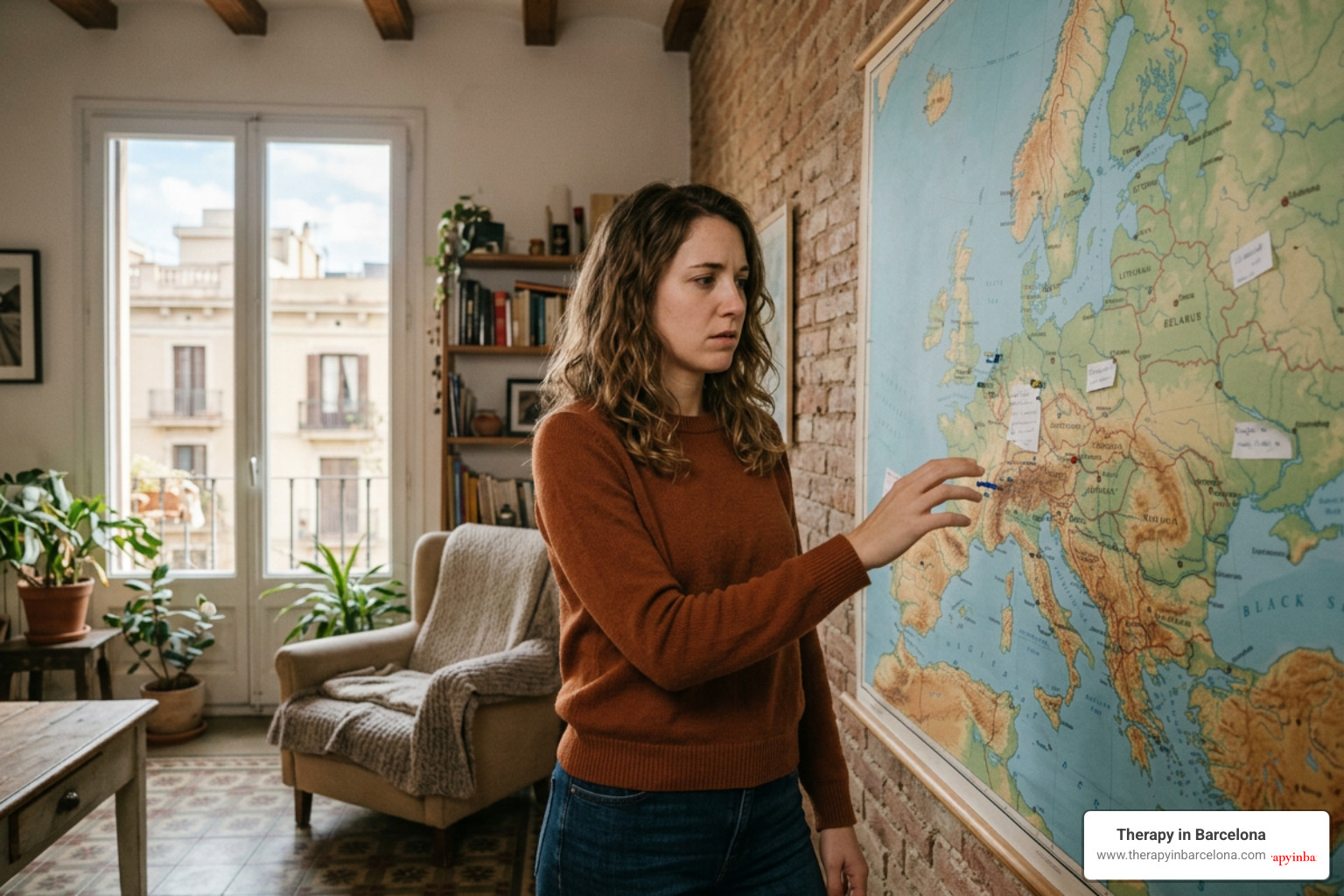
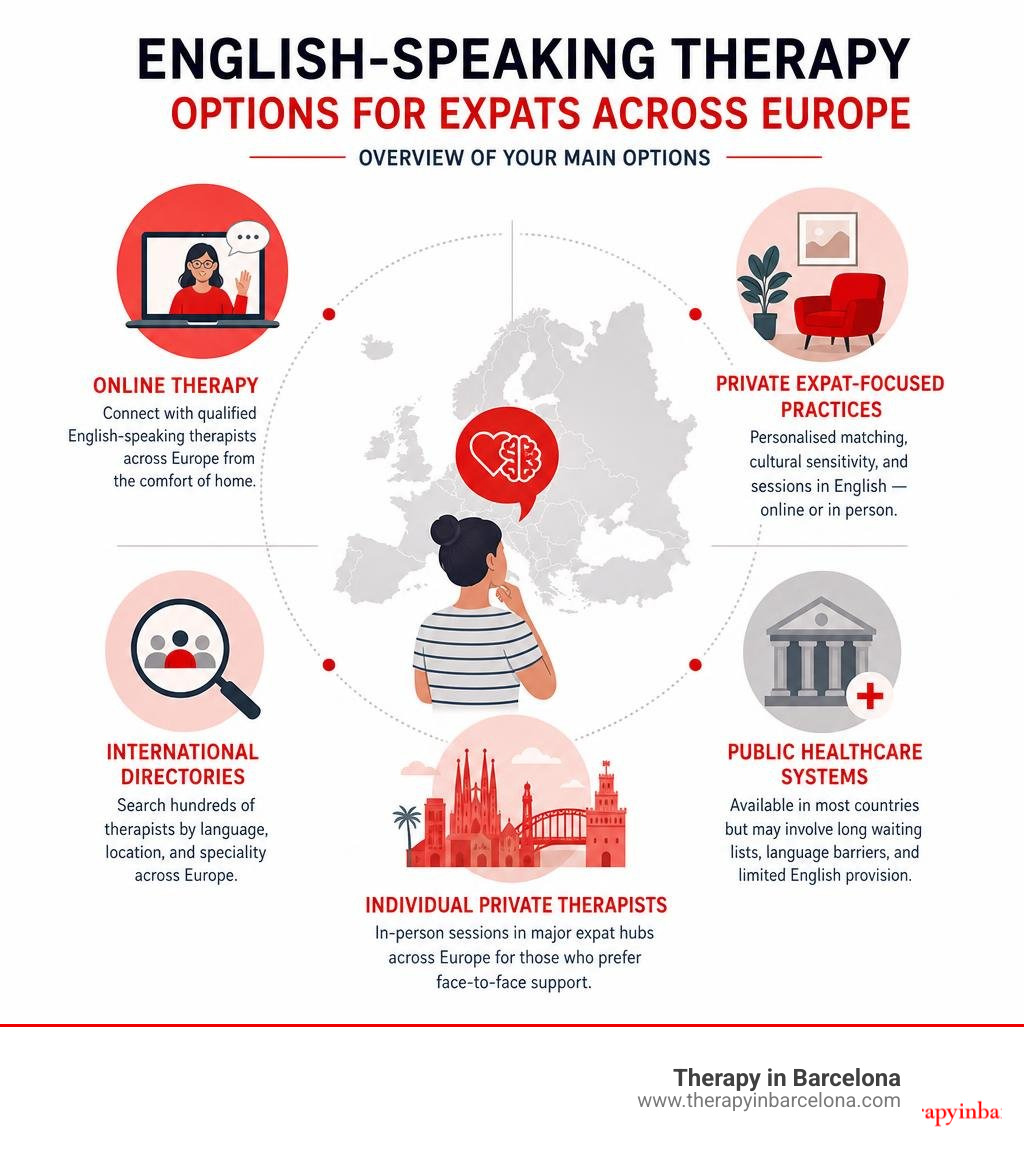
English-speaking therapy in Europe is more accessible than many expats realise — but finding the right fit still takes some know-how. Whether you’ve just landed in Barcelona, settled into life in Valencia, or are somewhere between cities, here’s a quick overview of your main options:
- Online therapy platforms such as directories and matching services connect you with qualified, English-speaking therapists across Europe, often within days.
- Private expat-focused practices offer personalised therapist matching, cultural sensitivity, and sessions in English — both online and in person.
- Large international directories list hundreds of therapists across 60+ countries, searchable by language, location, and speciality.
- Public healthcare systems exist in most European countries but typically involve long waiting lists, language barriers, and limited English-language provision.
- Individual private therapists based in major expat hubs — Barcelona, Madrid, Lisbon, Valencia, and Málaga among them — offer in-person sessions for those who prefer face-to-face support.
Moving abroad is one of the most exciting things a person can do. It’s also one of the loneliest. The early buzz of a new city fades, and what’s left can feel quietly disorienting — the unfamiliar bureaucracy, the language barrier, the slow creep of isolation that nobody warned you about.
For many expats, that’s when the idea of therapy first surfaces. But then comes the next hurdle: finding someone who actually speaks your language. Not just English, but the language of your cultural references, your emotional register, your specific experience of being far from home.
That gap between needing support and knowing where to find it is what this guide is here to close. Across Europe, the landscape of English-speaking mental health care is uneven — genuinely excellent in some cities, thin on the ground in others. Understanding what’s available, and what to look for, makes all the difference.
Moving abroad can leave many people feeling persistently low, unmotivated, and overwhelmed by the daily challenges of adapting to a new culture. Finding professional mental health support in English can also be difficult, adding to the stress of settling into a new environment.
The Challenges of Finding English Speaking Therapy in Europe

When you move to a new country, you expect to struggle with local taxes, transport routes, and grocery labels. You do not always expect to struggle to find a safe space to talk. Yet, finding a qualified professional who offers therapy in English is one of the most common hurdles for internationals.
The challenges go beyond simply looking up a phone number. For those trying to find support abroad, the search often reveals a fragmented system of long waiting lists, legal grey areas, and cultural gaps.
If you are trying to find your footing, understanding these hurdles is the first step toward overcoming them. For a deeper look at the Spanish landscape, you can read our guide on finding an English-speaking therapist in Spain.
Navigating Local Healthcare Systems as an Expat
For many expats, the first point of call is the local public healthcare system. While countries like Spain offer high-quality medical care, mental health services in the public sector are often heavily strained.
- The Public System Bottleneck: Public mental health departments face severe underfunding and high demand. Waiting lists for a single appointment can stretch from several weeks to many months.
- Language Barriers in Local Clinics: Even with an appointment, finding an English-speaking therapist isn’t guaranteed, making it much harder to discuss complex emotions and mental health concerns.
- The Insurance Maze: Private health insurance may cover therapy, but some policies require a psychiatric referral, making it harder to access support when it’s needed most.
Because of these hurdles, the vast majority of expats turn to private practice to get timely, reliable support.
Why Language Nuance Matters in English-Speaking Therapy Europe
There is a significant difference between speaking a language for daily transactions and using it to process deep-seated emotions.
When you translate your feelings in real-time, your brain has to work twice as hard. This “translation fatigue” acts as a cognitive buffer, keeping you at a distance from your actual emotions. You might find yourself searching for the “right” word rather than letting yourself feel the weight of what you are saying.
Therapy is less effective when you cannot access your natural emotional register. For many internationals, speaking in their native language—or a language in which they have complete emotional fluency—is the only way to feel truly understood.
To understand why this linguistic connection is so vital, explore our article on Mind Your Language: A Guide to Online Therapy in English.
Choosing the Right English Speaking Therapy Europe Provider

Once you decide to seek private therapy, you face another choice: do you meet a therapist online, or do you find someone for face-to-face sessions in your city?
Both formats have distinct advantages, and the right choice depends on your lifestyle, your location, and the specific issues you want to address. If you are curious about how to get started from home, you can read about How to Access Remote Therapy Across Europe Without Leaving Your Couch.
The Efficacy of Remote Support for Internationals
Online therapy offers a convenient and effective way to access professional support from anywhere, making it easier to fit therapy into everyday life.
The success of therapy does not depend on the physical room you sit in; it depends on the “therapeutic alliance”—the trust and connection you build with your therapist.
For expats, digital nomads, and frequent travellers, remote therapy offers crucial benefits:
- Continuity of Care: If you move between cities, travel for work, or return home for the holidays, you do not have to pause your therapy. You keep the same therapist, preserving the progress you have already made.
- Access to Specialists: If you live in a smaller town or a secondary hub like Zaragoza or Gran Canaria, local English-speaking therapists might be scarce. Online therapy opens up a highly qualified network of professionals.
- Comfort and Safety: Opening up about difficult experiences can feel easier when you are in the comfort of your own home.
For more on how to manage your mental health while moving around, see our guide: Roam Free, Heal Freely: A Digital Nomad’s Guide to Remote Therapy.
When to Choose In-Person Sessions in Major European Hubs
Despite the convenience of online sessions, face-to-face therapy remains highly valuable. Sitting in the physical presence of a therapist offers a different kind of grounding, which can be especially helpful if you are dealing with difficult past events or feel completely disconnected from your surroundings.
In-person sessions are particularly suited for:
- Somatic and Experiential Therapies: Somatic practices rely heavily on tracking physiological cues, breathing patterns, and subtle body movements that are sometimes easier to read in person.
- Anchoring in Your Local Community: Visiting a physical office in hubs like Barcelona, Madrid, Valencia, Málaga, or Alicante can help establish a routine, giving you a physical space dedicated entirely to your personal growth.
Comparing Expat Mental Health Options Across Europe
When searching for English-speaking therapists in Europe, you will find several different pathways. It helps to understand how these options compare so you can make an informed choice. For a broader perspective on the global expat experience, check out our resource on Beyond Borders: Essential Support for Expats Worldwide.
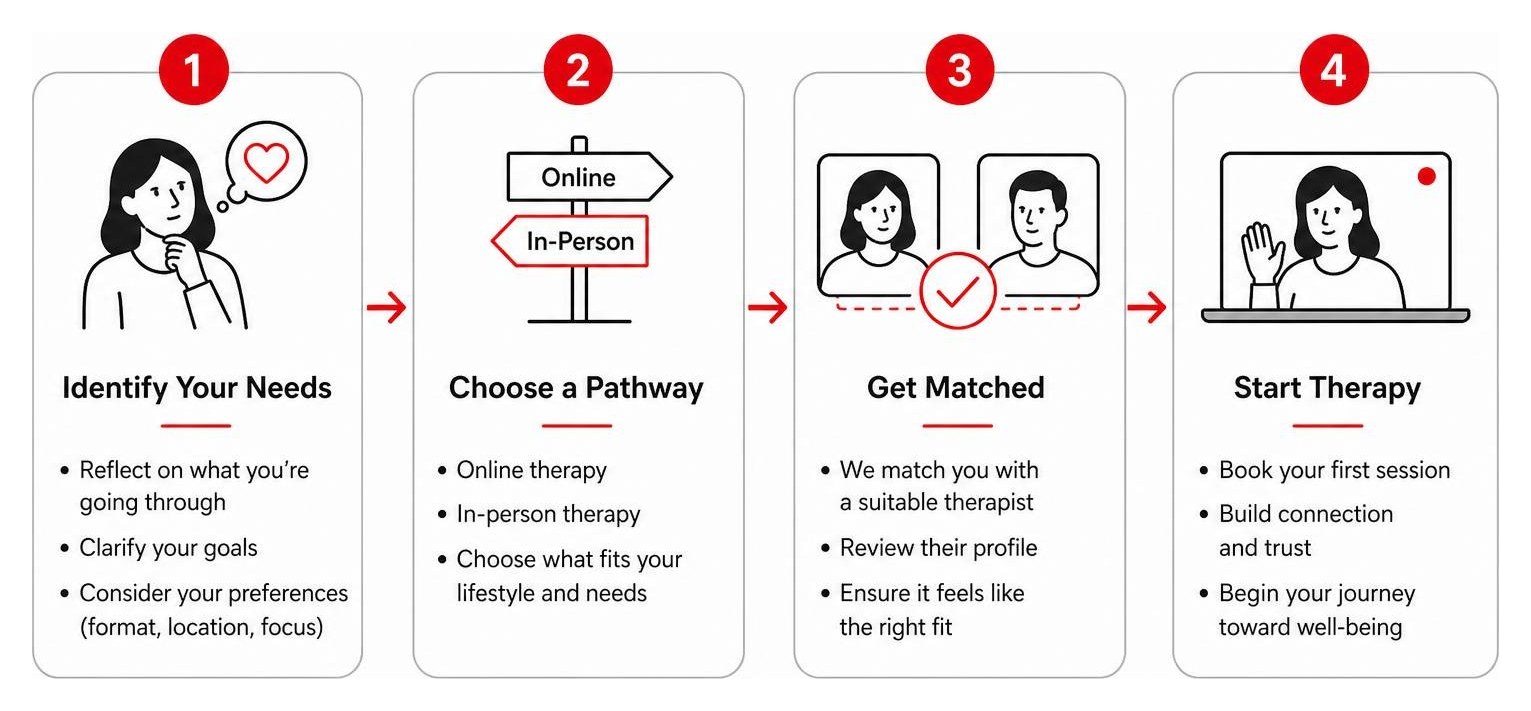
To help you visualize the process of finding support, here is how the typical expat mental health journey unfolds:
Public Systems and Large Directory Networks
When looking for help, expats often encounter three main alternatives to specialised private practices:
1. Public Healthcare Systems
- How it works: Access through local referral doctors or public health centres.
- Pros: Low cost or free at the point of delivery.
- Cons: Extremely long wait times, lack of choice regarding your practitioner, and a high likelihood of language barriers.
2. Large Online Directories and Platforms
- How it works: Searchable databases or automated matching platforms.
- Pros: Wide reach, multiple price points, and large directories spanning many countries.
- Cons: Many directory platforms rely on basic search filters or algorithms to pair you with a therapist. This can lead to a trial-and-error process where you spend time and money trying to find a good fit on your own.
3. Local Generalist Practices
- How it works: Private clinics that primarily serve the local population but have one or two therapists who speak English.
- Pros: Easy to find locally for in-person sessions.
- Cons: While highly qualified, these therapists may lack specific training in expat-related challenges, such as culture shock, identity loss, systemic displacement, or bicultural relationship dynamics.
Bespoke Private Practices and Personalised Matching
At Therapy in Barcelona, we do things differently. Established in 2011 by Australian psychologist and expat Leigh Matthews, our practice was born out of a real, personal need.
Having navigated the challenges of moving to Spain, adapting to a new culture, and raising a family abroad, Leigh realised how vital it was to have high-quality, culturally sensitive support in one’s own language.
Today, we are a trusted group practice of psychology-trained therapists who are expats themselves. Here is what sets our private-pay service apart:
- Bespoke Clinical Matching: We do not use algorithms. Our intake process is thorough and handled by real professionals who understand your goals, preferences, and background to match you with the right therapist from the start.
- Expat-Focused Expertise: Our team understands the unique struggles of living abroad—from bicultural relationships and identity shifts to career transitions and loneliness. We work with adults, couples, teenagers and families.
- Collaborative Care and Quality Control: As a group practice, we work collaboratively, constantly sharing insights and maintaining high ethical standards to ensure you receive excellent care.
- Strict Data Privacy: We maintain absolute confidentiality. Your data is protected and never sold or shared with third-party platforms.
Whether you prefer meeting online from anywhere in Spain (including Madrid, Valencia, Málaga, Alicante, Sevilla, Marbella, and Gran Canaria) or visiting our welcoming offices in the heart of Barcelona’s Eixample district, we provide a consistent, supportive space.
Specialized Therapeutic Approaches for Expats
Therapy is not a one-size-fits-all process. Different challenges require different therapeutic tools. When choosing a provider, it helps to understand the therapeutic approaches they use and how these methods apply to the expat experience.
You can read more about how these modern practices translate to the digital space in our guide to Working Remotely, Healing Remotely: Your Guide to Therapy in the Digital Age.
Somatic and Trauma-Informed Methods in English-Speaking Therapy Europe
Living in a foreign country places a constant, subtle stress on your nervous system. Your brain is always working harder to decode social cues, navigate different languages, and manage unfamiliar environments. Over time, this chronic stress can manifest physically as exhaustion, muscle tension, or worry.
Specialised, trauma-informed approaches can help you process these physical responses:
- Somatic Internal Family Systems (IFS): This approach looks at the different “parts” of your personality (like the critic, the pleaser, or the anxious protector) and how they hold stress in the body. By connecting with these parts, you can release physical tension and find inner balance.
- Interpersonal Therapy (IPT): This method focuses on your relationships and social roles. It is highly effective for expats dealing with the grief of leaving their support networks behind, navigating new social circles, or managing bicultural relationship conflicts.
Goal-Oriented and Cognitive Frameworks
If you are dealing with professional burnout, career transitions, or feel stuck in your daily habits, structured cognitive frameworks offer practical, day-to-day strategies:
- Cognitive Behavioural Therapy (CBT): CBT helps you identify and challenge unhelpful thought patterns. It is highly effective for managing worry, low mood, and the self-criticism that often arises when trying to adapt to a new culture.
- Acceptance and Commitment Therapy (ACT): Rather than fighting difficult emotions, ACT teaches you to accept them while focusing your energy on actions that align with your core values. It is a powerful tool for expats trying to rebuild a meaningful life in a new country.
- Solution Focused Brief Therapy (SFBT): This goal-oriented approach focuses on your strengths and resources in the present, helping you find practical solutions to immediate challenges.
Frequently Asked Questions about English Speaking Therapy Europe
How do I verify a therapist’s qualifications in Europe?
Because mental health regulations vary significantly across European countries, verifying credentials is key. Look for therapists who are “psychology-trained” or hold equivalent clinical qualifications from their home countries.
Qualified professionals should be registered with recognised national or international professional bodies (such as the BACP in the UK, the COP in Spain, or equivalent national registries). At Therapy in Barcelona, all our therapists are highly qualified, psychology-trained, and adhere to strict professional and ethical standards.
Will my international health insurance cover therapy?
Therapy in Barcelona is a private-pay service. However, if you hold an international or private health insurance policy that covers outpatient mental health care, you may be eligible for reimbursement.
We can provide detailed private invoices with the necessary practitioner registration details. We recommend contacting your insurance provider directly to ask about their specific reimbursement requirements, diagnostic code policies, and coverage limits.
What is the typical cost of English-speaking therapy in Europe?
Private therapy fees across Europe vary depending on the city, the therapist’s experience, and the format of the sessions. On average, private sessions range from €70 to €150.
At Therapy in Barcelona, we believe in pricing transparency. While we operate on a private-pay basis, some of our therapists offer sliding scale fees for clients with genuine financial need. Feel free to inquire about this during your initial contact.
Finding Your Path to Healing Abroad
Living abroad should be an enriching adventure, but it is completely normal to need support along the way. You do not have to navigate the challenges of relocation, anxiety, or relationship strain on your own.
At Therapy in Barcelona, we have spent over a decade building a warm, compassionate sanctuary for the international community. Our team brings genuine empathy, professional excellence, and expat experience to every session.
Whether you choose online therapy from the comfort of your home or prefer to visit our central office in Barcelona’s Eixample district, we are here to help you feel grounded, understood, and supported.
If you’d like support, book a Free Discovery Call today to take the first step.
