


Feeling Lost Abroad? Here’s How to Find English Online Therapy That Actually Works

Online therapy that English speakers can access right now — without waitlists, language barriers, or leaving home — is more available than most people realise. If you’re an expat, international professional, or someone living abroad who needs support in your native language, here’s a quick overview of your main options:
- Specialised private practices (like Therapy in Barcelona): Psychology-trained therapists, bespoke matching, expat-specific cultural expertise, sessions via secure video call — available online worldwide, including the USA and Canada
- Large platforms: High-volume subscription services with algorithm-based matching and a broad network of licensed therapists
- Public health systems: Free or low-cost, but often come with long waiting lists and limited availability of English-speaking professionals
Living in a city like Barcelona, Valencia, or Madrid can be exhilarating. But it can also be quietly exhausting in ways that are hard to put into words — especially when those words need to be in a language that isn’t yours.
Many expats reach a point where they feel more alone than they expected. They may not be in crisis. They may simply want space to talk openly with someone who understands their language, cultural references, and daily reality without constant explanation. That quiet kind of support is often exactly what makes online therapy in English so valuable.
It removes the double burden of navigating your inner world and a foreign language at the same time. Whether you’re managing anxiety, relationship strain, or the slow grind of cultural adjustment, therapy in your native language makes the work feel less like climbing a mountain and more like having an honest conversation.
This guide walks you through everything you need to know: how online therapy works, what to look for in a therapist, how different options compare, and how to get started — wherever you are in the world.
What is Online Therapy and How Does it Work?
At its core, Online Therapy is professional mental health support delivered via the internet. It has moved far beyond simple “Skype calls” to become a comprehensive therapeutic experience. Modern Online Therapy/E Therapy typically involves secure video sessions that mimic the intimacy of an in-person office visit, but from the privacy of your own home.
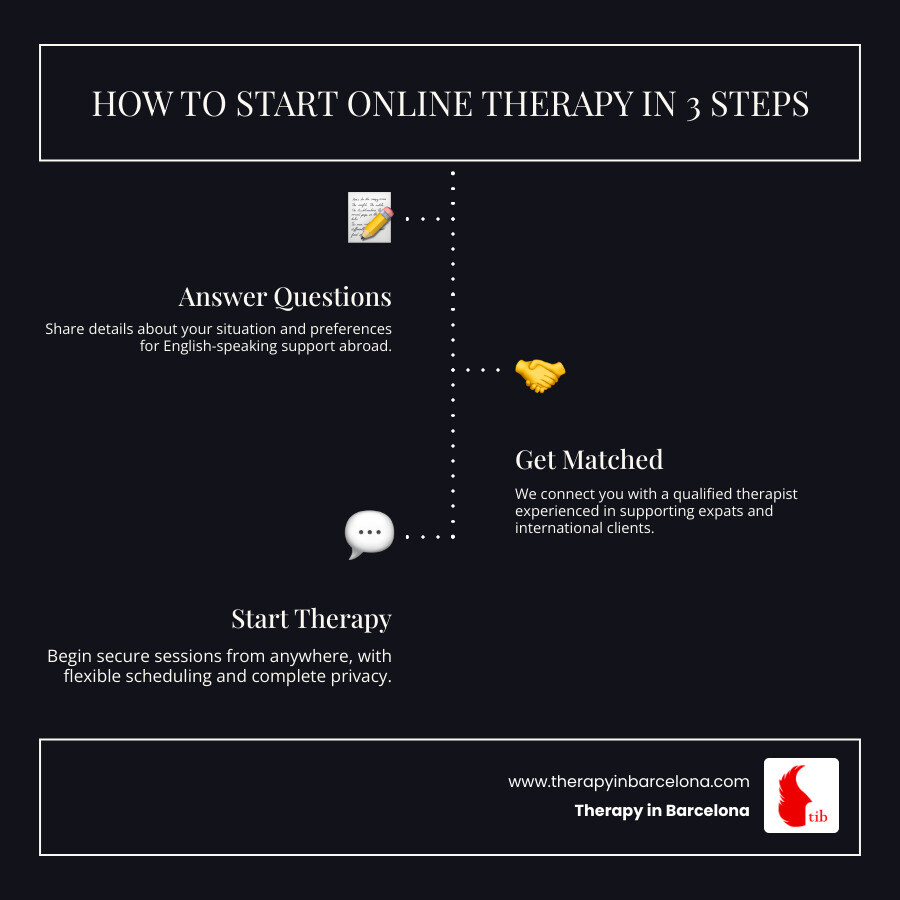
The process is straightforward. Most services begin with an intake phase where you share what’s on your mind. Once matched with a therapist, you connect through encrypted platforms. Beyond video, many therapists use digital tools like interactive worksheets, shared journals, and secure messaging to support you between sessions. For expats in hubs like Málaga or Alicante, this means high-quality care is no longer restricted by who has an office in your immediate neighbourhood.
Is online therapy as effective as traditional sessions?
One of the most common questions people ask is: “Does it really work as well as in-person therapy?” In many cases, yes. A strong body of research shows that online therapy can be highly effective, especially for concerns like anxiety, depression, and CBT-based treatment.
For many common mental health concerns, online therapy can be just as effective as in-person support. It is widely used for issues like anxiety, depression, and stress, especially when sessions are consistent and the therapist-client fit is strong. Many people also find it easier to stick with therapy online because it is more convenient, flexible, and accessible from home.
Choosing online therapy in English does not mean settling for less. Well-established approaches like Cognitive Behavioural Therapy (CBT) and Acceptance and Commitment Therapy (ACT) work well online. For many people, being in a familiar space can make it easier to relax, speak openly, and engage more fully in the process.
The Benefits of Choosing Online Therapy for Expats
For those living abroad, the “language of the heart” matters. You might be fluent enough in Spanish to navigate a bank meeting in Madrid, but describing the nuance of a childhood memory or a complex panic attack is different. Choosing English Speaking Therapy In Barcelona Your Guide To Mental Wellness ensures that nothing is “lost in translation.”
The Expats Guide To Online Therapy Bridging Distances Building Connections highlights several key advantages:
- Cultural Nuance: An English-speaking therapist who is also an expat understands that “moving stress” isn’t just about boxes—it’s about identity loss and cultural fatigue.
- Consistency: If you move from Barcelona to Sevilla, or even back to your home country, you don’t have to start over with a new therapist.
- Accessibility: You save time on commutes and can schedule sessions around a busy international career.
How to choose the best English online therapist for your life
Therapy is never one-size-fits-all. A therapist who seems ideal on paper may still not feel like the right fit in practice. That is why the matching process matters so much when choosing online therapy in English.
At Therapy in Barcelona, we believe the connection between you and your therapist can make a real difference in how supported and understood you feel. That is why we do not take a one-size-fits-all approach. Instead, we use a personalised matching process to help connect you with a therapist who fits your needs, whether you are dealing with work burnout, cultural adjustment, or bicultural relationship challenges.
Comparing Your Options: Large Platforms vs. Private Specialised Care
When searching for online therapy English services, you’ll encounter three main paths. Each has its place, but they offer very different experiences.

Large Online Platforms
Large platforms are the “high-street” giants of the industry. They offer 24/7 messaging and a massive directory of therapists.
- The Pros: Often lower cost, easy-to-use apps, and quick matching via algorithms.
- The Cons: High therapist turnover can disrupt continuity. The algorithm-based matching can feel impersonal, and there have been public discussions regarding how these large corporations handle user data privacy.
Public Health Systems
In Spain, the public system provides mental health care through local hubs in cities like Valencia or Málaga.
- The Pros: It is essentially free or very low cost.
- The Cons: Waiting lists are notoriously long, often stretching for months. Furthermore, finding a clinician who is fully fluent in English and understands the specific psychological pressures of expat life can be a significant challenge.
Specialised Private Practices
Practices like Therapy in Barcelona focus on quality over quantity.
- The Pros: You get bespoke matching by human experts, not algorithms. Every therapist is psychology-trained and usually an expat themselves. There is a strict adherence to privacy—we never sell your data.
- The Cons: These are private-pay services, though many clients find the higher quality of care and lack of waitlists worth the investment. Some therapists offer sliding scale fees for those with financial need.
Specialized Support for the International Community
The expat experience isn’t just for individuals. It affects families, couples, and even teenagers or children who are navigating life as “Third Culture Kids.”
- Individual Therapy: For adults dealing with anxiety, depression, or the “identity crisis” that often follows a move.
- Couples Counselling: Virtual Love Doctors Best Online Therapy For Couples helps partners navigate the strain that relocation puts on a relationship.
- Teen Support: Virtual Couch Time Best Online Therapy For Teens provides a safe space for adolescents who may feel uprooted or out of place in their new school system.
Who is online therapy best suited for?
Online therapy is particularly effective for expat professionals who travel frequently and accompanying spouses who may feel isolated while their partner is at work. It’s also a lifeline for international students and digital nomads who don’t have a permanent “home base.”
Many expats move abroad expecting to feel excited and fulfilled, then feel confused or ashamed when the reality is stress, loneliness, or overwhelm. Online therapy in English can help by giving you space to talk with someone who understands that relocation is a major life change. With the right support, it becomes easier to process those feelings, adjust to your new environment, and build a life that feels more settled and sustainable.
Practical Considerations: Privacy, Cost, and Getting Started
When you move your therapy online, security is paramount. Professional practices use 256-bit encryption and platforms that comply with international privacy standards (like GDPR in Europe). Your data should be treated with the same confidentiality as a physical medical record.
Cost and Insurance
Therapy in Barcelona is a private-pay service. While we don’t bill insurance companies directly, some international insurance plans may reimburse you for sessions with a licensed psychologist. We recommend checking with your provider to see if they cover “out-of-network” mental health services.
Worldwide Access
A unique benefit of our service is that we offer sessions to expats worldwide, including those currently in the USA and Canada. This allows for continuity of care even if your career takes you across the Atlantic.
Frequently Asked Questions about Online Therapy
What technology do I need for sessions?
You don’t need a high-tech setup. A reliable internet connection, a smartphone, tablet, or laptop with a camera, and a private space where you won’t be interrupted are all you need. Most therapists use simple, browser-based tools that don’t even require a software download.
Can I switch therapists if it’s not a good fit?
Yes, and you should! The “click” between you and your therapist is essential. At Therapy in Barcelona, we take the matching process seriously to avoid this, but if you ever feel the fit isn’t right, we make it easy to transition to another professional without any awkwardness or extra cost.
Is my data kept private and secure?
Absolutely. Unlike some large platforms that have faced criticism for data sharing, specialised private practices prioritise your anonymity. We use end-to-end encrypted video platforms and secure clinical note-taking software.
Conclusion
Finding the right support shouldn’t be the hardest part of your expat journey. Therapy in Barcelona was founded in 2011 by Leigh Matthews, an Australian Psychologist and expat who moved to the city and realised how difficult it was to find a therapist who “got it.”
Since then, we have grown into a compassionate sanctuary for the international community. Our team of psychology-trained therapists understands the messiness of life abroad because we live it too. We are committed to being the therapists we would want to work with—authentic, professional, and deeply human.
If you’re feeling a bit lost, or if the “dream life” feels a bit more like a struggle right now, you don’t have to navigate it alone. We invite you to take the first step toward feeling like yourself again.
Book your Free Discovery Call today and let us help you find your perfect match.
