


Why Mindfulness is Your Ally Against Work Stress
For many, mindfulness for work stress is a welcome concept amidst the storm of daily demands. If you need a quick overview of how mindfulness can help you manage work-related pressures, here’s what to know:
- It significantly reduces perceived stress.
- It improves emotional regulation and coping skills.
- It boosts focus, attention, and productivity.
- It helps decrease job burnout and improves sleep.
- It fosters resilience and clearer decision-making.
Consider David, a fictional Canadian sales manager in Madrid, who is a composite example representing common expat challenges. He is battling the emotional toll of his high-pressure role. The relentless emails, tight deadlines, and complexities of a foreign culture leave him on edge. This state of constant busyness resonates with countless expat professionals across Spain, whether in the dynamic city of Barcelona or the busy hubs of Valencia.
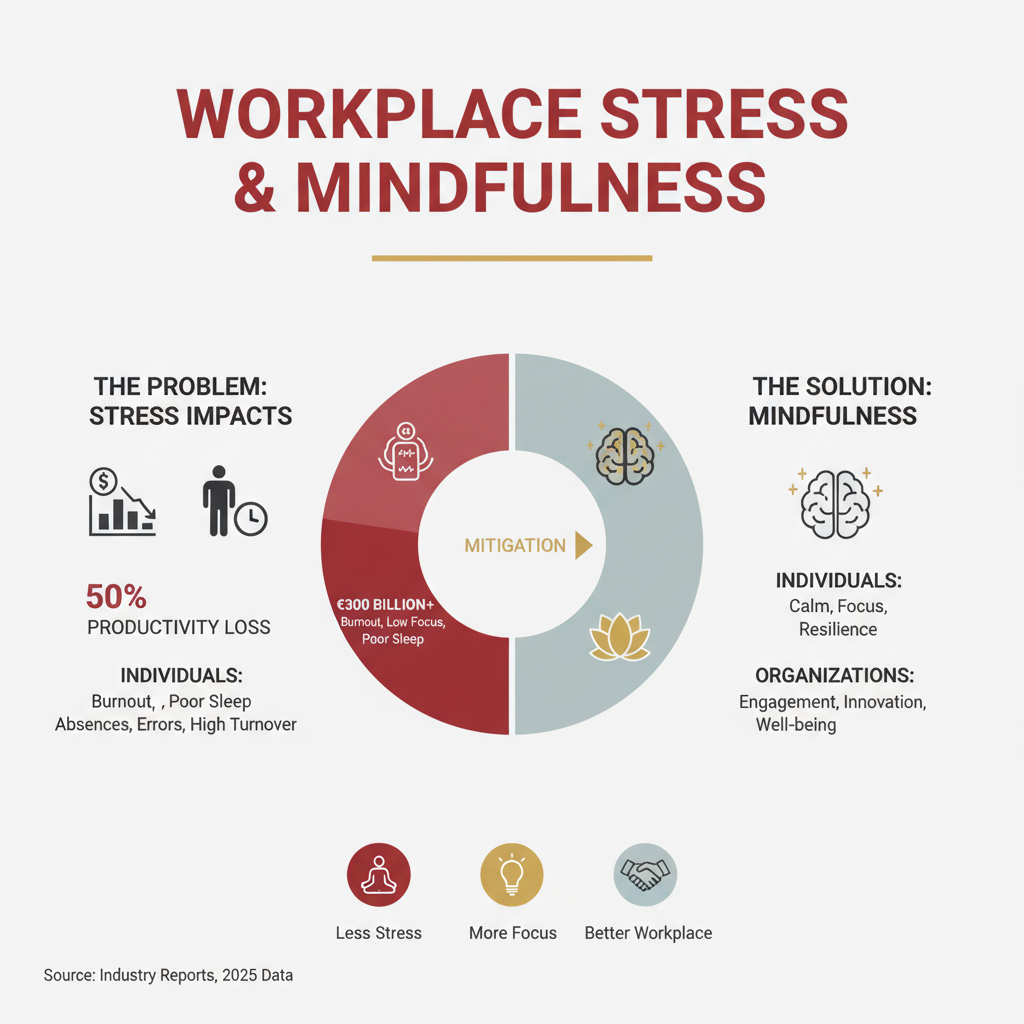
Work-related stress isn’t just a personal burden; it carries a hefty price for businesses. In the US alone, the annual cost of workplace stress is estimated to be as high as $300 billion, largely from productivity losses (Source: The American Institute of Stress). In response, a 2018 survey found that 52% of employers were providing mindfulness training (Source: Forbes), contributing to a global corporate wellness market valued at over $66 billion in 2022 (Source: Grand View Research). Organisations clearly recognise the need for solutions.
This guide explores how to use mindfulness to steer your professional life with greater ease. We will explore what mindfulness means in a workplace context, its research-backed benefits, and provide actionable strategies you can implement today to cultivate well-being in demanding work environments.
Understanding Mindfulness and Its Place in the Modern Workplace
What does mindfulness for work stress actually mean when you’re at your desk in Barcelona, feeling overwhelmed? At its core, mindfulness is about paying attention to the present moment with openness and without judgement. Instead of being swept away by thoughts of yesterday’s mistakes or tomorrow’s deadlines, you learn to notice what’s happening right now—your thoughts, feelings, and physical sensations—and choose how to respond instead of reacting on autopilot.
For internationals managing work life in Spain, whether in Madrid’s business districts or Valencia’s creative quarters, this practice is especially valuable. Adjusting to new work customs and being far from support networks can amplify workplace stress. Mindfulness offers a portable tool to find stability amidst the cultural shifts and professional demands of expat life.
When life abroad feels especially hard, professional support can help. Mindfulness integrated with therapy offers a practical way to manage work stress and the unique pressures of international living.

What Does Mindfulness at Work Look Like?
Mindfulness at work isn’t about sitting cross-legged on the floor. It’s about bringing intentional awareness to what you’re already doing.
- Being fully present in meetings and tasks: When your mind wanders, gently guide it back to the conversation. This simple shift can improve connection and communication.
- Noticing your surroundings and your own state: Pause to observe the light in your office, the sounds of traffic, or the tension in your shoulders. This awareness is an early warning system for stress.
- Stepping off autopilot: Many of us rush through workdays without conscious engagement. Mindfulness invites you to pause and consciously choose your next action.
- Finding clarity and calm: Observing your thoughts and emotions without getting absorbed in them creates space to respond thoughtfully rather than react impulsively.
The ‘For-Gain’ vs. ‘No-Gain’ Approach
As mindfulness enters corporate settings, a tension has emerged. Many organisations adopt a “for-gain” approach, viewing mindfulness as a productivity tool. While these benefits often occur, this can lead to “McMindfulness”—a superficial application that misses the practice’s deeper essence.
The traditional “no-gain” approach focuses on cultivating present-moment awareness for its own sake, developing well-being and self-compassion. Authentic practice focuses on the process, not just the results. Approaching mindfulness with curiosity about your own experience allows genuine awareness to develop, which naturally leads to better performance and well-being.
Mindfulness Has Limits: What It Can and Can’t Do
While mindfulness for work stress offers real benefits, it’s not a magic solution for toxic workplaces or a substitute for necessary organisational changes. If you’re dealing with poor management or unrealistic workloads, mindfulness alone won’t fix these systemic problems.
Research suggests mindfulness can be less effective when used to mask deeper issues. The practice works best as a tool for personal resilience, not as a band-aid for unhealthy work environments.
For individuals who have experienced deeply distressing events or are managing certain mental health challenges, mindfulness requires careful guidance from qualified professionals. What is calming for one person might be overwhelming for another.
Professional support can help you use it safely. Therapy in Barcelona offers evidence-based approaches such as Cognitive Behavioural Therapy (CBT) and Acceptance and Commitment Therapy (ACT), integrating mindfulness within a broader therapeutic plan. Recognising that mindfulness is one tool among many helps you set realistic expectations. You can explore more in this scientific research on mindfulness limitations.
The Science-Backed Benefits of Mindfulness for Work Stress
The evidence supporting mindfulness for work stress reveals benefits for both employees and organisations. When we cultivate present-moment awareness at work, meaningful positive changes occur.

For the Employee: Reducing Burnout and Boosting Well-being
Practising mindfulness trains your brain to respond differently to workplace pressures, creating a foundation for greater resilience.
- Lower stress: Mindfulness teaches you to observe thoughts and emotions without getting swept away. Clinical trials consistently show meditation’s effectiveness for managing stress, feelings of anxiety, and sleep problems.
- Better emotional regulation: You develop “meta-cognitive awareness”—the ability to notice your emotional patterns and create space between a trigger and your response.
- Improved focus: Mindfulness strengthens your attention, helping you stay present with the task at hand. Studies show this leads to increased concentration and fewer cognitive failures.
- Better sleep: Carrying less mental chatter from work into your evening allows your nervous system to rest, which in turn fuels better decision-making the next day.
- Less anxiety and worry: By learning to relate differently to uncertainty, you stay grounded in the present moment rather than catastrophising about the future.
For more in-depth information, you can explore this evidence on mindfulness for mental health.
If you’re struggling with stress or burnout as an expat, Therapy in Barcelona offers culturally sensitive support. Our therapists use evidence-based approaches, including Stress Management techniques. You can also explore our articles on Mastering Stress and How to Chill Out Fast.
For the Organisation: Healthier, More Productive Teams
Globally, low employee engagement—often linked to stress—costs the economy an estimated $8.8 trillion in lost productivity (Source: Gallup’s State of the Global Workplace Report). Investing in mindfulness programmes addresses this challenge at its root.
- Higher productivity: Mindful employees make more thoughtful decisions and waste less time on unproductive activities.
- Fewer sick days: With tools to manage pressure, employees experience less burnout and stress-related illness, reducing absenteeism.
- Lower healthcare costs: Healthier, less stressed employees lead to reduced medical claims and lower insurance premiums.
- Better team communication: Meta-analyses show mindfulness improves compassion and empathy (Source: Journal of Marital and Family Therapy). When team members listen more attentively, conflicts decrease.
Growth Mindset and Clearer Decisions
Mindfulness helps counteract our brain’s natural “negativity bias,” creating space for more balanced perspectives. This connects to Carol Dweck’s research on mindset.
People operate from either a fixed mindset (abilities are set) or a growth mindset (abilities can be developed). Mindfulness cultivates a growth mindset by encouraging curiosity over judgement. When faced with a challenge, instead of thinking “I can’t do this,” you can ask, “What can I learn from this?”
Making value-aligned choices becomes easier when you’re not caught in reactive patterns. Mindfulness helps you pause and consider whether your decisions reflect your deeper values, leading to more authentic leadership and greater job satisfaction. Find out more on developing a growth mindset.
Your Practical Guide: Weaving Mindfulness into Your Workday
The value of mindfulness for work stress lies in its simplicity. For busy expats in Barcelona, Madrid, or Valencia, the key is weaving small practices into your existing day. The goal isn’t to add more to your to-do list, but to transform ordinary moments into opportunities for presence and calm.

Simple Mindfulness Techniques for Work Stress
- Mindful breathing: A three-minute breathing break can reset your nervous system. Simply pause and notice the sensation of air flowing in and out.
- Body scan: During a waiting moment, bring awareness from your toes up through your body, noticing areas of tension without judgement.
- Mindful listening: In meetings, give the speaker your complete attention. This improves relationships and information retention.
- Single-tasking: When writing a report, just write the report. Each time your mind wanders, gently guide it back. This reduces errors and increases productivity.
- The S.T.O.P. technique: When overwhelm hits, Stop, Take a breath, Observe your thoughts and feelings, then Proceed with renewed awareness.
For more ideas, explore our guide on 10 Ways to Practice Mindfulness Without Hitting the Meditation Mat.
The Power of Nature: Biophilia and Mindful Breaks
Humans have an innate connection to nature called biophilia, which you can use for stress relief even in cities like Madrid or Barcelona. Nature actively restores your mental resources.
- Lunchtime walks: A ten-minute mindful stroll in a park like Valencia’s Jardín del Turia can significantly lower stress. Focus on the sensation of your feet on the ground or the play of light through leaves.
- Desk plants: A small plant can reduce stress and boost productivity. The simple act of watering it can become a mindful ritual.
- Window views: If you have a view of greenery, take regular breaks to gaze outside. This practice, backed by Attention Restoration Theory
Overcoming Barriers to Mindfulness at Work
- Lack of time: Try micro-practices. A thirty-second pause or three conscious breaths between tasks adds up. Consistency trumps duration.
- Noisy environments: Use noise-cancelling headphones to create a buffer of quiet.
- Feeling self-conscious: Start with invisible techniques like mindful breathing or a quick body scan in the bathroom.
- Forgetting to practice: Set gentle phone reminders or use environmental cues, like your phone ringing, as a reminder to take a breath.
- Distractions: Distractions are part of the practice. When your mind wanders, notice it without criticism and gently return your focus. This return is the practice itself.
Fostering a Mindful Culture: Finding the Right Support
Building a workplace culture that accepts mindfulness for work stress requires both individual commitment and organisational support. While your personal practice is the foundation, employers play a key role in creating an environment where well-being is genuinely valued.
How to Encourage Mindfulness in Your Workplace
- Leadership support: Gain backing by sharing concrete benefits like reduced stress, sharper focus, and better team communication, which align with business goals.
- Creating quiet spaces: A small corner with comfortable seating and plants can become a sanctuary for employees to decompress.
- Offering structured training: Programmes like Mindfulness-Based Stress Reduction (MBSR) provide a solid foundation. Six-week programmes are often more effective than one-off workshops.
- Providing accessible resources: Curated guided meditations, exercises, and educational materials help sustain the practice.
- Leading by example: When leaders openly practise mindfulness, it normalises these practices and shows genuine commitment.
Finding the Right Support: Therapy Options for Work Stress
Sometimes, personal practices and workplace initiatives aren’t enough, especially for expats juggling cultural adjustment and other pressures. When stress becomes overwhelming, it’s important to know your options for professional help.
- Public healthcare systems: Spain’s public system offers services at little to no cost, but often involves long waiting lists and limited availability of English-speaking therapists.
- Large online platforms: These offer convenience but can lack the cultural sensitivity expats need, and data privacy practices can be a concern.
- Local private practices: Quality varies, and finding a therapist who speaks your language and understands the expat context can require extensive research.
At Therapy in Barcelona, our approach is built to address these challenges. Our thorough intake process matches you with a therapist who fits your specific needs and cultural background, improving the chances of a positive outcome from the start.
We are a group practice of psychology-trained therapists who are expats themselves, and we work with adults, couples, teens and families. We speak English, and some of our therapists also speak German, French, Spanish, Afrikaans, Portuguese, Swedish, Austrian-German and Swiss-German. Having steered our own expat journeys, we understand the complexities of workplace stress in a foreign country.
We offer flexible session options—online therapy worldwide and in-person sessions at our welcoming office in Barcelona’s Eixample district. Your privacy is paramount; we maintain strict data protection standards and do not sell data.
Our therapists use a range of evidence-based approaches, including Cognitive Behavioural Therapy (CBT), Acceptance and Commitment Therapy (ACT), and Mindfulness-Based Stress Reduction (MBSR), customised to your goals.
Founded by Leigh Matthews, an Australian Psychologist who has been supporting internationals in Barcelona since 2011, Therapy in Barcelona is a trusted sanctuary for the international community. If work stress is affecting your life, know that professional support is available. You might also find our articles on Expat Stress Management Tips and Anxiety Therapy Tips for Expats helpful.
Frequently Asked Questions about Mindfulness for Work Stress
How long does it take to see the benefits of mindfulness?
You can experience some benefits almost immediately, like a moment of clarity from a single conscious breath. Deeper, more lasting changes, such as feeling less reactive to pressure, typically unfold over weeks and months of consistent practice.
Research on programmes like Mindfulness-Based Stress Reduction (MBSR) often shows meaningful improvements within eight weeks. Think of it like learning an instrument: you notice progress quickly, but fluency comes with regular practice. For mindfulness to feel integrated into your routine, aim for a few minutes of practice daily.
Can I practise mindfulness without formal meditation?
Absolutely. This is great news for busy professionals in cities like Barcelona or Madrid. While sitting meditation is valuable, it’s just one method.
Informal practices are just as important. Try mindful walking on your way to the office, mindful eating during a coffee break, or mindful listening in meetings. The goal is to bring conscious awareness to whatever you’re already doing.
Is mindfulness suitable for everyone?
For most people, mindfulness is safe and beneficial. However, it isn’t a universal solution, and some situations require extra care.
If you have a history of deeply distressing experiences or certain mental health conditions, such as psychosis, intensive mindfulness can sometimes feel overwhelming. This doesn’t mean mindfulness is off-limits, but that it should be approached thoughtfully, ideally with professional guidance.
Sometimes resistance to mindfulness is a sign that working with a qualified therapist could be helpful. At Therapy in Barcelona, our psychology-trained therapists know how to integrate mindfulness safely into a broader therapeutic plan. If you have concerns, reaching out for professional guidance is a mindful act in itself.
Conclusion
Mindfulness for work stress is a practical skill that can transform how you experience your professional life. Whether you’re an expat adjusting to the energy of Barcelona, finding your feet in Madrid, or settling into the rhythm of Valencia, mindfulness offers a way to manage workplace pressures with greater ease.
It won’t fix a toxic workplace, but it will give you tools to respond rather than react when stress hits. The science shows it can reduce burnout, improve focus, and foster clearer decision-making.
The beauty of mindfulness is its accessibility. A three-minute breathing exercise at your desk or a mindful walk during lunch can make a real difference. These small moments of awareness build resilience.
For many internationals, the challenges of cultural adjustment and distance from support networks can amplify professional pressures. Sometimes, personal practice needs the support of professional guidance.
If you’re finding that stress is affecting your well-being, you don’t have to figure it out alone. Therapy in Barcelona offers personalised therapist matching for expats and internationals. Our team understands the unique challenges of working and living abroad because we’ve been there ourselves.
We provide both online sessions worldwide and face-to-face therapy in Barcelona. Our approach combines evidence-based practices like CBT and MBSR with the cultural sensitivity that comes from personal experience.
Your journey toward better work-life balance doesn’t have to wait. Taking the first step, whether it’s a simple breathing practice or seeking support, is what matters.
If you’d like support, book a Free Discovery Call. We’re here to help you find your calm and clarity in your professional life.
