


Why Emigrating to Spain from the US Is Becoming the American Dream

Emigrating to Spain from the US is no longer a distant dream—it’s an achievable path that thousands of Americans are taking every year. Whether you’re drawn by affordable living, excellent healthcare, or a slower, richer quality of life, Spain offers a compelling alternative to the high-cost reality of the United States.
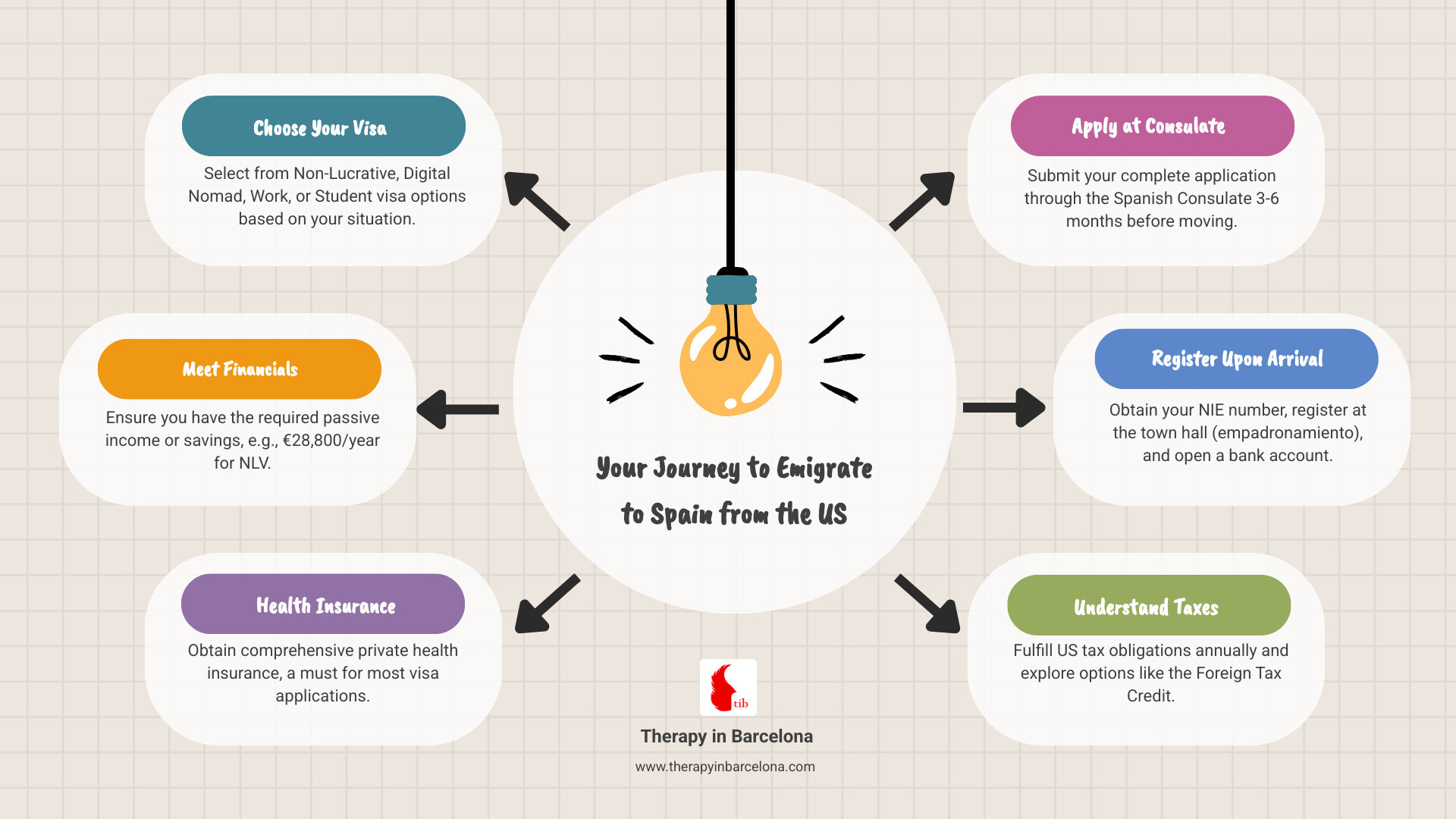
Quick Answer: Key Steps for Emigrating to Spain from the US
- Choose Your Visa: Non-Lucrative (for retirees/passive income), Digital Nomad (for remote workers), or Work/Student visas
- Meet Financial Requirements: €28,800/year for Non-Lucrative Visa; €2,500+/month for Digital Nomad Visa
- Secure Private Health Insurance: Required for most visa applications
- Apply Through Spanish Consulate: Start the process 3-6 months before your planned move
- Register Upon Arrival: Obtain NIE number, register at town hall (empadronamiento), open bank account
- Understand Tax Obligations: File US taxes annually, even as an expat; explore Foreign Tax Credit options
But the official guides don’t cover the emotional side. This move is more than visas and bank balances. The thrill of tapas at midnight can be paired with unexpected loneliness or the frustration of bureaucracy. The Spain you imagine and the one you experience won’t always match—and that’s normal.
This guide covers both the practical essentials—visas, costs, healthcare, taxes—and the emotional realities of building a new life abroad. We will walk you through the legal routes, financial planning, and cultural adjustments. Whether you are drawn to Barcelona, Valencia, or Málaga, we will help you understand what it really takes to make this move.
Why Americans Are Choosing Spain: More Than Just Sunshine
The numbers are compelling: over 36,000 US citizens were registered residents in Spain in 2023, a 41 per cent increase since 2021, according to Spain’s National Statistics Institute (INE). But statistics don’t tell the whole story of why so many Americans are choosing to emigrate to Spain from the US.
Spain offers a genuine improvement in quality of life that doesn’t require extraordinary wealth. The slower pace is a deliberate choice to prioritise family, social connections, and enjoying life. For Americans used to a relentless work culture, this shift can feel profound.

The cost of living is a major draw. A comfortable flat in Valencia or Málaga might cost €800, compared to over $2,500 in a mid-sized US city, with overall living costs being significantly lower in Spain. Fresh produce, dinners out, and private healthcare become more accessible.
Safety is another key factor. Spain ranks 23rd globally for safety, while the US is 132nd. Violent crime is rare, and the general sense of public safety is a noticeable and welcome change for many Americans.
Spain’s healthcare system is another significant reason. Both public and private options offer high-quality care at a fraction of US costs. For many, especially those nearing retirement, this is the deciding factor.
The Mediterranean lifestyle, with its focus on fresh food, walkable cities, and outdoor living, contributes to better health. It is common to see older residents leading active, social lives.
Spain’s cultural richness is immense, with cities like Barcelona, Sevilla, and Madrid offering distinct experiences. Valencia is popular for its mix of beach and city life, while Málaga is a growing tech hub with traditional charm.
Spain’s location as a European gateway makes travel easy. Weekend trips to Paris or Portugal are feasible, with high-speed trains and budget airlines making exploration affordable.
Often, it’s the small daily pleasures that make the biggest difference: the local bar owner who knows your coffee order, a street festival, or neighbours stopping to chat. Life is lived outdoors, in plazas and on terraces.
No place is perfect. Spanish bureaucracy can be maddening, and the language barrier is real. But for many Americans, these challenges are manageable compared to the reward: a more balanced, affordable, and connected life.
Your Legal Pathway: Spanish Visas for US Citizens
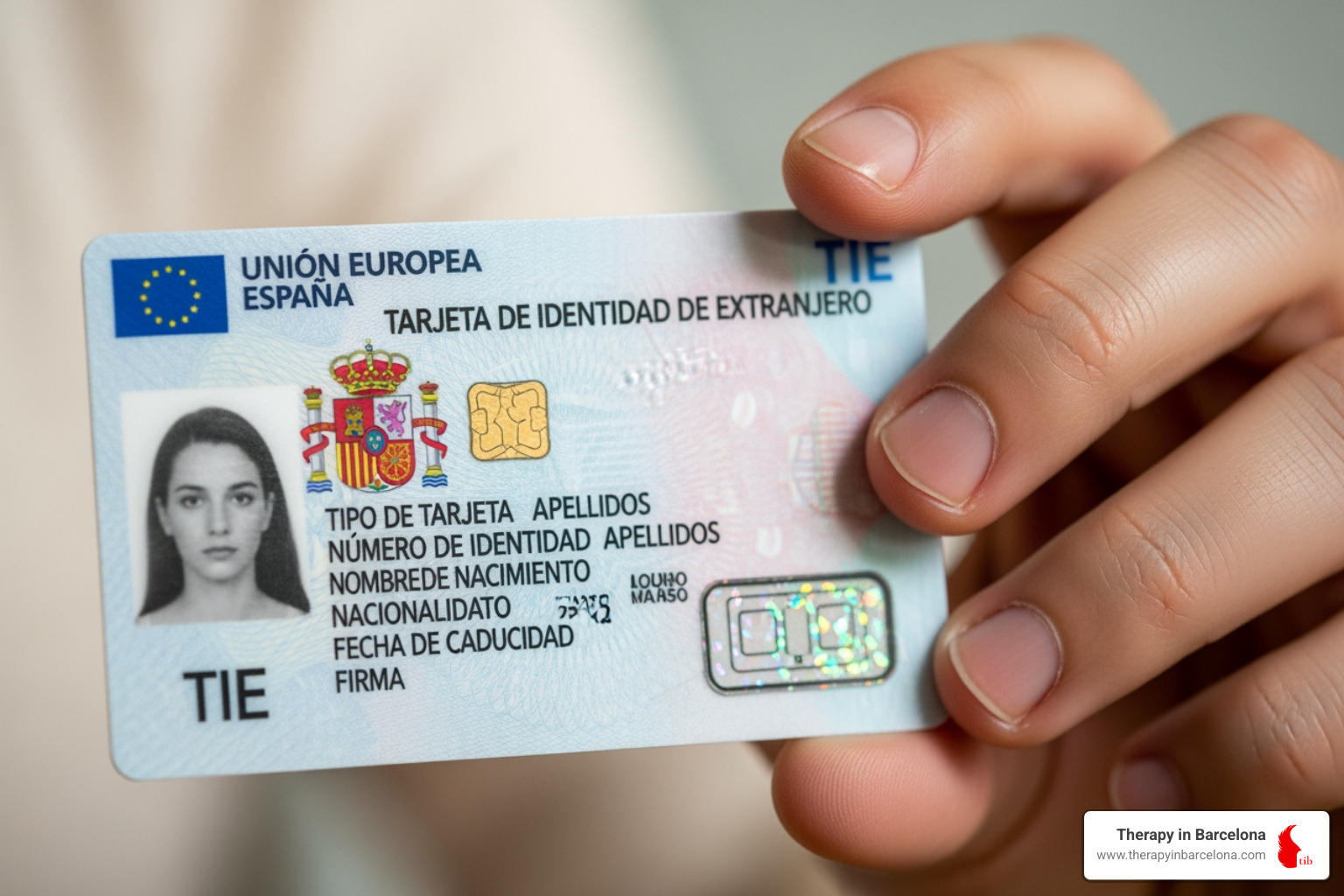
To live in Spain long-term, you need a visa. US citizens can visit for 90 days visa-free, but longer stays require a long-stay visa obtained from a Spanish consulate in the US. Once in Spain, you will apply for a Foreigner Identity Card (TIE), your official residency permit.
The Non-Lucrative Visa: For Retirees and the Financially Independent
The Non-Lucrative Visa (NLV) is a popular choice for those with sufficient passive income or savings who do not intend to work in Spain. This visa is ideal for retirees or individuals with independent financial means.
- No Working Allowed: You cannot engage in any work or professional activity with this visa.
- Financial Proof: For 2024-2025, applicants must show proof of at least €28,800 in annual passive income or savings for a single applicant. This increases by around €7,200 for each family member.
- Private Health Insurance: You must secure comprehensive private health insurance from an entity authorised to operate in Spain, with no co-pays or deductibles.
- Renewal Process: The initial visa is valid for one year and can be renewed for two-year periods, eventually leading to long-term residency.
The official requirements for the non-lucrative visa can be found on the Spanish Ministry of Foreign Affairs website: https://www.exteriores.gob.es/es/ServiciosAlCiudadano/Paginas/Servicios-consulares.aspx?scco=Estados+Unidos&scd=288&scca=Visados&scs=Visados+Nacionales+-+Visado+de+residencia+no+lucrativa.
The Digital Nomad Visa: Working Remotely from Spain
Spain’s Digital Nomad Visa (DNV), launched in 2023, is an excellent option for remote workers and freelancers. It allows non-EU citizens to live in Spain while working for companies or clients outside of Spain.
- Remote Workers/Freelancers: You must be employed by a non-Spanish company or be a self-employed freelancer with clients primarily outside Spain. Work for Spanish clients must not exceed 20 per cent of your total business activity.
- Income Threshold: Applicants need to demonstrate a monthly income of at least €2,762 for the main applicant, as stipulated by Spanish law. This increases for dependents.
- Tax Advantages: The DNV can offer favourable tax treatment under the “Beckham Law,” allowing eligible individuals to be taxed at a flat rate of 24 per cent on Spanish-sourced income up to €600,000 for the first six years, a significant incentive for high earners.
- Requirements: You’ll need proof of a stable work relationship, a university degree or three years of relevant professional experience, and private health insurance.
Other Pathways: Work, Student, and Entrepreneur Visas
Several other visa options exist for US citizens:
- Work Visa (Trabajo por Cuenta Ajena): Requires a job offer from a Spanish employer who must prove no suitable EU candidate is available.
- Student Visa: For recognised academic programmes. It may allow part-time work and can lead to a residence permit to seek employment after your studies.
- Entrepreneur Visa (Emprendedor): For starting an innovative business, requiring a government-approved business plan.
- Self-Employment Visa (Autónomo): For freelancers wishing to establish a business in Spain, requiring a business plan and proof of financial viability.
A Note on the Golden Visa
The Spanish government has initiated the process to eliminate the Golden Visa, which previously offered residency for a significant investment (e.g., €500,000 in real estate). While applications submitted before the final legislative change may be processed under the old rules, new applicants should explore other visa options.
The Financial Realities of Emigrating to Spain from the US
One of the most compelling reasons for emigrating to Spain from the US is the significantly lower cost of living. While your budget will vary depending on your lifestyle and chosen city, Spain generally offers a more affordable existence.
Cost of Living: Spain vs. The US
Let’s break down how Spain compares to the US financially, based on aggregate cost-of-living data:
- Overall Comparison: Consumer prices in Spain are roughly 41 per cent lower than in the US, and this gap widens to 52 per cent when rent is included.
- Housing Costs: Rental prices are a major factor, being on average over 130 per cent cheaper in Spain.
- Utilities: Basic utilities (electricity, heating, cooling, water, rubbish) for an apartment cost around €135 in Spain, compared to over €195 in the US.
- Groceries: The cost of fresh produce and everyday groceries is significantly lower.
- Transportation: A monthly transport pass is about half the price in Spain compared to the US.
- Dining Out: A meal out is also more budget-friendly, with restaurant prices being over 60 per cent lower.

A Tale of Two Budgets: Madrid vs. a Smaller City like Alicante
The cost of living in Spain varies widely by region. Your choice of city will significantly impact your monthly expenses.
- Madrid/Barcelona: As Spain’s most expensive cities, expect higher rents and living costs. They offer a cosmopolitan lifestyle with large expat communities.
- Valencia/Alicante/Seville/Málaga: These cities offer a more affordable, relaxed lifestyle. In Valencia, for example, monthly costs (excluding rent) are around €700, with one-bedroom flats from €600-€900, according to user-contributed data. Málaga is also a top-ranked expat city, frequently praised in global surveys for its quality of life.
- Rural Spain: For the lowest costs, consider smaller towns and rural areas. Places like Zamora, Ciudad Real, and Lugo offer significantly lower rents and everyday expenses but often require better Spanish skills.
US Tax Obligations for Expats: A Key Part of Emigrating to Spain from the US
Even after emigrating to Spain from the US, your tax obligations to Uncle Sam don’t disappear. The US taxes its citizens on worldwide income, regardless of where they live.
- Filing US Taxes Abroad: All US citizens must file an annual US tax return, reporting their worldwide income to the IRS.
- Foreign Tax Credit (FTC): A tax treaty between the US and Spain prevents double taxation. Spain’s higher tax rates often generate foreign tax credits that can reduce or eliminate your US tax liability.
- Foreign Earned Income Exclusion (FEIE): If you meet certain criteria, you may be able to exclude a large portion of your foreign earned income from US taxation (up to $120,000 for tax year 2023, an amount which is adjusted annually for inflation), as detailed by the IRS.
- FBAR/FATCA: You may need to report foreign bank accounts (FBAR) and financial assets (FATCA) if they exceed certain thresholds.
- Form 720 (Spanish Foreign Asset Declaration): As a Spanish tax resident, you must declare foreign assets over €50,000 using Form 720 (Modelo 720), a requirement of the Spanish Tax Agency (Agencia Tributaria).
It is highly recommended to consult with a tax professional specialising in US expat taxes to ensure compliance with both US and Spanish tax laws. The US-Spain Tax Treaty details can be found on the IRS website: https://www.irs.gov/businesses/international-businesses/spain-tax-treaty-documents.
Building Your New Life: Practical Steps and Cultural Integration
Once your visa is approved and you’ve moved, emigrating to Spain from the US shifts from paperwork to building a life. The first few months involve essential administrative tasks that are the foundation for your new life.
Your NIE (Número de Identificación de Extranjero) is your essential foreigner’s ID number, required for almost all official transactions. You can apply for it in the US before you move or in Spain upon arrival.
Empadronamiento is registering your address at the local town hall (ayuntamiento). This is crucial for accessing local services like public healthcare and to enrol children in school.
You will also need to open a Spanish bank account for daily life. You’ll typically need your NIE, passport, and proof of address and income.
If you’re moving with pets, the process is generally straightforward. Your pet will need an ISO-compliant microchip, a rabies vaccination, and an EU Health Certificate from a USDA-accredited vet, following specific EU and Spanish regulations. The good news is Spain does not require quarantine for pets from the US.
Healthcare in Spain: Public and Private Options for Americans
Spain’s high-quality, affordable healthcare system is a major draw for expats, with both public and private options available.
The public system (Sistema Nacional de Salud) is free for residents contributing to social security (employees, autónomos). After registering, you get a health card (tarjeta sanitaria) for access. Care is comprehensive, but wait times for specialists can be long.
For visas like the Non-Lucrative and Digital Nomad, comprehensive private health insurance is mandatory. It must be from a Spanish-authorised provider and offer full coverage with no co-pays. Many expats choose private insurance for faster access and English-speaking doctors.
When choosing private insurance, copago plans have lower premiums with a fee per service, while sin copago plans have higher premiums with no extra costs per visit. Your choice depends on your budget and expected healthcare needs.
The Expat Experience: Adjusting to the Spanish Lifestyle
Moving to Spain is about immersing yourself in a new culture. Some adjustments will be delightful, others frustrating, but all require patience.
Spain is a relationship-based culture. Trust is built through personal connection, not just transactions. Business meetings often start with personal chat, as building rapport is key.
While the siesta is less common in big cities, daily rhythms are different. Meal times are later: lunch is around 2-3 PM and dinner is after 9 PM.
Learning Spanish is key to integration. While you can get by with English in major cities, daily life is much easier in Spanish. Locals appreciate the effort and are generally patient.
Spanish bureaucracy can be slow and complex. Patience, persistence, and a sense of humour are essential.
Homesickness and culture shock are normal. The initial excitement can fade, leading to frustration or loneliness. This is a natural part of adapting, not a sign you have made the wrong choice.
Building a local network and connecting with other expats can provide invaluable support. For more insights, explore our resources on moving to Spain.
The Emotional Journey of Emigrating to Spain from the US
The decision to move to Spain is often driven by excitement, but there’s a profound emotional journey that isn’t always visible.
Relocation stress is real. The volume of tasks and paperwork can feel overwhelming, and you may question your decision at times.
A move abroad can trigger identity shifts. Without your usual cultural context, your confidence may waver as you find your place between your old and new cultures.
Loneliness and isolation can be intense. Building a new support system takes time, and relationships with friends and family back home change with distance.
The stress of moving can strain relationships, both for couples moving together and for those maintaining long-distance ties with loved ones.
The “expat bubble” can be comforting but may hinder full integration. Finding a balance between expat and local connections is an ongoing process.
Take Sarah, a 34-year-old from Chicago. She is fictional, but her story is a composite of experiences we often see. She moved to Valencia for sunshine and a better social life. While she found both, she also faced unexpected loneliness, the challenge of using the healthcare system in Spanish, and the quiet grief of missing family traditions. Her story mirrors that of many expats, highlighting that the emotional side of relocation is as real as the practical one.
Finding the Right Support: What Are Your Options?
When challenges arise, the right support is vital. Not all therapy options are suited for the international experience.
Spain’s public healthcare system covers mental health, but access often involves a GP referral, long waits, and potential language barriers.
Large online therapy platforms are convenient but can feel impersonal. They may lack the cultural understanding specific to the expat experience in Spain, and some have privacy concerns.
Local practices may cater mainly to Spanish speakers, making it hard for expats to find a therapist who understands the specific challenges of living abroad.
Therapy in Barcelona is different. Our team of psychology-trained therapists are expats, so we understand these challenges firsthand.
We offer bespoke therapist matching to connect you with a professional who understands your cultural context. We provide culturally sensitive support for issues like culture shock or isolation, whether you are in Barcelona, Madrid, Valencia, Málaga, or Alicante.
Our services are available both online (worldwide, including the USA and Canada) and in-person at our central Barcelona office at Calle Paris 162-164, 3o, 1a, 08036. We have strict privacy policies and never sell client data. As a private-pay service, some therapists offer sliding scale fees; you can ask about this during your initial consultation.
If you’d like support with the emotional complexities of your new life in Spain, our team of expat therapists is here to help. For more information about our expat therapy services, visit our services page.
Frequently Asked Questions about Emigrating to Spain from the US
How much money do you need to move to Spain from the US?
The amount depends on your visa and lifestyle.
For a Non-Lucrative Visa, you need to show at least €28,800 in annual passive income or savings, an amount tied to Spain’s IPREM indicator. For a Digital Nomad Visa, the monthly income requirement is over €2,500, based on the Spanish minimum wage.
Monthly living costs vary by city. You might expect to spend €1,500–€2,000 (plus rent) in Madrid or Barcelona, versus €1,200–€1,500 in more affordable cities like Valencia or Málaga, where rent is also much cheaper, according to cost-of-living aggregators.
Budget for initial costs like flights, visa fees, and rental deposits. A cushion of €5,000 to €10,000 is recommended to help you settle in.
Can I move to Spain without a job?
Yes, several visa routes allow you to move to Spain without a Spanish job:
- Non-Lucrative Visa: For those with sufficient passive income or savings.
- Digital Nomad Visa: For remote workers with non-Spanish employers or clients.
- Student Visa: For those enrolled in a Spanish academic programme.
The key for all these visas is proving you can support yourself financially.
Is healthcare free in Spain for American expats?
Access to free public healthcare depends on your residency status and social security contributions.
Residents who contribute to social security (employees, autónomos) get access to the public system, which is free at the point of use.
However, for initial visa applications like the Non-Lucrative and Digital Nomad visas, you must have comprehensive private health insurance from a Spanish-authorised provider.
Many expats prefer private insurance for faster access to specialists and English-speaking doctors. Premiums are generally far more affordable than in the US.
Choosing a healthcare plan can be stressful, and it’s a valid part of the emotional journey of moving abroad. These decisions are part of building a new life.
Conclusion: Your Spanish Dream Awaits
Emigrating to Spain from the US is a profound life shift. The data is compelling—a lower cost of living, excellent healthcare, and top-ranked expat cities like Valencia, Málaga, and Barcelona, which consistently feature in global quality of life surveys. But the real story is in the daily experiences: learning to haggle in Spanish at the market, a neighbour inviting you for coffee, or the moment you realise you’ve stopped translating in your head.
Practical planning is essential. Choosing the right visa, understanding your tax obligations, and budgeting for your new life are key steps we have covered to help you move forward with confidence.
It is also important to acknowledge the emotional journey. You will face discomfort, miss family, and may even feel grief. Some days will be an adventure, others a struggle. This is all a normal part of building a richer, more complex life abroad.
The journey of emigrating is as much internal as it is external. If you would like support with the emotional side of your new life in Spain—whether you are in Barcelona, Madrid, Valencia, or anywhere else—our team of expat therapists at Therapy in Barcelona is here to help. We understand these unique challenges because we have lived them ourselves. If you would like support, book a Free Discovery Call. Online therapy available worldwide, including USA and Canada.
Your Spanish dream is waiting. And you don’t have to do it alone.
