


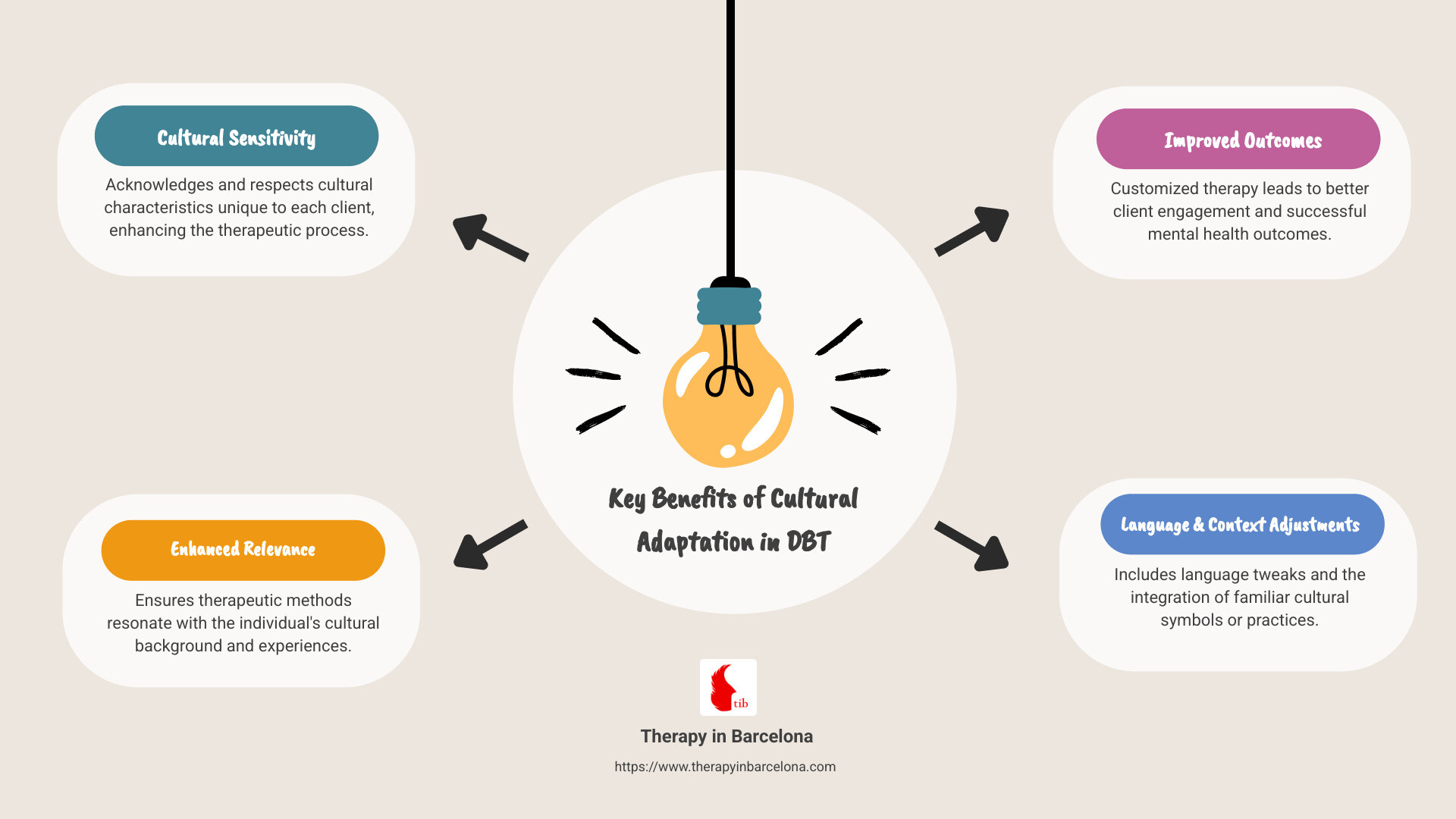
Dialectical Behavior Therapy Cultural Adaptations are essential for providing effective mental health support in diverse cultural contexts. Here’s why they matter:
- Cultural Sensitivity: Adapting therapy acknowledges and respects cultural characteristics unique to each client, enhancing the therapeutic process.
- Improved Relevance: Ensures therapeutic materials and methods resonate with the individual’s cultural background and experiences.
- Improved Outcomes: Customized therapy often leads to better client engagement and successful mental health outcomes.
- Language & Context Adjustments: Essential modifications include language tweaks, culturally relevant examples, and the integration of familiar cultural symbols or practices.
Navigating a new culture while managing emotional wellbeing is no small feat. For many, settling into a foreign environment brings an array of challenges—language barriers, cultural disconnects, and feelings of isolation. That’s why culturally adapted therapy, especially Dialectical Behavior Therapy (DBT), is invaluable for internationals in diverse communities like Barcelona.
DBT is a structured therapy that improves emotional and social skills through four core modules: mindfulness, distress tolerance, emotion regulation, and interpersonal effectiveness. But when these modules are delivered without cultural context, they may not resonate or fully address the unique stresses faced by individuals from different backgrounds.
Consider the story of Emily, a fictitious British expatriate balancing life in Barcelona’s vibrant yet unfamiliar environment. While she came for trip, Emily finds herself struggling with loneliness and anxiety. By adapting DBT to reflect familiar cultural elements and nuances, therapists can better support Emily and others, helping them gain confidence and serenity in their new home.
Adaptations might involve using specific cultural metaphors, recognizing distinct community pressures, or translating materials into the client’s native language. This level of care ensures therapy isn’t just supportive—it’s truly effective in addressing personal and cultural needs.
Understanding Dialectical Behavior Therapy (DBT)
Navigating a new culture while managing emotional well-being is no small feat. For many, settling into a foreign environment brings an array of challenges—language barriers, cultural disconnects, and feelings of isolation. That’s why culturally adapted therapy, especially Dialectical Behavior Therapy (DBT), is invaluable for internationals in diverse communities like Barcelona.
DBT is a structured therapy that improves emotional and social skills through four core modules: mindfulness, distress tolerance, emotion regulation, and interpersonal effectiveness. But when these modules are delivered without cultural context, they may not resonate or fully address the unique stresses faced by individuals from different backgrounds.
Mindfulness
Mindfulness in DBT helps individuals stay present and aware, which is crucial when adjusting to a new culture. It involves observing thoughts and emotions without judgment. For someone like Emily, a fictitious British expatriate in Barcelona, mindfulness could mean focusing on her surroundings and embracing new experiences, easing her transition into the local culture.
Distress Tolerance
Distress tolerance skills are about surviving crises without making them worse. These skills are vital for those facing the unpredictability of life abroad. Techniques like self-soothing and radical acceptance can support individuals in managing the discomfort of cultural adjustments. For example, Emily might use these skills to cope with the stress of language barriers or cultural misunderstandings.
Emotion Regulation
Emotion regulation teaches individuals how to manage and change intense emotions. This is particularly beneficial for expats who may face heightened emotional responses due to cultural differences. By learning to identify and label emotions, Emily can better understand her reactions and reduce feelings of anxiety or homesickness.
Interpersonal Effectiveness
Interpersonal effectiveness focuses on improving communication and relationship skills. This module is essential for building connections in a new cultural setting. For Emily, mastering these skills could help her steer social interactions in Barcelona, fostering friendships and reducing feelings of loneliness.
By adapting DBT to reflect familiar cultural elements and nuances, therapists can better support Emily and others, helping them gain confidence and serenity in their new home. Adaptations might involve using specific cultural metaphors, recognizing distinct community pressures, or translating materials into the client’s native language. This level of care ensures therapy isn’t just supportive—it’s truly effective in addressing personal and cultural needs.
The Importance of Cultural Adaptations in DBT
Imagine trying to wear a pair of jeans that don’t quite fit right. They’re either too long, too tight, or just not your style. That’s how therapy can feel if it doesn’t consider your cultural background. This is where cultural adaptations in Dialectical Behavior Therapy (DBT) come into play.
Why Cultural Adaptations Matter
Cultural adaptations are essential because they make therapy more relatable and effective. They ensure that the principles of DBT—like mindfulness, emotion regulation, and interpersonal effectiveness—are delivered in a way that resonates with the individual’s cultural context.
Acceptance is a core aspect of DBT, and cultural adaptations improve this by acknowledging and respecting the diverse backgrounds of clients. When therapy aligns with a person’s cultural values and beliefs, they are more likely to accept and engage with the treatment.
Enhancing Effectiveness
Research shows that culturally adapted therapies can improve outcomes for clients from various backgrounds. For instance, translating DBT materials into the client’s native language or using cultural metaphors can make the therapy more accessible and impactful. For example, using metaphors from the natural world for Native American clients can improve understanding and connection to the material.
In a diverse city like Barcelona, with its rich mix of cultures, these adaptations are not just beneficial—they are necessary for the therapy to be truly effective.
Principle-Driven Approach
DBT is a principle-driven therapy, meaning its core principles can be adapted without losing their essence. This flexibility allows therapists to modify the delivery of DBT to fit cultural contexts while maintaining the integrity of the treatment. For example, therapists can integrate cultural practices such as healing circles for Native American clients or adjust the interpersonal effectiveness module to reflect collectivist values in certain cultures.
By incorporating cultural adaptations, DBT can be more than just a set of skills; it becomes a personalized journey that respects and integrates the client’s cultural identity. This approach not only improves the therapeutic experience but also empowers clients to steer their cultural landscapes with confidence.
In the next section, we’ll explore the key cultural adaptations in DBT that make this therapy a powerful tool for supporting internationals in their mental health journey.
Dialectical Behavior Therapy (DBT) is a powerful tool for mental health support, especially for those navigating life in a new culture. At Therapy in Barcelona, we understand that DBT becomes even more effective when tailored to fit the cultural nuances of our clients. Here are some key cultural adaptations that enhance DBT’s effectiveness:
Language Modifications
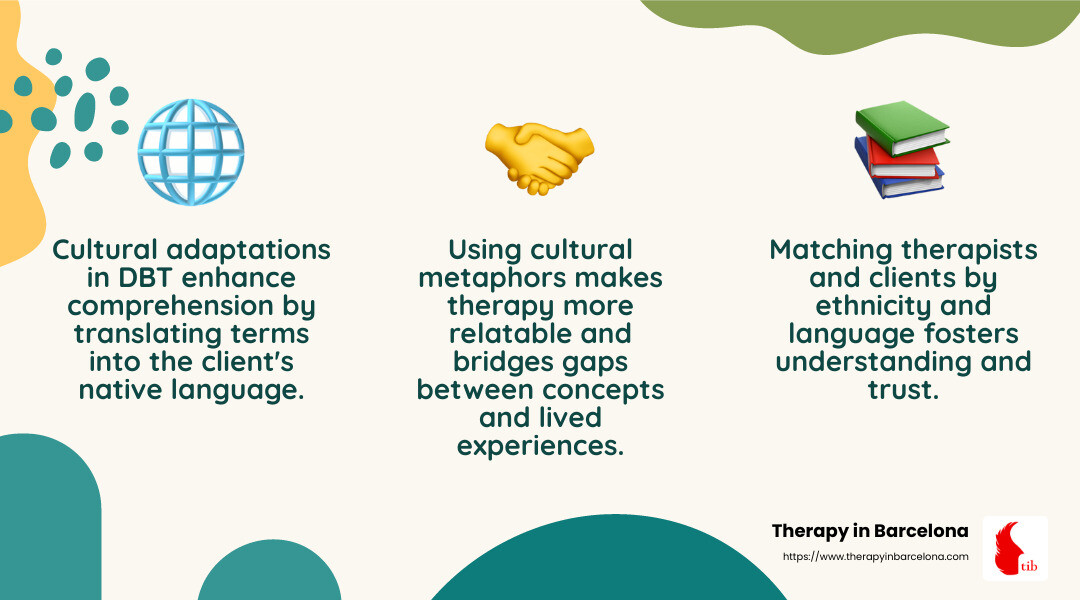
Language is more than just words—it’s a vessel for culture and identity. Translating DBT materials into a client’s native language can significantly improve comprehension and engagement. For example, translating mindfulness into sachetansilata for Nepali clients ensures that the concept resonates culturally. These translations are not just literal but are crafted to maintain the essence and intent of the original terms.
Therapist-Client Matching
An important aspect of culturally adapted DBT is matching therapists and clients based on ethnicity and language. This intentional pairing fosters a deeper connection and understanding, making clients feel more comfortable and understood. When therapists share or are familiar with the client’s cultural background, it can facilitate more open communication and trust.
Cultural Metaphors
Using metaphors and allegories that align with a client’s cultural background can make therapy more relatable. For instance, employing metaphors from the natural world for Native American clients taps into their cultural beliefs of unity with nature. Such metaphors help bridge the gap between abstract DBT concepts and the client’s lived experiences, making the therapy more intuitive and meaningful.
Addressing Stigma
In many cultures, mental health is surrounded by stigma, which can be a barrier to seeking help. Culturally adapted DBT addresses this by including discussions about cultural stigma and integrating content on intergenerational trauma and Critical Race Theory. By acknowledging and addressing these issues, therapy becomes a space where clients can confront and work through stigmas that may have previously hindered their mental health journey.
These adaptations are crucial in making DBT a more inclusive and effective therapy option. They ensure that clients from diverse backgrounds can engage with the therapy in a way that feels respectful to their cultural identity and personal experiences. At Therapy in Barcelona, we are committed to providing culturally sensitive mental health support to the international community, helping you navigate the challenges of expat life with understanding and empathy.
In the next section, we’ll explore the challenges faced when implementing these cultural adaptations and how therapists can overcome them to provide the best support for their clients.
Challenges in Implementing Cultural Adaptations
While culturally adapting Dialectical Behavior Therapy (DBT) can make it more effective, it also presents several challenges. Let’s explore these problems and how they impact therapy.
Language Barriers
Language is a cornerstone of effective therapy. Yet, when therapy isn’t delivered in a client’s native tongue, nuances can get lost. This can make it difficult for clients to fully express their emotions or understand complex concepts. For instance, certain emotion terms might not have direct translations, leading to misunderstandings. This is why translating materials and offering bilingual services are crucial steps in overcoming these barriers.
Logistical Barriers
Access to therapy can be a significant issue, especially for clients in remote areas or those without reliable transportation. Traditional therapy settings may not be accessible for everyone. By offering flexible meeting times and considering non-traditional settings, therapists can help bridge this gap. This approach not only makes therapy more accessible but also respects the client’s logistical constraints.
Cultural Context
Understanding the cultural context is essential for effective therapy. Sometimes, the goals of DBT modules, like interpersonal effectiveness, may not align with a client’s cultural values. For example, focusing on individualism might clash with cultures that prioritize community and family. Therapists need to adapt these modules to fit within the client’s cultural framework, ensuring that therapy feels relevant and respectful.
Therapist Understanding
Therapist-client identity differences can create barriers to understanding. A therapist unfamiliar with a client’s cultural practices might struggle to connect. To overcome this, therapists can engage in cultural competency training and involve cultural experts in the therapy process. This improves their ability to understand and respect the client’s cultural background, fostering a more supportive therapeutic environment.
These challenges highlight the complexities of adapting DBT for diverse populations. However, by acknowledging and addressing these barriers, therapists can create a more inclusive and effective therapy experience.
Next, we’ll explore practical tips for therapists to consider when culturally adapting DBT, ensuring they provide the best possible support for their clients.
Practical Tips for Culturally Adapting DBT
When adapting Dialectical Behavior Therapy (DBT) for diverse cultural backgrounds, a thoughtful approach is essential. Here are some practical tips to guide therapists in making DBT more inclusive and effective.
Translation
Language matters. Translating DBT materials into the client’s native language can significantly improve understanding and engagement. For instance, translating handouts into languages like Spanish, Mandarin, or Nepali ensures clients can fully grasp the therapy concepts. But it’s not just about words. Consider cultural nuances and context to ensure translations are meaningful and accurate.
Cultural Experts
Involving cultural experts can be a game-changer. These experts bring invaluable insights into cultural norms, values, and practices. They can guide therapists in tailoring DBT strategies that resonate with clients’ cultural backgrounds. For example, using metaphors and allegories from a client’s culture can make therapy more relatable and effective. In one study, therapists used natural world metaphors for Native American clients, tapping into cultural beliefs about unity with nature.
Community Integration
Building connections with local communities can improve therapy outcomes. Community integration helps therapists understand the broader cultural context in which clients live. This understanding can inform the adaptation of therapy techniques to better suit the client’s environment. Engaging with community leaders or participating in local events can also build trust and rapport, making clients feel more comfortable and supported.
Flexible Delivery
Finally, consider flexible delivery methods to accommodate clients’ needs. This might mean offering therapy sessions outside traditional office settings, such as in community centers or via teletherapy. Flexible meeting times can also be crucial, especially for clients with demanding schedules or transportation challenges. This approach not only improves access but also respects the client’s lifestyle and commitments.
By embracing these strategies, therapists can provide culturally sensitive and effective support, ensuring that DBT meets the unique needs of each client.
Next, we’ll address some frequently asked questions about dialectical behavior therapy cultural adaptations, shedding light on its cultural appropriateness and the rationale for adapting it for specific populations.
Frequently Asked Questions about Dialectical Behavior Therapy Cultural Adaptations
Is DBT culturally appropriate?
Dialectical Behavior Therapy (DBT) is a powerful tool for managing emotions and improving interpersonal skills, but its effectiveness can be influenced by cultural factors. While DBT is principle-driven and adaptable, cultural acceptance is crucial for its success. This means considering the unique cultural backgrounds of clients and adjusting the therapy to fit their specific needs. For instance, translating therapy materials into the client’s native language or using culturally relevant examples can improve understanding and engagement.
What are cultural adaptations in psychology?
Cultural adaptations in psychology involve modifying therapeutic approaches to align with the cultural values, beliefs, and practices of diverse populations. This can include changes in language, therapist-client matching, and the use of cultural symbols or metaphors. For example, matching therapists and clients based on ethnic or linguistic similarities can foster a stronger therapeutic alliance. Additionally, incorporating cultural symbols or stories can make therapy more relatable and meaningful, helping clients connect more deeply with the therapeutic process.
Why adapt DBT for specific populations?
Adapting DBT for specific populations is essential for promoting mental health equity. Different cultural groups may have unique needs and face distinct challenges, such as stigma surrounding mental health or differing views on individualism versus collectivism. By tailoring DBT to address these cultural needs, therapists can help reduce mental health disparities and improve outcomes for historically underrepresented groups. For example, adapting the interpersonal effectiveness module to consider the importance of family and community in Latinx cultures can make the therapy more relevant and effective.
By understanding and implementing these cultural adaptations, therapists can ensure that DBT is not only effective but also culturally sensitive, providing support that truly resonates with each client’s unique background and experiences.
Conclusion
Therapy in Barcelona understands the importance of culturally sensitive support in mental health care. For expatriates and internationals living in Barcelona, navigating cultural nuances can be a significant challenge. That’s why we focus on personalized therapist matching to ensure that clients receive the most effective support possible.
Our approach to therapy is not just about addressing symptoms; it’s about understanding the whole person. By considering cultural backgrounds, language preferences, and individual experiences, we tailor our therapeutic approaches to meet the unique needs of each client. This personalized matching is crucial for fostering a strong therapeutic relationship, which is essential for successful outcomes.
At Therapy in Barcelona, we are committed to helping our clients feel understood and supported. Our team of English-speaking therapists is not only trained in various therapeutic modalities but also experienced in the complexities of expat life. This combination of expertise and empathy allows us to provide a sanctuary for internationals facing the unique challenges of living abroad.
Whether you’re dealing with cultural adjustment, work-life balance, or other mental health concerns, our culturally informed care can make a significant difference. We invite you to learn more about our services and how we can help you thrive in your new environment.
Find more about Therapy in Barcelona’s expat therapy services and find the support you need to steer the complexities of life abroad.
