


Navigating Love: Must-Discuss Topics in Couples Therapy

Couples therapy topics are essential conversations that can transform relationships. Whether you’re hoping to improve communication, set relationship goals, or uncover the benefits of therapy, there are fundamental points everyone should explore.
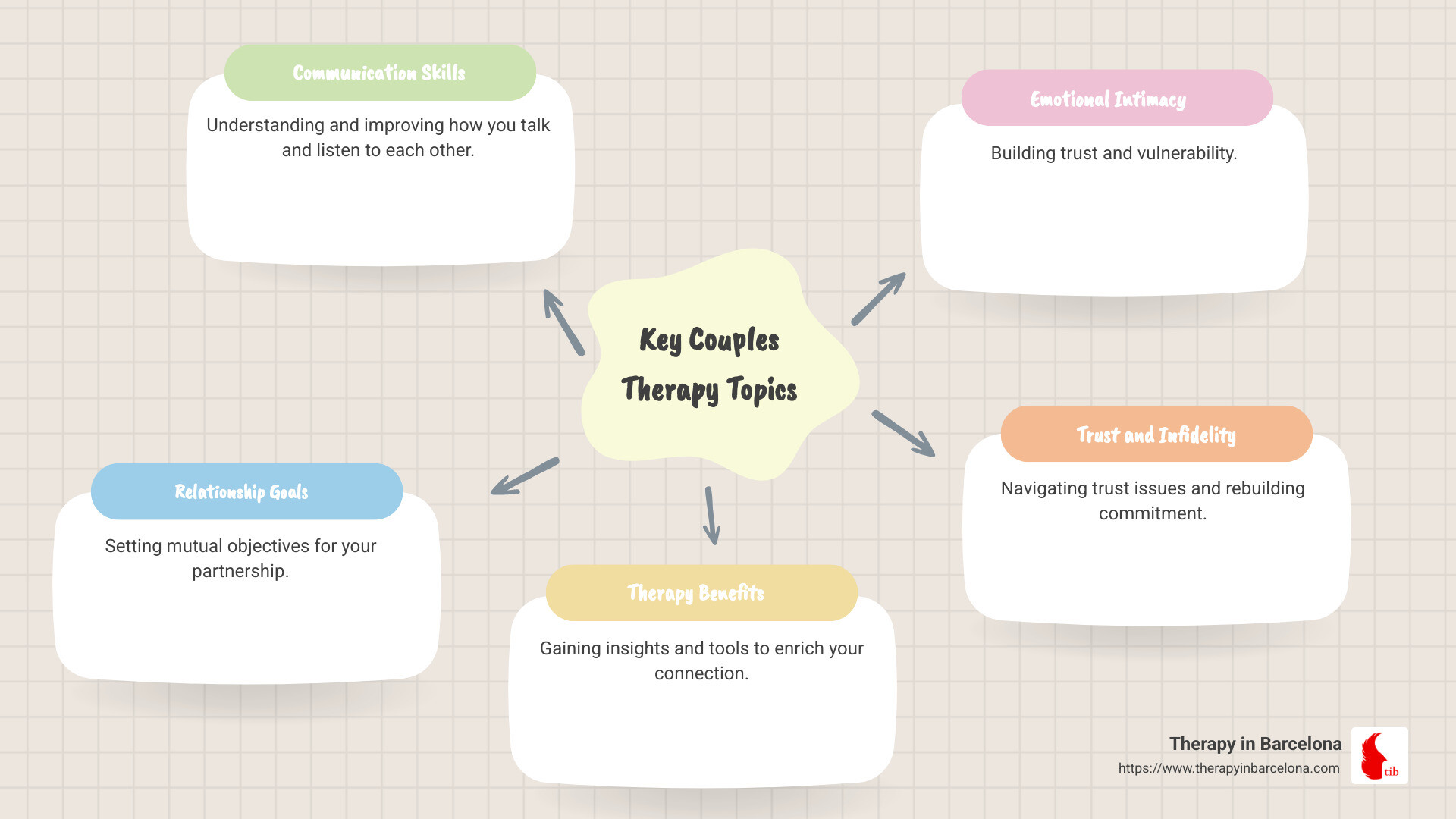
- Communication Skills: Understanding and improving how you talk and listen to each other.
- Relationship Goals: Setting mutual objectives for your partnership.
- Therapy Benefits: Gaining insights and tools to enrich your connection.
When navigating the complexities of love, addressing these key areas can be life-changing.
I’m Leigh Matthews, an immigrant in Barcelona and an Australian psychologist with years of experience supporting clients through these delicate conversations. My team’s background in couples therapy topics allows us to provide personalised support. Let’s start on a journey to strengthen your relationship.
Essential Couples Therapy Topics
When it comes to couples therapy topics, diving into these essential areas can lead to a healthier and more fulfilling relationship. Here’s a breakdown of the key topics you might explore:
Communication Patterns
Effective communication is the backbone of any successful relationship. Couples often struggle with misunderstandings because of different communication styles. Therapy can help you identify these patterns and develop strategies to improve how you express and understand each other.
- Active Listening: Truly hearing your partner’s words and feelings.
- Assertive Expression: Clearly stating your thoughts without aggression.
Emotional Intimacy
Emotional intimacy is about connecting deeply with your partner. It involves sharing your feelings and being vulnerable, which can strengthen your bond. Therapy can help you explore your emotional needs and find ways to meet them together.
- Vulnerability: Being open about your fears and desires.
- Trust Issues: Addressing past hurts to build a stronger future.
Trust and Infidelity
Trust is crucial, and infidelity can shatter it. Couples therapy can guide you through the process of rebuilding trust and understanding the causes behind infidelity. This journey often involves exploring commitment and setting new boundaries.
- Trust Rebuilding: Taking steps to restore faith in each other.
- Infidelity Causes: Understanding why it happened to prevent future issues.
Intimacy and Sexual Compatibility
Discussing desires and boundaries can improve intimacy. Therapy provides a safe space to explore these topics, helping you create a fulfilling sexual relationship that strengthens your connection.
- Desires and Boundaries: Openly discussing what you both want and need.
- Emotional Connection: Building a strong emotional foundation for physical intimacy.
Conflict Resolution
Disagreements are inevitable, but how you handle them matters. Therapy can teach you conflict resolution skills to manage disputes constructively, ensuring that conflicts don’t harm your relationship.
- Effective Communication Strategies: Learning to discuss issues calmly and productively.
- Negotiation and Compromise: Finding solutions that satisfy both partners.
Life Transitions
Significant life changes, like moving or starting a family, can strain relationships. Therapy helps you steer these transitions together by developing coping strategies and fostering resilience.
- Acknowledge Change: Recognising how changes affect your relationship.
- Supportive Solutions: Working together to find ways to adapt.
Roles and Responsibilities
Discussing the division of household tasks and financial duties can prevent resentment. Therapy can help you set clear roles and responsibilities, ensuring fairness and reducing conflict.
- Identify Imbalances: Recognising areas where one partner may feel overburdened.
- Negotiate Roles: Agreeing on a fair division of tasks.
Family Dynamics
Family influences can impact your partnership. Therapy can help you understand and manage these dynamics, setting healthy boundaries with extended family members.
- Understanding Backgrounds: Exploring how your upbringing affects your relationship.
- Setting Boundaries: Establishing limits with family to protect your partnership.
Financial Management
Money is a common source of stress in relationships. Therapy can help you address financial transparency, budgeting, and setting financial goals together.
- Financial Transparency: Being open about your financial situation.
- Budgeting: Creating a plan that aligns with your goals.
Parenting and Co-Parenting
Raising children can be challenging. Therapy can support you in discussing parenting styles, discipline, and educational choices, ensuring a united front.
- Parenting Styles: Understanding each other’s approaches to raising children.
- Co-Parenting: Working together for the well-being of your kids.
Quality Time
Spending quality time together is essential for maintaining a strong connection. Therapy can help you prioritise time for each other, even amidst busy schedules.
- Make Time for One Another: Finding ways to connect regularly.
- Shared Activities: Engaging in hobbies and interests together.
Future Plans and Life Goals
Discussing future aspirations can align your paths. Therapy provides a platform to explore life goals and ensure your visions for the future are compatible.
- Set Relationship Goals: Defining what you both want from your partnership.
- Plan for the Future: Creating a shared vision for your lives together.

Exploring these couples therapy topics can be a transformative experience, helping you build a stronger, more resilient relationship. As you dig into these areas, you’ll gain the tools needed to steer challenges and celebrate successes together.
Communication in Relationships
Communication is the backbone of any relationship. It’s not just about talking but about truly understanding each other. Let’s explore three essential elements: communication skills, active listening, and assertive expression.
Communication Skills
Clear communication can prevent misunderstandings and build trust. When both partners know how to express themselves clearly, it reduces the chance of conflicts. In therapy, you can learn techniques to improve these skills, making your conversations more meaningful and productive.
Active Listening
Listening is more than just hearing words. It’s about being present and showing empathy. Active listening involves giving your full attention, nodding, and asking questions. This approach ensures your partner feels heard and valued.
“I believe that listening is a lost art form that people need to be reminded of. It is one of the most respectful things that a person can do.” says Dr Cynthia, a couples therapy therapist at Therapy in Barcelona.
Assertive Expression
Expressing yourself assertively means being honest about your feelings while respecting your partner’s. It’s about saying what you need without being aggressive. This balance helps in creating a respectful and supportive environment.
When you master these communication aspects, your relationship can thrive. You’ll find that many issues become easier to resolve, and your connection deepens.
Building Emotional Intimacy
Emotional intimacy is the heart of a deep and fulfilling relationship. It involves understanding each other’s emotional needs, embracing vulnerability, and addressing any trust issues that might arise.
Emotional Needs
Every person has unique emotional needs. Recognising and respecting these needs is crucial for a strong relationship. In couples therapy, you can explore what you and your partner require to feel loved and supported. This understanding fosters a deeper connection and helps prevent misunderstandings.
“Exploring intimate topics with your therapist helps partners better understand each other’s emotional needs to foster more profound connections.” — Dr Cynthia, a couples therapy therapist at Therapy in Barcelona.
Vulnerability
Being vulnerable means opening up and sharing your true self with your partner. It can be scary, but it’s essential for building trust and closeness. Therapy provides a safe space where both partners can express their fears, hopes, and dreams without judgment. This openness can strengthen your bond and create a more supportive relationship.
Trust Issues
Trust is the foundation of any relationship. When it’s broken, it can be challenging to rebuild. Couples therapy offers guidance on how to address trust issues, whether they’re due to past betrayals or ongoing doubts. By working through these challenges, you can learn to trust each other again and create a more secure relationship.
In therapy, you’ll find that emotional intimacy is not just about being close physically but also feeling connected emotionally. By focusing on these aspects, you can create a relationship that withstands the tests of time and challenges.
Navigating Trust and Infidelity
Trust is the bedrock of any healthy relationship. But what happens when that trust is broken? Rebuilding trust after infidelity is challenging but not impossible. It’s a journey that requires commitment, patience, and a willingness to understand the underlying issues.
Trust Rebuilding
Rebuilding trust begins with open and honest communication. In therapy, partners can explore the root causes of trust issues and work towards healing. A couples counselor offers tools for effective communication and encourages empathy, helping both partners to express their feelings and needs without fear of judgment.
Creating new patterns of trust involves setting clear boundaries and expectations. By doing what you say you will do, you demonstrate reliability and begin to mend the broken bonds.
“Trust is the foundational building block of a flourishing relationship. You create trust by doing what you say you will do.”
Infidelity Causes
Understanding why infidelity happens is crucial. It’s often a symptom of deeper issues such as unmet emotional needs or lack of communication. Therapy helps couples dig into these underlying problems, providing a clearer perspective on what led to the betrayal.
Discussing these causes openly allows both partners to gain insight and work towards preventing future issues. It’s about addressing the pain, anger, and guilt without judgment, creating a space where healing can begin.
Commitment
Commitment is more than just staying in a relationship; it’s about actively working to make it better. In couples therapy, partners learn to reaffirm their commitment by setting shared goals and working towards them together.
By focusing on commitment, couples can steer the complexities of their relationship with a renewed sense of purpose. This involves understanding each other’s aspirations and aligning them with the relationship’s future.
Couples therapy provides a roadmap for navigating trust and infidelity, helping partners to rebuild their relationship on a more solid foundation. With dedication and guidance, it’s possible to move past infidelity and create a stronger, more connected partnership.
Financial Management in Relationships
Money matters can be a major source of stress in relationships. In fact, the American Psychological Association notes that 31% of couples cite money as a significant stressor. That’s why financial management is a key topic in couples therapy.
Financial Transparency
Being honest about finances is crucial. Financial transparency means sharing information about your income, debts, and spending habits. When partners are open about their money situation, it builds trust and reduces misunderstandings.
Couples therapy encourages partners to discuss their financial realities and expectations. This openness helps both parties feel secure and informed about their financial future.
Budgeting
Creating a joint budget is a practical step towards managing finances effectively. A budget helps couples track their spending and ensure they are living within their means. It also highlights areas where they can save or cut back.
Therapists often guide couples in setting up a monthly spending plan. This involves listing all income sources and expenses, and then deciding together how to allocate funds. Having a clear budget can reduce financial stress and prevent conflicts.
Financial Goals
Setting financial goals together is essential for a healthy relationship. Whether it’s paying off debt, saving for a house, or planning a vacation, having shared goals aligns partners towards a common future.
Couples therapy provides a space to explore each other’s values and priorities regarding money. By discussing and negotiating these goals, partners can create a financial plan that reflects their shared vision.
“By exploring each partner’s dream for the future, you can create a unified, rewarding shared vision and develop a plan to get there.”
When couples work together on their finances, they strengthen their relationship. Financial management in therapy isn’t just about numbers; it’s about understanding and supporting each other’s dreams and aspirations. This sets the stage for a harmonious and stable partnership.
Moving on from financial management, let’s explore how couples steer the challenges and joys of parenting and co-parenting in their relationships.
Parenting and Co-Parenting Challenges
Parenting can be one of the most rewarding yet challenging aspects of a relationship. It’s not just about raising kids; it’s about navigating different parenting styles, discipline methods, and educational choices. These are common couples therapy topics that can make or break a relationship.
Parenting Styles
Every parent has a unique way of raising their children, often influenced by their upbringing. Some may lean towards a more authoritative style, while others prefer a permissive approach. These differences can lead to conflicts if not addressed.
In therapy, couples explore these differences. They discuss their parenting philosophies and how they can blend them for the benefit of their children. The goal is to find a balanced approach that respects each partner’s views while prioritizing the child’s well-being.
Discipline
Discipline is a hot topic for many parents. Whether it’s timeouts, grounding, or other methods, partners may not always agree on how to handle misbehavior.
Therapists encourage couples to develop a discipline plan together. This includes setting clear family rules and consequences that both parents support. By having a unified approach, parents can avoid the “good cop, bad cop” dynamic and present a consistent front to their children.
Educational Choices
Choosing the right educational path for children can be daunting. From deciding on public versus private schooling to extracurricular activities, these decisions require careful consideration.
In therapy, couples discuss their educational values and goals for their children. They explore options and make decisions that align with both partners’ aspirations for their child’s future. This collaborative approach ensures that both parents feel involved and heard in the decision-making process.
By addressing these parenting and co-parenting challenges in therapy, couples can create a more harmonious home environment. It also sets a positive example for their children, showing them how to steer differences respectfully and effectively.
Next, we’ll dig into the importance of communication in relationships and how it can improve understanding and connection between partners.
Frequently Asked Questions about Couples Therapy Topics
What do they talk about in couples counselling?
Couples counselling covers a wide range of topics to help partners improve their relationship. Common areas include communication, parenting, and finances.
- Communication: This is often the first issue addressed. Couples learn how to express themselves clearly and listen to each other actively. Effective communication can help partners understand each other’s needs and prevent misunderstandings.
- Parenting: Parenting styles, discipline, and educational decisions are frequent subjects. Therapy helps couples align their approaches to raising children, ensuring a unified front.
- Finances: Money is a significant source of stress for many couples. In therapy, partners discuss budgeting, financial goals, and transparency to reduce tension and improve financial management.
What is the most common problem addressed in couples therapy?
The most common problem in couples therapy is communication problems. Poor communication can lead to misunderstandings and unresolved conflict, which can strain the relationship.
Therapists focus on teaching couples how to communicate effectively. This involves active listening, where partners truly hear and understand each other’s perspectives, and assertive expression, where they share their thoughts and feelings honestly but respectfully.
What questions are asked at couples therapy?
In couples therapy, various questions help guide the sessions and address specific issues. Here are some examples:
- Support: How can partners support each other better in daily life?
- Personal Challenges: What individual challenges are affecting the relationship?
- Stress Management: How do stress and external pressures impact the relationship, and how can they be managed?
These questions aim to uncover underlying issues and foster a deeper understanding between partners, paving the way for a healthier and more fulfilling relationship.
Next, we’ll explore the role of financial management in relationships and how it can create stability and harmony between partners.
Conclusion
At Therapy in Barcelona, we understand that every relationship is unique. That’s why we offer personalised therapist matching, ensuring that each couple is paired with a therapist who truly fits their needs and goals. Our approach is designed to provide culturally sensitive support, especially for expats navigating life in a new country.
Our couples therapy therapists are skilled in addressing a variety of couples therapy topics, from communication patterns and emotional intimacy to financial management and parenting challenges. We believe that therapy should be a safe space where both partners can explore their relationship dynamics and work towards a stronger, healthier bond.
Whether you’re dealing with trust issues, navigating life transitions, or simply looking to improve communication, Therapy in Barcelona is here to support you every step of the way. Our multilingual services, available both in-person and online, ensure that language is never a barrier to receiving the help you need.
In the journey of love, having a skilled therapist by your side can make all the difference. Let us help you and your partner find clarity, connection, and a path forward together.
