


Who Needs a Work Permit in Spain?

The first thing to understand about working in Spain is that your nationality dictates the rules. Spain follows European Union guidelines regarding the “freedom of movement,” which creates two very different experiences for people moving here.
If you are a citizen of an EU country, an EEA country (Iceland, Liechtenstein, Norway), or Switzerland, you do not need a work permit. You have the right to live and work in Spain just like a local. You simply need to register for a residency certificate (the “green NIE”) if you stay longer than three months.
However, if you are a “third-country national”—which includes citizens of the UK, USA, Canada, Australia, and most other non-EU nations—you must secure both residence and work authorisation before you can legally start a job. This is a two-step legal requirement: you need permission to live here (residency) and permission to be employed (work permit). You can find more details on the official EU immigration portal for employed workers or check out our practical guide to moving to Spain for a broader look at the move.
Main Types of Work Visas and Permits
Spain’s work permit architecture is divided into two main “regimes.” The General Regime is the traditional route, often used for standard roles. It usually requires a “labour market test,” meaning the employer must prove they couldn’t find a suitable EU candidate.
The second is the Special Regime (Law 14/2013), which was designed to attract international talent, investors, and entrepreneurs. This route is generally faster and doesn’t require the employer to check the local job market first.
Common permits include:
- Standard Employment Visa: For general roles where the employer can prove a shortage of local talent.
- Digital Nomad Visa: For remote workers employed by non-Spanish companies.
- Self-Employed Visa: For those starting their own business (autónomos). You can read our guide to self-employment in Spain for more on this.
- Intra-Corporate Transfer (ICT): For moving employees within the same multinational company to a Spanish branch.

The Highly Qualified Professional (HQP) Work Permit Spain
The Highly Qualified Professional (HQP) permit is often the “gold standard” for skilled expats. It is processed by a specialised unit in Madrid called the Unidad de Grandes Empresas (UGE-CE). Because it falls under the Law 14/2013 fast-track system, it bypasses the national employment situation test.
To qualify, the role must be either a managerial position or a high-level technical/scientific role. The authorities look at your university degree, professional experience (usually at least 3 years), and the salary offered. For specific details on the HQP route, the Spanish Ministry of Foreign Affairs provides official consular guidance.
Requirements for the EU Blue Card Work Permit Spain
The EU Blue Card is a work and residence permit valid across most of the European Union, though it is issued by individual countries like Spain. It is aimed at professionals with high-level qualifications.
Key requirements for the Blue Card in Spain include:
- A valid work contract for at least one year.
- A higher education qualification (degree) or at least five years of high-level professional experience.
- A salary that meets the specific threshold (usually 1.5 times the average gross annual salary).
The major benefit of the Blue Card is mobility; after 18 months of legal residence in Spain, it is often easier to move to another EU member state for work.
The Application Process: From Job Offer to TIE
The process of obtaining a work permit in Spain is a relay race between the employer and the employee. It begins in Spain and ends at a consulate in your home country.
First, your employer must initiate the process. They submit the application for work authorisation to the Spanish authorities (either the Provincial Aliens Office or the UGE-CE). They must provide a compliant contract and, for general permits, proof that the job is on the “Shortage Occupations List” or that they advertised the role locally without success.
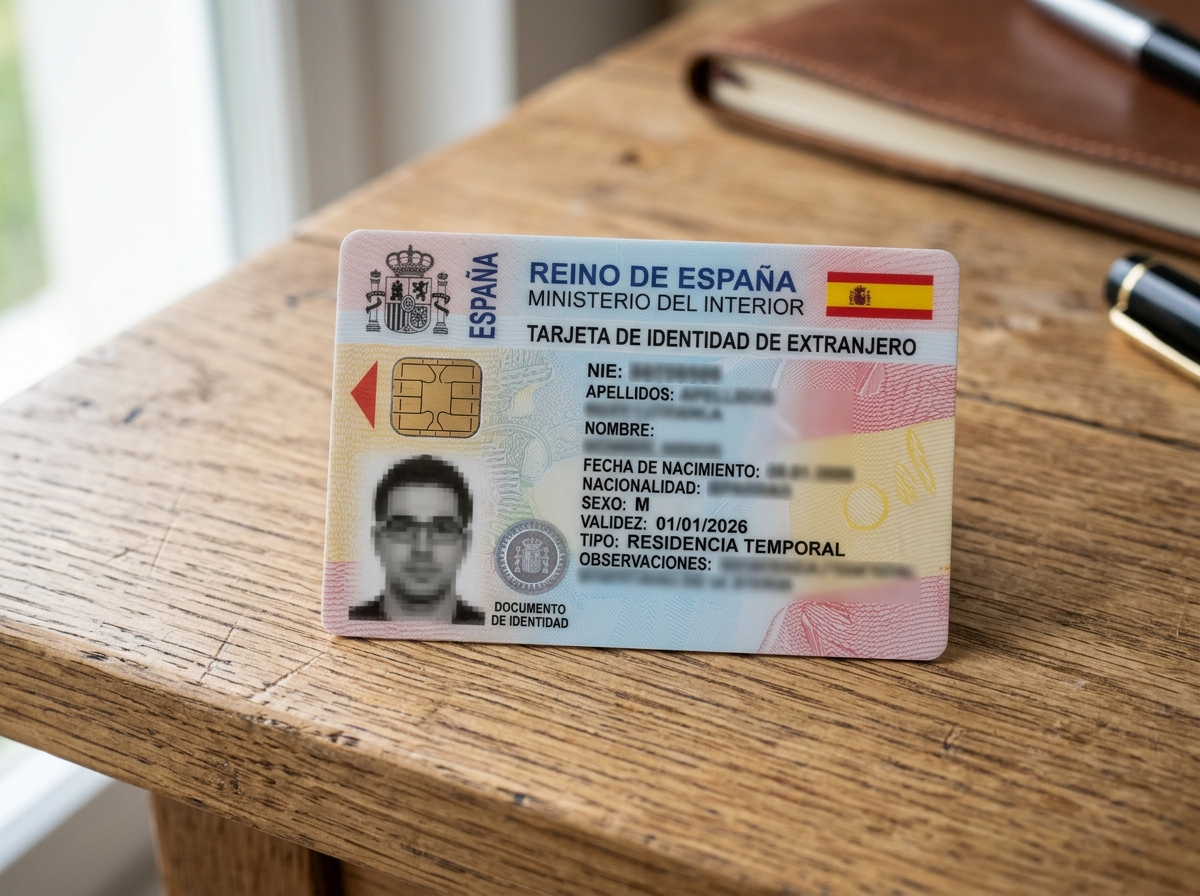
Once the authorisation is granted, the “visa phase” begins. You take that approval to the Spanish consulate where you live to get your entry visa. After you land in Spain, the final step is getting your physical ID card, known as the TIE (Tarjeta de Identidad de Extranjero).
Step-by-Step Guide to Your Work Permit Spain
Navigating the timeline can be tricky. Here is the roadmap:
- Job Offer: Secure a formal offer and a signed contract.
- Initial Authorisation: Your employer applies in Spain. This can take 20 days for HQP permits or up to 3 months for general permits.
- Consular Visa: Once authorised, you apply for the visa at the Spanish consulate in your home country. This usually takes 1–2 months.
- Entry and Social Security: You enter Spain. Your employer must register you with the Social Security system before you start working.
- Empadronamiento: You register your address at the local town hall (ayuntamiento).
- TIE Application: Within 30 days of arrival, you must visit the police station for fingerprints to get your TIE card.
For a more detailed breakdown of the logistics, see our relocation roadmap for expats.
Salary Thresholds and Working Conditions
To qualify for skilled permits, your salary must meet certain minimums. For 2025, the general minimum wage in Spain is approximately €16,576 per year, as per the official state bulletin. However, for a work permit in Spain under the HQP or Blue Card categories, the thresholds are much higher. According to the Ministry of Migration, these are:
- HQP Scientific/Intellectual roles: Approximately €40,077 per year.
- HQP Managers/Executives: Approximately €54,142 per year.
Spain’s work culture is famous for its focus on work-life balance. While the 40-hour work week is standard, many offices still observe a “split shift” or a long lunch break. You are also entitled to at least 30 calendar days of paid holiday per year. Additionally, some professionals use an Employer of Record (EOR) to manage their employment contract and payroll locally while working for a company based abroad.
If you are moving for a high-salary role, you might also qualify for the Beckham Law, a special tax regime that allows foreign workers to pay a flat 24% tax rate on Spanish income for up to six years. You can learn more in our comprehensive guide to the Beckham Law.
Comparing Your Options: HQP vs. EU Blue Card
Choosing between the national HQP permit and the EU Blue Card depends on your long-term goals. While both require a job offer, the HQP is often the faster route for those intending to stay specifically in Spain (such as in Madrid or Valencia). The Blue Card is better if you envision a future career that spans multiple EU countries.
For a deeper dive into making these choices, our work and wanderlust guide offers practical advice for professionals.
HQP Permit vs EU Blue Card: Key Differences
HQP Permit (National)
- Target: Managers, directors, and high-level technical staff.
- Salary: Generally assessed by the UGE based on the role, often starting around €40,077 for technical roles and €54,142 for executives, according to official UGE-CE criteria.
- Processing: Fast-track via UGE-CE, with a target of 20 working days for the initial decision.
- Mobility: Grants residence and work rights specifically for Spain.
EU Blue Card
- Target: Highly educated professionals with a university degree (minimum 3 years) or 5+ years of equivalent experience.
- Salary: Strictly defined, usually 1.5 times the average gross salary in Spain (approx. €45,000 – €50,000 depending on the sector), as specified in the EU Blue Card guidelines.
- Processing: Can take up to 90 days for approval.
- Mobility: After 18 months of residence in Spain, holders can move to another EU country to apply for a new Blue Card with simplified procedures.
Exemptions and Special Cases
Not everyone has to go through the full work authorisation process. Certain professionals are exempt under Spanish law, though they may still need a specific type of residence visa. These include:
- Researchers and Scientists: Invited by Spanish public or private research bodies.
- University Professors: Contracted by a Spanish university.
- Artists: Coming for specific cultural performances.
- Media Correspondents: Accredited foreign journalists.
- Clergy: Members of the Catholic Church or other registered religious entities.
Since Brexit, UK nationals are now treated as third-country nationals, meaning they generally need the same permits as Americans or Canadians. However, those who were already living in Spain before December 31, 2020, have protected rights under the Withdrawal Agreement. You can find a list of exemptions from work authorisation on the official government site.

Frequently Asked Questions about Spanish Work Permits
Can my family join me and work?
Yes. Under the HQP and EU Blue Card schemes, family members (spouses, civil partners, and dependent children) can apply for residency at the same time as the main applicant. A major benefit of these permits is that spouses are generally granted the right to work in Spain without needing to apply for their own separate work permit.
How long does the processing take?
It varies. The HQP permit is the fastest, with initial approval often coming in 20–30 days. However, you must factor in the time to get a consular appointment (1–2 months) and the TIE card issuance (another 30 days after arrival). In total, expect the journey to take 3 to 6 months.
What are the common reasons for denial?
Denials usually happen because of “the three Ds”: Documents, Dollars, and Deeds.
- Documents: Missing apostilles, lack of sworn translations, or expired passports.
- Dollars: The salary offered doesn’t meet the specific threshold for that permit type.
- Deeds: A criminal record in the last five years in any country where you’ve lived.
Settling into Your New Life
Securing a work permit in Spain is a significant milestone, opening the door to a rewarding life in a vibrant culture. Whether you are settling into the tech hubs of Barcelona and Madrid or enjoying the coastal life in Alicante or Marbella, the adjustment involves both legal and emotional shifts.
Moving abroad is a high-stress life event. While you’re busy with NIE numbers and TIE appointments, it’s easy to overlook your mental well-being. Many expats experience relocation stress, isolation, or a loss of identity during the first year. Even when a work permit is approved quickly, the first few months can still feel overwhelming as you adjust to a new language, routine, and social circle.
If you find yourself struggling with the transition, there are several ways to find support. You might explore the public healthcare system, though wait times for mental health support can be long and require a referral from a GP (médico de cabecera). There are also large international online platforms and local Spanish-speaking practices, but these can sometimes lack the specific cultural nuance that internationals need.
At Therapy in Barcelona, we provide a different experience. Founded by Australian Psychologist Leigh Matthews—who has lived the expat experience in Barcelona since 2011—we provide a compassionate sanctuary for internationals. Leigh is an Australian-trained and registered psychologist who understands the hurdles of intercultural marriage and adapting to a new culture firsthand.
As a private-pay service, we focus on high-quality, personalised care with a team of psychology-trained therapists who are expats themselves. We offer bespoke therapist matching to ensure you find the right fit, and we maintain strict privacy with no data selling. Our team speaks English, and many of our therapists also offer support in languages such as German, French, Spanish, Afrikaans, Portuguese, Austrian-German, and Swiss-German. We offer sessions at our Barcelona office and online to expats worldwide, including those in the USA and Canada.
If you’re feeling overwhelmed by the move or the transition into your new life, we are here to help. You can book a Free Discovery Call to find the right match for your journey. You don’t have to navigate the transition alone.
