


Finding an Expat Therapist in Alicante: What You Need to Know First

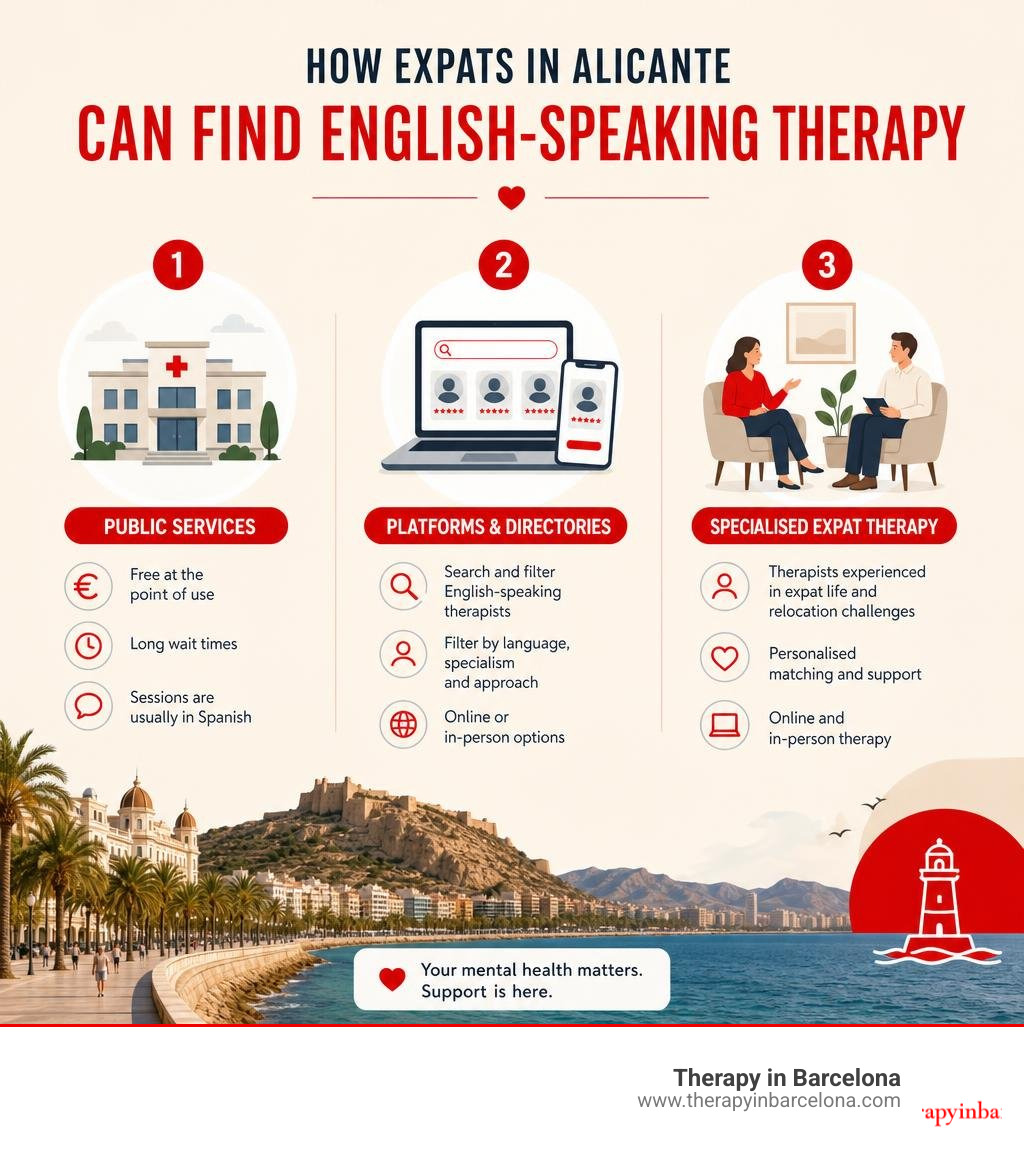
If you’re looking for an expat therapist in Alicante, here is a quick overview of your main options:
- Specialised expat therapy services – Online and in-person therapy from psychology-trained therapists experienced in supporting expats, including Therapy in Barcelona, which offers personalised therapist matching and online sessions across Spain.
- Expat therapy platforms and directories – You can use therapist directories to find English-speaking professionals based on language, specialism, and therapeutic approach.
- Local private psychologists – Some Alicante-based therapists offer English-language sessions in person; availability varies and waitlists can apply.
- Public health services (Seguridad Social) – Free at the point of use but typically long wait times and sessions are almost always in Spanish.
All services listed here are private-pay. Some therapists offer sliding scale fees for those with financial need — it is always worth asking.
Alicante is the kind of place that looks effortless from the outside. Warm light, a working seafront, cafés full of locals and internationals, a pace of life that genuinely invites you to slow down. For many expats, it ticks every box on paper.
But the emotional reality of building a life there is often quieter and harder than the Instagram version suggests. Feeling anxious can hide behind a busy social calendar.
Loneliness can sit right alongside a stunning sea view. And the familiar markers of who you are — your career, your friendships, your sense of belonging — can feel strangely out of reach, even months or years after arriving.
Feeling this way is common among expats on the Costa Blanca, making the right therapeutic support especially important. One client described finding a therapist abroad as “trying to navigate an unfamiliar city without a map.”
This guide is here to make that search clearer. Whether you have just arrived, have been in Alicante for years, or are a digital nomad passing through, you will find practical, honest information about your options, what things actually cost, and how to find a therapist who genuinely understands the expat experience.
The Unique Challenges of Relocating to the Costa Blanca
Moving to Spain is often framed as a dream come true. But relocation is a major life transition, and transitions bring an emotional load. When the initial excitement of the move fades, many expats find themselves dealing with unexpected mental health challenges.
Many expats arrive in Alicante with everything they hoped for—a remote job, sunny weather, and a great location—yet still find themselves feeling disconnected, anxious, or unexpectedly low. Even everyday tasks can become overwhelming, often accompanied by guilt for not feeling happier in their new surroundings.
This mix of isolation, language barriers, and the pressure to feel constantly grateful can lead to significant distress. Common issues that expats face include:
- The Unspoken Loneliness: Meeting people at casual expat meetups is easy, but building deep, trusted friendships takes time. Many expats report feeling lonely even when surrounded by others.
- Language and Communication Barriers: Not being able to express your personality, humour, or complex emotions in a new language can make you feel like a simplified, flatter version of yourself.
- Bureaucracy Stress: Navigating the Spanish administrative system (getting a NIE, registering for healthcare, dealing with taxes) can trigger high levels of worry and a sense of helplessness.
- Expat Guilt: When friends and family back home think you are living the dream, it becomes very difficult to admit that you are struggling. This leads to suffering in silence.
- Identity Loss: If you left a career, a close-knit social circle, or a familiar role behind, you might find yourself asking, “Who am I without my old life?”
Addressing these challenges requires a space where you do not have to explain the cultural context of being an expat.
Why Finding an Expats Therapist Alicante Can Be Difficult
While Alicante has a growing international population, finding a qualified, English-speaking therapist locally can be surprisingly difficult.
First, the local public mental health system is under heavy strain, with long waitlists and very few resources for non-Spanish speakers.
Second, in the private sector, the term “therapist” is not strictly regulated in Spain. Anyone can call themselves a therapist or coach without holding recognised clinical qualifications. This makes it difficult for expats to know if the professional they are contacting is properly trained and licensed.
Additionally, many local practitioners who speak English may not have personal experience of what it actually feels like to move countries, build a life from scratch, and live between cultures.
The Emotional Reality Behind the Sunny Coastline
The contrast between Alicante’s vibrant outdoor lifestyle and one’s internal emotional state can create a painful disconnect. For trailing spouses — those who moved to Spain to support a partner’s career — the loss of their own professional network and independence can lead to quiet resentment and identity crises.
For digital nomads and remote workers, the lack of a structured workplace often leads to blurred boundaries, feeling exhausted and overwhelmed, and a specific kind of location-independent loneliness. I
f you are navigating these experiences, you are not alone, and specialised remote support is available. Learn more about how we support internationals in the region on our page about Alicante Spain.
How to Choose and Verify an Expats Therapist Alicante
When you are feeling vulnerable, the process of vetting a therapist can feel overwhelming. However, taking a few structured steps to verify a professional’s credentials will protect your mental health and help you receive high-quality care.

Verifying Qualifications in Spain
To practise psychology legally and clinically in Spain, a professional must be registered with the local official college of psychologists, known as the Colegio Oficial de Psicología or COP. You can start with the Consejo General de la Psicología de España or the relevant regional colegio if you want to check a psychologist’s professional registration.
Here is what to look for when verifying a therapist’s background:
- Colegiado Number: Every qualified psychologist in Spain has a registration number, known as a número de colegiado. You can ask for this number and verify it through the relevant COP register.
- Clinical Designation: For private clinical practice, look for the title Psicólogo General Sanitario or Psicólogo Clínico. This means they have completed the postgraduate training required by Spanish law to treat mental health concerns.
- International Credentials: Many expat therapists hold licences from their home countries, such as the UK, US, Australia, or other countries. Check whether they are registered with recognised bodies such as the BACP, HCPC, or APA, and whether they follow a clear code of ethics.
- Transparency: A professional therapist will be open about their qualifications, their supervisory structure, and the limits of their practice.
Finding the Right Therapeutic Approach for Your Needs
Therapy is not one-size-fits-all. Different challenges respond better to different modalities. When browsing profiles on directories or platforms, look for approaches that align with your goals:
- Cognitive Behavioural Therapy (CBT): Highly structured and practical. Often used for managing worry, panic, and negative thought patterns.
- Acceptance and Commitment Therapy (ACT): Focuses on accepting difficult emotions and committing to actions that align with your values. It can be helpful for life transitions and identity shifts.
- The Gottman Method: A research-based approach to couples therapy that helps partners improve communication, manage conflict, and rebuild intimacy.
- Somatic and Trauma-Informed Therapies: These approaches help people work with stress and difficult physical responses held in the body, which can be useful for chronic worry and feeling burnt out.
If you want to understand more about these therapeutic styles and how they are applied, you can explore our team’s approach at English Speaking Therapists Barcelona.
Comparing Your Therapy Options in Alicante
To help you make an informed decision, let’s look at how the main mental health pathways in Spain compare. This breakdown avoids complex tables to ensure it is easy to read on your mobile phone while you are on the go.
Public Mental Health Services (Seguridad Social)
- How it works: You must first book an appointment with your local GP (médico de cabecera) at your nearest Centro de Salud. If they deem it necessary, they will refer you to a specialist.
- The Pros: It is entirely free of charge if you are registered in the Spanish public healthcare system.
- The Cons: Public mental health services often involve long waits, brief appointments, and Spanish-language sessions, limiting access for many expats.
Large Global Online Platforms
- How it works: You sign up online, answer a brief questionnaire, and an algorithm matches you with a therapist. Sessions are conducted via video, phone, or text.
- The Pros: Highly convenient, easy to access from home, and often cheaper than local private therapy.
- The Cons: These platforms often rely on algorithms for matching, which may lead to poorer therapist fits. They also typically offer less personalised, culturally sensitive support.
Specialized Expat Therapy Services (Online Support)
- How it works: You contact a dedicated practice that specialises in international mental health. A human intake coordinator assesses your needs and personally matches you with a qualified expat therapist.
- The Pros: You’re matched with a qualified therapist who understands the challenges of living abroad. Sessions are available online, with personalised matching and a strong commitment to privacy.
- The Cons: This is a private-pay service, meaning you must pay out-of-pocket or seek reimbursement through private international insurance.
At Therapy in Barcelona, we provide this exact model of specialised, human-led online care for expats living in Alicante and across Spain. We stand apart from large global platforms and the public health system by offering bespoke therapist matching, strict privacy, and culturally sensitive support in your native language.
Practical Details: Costs, Formats, and What to Expect
Starting therapy is an investment of your time, emotional energy, and money. Knowing what to expect practically can help ease any anxiety about the process.
Typical Costs for an Expats Therapist Alicante
Private therapy in Spain is generally more affordable than in countries like the UK, the US, or northern Europe, but rates still vary based on the therapist’s experience and specialism:
- Average Private Rates: Private sessions with an English-speaking psychologist in Spain typically range from €60 to €120 per session.
- Sliding Scales: Many therapists and practices offer sliding scale fees based on financial need, student status, or unemployment. It is always worth asking about this during your initial contact.
- Session Packages: Some practitioners offer discounted packages if you book a block of sessions in advance.
Preparing for Your First Online Therapy Session
Online therapy has become the preferred format for many expats because of its flexibility. Whether you are using an online directory or booking directly with a specialised practice, preparing your space is key to a good session:
- Create a Private Sanctuary: Choose a quiet room where you cannot be overheard. Close the door, and let family members or flatmates know you cannot be disturbed for the next hour.
- Check Your Tech: Ensure you have a stable internet connection, update your browser, and use headphones to improve sound quality and protect your privacy.
- Give Yourself Buffer Time: Try not to rush straight from a work meeting into your session. Give yourself ten minutes before and after to settle your thoughts and process the conversation.
Most reputable practices will offer a Free Discovery Call before you commit. This is a short, informal chat where you can explain what you are looking for, ask questions about fees, and see if the therapist’s approach feels like a good fit. You can learn more about how to set up these sessions on our online therapy.
Frequently Asked Questions about Expat Therapy in Spain
Can non-residents or short-term visitors access therapy in Alicante?
Yes. Private therapists and specialised expat services do not require you to be a permanent resident or registered in the Spanish public healthcare system. If you are a digital nomad, a tourist, or a seasonal visitor on the Costa Blanca, you can easily access private therapy.
Specialised online support is also highly beneficial for those who travel frequently, as it allows you to keep the same therapist regardless of your physical location.
Should I do therapy in my native language or Spanish?
While you might speak conversational or even fluent Spanish for daily life, processing deep emotional experiences, childhood memories, or difficult life events is entirely different.
Research published by the British Association for Counselling and Psychotherapy (BACP) shows that speaking your native language in therapy allows for a deeper emotional connection and more natural expression. When you do therapy in a second language, your brain has to work harder to translate, which can act as an emotional filter and prevent you from fully connecting with your feelings.
How do other Spanish hubs compare for expat mental health?
If you are split between different regions or travel within Spain, you will find active international mental health communities in other major hubs. Cities like Madrid, Valencia, and Málaga have robust networks of English-speaking professionals.
Finding a Space Where You Feel Understood
Living abroad is a beautiful, life-expanding adventure, but it is also a path that tests your resilience. You do not have to navigate the quiet, challenging moments of that journey alone.

At Therapy in Barcelona, we have been supporting the international community in Spain since 2011. Founded by Leigh Matthews — an Australian trained psychologist who moved to Spain in 2011 and understands the realities of intercultural life — our practice is built on empathy, professional excellence, and a deep understanding of the expat experience.
We do not believe in one-size-fits-all algorithms. Our team takes the time to listen to your story and personally match you with a psychology-trained therapist who fits your unique personality, goals, and language needs.
Whether you are dealing with anxiety, relationship strain, or the unsettling feeling of being lost between two worlds, we are here to provide a safe, compassionate sanctuary.
If you are ready to take the first step toward feeling like yourself again in Spain, we would love to support you.
