


Why Emotional Challenges Can Make Moving to Spain Feel Harder Than Expected

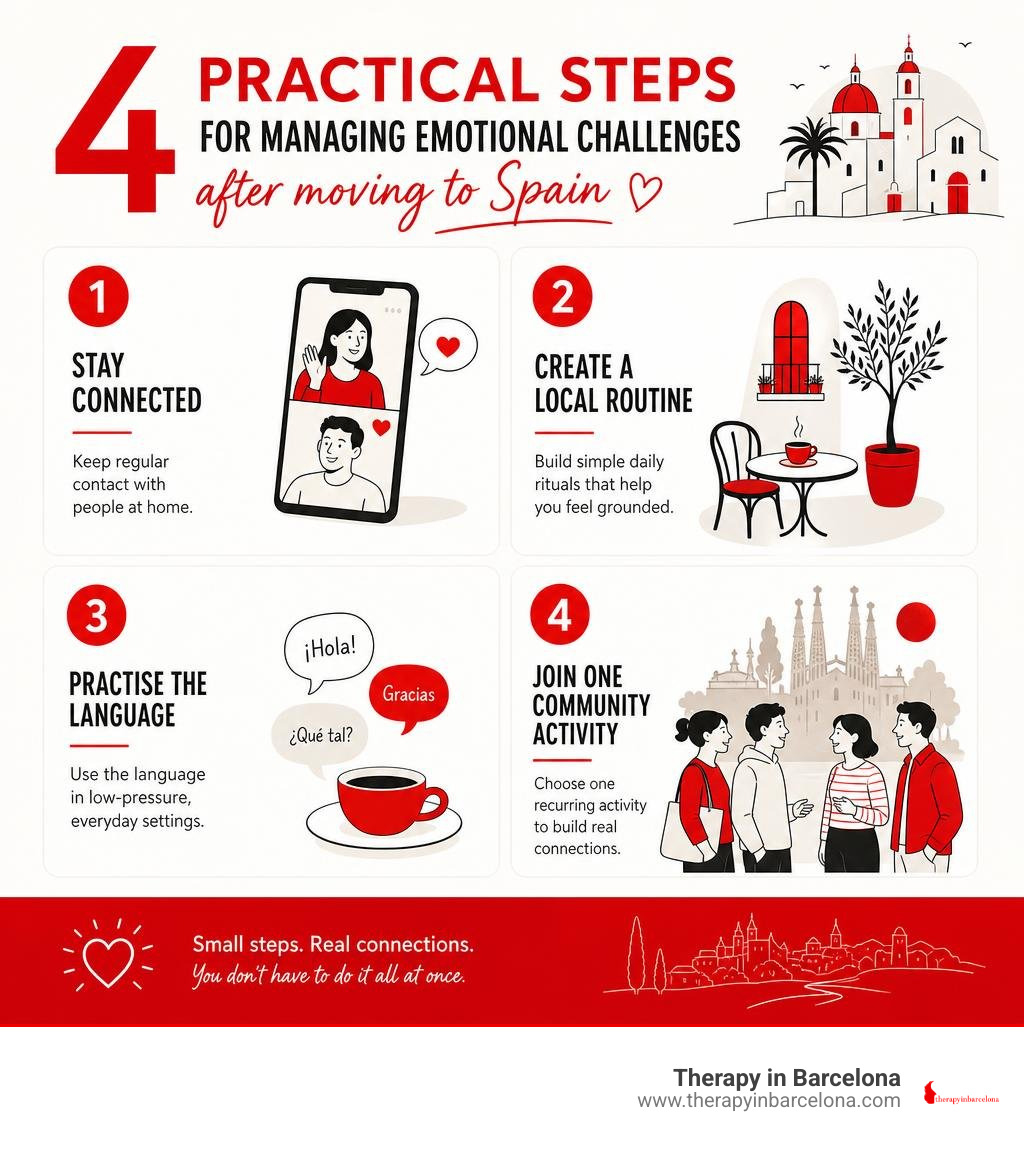
The emotional challenges expats in Spain face are common, manageable, and worth addressing early. Start by treating the move as both a practical and emotional transition: keep regular contact with people at home, create a simple local routine, practise the language in low-pressure settings, and join one recurring community activity. If sadness, anxiety, exhaustion, isolation, or relationship strain persist and begin affecting daily life, speaking with a culturally aware therapist can help.
Spain can look effortless from the outside: busy plazas, late dinners, sunshine, and an international social scene. Yet relocation also involves real losses. You may miss the ease of your first language, the people who knew you before the move, familiar work roles, and the confidence of handling daily tasks without help. This is often called migratory grief: a valid response to leaving parts of a former life behind, even when moving was a positive choice.
Loneliness is not simply a problem of being alone. Research cited by InterNations suggests that up to 40% of expatriates experience moderate to severe loneliness. In Barcelona, where a substantial share of residents were born abroad, it is still possible to feel disconnected while surrounded by people. New friendships can take time, conversations may feel effortful, and transient expat circles can bring repeated goodbyes.
The practical load matters too. Appointments, residency paperwork, housing, taxes, work changes, and Spanish or regional languages such as Catalan can create a steady background level of stress. A difficult week does not mean you have made the wrong decision. It may mean you need more support, more rest, and a clearer plan for building a life that feels like yours.
If you’d like support, book a Free Discovery Call.
Understanding the Core Emotional Challenges Expats in Spain Face

Relocating to cities like Madrid, Barcelona, Valencia, or Sevilla involves a major psychological transition. Many newcomers begin with high expectations, only to encounter unexpected emotional dips as daily routines take over. Understanding the hidden challenges of expat life in Spain helps normalise this experience.
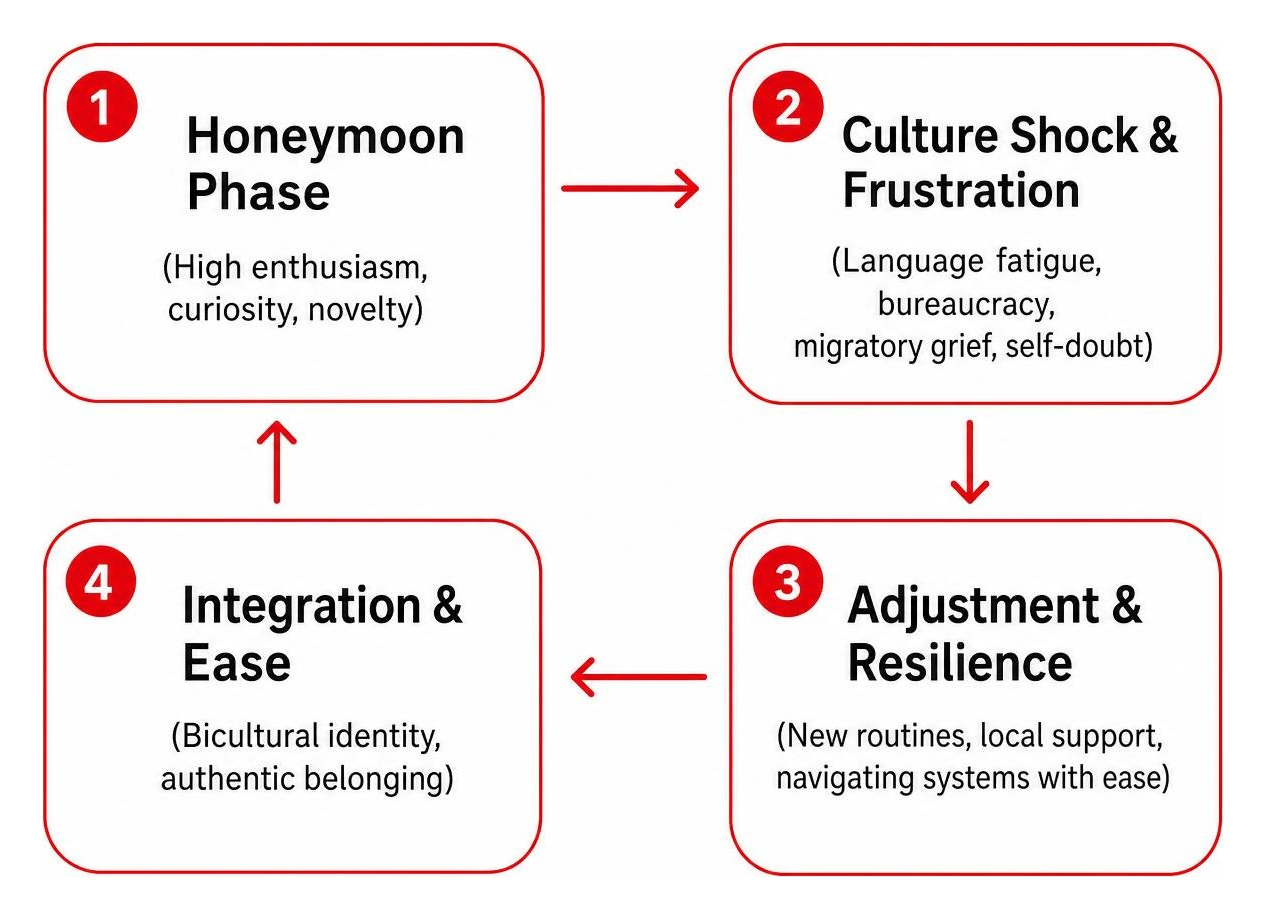
The psychological journey of relocation often follows a predictable pattern known as the U-Curve adaptation model. The initial excitement of the honeymoon phase eventually gives way to frustration, cultural fatigue, and homesickness. Internationals frequently experience what can be described as emotional jet lag—the feeling of being physically present in Spain while their emotional anchor remains tethered to another time zone.
Migratory Grief and the Invisible Emotional Challenges Expats in Spain Encounter
Migratory grief is the unacknowledged sense of loss that occurs when leaving one’s native country. When you move abroad, your established social networks, daily habits, familiar cultural cues, and professional status are disrupted simultaneously. Even when the move to Spain is voluntary and welcome, these quiet losses require real emotional processing.
Expats often struggle with identity disorientation when their usual ways of expressing humour, intellect, and competence do not translate easily into a new environment. Navigating migratory grief as an international means giving yourself permission to mourn your past life without feeling ungrateful for your present one. Healthy adaptation focuses on building a bicultural identity that honours your roots while embracing your new life in Spain.
Culture Shock vs Relocation Stress: Recognizing the Difference
Distinguishing between ordinary relocation stress and severe culture shock helps you choose the right support. While relocation stress is typically tied to concrete events and passes quickly, severe culture shock is more pervasive and affects your overall well-being. Recognising culture shock symptoms versus stress ensures that you can intervene before emotional burnout occurs.
Temporary Relocation Stress
- Trigger: Specific, identifiable tasks such as flat hunting, opening a bank account, or unpacking boxes.
- Duration: Acute and temporary; eases quickly once the practical problem is resolved.
- Emotional Impact: Short bursts of worry, manageable frustration, or physical tiredness after busy days.
- Social Functioning: Ability to socialise, enjoy meals, and stay connected with friends remains intact.
Severe Culture Shock
- Trigger: Pervasive disorientation caused by navigating unfamiliar cultural codes and daily operating systems.
- Duration: Chronic and persistent, often lasting several months without proactive emotional care.
- Emotional Impact: Deep fatigue, sudden irritability toward local customs, irrational resentment, and persistent self-doubt.
- Social Functioning: Withdrawing from social interactions, avoiding leaving the house, and profound feelings of detachment.
Why Loneliness and Isolation Are Frequent Emotional Challenges Expats in Spain Experience
Living in vibrant Spanish hubs like Málaga, Alicante, or Barcelona does not protect you from feeling isolated. In Barcelona, official municipal data indicates that approximately 22% of residents are foreign-born, creating dynamic international communities. However, high population turnover means that expat social circles can feel transient and surface-level.
Many newcomers find that the isolation expats experience between months three and six is the most difficult stage of the move. During this window, the novelty has faded, initial visitors from home have left, and meaningful local friendships are not yet fully formed. Superficial networking events often leave internationals craving deeper, more grounding connections.
Unpacking the Hidden Triggers: Language Fatigue, Bureaucracy, and Guilt
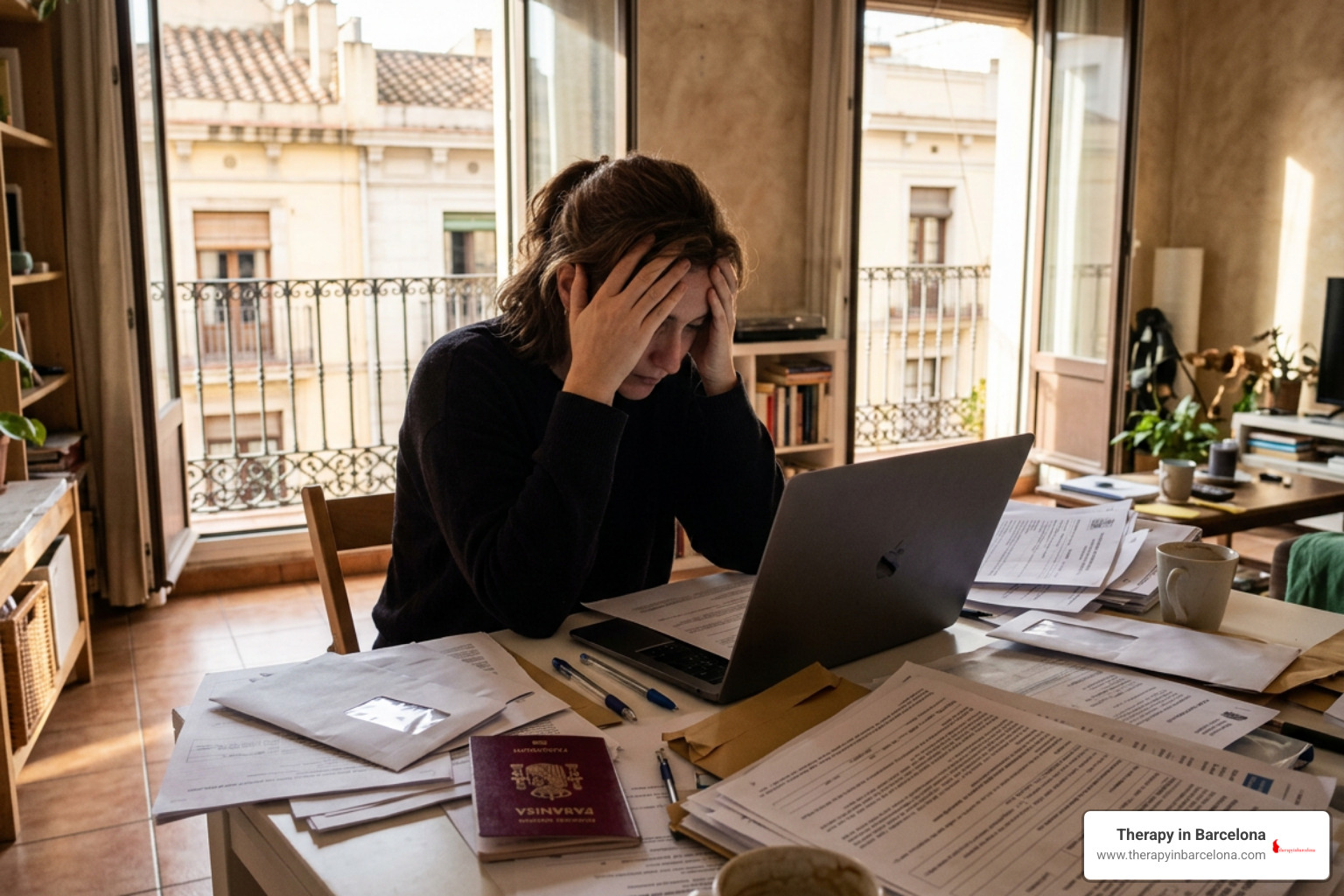
Beyond social adjustments, several systemic hurdles can add constant friction to daily life in Spain. Navigating hidden cultural hurdles requires recognising how administrative hurdles, linguistic demands, and personal guilt impact your nervous system.
Consider the experience of an international who arrived in Madrid feeling capable and enthusiastic, but within four months felt drained by grocery runs, overwhelmed by tax registration, and guilty about missing family milestones back home. This fictional composite example reflects the compound effect of invisible daily stressors that many internationals encounter.
Language Fatigue and Regional Linguistic Identity
Living in a second language demands constant mental effort. Translating thoughts, interpreting social nuance, and worrying about making mistakes causes cognitive exhaustion and self-monitoring fatigue. Many internationals find themselves staying quiet in group settings simply because their brain needs a break from constant translation.
In autonomous communities like Catalonia, the Basque Country, or Galicia, regional languages add another layer of complexity. Signs, administrative forms, and neighbourhood conversations often happen in Catalan, Basque, or Galician alongside Spanish. Not understanding these languages can lead to unintended feelings of exclusion and temporary loss of self-confidence.
Bureaucratic Anxiety and the “Mañana” Rhythm
Spanish administrative processes are notorious for testing the patience of newcomers. Securing appointments for your Foreigner Identity Number (NIE), certificate of registration (empadronamiento), or residency cards can feel like an unpredictable obstacle course. Managing bureaucratic hurdles and expat stress requires adjusting to local administrative workflows.
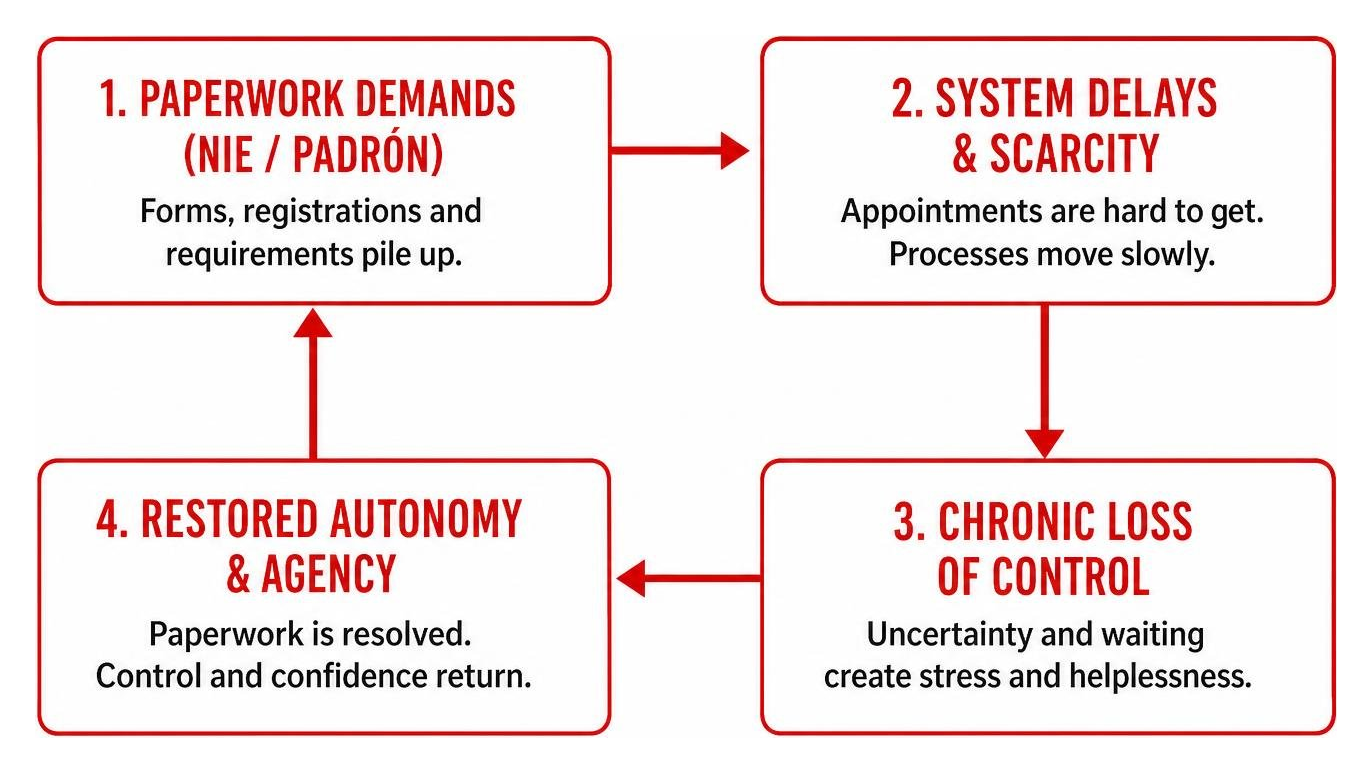
The local cultural pace and the so-called “mañana” rhythm can feel relaxing on holiday, but frustrating when waiting for essential paperwork. This constant background uncertainty can trigger chronic administrative tension, leaving expats feeling powerless over their legal status, housing, or employment.
Managing Expat Guilt, Envy, and Shifting Roles
Expats frequently deal with internal emotional conflicts that are rarely discussed openly. Expat guilt emerges when missing birthdays, illnesses, or family gatherings back home, leading to feeling torn between two worlds. At the same time, social media comparisons can spark envy, making it seem as though other internationals are adapting effortlessly while you struggle.
Relocation also creates significant shifts within families and partnerships. According to InterNations research, 73% of expatriates relocate with a partner, and 52% bring children. When one partner pauses their career while the other works, an adaptation imbalance can develop. The accompanying partner may lose their professional identity and daily social network, placing added pressure on the relationship.
Practical Strategies to Build Belonging and Emotional Resilience
Overcoming the emotional challenges of relocation requires intentional, practical action. By cultivating resilience and overcoming rootlessness, you can anchor yourself in your local neighbourhood while maintaining a secure sense of self.
Building emotional resilience does not mean suppressing your frustrations. It involves developing reliable daily routines and taking practical steps to integrate into your local community at a pace that feels sustainable.
Establishing Grounding Daily Rituals and Nervous System Regulation
Unfamiliar surroundings keep your nervous system in a state of heightened alertness. Creating predictable daily habits provides your brain with a much-needed sense of safety and routine.
- Establish a neighbourhood anchor: Visit the same local café, bakery, or fruit shop at regular times to build familiar, low-pressure interactions.
- Maintain consistent sleep hygiene: Protect your sleep patterns, especially if you are adapting to later Spanish dinner times and evening social hours.
- Practice mindful self-compassion: Acknowledge that adjusting takes time, and lower your daily performance expectations during the first year.
- Design familiar home spaces: Keep comforting routines from home, whether that involves preparing familiar meals or enjoying quiet morning rituals.
Actively Cultivating a Sustainable Support Network
Building a healthy community in Spain involves creating a mix of expat friends who understand your journey and local connections who ground you in Spanish life.
- Join interest-based groups: Connect through hiking clubs, amateur sports leagues, pottery workshops, or co-working spaces rather than relying solely on nightlife.
- Participate in language exchanges (intercambios): Practice Spanish in informal, supportive café settings where both participants are learning.
- Volunteer locally: Offer your time to neighbourhood projects, animal shelters, or cultural organisations to build community ties.
- Set clear boundaries with transient groups: Prioritise friendships with people who plan to stay long-term to avoid the exhaustion of constant goodbyes.
- Maintain structured home check-ins: Schedule predictable video calls with family and close friends rather than relying on constant, fragmented messaging.
When to Seek Culturally Sensitive Professional Support
While emotional ups and downs are a normal part of moving abroad, persistent distress deserves professional care. Accessing comprehensive expat mental health support resources ensures that you do not have to carry the emotional weight of relocation on your own.
If you or someone you know is facing an acute crisis in Spain, free and confidential crisis support is available 24/7. You can call the national suicide prevention hotline at 024 or reach the Spanish crisis helpline Teléfono de la Esperanza at 717 003 717 (or +34 914 590 055).
Differentiating Temporary Adjustment Struggles from Persistent Emotional Distress
It is important to notice when ordinary cultural adjustment begins turning into prolonged emotional distress, without attempting to self-diagnose. Consulting cultural adjustment therapy guidance helps you assess how your mood is affecting your everyday life.
Consider reaching out for professional support if you notice:
- Feeling overwhelmed, unmotivated, or persistently down for longer than two weeks.
- Loss of interest in exploring your city, hobbies, or socialising.
- Persistent brain fog, decision fatigue, or difficulty completing basic daily tasks.
- Unexplained physical signs like chronic digestive issues, tension headaches, or disrupted sleep patterns.
- Overwhelming feelings of worthlessness, hopelessness, or constant regret about the move.
Navigating Mental Health Services in Spain
Internationals in Spain have several mental health options to consider, including public system clinicians, general local practices, and large online platforms. Spain’s public healthcare system is highly ranked globally, but public system clinicians often face long waiting lists of four to six months, and consultations in English are rare. Local general practices may lack clinicians who have lived the expat experience themselves, while large online platforms offer broad convenience but can lack localised insight into Spanish life.
In contrast, Therapy in Barcelona provides private-pay quality, culturally sensitive support in your native language, bespoke therapist matching, and strict privacy without data selling. Specialised expat therapy services use evidence-based modalities like Cognitive Behavioural Therapy (CBT), Acceptance and Commitment Therapy (ACT), and Internal Family Systems (IFS).
These approaches help you manage unhelpful thought loops, build psychological flexibility, and process shifting identity roles in your native language.
While Therapy in Barcelona operates as a private-pay practice, some therapists offer sliding scale fees for those with financial need, which prospective clients can inquire about during intake.
Frequently Asked Questions about Expat Mental Health in Spain
How long does culture shock typically last after moving to Spain?
Cultural adjustment generally follows a timeline of 6 to 18 months, though this varies from person to person. The initial honeymoon phase typically lasts a few weeks to three months, followed by a period of frustration and fatigue as practical hurdles arise. Most expats find their rhythm, comfort, and sense of ease between their first and second year.
Why do I feel lonely in Spain even though the social lifestyle is so active?
Spain’s warm, outdoor social culture can sometimes highlight internal feelings of loneliness. While casual street interactions and busy tapas bars are common, forming close, authentic friendships takes time. Subtle language gaps, differences in humour, and the transient nature of some expat groups can also make socialising feel tiring rather than restorative.
How do I access English-speaking therapy in Spain?
You can access English-speaking care through private clinics, independent practitioners, or specialised group practices. While private health insurance policies sometimes offer partial reimbursements, many expats work directly with private-pay practices that specialise in cross-cultural transitions. Matching with a therapist who understands the expat journey ensures your care is both culturally relevant and personalised.
Moving Forward: Building Your Life in Spain
Adapting to life in Spain is an ongoing journey that involves both practical adjustments and emotional growth. Giving yourself time to adapt, validating your losses, and creating sustainable daily routines will help you build a grounded, fulfilling life in your new home.
Founded in 2011 by Australian psychologist Leigh Matthews, Therapy in Barcelona is a trusted group practice supporting internationals in Spain and worldwide. The multilingual team offers psychology-trained therapy in English, Romanian, German, French, Spanish, Afrikaans, Portuguese, Austrian-German and Swiss-German, with in-person sessions in central Barcelona and online therapy for adults, couples, teens and families. Clients are carefully matched with the therapist best suited to their needs.
If you’d like support, book a Free Discovery Call. What is one small, grounding habit you can introduce into your routine in Spain today?
