


Why Pre-Departure Counselling is Crucial for International Students

Moving to a new country to study is a big step—exciting, sometimes overwhelming, and full of unknowns. This guide is here to help you feel more prepared and less alone. We’ll walk through the key things to know before you leave, from sorting out paperwork to looking after your wellbeing. You’ll see how pre-departure counselling for international students can make your transition to Spain—whether Barcelona, Valencia, or Málaga—smoother and more rewarding.
Pre-departure counselling typically covers:
- Visa and immigration processes
- Financial planning and budgeting
- Cultural adjustment and adaptation
- Health and safety information
- Travel arrangements and logistics
- Accommodation and settling-in guidance
- Academic preparation
Moving to a new country, whether it’s for university in Barcelona, Valencia, or Málaga, brings a unique set of challenges beyond academics. From understanding new cultures to navigating practicalities like banking and transport, having a clear roadmap makes all the difference. Pre-departure counselling helps transform abstract anxieties into concrete plans, preparing you for the realities of life abroad.
It’s about more than just ticking boxes on a checklist. These sessions build your confidence, reduce stress, and ultimately contribute to a much smoother transition into your new academic and social environment. By addressing potential problems before you even leave, you’re better positioned to thrive from day one.
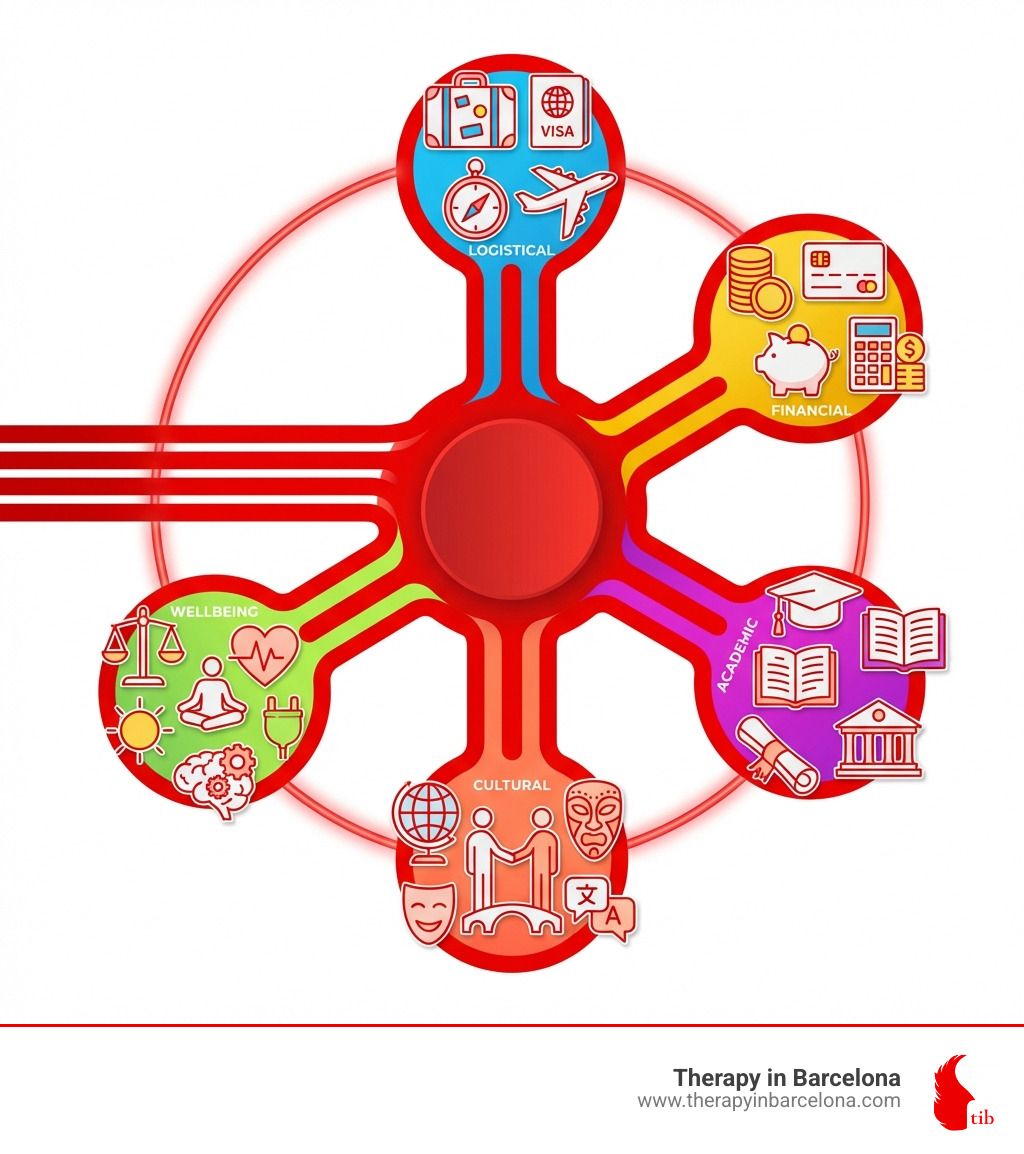
So, what exactly is pre-departure counselling for international students and why is it so important? At its core, it’s a comprehensive service designed to equip students with all the necessary information, resources, and emotional preparedness for their study abroad journey. Think of it as your personal compass, guiding you through the intricate landscape of international education. It aims to make you feel confident, well-prepared, and informed before you even leave your home country.
Pre-departure counselling can make a real difference. It helps students feel more confident, lowers stress, and makes the move abroad feel more manageable. It also gives you practical ways to handle culture shock, homesickness, and unexpected problems. In short, it helps you settle into a new academic and social environment with more clarity and support.
The Practical Blueprint: Visas, Money, and Getting Settled
Preparing for your international study adventure involves a lot of practical steps, from sorting out your legal right to be in a new country to managing your finances and ensuring you have a place to live. Pre-departure counselling provides a structured approach to these essential tasks, turning potential headaches into manageable to-do lists.

Visa and Immigration Guidance
One of the first and most important tasks for any international student is navigating the visa and immigration processes. Your pre-departure counselling sessions will dig into this, providing step-by-step support.
You’ll receive guidance on:
- Passport Validity: A crucial first step is to ensure your passport is valid for at least six months beyond your intended return date. Many countries have strict requirements, and an expired or soon-to-expire passport can lead to delays or refusal of entry. Update your passport as soon as possible if needed.
- Visa Application Procedures: This includes understanding the specific type of student visa required for your destination country, the necessary documentation, and application deadlines. Requirements can vary significantly from country to country. Some may require proof of funds, acceptance letters, or specific health checks.
- Interview Preparation: If a visa interview is part of the process, counselling may include mock interviews or guidance on what to expect, common questions, and how to present yourself clearly and honestly.
- Document Management: You’ll learn the importance of keeping multiple copies (original, hardcopy, and digital) of all vital documents, such as your passport, visa, acceptance letter, and financial statements. It’s wise to carry some copies with you, keep others in a separate bag, and leave a set with a trusted person back home. This protects you in case of loss or theft.
- Customs Regulations and Travel Restrictions: Understanding what you can and cannot bring into your host country is essential to avoid issues at the border. This includes restrictions on certain food items, medications, and other goods. You’ll also be briefed on any current travel restrictions that might impact your journey.
For U.S. citizens, you can apply for your passport and a visa, if required. Checking official government websites for your home country and destination country is always a good idea.
Financial Planning and Budgeting
Managing your money effectively is central to a lower-stress study abroad experience. Pre-departure counselling offers practical financial planning and budgeting advice, helping you avoid common pitfalls.
Key areas covered include:
- Making a Realistic Budget: This involves estimating not just tuition and accommodation, but also daily living expenses like food, transport, personal care, and leisure activities. Students often underestimate non-academic expenses in their first term abroad.
- Comparing Living Costs: You’ll gain insights into the cost of living in your specific city, whether it’s the busy streets of Barcelona, the historic charm of Sevilla, or the sunny shores of Málaga.
- Scholarships and Funding: Counsellors can help you identify potential scholarships, grants, or student loan options available to international students.
- Opening a Bank Account in Spain: You may receive guidance on how to open a local bank account upon arrival, which is often crucial for receiving funds and managing daily expenses efficiently.
- Currency Exchange Basics: Understanding exchange rates, how to safely convert currency, and avoiding excessive fees.
- Planning for Emergencies: It’s wise to have access to emergency funds. Counsellors can advise on how much emergency money to carry (a small amount of local currency plus accessible bank transfers) and how to set up ways of accessing funds quickly if needed.
- Financial Aid: If you receive financial aid, it’s helpful to speak with a financial aid counsellor at your university to discuss how your study abroad plans might impact your aid and to ensure timely disbursement. This can ease financial stress, especially in the initial weeks abroad when loan disbursements might be delayed.
Travel, Accommodation, and Settling In
The logistics of getting to your new home and settling in can feel daunting, but pre-departure counselling aims to simplify this process.
You’ll receive assistance and advice on:
- Booking Flights and Arranging Airport Pickup: Counsellors can guide you on planning travel dates, booking flights, suggesting ideal arrival times, and sometimes signpost you to student discount fares. They may also help you find airport pick-up services, supporting a smoother transition from the airport to your accommodation. This can be especially useful in large, unfamiliar cities like Madrid or Barcelona.
- Packing: What’s Essential, What’s Not: You’ll get practical packing tips tailored to your destination’s climate and cultural norms. For example, if you’re heading to Barcelona, you’ll need clothes for warm summers and mild winters, whereas for more northern European destinations, winter gear is a must. You may be advised to bring essential documents in hand luggage, consider adapters for electrical outlets, and stay aware of customs regulations regarding food items.
- Choosing Between University Halls and Private Housing: Counsellors may provide information on various accommodation options, including university dormitories, private student residences, shared apartments, or homestays. They can often assist with application processes and deadlines for university housing, and provide resources for finding off-campus options. Sometimes, they even connect students heading to the same university so they can consider living together.
- Researching Local Transport: Getting to know local transport systems—whether it’s Barcelona’s Metro, Valencia’s trams, or Madrid’s extensive bus network—is important for daily life. Counselling sessions often include tips on public transportation, safety, and purchasing tickets or passes.
- Setting Up Utilities and Internet: You may receive guidance on how to set up essential services like electricity, water, and internet in your accommodation, so you’re connected and more comfortable from the start.
Getting Ready for Your New Life: Academic, Cultural, and Social Adjustment
Beyond the practicalities, successfully studying abroad hinges on your ability to adapt academically, culturally, and socially. Pre-departure counselling prepares you for these shifts, helping you accept the new experiences that await.

Academic Preparation for a New System
The education system in Spain, for example, might be quite different from what you’re used to. Understanding these differences beforehand can significantly ease your academic transition.
Counselling sessions will cover:
- How the Spanish Education System Works: This includes insights into typical teaching styles, class structures, and the overall academic environment. You might find more emphasis on lectures, seminars, or practical work depending on your course.
- Different Teaching and Grading Styles: Be prepared for varying assessment methods, from oral exams to group projects, and how grades are typically awarded. Understanding these nuances helps you tailor your study techniques.
- Academic Integrity and Expectations: Familiarising yourself with the host university’s policies on plagiarism, cheating, and proper citation is crucial. Academic integrity standards can differ, and knowing them prevents unintentional violations.
- Language Support Services: Even if your courses are in English, learning some basic Spanish or Catalan will be incredibly beneficial for daily life. Counsellors can point you to language learning resources and support services available at your university or in your city.
Cultural Adjustment and Adaptation
Moving to a new country means immersing yourself in a new culture. While exciting, this can also bring challenges like culture shock and homesickness.
You’ll learn about:
- Local Customs and Social Etiquette: Understanding the unwritten rules of social interaction, greetings, dining etiquette, and public behaviour can prevent misunderstandings and help you integrate more smoothly. For instance, meal times in Spain are often later than in many other countries.
- Building Communication Skills: This goes beyond language proficiency. It involves adapting your communication style to local norms, understanding non-verbal cues, and being mindful of cultural differences in directness or formality.
- Making Friends and Building a Network: Counsellors can offer strategies for meeting new people, joining student clubs, and engaging in local communities. This is vital for combating loneliness and building a support system.
- Exploring Your New City: You’ll get tips on how to safely and effectively explore your new surroundings, from the historic Gothic Quarter in Barcelona to the stunning Turia Gardens in Valencia, or the vibrant Plaza Mayor in Madrid. Familiarity with your city helps you feel more at home.
How Pre-Departure Counselling Supports Social Transition
A significant aspect of a successful study abroad experience is building a social life and feeling connected.
This includes:
- Connecting with Peers and Alumni Before You Go: Many programmes facilitate connections through WhatsApp groups or email chains for students heading to the same destination or university. This allows you to discuss what to pack, plan to meet up during travel, or even arrange to fly together if you’re from the same city. Alumni can also share invaluable experiences and tips.
- Making the Most of University Orientation: Orientation programmes are your first formal introduction to your new university and city. Pre-departure counselling encourages active participation, highlighting how these sessions provide crucial information on academic resources, support services, and social activities, and are excellent opportunities to meet fellow students.
- Tips for Meeting New People and Building a Support System from Day One: Counsellors provide actionable advice on how to be proactive in social settings, join student organisations, engage with local communities, and use campus resources to build a strong network. This helps mitigate feelings of isolation and fosters a sense of belonging.
Your Health and Wellbeing Abroad: A Priority for Success
Your physical and mental well-being are central to a positive study abroad experience. Pre-departure counselling places a strong emphasis on preparing you for health and safety challenges, as well as equipping you with strategies to look after your mental health.
Physical Health and Safety
Being prepared for health and safety concerns is important. You’ll often receive guidance on:
- Get health insurance: Many students need this before they can enrol or apply for a visa. Make sure you understand what your plan covers, including emergencies, prescriptions, and mental health care.
- Check vaccines early: Find out which vaccinations are required or recommended for your destination, and speak with a doctor or travel clinic in advance. You can check the Centers for Disease Control and Prevention for travel health information.
- Plan for prescription medication: Bring enough for your trip if allowed, check whether your medication is legal in your host country, and carry a doctor’s letter with the generic medication names.
- Prepare emergency contacts: Keep a list of family, university support numbers, local emergency services, and your embassy or consulate. U.S. citizens can also register with the U.S. Department of State’s Smart Traveler Enrollment Program.
- Learn basic safety habits: Know local laws, stay aware of your surroundings, use trusted transport, and know how to get help quickly if something goes wrong.
How Pre-Departure Counselling Helps with Mental Health
The emotional journey of studying abroad can be intense. Pre-departure counselling for international students can offer important mental health preparation and support.
- Coping with Nerves Before You Leave: It’s common to feel nervous or overwhelmed before such a big life change. Counselling can help you acknowledge these feelings and develop coping tools.
- Strategies for Stress and Homesickness: You might learn practical strategies to manage stress, deal with culture shock, and cope with homesickness, which can often set in after the initial excitement fades. Ideas may include staying connected with family, creating a familiar environment, and actively engaging with your new surroundings.
- Recognising Signs of Loneliness or Low Mood: Counsellors can help you notice signs of prolonged sadness, isolation, or difficulty adjusting, and normalise these experiences as part of the expat journey.
- Knowing When and How to Seek Help: Perhaps most importantly, you may be informed about the mental health resources available to you. This can include university counselling services, local helplines, and professional therapy. Reaching out is a sign of care for yourself, and investing time and money in your mental health supports your overall well-being.
At Therapy in Barcelona, we understand the unique mental health challenges faced by international students—from cultural adjustment and homesickness to academic pressure and identity shifts. Our team of psychology-trained therapists, many of whom are internationals or expats themselves, offers culturally sensitive support.
We provide:
- Online therapy worldwide, including for clients in the USA and Canada, and for students based in hubs like Valencia, Madrid, Málaga or Sevilla.
- In-person sessions in Barcelona (Calle Paris 162-164, 3o, 1a, Barceclona, 08036).
- Therapy in multiple languages: all our therapists work in English and some also offer support in German, French, Spanish, Afrikaans, Portuguese, Austrian-German and Swiss-German.
- A group practice model: we are a team of highly qualified, psychology-trained therapists who work with adults, couples, teens and families.
- Personalised, careful matching: we take time to match you with a therapist whose skills, approach and background fit your needs, because therapy is not one-size-fits-all.
- A trusted, established practice: we have been supporting internationals in Spain since 2011 and are known for our high quality, private-pay care, strict privacy, and no data selling.
We also know we’re not the only option. Many students find support through:
Public health systems
- Often free or low-cost.
- Can be a good option if you’re comfortable with possible waiting lists and professionals who may not always specialise in expat experiences or speak your preferred language.
Large online therapy platforms
- Convenient and accessible from anywhere with an internet connection, including smaller cities or towns.
- Matching is often algorithm-based, which may not capture the nuance of your cultural background or specific needs. Data policies and how your information is used can vary.
Local private practices
- Many offer solid support and in-depth work.
- Cultural sensitivity and language options can differ widely. Some may not be familiar with the layered experience of being an international student in Spain.
Therapy in Barcelona’s edge lies in our focus on internationals and expats, careful therapist matching, and culturally aware support for people living abroad. If you’d like support, you can explore our resources on individual therapy for students and therapy for adolescents, or book a Free Discovery Call to see if we might be a good fit. Global crisis support is also available; the International Association for Suicide Prevention (IASP) offers free, confidential crisis support worldwide through local helplines.
Finding Support: How to Access Counselling and Prepare for Departure
Ensuring a successful study abroad experience means knowing where to turn for help and guidance. Pre-departure counselling is a valuable resource, and understanding how to access it effectively is a key step in preparation.
Where to Find Reliable Pre-Departure Support
There are several avenues through which students can find and access reliable pre-departure counselling services:
- University International Student Offices: Your host university will almost certainly have a dedicated international student office that provides pre-departure information, orientation programmes, and ongoing support. They are often the first point of contact for official guidance.
- Alumni Networks and Forums: Connecting with alumni who have studied in your chosen destination can provide real-world insights and practical advice. Many universities have active alumni groups, and online forums can also be a useful resource.
- Reputable Educational Consultants: Education consultants often offer pre-departure briefings. Services offered by education consultants may include assistance in finding student accommodation, cultural orientation, and help with procuring international SIM cards. They can sometimes assist with GIC payments and career coaching.
- Official Government Resources: Your home country’s government websites may offer travel advisories, safety tips, and programmes. Similarly, the destination country’s embassy or consulate in your home country can provide specific visa and immigration information.
Choosing the Right Support for You
When it comes to mental health support, international students have several options. Each has potential benefits and limits.
Public health systems
- Pros: Often free or low-cost. They provide essential medical and mental health services.
- Cons: Waiting lists can be long, especially for mental health support. Services may not always be tailored to the specific cultural and language needs of international students.
Large online therapy platforms
- Pros: Convenient and accessible from anywhere with an internet connection, including smaller Spanish cities, coastal areas like Alicante or Marbella, and islands like Gran Canaria.
- Cons: Therapist matching is often algorithm-based, which can miss nuance. Some people have concerns about data use and privacy. The relationship can sometimes feel less personal than with a smaller, dedicated practice.
Local private practices
- Pros: Many offer high quality, in-depth therapy.
- Cons: Not all will have therapists who speak your language or understand the expat experience. Cultural sensitivity and experience with international students can vary.
Therapy in Barcelona
At Therapy in Barcelona, we position ourselves alongside these options, not above them. Our differentiators include:
- Expat-specific focus: We specialise in supporting internationals, including students in Barcelona, Madrid, Valencia, Málaga and beyond.
- Bespoke therapist matching: We take time to understand your needs and match you with a therapist who fits you, rather than relying on automated matching.
- Psychology-trained therapists: All our therapists are psychology-trained and offer their services as therapists in Spain. We work with adults, couples, teens and families.
- Culturally and linguistically sensitive care: We work in English, and some of our therapists also speak German, French, Spanish, Afrikaans, Portuguese, Austrian-German and Swiss-German.
- Online and in-person: We offer online therapy worldwide, including the USA and Canada, and face-to-face sessions in our Barcelona office.
- Trusted, established practice: Founded in 2011 by Australian Psychologist Leigh Matthews, who has been in Barcelona since 2011 and has extensive experience supporting internationals.
- Privacy and ethics: We provide a high quality private-pay service, with strict respect for confidentiality and no data selling.
Practical Steps After Counselling
Once you’ve gone through your pre-departure counselling and feel more prepared, there are a few practical steps to consolidate things:
- Assembling an Emergency Document Kit: Beyond digital copies, have a physical kit with photocopies of your passport, visa, insurance details, and emergency contacts. Keep this separate from your main documents.
- Setting a Communication Plan with Family: Discuss how often you’ll communicate, preferred methods (WhatsApp, video calls), and time differences. This helps manage expectations and reduces anxiety for both you and your family.
- Learning Basic Phrases in Spanish or Catalan: Even a few key phrases can make a big difference in daily interactions, showing respect and easing your integration into cities like Barcelona, Madrid, Valencia or Sevilla.
- Scheduling Time for Self-Care Upon Arrival: The first few weeks can be intense. Plan for some downtime, explore your new neighbourhood at a gentle pace, and don’t feel pressured to do everything at once. This can help ease initial stress and homesickness.
If you’d like support as you prepare to move or once you’ve arrived, you’re welcome to book a Free Discovery Call with Therapy in Barcelona to see whether working with one of our therapists might be a good fit for you.
Preparing to study abroad is about more than ticking boxes—it’s about building confidence for the journey ahead and knowing you don’t have to do it all alone. If you’re feeling overwhelmed about moving to Spain—whether to Barcelona, Valencia, Madrid, Málaga or another city—you’re not alone.
Our team at Therapy in Barcelona, specialises in working with people living abroad. We offer online therapy worldwide—including the USA and Canada—and in-person sessions in Barcelona. If you’d like support with nerves about the move, cultural adjustment, homesickness or simply having a steady base as you start this new chapter, book a Free Discovery Call to see how we can support you in preparing for a steadier, more supported start to your time abroad.
