


Premarital counseling topics are key to setting a solid foundation for your future marriage. They include communication, finances, intimacy, and family dynamics. Exploring these areas with your partner can help ensure a successful and fulfilling relationship.
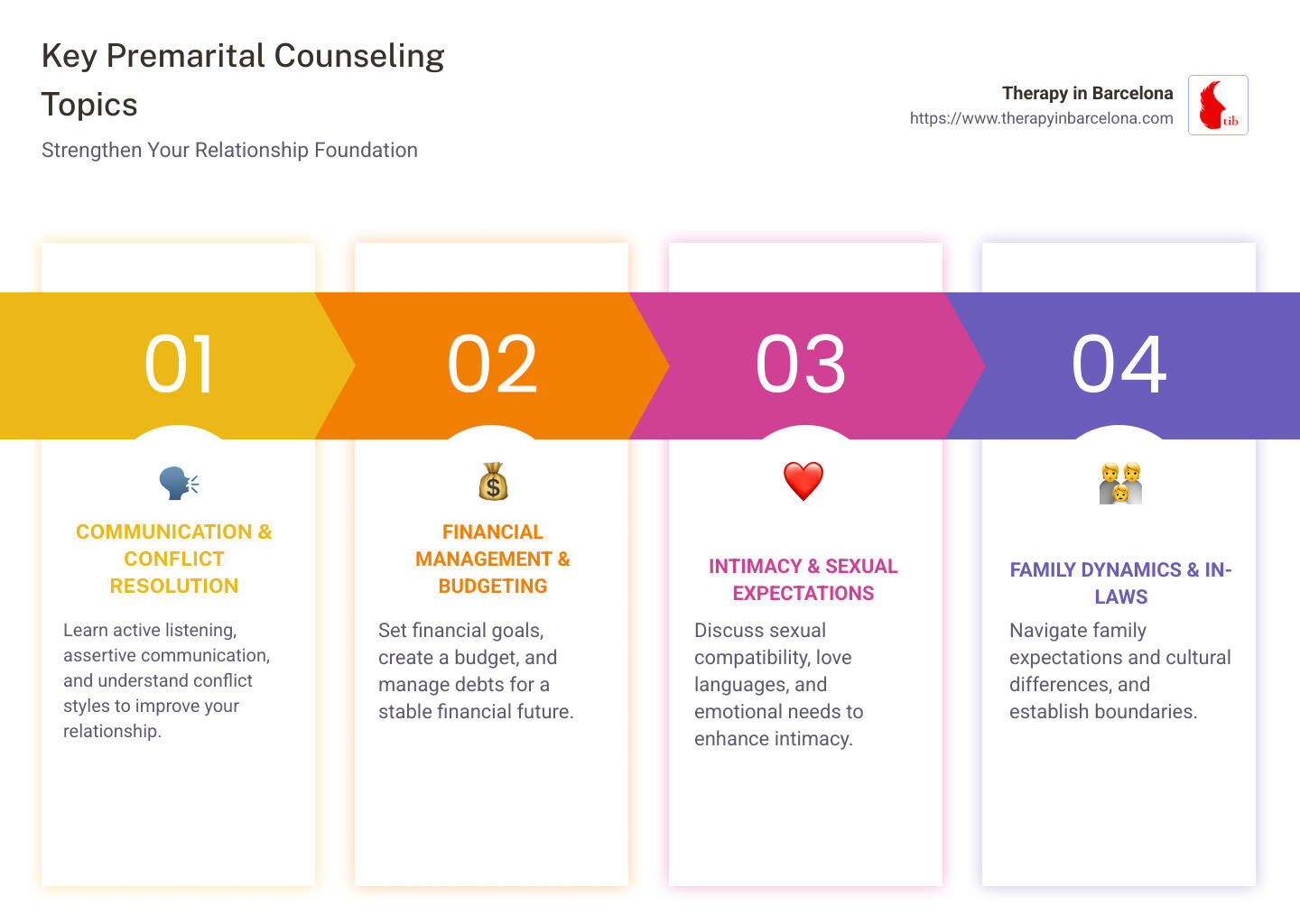
When it comes to building a lasting relationship, premarital counseling topics are crucial. They cover essential areas like:
- Communication and Conflict Resolution
- Financial Management and Budgeting
- Intimacy and Sexual Expectations
- Family Dynamics and In-Laws
Finding these topics can strengthen your bond and prepare you for the challenges of marriage.
As someone deeply familiar with premarital counseling topics, I am Leigh Matthews, a psychologist with years of experience supporting couples through custom therapy. We’ll explore how these discussions can form a strong relationship foundation.
Importance of Premarital Counseling
Premarital counseling is not just for couples facing issues. It’s a proactive step to strengthen your relationship before marriage. Let’s break down why it’s so important, focusing on communication, conflict resolution, and a proactive approach.
Communication
Effective communication is the backbone of any strong relationship. In premarital counseling, couples learn to express their thoughts and feelings openly. This includes mastering active listening and assertive communication.
Consider a couple who discovers through counseling that one partner needs more verbal affirmation, while the other values quality time. By understanding each other’s communication styles, they can better meet each other’s needs.
Conflict Resolution
All couples face disagreements. The key is how you handle them. Premarital counseling provides tools to resolve conflicts constructively. Couples explore different conflict styles and learn techniques to manage disagreements without damaging the relationship.
Research shows that couples who learn conflict resolution skills are less likely to divorce. It’s about finding common ground and respecting each other’s perspectives.
Proactive Approach
Premarital counseling encourages couples to address potential issues before they become major problems. By discussing topics like finances, intimacy, and family dynamics, couples can prevent misunderstandings.
For instance, a couple might use counseling sessions to discuss their financial goals and set a budget. This proactive approach helps them avoid future money-related stress.
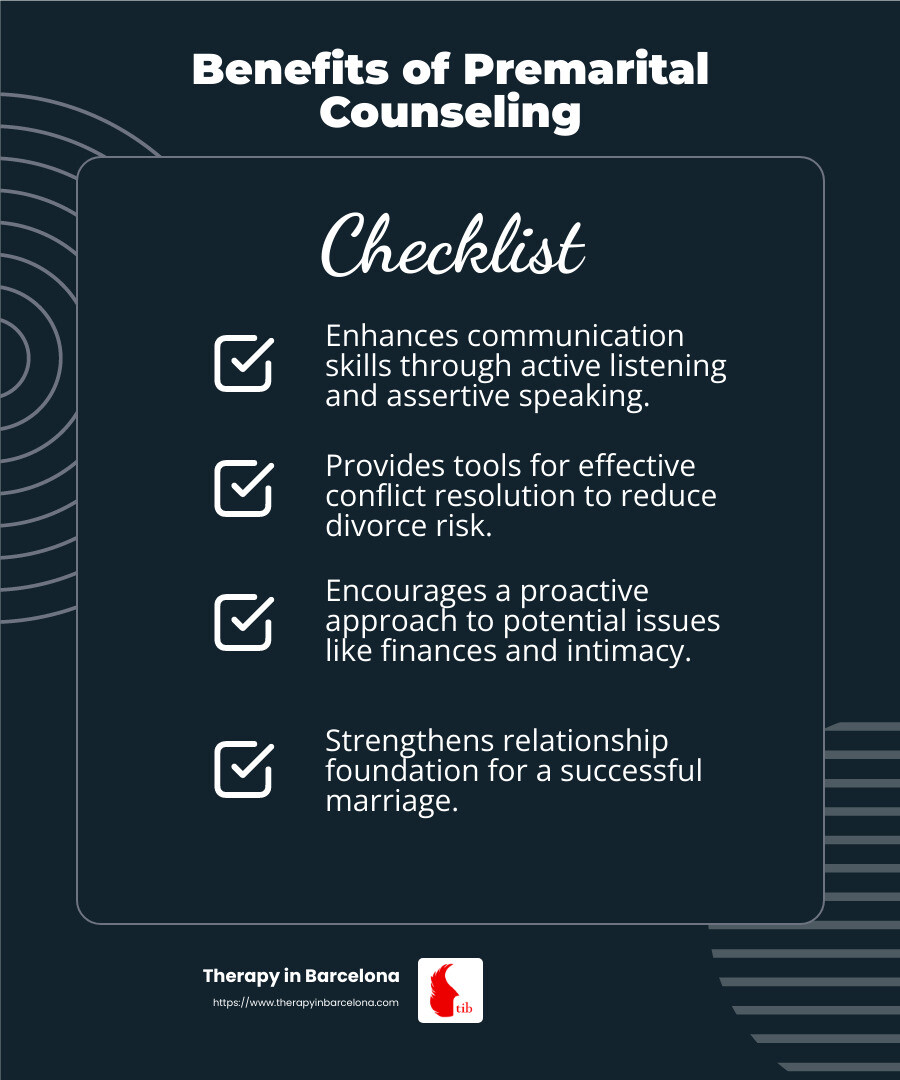
Premarital counseling is about preparing for the future. It equips you with the skills to handle challenges and strengthens your relationship from the start. By investing time now, you’re setting the stage for a successful, fulfilling marriage.
Essential Premarital Counseling Topics
Premarital counseling covers a range of essential topics that help couples prepare for a successful marriage. Let’s explore these key areas:
Communication
Communication is the heart of any relationship. In counseling, couples practice active listening and learn how to express their feelings clearly. This helps prevent misunderstandings and builds a strong emotional connection.
Consider this scenario: A couple, Alex and Jamie, discovered through counseling that their communication styles were different. Alex preferred direct conversation, while Jamie valued subtle cues. By understanding these differences, they improved their communication and avoided unnecessary conflicts.
Finances
Money can be a major source of stress in a marriage. Counseling sessions focus on setting financial goals, creating budgets, and managing debt. It’s crucial to discuss spending habits and financial expectations early on.
For instance, a couple might use tools like budgeting apps to track their expenses together. This transparency helps build trust and ensures both partners are on the same page financially.
Intimacy
Discussing intimacy openly is vital for a healthy relationship. Counseling provides a safe space to explore sexual compatibility, love languages, and emotional needs. Understanding each other’s desires can lead to a more satisfying relationship.
Imagine a couple, Sam and Riley, who learned about their differing love languages. Sam valued physical touch, while Riley appreciated acts of service. Recognizing these preferences helped them meet each other’s needs more effectively.
Family Dynamics
Marriage often involves merging two families. Counseling helps couples steer family expectations, cultural differences, and set boundaries with in-laws. This can prevent conflicts and foster a harmonious family environment.
Consider the case of Chris and Pat, who faced cultural differences in their families. Through counseling, they developed strategies to respect each other’s backgrounds while creating their own family traditions.
Career Goals
Balancing career aspirations with relationship goals is essential. Counseling encourages discussions about work-life balance and future planning. Couples learn to support each other’s careers while maintaining a strong partnership.
For example, a couple might set aside time each week to discuss their career progress and any upcoming challenges. This regular check-in ensures both partners feel supported in their professional lives.
Personal Values
Understanding each other’s personal values and beliefs is crucial. Topics like religion, spirituality, and ethics are explored in counseling to ensure alignment. This helps couples make informed decisions about their future together.
A couple might find through counseling that they have different religious beliefs. By discussing these openly, they can find common ground and respect each other’s perspectives.
Preparing for Parenthood
If children are in the future plans, discussing parenting styles and roles is important. Counseling helps couples align on education, discipline, and family values, setting the stage for effective co-parenting.
Imagine a couple, Jordan and Taylor, who used counseling to discuss their parenting philosophies. They developed a plan to balance responsibilities and support each other as future parents.
By addressing these premarital counseling topics, couples can build a strong foundation for their marriage. Open discussions in these areas lead to better understanding and a more fulfilling relationship.
Communication and Conflict Resolution
Communication and conflict resolution are vital skills for a successful marriage. They help couples understand each other better and handle disagreements in a healthy way. Here’s how premarital counseling can help you develop these skills:
Active Listening
Active listening means giving your full attention to your partner. It’s not just about hearing words; it’s about understanding the emotions and intentions behind them. In counseling, couples learn to listen without interrupting and to ask questions that clarify their partner’s feelings.
Consider a couple where one partner often feels unheard during arguments. Through counseling, they can learn to practice active listening by repeating back what the other person said before responding. This simple technique helps couples feel more connected and reduces misunderstandings.
Assertive Communication
Assertive communication involves expressing your thoughts and feelings honestly and respectfully. It’s about finding a balance between being too passive and too aggressive. Counseling helps couples practice assertiveness, which leads to more productive conversations.
For instance, one partner might tend to avoid conflict, while the other is more confrontational. In counseling, they can learn to use “I” statements, like “I feel frustrated when…” This approach helps them express their needs clearly without blaming each other, leading to fewer arguments.
Conflict Styles
Everyone has a unique conflict style, whether it’s avoiding, accommodating, competing, compromising, or collaborating. Understanding your style and your partner’s can help you steer disagreements more effectively.
Imagine a couple discovering through counseling that they have different conflict styles. One partner might prefer to avoid conflict, while the other wants to address issues head-on. By recognizing these differences, they can learn to approach conflicts in a way that respects both their styles, leading to more constructive resolutions.
By focusing on communication and conflict resolution in premarital counseling, couples can develop essential skills for a healthy marriage. These topics help create a foundation of understanding and respect, paving the way for a strong partnership.
Next, we’ll explore how to manage financial matters and budgeting as you prepare for marriage.
Financial Management and Budgeting
Money can be a tricky subject in any relationship. It’s one of the top causes of stress and conflict for couples. That’s why discussing financial management and budgeting is crucial before tying the knot.
Financial Goals
Setting shared financial goals is like creating a roadmap for your future together. It helps align your priorities and dreams. Ask yourselves questions like:
- Do we want to buy a house?
- How much do we need to save for retirement?
- What are our travel or lifestyle aspirations?
Having clear goals fosters teamwork and can even strengthen your relationship. Consider a couple who both dream of traveling but have different ideas about saving. Through counseling, they can find a way to achieve their travel dreams by setting a shared savings target and sticking to it.
Budgeting
Budgeting is about managing your money wisely. It’s not just about cutting back; it’s about making sure your spending aligns with your priorities. In premarital counseling, couples learn to create a budget that reflects their combined income and expenses.
Imagine a couple who constantly argue about money because one is a saver and the other is a spender. Counseling can help them create a budget that allows for savings and some discretionary spending. This compromise can reduce financial stress and bring them closer.
Debt Management
Debt can be a heavy burden, but it doesn’t have to be a deal-breaker. Discussing debt openly and honestly is essential. Premarital counseling can guide couples in creating a plan to manage and reduce debt together.
For example, if one partner has student loans and the other has credit card debt, counseling can help them tackle their debts as a team, setting up a payment plan that works for both. By facing their debt together, they can build trust and financial security.
Discussing financial management and budgeting in premarital counseling helps couples steer money matters with confidence and clarity. By setting goals, creating a budget, and managing debt, you can build a strong financial foundation for your marriage.
Next, we’ll dig into the importance of intimacy and sexual expectations in a healthy relationship.
Intimacy and Sexual Expectations
Intimacy and sexual expectations play a pivotal role in building a strong and satisfying marriage. It’s about more than just physical connection; it’s about understanding each other’s emotional needs and desires. Let’s explore how sexual compatibility, love languages, and emotional needs contribute to a fulfilling relationship.
Sexual Compatibility
Sexual compatibility is the harmony between partners in their sexual preferences and desires. It’s essential for maintaining a healthy and satisfying sexual relationship. Discussing this openly in premarital counseling can prevent misunderstandings and foster a deeper connection.
Consider a couple who had different expectations about intimacy. Through counseling, they learned to communicate their needs and found ways to meet in the middle. This understanding improved their relationship and brought them closer.
Love Languages
Love languages are the ways people express and receive love. Knowing your partner’s love language can significantly improve intimacy. The five love languages include words of affirmation, acts of service, receiving gifts, quality time, and physical touch.
Imagine a couple where one partner feels loved through acts of service, while the other values quality time. In counseling, they discovered each other’s love languages and learned to express love in ways that resonated with each other. This simple insight transformed their relationship.
Emotional Needs
Emotional needs are the feelings and support each partner requires to feel loved and secure. Addressing these needs in premarital counseling helps couples understand what makes each other feel valued and cherished.
Take a couple, for instance, where one partner needs reassurance, while the other values independence. Through counseling, they learned to balance these needs, creating a supportive and nurturing environment for their relationship.
Discussing intimacy and sexual expectations in premarital counseling helps couples build a deeper emotional and physical connection. By understanding sexual compatibility, acknowledging love languages, and addressing emotional needs, partners can create a fulfilling and enduring marriage.
Next, we’ll explore the role of family dynamics and in-laws in shaping a harmonious relationship.
Family Dynamics and In-Laws
When you marry someone, you also marry their family. Navigating family dynamics and in-laws is crucial for a harmonious marriage. Let’s explore how understanding family expectations, respecting cultural differences, and setting boundaries can help manage these relationships effectively.
Family Expectations
Families come with their own set of expectations and traditions. It’s important to discuss these with your partner to avoid potential conflicts. For example, some families expect regular visits, while others prioritize independence.
Consider the story of Emily and Alex. Emily’s family valued close-knit gatherings, while Alex’s family was more reserved. Through premarital counseling, they learned to balance these expectations and create new traditions that honored both families.
Cultural Differences
In multicultural relationships, understanding cultural differences is key. Different cultures have unique traditions, values, and views on marriage. Addressing these differences in counseling can help couples appreciate and integrate them into their lives.
Take the case of Priya and Marco. Priya came from a family-oriented culture, while Marco’s family valued individualism. Counseling helped them understand each other’s backgrounds and find common ground, fostering mutual respect and appreciation.
Setting Boundaries
Setting boundaries with in-laws is essential for maintaining a healthy marriage. Boundaries protect your relationship from external pressures and allow you to create your own family unit.
For instance, Lisa and Tom struggled with in-law interference early in their marriage. Through counseling, they learned to communicate their boundaries clearly and assertively. This helped them establish a respectful relationship with their in-laws while prioritizing their marriage.
Understanding and managing family dynamics and in-laws can significantly impact your marriage. By discussing family expectations, respecting cultural differences, and setting boundaries in premarital counseling, couples can create a supportive and respectful environment for their relationship.
Next, we’ll dig into how career goals and aspirations can influence your marital journey.
Career Goals and Aspirations
Balancing career goals and aspirations with marriage is like juggling. It requires skill and coordination. Let’s explore how work-life balance, career support, and future planning can help couples manage this juggling act.
Work-Life Balance
Work-life balance is crucial for a happy marriage. It’s about finding time for both your career and your relationship. Couples need to discuss how they will manage their time and energy.
Consider the story of a couple where one partner’s job required long hours, while the other had a flexible schedule. Through counseling, they learned to prioritize couple time by scheduling regular date nights and setting boundaries with work.
Career Support
Supporting each other’s careers is essential. This means understanding each other’s ambitions and helping each other succeed. Discuss how you will support each other’s career goals in premarital counseling.
For example, a couple with demanding careers decided to take turns focusing on their careers, allowing one to advance while the other provided support at home. This agreement helped them balance their aspirations with their relationship.
Future Planning
Planning for the future involves discussing career changes, relocations, and long-term goals. Couples should talk about where they see themselves in the future and how their careers fit into that vision.
Take the case of a couple where one partner wanted to pursue a career abroad, while the other preferred staying in their hometown. Through counseling, they explored their options and found a compromise that aligned with both their career aspirations and personal goals.
Balancing career goals and aspirations with marriage requires open communication and mutual support. By discussing work-life balance, career support, and future planning in premarital counseling, couples can build a strong foundation for both their careers and their relationship.
Next, we’ll explore how personal values and beliefs shape your partnership.
Personal Values and Beliefs
Understanding each other’s personal values and beliefs is like finding the blueprint of your relationship. It shapes how you make decisions and face challenges together. Let’s explore how religion, spirituality, and ethics play a role in a marriage.
Religion
Religion can be a cornerstone for many couples. It provides a shared framework for values and traditions. During premarital counseling, discuss how your religious beliefs will influence your marriage. Will you attend services together? How will you celebrate religious holidays?
Consider the story of Emma and Liam. Emma was deeply religious, while Liam was not. They used counseling to steer their differences, deciding to celebrate major religious holidays together while respecting each other’s beliefs.
Spirituality
Spirituality is personal and can differ from organized religion. It involves a sense of connection to something bigger. Couples should talk about how spirituality fits into their lives and marriage. This could include meditation, nature walks, or other practices that bring peace and connection.
For instance, Rachel and Tom found that their shared love for nature hikes was a spiritual practice that strengthened their bond. They made it a regular part of their routine, allowing them to connect with each other and their surroundings.
Ethics
Ethics guide how you treat each other and make decisions. Discussing ethical beliefs in premarital counseling helps ensure you are aligned on important issues. This could include how you handle honesty, fairness, and responsibility.
Take the example of Alex and Jordan. They both valued honesty but had different views on what that meant in practice. Counseling helped them establish clear boundaries and expectations, ensuring their ethical beliefs supported a strong, trusting relationship.
Exploring personal values and beliefs in premarital counseling helps couples build a shared understanding. By discussing religion, spirituality, and ethics, you create a roadmap for navigating life’s challenges together.
Next, we’ll dig into preparing for parenthood and how it shapes your future as a couple.
Preparing for Parenthood
Parenting Styles
Discussing parenting styles is crucial before starting a family. Are you more of a disciplinarian, or do you prefer a more relaxed approach? Understanding each other’s methods can prevent conflicts later. In premarital counseling, couples explore their upbringing and how it influences their parenting preferences.
Consider a couple who discovered they had different views on discipline. Counseling helped them find a balance that respects both their perspectives, ensuring a harmonious approach to parenting.
Roles and Responsibilities
Who will take on what roles when it comes to parenting? Will both partners work, or will one stay home with the children? Clarifying these roles early helps manage expectations and reduces stress.
For example, a couple decided that one partner would take a year off work after their first child, while the other would handle more household chores. This mutual understanding strengthened their partnership.
Education and Development
Education is a significant aspect of parenting. Discuss your educational values and how you plan to support your child’s learning journey. Will you opt for public, private, or homeschooling? How will you encourage extracurricular activities?
Take a couple who used counseling sessions to align their educational goals. They decided to prioritize a balanced approach, focusing equally on academics and creative pursuits.
Preparing for parenthood in premarital counseling helps couples align their parenting styles, roles, and educational goals. This proactive approach lays a strong foundation for a supportive and nurturing family environment.
Next, we’ll explore the frequently asked questions about premarital counseling topics.
Frequently Asked Questions about Premarital Counseling Topics
What are the key topics in premarital counseling?
In premarital counseling, couples dive into essential areas that can impact their future together. Communication is a major focus, as effective communication is the backbone of any strong relationship. Couples learn to express thoughts and feelings openly, which helps in resolving conflicts and understanding each other better.
Finances are another critical topic. Couples discuss budgeting, saving, and managing debt to ensure they’re on the same page financially. This transparency helps prevent misunderstandings and builds trust.
Intimacy is also explored, covering both physical and emotional aspects. Understanding each other’s needs, love languages, and sexual expectations can improve the connection and satisfaction in the relationship.
How many sessions does premarital counseling typically involve?
Most couples attend between 5-10 sessions of premarital counseling. These sessions are typically held weekly or bi-weekly. This schedule allows couples to dig deeply into each topic without feeling rushed, giving them time to reflect and apply what they’ve learned.
Why is premarital counseling important?
Premarital counseling is vital for setting clear relationship goals and ensuring both partners are aligned in their vision for the future. It provides tools for conflict resolution, helping couples steer disagreements constructively.
By addressing potential issues before they arise, couples can lay the groundwork for long-term success in their marriage. This proactive approach fosters a strong, resilient partnership that can withstand life’s challenges.
Next, we’ll wrap up with insights on how Therapy in Barcelona offers personalized therapist matching and culturally sensitive support.
Conclusion
As you prepare to start on the journey of marriage, premarital counseling can be a game-changer. At Therapy in Barcelona, we understand that every couple is unique, and our services reflect this understanding.
Personalized therapist matching is one of our key offerings. We ensure that you and your partner are paired with a therapist who truly understands your needs. This custom approach allows for more effective sessions, where your specific concerns and goals are addressed with sensitivity and expertise.
Being in a city as diverse as Barcelona, we recognize the importance of culturally sensitive support. For many expats, cultural differences can add an extra layer of complexity to relationships. Our therapists are skilled in navigating these nuances, providing a supportive environment for couples from all backgrounds. This ensures that cultural expectations and family dynamics are considered, fostering a deeper understanding between partners.
Therapy in Barcelona is dedicated to helping you build a strong foundation for your marriage. With our multilingual services and commitment to personalized care, we’re here to support you every step of the way. Whether you’re navigating communication challenges or aligning on future goals, our team is ready to guide you toward a fulfilling and lasting partnership.
Ready to take the next step? Explore our couples counseling services and see how we can help you set the stage for a successful marriage.
