


Are You Alone in a Relationship? Here’s What to Look For

If you’ve been searching for signs that you are alone in a relationship, you’re not alone in asking. Research on relationship loneliness suggests that many people in committed relationships experience loneliness, often unexpectedly, because it clashes with what a relationship is supposed to feel like: connection, safety, and being seen.
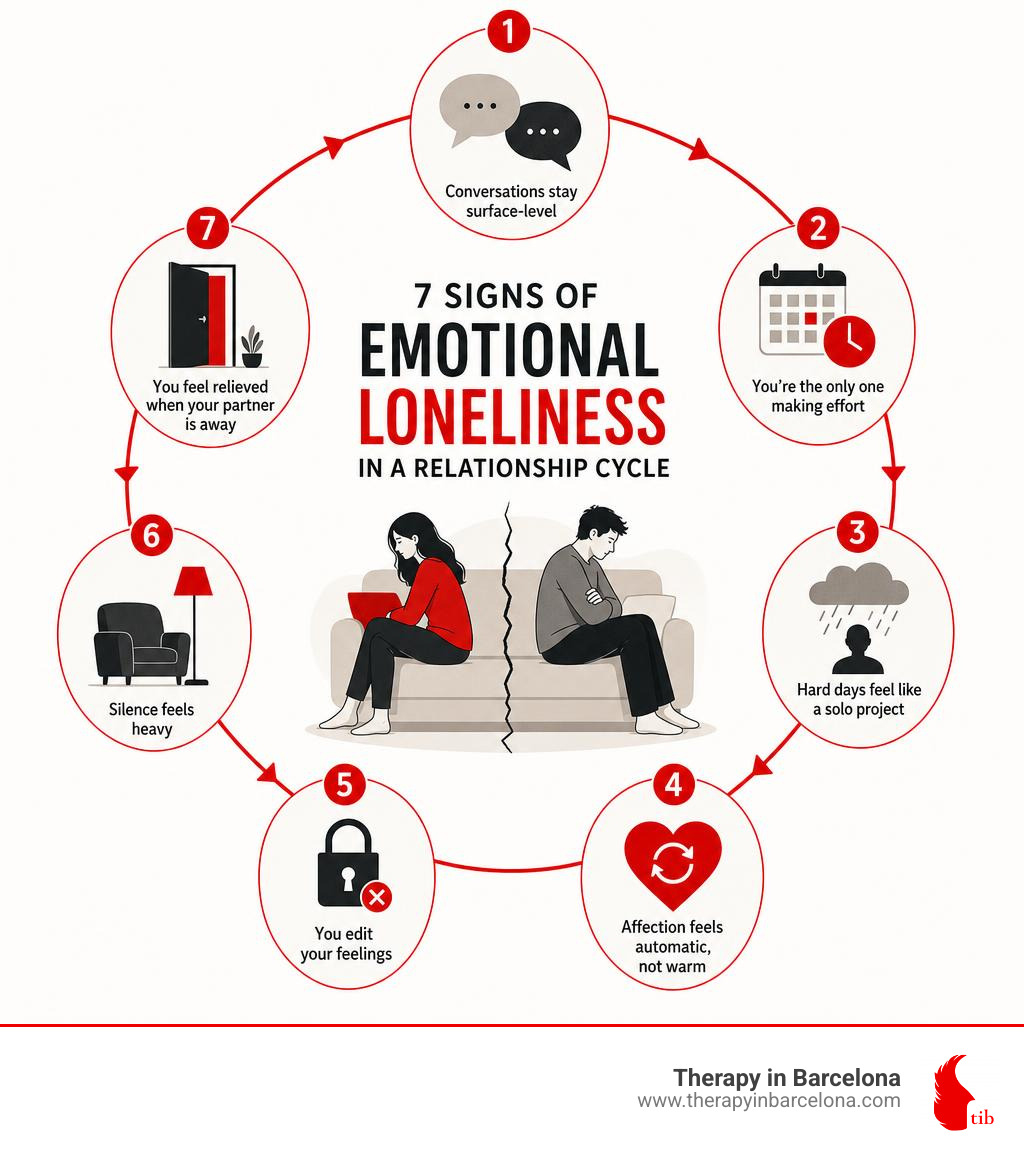
Here are the most common signs to watch for:
- Conversations stay surface-level — most talk is about logistics, chores, or schedules, with little emotional depth
- You’re the only one making effort — you initiate contact, plan time together, and resolve conflict alone
- Hard days feel like a solo project — you don’t turn to your partner for comfort, or you do and feel worse
- Affection feels automatic, not warm — physical closeness happens out of habit rather than genuine connection
- You edit your feelings — you hold back thoughts or emotions to avoid tension or keep the peace
- Silence feels heavy — being together feels lonelier than being alone
- You feel relieved when your partner is away — their absence brings calm rather than absence bringing longing
Feeling lonely inside a relationship is not the same as going through a rough patch. It’s a specific, often quiet kind of pain — and it tends to build slowly, through small repeated disconnections rather than one dramatic event.
Many people in relationships look connected from the outside: they share a home, eat dinner together, and manage daily life as a team. But inside, one partner may feel invisible. Conversations stay focused on groceries, rent, childcare, or schedules. Over time, they stop sharing worries, not because the pain has gone, but because they no longer expect to be heard.
That quiet withdrawal is one of the most telling signs that something is wrong.
This article walks through the most recognisable signs that you may be emotionally alone in your relationship, what causes it, and what you can actually do about it.
Understanding Relationship Loneliness vs Normal Challenges
Every relationship goes through dry spells. Busy work periods, moving to a new city like Madrid or Valencia, or adjusting to life in a foreign country can temporarily exhaust your emotional bandwidth. During these times, you might feel a temporary disconnect.
However, there is a fundamental difference between a temporary relationship challenge and true, systemic isolation.
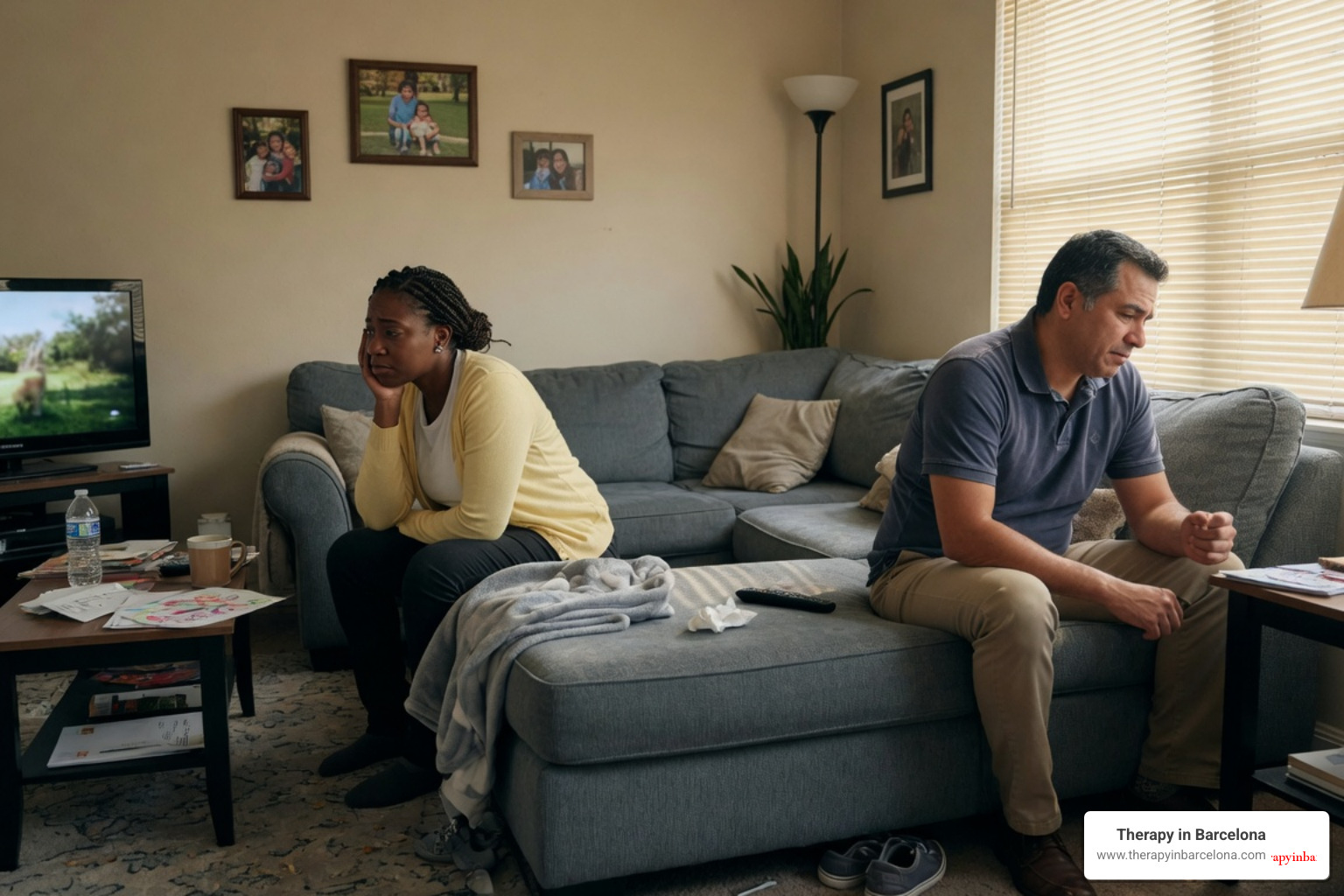
In a healthy partnership facing a challenge, both partners still feel like they are on the same team. You can turn towards each other, share your stress, and find comfort in mutual vulnerability. When you are truly alone in a relationship, that shared foundation is gone. You no longer feel like a team; you feel like roommates who happen to share a lease.
According to psychological research on relationship loneliness from 16Personalities, this persistent isolation often stems from unmet emotional needs and deep-seated attachment patterns.
When we carry childhood attachment patterns that associate love with over-functioning or emotional containment, we may unconsciously choose partners who recreate that familiar, lonely dynamic. Over time, the nervous system prioritises predictability over well-being, leading to a quiet loneliness that persists even within a highly stable household.
7 Glaring signs that you are alone in a relationship
Recognising the signs that you are alone in a relationship requires looking closely at your daily interactions. It is not about the presence of explosive fights, but rather the absence of meaningful connection.

If you suspect your partnership has become a solo journey, look for these seven glaring indicators. If these resonate, you can find more info about couples counseling to help navigate the next steps. Psychologists point out that recognizing these patterns is the first step toward restoring balance, as detailed in Parade’s guide on one-sided relationships.
1. Conversations stay on logistics (One of the signs that you are alone in a relationship)
In a lonely relationship, communication slowly degrades into transactional talk. Conversations revolve entirely around running the household: bills, chores, grocery lists, and school runs.
You no longer talk about dreams, fears, or what is really going on inside. When you try, the conversation shifts back to chores, schedules, or money. This emotional distance can become a “silent divorce”: still together on paper, but living separate inner lives.
2. You are the only one keeping the relationship alive
A healthy relationship relies on a balanced give-and-take. When you are alone in a relationship, you carry the entire weight of the emotional and logistical labour.
- You initiate almost all text messages and phone calls.
- Plans for dates, weekends, or holidays only happen if you organise them.
- You are the one who initiates conversations about relationship issues and works to resolve conflicts.
- You constantly apologise to keep the peace, even when you have done nothing wrong.
If you want to test this dynamic, try stepping back. Stop planning, stop reaching out first, and see if your partner notices or steps up. In a one-sided relationship, when the “giver” stops putting in the effort, the relationship often grinds to a complete halt.
3. Your hard days feel like a solo project
When you have a difficult day at work, receive bad news, or feel overwhelmed by the stress of living abroad, your partner should be your safe harbour.
In a lonely relationship, hard days feel like solo projects. You stop sharing because you expect distraction, indifference, quick fixes, or no real comfort. Over time, coping alone feels easier than facing the disappointment of not feeling supported.
4. Affection feels routine instead of warm
Physical intimacy and affection can easily become automatic habits. You might still hug, kiss hello, or even have sex, but the warmth and presence are entirely missing.
It feels like going through the motions to check a box rather than a genuine desire to connect. This routine affection can leave you feeling more isolated than total abstinence because it highlights the emotional distance between you. You are physically close, but emotionally miles apart.
5. You edit your feelings to keep things smooth
Do you find yourself constantly filtering your thoughts, holding back your opinions, or hiding your true feelings to avoid tension?
When you hide your feelings to keep the peace, connection becomes shallow. Maybe your needs were met with anger, defensiveness, or dismissal before. Over time, speaking up can trigger a “boundary hangover”: anxiety, guilt, or dread after being honest.
6. Silence feels heavy instead of peaceful (Another of the signs that you are alone in a relationship)
In a connected relationship, silence is comfortable and peaceful. You can sit together in a room, reading or working, and feel a warm sense of shared presence.
When you are alone in a relationship, the silence feels heavy, awkward, and cold. It is a silence born of emotional withdrawal and unresolved resentment. You sit across from each other at dinner, scrolling on your phones, feeling deeply unseen and unheard. The silence is a physical barrier that keeps you from reaching out to one another.
7. You feel happier when your partner is away
One of the most telling signs that you are alone in a relationship is how you feel when your partner is not there. Instead of missing them, you feel a profound sense of relief and lightness when they leave the house, travel for work, or go out with friends.
Your home feels peaceful only when you are in it alone. When thoughts of a future single life bring a sense of relief rather than fear, it is a clear sign that the relationship is no longer serving as a source of support or happiness.
The Emotional and Physical Toll of Relational Isolation
Feeling alone while in a committed relationship is not just emotionally painful; it has a measurable physical toll. Neuroscience shows that the brain processes relational rejection and emotional isolation using the same pain pathways triggered by physical injuries, as demonstrated in neuroscience research published in Science.
When you live with chronic relationship stress and emotional neglect, your body remains in a constant state of low-grade fight-or-flight. This persistent stress can lead to:
- Chronic fatigue and sleep issues
- Changes in appetite and digestive problems
- A weakened immune system
- Persistent feelings of anxiety, low mood, and a loss of self-esteem
In international couples, this stress is often amplified by the challenges of living abroad, where you may lack a wider local support network of close friends and family. Understanding how you and your partner express tension is crucial here. You can read more info about stress languages to understand how stress impacts your daily interactions.
How to Reconnect or Move Forward
If you recognise these signs in your partnership, the situation is painful, but it is not necessarily hopeless. There are practical steps you can take to address the disconnect:
- Initiate an honest conversation: Choose a calm, neutral moment. Avoid blaming or listing past mistakes. Instead, focus on your own experience using “I” statements. For example, say: “I feel lonely in our daily life, and I miss having deep conversations with you. I want us to find our way back to each other.”
- Make small emotional bids: Dr. John Gottman’s research shows that relationships are built on small, daily acts of connection. Share a small joke, ask a curious question about their day, or offer a gentle touch. Notice how your partner responds to these bids.
- Set aside dedicated, tech-free time: Schedule regular times to connect without the distraction of phones, televisions, or household chores.
- Address cultural adjustments: If you are in an intercultural relationship, different expectations around communication, gender roles, and family obligations can easily lead to misunderstandings. You can find more info about thriving with cultural differences to help bridge these cultural gaps.
Whether you are living in Málaga, Alicante, or Barcelona, rebuilding a connection requires a mutual, active commitment. If both partners are willing to put in the effort, you can slowly bridge the emotional gap.
When to Seek Professional Support
Sometimes, the emotional distance has grown too wide, or the patterns of resentment are too deeply ingrained to resolve on your own. This is when professional support becomes invaluable.
When looking for help, you have several options:
- The Public Health System: In Spain, you can access mental health care through the public system (such as CatSalut in Catalonia). While this is a free alternative, it often involves long waiting lists, limited session frequency, and you rarely have a choice of therapist or access to specialised expat care.
- Large Online Platforms: Global online platforms offer quick access to therapists. However, these platforms often lack local cultural understanding, do not guarantee consistency with the same professional, and raise privacy concerns regarding how your personal data is handled.
- Local Spanish Practices: While there are many excellent local practices, language barriers and a lack of expat experience can make it difficult for international clients to feel fully understood.
Therapy in Barcelona offers a distinct, high-quality alternative. Established in 2011 by Australian Psychologist Leigh Matthews, we are a trusted, private-pay group practice specialising in supporting the international community.
Unlike large platforms, we protect your privacy, match you thoughtfully with the right therapist, and offer culturally sensitive support in your native language from expat-informed professionals who understand relocation and bicultural relationships.
We offer in-person sessions at our welcoming offices in the heart of Barcelona’s Eixample district, as well as online therapy worldwide (including the USA and Canada) for expats living in Madrid, Valencia, Marbella, Gran Canaria, or beyond. For those with financial need, some of our therapists offer sliding scale fees.
If you want to explore how therapy can help your relationship, you can read more info about couples therapy for expats.
Frequently Asked Questions about Relationship Loneliness
Is it common to feel lonely in a committed relationship?
Yes, it is common. AARP research has found that loneliness affects many adults, including people who are married or partnered. In committed relationships, it often appears when routines, work stress, caregiving, or household responsibilities gradually replace emotional intimacy, curiosity, and meaningful communication.
How do I tell my partner I feel alone without blaming them?
Use a gentle startup and focus on “I” statements rather than “you” statements. Instead of saying, “You never talk to me and you make me feel lonely,” try saying, “I’ve been feeling quite isolated lately, and I really miss the closeness we used to share. I’d love for us to spend some quiet time talking tonight.” This invites connection rather than defensiveness.
What is a “silent divorce” and how do I spot it?
A “silent divorce” refers to a state where a couple remains legally and physically together, but their emotional bond has completely ended. You can spot it by an absence of personal conversations, routine-only affection, living completely separate social lives, and feeling a sense of relief when your partner is away rather than a desire to connect.
Finding Your Way Forward
Feeling alone in a relationship is a painful and exhausting experience, but it is also a powerful signal. It tells you that your current way of relating is no longer working, and that your emotional needs are going unmet. Whether you choose to work together to rebuild the connection or decide that the partnership has run its course, you do not have to navigate this transition alone.
If you would like support in understanding your relationship dynamics and finding a path forward, we are here to help.
Book a Free Discovery Call with Therapy in Barcelona today, and let us match you with a culturally sensitive, English-speaking therapist who can guide you toward growth and connection.
