


Why Emigrating to Spain Could Be Your Best Move Yet

Emigrating to Spain is a dream for thousands each year, drawn by sunshine, affordable living, and a slower pace of life. But turning this dream into reality involves planning, paperwork, and patience. Here’s a quick overview of the process:
Key Steps to Emigrate to Spain:
- Choose your visa path – Non-Lucrative, Digital Nomad, Student, Work, or EU registration
- Gather essential documents – Passport, proof of income, health insurance, background checks
- Apply at the Spanish consulate in your home country
- Obtain your NIE (Foreigner Identity Number) upon arrival
- Register locally at the town hall (empadronamiento)
- Apply for your TIE card (Foreigner Identity Card) if staying over six months
- Set up healthcare, banking, and accommodation
- Steer taxes and work permits based on your situation
From the coastal calm of Málaga to Barcelona’s energy or Valencia’s quality of life, Spain has something for everyone. The cost of living can be significantly lower than in major hubs like New York or London—in some cases over 50% less, according to data from Numbeo—and its healthcare system is consistently ranked among the world’s best, as noted in the 2021 Health Care Index. It’s no surprise the country saw a 41% increase in American expats between 2021 and 2023, according to Spain’s National Statistics Institute (INE).
But moving to Spain is more than a one-way flight. It means handling bureaucracy, understanding the difference between an NIE and a TIE, and adjusting to a new culture. It also involves managing the emotional weight of leaving home—the homesickness, language barriers, and moments of doubt. These personal challenges are just as significant as the practical steps.
This guide covers both the legal essentials and the lived experience of building a life in Spain. Whether you’re moving to Madrid for work, Alicante for retirement, or anywhere in between, you’ll find clear, honest guidance for your journey.
The Essential First Steps: Visas and Legal Requirements
The visa and residency process is the foundation of your move to Spain. The path you take depends on your citizenship, but understanding the steps upfront saves stress later.
Residency for EU/EEA/Swiss Citizens
If you hold an EU, EEA, or Swiss passport, you benefit from freedom of movement. For stays longer than three months, you must register for a Certificado de Registro de Ciudadano de la Unión (the “Green Certificate”). This requires proving you have sufficient funds to support yourself and comprehensive healthcare coverage, either public or private. Family members who are not EU citizens can apply for residency based on your status.
Key Visa Options for Non-EU Citizens (US, UK, etc.)
For non-EU citizens, moving to Spain for longer than 90 days requires a visa obtained before you arrive. Your reason for moving determines the type of visa you need.
- The Non-Lucrative Visa is for retirees or those with passive income who do not plan to work in Spain. You can find official details through the guide to the non-lucrative visa for Spain.
- The Digital Nomad Visa is for remote workers employed by a non-Spanish company or freelancers with mainly international clients. You need to show a stable work history, a monthly income and relevant qualifications.
- Student Visas are valid for the duration of your studies and may allow part-time work. After graduation, you can apply for a permit to seek employment.
- Work Visas require a job offer from a Spanish employer, who usually initiates the process. Once the work permit is approved, you apply for the visa in your home country.
- The Golden Visa, based on a €500,000 property investment, is set to be discontinued. The Spanish government announced in April 2024 its intention to scrap the scheme, though applications submitted before the final legislative change may still be processed.
The Crucial Paperwork: Understanding NIE and TIE
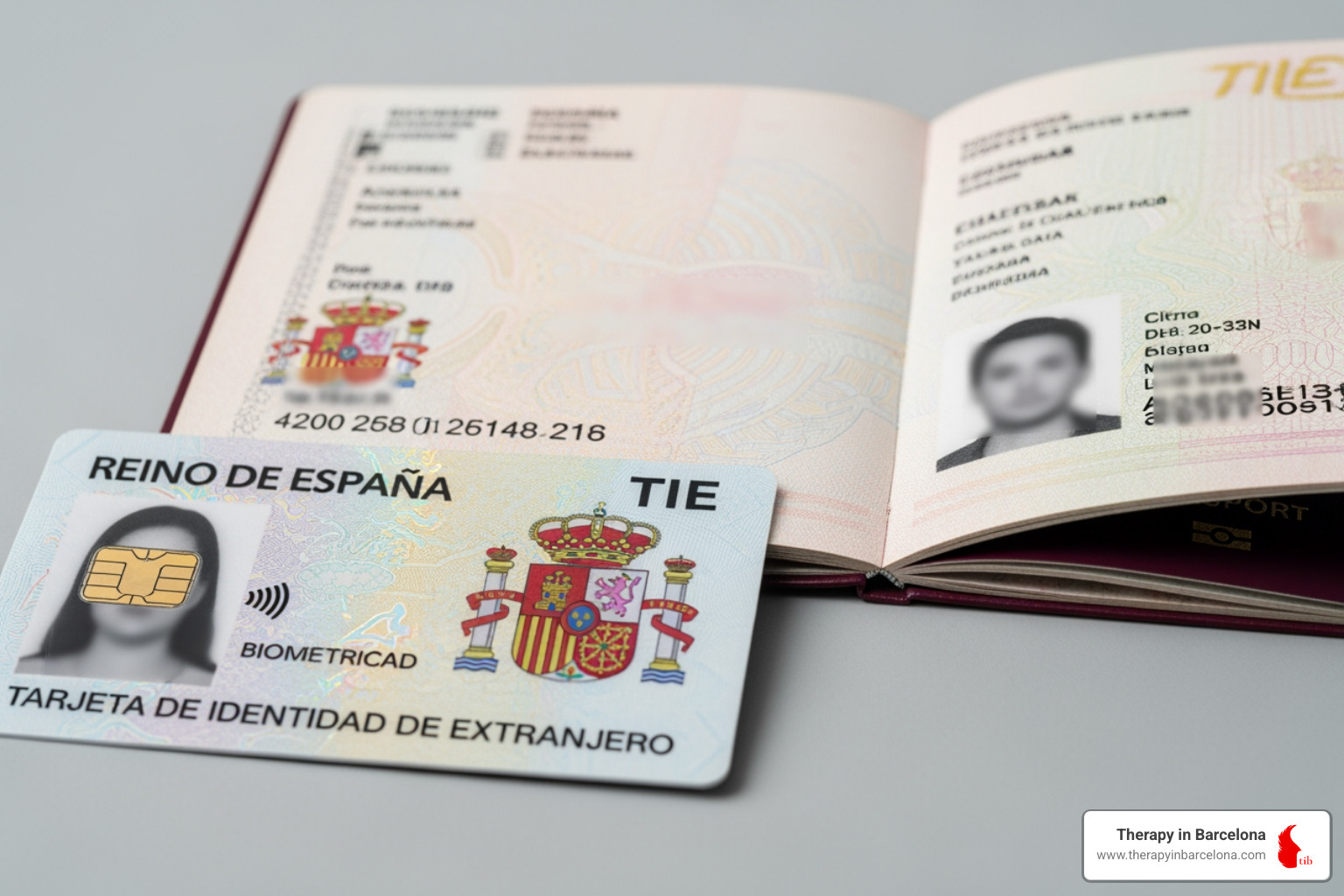
Two acronyms are essential in Spain: NIE and TIE.
- Your NIE (Número de Identidad de Extranjero) is your unique Foreigner Identification Number. It’s essential for almost all administrative and financial tasks, from opening a bank account to signing a rental contract. You can apply for it before you leave or upon arrival.
- Your TIE (Tarjeta de Identidad de Extranjero) is the physical, biometric card that proves your legal residency. It includes your photo, fingerprints, and NIE. You must apply for it within the first month of arriving in Spain. For more details, see the Official information on the Foreigner Identity Card (TIE).
Special Considerations for British Citizens Post-Brexit
Since Brexit, British citizens are treated as non-EU nationals and require a visa for stays over 90 days. If you were a resident in Spain before January 1, 2021, your rights are protected under the Withdrawal Agreement, but you should exchange your old green certificate for a TIE card. This is crucial with the EU’s new Entry/Exit System (EES) expected to launch in Autumn 2024. For those moving now, you must apply for a suitable visa (Non-Lucrative, Digital Nomad, etc.) at a Spanish consulate in the UK before travelling. For comprehensive details, consult the UK government guidance on living in Spain.
Setting Up Your Life in Spain: Housing, Banking, and Healthcare
With your visa sorted, it’s time to build your life in Spain. This means finding a home, managing your finances, and accessing healthcare—the practical foundations for thriving in your new country.

Securing Your Home: Renting and Buying Property
Housing costs vary significantly. Madrid and Barcelona are the most expensive, with basic apartments starting around €850 per month. Cities like Valencia, Málaga, and Alicante offer a balance of lifestyle and affordability. For lower costs, consider inland cities like Ourense or Castellón, where rents can start from €350-€400.
When renting, always get a written contract. Landlords typically require a one-month deposit (fianza) and proof of income. Start your search on platforms like Idealista and Fotocasa. Buying property is also an option for foreigners without restrictions, though the Golden Visa programme that encouraged this is being phased out.
Managing Your Finances: Banking and Cost of Living
A Spanish bank account is essential. To open one, you’ll need your passport, NIE or TIE, and proof of address. Major banks like Santander, BBVA, and CaixaBank have extensive networks, while online banks like N26 are popular with expats for their low fees and easy international transfers.
The monthly cost of living for one person can range from €820 to €1,100, but this depends heavily on your location and lifestyle. For detailed city-by-city breakdowns, Numbeo is a useful resource.
Your Health and Wellbeing: The Spanish Healthcare System
Spain’s public healthcare system (Sistema Nacional de Salud, or SNS) is excellent. You gain access once you contribute to Social Security through employment or self-employment. EU pensioners can often transfer their healthcare rights with an S1 form. For most visa applications, you’ll initially need private health insurance.
Many expats maintain private insurance for shorter waiting times and English-speaking doctors. Providers like Sanitas and Adeslas are popular, with plans costing €50-€150 monthly. Don’t forget Padrón registration at your local town hall; it’s required to access local services, including healthcare.
Moving countries also carries an emotional weight. The stress of adjusting can be overwhelming. If you’re struggling, reaching out for support is a sign of strength. While support is available through the public system or large online platforms, many expats seek out specialised care that understands their unique journey. Therapy in Barcelona offers culturally sensitive therapy for expats. We provide in-person sessions in Barcelona and online therapy for clients worldwide, including in the USA and Canada. For more about our individual therapy services, or to see how we can support your transition, you can book a Free Discovery Call.
Working and Taxes: Your Professional Life in Spain
For many, moving to Spain involves work. Understanding the job market, self-employment rules, and tax system is key to a smooth professional transition.

Finding a Job and Understanding Work Contracts
While unemployment can be a concern (Spain’s rate is often among the highest in the EU, according to Eurostat), sectors like IT, healthcare, and engineering have high demand. Spanish fluency greatly expands your options, but international companies often operate in English. Use platforms like InfoJobs, Indeed, and LinkedIn for your search. Spanish work culture, as noted in Erin Meyer’s The Culture Map, often values relationships and work-life balance, with trust built through informal interaction.
Becoming ‘Autónomo’: A Guide to Freelancing in Spain
Freelancing in Spain (as an autónomo) is a popular route, especially for digital nomads. The process involves:
- Registering with the tax authorities (Agencia Tributaria) and Social Security.
- Paying monthly Social Security fees, which grant access to public healthcare.
- Filing quarterly tax returns for income tax (IRPF) and VAT (IVA). It’s highly recommended to hire a professional (gestor) to manage this.
The Digital Nomad Visa is ideal for freelancers working for non-Spanish clients. Therapy in Barcelona understands the flexible lifestyle of digital nomads and offers custom online therapy services.
Understanding the Spanish Tax System
Spain’s tax system is complex, so professional advice is wise. Key points include:
- Tax Residency: You are typically a tax resident if you spend over 183 days a year in Spain. Tax residents are taxed on their worldwide income.
- IRPF: Spain’s progressive personal income tax.
- Modelo 720: If you are a tax resident with over €50,000 in assets outside Spain, you must file this annual declaration. See the Official information on Form 720.
- Double-Taxation Agreements: Spain has treaties with many countries, including the UK and US, to prevent you from being taxed twice on the same income.
The Expat Experience: Facing Challenges and Finding Support While Emigrating to Spain
Emigrating to Spain is an emotional journey as much as a practical one. The excitement of a new life can be accompanied by challenges the travel blogs don’t always show.

The Emotional Journey of Emigrating to Spain
Culture shock, loneliness, and homesickness are common. The language barrier can feel isolating, even in a crowd. Consider Emily, a 34-year-old from the UK who moved to Valencia. She is fictional—a composite, not a real client—but her story mirrors many expats’ experiences: she expected easy integration but instead felt lost and disconnected, straining her relationship and sense of self. This identity shift is normal. You are building a new life without your old support systems, and that takes time. If you’re moving with a partner, the shared stress can be intense. Therapy in Barcelona offers couples counselling services for internationals facing these exact pressures.
Finding the Right Mental Health Support
When you’re struggling, finding the right help is crucial. Spain’s public healthcare system offers mental health services, but waiting lists can be months long. Large online therapy platforms offer convenience but often use algorithms that can’t grasp the specific nuances of expat life. Local private practices are another option.
Therapy in Barcelona was founded in 2011 by Leigh Matthews, an Australian Psychologist in Barcelona since 2011, who, as an expat herself, saw the need for culturally sensitive support. We are a trusted group practice of highly qualified, psychology-trained therapists who work with adults, couples, teens and families. We offer bespoke therapist matching and collaborative care so you’re paired with someone who fits your needs and background. We work in English, and some of our therapists also speak German, French, Spanish, Afrikaans, Portuguese, Austrian-German and Swiss-German. Your privacy matters to us—we do not sell your data.
We offer in-person sessions in Barcelona and online therapy worldwide, including in the USA and Canada, for those in Madrid, Valencia, Málaga, and beyond. We are a private-pay service, which allows for high-quality, individualised care. Some therapists offer sliding scale fees. You can learn more about our team of therapists here.
Practical Steps for Daily Life and Integration
A few practical steps can ease your transition:
- Driving Licences: If you’re a non-EU resident, you generally have six months to exchange your foreign licence for a Spanish one. The process can be slow, so start early. Check the official EU guidance on driving licence exchange.
- Bringing Pets: Spain is pet-friendly. Your pet will need a microchip, valid rabies vaccination, and a health certificate.
- Emergency Numbers: The universal emergency number is 112. For police, dial 091; for health emergencies, 061.
- Padrón Registration: Registering at your local town hall is essential for accessing public services.
Frequently Asked Questions about Emigrating to Spain
How much money do I need to emigrate to Spain?
This depends on your visa and lifestyle. For a Non-Lucrative Visa, you must prove an annual income of around €28,800 (approx. $31,000 or £24,500) for one person. Monthly living costs vary widely: a solo budget in Madrid or Barcelona could exceed €2,000, while in smaller cities like Ourense, a comfortable budget might be closer to €1,100. As a general rule, have at least three to six months of living expenses saved up before you move. For detailed figures, check Numbeo cost of living data.
Can I move to Spain without a job?
Yes. Several visas allow this:
- The Non-Lucrative Visa is for those with sufficient savings or passive income who don’t plan to work in Spain. See the official guide to the non-lucrative visa for Spain.
- The Digital Nomad Visa is for remote workers with non-Spanish employers or clients.
- Student Visas allow you to reside in Spain for your studies and often permit part-time work.
- An Entrepreneur Visa is an option if you have a solid business plan to start a company in Spain.
What is the hardest part about moving to Spain?
Most expats point to two things: bureaucracy and emotional adjustment.
Spanish bureaucracy (papel-trámite) can be slow and complex, and the language barrier makes it harder. Simple tasks can feel overwhelming at first.
Beyond the paperwork, the emotional challenges can be surprising. The initial excitement can fade, leaving feelings of loneliness, homesickness, and culture shock. Building a new social circle and identity takes time and can be disorienting. Finding a job without fluent Spanish can also be a major hurdle outside of international hubs.
These struggles are a normal part of the expat journey. If you find the adjustment difficult, support is available. While the public health system or large, algorithm-based online platforms are options, they may not provide the timely, culturally-aware support needed. Therapy in Barcelona was created by expats for expats, and we understand these unique challenges. If you’d like support for your move, book a Free Discovery Call with our team to see how we can help.
Embracing Your Spanish Adventure
Emigrating to Spain is a courageous reimagining of your life. It takes patience to handle the paperwork and language barriers, but the rewards are real: a country where life often moves at a more human pace, from the vibrant streets of Valencia to the cosmopolitan energy of Madrid or the coastal calm of Málaga.
The practical steps are the foundation, but the emotional journey is just as important. Feelings of loneliness, frustration, and identity shift are normal for almost every expat. Acknowledging these struggles is realistic, and knowing when to seek support is a strength.
When you need support, you have options. The public healthcare system offers some services, but with long waits. Large online platforms offer convenience but may lack the cultural understanding expats need. Local practices throughout Spain also offer various approaches.
Therapy in Barcelona was created to fill a specific gap. As expats ourselves, our team of psychology-trained therapists understands your journey. We offer bespoke therapist matching to ensure you get the right support. This is a private-pay service, though some therapists offer sliding scale fees. We provide in-person therapy in Barcelona and online therapy across Spain—in cities like Alicante, Marbella, and Gran Canaria—and worldwide.
Your Spanish adventure is yours to shape. Be patient with the process and with yourself. Celebrate the small victories. If you’d like support for your move or for any challenges you’re facing, book a Free Discovery Call with our team. We’re here to help you thrive in your new home under the sun.

