


Why Finding Jobs in Spain Can Feel Overwhelming (But Doesn’t Have To)

Jobs in Spain can open the door to Mediterranean sunshine, a relaxed lifestyle, and a rich cultural experience—but the path to securing one isn’t always straightforward. Whether you’re drawn to the vibrant streets of Madrid, the coastal charm of Málaga, or the creative energy of Valencia, understanding how to steer the Spanish job market is essential.
Quick guide to finding jobs in Spain:
- Understand the market – According to Spain’s National Statistics Institute, the unemployment rate was 12.29% in early 2024. Still, skilled workers in IT, tourism, hospitality, and teaching can find openings.
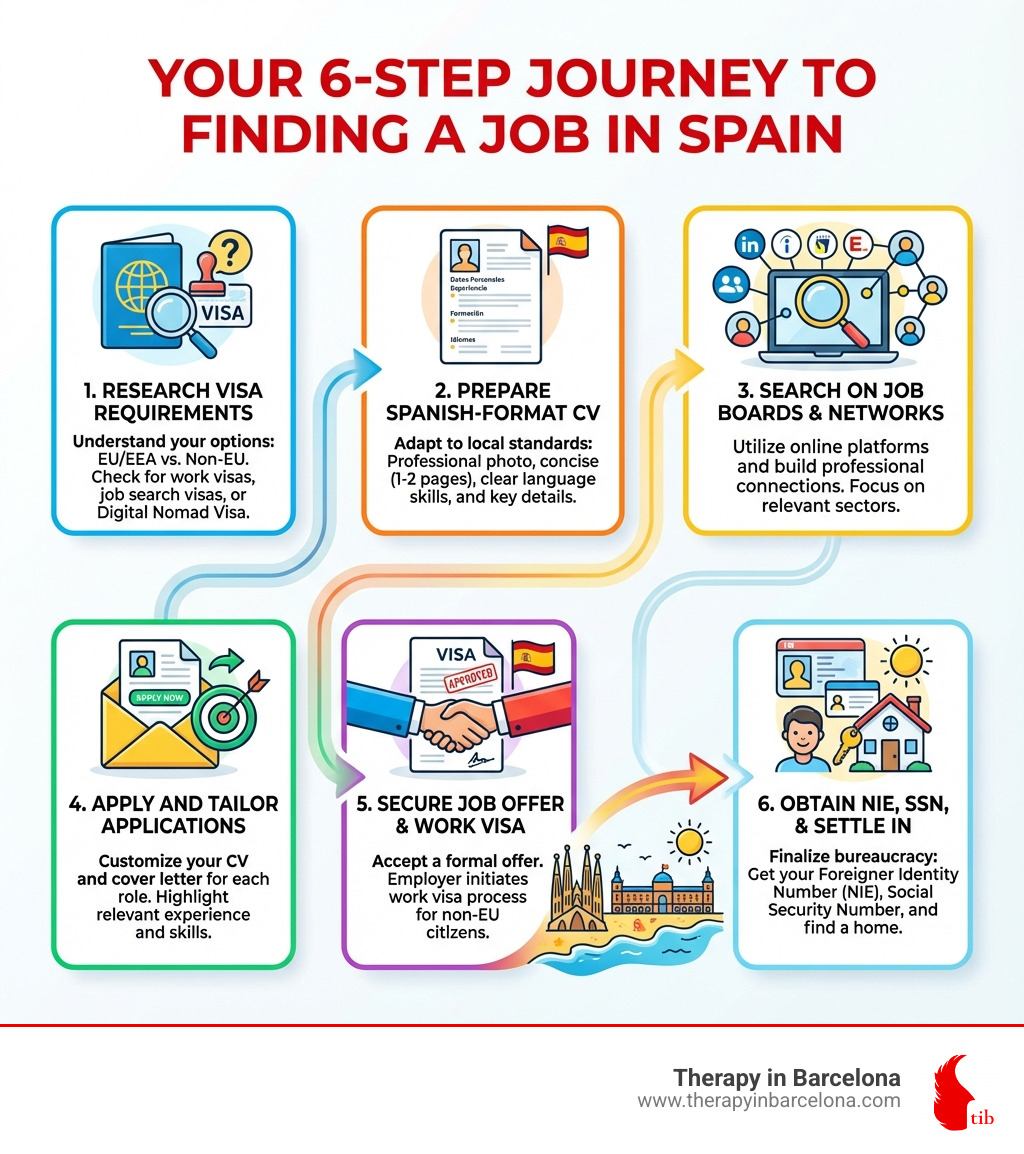
- Sort your visa – EU/EEA citizens can work freely; non-EU citizens usually need a work visa, job offer, or another route like the Digital Nomad Visa.
- Know where to look – Search on LinkedIn Jobs, Indeed Spain, EURES, and specialist sites like Englishjobs.es.
- Adapt your CV – Spanish employers often expect a professional photo, a concise format of 1-2 pages, and clear language skills.
- Consider the language – English-speaking jobs do exist, especially in international companies, but learning Spanish will expand your options.
- Target the right cities – Madrid, Barcelona, Valencia, and Málaga tend to offer the most opportunities for international workers.
The Spanish job market is competitive. You’ll be up against local candidates, EU nationals who can work without visas, and other internationals drawn by the lifestyle. But if you’re a highly skilled professional with the right approach, plenty of doors will open.
Many expats underestimate the emotional side of this journey. Moving countries for work isn’t just about securing employment—it’s about building a new life from scratch. The bureaucracy can test your patience. The cultural differences might catch you off guard. The isolation can creep in when you least expect it. These aren’t signs you’ve made a mistake; they’re a normal part of relocating abroad.
This guide will walk you through the practical steps: understanding the job market, securing the right visa, crafting a Spanish-style CV, and identifying the sectors and cities where foreign workers thrive. We’ll also touch on what life as a professional in Spain actually looks like—the work culture, the cost of living, and how to access healthcare.
If the job search feels overwhelming, that makes sense. Moving countries, handling paperwork, and finding work is a lot at once. You do not have to manage it alone. Therapy in Barcelona supports internationals in Spain and worldwide with online and in-person therapy in English and other languages.
Understanding the Spanish Job Market: What to Expect
Spain’s job market is competitive, with unemployment at 12.29% in early 2024. Finding jobs in Spain takes persistence, but skilled workers can still find strong opportunities in growing sectors.
While the overall market can be challenging, cities like Madrid, Barcelona, Valencia, and Málaga offer more prospects for international professionals. These urban hubs are often home to multinational companies and thriving industries that welcome foreign talent.
To learn more about what it means to work in this beautiful country, explore our insights on Working in Spain.
The Language Question: Do I Need to Speak Spanish?
This is a common question, and the answer isn’t a simple yes or no. While you can find jobs in Spain that don’t require Spanish, particularly in international companies or tourist-facing roles, learning the language will open up many more opportunities.
Currently, you can find thousands of jobs available in Spain specifically for English speakers. These roles are frequently found in sectors like Tourism & Hospitality, Customer Service & Call Centres, and IT & Tech. Major cities like Madrid, Barcelona, Valencia, and Málaga, with their growing tech hubs and international populations, often have English-speaking opportunities. Some IT jobs in Spain may even allow for remote work, which is great for digital nomads.
Relying only on English can narrow your job options and make everyday life harder. Many Spanish workplaces still use Spanish day to day. Learning even the basics helps you find more roles, build local connections, and feel more at home. Apps like Duolingo or local classes are good places to start.
Acknowledging Your Options for Support
Starting a job search in a new country can feel like a huge task. You can find practical help from public services like SEPE (Spain’s Public Employment Service), large online job platforms, and local recruitment agencies. These resources are invaluable for the practical side of job seeking.
Job searches are practical, but relocation is emotional too. Job boards and agencies help with vacancies; they rarely help with stress, overwhelm, or culture shock. For that, you can explore public healthcare, online therapy, or local practices like Therapy in Barcelona.
Our psychology-trained therapists are expats themselves and understand the challenges of living abroad, from navigating bureaucracy to dealing with homesickness. As a private-pay service, we provide bespoke, culturally sensitive support with a focus on personalised therapist matching and strict privacy.
We aim to provide a safe and compassionate environment where you can process these challenges, which is just as crucial for a successful life in Spain as finding a job.
Your Legal Roadmap: Visas and Work Permits for Spain

Dealing with Spanish bureaucracy can be frustrating, but securing the correct visa and work permit is the first legal step to getting a job in Spain. The process requires careful documentation and patience.
Key documents you’ll need to get familiar with include:
- NIE (Número de Identificación de Extranjero): Your foreigner’s identification number, which is essential for almost any administrative task in Spain, including working, opening a bank account, or renting property.
- Social Security Number (Número de Seguridad Social): This is required for employment and ensures you contribute to and can benefit from the Spanish social security system.
- TIE (Tarjeta de Identidad de Extranjero): The physical foreigner’s identity card that formalises your residency status.
For EU/EEA and Swiss Citizens
If you’re a citizen of an EU, EEA (European Economic Area) country, or Switzerland, you are in a good position. You have freedom of movement and can work in Spain without needing a work visa, which simplifies your job search significantly.
While you don’t need a visa, you must register your residency if you plan to stay for more than 90 days. This involves getting your NIE and registering with the local authorities. The process is generally straightforward, but it’s still wise to prepare your documents in advance.
For more comprehensive information on employment opportunities across Europe, including Spain, you can visit the European employment portal, EURES (https://eures.europa.eu/index_en).
For Non-EU Citizens: Securing Your Right to Work
For those outside the EU/EEA/Switzerland, the path to getting a job in Spain is more structured. Non-EU citizens typically need a work visa, and this usually requires a job offer from a Spanish company before you can apply. Spain offers several visa options that might fit your situation:
- Highly Skilled Worker Visa: This visa is for professionals with specialised skills who have a job offer from a Spanish company. It’s designed to attract talent in high-demand sectors.
- Digital Nomad Visa: A newer option, this visa allows remote workers and freelancers to live and work from Spain for foreign companies. It’s a great choice if your work is entirely online. You can find more details on this pathway in our guide to being a Digital Nomad Spain.
- Youth Mobility Visa (for Canadians): Specifically for Canadian citizens, the Youth Mobility Visa (often called a Working Holiday Visa) provides an open work permit for up to 12 months. This allows young Canadians to work and travel across Spain, offering a flexible way into the job market.
- Student Visa with Work Permission: If you are mainly in Spain to study, some student visas allow you to work part-time (up to 30 hours per week) to support yourself.
It’s crucial to research the specific requirements for your nationality and chosen visa category well in advance, as the application process can take time.
How to Find and Secure Jobs in Spain

Finding jobs in Spain often involves more than just sending out applications; it’s about strategic networking and understanding the local job search culture. Many of the best opportunities aren’t always advertised publicly, making a proactive approach key. Building connections can help you uncover these hidden opportunities and even lead to visa-friendly employers. Our articles on Expat Professionals offer further insights into managing your career abroad.
Where to Find Job Openings
The internet has made international job searching more accessible than ever. Here’s a rundown of platforms where you can begin your hunt for a job in Spain:
- General job boards:
- LinkedIn: A must-use tool for networking and job searching. Many international companies and larger Spanish employers post roles here.
- Indeed Spain: A broad job board with vacancies across many sectors, from entry-level roles to specialist positions.
- EURES: The European employment portal for job mobility across the EU/EEA, with vacancies and practical guidance for workers.
- SEPE: Spain’s public employment service. It is mostly in Spanish, but useful for understanding the local labour market and official job resources.
- English-speaking job platforms:
- Englishjobs.es: A useful site for English-speaking professionals looking for jobs in Spain, including roles where Spanish may not be required.
- Jobs in Barcelona and Jobs in Madrid: City-focused sites can be helpful if you are targeting Spain’s biggest international job markets.
- The Local Spain: Often includes listings aimed at international residents and expats.
- For Barcelona-specific options, this guide to finding jobs in Barcelona is also worth checking.
- Specialised industry boards:
- For hospitality, tech, teaching, healthcare, or customer service, look beyond general job boards. Many companies advertise directly on their own careers pages.
- If you want to teach English, check language school websites and TEFL/CELTA provider job boards.
- For tech roles, combine LinkedIn with startup communities, company career pages, and local networking events.
For those specifically targeting the Catalan capital, our guide to Finding Jobs in Barcelona offers tailored advice.
Crafting Your Spanish CV and Application
The Spanish approach to job applications has some cultural nuances you’ll want to be aware of to make a strong first impression.
- CV Format: Spanish employers often expect a professional photo on your CV, which is less common in some other countries (like the UK or North America). Keep your CV concise, ideally one to two pages, focusing on relevant experience and achievements. Clarity and professionalism are paramount.
- Highlight Language Skills: Given the earlier discussion, explicitly highlighting your language proficiency (both English and any level of Spanish) is crucial.
- Custom Cover Letters: Always tailor your cover letter to the specific job and company. Use it to express your motivation for the role and your interest in working in Spain. If you require visa sponsorship or already have a valid work permit, it’s wise to mention your visa status clearly.
- Adaptability: Emphasise your adaptability, international experience, and willingness to integrate into a new cultural environment.
For more detailed guidance on preparing for the local market, check out our insights on Working in Barcelona.
In-Demand Sectors and Top Cities for Foreign Workers
Spain’s economic landscape offers varied opportunities, with certain sectors and cities proving more welcoming to foreign talent. While Barcelona and Madrid are perennial favourites, cities like Valencia, Málaga, Alicante, Sevilla, and Marbella are also growing hubs for expats seeking jobs in Spain.
Hotspots for Jobs in Spain: Key Industries
Several industries consistently show demand for foreign workers, often leveraging their language skills or specialised expertise:
- Tourism & Hospitality: Given Spain’s status as a global tourist destination, this sector is always in need of multilingual staff, especially in coastal areas and major cities. From hotel management to customer service and entertainment, opportunities abound. If you’re looking for English Speaking Roles in Barcelona, hospitality is a great place to start.
- IT & Tech: Spain’s tech scene is burgeoning, particularly in cities like Barcelona, Madrid, Valencia, and Málaga. Roles for software engineers, developers, data analysts, and IT support are in high demand. Many tech companies are international and operate in English, making them ideal for expat professionals.
- Teaching English: This remains one of the most accessible routes for non-EU foreigners to find jobs in Spain. With a TEFL or CELTA certification, you can find work in language academies, public schools (as an assistant), or through private tutoring.
- Customer Service & Call Centres: Many international companies establish their customer service operations in Spain, seeking multilingual agents to serve a global client base. These roles often require strong English skills and sometimes other European languages.
- Healthcare: Spain boasts a universal and publicly funded healthcare system, considered among the best globally. There’s a consistent demand for healthcare professionals, from doctors and nurses to home health aides. Foreign qualifications may require validation, but opportunities are there.
- Construction: While not always English-speaking, skilled tradespeople like plumbers and electricians can find work, especially in regions with ongoing development.
Best Cities for Expat Jobs in Spain
Choosing the right city can significantly impact your job search and overall experience. Here’s a look at some of the top cities for expats:
- Madrid: As the capital, Madrid offers a vibrant job market across diverse sectors, including finance, IT, and international business. It has a large expat community and excellent infrastructure.
- Barcelona: A cosmopolitan hub with a strong focus on tech, tourism, and creative industries. Barcelona attracts a significant international workforce and offers a high quality of life.
- Valencia: Rapidly gaining recognition as a tech and innovation hub, Valencia offers a more affordable cost of living than Madrid or Barcelona, combined with a beautiful Mediterranean lifestyle.
- Málaga: A growing tech hotspot on the Costa del Sol, Málaga is attracting startups and digital nomads. Its pleasant climate and lower cost of living make it an attractive option.
- Alicante, Sevilla, Marbella, Zaragoza, Gran Canaria: These cities also offer various opportunities, particularly in tourism, hospitality, and increasingly, tech and remote work. Gran Canaria, for instance, is a popular spot for digital nomads.
When considering a city, it’s helpful to weigh the job opportunities against the cost of living. While salaries in Spain are generally lower than in many Western countries, the cost of living is also significantly more affordable.
Here’s a comparison of average net salaries versus average one-bedroom rent in key cities:
City: Madrid
- Average 1-bedroom rent: €900–€1,200
- Average net salary: €1,500–€2,200
City: Barcelona
- Average 1-bedroom rent: €850–€1,100
- Average net salary: €1,500–€2,000
City: Valencia
- Average 1-bedroom rent: €600–€900
- Average net salary: €1,300–€1,800
City: Málaga
- Average 1-bedroom rent: €500–€800
- Average net salary: €1,200–€1,700
(Note: These are average ranges based on data from mid-2024 and can vary based on neighbourhood, job, and individual circumstances. Source: Cost-of-living aggregators such as Numbeo, https://www.numbeo.com/cost-of-living/)
Life as a Professional in Spain: Culture, Costs, and Care
Beyond securing a job, understanding the nuances of professional life, managing your finances, and ensuring your well-being are crucial for a fulfilling experience. Spain offers a different rhythm of life, which many expats find incredibly appealing.
Spanish Work Culture: What to Know
The Spanish work culture can differ from what you’re used to, often prioritising personal relationships and a more relaxed pace:
- Personal Relationships: Spaniards value personal connections in business. Building rapport and trust can be as important as professional competence.
- Long Lunch Breaks (la comida): The workday often includes a longer lunch break, typically between 1:30 PM and 3:00 PM. This isn’t a “siesta” in the traditional sense of napping, but a time for a substantial meal and socialising. Some shops and businesses may close during this period.
- Work Hours: While the traditional 9-to-5 exists, many offices operate on a split shift, with a long lunch break extending the day later into the evening. However, this is evolving, especially in international companies.
- Hierarchy: While modern workplaces are becoming flatter, a more hierarchical structure might still be present in some traditional Spanish companies.
- Communication Styles: Communication can be more indirect and relationship-focused than in some Northern European or North American cultures.
Spain also boasts generous vacation days, with full-time employees typically receiving around 22 working days plus national holidays, as mandated by law. This contributes to a highly valued work-life balance. For more on adapting to professional life in a new country, read about Working in Multicultural Teams.
Salary vs. Cost of Living
One of the most attractive aspects of pursuing a job in Spain is the generally lower cost of living compared to many other Western countries. While salaries in Spain are often lower, your purchasing power can stretch further, especially outside of Madrid and Barcelona.
- Budgeting: Careful budgeting is still essential, but you’ll likely find housing, food, and social activities more affordable.
- Shared Flats (pisos compartidos): Sharing a flat is a common and economical housing solution for expats, particularly in larger cities.
Health Insurance for Foreign Workers
Access to healthcare is a significant consideration when moving abroad. Spain’s healthcare system is generally excellent:
- Public Healthcare System (Sistema Nacional de Salud): Spain has a universal and publicly funded healthcare system. If you are legally residing and working in Spain, you will contribute to social security and be eligible for public healthcare.
- Private Health Insurance: While the public system is comprehensive, many foreigners opt for private health insurance. This can offer benefits such as shorter wait times, direct access to specialists, and a greater likelihood of finding English-speaking doctors. For non-EU citizens applying for certain visas (like the Digital Nomad Visa), private health insurance is often a mandatory requirement.
For detailed information on the Spanish healthcare system and your options, you can consult this guide: More on the Spanish healthcare system.
Frequently Asked Questions about Finding a Job in Spain
Is it hard for a foreigner to get a job in Spain?
It can be challenging, but certainly not impossible. Spain has a competitive job market with a relatively high unemployment rate (12.29% in Q1 2024, Source: https://www.ine.es/dyngs/INEbase/en/operacion.htm?c=Estadistica_C&cid=1254736176918&menu=ultiDatos&idp=1254735976595).
For non-EU citizens, the process is more complex due to visa requirements, often necessitating a job offer before you can even move. However, highly skilled workers, especially those in demand sectors like IT, healthcare, tourism, and English teaching, can find opportunities. Learning Spanish significantly improves your prospects, but English-speaking roles are also available, particularly in international companies and major cities. Patience and persistence are essential.
What is the average salary in Spain for an English speaker?
Salaries in Spain are generally lower than in countries like the UK, USA, or Canada, but this is often offset by a lower cost of living. For English speakers, salaries can vary widely depending on the industry, experience, and the specific role.
As a general guide, in major cities like Madrid and Barcelona, average net salaries for professionals might range from €1,500 to €2,200 per month. In cities like Valencia and Málaga, these averages might be slightly lower, between €1,200 and €1,800 (Source: Data from cost-of-living aggregators like Numbeo, mid-2024, https://www.numbeo.com/cost-of-living/). These figures need to be considered in relation to local rent costs, as outlined in the table above.
Can I move to Spain without a job?
For non-EU citizens, moving to Spain without a job offer is generally not feasible if your intention is to work, as a job offer is typically a prerequisite for obtaining a work visa. However, there are exceptions:
- Youth Mobility Visa (Canadians): This visa allows Canadians to live and work in Spain for up to 12 months without a prior job offer.
- Digital Nomad Visa: If you work remotely for a company outside Spain or are a freelancer with non-Spanish clients, this visa allows you to reside in Spain. You wouldn’t need a local job offer.
- Significant Savings: If you have substantial savings and do not intend to work immediately, you might explore non-lucrative visas, but these explicitly prohibit working in Spain.
For EU/EEA/Swiss citizens, you can move to Spain without a job and then search for work, but you’ll need to register your residency within 90 days. Regardless of your nationality, it’s always advisable to have a solid financial plan and ideally a job offer or a clear visa pathway before making the move.
Your New Professional Chapter in Spain
Finding a job abroad is more than a career move; it’s a major life change, full of both excitement and challenges. Adjusting to a new culture, dealing with bureaucracy, and building a community from scratch can be stressful. It’s important to acknowledge these pressures and look after your mental well-being. Seeking support is a sign of strength.
The team at Therapy in Barcelona, made up of psychology-trained expat therapists, understands these unique challenges firsthand. If the process feels overwhelming or you just need a space to talk, we are here to help you thrive in your new life.
Life as an expat, while rewarding, often brings its own emotional difficulties. The initial excitement of securing a job in Spain can sometimes fade, leaving feelings of isolation, homesickness, or stress from cultural adjustment.
Our therapists, many of whom have been through the expat journey themselves, offer culturally sensitive support in English and other languages. We provide a safe, compassionate space to explore these feelings, helping you build resilience and settle into your new professional chapter.
Whether you are getting used to a new work environment, adjusting to a different social rhythm, or simply trying to maintain your emotional balance during a period of change, our team is here for you. We offer personalised therapist matching to connect you with a professional who understands your specific needs, whether you’re in Barcelona, Madrid, Valencia, Málaga, Alicante, Sevilla, Marbella, Zaragoza, or Gran Canaria.
If you’d like support on your journey, book a Free Discovery Call.
