


Why Finding a Spanish Therapist Matters for Your Mental Health

Finding a Spanish therapist can be transformative, especially if you are living abroad or seeking support in your native language. Here’s what you need to know:
How to Find a Spanish-Speaking Therapist:
- Use online searches and trusted recommendations from friends, doctors, or community groups
- Check platforms offering multilingual services across Spain
- Look for practices specialising in expat and international client support
- Verify therapist qualifications, cultural competence, and approach
- Book a free initial consultation to assess fit
Key Benefits of Therapy in Spanish:
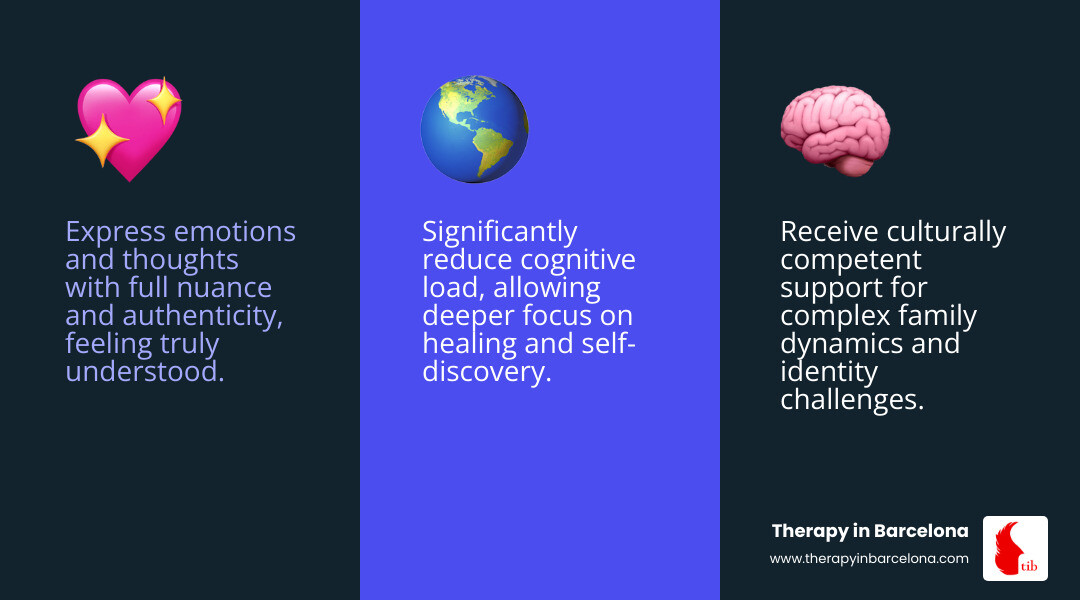
- Express emotions with full nuance and authenticity
- Access culturally competent support for family dynamics and identity
- Reduce cognitive load from translating thoughts and feelings
- Feel truly understood without language barriers
What to Consider:
- Therapeutic approach (CBT, psychodynamic, systemic, etc.)
- Location: online therapy or in-person in cities like Barcelona, Valencia, or Madrid
- Cost: This is typically a private-pay service, though some therapists offer sliding scale fees for those with financial need
- Cultural specialisations for expats, immigrants, or LGBTQ+ communities
Whether you’re an expat in Barcelona feeling isolated, a couple dealing with intercultural tensions, or someone simply wanting to express yourself fully in Spanish, the right therapist can make all the difference.
For many internationals, moving abroad can bring unexpected loneliness and isolation. Finding a therapist who understands both their language and the challenges of expat life can make a meaningful difference.
Language shapes how we process emotions. When you work with a Spanish-speaking therapist, you’re not just translating words—you’re accessing the full depth of your emotional landscape. You can express childhood memories, cultural values, and complex feelings without the mental gymnastics of a second language.
This matters profoundly when working through feelings of persistent worry, low mood, the impact of difficult past experiences, and relationship struggles. But it’s not just about language. Cultural competence is equally vital.
A therapist who understands concepts like familismo, personalismo, or the cultural weight of ‘los trapos sucios se lavan en casa’ (dirty laundry stays at home) can help you work through family dynamics, immigration stress, and identity questions in ways a generic approach cannot.
For expats and internationals across Spain—from Valencia’s growing expat communities to Málaga’s coastal hubs—this cultural and linguistic sensitivity becomes the foundation of meaningful progress.
This guide will walk you through why therapy in Spanish matters, how to find the right therapist for your needs, what to consider in terms of cost and approach, and how to prepare for your first session. You’ll also learn about the therapeutic approaches and specialisations available, so you can make an informed choice that fits your life.
The Power of Your Native Tongue: Why Work with a Spanish-Speaking Therapist?
Choosing a Spanish therapist means opening up a deeper level of communication and understanding in your therapeutic journey. When you speak in your native language, you can express emotions, thoughts, and experiences with a richness and authenticity that’s often lost when communicating in a second language. This isn’t just about vocabulary; it’s about connecting with the very core of your being.
The Difference in Emotional Depth
Imagine trying to explain a complex childhood memory or a deeply personal feeling in a language you’re still learning. It’s challenging, isn’t it? When you’re speaking Spanish, your native tongue, you don’t have to filter your thoughts through a linguistic sieve. This allows for unfiltered communication, where every nuance and subtext can be conveyed effortlessly.
This emotional depth is crucial for building a strong therapeutic relationship, often referred to as the therapeutic alliance. The connection and rapport with your therapist are the most important factors for successful outcomes, regardless of the language spoken.
However, when you can speak freely in Spanish, you’re more likely to feel truly heard and understood, fostering a sense of trust and safety. This can be especially important when discussing sensitive topics, allowing you to be vulnerable without the added cognitive load of translation.
Navigating Complex Feelings Without a Language Filter
Therapy often involves exploring difficult emotions such as persistent worry, low mood, the impact of distressing events, and grief. These are not simple concepts; they are intricate tapestries of feelings, experiences, and cultural understandings.
Expressing complex emotions in your native language allows you to articulate these experiences precisely as you feel them, reducing the risk of misunderstanding or misinterpretation.
For instance, certain idiomatic expressions or cultural sayings in Spanish might perfectly capture a feeling that would take several sentences to explain in English. This linguistic shorthand can be incredibly powerful in therapy, allowing your therapist to grasp the full emotional weight of what you’re sharing.
Non-native therapy, while still effective, might sometimes feel more analytical, focusing on literal meanings rather than the deeper emotional resonance. Therapy in your native Spanish provides a direct conduit to your emotional world, making the healing process more intuitive and effective.
If you’re seeking support for individual challenges, you can find more information about our individual therapy services. For those dealing with relationship issues, exploring couples counselling services may be a helpful next step.
More Than Words: The Crucial Role of Cultural Competence

Beyond language, cultural competence is a cornerstone of effective therapy for Spanish speakers. It means a therapist not only speaks Spanish but also understands the cultural identity, immigration challenges, and family dynamics that shape the lives of many individuals within the Spanish-speaking community. This is particularly vital in a country like Spain, which is home to diverse Spanish-speaking populations, both local and international.
According to research published in the Journal of Counseling Psychology, culturally adapted mental health interventions are significantly more effective than standard treatments for ethnic minorities.
This includes appreciating concepts such as familismo (the strong emphasis on family loyalty and solidarity) and personalismo (the preference for warm, personal relationships). A therapist who understands these values can guide conversations about family expectations, cultural pressures, and identity conflicts with greater sensitivity and insight.
For Expats and Internationals
For expats and internationals living in Spain, cultural competence becomes even more critical. Moving to a new country, whether it’s Barcelona, Valencia, Madrid, Málaga, Alicante, Sevilla, Marbella, Gran Canaria, or Zaragoza, brings a unique set of challenges: cultural adjustment, homesickness, isolation, and the complex process of building a new identity while maintaining ties to your roots.
Leigh Matthews, the Australian Psychologist and founder of Therapy in Barcelona, intimately understood this need, having experienced it herself when she moved to Barcelona in 2011. She realised the profound lack of English-speaking therapists who truly understood the expat experience.
Our team at Therapy in Barcelona comprises psychology-trained therapists, many of whom are expats themselves. This means they bring a unique dual perspective: they understand the expat journey and are equipped to provide culturally sensitive support. They can help you manage the challenges of biculturalism, deal with the stresses of cultural shock, and find ways to build community and a sense of belonging in your new Spanish home.
You can learn more about our team of therapists and their diverse backgrounds.
Understanding Family and Community Dynamics
Within Spanish-speaking communities, family and community dynamics often play a significant role in mental well-being. Generational differences, particularly for first-generation individuals or those with immigrant backgrounds, can create unique pressures. Children might feel caught between their parents’ traditional expectations and the more liberal values of their new environment.
One common cultural saying, ‘los trapos sucios se lavan en casa’ (dirty laundry is washed at home), reflects a deeply ingrained cultural stigma against discussing personal or family problems outside the immediate family. This can make seeking therapy a challenging decision, often accompanied by feelings of guilt or shame.
A culturally competent therapist can acknowledge this stigma, validate these feelings, and help destigmatise mental health support, creating a safe space where clients feel comfortable sharing their experiences without judgment. This empathetic approach helps clients recognise that therapy is an investment in personal well-being, not a sign of weakness or failure.
Your Roadmap to Finding the Right Spanish Therapist

Finding the right Spanish therapist is a personal journey, and it’s normal to feel a bit overwhelmed at the start. However, with a clear roadmap, you can confidently sort through your options and find a professional who meets your specific needs.
With online therapy now recognised by bodies like the American Psychological Association as being as effective as in-person sessions for many conditions, you have more choices than ever before, whether you’re looking for support in Barcelona, Madrid, or even online from another city.
Key Factors to Consider
When choosing a Spanish-speaking therapist, several factors should guide your decision:
- Therapeutic Approach: Different therapists use different methods. Common approaches include Cognitive Behavioural Therapy (CBT), Psychodynamic Therapy, and Acceptance and Commitment Therapy (ACT). Consider what style resonates with you.
- Location and Accessibility: Do you prefer in-person sessions in a city like Barcelona or Valencia, or does the flexibility of online therapy suit your lifestyle better? Many providers offer both options.
- Cost and Fees: Therapy is typically a private-pay service. While specific prices are not mentioned here, session costs can vary. Some therapists offer sliding scale fees for those with financial need, so it’s always worth inquiring about this during an initial consultation.
- Therapist Qualifications: Ensure your therapist is a qualified professional with appropriate accreditation and experience. Look for psychology-trained therapists who are committed to high standards of professional care.
Exploring Your Options: Private Practice, Public System, and Personalised Matching
When seeking a Spanish therapist, you’ll encounter various avenues. Understanding the differences can help you make an informed choice:
Private Practice
- Benefits: Services like Therapy in Barcelona offer personalised matching, ensuring you’re paired with a therapist who truly fits your needs. They often provide expat-specific cultural sensitivity, strict privacy with no data selling, and a team of psychology-trained therapists. You’ll find flexible online and in-person sessions in Barcelona and potentially across Spain. This approach prioritises quality and custom care.
- Considerations: These are private-pay services.
Public System
- Benefits: Free or low-cost mental health services.
- Considerations: Often come with long wait times, limited language options (primarily Spanish), and less flexibility in choosing a specific therapist or therapeutic approach.
Other Local Practices
- Benefits: May offer Spanish-speaking therapists.
- Considerations: Not all specialise in expat needs or offer bespoke matching, and their cultural sensitivity for diverse Spanish-speaking communities might vary.
Large Online Platforms
- Benefits: Offer a broad selection of therapists, often across many languages.
- Considerations: May lack local cultural expertise, the personalised care of a dedicated practice, or the deeper understanding of specific expat challenges.
How We’re Different at Therapy in Barcelona
What sets Therapy in Barcelona apart is our commitment to bespoke therapist matching. We take the time to understand your unique situation, ensuring you’re paired with a therapist whose expertise, approach, and personality align with your needs.
Our therapists are psychology-trained professionals who are also expats, bringing a profound understanding of the challenges of living abroad. We are devoted to supporting internationals, providing a safe and compassionate environment.
How to Vet Therapists
Always check a therapist’s qualifications and experience, particularly their expertise with expats or individuals from similar cultural backgrounds. Inquire about their therapeutic approach and ask about their availability for a free initial consultation.
This allows you to assess their style, comfort level, and whether they truly understand your needs. You can find out more about our fees and how we operate as a private-pay service.
Preparing for Your First Session with a Spanish Therapist
Starting therapy for the first time can bring a mix of emotions, from nervousness to hope. It’s completely normal to feel unsure about what to discuss or how to begin. Your therapist is trained to guide the conversation.
- Asking Questions: Don’t hesitate to ask your therapist questions about their approach, what to expect from therapy, or how they handle specific issues. There’s no such thing as a “wrong question.”
- Setting Goals: While you don’t need a detailed plan, having a general idea of what you hope to achieve can be helpful. Your therapist will work with you to set collaborative goals.
- Building Trust: Building a trusting relationship takes time. You are not obligated to share everything on the first day. Allow yourself to open up at your own pace.
- What to Expect: Your first session will likely involve your therapist getting to know you, asking about your background, current challenges, and what brings you to therapy. This initial assessment helps them understand your situation and determine the best way forward.
- Feeling Comfortable: Feel free to bring a comfort object or a non-alcoholic drink to your session if it helps you relax. The aim is to create an environment where you feel safe and able to express yourself authentically.
Online therapy has been increasingly recognised as effective as in-person therapy, with many providers offering both options. You can explore our online therapy services to see if this is a good fit for you.
Understanding Therapeutic Approaches and Specialisations
The world of therapy offers a rich mix of approaches and specialisations, each designed to address different needs and preferences. When searching for a Spanish therapist, it’s helpful to understand these distinctions so you can find a professional whose methods align with your goals for healing and growth.
The therapeutic relationship is a crucial element for positive outcomes, and the right approach, delivered by the right therapist, can make all the difference.
Therapists often emphasise creating a safe, non-judgmental space for clients to express themselves and explore their emotions, regardless of the specific modality used.
Common Approaches You Might Encounter
Here are some common therapeutic approaches that Spanish-speaking therapists might offer:
- Cognitive Behavioural Therapy (CBT): This approach focuses on identifying and changing unhelpful thought patterns and behaviours. It’s highly effective for challenges such as persistent worry, low mood, and specific fears.
- Psychodynamic Therapy: This therapy explores how past experiences and unconscious patterns influence current behaviour and emotional states. It aims to provide deeper insight into long-standing issues.
- Acceptance and Commitment Therapy (ACT): ACT helps clients accept difficult thoughts and feelings, commit to actions that align with their values, and live a more meaningful life.
- Systemic Therapy: Often used in family or couples therapy, this approach views individuals within their relational systems (family, community) and addresses interaction patterns.
- Gottman Method for Couples: Specifically for couples, this evidence-based method focuses on improving communication, managing conflict, and enhancing intimacy.
Finding a Specialist for Your Needs
Many Spanish-speaking therapists offer specialised services for a wide array of issues. This custom support ensures that you receive care that is specifically designed for your unique challenges.
- Support for Low Mood and Worry: Therapists can help you develop coping mechanisms, challenge unhelpful thoughts, and explore the underlying causes of these common mental health concerns.
- Support for Difficult Past Experiences: Specialised therapists can guide you through processing difficult experiences, reducing their impact on your daily life, and fostering resilience.
- Relationship Problems: Whether it’s communication breakdowns, conflict resolution, or working through intercultural relationships, therapists can help individuals, couples, and families improve their dynamics. Our couples counselling services or family therapy services might be particularly helpful here.
- Cultural Adaptation: For expats, immigrants, or individuals managing bicultural identities, therapists can provide invaluable support in adjusting to new environments, managing cultural shock, and integrating different aspects of their identity.
- Child and Adolescent Therapy: Specialised therapists work with younger clients to address emotional, behavioural, or developmental challenges. You can find more information on our adolescent therapy services.
Your Next Step Towards Healing
Taking the first step towards seeking therapy is a significant act of self-care and courage. It means acknowledging that you’re ready to invest in your well-being and find ways to heal and grow. Finding the right Spanish therapist who speaks your language and understands your cultural context can make all the difference in this journey.
At Therapy in Barcelona, we are committed to being the kind of therapists we would want to work with. Our expat-focused expertise, coupled with our team of psychology-trained therapists, ensures that you receive culturally sensitive and effective support.
We understand that life, especially for expats in vibrant cities like Barcelona, Madrid, Valencia, or Málaga, can be messy and challenging. Whether you’re struggling with cultural adjustment, isolation, relationship issues, or the impact of past difficult experiences, we offer a safe and supportive space.
We pride ourselves on our careful therapist matching process, which is designed to improve the probability of positive therapeutic outcomes from the outset. We don’t just match a client with the next available professional; we take the time to ensure the best fit for your unique needs.
If you’d like support, our team of culturally-sensitive therapists is here to help. Taking that first step can feel daunting, but it’s a powerful move towards a more settled and fulfilling life.
Book a Free Discovery Call with us today to find a therapist who truly understands you.
Note: We offer online therapy worldwide, including USA and Canada.
