


Finding an English-Speaking Psychotherapist Abroad

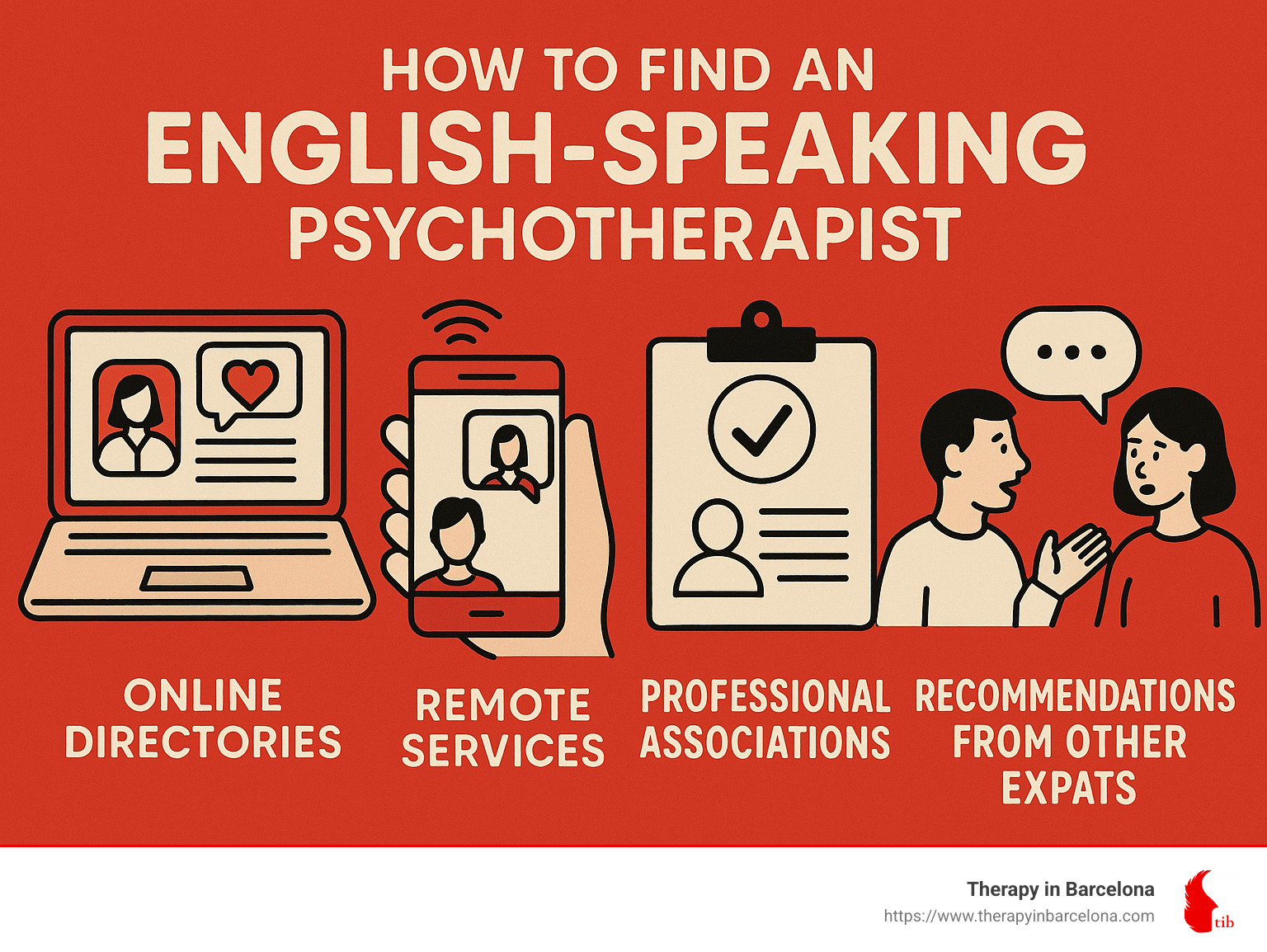
Looking for an English-speaking psychotherapist? Here’s how to find one quickly:
- Online directories: Some directories list English-speaking providers in your area. For example, Therapy in Barcelona offers a list of professionals who provide therapy in English.
- Remote therapy services: Some providers specialise in online sessions, ideal if local options are limited.
- Professional networks: Associations, such as the British Psychological Society or American Psychological Association, have databases of licensed psychotherapists abroad.
When living overseas, emotional support often becomes essential—yet challenging—to find. Language barriers can make expressing personal struggles difficult, intensifying feelings of isolation or frustration.
Take Emily, for instance—a 34-year-old expat from the UK who moved to Barcelona seeking trip but found herself unexpectedly lonely. Although Emily is a fictionalised example, her experience mirrors what many internationals feel when cultural adjustments become overwhelming.
Finding an English-speaking psychotherapist abroad means finding someone who genuinely gets you—your language, your culture, and the unique pressures of expat life. It’s the first crucial step toward emotional wellness and a smoother transition into your new life overseas.
Understanding the Need for English-Speaking Psychotherapists
Living abroad can be immensely rewarding—but it also brings challenges, especially when it comes to emotional wellbeing. Adjusting to life in a new country is often more difficult than expected, and when difficult emotions arise, having someone who truly understands you becomes crucial. That’s why there’s a growing need among expats for an English-speaking psychotherapist, someone who can offer emotional support without the added layer of language barriers.
Even if you’re fluent enough for daily life and work in your new home’s language, expressing your deepest thoughts, fears, and feelings in therapy is different. When it comes to processing complex emotions, we almost always revert back to our first language. Leigh Matthews, founder of Therapy in Barcelona and herself an Australian Psychologist who experienced these challenges firsthand, puts it perfectly:
“When we’re processing difficult emotions, our brain naturally reverts to our native language. Having to translate feelings adds an extra layer of difficulty to an already challenging process.”
And it’s not just about language—it’s also about cultural displacement. Navigating unfamiliar customs, building a new social circle, and even questioning your decision to relocate can all lead to feelings of isolation and overwhelm. These issues can become even more intense when you find yourself unable to fully express your emotional experience. This makes building trust within the therapeutic relationship both more essential and more complicated.
Research continues to confirm that therapy conducted in one’s native language is generally more effective. Why is that? Our emotional vocabulary is richer and more nuanced in our mother tongue, enabling clearer, deeper expression of our inner experiences. This linguistic comfort helps build the trust that’s so critical to effective therapy.
At Therapy in Barcelona, we’ve heard this same sentiment again and again from our clients. One shared: “After trying therapy in Spanish, which I speak fluently for work, I realised I couldn’t access the emotional depth I needed. Finding an English-speaking psychotherapist who also understood the expat experience was transformative.”
It’s clear: for expats seeking psychological support, finding the right therapist isn’t just about professional qualifications. It’s about finding someone who understands your language, your cultural background, and your unique struggles as an international. By choosing to work with an English-speaking therapist, you’re taking a meaningful step towards emotional wellness, making your overseas experience smoother and more fulfilling.
If you’re currently facing these challenges, you’re not alone. Consider reaching out to our team at Therapy in Barcelona to explore how we can match you with a therapist who resonates with your individual experience and needs.
Challenges Expats Face When Seeking Mental Health Support
Moving abroad can be an exciting journey filled with new experiences, but it also brings unique mental health challenges. As an expat, seeking emotional support isn’t always straightforward—even when you speak the local language. Beyond language barriers, internationals often face several distinct problems when looking for mental health care.
Isolation and Cultural Disconnection
One of the most common struggles expats face is isolation. When you first arrive in a new country, your support network—from friends and family to familiar community ties—is suddenly thousands of miles away. This feeling of loneliness can amplify stress, anxiety, and sadness, making emotional wellbeing even harder to achieve.
Finding trusted recommendations for English-speaking psychotherapists becomes tricky without an established local network. A client at Therapy in Barcelona described their experience like this: “I felt completely alone with my anxiety. Back home, I would have asked friends or family for recommendations, but here, I didn’t have anyone to turn to. It felt impossible.”
This lack of community creates a catch-22: you need support to overcome isolation, but isolation itself can prevent you from easily accessing support.
Finding the Right Therapeutic Fit
Even if you manage to overcome isolation and language barriers, there’s still the essential matter of finding the right therapist. Not every English-speaking psychotherapist abroad has experience with the particular issues internationals face, such as culture shock, identity shifts, career transitions, and relationship strains unique to living between two cultures.
It’s crucial to find a therapist who genuinely understands the complexities of expat life. Without this cultural connection, therapy can feel superficial or incomplete. Many internationals often express that the turning point in their therapy journey came when they finally connected with a therapist who understood their expat experience deeply.
Navigating Unfamiliar Healthcare Systems
Another significant obstacle is learning how to steer unfamiliar healthcare systems. Each country has its own mental health regulations, insurance coverage complexities, and professional qualifications. Questions like “What qualifications should my therapist have?” or “Can I legally consult an online therapist from my home country?” can feel overwhelming and confusing.
It’s normal to feel unsure about how to proceed, especially when you’re already struggling emotionally. Understanding local healthcare pathways and regulations often requires guidance, adding another level of stress to the process.
Logistical Difficulties
On top of emotional and systemic challenges, expats also face practical and logistical issues when seeking mental health care. If you’re considering remote therapy sessions with providers in your home country, time zone differences can make scheduling sessions tricky.
Busy international work schedules, frequent travel, and the need to find a private space for online therapy sessions further complicate matters. Simple practicalities you never thought about at home suddenly become significant barriers to accessing regular, consistent support.
Collectively, these challenges can feel overwhelming—but the good news is, they’re not impossible. With the right information, resources, and support, finding meaningful help becomes possible, and healing becomes realistic.

If you’re experiencing any of these barriers, don’t be discouraged—you’re not alone, and support is within reach. Therapy in Barcelona specialises in matching internationals with qualified English-speaking psychotherapists who understand the nuances of expat life. Learn more about our expat-focused services here.
Benefits of Working with an English-Speaking Therapist
Connecting with an English-speaking psychotherapist whilst living abroad can have a profound impact on your therapeutic journey and overall wellbeing. Whether you’re navigating cultural nuances or confronting deep-seated emotional challenges, therapy conducted in your native language offers numerous benefits that make the experience richer, more comfortable, and ultimately more effective.
Authentic Emotional Expression
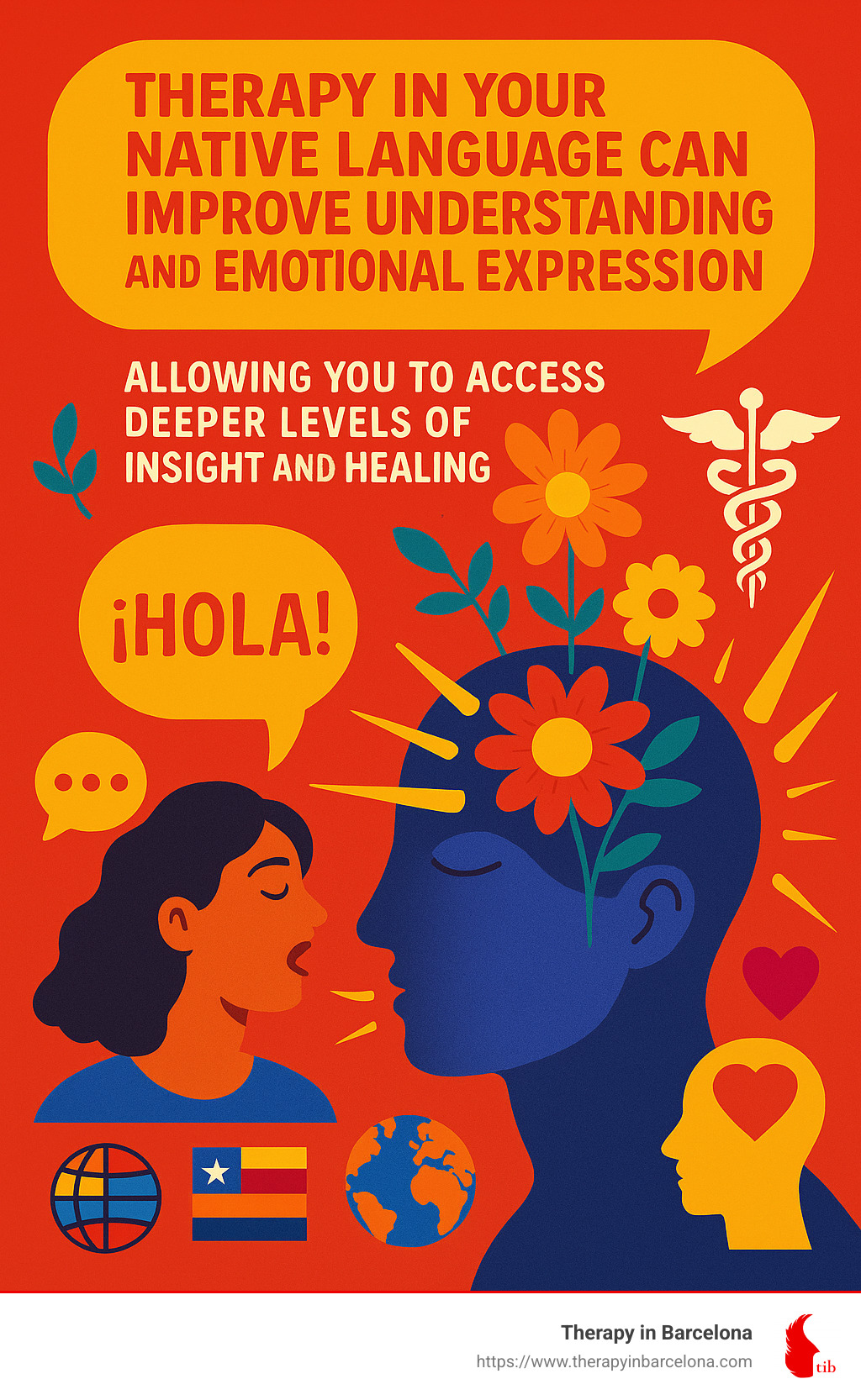
When it comes to therapy, expressing your emotions honestly and authentically is crucial. “Therapy in your native language can improve understanding and emotional expression, allowing you to access deeper levels of insight and healing,” notes Kamen Petrov, a Jungian psychotherapist who provides therapy in English in Barcelona.
Expressing yourself fully—without having to constantly translate your thoughts or feelings—allows you to dive deeper into your emotional experience. Studies consistently show that our emotional vocabulary is richest in our native language. This makes it easier to explore sensitive topics such as trauma, childhood experiences, and complex feelings, laying the groundwork for more meaningful therapeutic work.
Cultural Understanding and Shared Context
Finding an English-speaking psychotherapist who specialises in the expat experience means receiving support from someone who truly understands where you’re coming from culturally. A therapist who is familiar with both your home culture and the challenges of adjusting abroad can help you steer life’s complexities in a more direct and efficient way.
One client of Therapy in Barcelona shared their experience vividly: “I spent a lot of money on therapists who didn’t really acknowledge my needs. My therapist at Therapy in Barcelona is the first therapist that actually gives me what I need. She understands both where I come from and what I’m going through here. We don’t waste time explaining cultural references or the basics of expat life.”
This cultural, linguistic, and experiential connection creates an immediate understanding, allowing you to focus fully on the issues at hand.
Reduced Cognitive Load and Greater Comfort
Living abroad means regularly navigating life in a second language, adding a constant layer of mental effort. Therapy should be a space of relief, rather than an additional source of stress. With an English-speaking psychotherapist, you don’t have to expend energy searching for the right translation or worry about misunderstandings. Instead, you’re free to focus entirely on your emotional wellbeing, creating a sense of familiarity and comfort that can improve your therapeutic experience.
Building a Stronger Therapeutic Alliance
A successful therapeutic outcome greatly depends on the strength of your connection with your therapist—the therapeutic alliance. Working with an English-speaking psychotherapist who understands your background and speaks your language facilitates trust and rapport. You will find it easier to open up, feel understood, and build a relationship that supports meaningful change.
At Therapy in Barcelona, our therapists combine professional expertise with deep empathy. We’ve seen how therapy conducted in our clients’ first language strengthens the therapeutic alliance and significantly improves outcomes.
A Step Towards Greater Emotional Wellbeing Abroad
Choosing therapy in your native language isn’t just a practical choice—it’s one that honours your emotional health and overall quality of life abroad. Whether you’re experiencing isolation, challenging life transitions, or simply want a secure space to process your experiences, Therapy in Barcelona provides custom support for English-speaking expats.
With personalised therapist matching, compassionate care, and a deep understanding of international life, Therapy in Barcelona makes it easier than ever to access meaningful and effective therapy.
If you’re ready to explore these benefits firsthand, don’t hesitate to reach out to Therapy in Barcelona and begin your journey of emotional wellness today.
How to Find a Reputable English-Speaking Psychotherapist
Finding quality mental health support as an expat can initially feel daunting, but breaking the process down into clear steps can make it manageable—and even empowering. Here’s your guide to finding an English-speaking psychotherapist who truly understands your needs.
First things first, take a moment to reflect on your specific requirements. Think about what led you to seek support: Are you experiencing cultural adjustment challenges, relationship issues, or feeling anxious or isolated in your new country? Consider also practical factors like your preferred therapeutic approach, availability, budget, and whether you prefer in-person sessions or flexible online therapy.
With these requirements clear in your mind, you can start exploring specialised services. Platforms like Therapy in Barcelona carefully vet their therapists and specifically cater to expats and internationals. Such platforms offer detailed profiles to help you identify therapists with the professional qualifications and cultural sensitivity crucial for expat life.
Don’t underestimate the power of word-of-mouth recommendations, especially within expat communities. Joining online forums or Facebook groups for internationals in your city—whether you’re in Barcelona, Madrid, Valencia, or elsewhere—can connect you with individuals who have experienced similar struggles. These communities often share recommendations based on trusted personal experiences.
Additionally, international schools, companies, and even your home country’s embassy or consulate can be valuable resources. These organisations frequently maintain lists of English-speaking healthcare providers, including mental health professionals who specialise in supporting expats.
If you’re struggling to find options locally, teletherapy can be a lifeline. Remote therapy options aren’t limited by geography, allowing you access to skilled English-speaking psychotherapists wherever you are. Therapy in Barcelona offers online sessions, providing essential emotional support when local services are limited.
Whichever route you take, always prioritise verifying your therapist’s credentials and experience. Look for clear indications of professional licensing, educational background, and specialisation in expat issues such as cultural transitions, anxiety, relationship challenges, and identity struggles. This step ensures you’ll work with someone truly equipped to understand your unique experience.
Utilizing Online Directories and Platforms
Online directories have changed the game for expats seeking specialised support abroad. When browsing platforms to find an English-speaking psychotherapist, keep a few things in mind.
Use the search filters provided by directories to get specific about your needs—this could mean filtering by language fluency, therapeutic approach (like Cognitive Behavioural Therapy or Acceptance and Commitment Therapy), or availability to fit your schedule. While many therapists list themselves as “English-speaking,” it’s good practice to look for explicit mentions of their fluency or training in English-language therapy.
Seek out therapists who explicitly highlight their experience working with expatriates, Third Culture Kids (TCKs), or internationals facing intercultural challenges. Their profiles typically mention international living experience, specialised training, or a clear commitment to culturally sensitive support. Reading through profiles attentively will help you gauge the therapist’s suitability for your particular situation.
Questions to Ask Potential English-Speaking Psychotherapists
Once you’ve found potential therapists, it’s time to reach out. The better informed you are, the more likely you’ll find the right therapeutic fit. Be proactive by asking targeted questions to gauge compatibility and comfort:
- “Can you tell me about your experience working specifically with English-speaking expats?”
- “How do you address cultural differences and unique expat challenges in therapy?”
- “What therapeutic approaches do you use, and how might you adapt them for someone in my particular situation?”
- “Have you lived abroad yourself, or do you have significant professional experience with international clientele?”
- “What strategies do you use for navigating common expat issues like isolation, anxiety, or adjusting to cultural differences?”
- “How flexible are you with scheduling—especially if I’m travelling or dealing with time zone differences?”
- “Could you explain your fees clearly, including session costs, payment methods, and any flexible pricing options you offer?”
- “What is your experience in handling concerns similar to mine—such as anxiety, relationship challenges, or cultural adjustment issues?”
Taking the time to ask these questions upfront will allow you to build confidence, trust, and comfort before you even start therapy, setting you up for a positive therapeutic experience.
Qualifications to Look for in an English-Speaking Psychotherapist
When searching for therapy across different countries and systems, understanding credentials becomes particularly important. Let’s explore what you should consider when evaluating an English-speaking psychotherapist abroad.
Professional Licensing and Regulation
Mental health professions follow different regulations depending on the country. A qualified English-speaking psychotherapist should be transparent about their credentials and how they’re authorized to practice in their location.
Look for professionals with recognized credentials like degrees from accredited institutions and valid professional licenses or registrations. Membership in respected organizations such as the British Psychological Society, American Psychological Association, or equivalent professional bodies is another positive indicator of legitimacy.
Ethical practitioners will also be upfront about their limitations—what they can and cannot offer based on their qualifications and jurisdiction. This transparency is a hallmark of professionalism.
One client at Therapy in Barcelona shared their experience: “I spent a lot of money on therapists that didn’t really acknowledge my needs. My current therapist is the first who actually gives me what I need.”
Educational Background and Specializations
Beyond basic qualifications, consider whether a therapist has specialized training relevant to your specific situation:
Training in cross-cultural issues is particularly valuable when working with an English-speaking psychotherapist abroad. Look for formal education or continuing professional development in cultural competence, which helps therapists understand diverse perspectives.
Expat-specific knowledge is invaluable—understanding transition issues, cultural adjustment, and identity challenges that come with international living can make a significant difference in therapy outcomes.
Also consider therapists with specializations in your concerns, whether that’s trauma, relationships, anxiety, or other issues you’re facing. Additional training in these areas often translates to more effective support.
Professional Experience
The breadth and depth of a therapist’s experience can significantly impact their effectiveness with your unique situation:
Years of practice generally indicate a wider range of situations encountered and strategies developed. More experienced therapists have typically worked through complex scenarios similar to yours.
Diversity of clientele matters—therapists who have worked with people from various cultural backgrounds develop nuanced approaches to cross-cultural challenges.
Many effective therapists for expats have personal international experience themselves. Having lived abroad, they understand the complexities of cultural adaptation, language barriers, and identity shifts that come with international living.

Importance of Cultural Understanding in an English-Speaking Psychotherapist
Cultural competence extends far beyond language proficiency. An effective English-speaking psychotherapist for internationals should demonstrate:
Awareness of cultural biases is essential—understanding how their own cultural background influences their perspective and being open to examining these biases creates space for authentic connection.
A good therapist will have knowledge of cultural variations in how mental health, family dynamics, and personal values are expressed and understood across different cultures.
Look for skill in navigating cultural differences within the therapeutic relationship itself. The ability to discuss and work through cultural misunderstandings as they arise shows adaptability and cultural sensitivity.
Perhaps most importantly, an appreciation for the expatriate experience means understanding the unique stressors and growth opportunities that come with international living. This awareness creates a foundation of trust that allows for deeper therapeutic work.
As one Therapy in Barcelona client noted: “I feel accepted, respected and the real interest and importance in my problems. My therapist is always 100% with me and motivates me.”
When your therapist understands both where you come from culturally and the challenges of where you are now, you can focus on healing rather than explaining the basic context of your experience. This cultural attunement creates a foundation of trust that makes therapy more efficient and effective for internationals seeking support.
Exploring Remote and Online Therapy Options
The digital age has made accessing mental health support easier than ever—especially for expats seeking an English-speaking psychotherapist. Online therapy has opened up possibilities that were once unimaginable, bringing culturally sensitive and specialised support right to your doorstep, wherever you are in the world.
Advantages of Online Therapy for Expats
One of the most significant benefits of remote therapy is global access to specialists. When you choose online therapy, you’re no longer limited by your geographical location. You can find exactly the right therapist for your needs, even if they’re based in a different city or country. This means you can connect with an English-speaking psychotherapist who truly understands the unique challenges of the expat experience—whether you’re in Barcelona, Madrid, Valencia, or elsewhere in Spain.
Online therapy also ensures continuity of care, especially if you move frequently or travel a lot. Having a consistent therapeutic relationship provides stability during transitions, keeping you supported no matter how your life changes.
Comfort is another significant benefit. Being able to have therapy sessions from your own home reduces stress. There’s no rushing through traffic or navigating public transport. You can relax in a familiar environment, feeling safer and more open to the therapeutic process.
Additionally, online sessions often offer flexible scheduling, making it easy to find appointment times that suit your busy life or unusual working hours. Therapists who work online are typically experienced in accommodating different time zones and are often able to offer evening or weekend appointments that suit your schedule.

Potential Challenges of Remote Therapy
While remote sessions are incredibly beneficial, it’s important to remain mindful of certain potential drawbacks as well.
One common challenge is technical issues. Internet connectivity problems or video call disruptions can sometimes interfere, breaking the flow of the session. It’s worth investing in a stable internet connection and discussing backup plans with your therapist.
Privacy can also be a concern. Finding a completely quiet, secure space at home isn’t always easy, especially if you’re sharing your living environment. If possible, try to arrange a private corner or room where you can speak freely without distractions.
Regulatory complexities can arise too. Some therapists face restrictions on providing services across national borders, depending on licensing and local laws. Always check with your therapist to ensure they’re legally allowed to offer therapy in your location.
Lastly, non-verbal cues are sometimes harder to read in a video call setting. While skilled online therapists are adept at navigating this limitation, it’s something to keep in mind. Open communication about how you’re feeling during sessions can help reduce this barrier.
Selecting the Right Online Platform
Choosing the right online therapy platform or provider is crucial for your comfort and safety.
Look for platforms that prioritise security and confidentiality, using end-to-end encryption and adhering to strict privacy regulations. The ease of use is equally important—opt for straightforward technology that won’t add extra stress before sessions.
Consider session formats as well. Many platforms offer multiple options such as video, audio, or even text-based sessions. Think about what makes you feel the most comfortable and effective in your therapy journey.
Also, be sure to clarify the crisis protocols with your therapist. What happens if there’s a crisis during your session? Having a clear understanding can offer peace of mind.
Confidentiality in Remote Therapy Settings
Confidentiality deserves special attention when working with an English-speaking psychotherapist online. You should feel confident discussing sensitive topics, knowing your privacy is protected.
Ask potential therapists clear questions about their data protection practices. How do they protect your personal information and session content? Are sessions ever recorded, and if so, how are those recordings stored and managed?
Understand the platform’s documentation and note-keeping procedures. How are therapy notes kept secure? Also, what is the policy regarding third-party access—are there secure measures to ensure your session content stays confidential?
Lastly, make sure both you and your therapist understand how local privacy laws in your location and theirs might interact.
As one Therapy in Barcelona client shared:
“My experience has been very smooth and well-handled at a time when I was particularly vulnerable. The online system works perfectly and provides the privacy I need.”
Online therapy offers an accessible, flexible, and comfortable way to access mental health support from wherever you are. Whether in Barcelona or beyond, Therapy in Barcelona provides secure, professional, and culturally sensitive online sessions designed specifically for the expat community. For more information, visit our page about expat therapy services.
Costs Associated with English-Speaking Therapy Services
When you’re considering therapy, understanding the financial commitment involved can help you plan effectively. Costs for working with an English-speaking psychotherapist can vary significantly, influenced by location, therapist experience, and the type of therapy you choose.
Let’s look at what typically influences these costs and how you can make therapy more affordable.
Typical Fee Structures
Generally speaking, therapy prices differ based on session formats and therapist qualifications:
Traditional in-person therapy sessions in 2025 at Therapy in Barcelona usually range between €70 to €95 for a standard 50-minute session. If you’re seeking more specialised therapy and longer sessions—perhaps for specific issues such as trauma or relationship counselling—you might expect to pay slightly more, typically between €125 to €275 per session.
Online therapy services offer more flexibility. Typical prices for remote sessions range from €70 to €95 per session.
Choosing group therapy sessions can be a great way to access support at a lower cost, as these sessions generally have a lower price per participant compared to individual therapy.
Factors Affecting Cost
Several factors impact the cost of seeing an English-speaking psychotherapist:
- Geographic location: Therapy prices can vary greatly depending on where you live or where your therapist is based. Larger cities or major international hubs like Barcelona, Madrid, or Valencia typically have higher therapy rates than smaller towns or rural areas.
- Therapist credentials and experience: Therapists with extensive experience, specialised training, or additional certifications typically charge higher fees, reflecting their higher level of expertise.
- Frequency and duration of sessions: Most people attend weekly sessions, but you may choose fortnightly or even bi-weekly sessions depending on your needs and budget. Naturally, attending fewer sessions per month will reduce your monthly therapy expenses.
- Insurance coverage: Some international health insurance plans may partially or fully cover therapy services. It’s important to verify this with your insurance provider early in the process.
Making Therapy More Affordable
At Therapy in Barcelona, we understand that financial considerations can sometimes become a barrier to accessing the support you need. Thankfully, there are several approaches you can explore to reduce therapy costs:
Many therapists, including most of the therapists on our team at Therapy in Barcelona, offer a sliding scale fee structure. This means your therapy costs are adjusted to your financial circumstances, helping to ensure that financial stress doesn’t prevent you from receiving essential mental health support.
It’s also worthwhile to check your insurance policy. Usually, this will require specific documentation from your therapist, so clarify these details in advance. Therapy in Barcelona is a private pay services so you need to pay in full and then submit your invoice to your insurance company. We do not guarantee reimbursement.
Your therapist can provide invoices if you want to seek reimbursement from your insurer for your sessions. We recommend you talk to your insurer about your level of coverage and the possibility of reimbursement before making an appointment.
If you’re employed internationally, your company may offer an Employee Assistance Programme (EAP). These programmes often provide confidential counselling sessions free of charge or at a reduced cost to employees.
For international students, universities and educational institutions often have in-house counselling services available for free or at a low cost.
Additionally, opting for group therapy can significantly reduce costs while providing meaningful support and connections with others facing similar challenges.
Finally, you might consider shorter-term therapeutic approaches, such as Solution-Focused Brief Therapy, which focus on immediate solutions and typically involve fewer sessions, helping you manage overall expenses. These typically treat the symptoms rather than the problem and may not offer long lasting changes.
As one client from Therapy in Barcelona on Reddit shared, “I appreciate that they offered a sliding scale. It made it possible for me to continue therapy during a financially difficult period without adding financial stress.”
Investing in your mental health is crucial, and while the costs are an important consideration, don’t let finances deter you from seeking the emotional support you deserve.
Overcoming Barriers to Accessing Therapy
Even when you’ve found an English-speaking psychotherapist who feels like the right fit, you might still encounter certain problems that make starting therapy seem daunting. Let’s talk about how you can overcome some of the most common barriers, making it easier to prioritise your mental health and wellbeing abroad.
Financial Considerations
One significant hurdle for many expats seeking therapy is cost. Therapy is a valuable investment in your emotional health, but financial constraints are a real concern for many. However, don’t let finances deter you—there are ways to make therapy more affordable and accessible.
When reaching out to an English-speaking psychotherapist, be upfront about your budget. Many therapists, including most of the team at Therapy in Barcelona, are open to discussing your financial situation and might offer reduced fees or sliding-scale options. Package rates for multiple sessions can also reduce overall costs, making ongoing therapy more manageable. Additionally, if regular sessions feel financially challenging, talk to your therapist about spacing out appointments to fit your budget without losing momentum.
Don’t forget to check your home country’s health system or your international insurance provider to see if they might cover remote therapy sessions. Many expats don’t realise their home insurance or employer’s health assistance programs may offer reimbursements or partial coverage, making therapy more accessible than initially thought.
Scheduling Challenges
Another common obstacle—especially for busy expats juggling work, family, and the constant demands of adapting to life abroad—is finding the time for therapy sessions. It’s easy to feel therapy is something you’ll do “when you have time,” but prioritising your mental health is essential.
Think of therapy appointments as important commitments—not optional extras. Block off your therapy times in your calendar, treating them as non-negotiable self-care moments. Look specifically for therapists who can offer flexible scheduling, including early morning, evening, or weekend sessions. If your schedule is especially unpredictable, explore asynchronous online therapy options, which allow you to communicate with your therapist at your own pace, without rigid appointment times.
Cultural Stigma Around Mental Health
Let’s face it—there’s still stigma surrounding mental health in many cultures. That stigma might create hesitation or anxiety about seeking help, especially if you come from a background where therapy isn’t widely accepted or understood.
Seeking support is a courageous step, not a sign of weakness. Cultural norms from your home country might unconsciously influence your feelings about therapy. Reflecting on this can help you move past shame or embarrassment. One client at Therapy in Barcelona shared their initial anxiety: “I was very anxious to start therapy when I first contacted Therapy in Barcelona. But from the beginning, there was no judgement, and quickly even my family noticed positive changes.”
If stigma or privacy concerns make you reluctant, starting with an initial consultation or exploring online therapy in a more private setting can be a gentle way to ease into the process. Therapy in Barcelona provides a safe, judgement-free space to explore any cultural concerns or hesitations you might have about therapy.
Language Concerns
Sometimes, even if you’ve found an English-speaking psychotherapist, you might still worry about whether they’ll truly understand you, especially if English isn’t their first language. Make sure you’re clear about your expectations and comfort level. At Therapy in Barcelona, all therapists speak fluent English and all are expats themselves, making cultural and linguistic understanding core parts of their practice. In addition to English, the therapists at Therapy in Barcelona speak French, German, Austrian-German, Swiss-German, Swedish, Portuguese, Afrikaans, Polish, Spanish and Catalan.
Tips for Maximizing Your Therapy Sessions
To truly benefit from your therapy experience, it’s helpful to actively participate in the sessions and carry the insights you gain into your daily life.
Before each session, take a few minutes to prepare and reflect on what’s important for you to discuss. Being honest and direct with your therapist about your thoughts and feelings helps build trust and makes therapy more effective. Don’t hesitate to provide feedback—letting your therapist know what works for you and what doesn’t ensures the sessions remain meaningful and relevant.
Between sessions, practice what you’ve learned. Applying new insights and strategies to your daily life can significantly amplify the benefits of therapy. Collaboratively setting clear, achievable goals with your therapist also keeps you motivated and focused.
Lastly, be gentle and patient with yourself. Real change takes time and consistent effort. Regular attendance builds momentum, deepens the therapeutic work, and improves your overall progress.
One Therapy in Barcelona client shared a profound insight: “I will never forget my first session, how sad and hopeless I felt, and all the doubts I had about therapy. Each session was a relief. My therapist taught me so much that I now feel confident facing the challenges life throws my way.”
Overcoming these common barriers—financial concerns, scheduling conflicts, cultural stigma, and linguistic worries—is entirely possible. At Therapy in Barcelona, we understand these challenges intimately. We’re here to support you every step of the way, ensuring your therapeutic journey abroad is as smooth, meaningful, and empowering as possible.
Conclusion
Finding an English-speaking psychotherapist abroad isn’t just about practicality—it’s a meaningful step towards thriving emotionally as you steer the highs and lows of international life. Being able to fully express yourself in your native language and having a therapist who genuinely understands the expat experience creates an ideal space for emotional wellbeing and growth.
Of course, the journey to find the right therapist might feel overwhelming at first. But remember, taking that first step towards seeking support is already courageous and empowering. Allow yourself patience and kindness as you explore options and find the right therapeutic match—it truly is worth the effort.

At Therapy in Barcelona, we deeply understand what you’re going through because we’ve been there ourselves. Founded in 2011 by Leigh Matthews, an Australian Psychologist—and expat herself—Therapy in Barcelona was created to meet the unique mental health needs of Barcelona’s international community. Leigh experienced first-hand the struggle of initially adapting to a new culture and managing life’s stresses without access to culturally sensitive, English-language support. Her personal journey inspired her to build a supportive sanctuary specifically customised for expats like you.
Today, our team of psychology-trained therapists are not just professionals—they’re expats themselves. They intimately understand the challenges of cultural adjustment, isolation, identity changes, and the many stresses expats face. Our therapists offer compassionate care, blending professional expertise with genuine empathy born from shared experiences.
One Therapy in Barcelona client beautifully captured the transformative potential of finding the right therapist:
“Therapy with you has transformed my life. My relationships—with others and myself—have improved tenfold. I now see challenges as opportunities for growth and find deeper meaning in everyday experiences.”
Taking that initial step—reaching out for an introductory consultation—might seem daunting, but it can open doors to greater self-awareness, resilience, and a more fulfilled international experience. You’re not alone in this journey—we’re here, ready to support you every step of the way.
For more information and helpful resources, explore our expat therapy services or reach out directly for a free, no obligation discovery call. Your wellbeing matters, and we’re committed to helping you thrive abroad.
As we look ahead to 2025 and beyond, Therapy in Barcelona remains committed to providing up-to-date, culturally sensitive therapy services for expats worldwide. Regardless of how global dynamics change, our dedication to personalised therapist matching and empathetic care ensures that English-speaking individuals continue to find the support they need to steer life abroad.
