


Stay Calm and Carry On: Essential Expat Stress Management Tips

Expat stress management is crucial for anyone living abroad.
Moving to a new country can be exciting, but it also brings challenges that can stress anyone. Here’s a quick list of what expats can do to manage stress:
- Meditate daily: Even a few minutes can help you stay calm.
- Eat a balanced diet: Local foods can be fun and nutritious.
- Stay physically active: Exercise is key to both mental and physical health.
- Build a support network: Connect with other expats or locals for support.
Living in a vibrant city like Barcelona offers many opportunities for growth, but it can also be overwhelming. Expats often face cultural differences, language barriers, and feelings of isolation, which can contribute to stress and anxiety.
Take Emily, for example. A 34-year-old professional from the UK, she moved to Barcelona seeking to “live the dream’ but found herself unexpectedly lonely. While Emily is a fictional example, many expats share her experience. Dealing with the gulf between expectations and reality and the challenges of living abroad can be tough, but adopting effective stress management strategies can help.

Understanding these methods not only helps in maintaining mental well-being but also enriches the overall expat experience. Let’s explore the essentials that can ease these stressors and make living abroad a rewarding journey.
Understanding Expat Stress
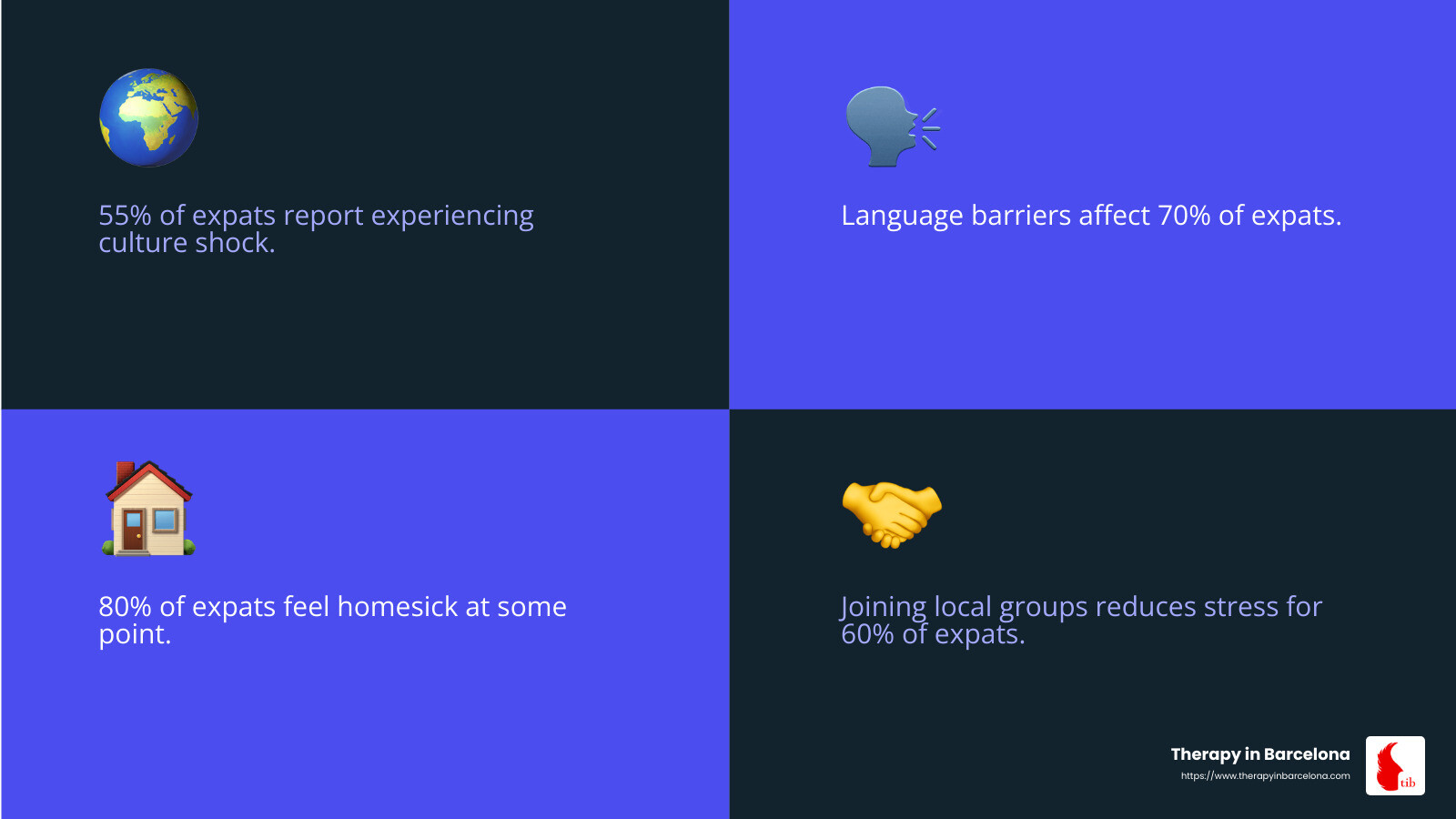
Living abroad can be an exciting trip, but it’s not without its challenges. Expat stress management is essential for maintaining mental well-being. Let’s explore some common stressors expats face: cultural adjustment, language barriers, and homesickness.
Cultural Adjustment
Moving to a new country often means adapting to a different culture. This can be thrilling but also overwhelming. The initial excitement, known as the honeymoon phase, can quickly give way to frustration and confusion. Understanding cultural norms and behaviours is crucial to easing this transition.
Imagine arriving in a busy Barcelona market, eager to experience local life, only to feel lost amid unfamiliar customs and practices. This is a common experience, and recognizing it is the first step toward adjustment.
Tip: Accept cultural humility by learning about local customs and participating in cultural activities. This not only helps in understanding your new environment but also in forming meaningful connections with locals.
Language Barriers
Language is a significant hurdle for many expats. Not being able to communicate effectively can lead to feelings of isolation and frustration. Even everyday tasks, like ordering food or asking for directions, can become daunting.
Take Emily, for example. She found her lack of Spanish proficiency made simple activities feel like monumental challenges. This is a common struggle, but it can be overcome with patience and practice.
Tip: Enroll in language classes or use language-learning apps. Even basic language skills can significantly improve your confidence and interactions with locals.
Homesickness
Being far from home can trigger intense feelings of loneliness and longing. Missing family, friends, and familiar surroundings is natural but can be distressing if not addressed.
Tip: Stay connected with loved ones through regular video calls and social media. Planning visits home or inviting friends and family to visit can also help bridge the distance.
Understanding these stressors and how they affect your mental health is the first step in managing them effectively. Let’s explore techniques to help you steer and thrive in your new environment.
Expat Stress Management Techniques
Living abroad can be thrilling, but it comes with its own set of challenges. Expat stress management is about finding effective ways to cope with these challenges. Let’s explore some practical strategies using the 5 A’s: avoid, alter, adapt, accept, and be active.
Avoid
The first step in managing stress is to identify and, where possible, avoid stressors. For instance, if crowded places make you anxious, try visiting popular spots during off-peak hours. This simple strategy can help you enjoy your new surroundings without feeling overwhelmed.
Alter
Sometimes, modifying your situation can significantly reduce stress. If language barriers are causing frustration, consider altering your approach by learning key phrases in the local language. As Emily finded, even a basic grasp of Spanish made her daily interactions smoother and less stressful.
Adapt
Adapting involves changing your expectations and being flexible. Accept the differences in your new environment. For example, if you’re used to a lifestyle, adjusting to the more relaxed pace in some parts of Barcelona might take time. The ability to adapt is a powerful tool in reducing stress.
Accept
Acceptance is crucial in managing stress. Recognize that some things are beyond your control, like cultural differences or homesickness. By accepting these realities, you free yourself from unnecessary frustration. This mindset shift can lead to a more peaceful and fulfilling expat experience.
Be Active
Staying active is a proven way to combat stress. Regular physical activity, whether it’s a morning jog along the beach or a yoga class, can boost your mood and energy levels. Barcelona offers a variety of outdoor activities that can help you stay fit while exploring your new home.
Incorporating these strategies into your daily routine can make a significant difference in how you experience life abroad. By managing stress effectively, you open the door to a more enjoyable and enriching expat journey. Next, let’s explore how building a support network can further improve your well-being.
Building a Support Network
When living as an expat, building a strong support network is essential. It helps you feel connected, reduces feelings of isolation, and provides a safety net during challenging times. Let’s explore ways to create this vital network.
Local Expat Groups
Joining local expat groups is a great starting point. These groups are often filled with people who understand your situation because they’ve been there themselves. They offer a sense of community and belonging, making it easier to steer the ups and downs of expat life.
Look for groups on platforms like Facebook or Meetup. Whether you’re in Barcelona or other cities like Madrid or Valencia, you’ll find groups custom to various interests and backgrounds. These gatherings can lead to friendships and offer practical advice on living in your new country.
Social Integration
Social integration goes beyond just meeting other expats. It’s about connecting with locals and immersing yourself in the culture. Language classes can be a bridge here. Not only do they help you communicate better, but they also introduce you to people who are eager to share their culture with you.
Volunteering is another excellent way to integrate socially. By contributing your time and skills, you meet people who share your values and interests. Plus, it gives you a sense of purpose and belonging.
Support Systems
A robust support system is like a safety net. It includes friends, family, and even professional services like Therapy in Barcelona. Having people to lean on during tough times is crucial. They provide emotional support and practical help, making your expat journey smoother.
Reaching out for help is a sign of strength, not weakness. Don’t be afraid to ask for help when you need it… asking for help isn’t a sign of weakness, it’s a sign of strength.
By actively seeking out opportunities to build connections, you create a support network that will provide you with the emotional support and companionship you need during your expat journey. This network is a cornerstone of effective expat stress management.
Next, we’ll dig into how practicing mindfulness and relaxation can further improve your well-being.
Practicing Mindfulness and Relaxation
Living abroad can be thrilling, but it often comes with stress and uncertainty. Practicing mindfulness and relaxation techniques can be a game changer for expat stress management. Let’s explore some effective methods.
Meditation
Meditation is a powerful tool for calming the mind. It helps you stay present and reduces stress. To start, find a quiet spot, sit comfortably, and focus on your breath. Let your thoughts float by without judgment. Just a few minutes each day can make a big difference in your mental well-being.
Leigh Matthews, the founder of Therapy in Barcelona, emphasizes the importance of meditation for expats. Her experience in supporting internationals shows that regular meditation can help manage the emotional ups and downs of living abroad.
Deep Breathing
Deep breathing exercises are simple yet incredibly effective. They help relax your body and mind. Try this: Inhale slowly through your nose, let the air fill your belly, and then exhale through your mouth. Repeat this process a few times. It’s like hitting a reset button for your stress levels.
Yoga
Yoga combines physical movement with breath control, promoting relaxation and flexibility. Many cities, including Barcelona, offer yoga classes custom for expats. These sessions not only improve your physical health but also connect you with a community of like-minded individuals.
Journaling
Writing down your thoughts and feelings can be therapeutic. Journaling allows you to process your experiences and reflect on your journey. Set aside time each day to jot down your emotions and thoughts. This practice helps you gain clarity and can be a comforting routine in the whirlwind of expat life.
By incorporating these mindfulness and relaxation techniques into your daily routine, you create moments of peace and self-reflection. They are essential tools for maintaining your mental health as you steer the challenges of living in a new country.
Next, let’s look at how taking care of your physical health can further support your expat experience.
Taking Care of Physical Health
Physical health is crucial for expat stress management. It gives you the energy to face new challenges and supports your mental well-being. Let’s explore some key areas to focus on.
Balanced Diet
Eating well is about more than just filling your stomach. A balanced diet fuels your body and mind. As an expat, explore the local cuisine while ensuring you eat plenty of fruits, vegetables, whole grains, and lean proteins. This mix provides the nutrients you need to thrive in your new environment. According to research, a nutritious diet boosts your energy levels and helps combat stress.
Stay Active
Regular physical activity is a stress-buster. It improves mood, increases energy, and improves overall health. Whether it’s a walk around your neighborhood, joining a local gym, or trying a new sport, staying active is essential. Many expats find that engaging in physical activities also helps them connect with locals and other internationals, creating a sense of community.
Sleep
Never underestimate the power of a good night’s sleep. Aim for 7-8 hours each night to allow your body and mind to recharge. Establish a bedtime routine to help you wind down—perhaps a warm bath or reading a book. Adequate sleep improves focus, mood, and resilience, making it easier to handle the ups and downs of expat life.
Hydration
Staying hydrated is simple yet vital. Water is essential for every function in your body. Keep a reusable water bottle with you and drink throughout the day. Proper hydration supports cognitive function and helps manage stress. It’s an easy way to boost your well-being as you steer your new surroundings.
Taking care of your physical health is a cornerstone of a successful expat experience. By focusing on these areas, you improve your ability to adapt and enjoy life abroad.
Next, we’ll address some frequently asked questions about expat stress management.
Frequently Asked Questions about Expat Stress Management
What is Expat Syndrome?
Expat Syndrome refers to the emotional stress many expats face when adapting to a new culture. It’s common to feel overwhelmed by cultural differences, language barriers, and homesickness. This stress can manifest in various ways, such as anxiety or depression.
For example, consider Emily, a fictional representation of many expats. She moved to Barcelona with excitement but soon found herself missing home and struggling to fit in. Emily’s story is not unique and highlights the emotional challenges many expats face.
Expat Child Syndrome is a related concept, affecting children who move abroad with their families. They may struggle with identity, feeling disconnected from both their home and host cultures. It’s important for parents to provide support and understanding during these transitions.
How to Deal with Expat Anxiety?
If you’re feeling anxious as an expat, know that you’re not alone. Many face similar challenges. Here are some steps to help manage anxiety:
- Seek Help: It’s okay to reach out for support. Consider talking to a therapist who understands expat experiences. Therapy in Barcelona offers culturally sensitive support custom to expats.
- Educate Yourself: Learn about your new culture and language. This knowledge can reduce misunderstandings and help you feel more at home.
- Build a Routine: Establishing a daily routine can provide a sense of stability and control, easing anxiety.
What are the 5 A’s of Stress Management?
Managing stress is crucial for expats. The 5 A’s of stress management offer practical strategies:
- Avoid: Identify stressors you can eliminate. Perhaps it’s limiting exposure to negative news or avoiding certain situations.
- Alter: Change your approach to stressors. For example, improve communication with colleagues to reduce workplace tension.
- Adapt: Adjust your expectations. Living abroad is a learning process. Be patient with yourself as you adapt to new norms.
- Accept: Some stressors can’t be changed. Accepting them can reduce frustration. Focus on what you can control.
- Be Active: Physical activity is a powerful stress reliever. Regular exercise boosts mood and energy, helping you tackle challenges with a clear mind.
By incorporating these strategies, you can better manage stress and thrive in your new environment.
Next, we’ll explore more on building a support network for expats.
Conclusion
Navigating the complexities of expat life can be challenging, but you’re not alone. At Therapy in Barcelona, we understand the unique problems faced by internationals living abroad. Our mission is to provide a sanctuary for the English-speaking community in Barcelona, offering culturally sensitive support tailored to your needs.
Personalised Therapist Matching
One of the key features that sets Therapy in Barcelona apart is our commitment to personalised therapist matching. We believe that the right therapist can make all the difference. Our process begins with a free findy call, allowing us to understand your specific needs and challenges. We then match you with a therapist who not only speaks your language but also understands your cultural background and personal journey. This ensures that you feel comfortable and supported from the very first session.
Culturally Sensitive Support
Living in a foreign country brings a unique set of challenges, from cultural adjustment to language barriers and homesickness. Our team of qualified therapists, many of whom are expats themselves, provide culturally sensitive support. They are well-versed in the nuances of expat life and equipped to help you navigate these challenges with empathy and expertise.
Therapy in Barcelona offers a range of therapeutic approaches, including Cognitive Behavioural Therapy (CBT), Acceptance and Commitment Therapy (ACT), and more, allowing us to tailor our services to meet your individual needs. Whether you’re dealing with anxiety, relationship issues, or the stresses of adapting to a new culture, our therapists are here to guide you through your journey.
A Supportive Community
Choosing Therapy in Barcelona means joining a community that values your strengths and is dedicated to helping you thrive. We are committed to providing a safe and supportive environment where you can explore your thoughts and feelings without judgment. Our goal is to empower you to embrace the expat experience, fostering personal growth and well-being.
If you’re ready to take the next step in managing your expat stress, reach out to us today. Let Therapy in Barcelona be your partner in navigating the complexities of life abroad. Together, we can help you find balance and fulfilment in your new environment.
For more information, visit Therapy in Barcelona.
