


Why Learning How to Cope with Stress at Work Matters More Than Ever

How to cope with stress at work is a top workplace wellness concern, and for good reason. With only 32% of employees thriving and 43% reporting high daily stress, the issue is widespread. For expats navigating new cultures and work environments, these pressures can feel even more intense.
Quick Answer: How to Cope with Stress at Work
- Identify your triggers – Keep a stress diary to spot patterns
- Use immediate relief techniques – Deep breathing, short walks, mindfulness
- Build long-term resilience – Regular exercise, healthy sleep, strong support networks
- Set clear boundaries – Limit after-hours emails, learn to say no
- Communicate proactively – Talk to your manager about workload and expectations
- Seek professional help when stress becomes chronic or overwhelming
This isn’t just about a bad day. The World Health Organization defines burnout as “a syndrome resulting from chronic workplace stress that has not been successfully managed.” When your fight-or-flight response is triggered daily by deadlines, difficult colleagues, or the pressure to prove yourself in a new country, it takes a significant toll.
High stress makes employees three times more likely to seek new jobs. But before updating your CV, know that proven strategies can help you regain control.
This guide offers practical, evidence-based techniques for managing work stress in the moment and for the long term. You’ll find actionable strategies for dealing with demanding bosses, cultural misunderstandings, or an overwhelming workload.
Understanding the Toll of Work Stress
Every job has stressful elements, from urgent projects to a colleague dropping the ball. Let’s explore the common sources of work-related stress and its effect on your physical and mental health.
Common stressors include low salaries, excessive workloads, lack of growth opportunities, poor management, and unclear expectations. For expats, these are magnified by cultural adaptation, language barriers, and the pressure to succeed far from home. This can make it harder to set boundaries or admit you’re struggling.
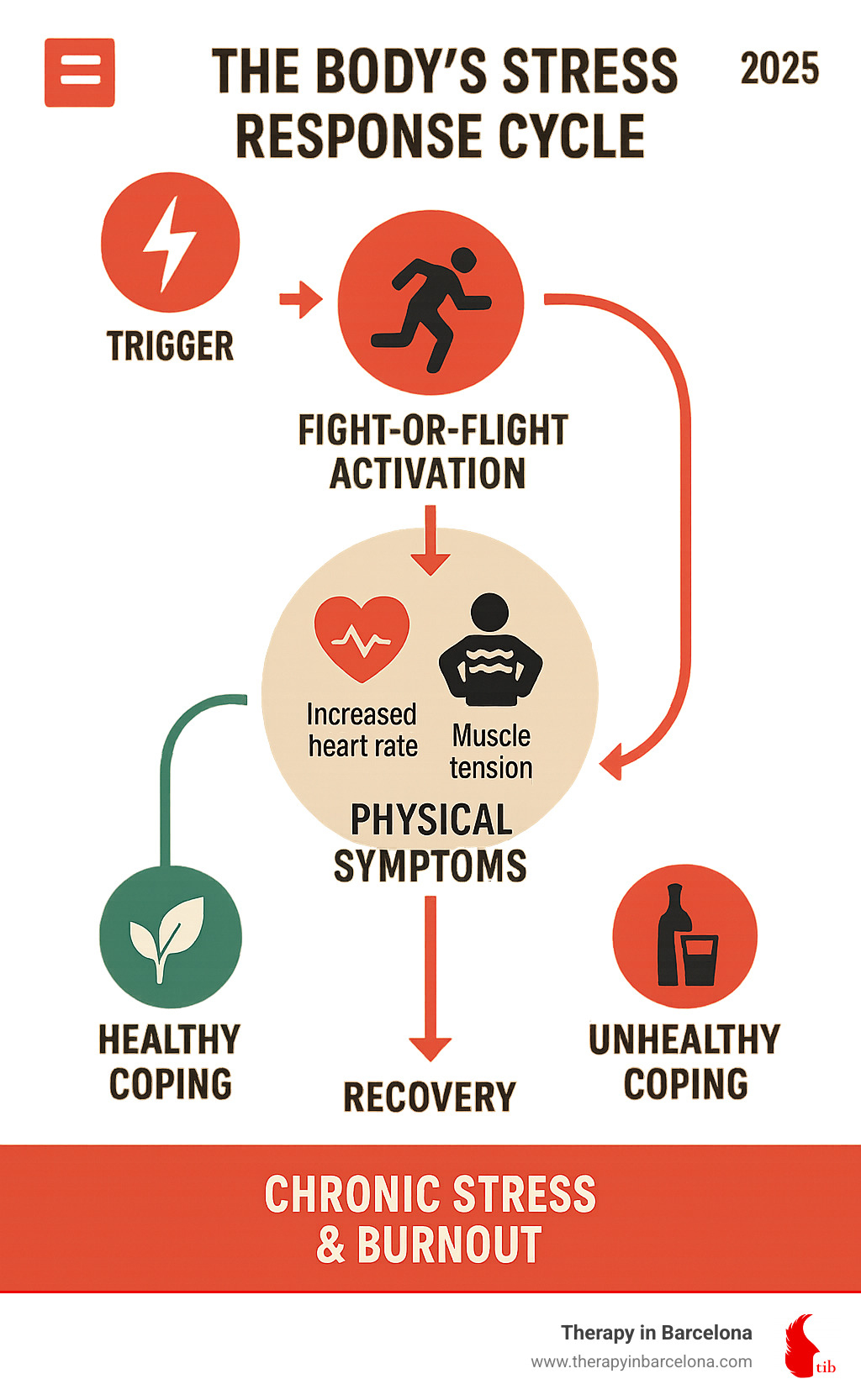
When you’re stressed, your body activates its fight-or-flight response. Your heart beats faster, your breath quickens, and your muscles tense. While this provides a temporary energy burst for a deadline, chronic activation from daily stress becomes detrimental.
What are the signs and symptoms of burnout?
Long-term unmanaged stress can lead to burnout, a psychological syndrome of overwhelming exhaustion, cynicism, and a sense of inefficacy. It’s a deep-seated weariness affecting your entire being. Signs include:
- Overwhelming exhaustion: Feeling physically and mentally depleted.
- Cynicism or depersonalisation: A negative, detached attitude toward your job.
- Reduced professional accomplishment: Feeling like nothing you do makes a difference.
Burnout is a serious occupational phenomenon, as recognised by the World Health Organization (WHO), resulting from chronic, unmanaged workplace stress.
How does chronic work stress affect your health?
The repeated activation of the stress response disrupts bodily systems and can weaken your immune system, interfering with healthy behaviours like exercise and sleep. Physically, you might experience headaches, stomachaches, muscle pain, or increased heart rate. Long-term, it increases the risk of serious health issues like cardiovascular disease.
Mentally, the impact is profound. Chronic stress is linked to anxiety and depression. Research shows that young people with heavy workloads are more likely to experience major depressive and generalised anxiety disorders, and studies suggest a link between burnout and depression and anxiety.
A toxic work environment—characterised by micromanagement, poor communication, and lack of recognition—is 10.4 times more likely to cause employee turnover, with 83% of American employees reporting work-related stress.

Your First Step: Identifying Personal Stress Triggers
To effectively cope with stress at work, you must first understand its source. We often spot major stressors like deadlines but miss the smaller, daily tensions that erode our well-being.
You might handle a major crisis calmly, then feel frazzled by a colleague’s loud phone calls or meetings that run over. These subtle stressors are just as draining because they often go unaddressed.
How can I identify my personal stress triggers at work?
The best way to identify your triggers is to become a detective of your own experience. Keep a stress diary for a week or two. Track not just big events, but also the small moments when you feel your shoulders tense or your mood shift.
Note your feelings and physical reactions throughout the day. Did you feel irritable after an email? Anxious before a team meeting? Did a headache creep in at 3 pm? Look for patterns. You might find stress peaks during specific tasks, times of day, or due to environmental factors like office noise.
Consider your work environment. Is your workspace cramped? Are there constant interruptions? These physical and social factors create an undercurrent of stress.
For expats, there’s an additional layer. Acknowledge expat-specific pressures: navigating cultural expectations, language barriers, or the feeling you constantly need to prove yourself. Perhaps you find it hard to say no to extra work or feel isolated without your usual support network.
Take Emily, a fictionalised example representing a common expat experience. A 34-year-old professional from the UK, she moved to Barcelona and found herself battling unexpected work stress. Through journaling, she finded her main triggers weren’t major deadlines, but Monday mornings with a disorganised to-do list, meetings with a dismissive colleague, and feeling culturally out of step. By identifying these specific triggers, Emily could address them strategically. She started organising her week on Sundays, developed new communication strategies, and used coffee chats to better understand the office culture.
This awareness is your foundation. Once you know what’s causing your stress, you can build targeted strategies to manage it.

In-the-Moment Techniques for Immediate Relief
Once you spot your stress triggers, you need a toolkit of strategies to deploy the moment pressure builds. Think of these as ‘fire extinguishers’ for stress, helping you regain calm right when you need it. These techniques include mindfulness, deep breathing, and grounding exercises.
How can mindfulness and relaxation help?
Mindfulness is like hitting the pause button on your mind. It’s the ability to pay gentle, non-judgmental attention to the present moment. When stressed, our minds often race. Mindfulness pulls you back to the ‘here and now’, calming your nervous system and countering the ‘fight-or-flight’ feeling. It helps you observe thoughts without getting caught in negative loops.
Here are a few simple 2-minute mindfulness exercises you can try at your desk:
- Deep Breathing: A classic for a reason. Inhale slowly through your nose (count of four), hold (four), and exhale slowly through your mouth (six). Repeat a few times to quickly shift your internal state. Research on breathing techniques confirms its powerful impact.
- Grounding through your senses: Anchor yourself in the present. Identify five things you can see, four things you can feel (your feet on the floor), three things you can hear, two things you can smell, and one thing you can taste.
- Progressive Muscle Relaxation: Gently tense a muscle group (like your shoulders) for a few seconds, then completely relax them. Notice the difference. Work through different muscle groups from your toes to your head to release physical tension.
- Micro-breaks: Step away from your desk for 1-5 minutes. Look out a window, stretch, or walk to the water cooler. This quick reset can prevent overwhelm.
- Listen to music: A 2021 study found that listening to music for just 10 minutes can lower stress hormones and boost your mood. Put on a calming or uplifting track.
What is cognitive reappraisal?
Cognitive reappraisal is a practical tool for shifting your perspective. It’s about changing how you think about a situation to change how you feel about it. Instead of accepting negative thoughts as fact, you treat them as hypotheses.
Here’s how it works:
- Treat thoughts as hypotheses: If you think, “My boss is mad at me,” ask yourself, “Is this definitely true, or just one interpretation?”
- Consider alternatives: Brainstorm other possibilities. Maybe your boss was preoccupied or received frustrating news. Your initial thought isn’t the only option.
- Reduce negative emotional responses: By seeking alternative explanations, you reduce the intensity of knee-jerk negative emotions. This practice builds a more resilient mindset, making you better equipped to cope with stress at work.
How to Cope with Stress at Work: Building Long-Term Resilience
While in-the-moment strategies offer immediate relief, learning how to cope with stress at work long-term requires building resilience. This means strengthening your capacity to handle challenges through a holistic approach that nurtures your physical health, relationships, and coping mechanisms.
What role does a healthy lifestyle play in stress management?
A healthy lifestyle is the bedrock of stress management. It won’t eliminate stressors, but it can reduce their emotional intensity and help you think more clearly.
Exercise is a powerful tool for stress management. Aim for at least 30 minutes of moderate activity three times a week. Physical activity acts as a release valve, boosting feel-good hormones. Even a brisk lunch-break walk can improve your perspective.
A healthy diet ensures your body is well-nourished to cope with stress. Reduce caffeine and sugar, as their temporary highs often lead to a mood and energy crash. Focus on a balanced diet to keep your energy steady.
The importance of sleep cannot be overstated. Adequate sleep fuels your mind and body; fatigue increases stress and can lead to irrational thinking. Most adults need seven to nine hours of sleep. Establish healthy sleep habits, like limiting screen time before bed.
How can I build a strong support network as an expat?
Living abroad can feel isolating, especially when work stress is high. A strong support network is invaluable for easing troubles and gaining perspective.
- Connect with colleagues: Build positive relationships at work. Ask for help and offer it to others. A co-worker can offer a sympathetic ear and practical advice.
- Nurture friendships: Keep in touch with trusted friends, both locally and back home. Sharing your feelings can alleviate tension.
- Schedule family calls: Regular calls can provide a sense of grounding and remind you of your support system beyond work.
- Join expat groups: Seek out communities of fellow internationals in Barcelona, Madrid, or Valencia. They understand the unique challenges of living and working abroad.
- Share feelings openly: Don’t bottle things up. Expressing your feelings to trusted individuals is therapeutic.
Avoid unhealthy coping mechanisms like alcohol or smoking, which create long-term problems. Instead, focus on healthy responses like learning a new skill or volunteering, which can build confidence and resilience.
If you find these strategies difficult to implement or your stress feels overwhelming, professional support can help. Individual therapy services offer a safe space to develop personalised coping strategies with therapists who understand the unique pressures of international life.

Proactively Reshaping Your Work Environment
Beyond in-the-moment techniques, learning how to cope with stress at work involves proactively shaping your environment. This means setting smart boundaries, managing your workload, and improving communication with your managers.
How to cope with stress at work by setting boundaries
The constant ping of notifications can make you feel ‘on’ 24/7. A key part of managing stress is carving out clear boundaries between your professional and personal life to prevent burnout and achieve work-life balance.
Establish clear rules for emails and messages, such as making your work inbox off-limits after 7 PM or on weekends. This commitment to disconnecting after hours is a powerful act of self-care. Protecting your personal time for socialising, exercise, or relaxing is non-negotiable for your well-being.
Learn to say ‘no’ respectfully when your plate is full. Try saying, “I’m focused on [Task A] right now. Can we discuss how this new request fits in?” This opens a dialogue instead of just refusing. Communicating your limits is crucial, especially for expats who feel extra pressure to prove themselves. Pushing yourself to exhaustion isn’t sustainable; your well-being is more valuable.
How to cope with stress at work by improving communication
Open, proactive dialogue with your superiors can prevent stress from festering. If you’re feeling overwhelmed, schedule a talk with your manager at a quiet time.
Come prepared. Clearly define the problem and its impact on you. This isn’t about complaining; it’s about focusing on solutions, not just complaints. Instead of saying, “I’m swamped,” try, “I’m finding it challenging to meet all deadlines with my current workload. Could we discuss prioritising tasks or delegating?” This shows you’re committed to a resolution.
If job requirements are unclear, don’t hesitate to clarify expectations with your supervisor. A clear understanding of your role can dramatically reduce anxiety. If the problem is a difficult boss or a toxic culture, approaching HR is an option. They can mediate or intervene.
Finally, remember to work smarter, not harder. Accept effective time management by prioritising tasks and letting go of perfectionism. Asking for help and sharing responsibilities can lighten the load significantly.
For expats, especially those working remotely across time zones in places like Barcelona, Madrid, or Valencia, these skills are vital. If you’re struggling, Therapy in Barcelona offers compassionate online therapy. Our expat-focused therapists understand these unique work setups and can provide culturally sensitive support to help you build a healthier, more balanced work life.
Frequently Asked Questions about Coping with Work Stress
It’s natural to have questions about work stress and whether what you’re feeling is a tough patch or something more serious. Here are some common queries.
What is the difference between feeling stressed and having burnout?
Stress is often characterised by over-engagement, urgency, and feeling overwhelmed, like you’re drowning in responsibilities but still fighting. Burnout is a state of depletion from prolonged, unmanaged stress. It involves disengagement, helplessness, and feeling emotionally exhausted and cynical, as if nothing you do matters.
Can I really reduce my stress if my boss or toxic culture is the main problem?
Yes. While you can’t change your boss or workplace culture alone, you can control your own response. Focusing on what you can control is key. Strategies like setting clear boundaries, focusing on controllable tasks, and building a strong support system can dramatically boost your resilience and reduce the impact of a difficult environment. You can also have a solutions-focused conversation with your manager or HR to advocate for yourself and make informed decisions about your long-term well-being.
When should I consider professional help for work stress?
Feeling consistently overwhelmed is a valid reason to seek support. You don’t need a formal diagnosis. Consider talking with a mental health professional if:
- Your stress is chronic and overwhelming, impacting daily life.
- You’re developing unhealthy habits (e.g., increased alcohol use, poor sleep).
- You’ve experienced a traumatic event at work or stress is triggering past trauma.
- Self-help strategies aren’t providing enough relief.
- You have persistent physical symptoms like headaches or stomach issues.
- Loved ones have expressed concern.
Unresolved work stress can impact your relationships and productivity. Seeking professional help is a proactive step towards managing your well-being.
You Don’t Have to Manage Work Stress Alone
Learning how to cope with stress at work as an expat in a city like Barcelona can feel overwhelming. The mix of professional pressures and cultural adaptation creates unique challenges. But you don’t have to figure it all out on your own.
We’ve covered key strategies: understanding your triggers, using in-the-moment relief techniques, building long-term resilience, and proactively reshaping your work environment. These skills are essential for a sustainable career, especially when navigating a new culture.
Seeking help is a sign of strength, not weakness. If stress becomes chronic and affects your health or relationships, professional support can make all the difference. A therapist offers a safe space and personalised strategies that fit your unique situation as an expat.
At Therapy in Barcelona, we understand these pressures intimately. Our founder, Leigh Matthews, is an Australian psychologist who moved to Barcelona in 2011. She experienced the challenges of adapting to a new culture and founded the practice to provide the culturally sensitive mental health support she saw was missing for the international community.
Our team of psychology-trained therapists are expats, bringing professional expertise and personal understanding to each session. We know the challenges of navigating Spanish work culture, the pressure of using a second language professionally, and the ache of missing your support network. While large online platforms offer convenience and the public system is an option, they may lack the personalised, culturally-sensitive support that is so crucial for the expat experience. At Therapy in Barcelona, we bridge that gap.
Your journey begins with a simple conversation. We take time to understand your needs and match you with the right therapist, because we believe the therapeutic relationship is everything.
We offer sessions at our offices in Barcelona’s Eixample district and online to expats worldwide, providing flexible support wherever you are.
You can find out more about our approach to work stress management and how we can support you. Our aim is to empower you to thrive, not just survive, and create the balanced life you moved abroad to find.
Asking for support isn’t admitting defeat. It’s taking control of your wellbeing and investing in your future.
