


Why Learning to Handle Workplace Stress Matters More Than Ever

If you’re searching for how to handle workplace stress, you’re not alone. It’s a major concern for professionals today, and the statistics paint a stark picture: 83% of American employees suffer from work-related stress, and for a quarter of them, their job is the number one stressor in their lives.
For expats, this can feel even more intense. Take Emily, a composite character representing the experiences of many internationals we support. As a 34-year-old professional from the UK now working in Barcelona, she finds that cultural differences, language barriers, and isolation can amplify everyday work pressures.
Quick strategies to handle workplace stress:
- Take regular breaks – Step away from your desk for 5-10 minutes every hour.
- Practise deep breathing – Use the 4-7-8 technique (inhale for 4, hold for 7, exhale for 8).
- Set clear boundaries – Learn to say no to excessive demands.
- Communicate openly – Discuss workload concerns with your manager.
- Build a support network – Connect with trusted colleagues and friends.
- Prioritise self-care – Maintain healthy sleep, exercise, and nutrition habits.
Research shows that work-related problems are now more strongly linked to health complaints than any other life stressor. But the encouraging news is that workplace stress is manageable. This guide will show you practical, evidence-based techniques to reduce stress and build long-term resilience, whether you’re dealing with demanding deadlines or the added complexity of a new work culture abroad.
Understanding the ‘Why’ and ‘What’ of Workplace Stress
Before diving into solutions, it’s crucial to identify the roots and warning signs of job-related pressure. This is your first step towards reclaiming control.
Common Causes of Stress in the Modern Workplace
Recognising your personal stress triggers is key. Common causes include:
- Heavy workloads and unrealistic deadlines that leave you constantly playing catch-up.
- Lack of control or autonomy over your work, which can make even simple tasks feel frustrating.
- Poor management practices, such as unclear expectations or inconsistent feedback.
- A toxic work culture, which research shows is 10.4 times more likely to cause employee turnover.
For expats in Barcelona or elsewhere, these stressors are often layered with cultural differences in communication styles, mentally exhausting language barriers, and the isolation of being far from home. At Therapy in Barcelona, we frequently support internationals navigating these complex Academic and Work Life challenges, understanding that adapting to a new professional environment requires culturally sensitive support.
Recognising the Warning Signs: Symptoms of Chronic Stress
Your body and mind send messages when stress is mounting. Learning to listen to this internal early warning system can protect you from burnout.

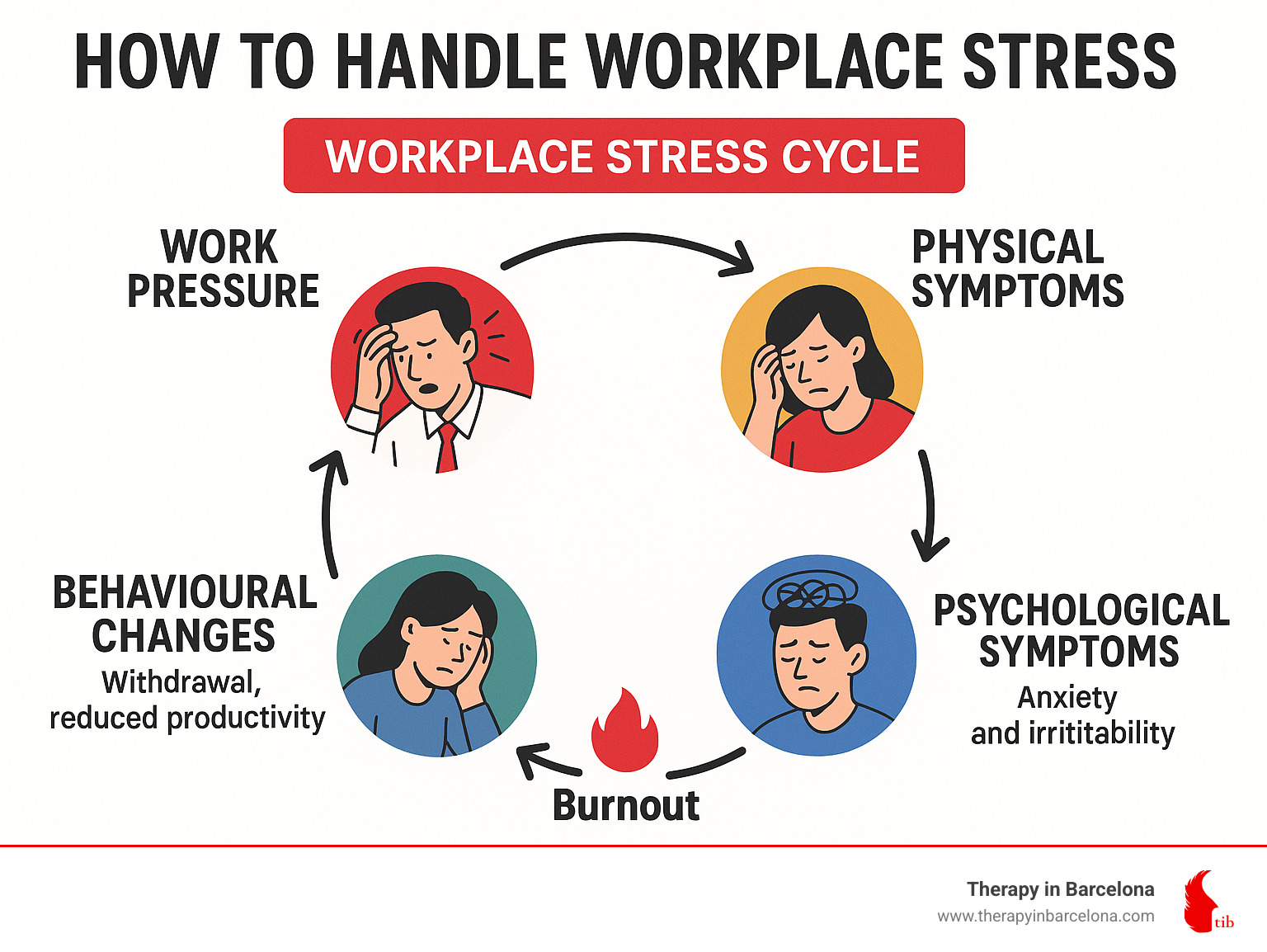
- Physical symptoms often appear first. Look out for persistent headaches, chronic fatigue, muscle tension, sleep disturbances, or stomach upsets.
- Psychological symptoms can be more subtle. These include increased anxiety, irritability, difficulty concentrating, or feeling detached from work you once enjoyed.
- Behavioural changes might include withdrawing from colleagues, taking more sick days, decreased productivity, or relying on unhealthy coping mechanisms like alcohol or comfort eating.
If you’re regularly experiencing several of these symptoms, it’s time to take action.
The Long-Term Impact of Unmanaged Stress
Ignoring workplace stress can lead to serious consequences. Burnout, recognised by the World Health Organization as a syndrome from unmanaged chronic workplace stress, is characterised by emotional exhaustion, cynicism, and reduced professional effectiveness. We often work with professionals experiencing burnout and have seen its profound impact.
Chronic stress can also lead to serious health issues, including cardiovascular problems and a weakened immune system. It significantly increases the risk of anxiety disorders and depression, harms your career trajectory, and strains personal relationships.
Leigh Matthews, an Australian Psychologist and founder of Therapy in Barcelona, explains from her own expat experience: “I’ve seen how workplace stress can compound when you’re navigating a new culture. The isolation and additional pressures of expat life can turn manageable work stress into something truly overwhelming. That’s why culturally sensitive support isn’t just helpful—it’s essential.”
Understanding these risks highlights why learning how to handle workplace stress is a vital investment in your health, career, and quality of life.
Your Personal Toolkit: How to Handle Workplace Stress as an Individual
While external factors play a role, empowering yourself with personal strategies is key. Here’s how to handle workplace stress with your own toolkit.
Master Your Workload and Set Healthy Boundaries
You have more control over your workload than you might think. The secret is working smarter and protecting your energy.
- Use time management techniques. Prioritise tasks by importance and urgency. Try “eating the frog” by tackling your most challenging task first. Use time-blocking to set aside specific periods for deep, focused work.
- Learn to say ‘no’ politely. When your plate is full, accepting more is a fast track to burnout. You can say, “I’d love to help, but given my current workload, I couldn’t give it the attention it deserves until next week. Would that work?”
- Set digital boundaries. Establish clear rules for when you check work emails, such as not after 7 PM or on weekends. This creates crucial mental space to recharge.
For expats, these boundaries can be challenging across time zones. At Therapy in Barcelona, we help clients steer these cultural nuances to find a sustainable Work-Life Balance and Finding Balance that honours both professional and personal well-being.
In-the-Moment Stress Relief Strategies
When stress hits suddenly, you need immediate relief. These quick, discreet techniques can calm your nervous system anywhere.

- Use your breath. Research indicates that breathing techniques can benefit your physical and mental well-being. Try the 4-7-8 technique: inhale for four counts, hold for seven, and exhale for eight. Repeat a few times.
- Take short, restorative breaks. A five-minute pause to walk to a window or step outside can help you reset and gain perspective.
- Move your body. A brisk walk, simple stretches at your desk, or even standing up can release tension and clear your head.
- Try other quick fixes. Listening to calming music, chewing gum, or mindfully observing an object can pull your mind away from stressors and anchor you in the present.
Building Long-Term Resilience to Workplace Stress
True mastery of how to handle workplace stress comes from building long-term resilience. This means strengthening your internal foundation.
- Maintain a healthy lifestyle. A nutritious diet, regular exercise, and quality sleep are non-negotiable for stress resilience. Physical activity is especially powerful, as it releases endorphins and helps regulate stress hormones.
- Develop hobbies outside work. Engaging in activities you love creates vital mental separation from your job and reminds you that you’re more than your job title.
- Build a robust support network. Cultivate relationships with friends, family, and trusted colleagues. For expats, this can be challenging. Leigh Matthews, an Australian Psychologist and founder of Therapy in Barcelona, explains, “Building new relationships in a foreign country while managing work stress can feel overwhelming. That’s why we focus on helping expats develop both individual coping strategies and the social connections they need to thrive.”
- Reframe negative thoughts. Practise self-compassion and challenge perfectionist tendencies. Treating yourself with kindness builds psychological resilience.
Creating a Healthier Work Environment: A Shared Responsibility
While personal strategies are essential, how to handle workplace stress is a shared responsibility. A supportive workplace requires effort from everyone to minimise stress at its source.
How to handle workplace stress by communicating effectively
Your voice is a powerful tool for shaping your work reality. Approach conversations as collaborative problem-solving.
- Talk to your manager constructively. Instead of saying, “I’m overwhelmed,” try, “I’m finding it challenging to maintain quality on all my projects. Could we discuss prioritising them?” Come prepared with specifics and potential solutions.
- Ask for support and resources. Requesting training, clarification, or access to employee assistance programmes is a sign of strategic self-advocacy, not weakness.
- Support struggling colleagues. Offer a listening ear without judgment, suggest a short break together, or gently remind them of company resources. Creating a psychologically safe environment where everyone feels heard is crucial, especially when navigating cultural differences.
What Employers Can Do to Reduce Workplace Stress
Employers have significant power to shape workplace stress levels, and supporting employee well-being is smart business.
- Foster a positive culture. Promote psychological safety, ensure leaders demonstrate empathy, and destigmatise mental health conversations.
- Provide mental health resources. Offer employee assistance programmes (EAPs) and access to counselling. Over 85% of employees believe employer actions would help their mental health.
- Promote genuine work-life balance. Offer flexible work arrangements, provide supportive leave policies, and respect employees’ time outside of work.
- Train managers in empathy and support. Equip managers to recognise warning signs, communicate effectively, and guide employees toward resources.
The Mutual Benefits of a Low-Stress Workplace
Investing in a low-stress workplace creates a positive cycle where employee well-being fuels organisational success.
- For employees: Benefits include improved health, greater job satisfaction, and better morale.
- For employers: This translates to increased productivity, lower turnover, and reduced absenteeism. Companies with strong well-being cultures also build stronger employer brands.
The World Health Organization estimates a $4 return for every $1 employers spend on treating common mental health issues, proving that supporting mental health is a sound financial investment.
As Leigh Matthews, an Australian Psychologist and founder of Therapy in Barcelona, observes, “When organisations truly support their international employees, they don’t just reduce stress—they open up incredible potential. Expats bring unique skills but need environments that nurture their strengths.”
Frequently Asked Questions about Handling Workplace Stress
Here are answers to common questions we hear from the international community about navigating workplace stress.
What’s the difference between normal work pressure and harmful stress?
Think of normal work pressure as a short-term, motivating challenge that can lead to growth. You might feel focused and energised. Harmful stress, on the other hand, is a persistent, overwhelming feeling that your demands exceed your ability to cope. It drains you, leaving you exhausted and irritable. If you’re dreading work and losing sleep over it, you’ve likely crossed into harmful stress.
Can I take time off work for stress in Spain?
Yes. Spain recognises mental health as integral to overall health. If workplace stress leads to conditions like severe anxiety, depression, or burnout, a doctor can issue a ‘baja médica’ (medical leave). This is a recognised form of temporary incapacity for work, giving you protected time to recover. Don’t hesitate to seek this support if you need it.
How can I support a colleague who seems stressed?
Supporting a colleague can make a profound difference. Here are a few simple ways to help:
- Listen without judgment. Simply acknowledging their feelings can provide enormous relief. Ask, “Would it help to talk about it?”
- Suggest a short break. Grabbing a coffee or taking a quick walk can offer perspective and connection.
- Offer practical help. If you have the capacity, helping with a small task can lighten their load.
- Maintain confidentiality. Avoid gossip. Trust and empathy are the foundations of genuine support.
You don’t need to solve their problems; showing you care is often what’s needed most.
Conclusion: Taking the Next Step Towards a Calmer Career

We’ve explored the landscape of workplace stress, from its warning signs to your personal stress-busting toolkit. You now have strategies to master your boundaries, practise breathing exercises, and help create a healthier work culture.
Learning how to handle workplace stress isn’t about eliminating pressure entirely. It’s about developing the wisdom to know when pressure is a healthy challenge versus when it’s harming your well-being. This balance is especially crucial for expats navigating new professional norms in Barcelona or elsewhere.
The journey to resilience isn’t always linear. What matters is having the tools to recognise when you’re off track and gently guide yourself back to healthier habits.
As Leigh Matthews, the Australian psychologist who founded Therapy in Barcelona after her own journey began in 2011, reminds us: “Being an expat myself, I understand how workplace stress can feel amplified when you’re also navigating cultural differences. It’s why our approach focuses on both practical stress management and the deeper emotional work of feeling grounded in an unfamiliar environment.”
If you find stress is becoming overwhelming, seeking professional support is a sign of strength. While large online platforms or public health systems offer options, the journey can be more effective with a therapist who truly understands the expat experience. Our team at Therapy in Barcelona consists of psychology-trained therapists who are also expats, offering a unique understanding of the challenges you face. We provide culturally sensitive support through in-person sessions in Barcelona or online therapy worldwide.
Professional therapy offers personalised strategies that go beyond general advice. A Comprehensive Guide to Therapy for Work Stress provides more insight. Your well-being deserves the same attention as your career goals.
