


The Unseen Emotional Toll of Studying Abroad in Europe

#
Online therapy for international students is a way to access professional mental health support remotely — via secure video call — with a therapist who understands the unique pressures of studying far from home.
If you’re looking for a quick overview, here’s what you need to know:
- What it is: Weekly or bi-weekly sessions with a qualified therapist, held over secure video call, with no need to register with a local clinic or GP.
- Who it’s for: Students studying abroad in Europe or elsewhere who are struggling with anxiety, homesickness, cultural adjustment, isolation, or academic pressure.
- Why online: It protects your privacy, fits around your timetable, and lets you work with a therapist in your own language — regardless of where you’re studying.
- How to access it: Through private platforms, specialist expat directories, or your university’s student assistance programme. Some therapists offer sliding scale fees for those with financial need.
- When to start: As soon as you notice your mood, concentration, or relationships are being affected. You don’t need a referral or a crisis to begin.
You packed your bags, sorted your visa, and landed in a new country ready for everything studying abroad promised. And yet, somewhere between the orientation week and your third month of lectures, something shifted. The excitement faded. The loneliness crept in. And suddenly, the dream felt a lot harder than anyone warned you it would be.
You’re not alone in that. Research on international student mental health published in late 2025 found that more than 63% of international students reported struggling with their mental health in the past month — without receiving any support. That’s a striking number, and it points to something important: the emotional challenges of studying abroad are real, common, and consistently underestimated.
What makes it harder is the pressure to appear fine. Many international students carry what might be called a double performance — keeping up academically while also performing belonging in a culture that isn’t entirely theirs yet. Add visa stress, language fatigue, and the guilt of sending cheerful updates home while quietly struggling, and the weight becomes significant.
This guide is for students navigating exactly that. Whether you’re based in Barcelona, Madrid, Valencia, or anywhere else in Europe, it walks you through why online therapy works so well for international students, how to find the right support, and what practical steps to take — including how to protect your privacy and manage the cost.
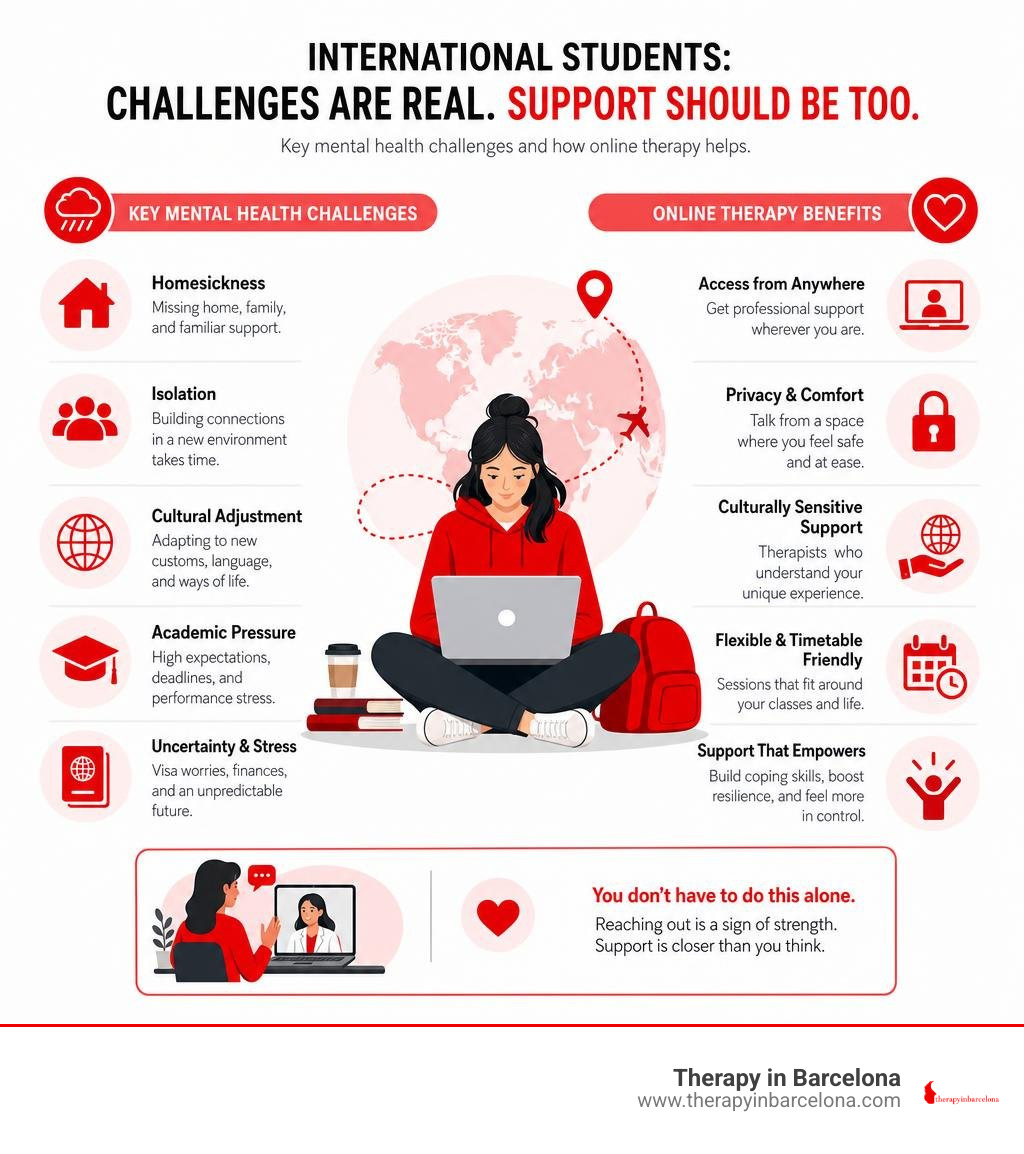
Moving abroad to pursue higher education is often framed as a dream achievement. Friends and family back home send congratulatory messages, while social media feeds fill up with scenic campus photos and weekend trips across European hubs like Málaga or Alicante. However, behind those curated moments lies an unseen emotional weight that few orientation seminars address.
The primary hurdle many scholars face is cultural displacement. Moving to a new country disrupts familiar support systems, daily routines, and intuitive coping mechanisms. Simple tasks — like opening a bank account, navigating public transport, or understanding local social cues — demand constant conscious energy. Over time, this cumulative exertion leads to severe mental fatigue.
In addition to cultural adjustment, international scholars frequently wrestle with several distinct psychological pressures:
- Visa anxiety and systemic pressure: Student visas are strictly tied to full-time academic performance and class attendance. The fear of failing a course is not just about grades; it carries the existential threat of losing legal residency and being forced to return home.
- Translational exhaustion: Using a second or third language for study and daily life takes significant mental effort. Many students feel like a less expressive version of themselves, struggling to communicate with the same confidence or nuance.
- Homesickness and isolation: Being thousands of kilometres away from family during personal milestones or family emergencies creates a deep sense of vulnerability and physical detachment.
- Impostor syndrome and family guilt: International education often represents a major financial or emotional sacrifice by the student’s family. This can create intense pressure to succeed, alongside overwhelming guilt if the student experiences sadness, burnout, or academic anxiety.
When these factors combine, students carry what clinicians call Invisible Baggage: Unpacking the Mental Health Crisis Among International Students. Recognising that these stressors are structural rather than personal failures is the first step toward getting meaningful support.
Why Online Therapy for International Students Outperforms In-Person Care
For students living outside their home countries, traditional face-to-face mental health care can present unexpected barriers. Finding a local English-speaking clinic in cities like Sevilla or Zaragoza, arranging physical transit between classes, and navigating unfamiliar healthcare administration often adds more stress to an already overloaded schedule.

This is where remote mental health support proves transformative. According to scientific research on digital solutions for student mental health, a substantial majority of surveyed international scholars express a strong preference for remote counselling services over traditional on-campus or in-person clinics.
The primary drivers of this preference include enhanced personal privacy, scheduling flexibility, and the complete elimination of transportation barriers.
Location independence means that whether a student stays in campus housing, relocates across town, or travels during term breaks, their therapeutic relationship remains stable and uninterrupted.
How Online Therapy for International Students Protects Privacy and Reduces Stigma
Cultural perception surrounding mental health varies wildly around the world. In many cultures, seeking psychological support is still unfairly viewed as a personal weakness or a source of family shame. For international students raised in these environments, walking into a prominent on-campus counselling centre runs the risk of running into classmates or acquaintances.
Remote sessions offer complete discretion. Students can attend therapy from the privacy of their bedroom, a quiet study nook, or any comfortable personal space.
Furthermore, private online mental health practices operate independently of university administrative databases and health registries.
Sessions are protected by strict confidentiality frameworks such as the General Data Protection Regulation (GDPR) in Europe. No records are shared with academic departments, advisors, or immigration authorities, ensuring that a student’s legal status and academic transcript remain entirely unaffected.
Bypassing Local Healthcare Waitlists and Language Barriers
Public healthcare systems across Europe offer vital medical services, but their mental health branches are frequently overburdened. In major international hubs such as Madrid and Valencia, public waitlists for English-speaking psychological consultations can stretch over several months.
For a student suffering from acute burnout or culture shock today, waiting half a semester for an intake appointment is simply not feasible.
Private online therapy bypasses these bureaucratic delays, typically allowing individuals to schedule an initial consultation within days.
Equally important is the issue of language depth. While a student may possess fluent conversational English or Spanish for academic purposes, expressing deep emotional distress, grief, or personal vulnerability requires nuanced linguistic precision. Working with a multilingual practitioner online allows students to articulate their internal world without spending session time translating complex feelings in their head.
Finding Support: What to Look For and How to Access Care Overseas
When seeking remote mental health care while living abroad, choosing the right practitioner requires looking beyond basic credentials. International scholars benefit most from practitioners who possess specific clinical experience in cross-cultural psychology, Third Culture Kid (TCK) dynamics, and the psychological impact of immigration.
An effective expat-focused therapist understands that feeling lost in a foreign country is not an individual fault, but a natural response to living between cultures.
Choosing the Right Therapist for Online Therapy for International Students
Finding the right therapeutic alliance involves evaluating both practical qualifications and personal rapport. Consider the following criteria when selecting a professional:
- Expat and cross-cultural expertise: Look for practitioners who have lived or worked abroad themselves. Therapists who share the expat experience bring genuine empathy to discussions surrounding relocation stress and cultural adjustment.
- Multilingual capability: Confirm that the therapist can conduct sessions in your primary language or a language in which you feel emotionally grounded.
- Evidence-based therapeutic modalities: Effective care often combines approaches tailored to your needs, such as CBT for thought patterns, ACT for life transitions, and IFS or Psychodynamic therapy for deeper relational patterns.
- Personalised matching: Rather than relying on generic automated algorithms, opt for services that utiliSe human-led intake assessments to pair you with a therapist who aligns with your specific goals and personality.
Many international students face academic pressure and homesickness after relocating abroad. Seeking private remote therapy can provide support in managing these challenges. Working with an English-speaking professional who understands cultural expectations and family dynamics can help students establish healthy boundaries while navigating life transitions.
Navigating Insurance, Telehealth, and Budget Options
Financial constraints are a very real consideration for university students. Navigating foreign health insurance policies to determine mental health coverage can be confusing, but several pathways exist to make care accessible:
- Private international student insurance: Many international insurance plans include telemedicine and mental health coverage, with reimbursement available depending on policy terms.
- University Student Assistance Programs (SAP): Some institutions partner with international third-party networks to provide foreign-enrolled students with a set number of free, confidential virtual counselling sessions (often up to 5 sessions) available 24/7.
- Private-pay and sliding scale fees: Many private practices use a private-pay model to protect privacy and simplify access. Some offer sliding scale fees for students with financial need, so it is worth asking during an initial consultation.
For a broader breakdown of cost-effective resources, explore this guide on Mental Health on a Budget: Free Counselling Options for International Students.
Practical Steps to Start Remote Counselling and Knowing Its Limits
Starting online therapy while living abroad is a straightforward process, but taking a few practical precautions ensures your sessions are smooth, secure, and therapeutic.

To help visualize the journey from initial outreach to ongoing care, here is a breakdown of the process:
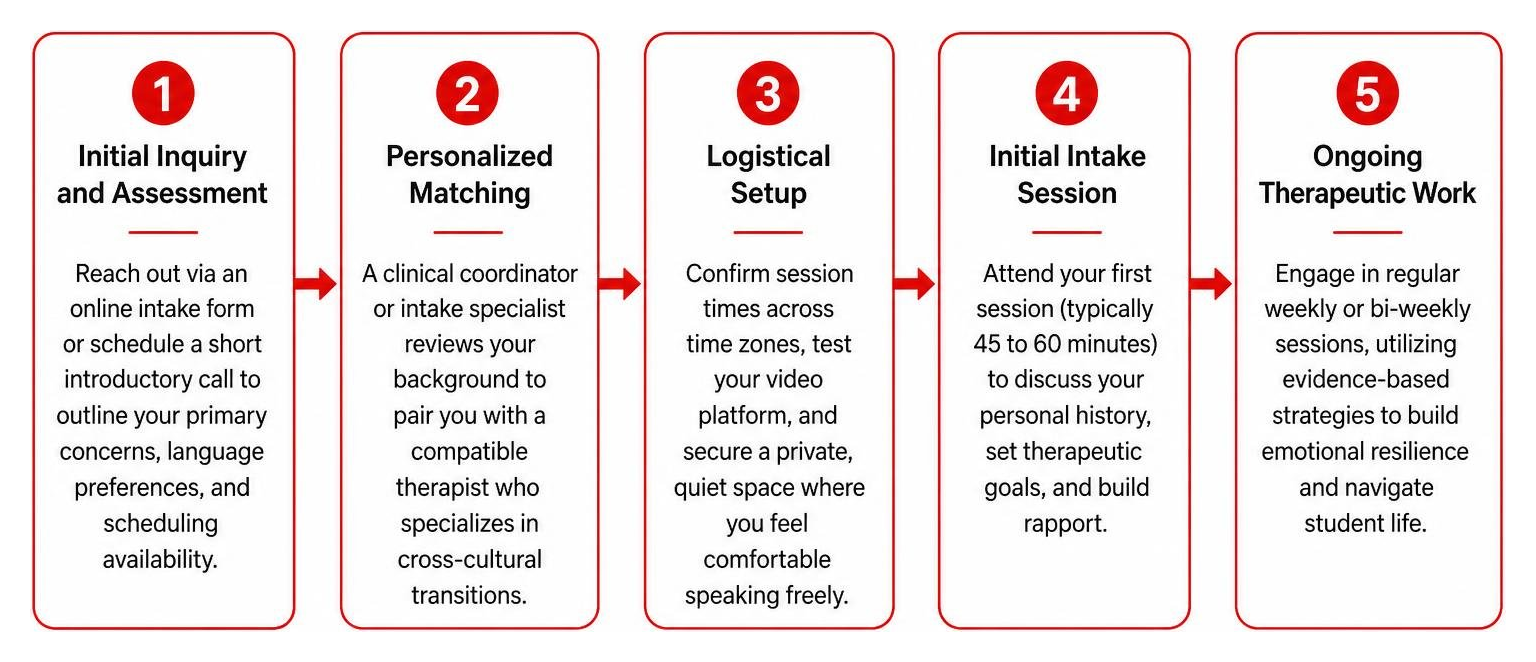
- Initial Inquiry and Assessment: Reach out via an online intake form or schedule a short introductory call to outline your primary concerns, language preferences, and scheduling availability.
- Personalised Matching: A clinical coordinator or intake specialist reviews your background to pair you with a compatible therapist who specialiSes in cross-cultural transitions.
- Logistical Setup: Confirm session times across time zones, test your video platform, and secure a private, quiet space where you feel comfortable speaking freely.
- Initial Intake Session: Attend your first session (typically 45 to 60 minutes) to discuss your personal history, set therapeutic goals, and build rapport.
- Ongoing Therapeutic Work: Engage in regular weekly or bi-weekly sessions, utilising evidence-based strategies to build emotional resilience and navigate student life.
When setting up your session environment, ensure your video platform is HIPAA-compliant or GDPR-compliant to safeguard your data. Coordinate time zones carefully—especially if you or your therapist travel during academic breaks. Finally, secure a quiet, private room where housemates or dorm neighbours cannot overhear your conversation.
Understanding Your Care Options
When selecting a mental health provider, it helps to understand how different services compare so you can make an informed decision for your needs:
Public Healthcare Systems
- Pros: Integrated with local public medical services; low or no out-of-pocket cost.
- Cons: Long waiting lists (often months); limited choice of clinician; potential language barriers in foreign languages.
Large Subscription Platforms
- Pros: Fast sign-up process; automated algorithmic matching; text-based messaging features.
- Cons: High therapist turnover; potential data privacy concerns; subscription lock-ins regardless of session usage.
Specialist Expat Practices (such as Therapy in Barcelona)
- Pros: Bespoke human-led therapist matching; deep expertise in expat and international student dynamics; strict privacy with no selling of personal data; culturally sensitive support in your native language.
- Cons: Private-pay model (though sliding scale fees may be available upon inquiry).
Knowing When In-Person or Emergency Support Is Required
While remote teletherapy is highly effective for managing persistent anxiety, low mood, stress, and relationship difficulties, it has specific clinical boundaries. Remote outpatient therapy is not designed for acute psychiatric emergencies or crisis situations.
You should seek immediate in-person medical or emergency support if you experience:
- Active thoughts of self-harm or suicide.
- Severe psychiatric crises, psychosis, or total loss of contact with reality.
- Severe substance overdoses or acute physical danger.
In the event of an emergency in Europe, immediately contact local emergency services (dialing 112 across the European Union) or visit the nearest university hospital emergency department.
Frequently Asked Questions about International Student Mental Health
Will seeking online therapy affect my student visa or academic record?
No. Engaging in private online therapy will not affect your student visa, legal residency status, or academic record. Private practices operate under strict legal privacy standards, such as GDPR in Europe. Your personal information, session notes, and attendance records are completely confidential and are never shared with your university, academic advisors, home government, or immigration authorities.
Is online therapy as effective as face-to-face sessions for culture shock?
Yes. Extensive psychological research confirms that video-based teletherapy is just as clinically effective as face-to-face sessions for treating culture shock, ongoing anxiety, feeling down, and social isolation.
The therapeutic alliance—the trust and connection built between client and practitioner—is the primary driver of positive outcomes, regardless of whether the session takes place in an office or over a secure video link.
How do I manage time zone differences with my online therapist?
Managing time zones is simpler than it seems. Most online therapists catering to international populations offer flexible scheduling windows, including early morning, late evening, or weekend slots designed specifically to accommodate students across different global time zones. When booking your sessions, double-check that your scheduling portal automatically adjusts to your local time zone to avoid missed appointments.
Supporting Your Well-Being Overseas
Studying abroad is one of the most transformative journeys a student can undertake, but it is entirely normal for that journey to bring unexpected emotional hurdles. Facing cultural displacement, academic pressure, and isolation does not mean you have made a mistake or that you lack resilience. It simply means you are human, navigating a major life transition far from your native support systems.
You do not have to carry the emotional weight of living abroad alone. Seeking specialised, culturally sensitive support can help you regain your footing, process complex feelings, and build practical tools to truly thrive during your time overseas.
Therapy in Barcelona was founded in 2011 by Leigh Matthews, an Australian Psychologist who experienced the challenges of moving to Spain firsthand. Over the past 14 years, Leigh has built a collaborative team of psychology-trained expat therapists dedicated to supporting the international community. Offering services in English and multiple other languages, the practice provides personalised therapist matching for clients in Barcelona and online worldwide.
If you are ready to take the next step toward supporting your mental health while studying abroad, take a moment to prioritise your well-being today. Book Your Free Discovery Call with Therapy in Barcelona to get matched with a therapist who understands your journey.
