


Why Online Therapy for Adults is Changing Mental Health Support
What is Online Therapy and How Does It Work?
Online therapy for adults goes by many names—telehealth, e-therapy, or virtual support—but at its heart, it’s professional mental health treatment delivered through digital platforms. For expats and internationals, it’s often the lifeline they didn’t know they needed.
Picture this: you’re living in Barcelona, Madrid, or Valencia, and you’re struggling with the weight of cultural adjustment. Traditional therapy might mean navigating language barriers, finding someone who truly understands your expat experience, or dealing with long waiting lists. Online therapy changes the game entirely.
The beauty of virtual support lies in its flexibility. You might connect with your therapist through video calls, creating that face-to-face connection via secure platforms. Some prefer audio calls—perfect for those who feel more comfortable with voice-only sessions. If you’re not ready for real-time conversation, live chat offers immediate text-based support, whilst asynchronous messaging lets you process thoughts and exchange messages at your own pace.
What makes this particularly powerful for internationals is how the process unfolds. It begins with an initial intake assessment where you share your story, your challenges, and what you’re hoping to achieve. Then comes the magic—personalised therapist matching based on your specific needs, cultural background, and circumstances. No more settling for whoever happens to be available; instead, you get paired with someone who genuinely understands your journey.
The platforms themselves are built with security in mind, ensuring your privacy and confidentiality throughout the entire process. You can explore what the therapy process looks like to get a clearer picture of what to expect.
For internationals juggling time zone differences, unpredictable work schedules, or simply craving the comfort of speaking from your own space, online therapy adapts to your life rather than forcing you to fit into rigid appointment slots. Whether you’re a digital nomad in Valencia or an expat professional in Madrid, your therapy works around your world, not the other way around.

Why “Best Fit” Matters for Expats and Internationals
When it comes to online therapy for adults, especially for expats and internationals, finding the right therapeutic fit isn’t just important—it’s absolutely crucial. Think of it like finding a trusted friend who truly understands your journey. The therapeutic relationship forms the foundation of successful therapy, and research consistently shows that this connection between therapist and client is the most important factor in achieving positive outcomes.
For internationals, the stakes are even higher. You’re not just looking for someone with impressive qualifications on the wall—you need someone who genuinely “gets” what it’s like to steer cultural differences, language nuances, and the unique isolation that can come with living abroad. You need someone who understands why explaining your feelings in your second language feels impossible, or why certain cultural references make you feel homesick in ways that are hard to describe.
While some expats might consider public system clinicians or large online platforms like BetterHelp or Talkspace, these options often fall short of providing the bespoke, culturally sensitive support that internationals truly need. Large platforms, whilst convenient, typically rely on algorithm-based matching that simply can’t capture the nuanced realities of expat life. Public healthcare systems, though valuable, often come with long waiting lists and may not offer English-speaking therapists who understand the complexities of international living.
This is where the magic of specialised, expat-focused services really shines through.
Therapy in Barcelona: Online Therapy Designed for Expats in Spain and Beyond
Here’s where Therapy in Barcelona steps in to fill that crucial gap. Founded by Leigh Matthews, an Australian psychologist who has been living the expat experience in Barcelona since 2011, this practice was created specifically because Leigh recognised what was missing in the mental health landscape for internationals.
Leigh’s story is one that many expats will find familiar. At 34, she fell in love and moved to Barcelona with her Catalan partner, suddenly finding herself navigating an intercultural marriage, Spanish family obligations, Catalan culture, and even pregnancy in a foreign country—all at once. When she looked for support during this overwhelming transition, she couldn’t find what she needed: an English-speaking therapist who could understand her situation as a foreigner navigating major life adjustments in a new culture.
This personal experience sparked the creation of Therapy in Barcelona. With over 20 years of experience in psychology and 14 years specialising in working with internationals, Leigh has built something truly special—a practice that combines expat-focused expertise with genuine cultural understanding.
The practice offers what many internationals have been searching for: English-speaking, psychology-trained professionals who provide culturally sensitive care without the language barriers or cultural misunderstandings that can derail progress. Their personalised therapist matching process is refreshingly human-led, taking into account your specific needs, cultural background, and personal circumstances.
What makes this particularly valuable is that their online therapy services extend far beyond Barcelona. Whether you’re an international in Madrid dealing with work stress, living in Valencia and struggling with isolation, or anywhere else in Spain or worldwide, you can access this specialised support.
Why Choose Therapy in Barcelona?
The difference becomes clear when you experience their personalised, human-first matching process. There are no algorithms here—just thoughtful consideration of who you are and what you need. Their team brings a deep understanding of expat and international life because they’ve walked similar paths themselves.
Privacy is taken seriously, with strict confidentiality policies and no data selling to third parties—a refreshing contrast to some larger platforms. The warm, supportive, and professional team strikes that perfect balance between expertise and genuine human connection that makes therapy feel safe and effective.
Their flexible online scheduling accommodates the reality of busy international lives and time zones, while being led by experienced professionals like Leigh, whose extensive background provides the foundation for truly understanding what works for the international community.
For expats seeking online therapy for adults that feels custom to their unique experience, this kind of specialised, culturally informed approach can make all the difference between feeling understood and feeling like just another case number.
Key Considerations for Choosing Your Online Therapy as an Adult Expat
Choosing the right online therapy for adults as an expat isn’t just about finding any therapist—it’s about finding your therapist. The one who truly understands what it’s like to steer life between cultures, to feel homesick for a place that might not even exist anymore, or to struggle with identity questions that locals simply don’t face.
Think of it like finding the right flatmate. You wouldn’t just pick the first person who responds to your ad, would you? You’d want someone who gets your lifestyle, respects your boundaries, and creates a space where you can truly be yourself. The same principle applies to therapy.
What Mental Health Issues Can Online Therapy Address?
Online therapy for adults can effectively support you through virtually any challenge you’re facing as an expat. Whether you’re dealing with anxiety that seems to spike every time you have to steer Spanish bureaucracy, or feeling down and unmotivated after another weekend spent scrolling through social media whilst your friends back home live their lives without you.
Stress management becomes particularly crucial when you’re juggling work pressures with the added complexity of doing everything in a second language. Many expats find themselves struggling with relationship challenges—both romantic partnerships strained by the stress of relocation, and the difficulty of forming meaningful friendships in a new country.
Grief and loss might surprise you as an expat concern, but it’s incredibly common. You’re not just mourning the loss of your old life; you’re grieving the person you used to be, the ease of understanding cultural cues, and sometimes even the loss of parts of your identity that don’t translate well to your new home.
Life transitions are practically the expat experience in a nutshell. From career changes necessitated by visa requirements to cultural adjustment struggles that nobody warned you about, online therapy provides a safe space to process these major shifts. Self-esteem issues often emerge when you’re constantly feeling like you’re not quite getting things right in your new culture.
For those navigating intercultural relationships, parenting challenges whilst raising third culture kids, or LGBTQIA+ identity questions in a new cultural context, having a therapist who understands these layered complexities can be transformative.
Who Provides the Therapy? Understanding the Professionals
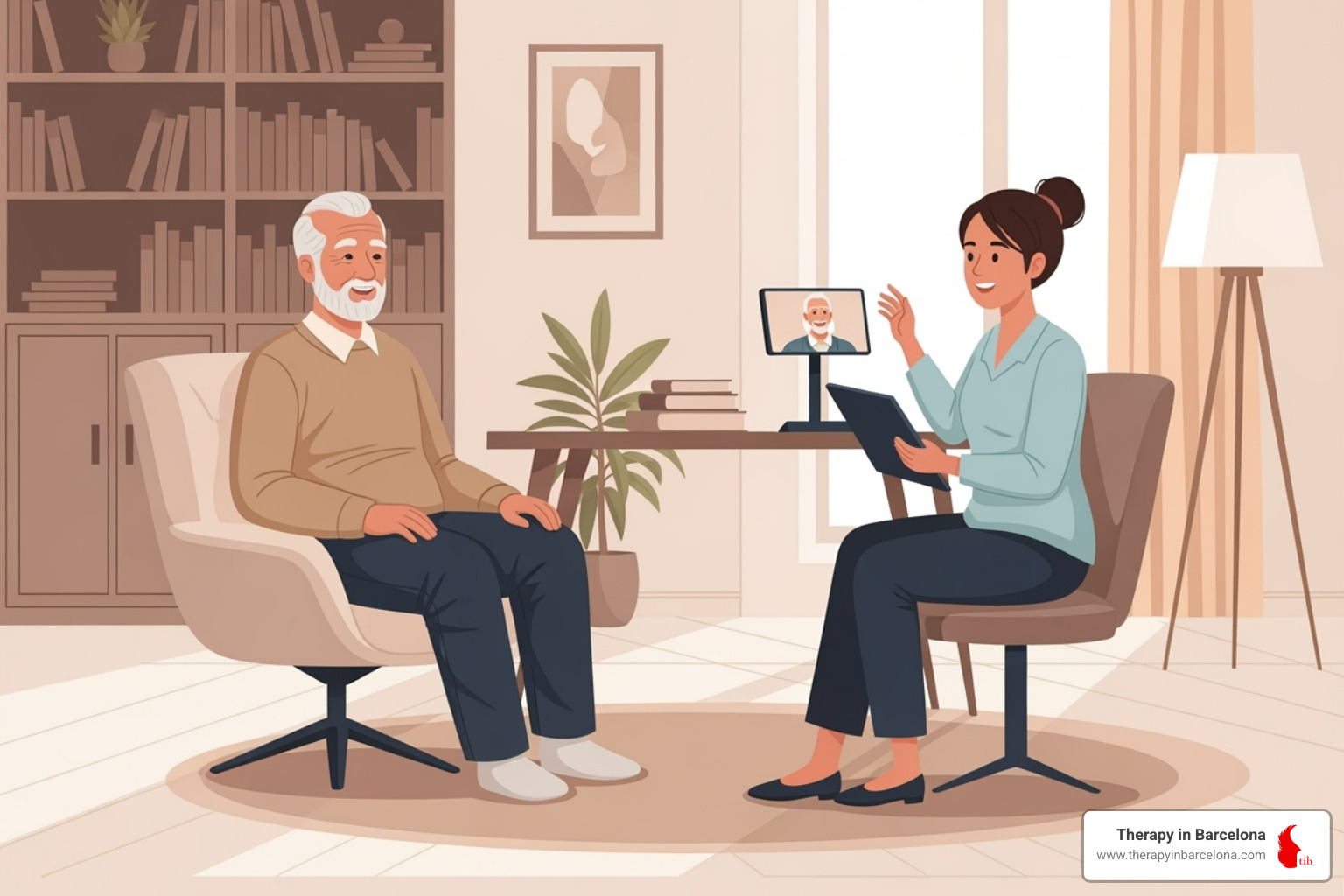
Understanding who you’re actually talking to matters more than you might think. Psychologists hold doctoral degrees and bring extensive training in evidence-based treatments. They can’t prescribe medication, but they’re skilled at helping you understand patterns in your thinking and behaviour that might be keeping you stuck.
Psychotherapists focus on specific therapeutic approaches and techniques. Their qualifications vary by country, but reputable services ensure they meet professional standards. Social Workers with clinical training often excel at understanding how your environment—including your expat status—affects your mental health.
Counsellors provide supportive therapy and guidance, often specialising in particular areas like grief or relationship issues. If medication becomes necessary, psychiatrists can be consulted through referral, though they typically don’t provide ongoing therapy.
At Therapy in Barcelona, all team members are psychology-trained professionals with appropriate qualifications from their countries of origin. More importantly, they’re expats themselves who understand the unique challenges of building a life abroad.
Is Online Therapy as Effective as In-Person Therapy?
Here’s the reassuring news: research consistently shows that online therapy can be just as effective as face-to-face sessions for most mental health concerns. The studies confirming this effectiveness are particularly encouraging for expats who might worry they’re getting “second-best” care.
The therapeutic relationship—that sense of connection and understanding between you and your therapist—is what drives positive change, not whether you’re sitting in their office or connecting via video call.
For internationals, online therapy often provides additional benefits that can actually improve the therapeutic experience. Consistency means you can maintain the same therapist even if you relocate again (and let’s be honest, many of us do). Comfort in your own space can help you feel safer and more relaxed, especially when discussing difficult topics.
Accessibility eliminates the stress of navigating public transport in a new city or finding parking in Barcelona’s narrow streets. Flexibility makes it easier to fit sessions around demanding work schedules and time zone differences with family back home.
Navigating Cost, Insurance, and Accessibility
Let’s talk about the practical stuff—because therapy is an investment in yourself, and you deserve to understand exactly what that means financially.
At Therapy in Barcelona, our collaborators set their own prices, with fees typically ranging from €80-95 for individual therapy sessions and €95-120 for couples therapy. Once you’re matched with a therapist, you’ll receive clear information about their specific fees and preferred payment methods.
Insurance coverage can be a pleasant surprise—some private insurance plans and international health insurance policies do cover online therapy sessions. It’s worth checking with your provider about mental health coverage, especially if you have expat-specific insurance.
Many services offer sliding scale fees or payment plans for those facing financial challenges. Don’t let cost become a barrier to seeking support—many therapists are genuinely willing to work with you to find an affordable solution.
How is My Privacy Protected?
Privacy concerns are completely valid, especially when you’re sharing deeply personal information online. Reputable online therapy for adults services implement multiple layers of protection that often exceed what you’d find in traditional office settings.
Technical security includes end-to-end encryption for all communications, secure platforms that meet international standards, and protected data storage with strict access controls. Professional standards ensure therapists are bound by ethical codes, with clear privacy policies and regular training on confidentiality requirements.
Confidentiality limitations do exist—therapists are required to break confidentiality if there’s risk of harm to yourself or others, child safety concerns, or specific legal requirements. However, these situations are rare and would be clearly explained during your initial sessions.
Unlike some large online therapy platforms that may sell user data for marketing purposes, specialised services like Therapy in Barcelona maintain strict privacy standards with no data selling or sharing with third parties.

The key is finding a service that treats your privacy as seriously as you do—because you deserve to feel completely safe in your therapeutic space.
Preparing for Your First Session and Beyond
Taking that first step into online therapy for adults can feel overwhelming, but a little preparation can help ease those pre-session butterflies and set you up for success. Think of it like preparing for an important conversation with someone who genuinely wants to understand and help you.
What to Expect in Your First Online Therapy Session
Your first session is really about two people getting to know each other – you and your therapist. It’s not about diving into your deepest traumas or solving everything in 50 minutes. Instead, it’s about building a foundation of trust and understanding.
Before your session arrives, you’ll typically complete some intake forms about your background and current concerns. This isn’t a test – it’s simply helping your therapist understand what’s brought you to this point. Take a few minutes to test your technology too – nothing breaks the ice quite like “Can you hear me now?” repeated five times.
Finding a private, comfortable space for your session matters more than you might think. This could be your bedroom, a quiet corner of your living room, or even your car if that’s the only private space available. The key is feeling safe to speak openly without worrying about flatmates or family members overhearing.
During the session itself, expect plenty of introductions and rapport building. Your therapist will likely share a bit about their approach and background, while you’ll have the opportunity to share your story and current challenges. This is your time to explore your goals and expectations for therapy, and equally important – to get a feel for whether this person feels like someone you could work with.
This is absolutely a two-way street. While your therapist is getting to know you, you’re also evaluating whether they feel like the right fit. Do you feel heard? Do they seem to understand your situation? Are you comfortable with their communication style? These aren’t superficial questions – they’re fundamental to whether therapy will be effective for you.
After your session, take some time to reflect on the experience. How did you feel during the conversation? Did you sense genuine understanding and empathy? It’s perfectly normal to feel a bit emotionally drained after opening up, but you should also feel some sense of hope or connection.
If something didn’t feel quite right, don’t hesitate to discuss your concerns. At Therapy in Barcelona, for instance, switching therapists is completely normal and encouraged if the first match isn’t perfect. The goal is finding someone who truly gets you, not settling for “good enough.”

When Online Therapy Isn’t Suitable & Crisis Alternatives
While online therapy for adults is remarkably effective for most mental health concerns, it’s important to recognise when more intensive support might be needed. Online therapy works beautifully for anxiety, relationship issues, cultural adjustment struggles, and the day-to-day challenges of expat life. However, there are situations where immediate, in-person care is essential.
Online therapy may not be the right fit if you’re experiencing active suicidal thoughts or detailed plans for self-harm, severe psychosis or hallucinations that feel very real, acute mental health crises requiring immediate intervention, or active substance abuse that needs medical supervision during detoxification.
This doesn’t mean you’re “too broken” for therapy – it simply means you deserve the most appropriate level of care for your current situation. Once these acute concerns are addressed, online therapy can often become a valuable part of your ongoing support system.
If you’re in a crisis situation, please reach out for immediate help. In Spain, you can call 112 for emergency services or 717 003 717 for Teléfono de la Esperanza. The International Association for Suicide Prevention maintains a comprehensive list of crisis centres worldwide, and Crisis Text Line (text HOME to 741741) is available in multiple countries.
For our Canadian readers, the Government of Canada provides extensive mental health support resources including crisis intervention services.
If you’re having thoughts of self-harm or suicide, please know that these feelings can change with proper support. Reaching out for immediate help isn’t giving up – it’s taking the most important step toward feeling better.
Frequently Asked Questions about Online Therapy for Adults
When considering online therapy for adults, especially as an expat or international, it’s natural to have questions. These are the concerns we hear most often from people taking their first steps toward mental health support.
How do I know if my therapist is a good fit?
The therapeutic relationship is the heart of effective therapy, and knowing whether you’ve found the right match is crucial for your healing journey. Think of it like any meaningful relationship – there are certain qualities that make you feel safe, understood, and supported.
You’ll know you’ve found a good fit when you feel safe and understood in your sessions. This means being able to share personal information without fear of judgment, feeling like your therapist truly “gets” your experiences, and sensing that they respect your cultural background and unique circumstances as an international.
Trust and rapport develop naturally when there’s a genuine connection. You should feel a sense of mutual respect and find yourself looking forward to sessions rather than dreading them. For expats especially, finding someone who understands the complexities of living abroad – from visa stress to cultural adjustment – can make all the difference.
A non-judgmental space is essential. Your therapist should create an environment where you feel accepted regardless of what you share. This is particularly important for internationals who may already feel like outsiders in their new country.
Aligned goals matter too. You and your therapist should be working towards outcomes that genuinely matter to you, not what they think you should want. This collaborative approach ensures you’re both invested in your progress.
It’s perfectly normal not to feel an immediate connection – give it 2-3 sessions to see if rapport develops. However, if you consistently feel misunderstood, judged, or uncomfortable, it may be time to consider a different therapist. Trust your instincts.
Can I switch therapists if the first one isn’t right for me?
Absolutely, and don’t feel guilty about it. Advocating for your needs is actually an important part of the therapeutic process, not a failure on your part. Finding the right therapist is a bit like finding the right friend – sometimes it takes a few tries to find someone who truly understands you.
At Therapy in Barcelona, switching therapists is handled with care and without judgment. The team understands that finding the right fit is crucial for your progress, and they’d rather help you find the perfect match than have you struggle with someone who isn’t quite right.
The process typically involves having an honest conversation about what isn’t working – whether with your current therapist or the service coordinator. They’ll then work to identify what you’re looking for in a therapeutic relationship and match you with someone who might be a better fit. The beauty of this approach is that you won’t have to start completely from scratch, as your basic information is already on file.
The right connection is essential for progress. A therapist who’s wonderful for one person might not be the best match for another, and that’s completely normal. Your mental health journey is too important to settle for a relationship that isn’t serving you well.
Do I need a formal diagnosis to start therapy?
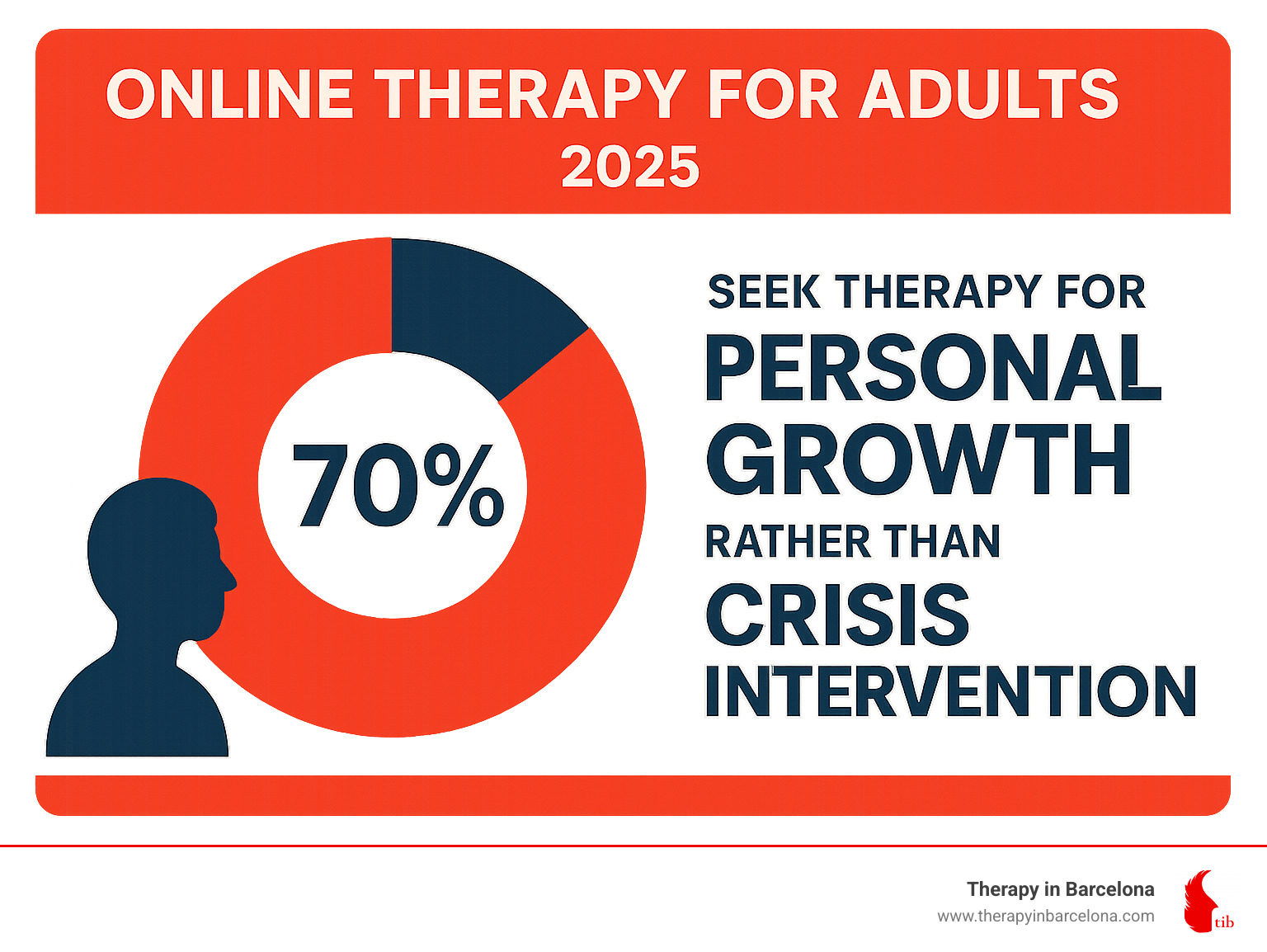
Not at all – this is one of the most liberating aspects of modern mental health support. Many people seek therapy for personal growth, self-findy, and navigating life’s challenges without having any formal mental health diagnosis.
Think of therapy as proactive mental wellness rather than crisis intervention. You might start therapy because you’re feeling stuck or unfulfilled, struggling with relationship difficulties, navigating major life transitions, or simply wanting to improve your communication skills and build self-confidence.
For expats and internationals, therapy often serves as a space to process the complex emotions that come with living abroad – from homesickness and cultural adjustment to identity questions and relationship challenges. You don’t need to have a “problem” to benefit from having a supportive, objective professional to talk through your experiences with.
Therapy is increasingly viewed as a form of self-care and personal development, much like going to the gym for physical health. It’s about investing in your mental health and well-being proactively, building resilience, and developing tools to handle whatever life throws your way.
Whether you’re exploring your values, working through a difficult period, or simply wanting to understand yourself better, therapy can be incredibly valuable. Your feelings and experiences are valid reasons to seek support, regardless of whether they fit into a diagnostic category.
Conclusion: Taking the First Step on Your Mental Health Journey
Online therapy for adults has transformed mental-health care—especially for those living far from home. It removes travel, time-zone, and language barriers while letting you keep the same therapist even if you relocate again. Most importantly, it offers the comfort of talking to someone who truly understands the expat experience.
Research shows that progress hinges on the quality of the therapeutic relationship, not on the setting. That’s why Therapy in Barcelona focuses on thoughtful, human-led matching with English-speaking professionals who have first-hand knowledge of life abroad.
Reaching out isn’t defeat; it’s an investment in your future self—a self that feels clearer, stronger, and more connected.
