


Why Understanding Topics to Discuss in Couples Therapy Matters

Topics to discuss in couples therapy range from everyday communication struggles to deeper trust and intimacy challenges. Whether you’re navigating cultural differences as an expat couple in Barcelona or working through universal relationship patterns, knowing what to expect can help you make the most of your sessions.
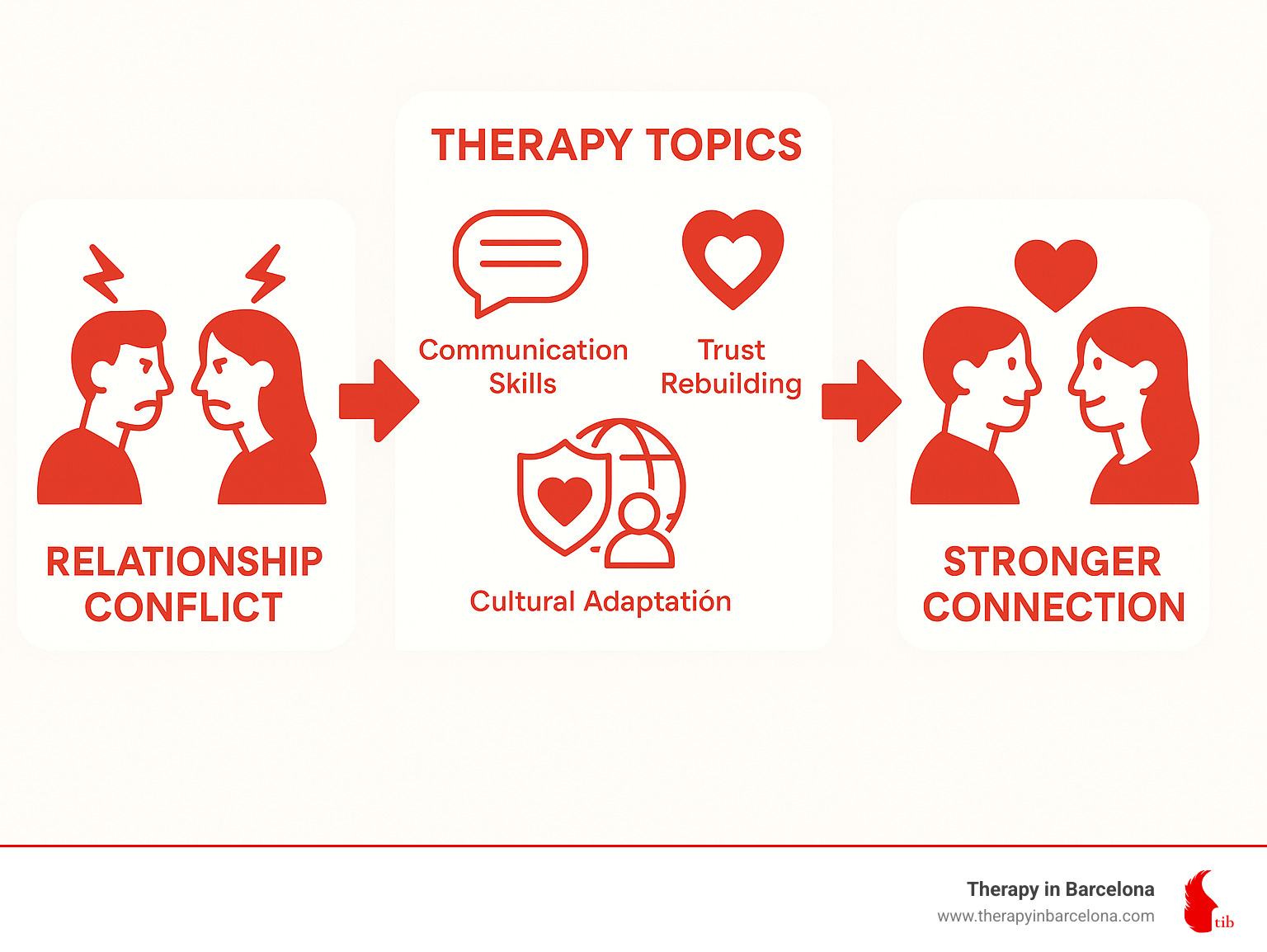
Key topics couples typically explore in therapy include:
- Communication patterns – Learning active listening and “I” statements
- Conflict resolution – Breaking destructive cycles and repair attempts
- Trust rebuilding – Addressing betrayals, transparency, and forgiveness
- Emotional intimacy – Deepening connection and vulnerability
- Physical intimacy – Navigating desire differences and sensate focus
- Money matters – Financial transparency and shared goals
- Family boundaries – Managing in-laws, parenting, and external pressures
- Cultural adjustment – Expat-specific challenges and identity conflicts
- Life transitions – Career moves, relocations, and major changes
- Values alignment – Ensuring you’re building towards the same future
Research shows that communication issues are the number one presenting problem in couples counselling. Dr. John Gottman’s studies reveal that 69% of relationship problems are actually unsolvable – meaning couples need to learn how to manage these ongoing differences rather than eliminate them entirely.
For expat couples in Barcelona and across Spain, therapy often includes navigating the unique stressors of living abroad – from language barriers to homesickness to different cultural expectations around relationships. These challenges can amplify existing tensions or create entirely new ones.
The good news? Couples therapy provides practical tools and a safe space to work through these issues together. Rather than avoiding difficult conversations, you’ll learn how to have them constructively.
Why Begin Together? What Couples Therapy Looks Like
Taking that first step into couples therapy can feel overwhelming, especially when you’re already navigating relationship tensions. The uncertainty of what to expect often creates additional anxiety on top of the challenges you’re already facing. Understanding the process, however, can help ease those worries and set you both up for success.
Your journey typically begins with an assessment session where your therapist takes time to understand your unique story. This isn’t just about cataloguing problems—it’s about exploring your relationship history, understanding what brought you together, and identifying both your current challenges and your hopes for the future. At Therapy in Barcelona, this initial conversation also includes understanding how expat life might be impacting your relationship dynamics.
Therapist matching plays a crucial role in your success. Research consistently shows that couples who attend therapy together are 30% more likely to experience long-term positive outcomes when they’re properly matched with their therapist. This isn’t about finding someone who simply has availability—it’s about connecting you with a professional who truly understands both your relationship patterns and your cultural context as internationals.
The evidence-based methods commonly used in couples therapy each offer different strengths. The Gottman Method focuses on building deeper friendship whilst teaching you how to manage conflict constructively. Emotionally Focused Therapy (EFT) helps you understand and address the deeper attachment needs that drive your interactions. Imago Relationship Therapy explores how childhood experiences shape your adult relationship patterns.
Most couples begin to see meaningful improvement within 12-20 sessions, though this timeframe varies based on the complexity of your challenges and your commitment to practising new skills between sessions. Studies indicate that 70-90% of couples report positive outcomes from therapy.
Confidentiality remains absolutely paramount throughout your therapeutic journey. What you share in those sessions stays in those sessions. Your therapist creates a safe emotional space where both of you can express yourselves authentically without fear of judgement.
The realistic timeframe and outcomes depend largely on what topics to discuss in couples therapy matter most to your relationship. Some couples come seeking better communication skills and see rapid improvement. Others are working through deeper trust issues or cultural conflicts that require more time and patience.
Core Topics to Discuss in Couples Therapy
Every relationship is different, yet certain topics to discuss in couples therapy come up again and again. Think of these as the pillars that hold healthy partnerships together whether you are an expat couple in Barcelona or living elsewhere in Spain.
- Communication skills. Most pairs find they have been talking at rather than with each other. Learning to hear the feelings beneath the words is priority one.
- Conflict patterns. Therapy uncovers your “dance steps” during arguments and offers ways to break the cycle instead of replaying the same fight.
- Emotional intimacy. Stress, cultural gaps, or simply a busy life can erode closeness. Sessions create space for vulnerability and comfort.
- Physical intimacy. From desire differences to affection styles, therapists help partners talk about sex and touch without blame or shame.
- Trust repair. Whether the rupture involves infidelity, secrecy around money, or smaller broken promises, rebuilding requires transparency and accountability.
- Shared values & goals. Aligning on where to live, when to have children, or how to mix cultures prevents long-term resentment.
- Money management. Open books about spending, saving, and debt turn finances from a battleground into a team project.
- Parenting approaches. Discipline, schooling, language use, and cultural heritage often need careful negotiation—especially for third-culture kids.
- Boundaries & external stress. In-laws, workload, and tech use can crowd the relationship if limits are not clear.
- Cultural differences. What feels normal in one country may feel odd in another. Therapy offers a neutral space to decode these clashes.
Communication: The Most Requested Topic
Poor dialogue magnifies every other issue. Core tools include:
- Active listening – summarise your partner before replying.
- “I” statements – replace blame with feelings (“I feel overwhelmed” vs “You never help”).
- Repair attempts – small gestures of humour or tenderness that de-escalate tension.
Conflict & Repair
Dr John Gottman’s “Four Horsemen” predict relationship trouble: criticism, contempt, defensiveness, and stonewalling. Therapy swaps them for:
- Specific complaints instead of character attacks.
- Respectful language over eye-rolling or sarcasm.
- Ownership instead of excuses.
- Timed breaks when either partner feels overwhelmed, followed by a calm return.
Structured problem-solving—define the issue, brainstorm options, choose one step—keeps arguments from circling endlessly.
Rebuilding Trust After Betrayal
Recovery is possible, though rarely quick. Typical stages: full disclosure, consistent transparency (location check-ins, shared calendars, or passwords), and new agreements about boundaries. Genuine remorse plus changed behaviour rebuilds safety over time.
Strengthening Emotional & Physical Intimacy
- Love languages. Identify whether words, quality time, touch, acts of service, or gifts speak loudest.
- Sensate focus. Guided, non-goal-oriented touch brings back comfort and curiosity.
- Six-second kiss & micro-affection. Brief but intentional moments maintain connection on busy days.
Aligning on Money, Future & Family
Transparent budgets and shared saving goals reduce stress. For expats, add conversations about career moves, possible relocations, and raising bicultural children.
Boundaries With In-Laws, Work & Tech
Phone-free dinners, clear visiting schedules, and agreed work cut-off times protect couple time. Research shows even small digital-detox windows boost satisfaction.
These core areas give couples and therapists a roadmap. You may not need every topic, yet knowing where you could go removes the fear of the unknown and lets you focus on growth.
Relationship Exercises You’ll Practise Between Sessions
Couples therapy extends beyond the therapist’s office through homework exercises and daily practices that reinforce session insights. These exercises help couples build new habits and strengthen their connection between appointments.
Love Maps involve learning detailed information about your partner’s inner world – their dreams, fears, preferences, and experiences. Couples use card decks or structured questions to deepen their knowledge of each other.
Temperature checks provide daily opportunities to share feelings and concerns before they escalate into major conflicts. This might involve rating your stress level or sharing one thing you appreciated about your partner that day.
Weekly check-ins create structured time for discussing relationship issues, planning together, and expressing appreciation. These conversations help prevent problems from building up over time.
Gratitude rituals involve regularly expressing appreciation for your partner’s efforts and qualities. Research shows that couples who practice gratitude spend 68 minutes more together daily and report higher relationship satisfaction.
Role reversal exercises help partners understand each other’s perspectives by literally switching positions during conversations. This technique often produces breakthrough moments in understanding.
Mindful breathing together can synchronise your nervous systems and create deeper connection. Simple breathing exercises help couples regulate emotions and increase intimacy.

Preparing for Sessions & Managing Trade-Offs
Walking into your first couples therapy session can feel daunting, especially when expat life already stretches your bandwidth. A little planning turns that nervous energy into momentum.
- Adopt a growth mindset. See challenges as chances to learn together, not proof of failure.
- Lead with curiosity, not blame. Enter sessions ready to understand rather than convince.
- Schedule tough talks. Don’t launch into heavy topics at midnight; agree on a calm slot or save it for therapy.
- Practise self-soothing. Deep breaths, a short walk, or placing a hand on your heart keeps discussions productive.
- Set bite-sized goals. Celebrate using one “I” statement or catching one eye-roll; big change follows small wins.
- Do the homework. Couples who complete between-session exercises progress faster—think of it like language practice.
Therapy in Barcelona collaborators charge 90–115 € per session. Compare that cost with the emotional and practical price of an unchecked breakdown.
Finally, remember culture matters. Your therapist will weave expat stressors—visas, homesickness, Catalan family norms—into the work so you feel fully understood.
When to Seek Help & What to Expect Next
The decision to seek couples therapy often comes after months or even years of struggling. Many couples wonder if their problems are “serious enough” for professional help, but the truth is that early intervention typically leads to better outcomes and shorter therapy duration.
Frequent arguments about the same issues signal that you’re stuck in patterns that need professional guidance to break. When you find yourselves having the same fight repeatedly without resolution, it’s time to consider outside support.
Perhaps you’ve noticed that you and your partner feel more like roommates than romantic partners. This emotional distance often develops gradually, making it easy to dismiss until the gap feels impossible. Similarly, when difficult conversations get avoided entirely, important issues remain unresolved and resentment builds.
Loss of physical or emotional intimacy affects many couples, particularly during stressful periods or major life transitions. For expat couples, the stress of adapting to a new country can create unexpected barriers to connection.
If you’re considering separation or divorce, couples therapy can help you either rebuild your relationship or separate more amicably. Many couples find that therapy helps them remember why they fell in love in the first place.
Stonewalling – when one partner completely shuts down emotionally during conflicts – indicates that communication has broken down to a dangerous level. This pattern requires professional intervention to prevent further damage.
Life transitions such as job changes, relocations, illness, or becoming parents can strain even the strongest relationships. For expat couples, these transitions often coincide with cultural adjustment challenges, creating multiple stressors simultaneously.
Illness or loss affects couples differently, sometimes creating distance when support is most needed. Grief can bring couples together or drive them apart, and professional guidance helps ensure you support each other through these difficult times.
Individual mental health issues – such as depression, anxiety, or trauma – significantly impact relationships. Sometimes couples therapy works alongside individual therapy to address these challenges comprehensively.
Choosing a therapist involves considering factors like specialisation, cultural sensitivity, language preferences, and therapeutic approach. For expat couples in Barcelona and throughout Spain, finding someone who understands international life makes a significant difference in therapeutic outcomes.
At Therapy in Barcelona, our therapist matching process ensures you work with someone who understands both relationship dynamics and the unique challenges of expat life. Our team includes professionals who have steerd intercultural relationships, international moves, and the complex emotions that come with building a life abroad.
Online vs. in-office therapy both offer distinct benefits. Online sessions provide flexibility and access to specialists, while in-person meetings offer more personal connection and the ability to read body language more clearly. Many couples find that either format can be effective with the right therapist.
The most important step is reaching out when you recognise that your relationship needs support. Whether you’re dealing with communication breakdowns, trust issues, or the unique stressors of expat life, professional guidance can help you rebuild and strengthen your connection.

Frequently Asked Questions about Couples Therapy
How long does couples therapy usually take?
There is no universal timeline, but many pairs notice real progress after 12–20 sessions. Studies on Emotionally Focused Therapy show 70–75 % of couples reach full recovery, with most reporting clear improvement long before the final session.
Can we address individual issues in joint sessions?
Couples work focuses on the relationship, yet personal struggles—anxiety, past trauma, mood swings—inevitably surface. When an individual concern blocks progress, your therapist may suggest standalone sessions alongside the joint work so both tracks support each other.
What if my partner is reluctant?
Reluctance is common and often rooted in fears of blame or unfamiliarity with therapy. A brief phone call with the therapist or even a solo first meeting can ease worries. Most hesitant partners warm up once they experience the non-judgemental atmosphere and realise therapy isn’t about assigning fault but improving connection.
Conclusion
The journey through understanding topics to discuss in couples therapy reveals something profound: seeking support isn’t about admitting failure—it’s about choosing growth. Whether you’re working through communication breakdowns, rebuilding trust after betrayal, or simply wanting to strengthen your connection, therapy offers a structured path forward with proven tools and professional guidance.
For expat couples, this journey often carries additional weight. You’re not just navigating typical relationship challenges; you’re doing so while adapting to a new culture, possibly learning a new language, and managing the stress of being far from familiar support systems. These layers of complexity don’t make your relationship weaker—they simply make professional support even more valuable.
The most successful couples aren’t those who never face difficulties. They’re the ones who recognise when they need help and take proactive steps to strengthen their partnership. By understanding what topics to discuss in couples therapy before you begin, you’re already demonstrating the kind of intentional approach that leads to positive outcomes.
At Therapy in Barcelona, our team of expat therapists brings a unique understanding to this work. We’ve walked similar paths—navigating intercultural relationships, managing homesickness, and building new lives in Barcelona. This shared experience, combined with our professional training, allows us to offer support that’s both culturally sensitive and therapeutically effective.
Your relationship deserves the same care and attention you’d give to any other important aspect of your life. Whether you’re dealing with everyday stresses or more complex challenges, taking that first step toward professional support often marks the beginning of a stronger, more connected partnership.
Ready to begin? Our personalised matching process connects you with a therapist who understands both your relationship dynamics and your unique cultural context. Because while expat life can be complicated, finding the right therapeutic support shouldn’t be.
