


Why Barcelona’s International Teens Need Specialised Support

Teenager therapy barcelona services are crucial for helping adolescents steer the unique challenges of growing up in an international city. Whether you’re seeking support for anxiety, depression, cultural adjustment, or academic stress, Barcelona offers both public and private therapeutic options specifically designed for teens aged 12-18.
Quick answers for parents searching “teenager therapy barcelona”:
- English-speaking therapists: Available through private practices like Therapy in Barcelona, Hylé, and Hestía
- Free public support: Konsulta’m (all ages), Aquí t’escoltem (12-20 years), WhatsApp helpline (14-25 years)
- Common issues addressed: Anxiety, depression, ADHD, bullying, school stress, cultural adaptation, grief
- Session costs: €70-95 for individual sessions, with free options available
- Confidentiality: Sessions remain private unless safety concerns arise
Living abroad as a teenager brings distinct pressures. Beyond typical adolescent struggles, Barcelona’s international teens face language barriers, cultural isolation, and the stress of constant adaptation.
The city’s expat families often struggle to recognise when normal teenage behaviour crosses into something requiring professional support. Cultural differences in expressing emotions, academic systems that differ from home countries, and social media pressures create a perfect storm for mental health challenges.
Since 2018, Barcelona-based therapy services have supported over 3,382 international clients, investing more than 20,000 hours in helping expat families steer these complex transitions. The good news? Effective help is available in multiple languages, both online and in-person.
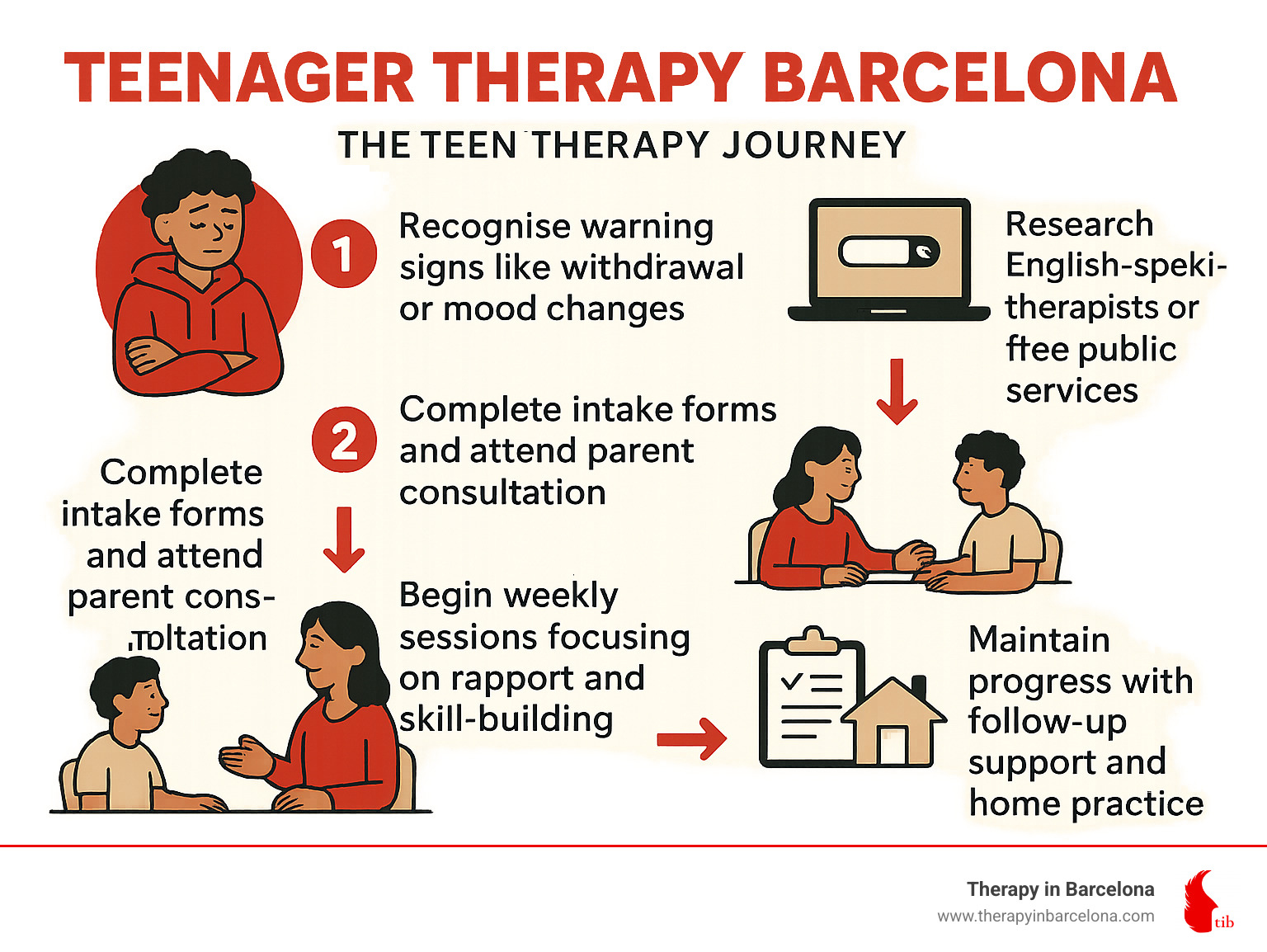
Why Teen Therapy Matters in Barcelona
Living in Barcelona as an international teenager can feel like an emotional roller-coaster. One day you’re soaking up Mediterranean sunshine; the next you’re missing friends and trying to fit in at a new school. This swing isn’t mere “teen drama” — it can be a genuine mental-health challenge that deserves support.
The statistics are clear: anxiety and depression are rising, and relocation amplifies both. Expat teens often feel caught between cultures, unsure where they belong. Homesickness can hit when they hear their native language on the metro or miss a family tradition.
Fortunately, Barcelona provides a solid safety net. Free services like Konsulta’m and Aquí t’escoltem offer drop-in support, while the city’s 24/7 WhatsApp helpline answers crises outside office hours.
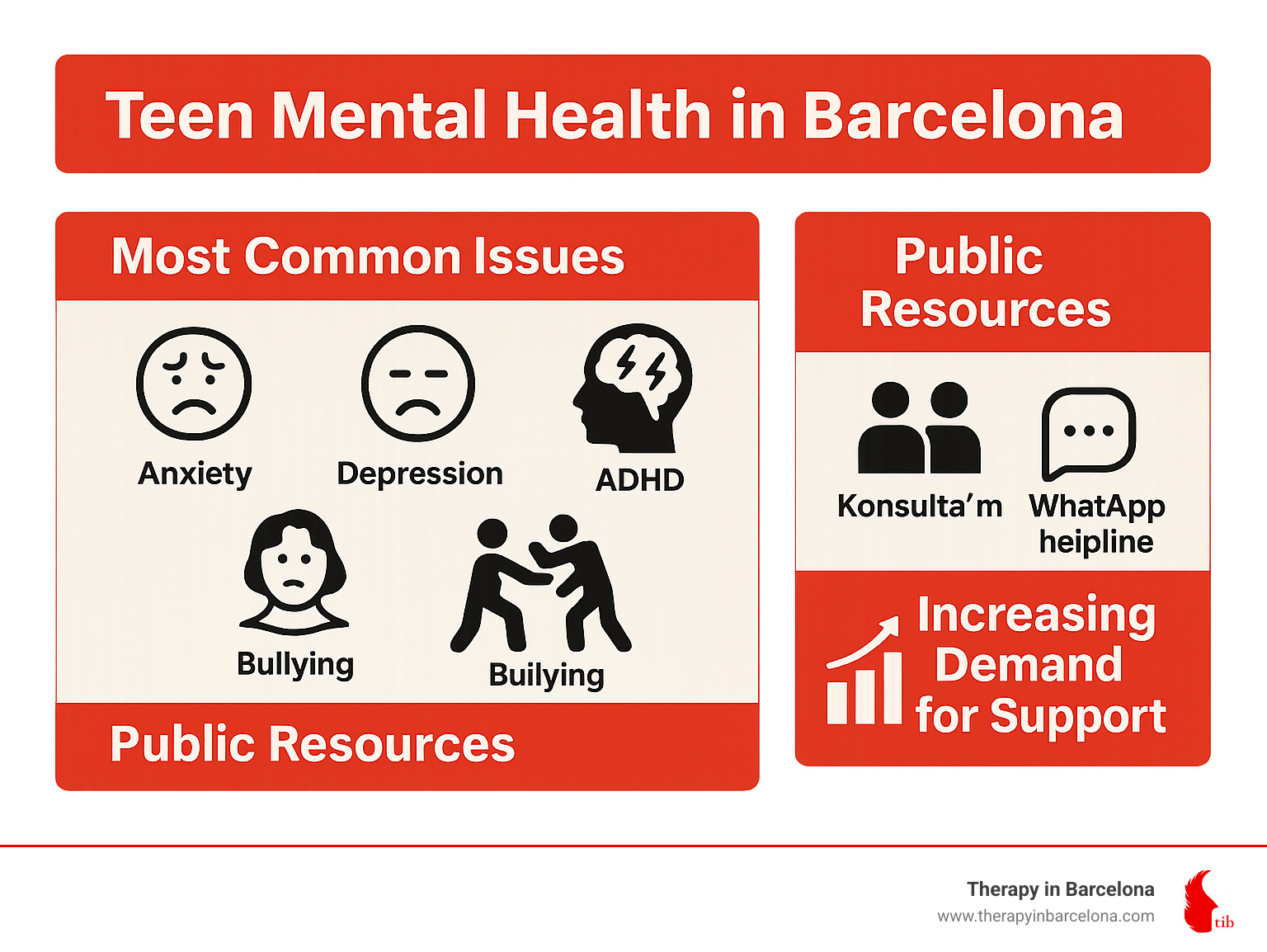
Beyond the numbers, teenager therapy barcelona tackles a web of interconnected challenges:
- Academic stress in a new education system and language
- Bullying and cyberbullying that exploit cultural differences
- ADHD or learning difficulties hidden by language barriers
- Social-media comparison with friends both here and back home
- Peer pressure intensified by the need to belong
- Grief and trauma linked to relocation or family changes
Recognising these stressors is the first step. The next is finding culturally sensitive help that understands the expat reality.
Spotting the Signs Your Teen Needs Help
Parenting a teenager can feel like walking a tightrope—one day they’re chatty and engaged, the next they’re locked in their room with music blasting. As an expat parent, it’s even trickier to know when typical teenage moodiness crosses into something more serious. Cultural differences, language barriers, and the stress of adapting to a new country can mask or amplify warning signs.

The key is looking for persistent patterns rather than isolated incidents. If your teen’s behaviour changes dramatically and stays that way for several weeks, it’s worth paying attention. Major mood swings that include frequent angry outbursts, unexplained crying, or constant irritability can signal deeper struggles. Similarly, when your once-social teen starts withdrawing—spending all their time alone in their room, refusing family activities, or pulling away from friends—it often indicates they’re overwhelmed.
School performance is another telling indicator. A sudden drop in grades, frequent absences, or complete school refusal can reflect anxiety, depression, or bullying. For international families, this might also signal struggles with academic pressure in a new educational system or feeling lost in classroom discussions conducted in a second language.
Changes in friendships and social connections are particularly important to watch. If your teen is losing friends, being bullied, or constantly struggling to fit in, these social challenges can deeply impact their mental health. Low self-esteem often shows up as negative self-talk, intense fear of failure, or constant comparison to others—especially common among expat teens trying to steer different cultural expectations.
Don’t overlook physical symptoms either. Frequent headaches, stomach aches, or sleep problems can be your teen’s body expressing emotional distress. Sometimes risky behaviour like substance experimentation, self-harm, or reckless actions becomes their way of coping with overwhelming feelings.
Red Flags Expat Parents Often Miss
Living abroad creates unique stressors that even experienced parents might not recognise as warning signs. Cultural isolation is one of the most significant yet overlooked challenges. When your teen constantly says “nobody gets me here” or expresses feeling like a permanent outsider, they’re not just being dramatic—they’re describing a real sense of disconnection that can lead to depression and anxiety.
Language frustration is another subtle but serious concern. If your teen starts avoiding group activities, seems unusually quiet in social settings, or expresses anger about communication barriers, they might be struggling more than you realise. The exhaustion of constantly translating thoughts and navigating cultural nuances can be overwhelming for young people still developing their identity.
Extreme homesickness that goes beyond occasional missing home can become problematic. When your teen constantly talks about “back home,” refuses to engage with local culture, or seems stuck in the past, they might need professional support to process their grief about leaving their previous life behind.
Seeking teenager therapy barcelona support isn’t about failing as a parent—it’s about recognising when your teen needs additional tools to steer their complex world. The earlier you intervene, the better equipped they’ll be to thrive in their new environment.
teenager therapy barcelona: Types of Support & How Sessions Work
Finding the right approach isn’t one-size-fits-all. Teenager therapy barcelona offers evidence-based and creative options so every adolescent can communicate in a way that feels natural.

Common Approaches
- Cognitive Behavioural Therapy (CBT) for anxiety and depression. Explore CBT for teens
- Mindfulness & relaxation for everyday stress
- Narrative therapy to help teens rewrite limiting stories
- Family therapy when communication has broken down
- Creative arts therapy for those who prefer images, music, or movement over words
- Online therapy for privacy and flexibility
“Therapy isn’t always about talking. Sometimes it’s about drawing, music, or simply having someone listen.”
— Leigh Matthews, Australian Psychologist & founder of Therapy in Barcelona
At Therapy in Barcelona, an intake call helps match your teen with a therapist who shares their language and cultural background. Adolescent Therapy Barcelona explains the process in depth.
The 5-Phase Journey
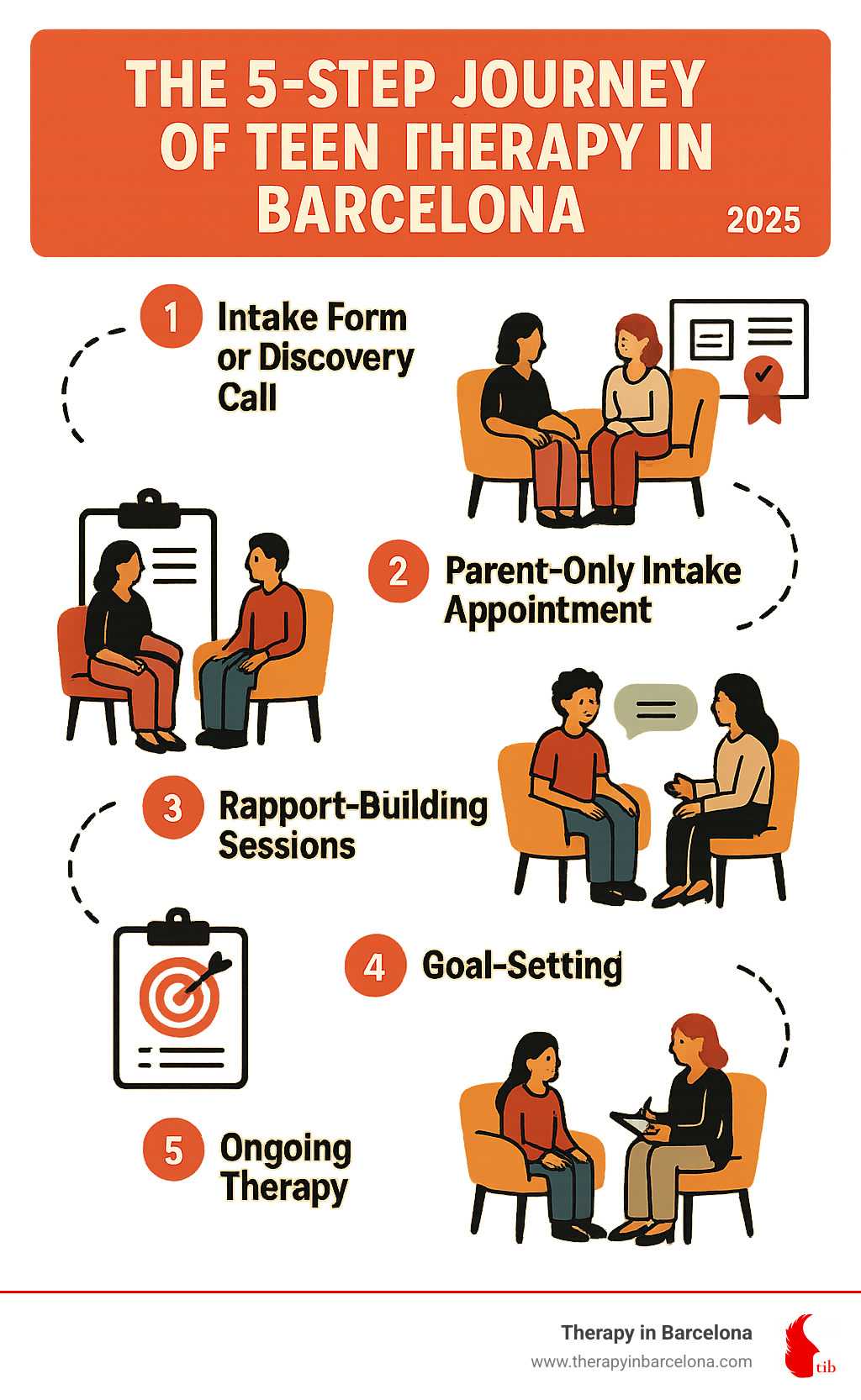
- Intake & information gathering – complete the Adolescent Intake Form or book a discovery call.
- Parent consultation – align goals and clarify confidentiality.
- Building rapport – 2–4 sessions focused on trust.
- Skill development – practical tools for emotions, school or social life.
- Consolidation & check-ins – taper sessions while progress is maintained.
Online vs In-Person
Online therapy removes travel time and can feel safer for teens, usually aged 14 years and upward, depending on the teen’s level of maturity. In-person meetings offer face-to-face connection and a clear boundary between home and therapy. Fees are the same, so choose the format your teen will actually use.
Finding the Right English-Speaking Therapist in Barcelona
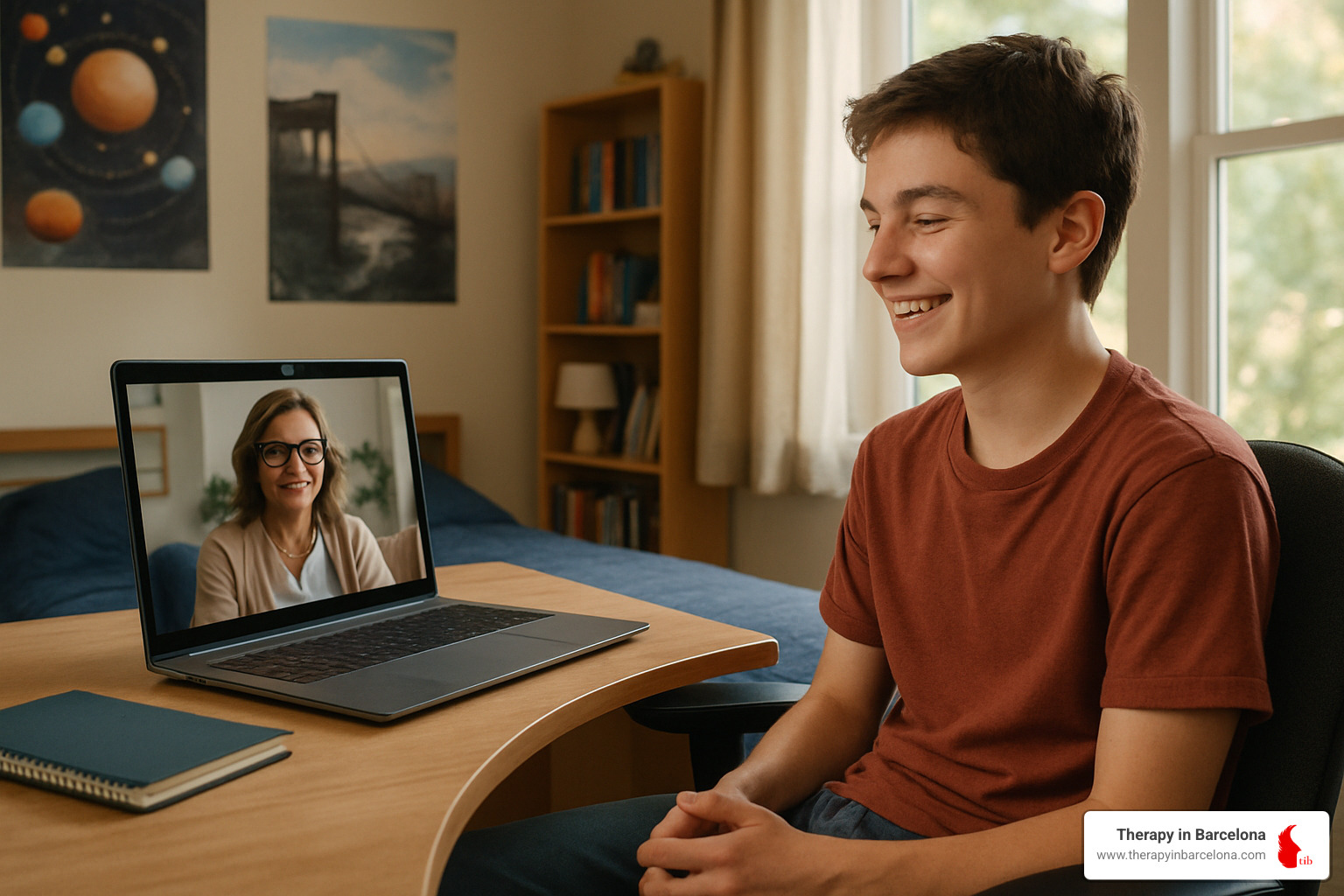
Barcelona’s international community has built a strong network of multilingual therapists. Clinics such as Therapy in Barcelona, Hylé, and Hestía deliver sessions in English and other languages, yet fluency alone isn’t enough. The best match is someone who also understands the push-and-pull of expat life.
Credentials & Matching
Seek psychology-trained, registered professionals who specialise in adolescents. Therapy in Barcelona’s intake team prioritises personality, cultural background, and clinical fit over first-available slots. Meet the therapists to see their diverse expertise.
Confidentiality & Fees
Sessions are private unless safety is at stake. Private appointments generally cost €80–€95 for individuals; €90–€115 for families. Current fees are listed on the website. Therapy in Barcelona is a private pay service which ensures confidentiality. If you want to be covered by insurance, please check if your sessions will be covered before starting. We are not a medical service and charge VAT for our sessions.
Public & Low-Cost Options
If private therapy is not possible, try:
- Konsulta’m – free, walk-in mental-health centres
- Aquí t’escoltem – youth drop-in (ages 12–20)
- WhatsApp Emotional Support Line 679 333 363 – 24/7 text help (14–25)
- Suicide Prevention Hotline 900 925 555 – emergencies
Quick Checklist
- Is the therapist qualified and registered?
- Do they speak your teen’s strongest language?
- Are they culturally competent with expat issues?
- Do their schedule and format (online/in-person) fit?
- Is the fee or public option workable?
Parents, Confidentiality & Ongoing Support
Teenager therapy barcelona balances your teen’s need for privacy with your wish to help. What’s said in session stays there unless safety is at risk. Therapists will invite you to occasional feedback meetings (with your teen’s consent) so everyone works together.
Supporting Progress at Home
- Listen first, fix later. Validate feelings before offering solutions.
- Keep routines steady. Meal times, bedtimes, and shared activities provide stability amid cultural upheaval.
- Practise mindfulness together. Even a short breathing exercise on the metro can lower stress. Research shows benefits for teens.
- Celebrate small wins. Notice effort, not perfection.
- Model healthy coping. Let your teen see how you handle bureaucracy, homesickness, or language slip-ups.
Progress continues between sessions, and your involvement—respectful, encouraging, and steady—makes a real difference.
Frequently Asked Questions about Teen Therapy in Barcelona
How much does teenager therapy barcelona typically cost?
Private therapy sessions typically range from €80–€95 for individual sessions and €90–€115 for family or couples therapy. However, each therapist at Therapy in Barcelona sets their own rates, so once you’re matched with the right professional for your teen, you’ll receive clear information about their specific fees and preferred payment methods. You can view current fee ranges here.
Insurance coverage varies, but many international insurance policies do provide reimbursement for therapy sessions—it’s worth checking your policy details. If private therapy feels financially out of reach, Barcelona offers excellent free public options including Konsulta’m, Aquí t’escoltem, and the 24/7 WhatsApp helpline, ensuring every teen can access support regardless of their family’s budget. These services will require your teen be fluent in Spanish or Catalan.
Will parents know what happens in teenager therapy barcelona sessions?
Confidentiality is fundamental to building trust between your teen and their therapist. Sessions remain private, creating a safe space where adolescents can speak openly without worrying that every detail will be shared with their parents. This privacy often makes the difference between a teen who engages in therapy and one who shuts down completely.
Therapy has to provide a safe space for your teenage son or daughter to open up and work on issues. This means that, unless there is a risk of the teenager self-harming or they ask for parental help with a coping skill, or the therapist wishes to offer strategies to improve relationships within the family, information disclosed during sessions will remain confidential.
Safety comes first, though. If there’s genuine concern about your teen’s wellbeing—such as risk of self-harm, harm to others, or abuse—therapists will involve parents and other professionals as needed. Additionally, with your teen’s consent, therapists often share general progress updates or offer practical strategies for supporting your teen at home, without revealing specific session content.
Many families find this balance reassuring—teens get the privacy they need to open up, while parents receive guidance on how to best support their child’s growth.
How long before we see improvements?
Every teen’s journey is unique. Some adolescents feel noticeably better after just a few sessions, especially when they’re dealing with specific stressors like school anxiety or friendship issues. Others, particularly those working through deeper challenges like depression, cultural adjustment, or trauma, may need several months of consistent support before significant changes emerge.
Session frequency typically starts with weekly meetings, gradually spacing out to biweekly or monthly sessions as your teen develops coping skills and confidence. Most families notice small positive changes within the first month—perhaps better communication at home, improved sleep, or a willingness to try new activities.
Several factors influence progress: the specific challenges your teen faces, how ready they are to engage in therapy, family support at home, and the strength of the therapeutic relationship. The encouraging news? Research consistently shows that teens who stick with therapy—even when progress feels slow—experience meaningful improvements in their mental health and overall quality of life.
Therapy isn’t just about “fixing problems”—it’s about building resilience, self-awareness, and coping skills that will serve your teen well into adulthood.
Conclusion
Being a teenager is challenging enough—add the layers of moving to a new country, learning a different culture, and possibly speaking a second language, and it’s no wonder so many international teens feel overwhelmed. But here’s the thing: with the right support, these same challenges can become stepping stones to incredible resilience and growth.
Barcelona’s international teens don’t have to steer this journey alone. Whether you’re noticing warning signs in your teenager or they’ve directly asked for help, support is available right now. From teenager therapy barcelona specialists who understand the expat experience to free public resources that provide immediate assistance, this vibrant city offers multiple pathways to healing.
The hardest part for most families? Taking that first step. It’s natural to wonder if you’re overreacting, if things will improve on their own, or if therapy is really necessary. But here’s what we’ve learned from supporting thousands of international families: waiting rarely makes things easier.
Your teenager deserves to feel understood, supported, and empowered—wherever they call home. The cultural sensitivity, language barriers, and unique pressures of expat life require therapists who truly “get it.” That’s why personalised matching matters so much. It’s not just about finding any therapist; it’s about finding the right therapist who can connect with your teen’s specific situation.
If you’re ready to take that next step, Therapy in Barcelona offers expert expat support in a welcoming, non-judgmental environment. Our team understands the complexities of international life because we’ve lived it ourselves. You can book a free discovery call here to discuss your family’s unique situation and explore how we can help.

Seeking help isn’t a sign of weakness—it’s a sign of wisdom. Every international teen deserves to thrive, not just survive, in their new home. With the right support, your teenager can transform the challenges of expat life into strengths that will serve them for years to come.
If you found this guide on teenager therapy barcelona helpful, please share it with other parents and expat families. Together, we can ensure that every international teen in Barcelona has access to the support they need to flourish.
