


Why Your First Therapy Session Matters More Than You Think

Counselling intake is the critical first session where you and your therapist begin to build understanding and trust. It’s more than paperwork; it’s the foundation for your therapeutic journey and where the work of healing begins.
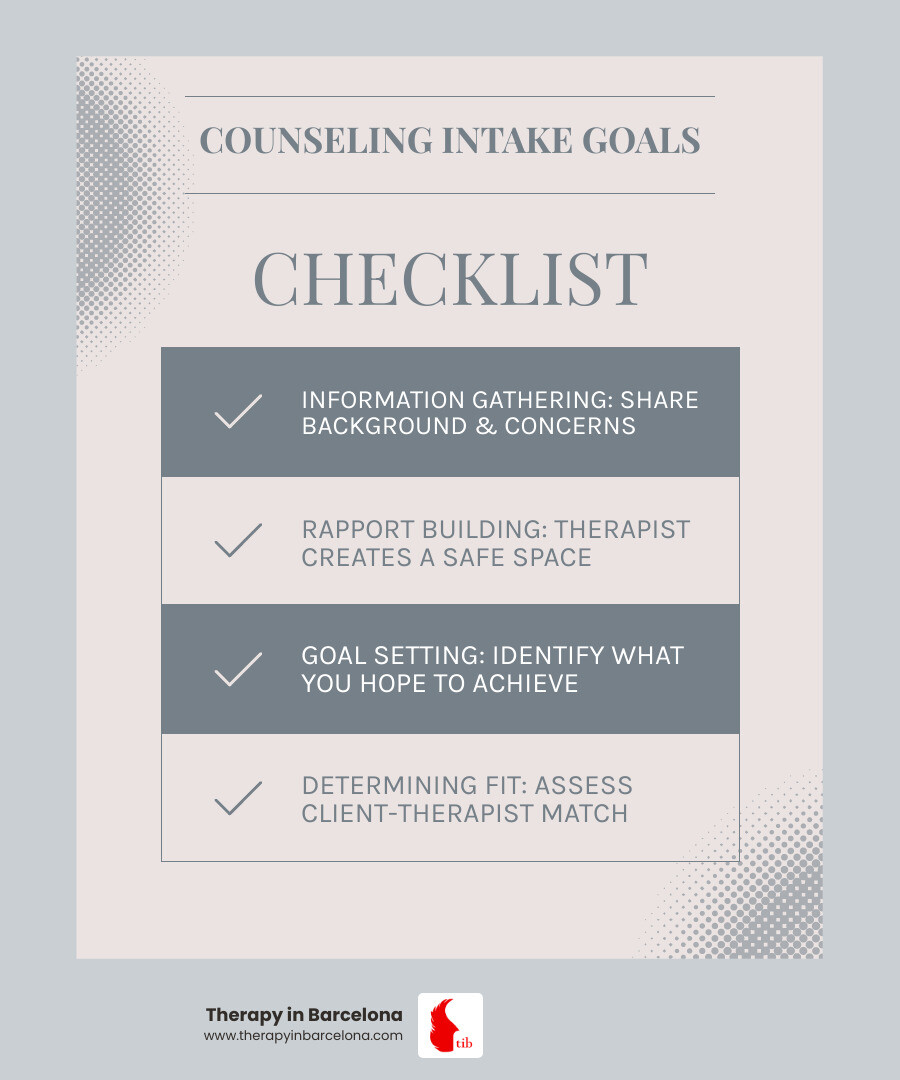
What happens during a counselling intake:
- Information gathering – You’ll share your background and current concerns.
- Rapport building – Your therapist creates a safe, welcoming space.
- Goal setting – Together, you’ll identify what you hope to achieve.
- Determining fit – You both assess if you’re a good match.
That knot in your stomach before a first therapy appointment is completely normal. Whether you’re an expat in Barcelona feeling isolated, a professional in Madrid struggling with work stress, or a couple in Valencia facing cultural differences, the intake session can feel daunting. You’re about to share personal information with a stranger, and it’s natural to be unsure of what to expect.
Here’s what you need to know: the intake session isn’t an interrogation or a test. It’s a collaborative conversation to help your therapist understand your unique situation and how best to support you. For internationals in Spain, this first meeting is especially important, as you’re not just explaining your struggles but also the cultural context that shapes them.
Studies consistently show that a strong therapeutic alliance, which begins in this first session, correlates with better treatment outcomes. In other words, how your intake goes can influence your entire therapeutic journey. That’s why getting it right matters.
This guide explains what happens during a counselling intake, how to prepare, and how to make the most of this foundational meeting. Whether you’re new to therapy or an expat finding your way in the Spanish mental health system, understanding the process helps you show up with confidence.
What is a Counselling Intake and Why Does It Matter?
Think of your counselling intake as the foundation of a house. Without a solid base, everything else is shaky. This first appointment is where you and your therapist begin building something important together.
During this session, your therapist listens to understand what brought you to them. They gather information, but they also pay attention to how you tell your story and what you hope might change. For expats in Valencia or Barcelona adjusting to a new culture alongside personal struggles, this context is especially important.
But the intake isn’t just about information; it’s about connection. As Licensed Clinical Social Worker Abby Gagerman notes, the intake helps build rapport for future sessions. That feeling of being understood matters. Studies consistently find that a strong therapeutic alliance correlates with better treatment outcomes. When you feel heard from the start, you’re more likely to benefit from the work ahead.
The counselling intake also serves to determine if you and the therapist are a good match. Therapy isn’t one-size-fits-all. A responsible therapist will recognise when someone else might serve you better and help you find that person. This protects your time and emotional energy.
Everything discussed feeds into a personalised treatment plan. Your therapist uses what they learn to recommend approaches that fit your situation—whether you’re dealing with anxiety, relationship struggles, or the loneliness of expat life. The intake turns vague concerns into a clear path forward, which often eases the anxiety of starting therapy.
The Two Sides of the First Session
Every counselling intake involves two people, each with a role.
As the client, you share what feels right. You don’t need to reveal everything in the first hour, as trust builds gradually. Your job is to communicate what brought you to therapy and what you’re hoping for. It’s also your chance to ask questions about the therapist’s experience and approach.
Your therapist works to create safety. They’ll explain how the session works, outline policies, and clarify confidentiality. They listen actively—not just to your words, but to your tone and the emotions beneath the surface. This is about understanding, not interrogation.
A trauma-informed approach means therapists structure conversations to minimise distress, letting you share at your own pace and prioritising your comfort. You are in control of what you reveal.
Confidentiality is central. Your therapist is legally and ethically bound to keep what you share private. They’ll also explain the limits. In Spain and the EU, therapists follow professional ethics and data protection laws (such as GDPR). We may need to act if there is risk of harm to you or others, concerns about a child or vulnerable adult’s safety, or a lawful court request. Understanding these boundaries from the start helps build a secure foundation.
For more guidance on preparing, you might find this resource helpful: Preparing for your first therapy session: A guide for internationals at Therapy in Barcelona.
The Nuts and Bolts: What to Expect During Your First Therapy Appointment
Before your first therapy session, there’s usually some paperwork. Most practices, including ours, ask you to complete forms like Informed Consent and an Intake Questionnaire through a secure online client portal. This allows your therapist to review your background beforehand, so you can spend less time on admin and more time talking about what matters.
Technology like Electronic Health Records (EHRs) makes this process smooth and secure. Some systems even let you enter your history on your phone. This efficiency means your therapist arrives at your session already familiar with your situation.
During the counselling intake conversation, your therapist will guide you through various topics to build a comprehensive picture of who you are. This understanding is essential for developing a treatment plan that fits your life. You can see an example in our Adult Intake Form.

Your therapist will explore several key areas:
- Presenting problem: What brings you to therapy now? This includes your primary concerns, symptoms, and how they affect your daily life.
- Personal and family history: Your upbringing, family dynamics, and significant life events help your therapist understand the context of your current experience. For expats, this often includes your cultural background and adjustment to life in Spain.
- Mental and physical health history: Have you been in therapy before? What about your physical health, medications, or sleep patterns? The mind-body connection is important.
- Strengths and coping mechanisms: How do you handle stress? What helps when you’re struggling? Therapy builds on what already works for you.
- Goals for therapy: What does success look like to you? You’ll work together to articulate specific, achievable goals.
Common Questions Your Therapist Might Ask During the Counselling Intake
Therapists use a mix of open-ended and closed-ended questions. Open-ended questions like, “What has been troubling you lately?” or “Tell me more about how you’ve been coping,” give you space to share your story in your own words.
Closed-ended questions help gather specific facts. For example: “Have you ever been diagnosed with depression?” or “Are you currently taking any medications?”
Your therapist isn’t reading from a script; they’re having a conversation. The questions flow naturally to ensure all necessary information is covered. This helps in formulating a preliminary diagnosis if needed and outlining a treatment plan.
Consider Alex, a fictional avatar representing a common expat experience. She’s 34, moved to Málaga a year ago, and feels overwhelmed. During her intake, the therapist might start with, “What brings you here today, Alex?” and follow up with, “Can you tell me more about that feeling of isolation?” Later, they might ask, “Have you experienced these feelings before?” to gather specific facts. This blend of questions ensures both a rich narrative and essential data are collected. Alex is fictional, but her story mirrors many internationals’ experiences.
If you want to understand what happens after the intake, this guide walks through the full process: What does the therapy process look like?.
What to Bring and How to Prepare for Your Counselling Intake
A little preparation can boost your confidence. Bring identification (passport or ID card) and your insurance information if you plan to use it. While Therapy in Barcelona is a private-pay service (some therapists offer sliding scale fees—just ask), it’s good practice to be prepared.
Also, have a list of current medications, including dosages. It’s also helpful to jot down notes on what you want to discuss, so you don’t forget anything important.
Most importantly, bring an open mind. Your therapist is there to support you, not judge you.
For an online therapy session, find a quiet, private space and test your internet connection, camera, headphones and microphone beforehand. Whether you’re in Gran Canaria, Valencia, or anywhere else, creating a peaceful environment helps you focus on the conversation.
Navigating Your Options for Therapy in Spain
For expats in Spain, finding the right therapeutic support can feel like solving a puzzle. You’re already adjusting to a new culture and possibly a new language, and now you need to find someone who understands.
The public health system offers accessible care, but waiting lists can stretch for months. The bigger challenge for internationals is that most services are in Spanish, and finding an English-speaking therapist is rare.
Large online platforms connect you with therapists globally, which is convenient. But the sheer volume of options can be overwhelming, and the experience may lack a personal touch. Not all therapists on these platforms understand the specific challenges of expat life in Spain.
Local private practices offer another route, but quality and specialisation vary. Some therapists may have limited experience with international clients or lack the English fluency required for nuanced conversations. Finding a practice that gets the expat experience takes time.

A Specialised Approach for Internationals
At Therapy in Barcelona, we understand these challenges because we’ve lived them. Our founder, Australian Psychologist Leigh Matthews, experienced them when she moved to Barcelona in 2011. She couldn’t find an English-speaking therapist who understood her situation, and that gap is why our practice exists.
We’ve built our practice around what we wished we had.
- Personalised Matching: We take time to understand your needs through an intake form (like our Couples Intake Form) or a Free Discovery Call. This thorough counselling intake helps us match you with a therapist from our team who truly fits. We focus on finding the right therapeutic relationship, because that’s what makes therapy work.
- Cultural Sensitivity: This is our lived experience. Our therapists are expats themselves. We offer therapy in English, and some of our therapists also speak German, French, Spanish, Afrikaans, Portuguese, Austrian-German and Swiss-German. When you talk about feeling isolated in Valencia or overwhelmed in Málaga, they get it.
- Quality and Expertise: We are a group practice of highly qualified, psychology-trained professionals. We share knowledge and support each other to maintain high standards of care. We work with adults, couples, teens and families.
- Privacy: As a private-pay service, we ensure strict confidentiality. Your data isn’t sold. Your information stays between you and your therapist. Some of our therapists offer sliding scale fees for those with financial need; just ask during your Free Discovery Call.
We’ve supported internationals in Barcelona since 2011. We offer both in-person sessions at our office in Eixample and online therapy to clients in Spain and worldwide.
After the First Session: What Are the Next Steps?
The counselling intake is just the beginning. Afterward, both you and your therapist have important work to do.
After you leave, your therapist reviews everything you shared during the session. This reflection is essential for them to process the conversation and create a formal intake note. This documentation guides future sessions and helps them begin sketching out a preliminary treatment plan custom to you, considering your history, goals, and strengths.
Meanwhile, you also have work to do. Take time to reflect on how the session felt. Did you feel heard and understood? Did the therapist’s style resonate with you? It’s normal to need a day or two to process the experience of sharing vulnerable parts of yourself.
Deciding on the right fit is a collaborative process. If you both feel it’s a good match, the next step is scheduling your second session, which marks the real start of your therapeutic journey.
Crucially, if it doesn’t feel right, it’s okay to say so. A professional therapist understands that fit matters enormously and won’t be offended. In fact, a good therapist will often help you find a colleague who might be a better match.
At Therapy in Barcelona, we see this as a collaborative process from the very first contact. Our aim is to empower you as an active participant in your healing. You can learn more about our ongoing process here: Therapy in Barcelona – How Therapy Works.

Frequently Asked Questions about the Counselling Intake Process
Starting therapy often brings up questions. Here are some common concerns about the initial counselling intake.
How long is a counselling intake session?
A counselling intake can be a standard 50-minute therapy appointment, or longer, lasting 50 to 90 minutes but this depends on your therapist and how they work.
What if I don’t “click” with the therapist?
It’s completely normal if you don’t feel an immediate connection. Finding the right fit is one of the most important factors in successful therapy. If you sense the therapist isn’t right for you, it’s important to acknowledge that feeling.
A professional therapist will understand and won’t take it personally. They can often refer you to a colleague who might be a better match. The goal is for you to find the most effective support, even if it’s with someone else. Our careful matching process aims to increase the chances of a good fit from the start, but we support you if adjustments are needed and send a first session survey to check in with you and give you space to share if there isn’t a fit.
Do I have to share everything in the first session?
Absolutely not. You are always in control of what you share and when. While the counselling intake is designed to be comprehensive, you are never obligated to discuss anything you’re not ready to.
Trust develops over time. A trauma-informed approach, which our therapists practise, means your therapist will respect your boundaries and create space for you to open up when you feel ready. They won’t pressure you for details you’re not comfortable sharing. The first session is about starting a conversation, not revealing every difficult experience.
Your First Step Towards a More Supported Life
Starting therapy takes courage. If you’re reading this, you’ve already taken a step towards understanding yourself better, especially while living as an expat in a country like Spain.
The counselling intake is where your journey begins. It’s your chance to be heard and the foundation for everything that follows. At Therapy in Barcelona, we’ve designed our intake process to be welcoming and supportive. Whether you need individual support, are working on relationship dynamics as a couple, helping your family adjust, or seeking support for a teen, we tailor our approach. We work with adults, couples, teens and families. Our intake forms, like the Family Intake Form, or the Couples Intake Form show how we begin to understand your unique situation.
Our founder, Australian Psychologist Leigh Matthews, created Therapy in Barcelona in 2011 because she couldn’t find what she needed as an expat: an English-speaking therapist who understood the challenges of adjusting to a new culture. This personal understanding of the expat experience permeates our entire team. We’re not just therapists who happen to work with internationals—we’re immigrants or in-betweeners ourselves.
That lived experience means we can truly see and understand you. We take the time to understand your concerns to make the best possible match with one of our psychology-trained therapists. It’s not about who’s available next; it’s about who’s the right fit for you.
If you’re an international in Barcelona, Valencia, Costa del Sol, Malaga Marbella, Madrid, or living anywhere in the world and feel ready to take that first step, we invite you to book a Free Discovery Call to see how we can support you. Our online therapy services are available worldwide, including in the USA and Canada. This is a private-pay service, and some of our therapists offer sliding scale fees for those with financial need—inquire when you reach out.
You don’t have to do this alone. Your first step towards a more supported life is just one conversation away.
