


Find an English Speaking Therapist Near You in Barcelona

An english speaking therapist near me can offer a private space to talk without having to translate every feeling, explain every cultural reference, or worry about finding the right Spanish or Catalan words. For many internationals in Barcelona, that matters when loneliness, relationship pressure, work stress, or the practical strain of settling abroad starts to build.
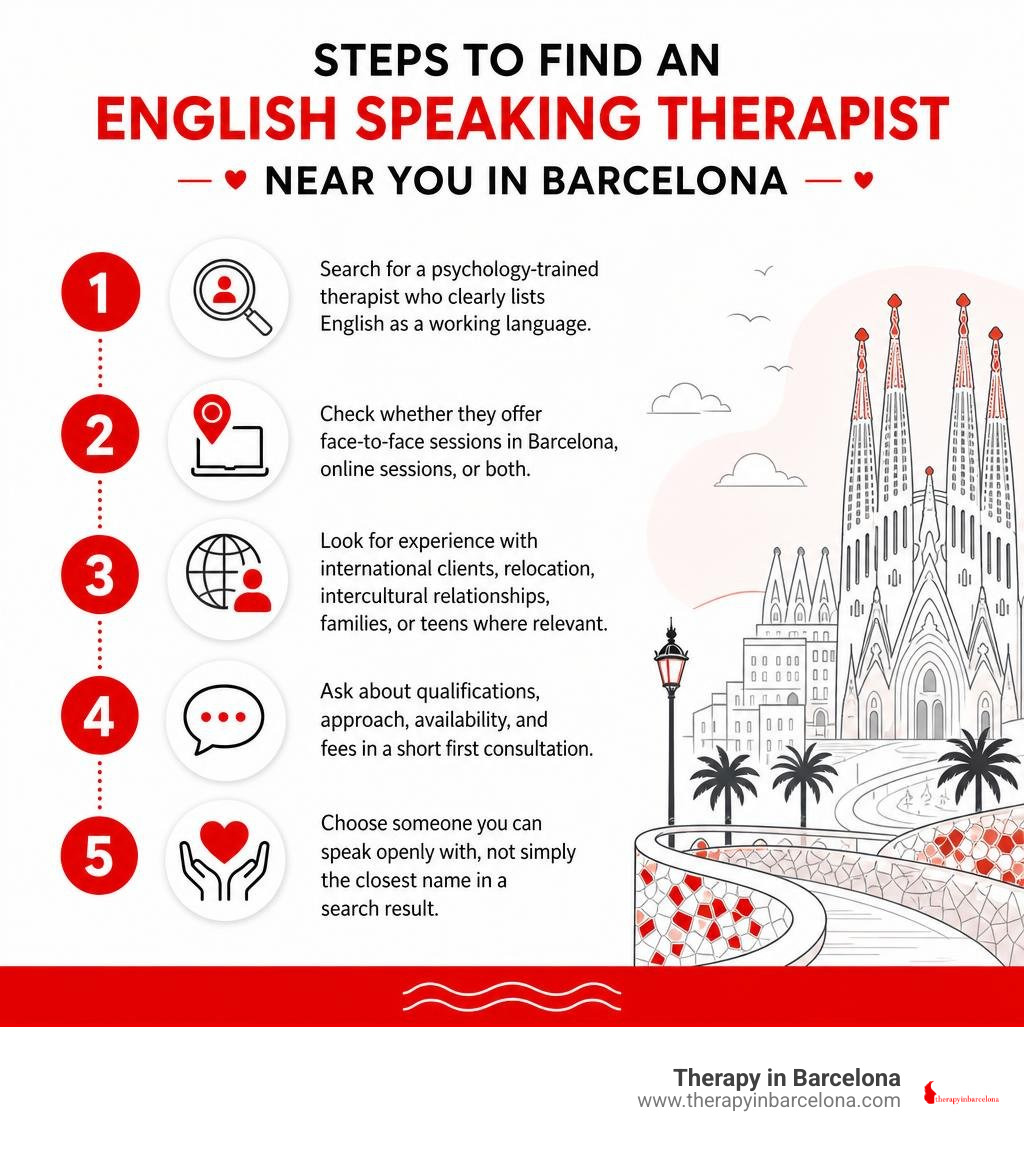
To find suitable support quickly:
- Search for a psychology-trained therapist who clearly lists English as a working language.
- Check whether they offer face-to-face sessions in Barcelona, online sessions, or both.
- Look for experience with international clients, relocation, intercultural relationships, families, or teens where relevant.
- Ask about qualifications, approach, availability, and fees in a short first consultation.
- Choose someone you can speak openly with, not simply the closest name in a search result.
Therapy in Barcelona is a trusted group practice in Spain, established in 2011. It offers psychology-trained, multilingual care in English, German, French, Spanish, Afrikaans, Portuguese, Austrian-German, and Swiss-German. The team provides careful personalised matching for adults, couples, teens, and families, with face-to-face sessions in its Barcelona office and online therapy for clients worldwide, including the USA and Canada.
Private-pay therapy can vary by provider and format. Some therapists offer sliding scale fees for people with financial need, so it is worth asking directly. If you’d like support, book a Free Discovery Call.
Why Seeing an English Speaking Therapist Near Me Matters for Expatriates
Moving to a new country brings excitement, but it also alters daily routines and social networks. When you live away from your original home, even small challenges can feel heavier. Finding an english speaking therapist near me provides a safe emotional anchor when adapting to culture shock, career changes, or family dynamics abroad.
Consider the experience of Elena (a fictional composite created to illustrate common expat challenges, not a real client). After relocating to Spain for work, she found herself struggling with sudden self-doubt and isolation. Although she spoke intermediate conversational Spanish, attempting to process her grief and career fatigue in a non-native language left her feeling misunderstood. Working with a practitioner who understood her language and foreign context allowed her to drop her guard completely.
Therapy provides a grounded environment to process complex transitions. Whether you are dealing with administrative burnout, homesickness, or identity shifts, a clinician who understands international living helps you build resilience. To learn more about selecting professional care tailored to your journey, read How Do I Choose the Right Therapist for My Needs as an Expatriate.
Processing Emotions: Native Language vs. English Therapy
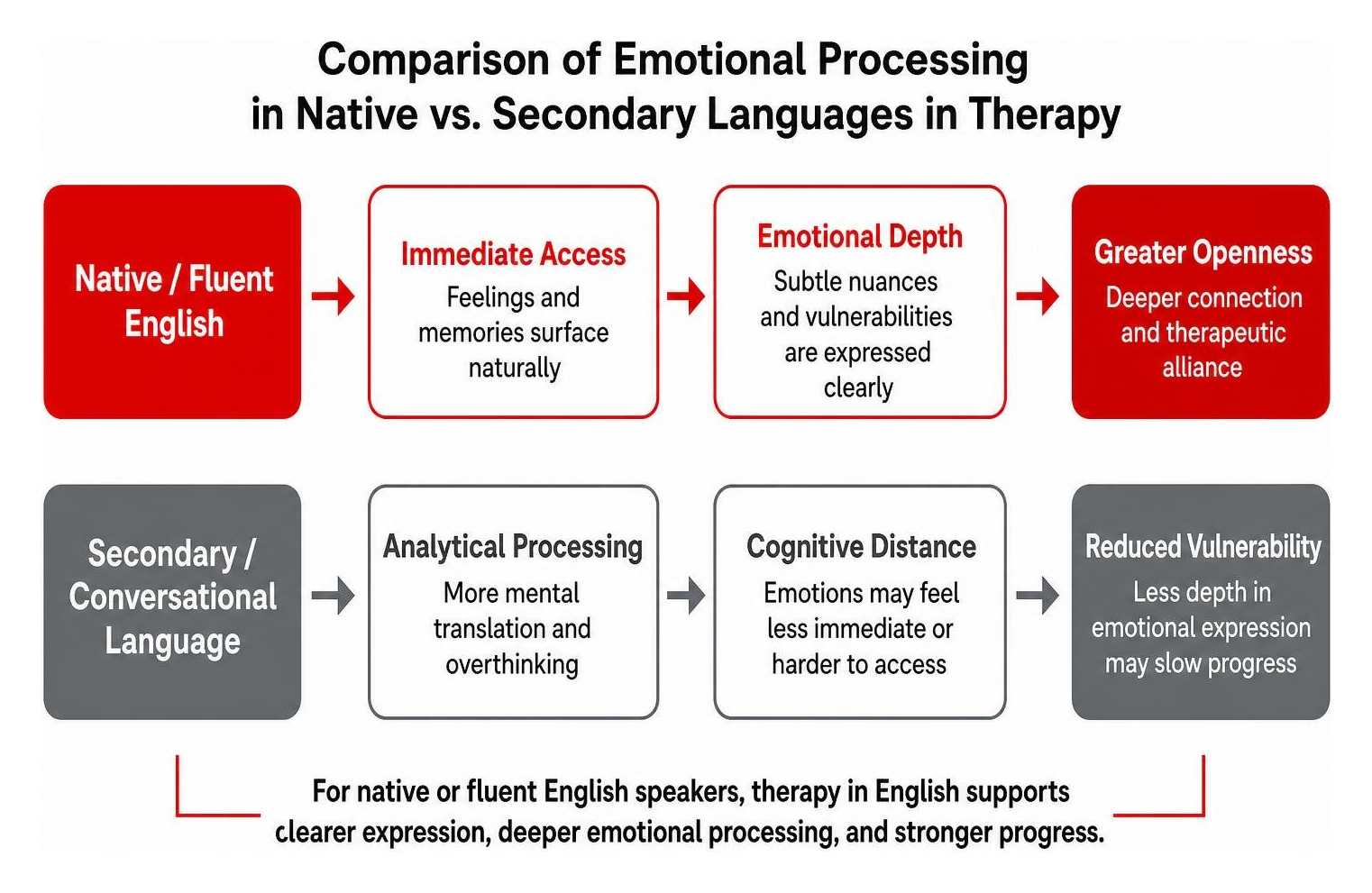
Language shapes how we store and recall emotional memories. Peer-reviewed research on the foreign-language effect suggests that using a second language can sometimes reduce emotional reactivity and create more psychological distance. In simple terms, a second language may help you think more analytically, while a highly fluent or primary language may feel closer to vulnerable memories and feelings. You can read the research summary in this open-access paper on the foreign-language effect.
For native or fluent English speakers, conducting therapy in English ensures that subtle emotional nuances are not lost. You do not have to pause to find the correct translation or worry about miscommunicating complex feelings. Clinicians who offer multilingual therapy modalities adapt evidence-based frameworks to help clients express vulnerability naturally and without hesitation.
Cultural Competence and Relocation Adaptation
Relocating abroad exposes individuals and families to distinct psychological pressures. Expatriates frequently encounter systemic challenges such as navigating foreign bureaucracies, establishing new support networks, and managing long-distance family obligations. Third Culture Kids (TCKs) and teens may struggle with belonging, while accompanying partners often experience career disruption and identity shifts.
A culturally competent therapist understands that these challenges are not personal failings, but predictable stages of cultural adjustment. They integrate evidence-based approaches like Cognitive Behavioural Therapy (CBT) and Acceptance and Commitment Therapy (ACT) to help clients manage stress and emotional overwhelm. This specialised insight creates a compassionate environment where international professionals and families feel validated.
How to Search for an English Speaking Therapist Near Me Online and In-Person
Searching for an english speaking therapist near me requires evaluating both location and delivery format. Depending on your routine, you might prefer in-person sessions in central hubs like Barcelona, Madrid, or Valencia, or the flexibility of secure telehealth. Both formats offer distinct advantages depending on your lifestyle and comfort.

Public health systems in Spain provide vital psychiatric care, but waiting lists can be long, and access to English-speaking practitioners is often limited. Large global apps provide quick scheduling, but their subscription models can feel transactional and lack local context. Specialised private practices, such as Therapy in Barcelona, offer an effective alternative, delivering bespoke therapist matching, culturally sensitive support in your native language, and strict privacy without selling user data. For a complete overview of regional care, see Finding an English Speaking Therapist in Spain.
5 Smart Steps to Find an English Speaking Therapist Near Me
Finding the right professional can be straightforward when broken into manageable actions. Following a clear strategy saves time and ensures a good therapeutic fit from the start.
- Leverage Local Professional Networks: Ask trusted expat communities, international medical clinics, or school counsellors for personal recommendations.
- Utilise Specialised Directories: Search verified directories that allow filtering by language, geographic city, and clinical approach.
- Check Professional Credentials: Verify that the practitioner holds recognised university degrees in psychology or clinical counselling and maintains active professional registration.
- Evaluate Modalities and Specialties: Confirm that the clinician uses evidence-based approaches matching your specific concerns, such as couples therapy, trauma care, or burnout support.
- Schedule an Initial Consultation: Use an introductory call to assess warmth, communication style, and cultural understanding before committing to ongoing care.
To explore this process further, review 5 Smart Ways to Find an English Speaking Therapist.
Specialised Directories for International Communities
Specialised directories for international communities can be useful when they let you filter by language, location, professional background, and experience with cross-cultural life. These filters help narrow a broad search into a more practical shortlist. Still, a directory profile is only a starting point, not proof of fit.
For clients who travel frequently across regions like Marbella, Málaga, Alicante, or Gran Canaria, remote therapy can offer helpful continuity. Online sessions allow individuals to maintain consistent therapeutic relationships during business travel, relocation, or periods when attending an office is difficult.
Understanding Credentials: Therapy, Counselling, and Psychiatry Options
When evaluating mental health care, understanding professional titles ensures you receive appropriate care. Different qualifications reflect varying levels of clinical training, scope of practice, and regulatory oversight.
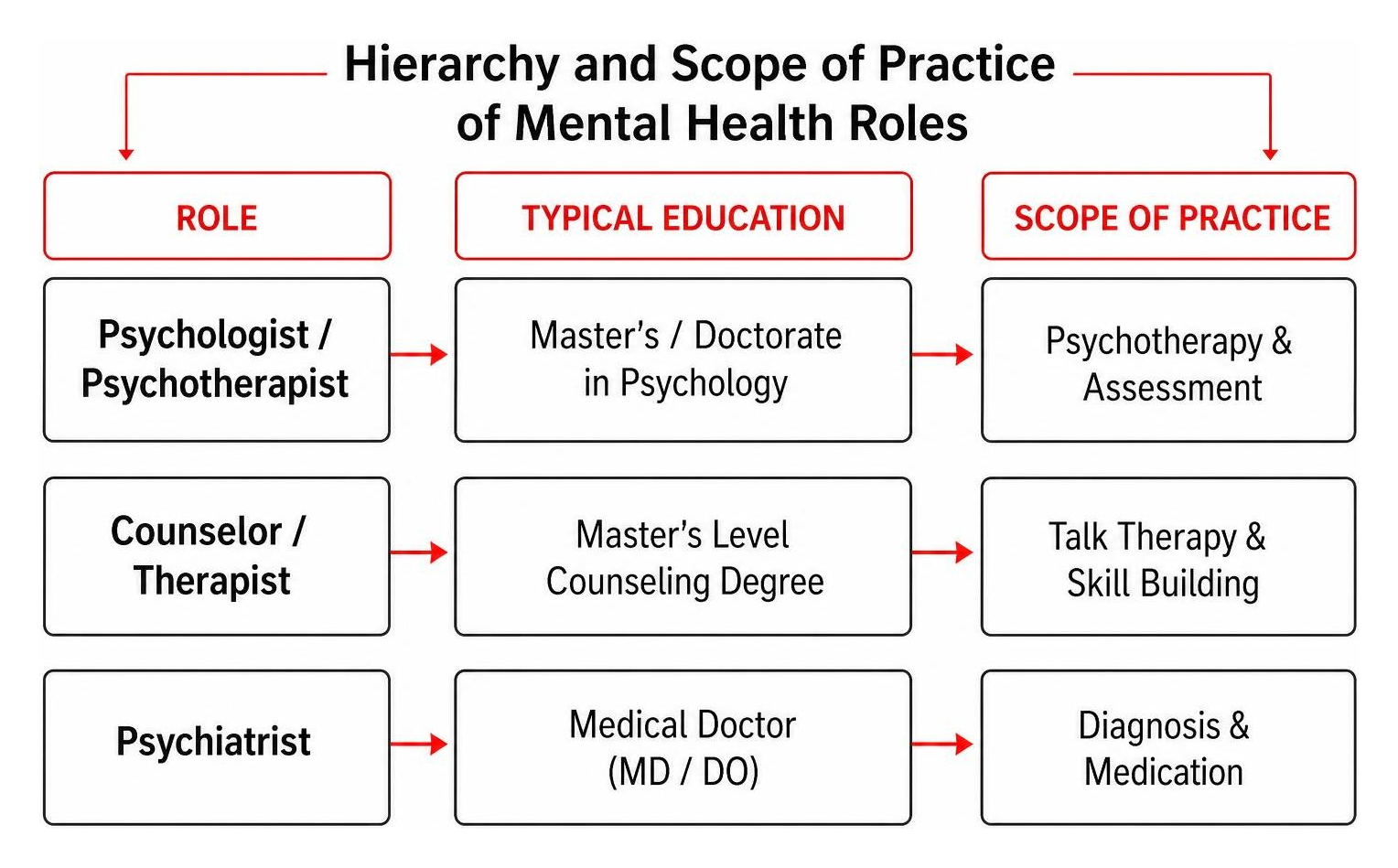
Understanding these distinctions helps you match your specific needs with the right professional. To read more about navigating local care options, see Your Guide to Finding the Right Therapist Near You.
Key Provider Types: LPC, LCSW, LMFT, and Psychologists
In English-speaking international contexts, you will encounter various professional designations:
- Licensed Professional Counsellors (LPC): Hold master’s degrees in counselling, focusing on individual mental health, life transitions, and emotional regulation.
- Licensed Clinical Social Workers (LCSW): Provide clinical therapy with a strong emphasis on social systems, family dynamics, and community resources.
- Licensed Marriage and Family Therapists (LMFT): Specialise in relational patterns, couples counselling, and family systems dynamics.
- Clinical Psychologists: Hold doctoral or master’s degrees in psychology, offering comprehensive psychological evaluations, psychodynamic therapy, CBT, and specialised psychological care.
- Psychiatrists: Medical doctors who diagnose complex psychiatric conditions and manage medication prescriptions alongside medical oversight.
Verifying Licenses and Qualifications
Ensuring your therapist is fully qualified provides peace of mind. Licensed professionals complete rigorous postgraduate education, thousands of supervised clinical hours, and ongoing ethics training. In Spain, health psychologists are registered with official regional bodies, such as the Col·legi Oficial de Psicologia.
When researching an english speaking therapist near me, check their official website or professional directory profile for transparent license numbers and academic qualifications. Qualified practitioners welcome questions about their clinical background, professional memberships, and supervision standards during initial inquiries.
Costs, Insurance Reimbursement, and What to Ask in a First Consultation
Understanding the financial aspects of therapy helps prevent unexpected expenses. In Spain and across Europe, specialised expat mental health services generally operate on a private-pay basis. This model guarantees strict privacy, direct therapist selection, and personalised care without diagnostic restrictions imposed by third parties.
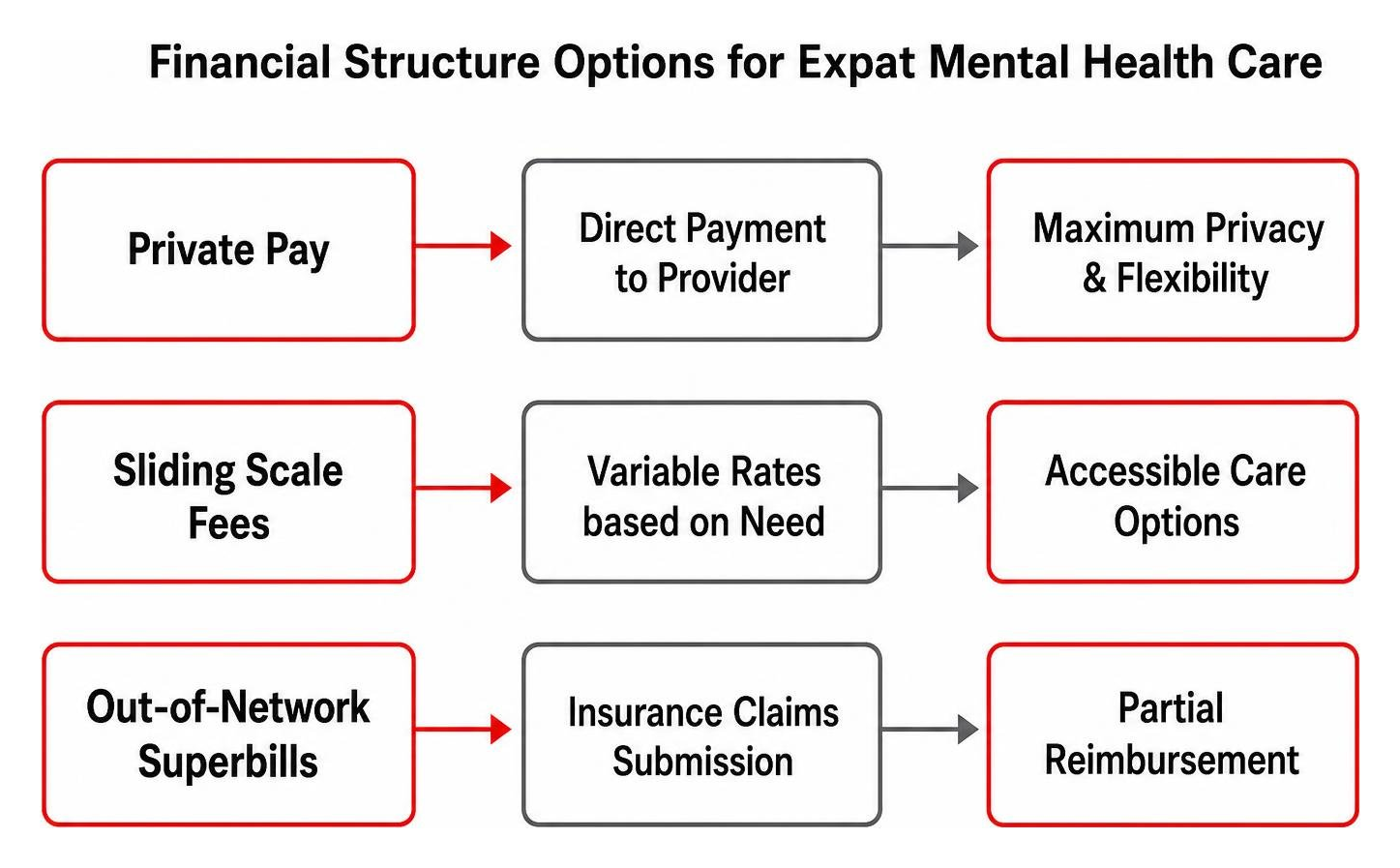
Some practitioners offer sliding scale fees based on documented financial need, and prospective clients are encouraged to inquire during intake. To learn about structuring treatment for specific concerns, consult Finding the Right Therapist for Depression or Anxiety.
Understanding Therapy Rates and Out-of-Network Superbills
Private therapy session rates vary depending on practitioner experience, specialised training, session length, and location. Because private providers set their own fees, there is no single official European price for psychotherapy. The safest approach is to ask each practice for its current written fee, what is included, and whether the fee differs for individual, couples, family, online, or in-person sessions.
If you carry private international health insurance, your policy may offer out-of-network benefits. Therapists can issue itemised monthly receipts detailing session dates, services provided, and paid fees. You can submit these invoices directly to your insurer to seek partial reimbursement, depending on your policy terms.
Key Questions to Ask an English Speaking Therapist Near Me
An initial consultation allows you to determine whether a clinician’s style aligns with your personal goals. Asking targeted questions helps establish therapeutic fit.
- What are your primary university qualifications and professional registrations?
- How much experience do you have working with expatriates, Third Culture Kids, or international families?
- What evidence-based therapy approaches (such as CBT, ACT, or IFS) do you integrate into sessions?
- What are your policies regarding session cancellations, scheduling flexibility, and online appointments?
- Do you offer sliding scale options or provide documentation for insurance reimbursement?
Frequently Asked Questions About Finding Local Therapy
Should I do therapy in English or my native language?
Choosing between English and your mother tongue depends on your personal comfort and therapeutic goals. Research indicates that working in a second language can provide helpful analytical clarity when examining complex problems. However, expressing deep emotional trauma or childhood memories often feels more natural in a primary language. If you are fully fluent in English, working with an English-speaking therapist allows seamless communication without emotional barriers.
What should I do if I am in an immediate mental health crisis?
Private therapy practices and outpatient clinics do not provide acute crisis intervention or immediate emergency medical care. If you or someone you know is experiencing acute severe distress, self-harm thoughts, or a mental health emergency:
- In Spain, call emergency services immediately at 112.
- Contact the Spanish National Crisis Hotline by dialing 024 (free, confidential, available 24/7).
- Contact Telefono de la Esperanza at 717 003 717.
- Go to the nearest hospital emergency room (urgencias).
Can I claim therapy expenses through my private health insurance?
It depends on your specific insurance provider and policy structure. Many international health insurance plans reimburse out-of-network mental health care provided by registered, university-trained psychologists. You pay the practitioner directly per session, and the clinic provides itemised monthly statements for submission to your insurer. Always verify out-of-network coverage details directly with your insurance representative before starting care.
Taking the Next Step
Finding an english speaking therapist near me empowers you to address life’s challenges with clarity, comfort, and professional support. Living abroad presents unique personal growth opportunities alongside complex emotional hurdles. Partnering with a skilled practitioner who understands international living helps you manage transitions, strengthen relationships, and foster deep emotional well-being.
Therapy in Barcelona was founded in 2011 by Leigh Matthews, an Australian Psychologist and expat in Barcelona since 2011 with extensive experience supporting international clients. As a trusted group practice in Spain, Therapy in Barcelona offers psychology-trained multilingual care in English, German, French, Spanish, Afrikaans, Portuguese, Austrian-German, and Swiss-German. The team provides careful personalised matching for adults, couples, teens, and families, working both online with clients worldwide (including the USA and Canada) and through face-to-face sessions at their central office in Barcelona.
If you’d like support, book a Free Discovery Call. What is one small step you can take today to prioritize your emotional well-being abroad?
