


The Complete Guide to Expat Mental Health Support Resources

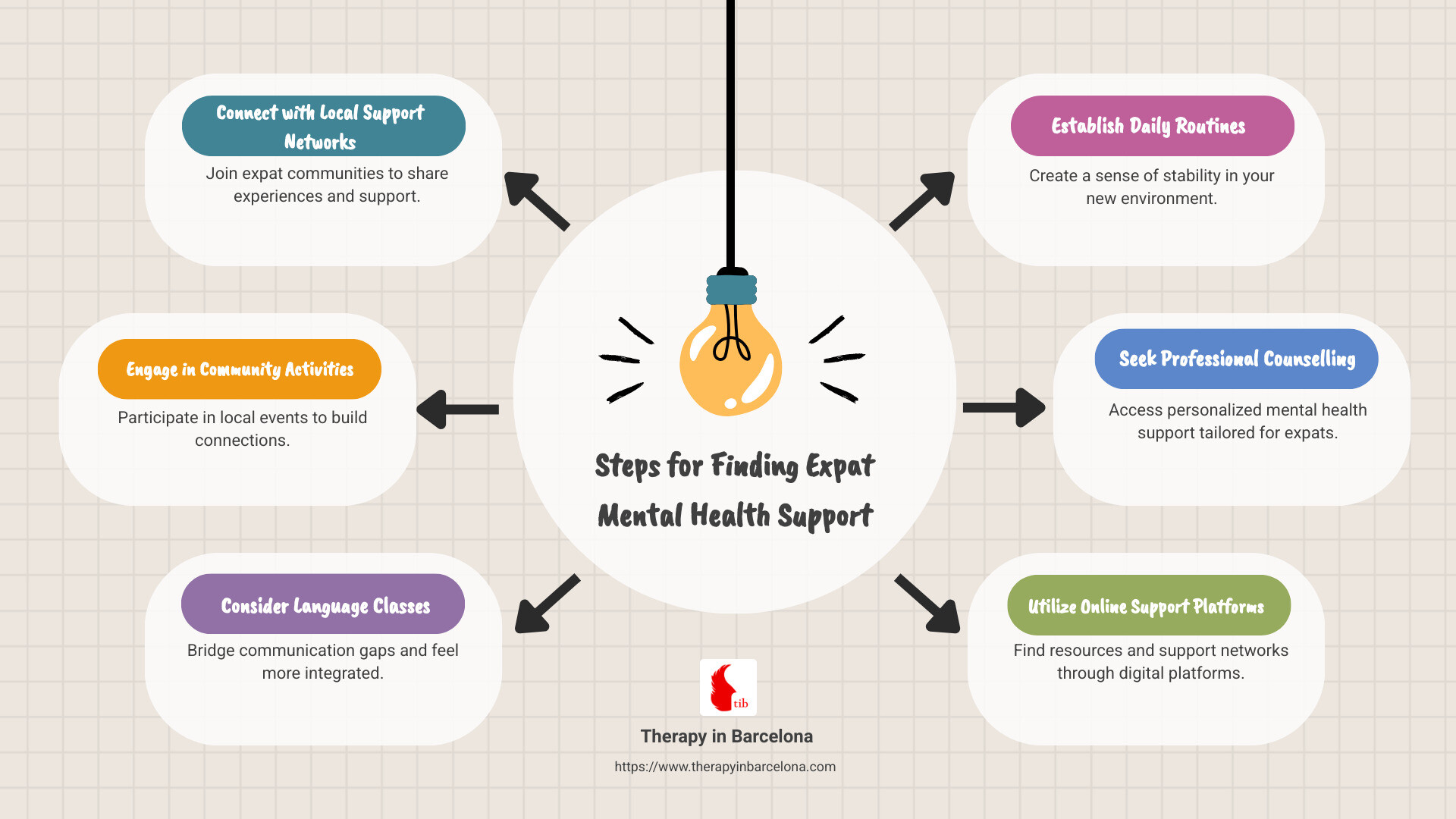
Expat mental health support is a lifeline for those navigating life in a new country, offering resources and guidance to help manage common challenges. If you’re feeling overwhelmed, here are a few quick steps to ease the transition:
- Reach out to local expat communities.
- Engage in language classes to bridge communication gaps.
- Establish a routine for a sense of stability.
- Consider professional help for personalised support.
Moving to a new country is thrilling yet daunting. As an expat, you may face cultural adjustment, communication issues, and homesickness. These challenges can strain your mental health. Imagine Emily, a 34-year-old from the UK, who moved to Barcelona. She was excited but soon felt alone and anxious, struggling with language barriers and missing her family.
Therapy in Barcelona understands these feelings and provides culturally sensitive support to help you adapt. Whether you’re like Emily, seeking community and direction, or just needing a safe space to express your feelings, finding support is key. In this post, Therapy in Barcelona Director and Founder, Australian Registered Psychologist, Leigh Matthews explores how moving abroad isn’t just about finding a new place—it’s about finding yourself in it.
Understanding Expat Mental Health
Living as an expat can be an exciting trip, but it also comes with its own set of challenges. Many expats experience what is often referred to as “expat syndrome.” This term describes the emotional and psychological struggles that can arise from living in a foreign country. Let’s explore some common issues like anxiety and depression that expats may face.
Expat Syndrome
Expat syndrome encompasses the feelings of disorientation and stress that come with adapting to a new culture. This can include:
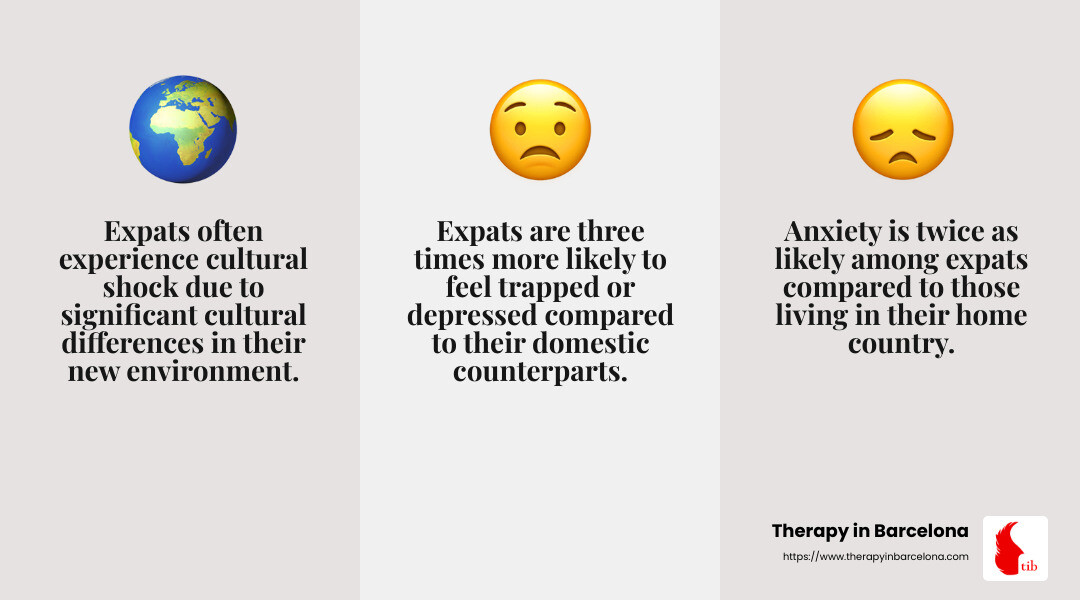
- Cultural Shock: The initial excitement of a new environment may fade, leaving expats feeling overwhelmed by cultural differences. This is culture shock.
- Language Barriers: Struggling to communicate effectively can lead to frustration and isolation.
- Homesickness: Missing family and familiar surroundings can amplify feelings of loneliness.
Consider the story of Emily, our fictional expat from the UK. Upon moving to Barcelona, she found herself excited yet quickly overwhelmed by the cultural differences and language barriers. Emily’s experience is not unique, as many expats face similar challenges.
Anxiety
Anxiety is a common mental health issue among expats. The pressure to adapt and succeed in a new environment can lead to:
- Constant Worry: Concerns about fitting in, job security, and language proficiency.
- Social Anxiety: Fear of social interactions due to language barriers or cultural misunderstandings.
According to a study, expats are twice as likely to experience anxiety compared to their domestic counterparts. This heightened risk underscores the importance of seeking support when needed.
Depression
Depression among expats can manifest as feelings of sadness, hopelessness, and a lack of motivation. Factors contributing to depression include:
- Isolation: Feeling disconnected despite being surrounded by people.
- Stress of Adaptation: The continuous effort to adapt to new customs and routines can be exhausting.
- Career Pressures: Balancing work demands with personal life in a foreign setting can be overwhelming.
A report highlights that expats are three times more likely to feel trapped or depressed compared to those living in their home country. This statistic emphasises the need for accessible mental health resources.
Therapy in Barcelona offers a supportive environment where expats can address these issues. With culturally sensitive care, expats like Emily can find the understanding and guidance they need to thrive in their new home.
In the next section, we’ll explore the key resources available for expat mental health support, including online therapy and international therapist directories.
Expat Mental Health Support: Key Resources
Navigating mental health as an expat can be challenging, but there are several resources available to help. These resources are designed to offer support that is both accessible and culturally sensitive, ensuring expats receive the care they need. Let’s dig into some of the key resources available to support expat mental health.
Therapist Directories
Finding the right therapist can be daunting, especially in a foreign country. The Therapist Directories can be a valuable tool that connect expats with therapists who understand their unique challenges. These directories often include professionals who, like our team of English speaking therapists at Therapy in Barcelona, specialise in working with internationals, ensuring culturally sensitive support.
- How It Works: Expats can search directories by location, language, and specialisation to find a therapist who meets their needs. Directories are particularly useful for those seeking therapists who speak their native language or have experience with expat issues (like our team at Therapy in Barcelona where we offer English therapy and therapy in German, therapy in French, therapy in Portuguese, therapy in Spanish and Catalan and other languages).
- Benefits: Access a wide range of therapists who understand the complexities of expat life. This can include challenges like cultural adjustment, identity struggles, and isolation.
Online Therapy
For many expats, online therapy is a convenient and effective way to access mental health support. It provides flexibility and accessibility, allowing individuals to receive care from the comfort of their own homes.
- Convenience: Online therapy eliminates the need for travel, making it easier for expats to fit sessions into their busy schedules. It also offers flexibility in scheduling, accommodating different time zones and lifestyles.
- Accessibility: Expats living in areas with limited mental health resources can still access high-quality care. Online platforms connect expats with therapists around the world, ensuring they receive the support they need.
- Cultural Sensitivity: Many online therapists are trained to address the specific needs of expats, offering a culturally sensitive approach to therapy.
Culturally Sensitive Support
Culturally sensitive support is crucial for expats seeking mental health care. This approach acknowledges and respects the diverse backgrounds and experiences of expats, ensuring they feel understood and supported.
- Therapy in Barcelona: This centre offers culturally sensitive mental health support custom to the international community. Founded by Leigh Matthews, an Australian psychologist with personal experience in expat life, Therapy in Barcelona is dedicated to helping expats steer the challenges of living abroad.
- Understanding and Empathy: Culturally sensitive therapists understand the nuances of expat life, including cultural dissonance, language barriers, and the stress of adaptation. They provide a safe space for expats to explore their feelings and develop coping strategies.
These resources are essential for expats seeking mental health support. By utilising international therapist directories, engaging in online therapy, or seeking culturally sensitive care, expats can find the help they need to thrive in their new environment.
Strategies for Maintaining Mental Wellbeing Abroad
Living abroad can be an exciting journey, but it also comes with its own set of challenges. Maintaining your mental well-being is crucial to ensure you thrive in your new environment. Here, we’ll explore some effective strategies, focusing on self-care, mindfulness, and physical health.
Self-Care: Prioritising Your Well-Being
Self-care is not a luxury; it’s a necessity, especially when you’re navigating life in a foreign country. Here are some practical self-care tips for expats:
Establish a Routine: Creating a daily routine can provide structure and stability. Include activities that bring you joy and help you relax, such as reading, cooking, or exploring your new surroundings.
Celebrate Small Wins: Adjusting to a new country takes time. Be kind to yourself and celebrate your achievements, no matter how small. Whether it’s successfully ordering a meal in the local language or making a new friend, every little victory counts.
- Set Boundaries: Make time for activities that nurture your well-being. Whether it’s indulging in a hobby or pampering yourself with a spa day, engaging in activities that bring you joy is essential.
“Living abroad can make everything seem more difficult. Therefore, it’s important to celebrate even the smallest achievements.” — Therapy in Barcelona
Mindfulness: Staying Present in the Moment
Mindfulness can be a powerful tool to help manage stress and maintain mental well-being. Here’s how you can incorporate mindfulness into your daily life:
- Practice Meditation: Set aside a few minutes each day to meditate. This can help you stay grounded and focused, reducing stress and anxiety.
- Engage in Deep Breathing Exercises: Deep breathing can calm the mind and body. Try taking a few deep breaths whenever you feel overwhelmed.
Building a Support Network as an Expat
Building a support network is essential for maintaining your mental well-being when living abroad. It helps to alleviate feelings of loneliness and provides a sense of belonging. Here are some effective ways to build your network:
Local Expat Groups
Joining local expat groups is one of the most straightforward ways to meet people who understand your journey. Many cities have thriving communities of expats who regularly organize social events and activities. These groups can be found on platforms like Facebook, Meetup, or Internations. Online communities are abundant as well.
- Example: Imagine Emily, a 34-year-old from the UK, who moved to Barcelona. She joined a local expat group on Facebook and attended a few meetups. This helped her to make new friends and feel more at home.
- Fact: According to a survey by Cigna, 86% of expats reported feeling detached or alone. Joining expat groups can significantly reduce these feelings by providing a community of like-minded individuals.
Language Classes
Taking language classes can serve dual purposes: improving your language skills and meeting others who are in the same boat. Language schools often host social events where students can practice their skills and form friendships.
- Tip: Look for language exchange events where you can meet locals interested in learning your language. This not only helps in improving language skills but also in understanding the local culture better.
- Case Study: A study found that attending language classes helped expats in Spain integrate more quickly into society, as they were able to communicate more effectively with locals and participate in cultural activities.
Volunteer Opportunities
Volunteering is a fantastic way to give back to your new community while meeting people who share your values. Whether it’s helping at a local shelter or participating in environmental projects, volunteering provides a sense of purpose and connection. Read more about volunteering in Barcelona.
- Quote: “Volunteering not only helps you meet new people but also gives you a sense of belonging in your new environment.” — Therapy in Barcelona
- Action Step: Check with local community centres or online platforms for volunteer opportunities that align with your interests. This can be an enriching way to build a network and make a positive impact.
Engaging in Hobbies and Sports
Joining clubs or sports teams can be an enjoyable way to meet people with similar interests. Whether it’s a book club, a yoga class, or a local football team, shared activities provide a natural way to connect with others.
- Example: Emily found a local running club in Barcelona, which not only helped her stay fit but also introduced her to a group of supportive friends who shared her love for running.
- Tip: Look for clubs or classes that welcome newcomers. These settings often have structured activities that make it easier to interact with others.
By actively seeking out these opportunities, you can build a robust support network that will provide the emotional support and companionship needed during your expat journey. Forming connections takes time, so be patient and open to new experiences.
Frequently Asked Questions about Expat Mental Health
Living abroad can be exciting, but it also brings unique challenges that may impact mental health. Here, we address some common questions about expat mental health support.
What is Expat Syndrome?
Expat syndrome refers to the psychological impact of living abroad, often characterized by feelings of anxiety, depression, and isolation. Many expats experience cultural dislocation, where they feel torn between their home culture and the new one. This can lead to identity confusion and stress.
- Example: Take Emily, a fictional 34-year-old professional from the UK. She moved to Barcelona seeking trip but found herself battling unexpected loneliness and cultural adjustment issues. While her story is fictional, it mirrors the struggles many expats face.
- Fact: Research shows that expats are twice as likely to experience anxiety and depression compared to their counterparts at home.
How to Find a Therapist as an Expat?
Finding a therapist who understands the expat experience is crucial for effective mental health support. Here are some ways to find the right therapist:
International Therapist Directory
Use online directories that specialise in listing therapists experienced in working with expats. These platforms often allow you to filter by language, specialty, and location, making it easier to find a suitable match.
- Tip: Look for therapists who offer culturally sensitive support and have experience with the unique challenges of expat life.
Online Resources
Online therapy platforms provide access to licensed professionals from the comfort of your home. This is particularly useful if local resources are limited or if you prefer to speak with someone in your native language.
- Quote: “Online therapy bridges the gap in support, providing a lifeline for expats navigating the complexities of a new life abroad.” — Therapy in Barcelona
- Action Step: Explore platforms that offer therapy in your native language to ensure effective communication and understanding.
What are Common Mental Health Issues for Expats?
Expats often face a range of mental health challenges due to the stress of adapting to a new country. The most common issues include:
Anxiety and Depression
The pressure of adjusting to a new culture, language barriers, and separation from support systems can lead to heightened anxiety and depression.
- Statistic: A study found that expats are two-and-a-half times more likely to experience anxiety and depression compared to those living in their home country.
Isolation
Being away from family and friends can lead to feelings of loneliness and isolation. This can be exacerbated if there are language barriers or cultural differences that make it hard to form new connections.
- Fact: According to a Cigna survey, 86% of expats reported feeling detached or alone.
By understanding these challenges and seeking appropriate support, expats can better steer the emotional complexities of living abroad. In the next section, we’ll explore strategies for maintaining mental well-being while living as an expat.
Conclusion
Navigating life as an expat can be an enriching yet challenging experience. With the right support, it becomes possible to thrive in a new environment. This is where Therapy in Barcelona plays a vital role.
Therapy in Barcelona is dedicated to providing culturally sensitive support customised to the unique needs of the international community. Founded by Leigh Matthews, an Australian psychologist and expat herself, the practice understands the intricacies of expat life. Leigh’s vision was born from her own experience of adjusting to a new culture and realising the need for English-speaking mental health support in Barcelona.
Personalised Therapist Matching
One of the standout features of Therapy in Barcelona is its commitment to personalised therapist matching. This means that every client is paired with a therapist who not only speaks their language but also understands their cultural background and specific challenges. This personal touch ensures that therapy is as effective and supportive as possible.
- Example: Consider Emily, a fictional expat from the UK, who found herself struggling with loneliness and cultural adjustment. At Therapy in Barcelona, she was matched with a therapist who had experience of living abroad and could empathise with her situation, providing the custom support she needed.
Culturally Sensitive Support
Therapy in Barcelona excels in offering culturally sensitive support. The team comprises therapists who are not only trained professionals but also expats themselves. This unique perspective allows them to connect with clients on a deeper level, addressing issues like cultural dislocation, identity confusion, and the stress of adapting to a new environment.
- Fact: Research highlights that expats are twice as likely to experience mental health issues such as anxiety and depression compared to their counterparts at home. Having a therapist who understands these challenges can make a significant difference in the therapeutic process.
A Sanctuary for Expats
For those seeking expat mental health support, Therapy in Barcelona provides a sanctuary where internationals can find understanding and guidance. Whether through in-person sessions in their centrally located office in Eixample or online therapy accessible from anywhere, clients receive care that is both empathetic and effective.
In conclusion, Therapy in Barcelona is more than just a therapy practice; it’s a guide of support for expats navigating the complexities of life abroad. By offering personalised therapist matching and culturally sensitive support, the practice ensures that clients are not just surviving, but thriving in their new surroundings. If you’re an expat in need of mental health support, reach out to Therapy in Barcelona and take the first step towards a healthier, more fulfilling life.

